
人类命运共同体

Search documents
特稿|为开创亚太和世界更加美好的未来汇聚强大合力——习近平主席向亚太经合组织工商领导人峰会发表的书面演讲引发国际社会热烈反响
Xin Hua She· 2025-11-01 10:56
Core Points - Xi Jinping's speech at the APEC Business Leaders Summit emphasizes the importance of open cooperation and multilateralism to address global challenges and promote prosperity [1][2][3] Group 1: Multilateralism and Cooperation - Xi Jinping's assertions highlight that unilateralism and protectionism lead to fragmentation in global trade and investment, while multilateralism is essential for addressing global challenges like climate change and supply chain crises [2][3] - The speech reflects China's commitment to maintaining a multilateral trade system and promoting trade and investment liberalization, particularly benefiting developing countries [2][3] Group 2: Economic Opportunities and Growth - Xi Jinping's speech outlines China's role as a responsible major power, providing a platform for global businesses to grow and share opportunities, emphasizing that "working with China means working with opportunities" [9][10] - The speech indicates that China's ongoing reforms and high-level opening-up will contribute to global economic stability and growth, enhancing the resilience of regional supply chains [8][10] Group 3: APEC's Role in Global Economic Integration - The APEC platform is highlighted as crucial for promoting inclusive and mutually beneficial economic globalization, with Xi Jinping calling for a collective effort to enhance regional cooperation and prosperity [5][6] - The emphasis on "doing big things together" in APEC cooperation aims to ensure that development benefits all member economies, particularly addressing the needs of developing nations [6][7] Group 4: Innovation and Sustainable Development - Xi Jinping's speech underscores the importance of innovation and sustainable development, with a focus on green technology and digital economy as key areas for cooperation among APEC members [10][11] - The speech suggests that China's advancements in green technology and innovation will have positive spillover effects on neighboring economies, enhancing their integration into global value chains [10][11]
韩正访问沙特
Xin Hua Wang· 2025-11-01 10:30
Group 1 - The core message of the visit emphasizes the strengthening of China-Saudi Arabia relations, highlighting the positive developments since the establishment of diplomatic ties 35 years ago and the successful visit of President Xi Jinping in 2022 [1][2] - The Saudi side expresses a strong commitment to the One China policy and seeks to deepen cooperation with China in various sectors including trade, investment, artificial intelligence, renewable energy, and mining [2][3] - The Ninth Future Investment Initiative Conference serves as a platform for discussing global development, with a focus on promoting prosperity and addressing common challenges faced by developing countries [2][3] Group 2 - Four key initiatives proposed by the Chinese side include: enhancing innovation for green development, promoting open cooperation for mutual benefits, advocating for people-centered development, and deepening collaboration through genuine multilateralism [3][4] - The visit aims to foster high-quality cooperation under the Belt and Road Initiative, focusing on energy collaboration, financial investment, and cultural exchanges [3][4] - The Chinese and Saudi business communities are encouraged to act as bridges for mutual development, aiming to elevate the comprehensive strategic partnership between the two nations [4]
国际人士:中国践行多边主义 推动各国共同发展、共享繁荣
Yang Shi Wang· 2025-11-01 08:58
Core Points - International figures highly praise President Xi Jinping's important speeches at the APEC meeting, emphasizing China's commitment to multilateralism and shared prosperity among nations [1][5][9] - The advocacy for a fair and just multilateral trade system is seen as essential for global cooperation and development [1][3] - Xi's proposals for global governance and security initiatives aim to foster a community with a shared future for humanity [5][7] Summary by Categories - **Multilateralism and Trade** - Xi Jinping's emphasis on multilateralism is positively impacting the business community, supporting a fair trade system that benefits all partners [1] - The importance of free trade and multilateralism is highlighted, particularly from the perspective of open economies like South Korea [3] - The need for collective commitments in trade is underscored, as reliance on any single country is deemed insufficient [9] - **Global Governance and Cooperation** - The interconnectedness of nations is stressed, with a call against creating an international system that benefits only a few [5] - Xi's pragmatic leadership and actionable suggestions reflect China's capability to lead in sustainable development amidst complex global dynamics [7] - The focus on cooperative and inclusive development aligns with the broader goals of global governance initiatives [9]

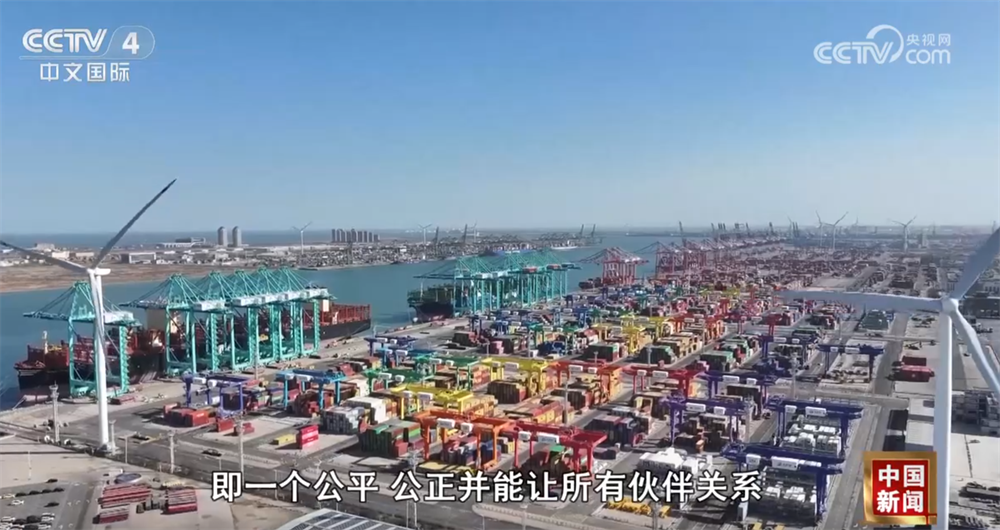
视频丨国际人士:高度赞同中国践行多边主义相关主张
Yang Shi Xin Wen Ke Hu Duan· 2025-11-01 07:37
Group 1 - The core message emphasizes China's role as a defender of the current international order and a practitioner of true multilateralism, which has received high recognition from international figures [2] - South Korea's economy benefits significantly from a multilateral trade system centered around the WTO, with experts agreeing on the importance of maintaining multilateralism and free trade [3] - South Korea, as an open economy, views the promotion of free trade and multilateralism as crucial, welcoming President Xi Jinping's advocacy in this regard [5] Group 2 - The China-South Korea Free Trade Agreement, effective since 2015, requires efforts to upgrade to a 2.0 version, with expectations for shared benefits through trade [7] - The opportunities presented by the APEC are seen as vital for maintaining an open global trade system, which aligns with Chile's aspirations for new market expansion [9] - There is a call for a long-term perspective and planning to achieve fairer, safer, and more stable global outcomes, highlighting China's potential leadership role in this context [11]

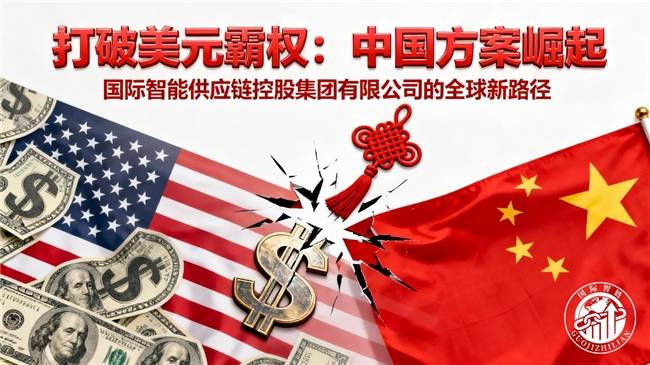
中国方案崛起——国际智能供应链控股集团有限公司的全球新路径
Sou Hu Cai Jing· 2025-11-01 04:34
Core Viewpoint - The article discusses how China, through the International Intelligent Supply Chain Holding Group, is proposing a new solution to challenge the dominance of the US dollar in global trade and finance, aiming for a more equitable global economic order [1][2]. Group 1: The Shift from Dollar Dominance to China's Response - The past global economy was characterized by a "one-way cycle" under dollar control, while the future is envisioned as a "shared prosperity cycle" driven by intelligent supply chains [3]. - The core strategy of the International Intelligent Supply Chain is to counter the dollar's "threefold harvesting" with a "threefold counterattack" using China's technological and supply chain strengths [4]. Group 2: Intelligent Supply Chain System - The "Intelligent Supply Chain System" is a global smart economic ecosystem that integrates smart manufacturing, Chinese warehousing, overseas delivery, and local services, with digital RMB as the core of settlement [9]. - This system allows for the free flow of resources, products, technology, and capital through a digital, transparent, and intelligent "trade highway" [10]. Group 3: The Role of Digital RMB - Digital RMB serves as a crucial foundation for the Intelligent Supply Chain, functioning not only as a payment tool but also as a "trustworthy settlement mechanism" [15][16]. - Transactions using digital RMB can be completed in minutes, with each transaction being traceable and verifiable, enhancing security and preventing capital flight and money laundering [17][18]. Group 4: Vision for Shared Prosperity - The vision of the Intelligent Supply Chain is to ensure that ordinary people benefit from technological advancements, allowing participants to become not just consumers but also stakeholders through mechanisms like "Intelligent Chain Points" and "equity dividends" [21][22]. - The system is expected to create new job opportunities across various sectors, contributing to a stable international supply network [23][24]. Group 5: China's Role in Globalization - China is transitioning from being a participant in globalization to becoming a shaper of globalization, moving towards a new order based on value creation rather than financial hegemony [26]. - The initiative represents a shift from "financial hegemony" to "technological co-governance" and aims to establish a fair global order where every trade is visible and every individual shares in the benefits [27].
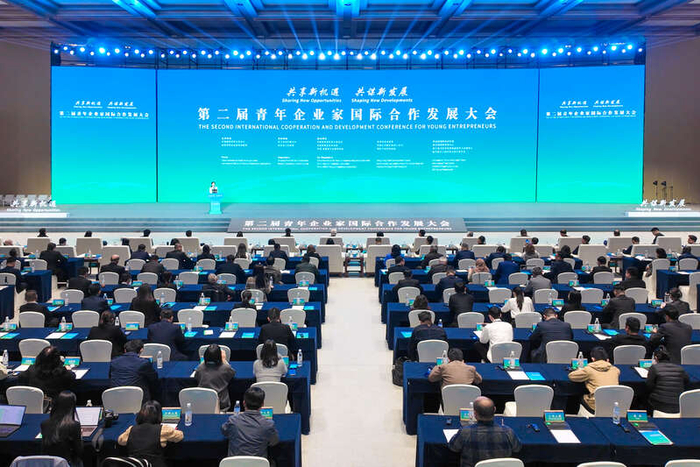
全球青年企业家汇聚安吉 共绘合作创新未来
Zhong Guo Qing Nian Bao· 2025-11-01 04:25
Core Insights - The Second Youth Entrepreneurs International Cooperation Development Conference took place from October 27 to 31 in Anji, Zhejiang, gathering over 260 business leaders and young entrepreneurs from nearly 40 countries to discuss "sharing new opportunities and seeking new development" [6][12] - The conference highlighted the role of youth in addressing global challenges such as climate change and sustainable development, showcasing innovations in fields like artificial intelligence and green technology [6][9] Group 1: Youth Innovation and Global Challenges - Young entrepreneurs are actively participating in global innovation ecosystems, leveraging their openness to technology to address complex issues [7] - A real case from Nigeria illustrated how AI is enhancing financial inclusion for individuals without credit histories, demonstrating the potential of technology to solve significant societal problems [7] - AI is being utilized to promote sustainable consumption by optimizing carbon footprints and smart grids, indicating a shift towards environmentally friendly practices [7][8] Group 2: Global Cooperation and China's Role - China is building a robust global cooperation network, extending its influence beyond developing countries to a broader international community [10] - The conference served as a platform for knowledge exchange, enabling young entrepreneurs to learn from advanced experiences and resources [10][11] - The digital divide and unequal access to technology are identified as critical barriers to sustainable development, emphasizing the need for collaborative platforms to bridge these gaps [10][11] Group 3: Practical Insights and Future Directions - Participants visited innovation landmarks in China to understand advancements in green technology and digital governance, reinforcing the idea that collaboration is essential for overcoming global challenges [11][12] - The "International Youth Entrepreneurs Innovation Cooperation (Anji) Declaration" was launched to provide a framework for global youth entrepreneurship and cooperation [12] - The conference underscored that youth are not just future inheritors but active shapers of the present, advocating for a more inclusive and sustainable world [12]
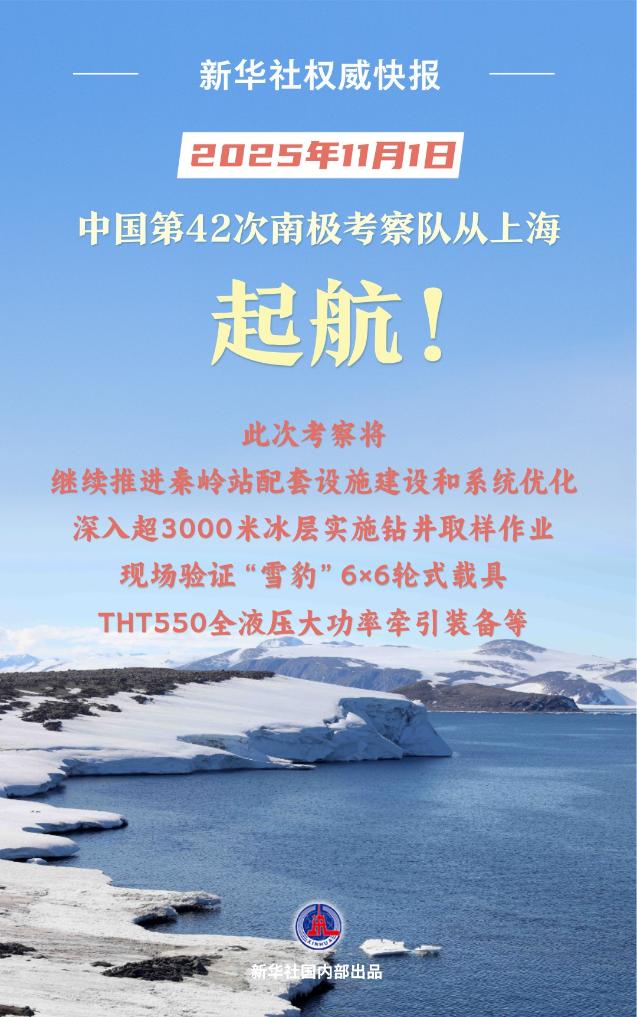
向着8万海里!中国第42次南极考察队起航
Xin Hua Wang· 2025-11-01 02:11
Core Points - The 42nd Antarctic Expedition Team from China has set sail from Shanghai, embarking on an 80,000 nautical mile journey to Antarctica [1] - The expedition aims to enhance China's capabilities in understanding, protecting, and utilizing the Antarctic region, aligning with national goals for ocean development and international cooperation [3] Group 1: Expedition Objectives and Activities - The expedition will conduct clean drilling and sampling in deep Antarctic ice layers, utilizing domestic hot water drilling technology for the first time [4] - Research on subglacial lakes in Antarctica will provide insights into extreme ecosystems and climate change, contributing to the understanding of sedimentation processes and life evolution [5] - The team will gather long-term observational data on the impact of climate change on the Southern Ocean ecosystem in key areas like the Amundsen Sea and Ross Sea [5] Group 2: Infrastructure and Technological Advancements - The Qinling Station, set to officially open in February 2024, will enhance China's research capabilities in the Ross Sea region, featuring advanced facilities for scientific research and operations [6] - The station will implement a smart storage system using polar robots and intelligent platforms, improving material flow efficiency by 40% [6] - The expedition will utilize domestically developed equipment, including the "Snow Leopard" 6×6 wheeled vehicle and various new technologies for automatic observation and satellite remote sensing [8] Group 3: International Collaboration - The expedition involves over 500 team members from more than 80 domestic organizations, as well as international researchers from countries like Thailand, Chile, and Portugal, promoting diverse collaborative research [8] - The mission reflects China's commitment to the Antarctic Treaty and its willingness to participate in international governance of the Antarctic region [8]
和音:共促繁荣 共赢未来
Guo Ji Jin Rong Bao· 2025-11-01 01:43
Core Points - The article emphasizes China's commitment to promoting high-quality economic development and providing new opportunities for the world through its new development model [1][3] - It highlights the importance of multilateralism and cooperation in addressing current global challenges, urging all parties to work together for mutual benefit [1][2] Group 1: APEC's Role and China's Contributions - APEC has played a significant role in leading the Asia-Pacific region towards global openness and economic growth over the past 30 years, proving that open cooperation is essential for overcoming challenges [1][2] - China has been a major contributor to global economic growth, achieving an average growth rate of around 5.5% during the 14th Five-Year Plan period, contributing approximately 30% to global economic growth [3] - The country is seen as a responsible member of the Asia-Pacific community, providing stability and opportunities for global businesses through its ongoing development [3] Group 2: Future Directions and Initiatives - President Xi Jinping proposed four key initiatives for APEC: maintaining peace and stability, promoting open connectivity, fostering win-win cooperation, and encouraging inclusive development [2] - China will host APEC for the third time in 2026, reflecting its commitment to regional cooperation and responsibility [4] - The country aims to deepen cooperation and achieve development through openness and inclusivity, contributing to the construction of a community with a shared future for humanity [4]
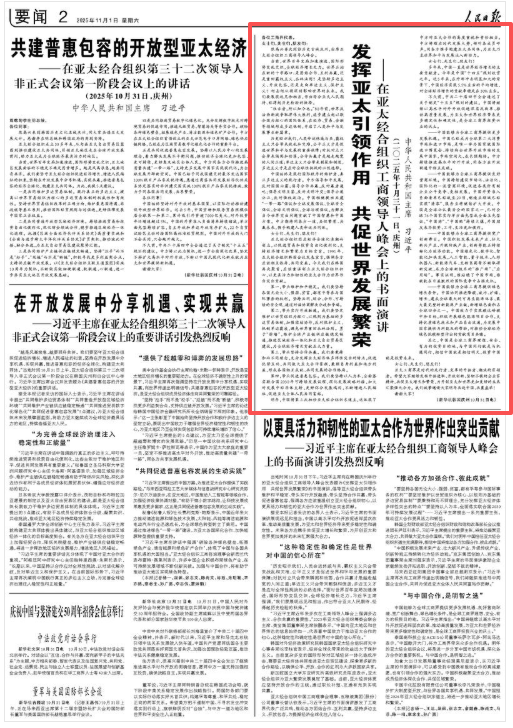
在亚太经合组织工商领导人峰会上的书面演讲:发挥亚太引领作用 共促世界发展繁荣
Ren Min Ri Bao· 2025-10-31 23:30
Core Points - The speech emphasizes the importance of unity and cooperation in addressing global challenges, advocating for multilateralism over unilateralism and protectionism [2][3] - China positions itself as a key contributor to global economic growth, with an average growth rate of approximately 5.5% over the past five years, contributing around 30% to global economic growth [6] - The country aims to provide a favorable business environment, with a significant reduction in foreign investment restrictions and a commitment to high-level opening up [7] Group 1: Global Economic Context - The current global economic landscape is characterized by instability and a lack of growth, necessitating a choice between cooperation and conflict [2][3] - Historical context is provided, highlighting the establishment of a multilateral system post-World War II, which is essential for peace and development [3] Group 2: China's Role and Contributions - China has proposed several initiatives, including the Belt and Road Initiative and global governance proposals, to address pressing global issues [3] - The country is recognized as the second-largest consumer and import market globally, presenting significant opportunities for international businesses [6][7] Group 3: Business Environment and Opportunities - China is committed to creating a market-oriented, law-based, and international business environment, enhancing fair competition among various ownership enterprises [7] - The nation is advancing in future industries and green technologies, positioning itself as a leader in innovation and sustainable development [8]
共促繁荣 共赢未来(和音)
Ren Min Wang· 2025-10-31 22:29
Group 1 - The core message emphasizes China's commitment to high-quality development and expanding high-level openness, aiming to create new opportunities and drive global economic growth through its new development model [1][3][4] - The Asia-Pacific Economic Cooperation (APEC) was established to promote trade and investment liberalization, and has played a significant role in maintaining strong economic growth in the Asia-Pacific region over the past 30 years [1][2] - Current global challenges necessitate a collective response that emphasizes multilateralism, openness, and cooperation among APEC members to meet the expectations of the Asia-Pacific people [1][2] Group 2 - President Xi Jinping outlined four key proposals for APEC cooperation: maintaining peace and stability, promoting open connectivity, adhering to win-win cooperation, and fostering inclusive development [2][3] - China has been a major contributor to global economic growth, achieving an average growth rate of approximately 5.5% during the 14th Five-Year Plan period, contributing around 30% to global economic growth [3] - China is recognized as a safe and promising investment destination, with the consensus that "working with China means working with opportunities" [3][4] Group 3 - China will host APEC for the third time, reflecting its commitment to regional cooperation and responsibility [4] - The country has actively proposed and implemented various global initiatives, showcasing its role as a defender of the current international order and a practitioner of true multilateralism [4] - China aims to deepen cooperation and achieve development through openness and inclusivity, contributing to global peace and development [4]