
数字金融

Search documents
“榜一”“榜二”城市再联手 全球金融科技“走向未来”
2 1 Shi Ji Jing Ji Bao Dao· 2025-11-19 10:04
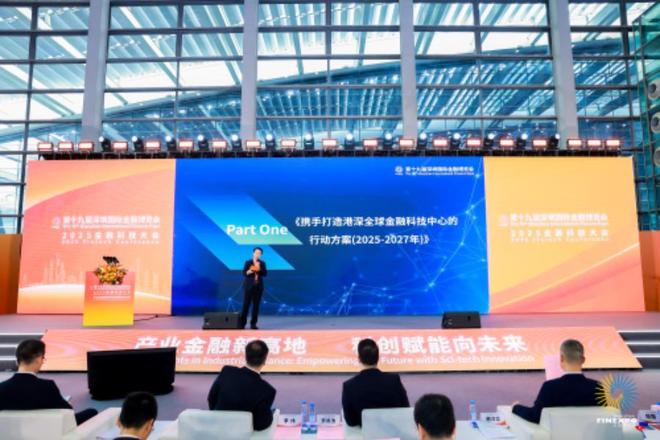
21世纪经济报道记者 黄子潇 深圳报道 《方案》共计20条具体措施,涵盖技术输出、金融数据跨境流动、数字普惠金融、数字人民币等领域。 全球金融科技中心六大重点任务 11月19日上午,第十九届深圳金博会正式开幕。《关于携手打造港深全球金融科技中心的行动方案 (2025-2027年)》(简称《方案》)正式发布。 深圳和香港具有良好的金融科技发展基础。在第38期全球金融中心指数报告(GFCI 38)的金融科技专 项排名中,香港位列全球第一,深圳位列全球第二。本次是"榜一""榜二"的强强联合。 据悉,《方案》内容充分考虑了深港特色和市场需求,以数据要素流通、数字技术创新为驱动,深化两 地金融科技技术攻关、场景适配与成果转化,形成数字金融与科技、绿色、普惠、养老金融协同发展格 局,并提出到2027年底,落地20个以上深港跨境数据验证平台金融应用场景。 "我们将以最开放的合作姿态、最优质的制度保障、最高效的服务体系,欢迎全球金融机构、科技企 业、行业人才来深港布局,共探数字金融创新、共推金融科技发展、共享产业升级机遇。"他表示。 深圳地方金融管理局局长时卫干在发布环节中介绍,2025 年3月,深港两地就已正式启动政策联合 ...

中国普惠金融研究院院长贝多广:普惠金融在中国走出独特快车道,下一步是构建高质量生态体系
Xin Lang Cai Jing· 2025-11-19 08:13
Core Viewpoint - The Chinese financial system is at a historical juncture, with a focus on building a strong financial nation and enhancing the quality and resilience of the financial system, particularly in the context of the upcoming "14th Five-Year Plan" [1] Group 1: Development of Inclusive Finance - Inclusive finance in China has developed uniquely and rapidly, driven by policy guidance that fosters collaboration among various financial entities [2][3] - The integration of financial technology has created an ecosystem that leverages "scenarios + data + technology," making China one of the most active markets for fintech applications globally [2] - The "last mile" problem is being addressed through deep coverage of underserved groups, such as small and micro enterprises and farmers, by lowering barriers to access financial services [3] Group 2: Achievements and Challenges - Since the formal introduction of inclusive finance in 2013, China has made significant progress, ranking high in various indicators such as account ownership and mobile payment penetration [4] - The current challenges for small and micro enterprises include unstable cash flow and significant accounts receivable, necessitating improved liquidity through bank loans [5] Group 3: Balancing Sustainability and Commercial Viability - The "impossible triangle" in inclusive finance—balancing coverage, affordability, and low risk—remains a challenge, requiring breakthroughs in market rules, top-level design, and technological empowerment [6][7] - Digitalization has proven essential in enhancing the accessibility and efficiency of inclusive finance services, particularly for underserved groups [7] Group 4: Future Directions - High-quality inclusive finance should evolve into a comprehensive ecosystem that includes not only credit but also insurance and investment services, addressing both production and consumption needs [8][9] - The development of inclusive insurance products is crucial, as all economic entities face risks, and insurance can be more critical than credit for low-income households [9] - Green inclusive finance is essential for sustainable rural development, particularly in achieving carbon neutrality goals while addressing the environmental impacts of rural economic activities [9]
不用抵押物,专利也能“变”贷款?山西金融解锁科创企业融资新玩法
Sou Hu Cai Jing· 2025-11-19 07:34
Core Insights - The financial sector in Shanxi is actively supporting economic transformation through innovative financial products and services, focusing on technology, green finance, inclusive finance, and digital finance [2][3][4][10] Group 1: Technology Finance - Shanxi Zhonglai Solar Technology Co., Ltd. received a loan of 200 million yuan from Huaxia Bank without any collateral, enabling the company to procure raw materials for production [3] - The Jinzhong Financial Regulatory Bureau has launched a plan to create a technology finance hub, resulting in 66 customized financial products and over 20 billion yuan in signed agreements with 192 technology companies [4] Group 2: Green Finance - The green loan financing scale of Industrial Bank's Taiyuan branch reached 16.532 billion yuan by the end of September [5] - New insurance products like meteorological index insurance and forestry carbon sink insurance are being developed to support ecological protection in the Yellow River basin [4][5] Group 3: Inclusive Finance - Zhejiang Merchants Bank's domestic letter of credit service has significantly improved cash flow for coal enterprises, with nearly 2 billion yuan disbursed to downstream companies [6] - The balance of inclusive agricultural loans in Jinzhong reached 145.156 billion yuan, with a growth rate of 13.50%, surpassing the average loan growth rate [7] Group 4: Digital Finance - Digital financial services in Shanxi have improved convenience for citizens, with over 10 million transactions processed for traffic fines through online platforms [8] - The digital economy industry loan balance in Jinzhong reached 2.332 billion yuan, supporting the intelligent upgrade of traditional industries [8] Group 5: Pension Finance - Shanxi Bank has expanded its pension financial products, with a total scale of 92.069 billion yuan by the end of August, benefiting over 500,000 customers [9] - China Life Insurance's "Silver Age Health" insurance covered 640,000 people, with claims exceeding 5.7 million yuan, providing security for the aging population [9]



香港财库局与深圳市地方金融管理局联合发布《关于携手打造港深全球金融科技中心的行动方案(2025-2027年)》
智通财经网· 2025-11-19 07:32
Core Insights - The Hong Kong Financial Services and the Treasury Bureau and the Shenzhen Local Financial Supervision Bureau jointly released an action plan to establish a global fintech center between Hong Kong and Shenzhen from 2025 to 2027, leveraging the strengths of both regions in fintech [1][2] Overall Requirements - The plan emphasizes the importance of data flow and digital technology innovation to enhance financial services and deepen cooperation between Hong Kong and Shenzhen, aiming to implement over 20 cross-border data verification platforms by the end of 2027 [3] Key Tasks - Attract and gather fintech innovation entities, encouraging the establishment of research and service centers, and supporting Hong Kong payment institutions to set up cross-border payment services in Shenzhen [4][5] - Support original technology research and collaboration between higher education institutions and industry associations to enhance fintech capabilities [6] - Promote the development of technology finance, green finance, inclusive finance, and pension finance through various supportive measures [7][8] Application Scenarios - Innovate in digital RMB application scenarios, expanding its use in retail, transportation, and trade, while enhancing international cooperation [10] - Develop financial innovations based on data assets, exploring services like data asset trusts and data security insurance [11] Regulatory Environment - Strengthen cross-border fintech innovation cooperation and explore regulatory sandbox mechanisms to support fintech applications [12][13] - Improve the financial technology governance system to ensure ethical practices and industry self-regulation [13] Industry Development Ecosystem - Enhance talent supply quality by implementing policies to attract and cultivate fintech professionals [14] - Foster industry collaboration through forums and events to showcase fintech achievements and enhance international influence [18][19]
创新服务满足物流企业融资
Jing Ji Ri Bao· 2025-11-19 01:30
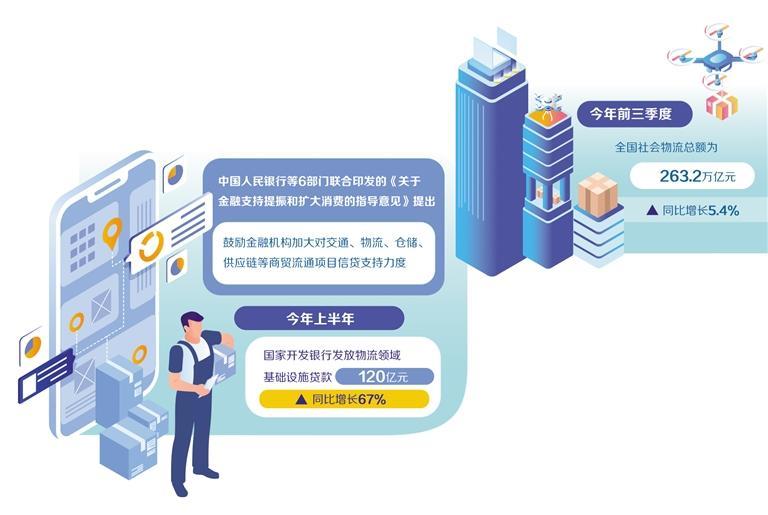
Core Insights - The logistics system is crucial for the operation of the real economy, covering a wide range of fields and industries. In the context of expanding domestic demand and stabilizing growth, the People's Bank of China and six other departments have jointly issued guidelines to encourage financial institutions to increase credit support for transportation, logistics, warehousing, and supply chain projects [1][2] Group 1: Financial Support and Challenges - Financial institutions are encouraged to enhance credit support for logistics companies of all sizes to address operational challenges [1] - Some small and micro enterprises face difficulties in cash flow due to high industry input costs and long repayment cycles, leading to reliance on high-cost bridge financing [1] - There is a need for innovative financial services to alleviate financing bottlenecks for enterprises [1] Group 2: Data-Driven Financing Solutions - The logistics industry is evolving from traditional warehousing to intelligent platforms, allowing financial institutions to utilize data for comprehensive assessments of enterprises' receivables and performance [1] - This approach aims to improve financing efficiency by streamlining traditional financing processes [1] Group 3: Innovation in Financial Products - Financial institutions are encouraged to innovate logistics financing products, including government-backed financing guarantees and reasonable loan terms for logistics equipment [2] - Establishing a coordination mechanism for small and micro enterprise financing can enhance banks' willingness to lend and alleviate financing difficulties [2] Group 4: Importance of Small and Micro Enterprises - The healthy development of small and micro enterprises is essential for enhancing the stability of the logistics industry [2] - Financial institutions should deepen service innovation to provide quality financial services to small and micro enterprises, aiding in cost reduction and efficiency improvement in the logistics sector [2]
金融活水润泽实体
Nan Fang Du Shi Bao· 2025-11-18 23:11
Core Insights - The article highlights the evolution and current strategies of Xinwang Bank, emphasizing its role as a digital financial pioneer in China, focusing on technology, green finance, inclusive finance, elderly finance, and digital finance to support the real economy in the digital age [1] Group 1: Technology Finance - Xinwang Bank has submitted over 540 patent applications, ranking among the top globally for new applications, and has been recognized in China's top 50 fintech companies for several years [2] - The bank offers fully online, unsecured, and contactless digital financial products tailored to the financing needs of tech startups, addressing their lack of collateral and standardized data [2] Group 2: Green Finance - Xinwang Bank positions itself as a "carbon-neutral bank," integrating "dual carbon" goals into its development strategy, focusing on both low-carbon operations and assisting clients in their low-carbon transitions [3] - The bank has launched digital financial products like "Low Carbon Circular Loan" and "Green Easy Financing" to meet the financing needs of small enterprises in the recycling sector [3] Group 3: Inclusive Finance - To address the financing challenges faced by small and micro enterprises, Xinwang Bank adopts a differentiated strategy, focusing on underserved customer segments and utilizing technology to manage risks [4] - The bank has introduced a decentralized supply chain finance solution that is fully online, real-time, and credit-based, covering the entire lifecycle of enterprises [4] Group 4: Elderly Finance - In response to an aging society, Xinwang Bank has enhanced its services for elderly clients, reflecting social responsibility while tapping into new market growth opportunities [5] - The bank's official app has introduced a "Caring Mode" to improve accessibility for elderly customers, enhancing their experience with customer service [5] Group 5: Digital Finance - As a next-generation digital-native bank, Xinwang Bank is at the forefront of digital finance, creating a comprehensive digital ecosystem that encompasses scenario finance, products, operations, and risk control [6] - The bank has developed a risk evaluation system centered on operational data and an intelligent customer service solution to improve service efficiency and customer experience [7] - Xinwang Bank has initiated the "Smart AI+" strategy, aiming for widespread AI tool adoption across the organization by 2025, promoting a deeper transition in digital finance [7]
科技为楫暖民生 责任为锚行致远
Nan Fang Du Shi Bao· 2025-11-18 23:11
Core Viewpoint - China Post Consumer Finance Co., Ltd. has established itself as a significant player in the consumer finance sector over the past ten years, focusing on inclusive finance and leveraging technology to enhance service efficiency and customer experience [2][3][6]. Group 1: Company Overview - Established in November 2015, China Post Consumer Finance is positioned as a national licensed consumer finance institution, initiated by Postal Savings Bank of China [2]. - The company has developed a diverse product portfolio covering various consumer scenarios, including 3C digital products, travel, education, and home decoration [3]. - As of October 2025, the company has served 18.57 million key customer groups, with a loan issuance scale exceeding 1 trillion yuan [4]. Group 2: Financial Performance - Since 2022, the comprehensive pricing of loans has been on a downward trend, with a decrease of 4.53 percentage points from the end of 2021 to October 2025 [3]. - The company has provided special services such as interest fee waivers and credit support plans to 238,500 customers since 2020 [3]. Group 3: Technological Advancements - The company has developed the "Youyuanjian" model, which has significantly improved internal efficiency and customer experience through the integration of AI and business processes [6]. - The intelligent customer service system has achieved a 98% accuracy rate in customer intent recognition, enhancing customer satisfaction [6]. - As of October 2025, the company holds 106 authorized patents and 135 software copyrights, with over 90% of its application systems being self-developed [7]. Group 4: Consumer Rights Protection - China Post Consumer Finance actively promotes consumer rights protection through various educational initiatives, including online and offline campaigns targeting vulnerable groups [8][10]. - The company has launched nearly 20 creative anti-fraud public welfare activities since 2021, reaching over 100 million consumers [9]. Group 5: Social Responsibility - The company engages in educational poverty alleviation activities, such as the "Walking Blackboard" initiative, which focuses on improving the quality of education in rural areas [10]. - It promotes green consumption through initiatives like the "Old for New" program and the "Youyou Forest" feature, which rewards users for environmentally friendly behaviors [11].
金融活水助力畅通乡村物流
Jing Ji Ri Bao· 2025-11-18 22:21
Core Viewpoint - The logistics sector plays a crucial role in facilitating domestic circulation and developing a modern industrial system, with financial support being essential for its growth [2] Financial Support for Infrastructure - Infrastructure construction is fundamental for logistics development, particularly in rural areas where the "first mile" and "last mile" challenges persist. Financial resources can effectively bridge funding gaps in rural logistics infrastructure [3] - In the first half of the year, the China Development Bank issued 12 billion yuan in loans for logistics infrastructure, marking a 67% year-on-year increase [3] - Financial backing for rural logistics can enhance agricultural modernization and rural revitalization, promoting the flow of agricultural products and industrial goods [3] Tailored Financial Products - Many rural logistics enterprises are small or startup companies that lack effective collateral, making traditional loan models less suitable. There is a need for tailored financial products such as credit loans and order financing [4] - Banks can design specialized credit products targeting key logistics segments, focusing on infrastructure development for storage and cold chain transport [4] Operational Support and Sustainability - Financial institutions should extend their support from construction to operational phases, ensuring projects not only get built but also operate sustainably [5] - Recommendations include providing liquidity support for initial operations and maintenance, as well as introducing professional management resources [5] Cold Chain Logistics Importance - Cold chain logistics is vital for balancing seasonal supply and demand of agricultural products, reducing circulation losses [6] - The Hebei Tianhuan Modern Commerce Smart Logistics Plaza is a significant cold chain logistics base, receiving 15 million yuan in project loans to support its operations [6] Rural Logistics Development - Since 2022, 1,285 county-level logistics centers and 1,457 township express logistics stations have been built, achieving a 95% coverage rate for express services in administrative villages [7] - Financial resources should be directed to support rural logistics, enhancing employment and living standards in rural areas [7] Comprehensive Financial Services - Financial services should focus on the entire logistics chain, with banks creating dedicated teams to address the unique needs of logistics enterprises [8] - Banks can leverage core enterprises in the supply chain to provide comprehensive financing services to small and medium-sized logistics companies [8] Growth of the Logistics Sector - The logistics industry in China is expanding, with a total social logistics volume of 263.2 trillion yuan in the first three quarters, reflecting a 5.4% year-on-year growth [9] - The ratio of total logistics costs to GDP has decreased by 0.1 percentage points compared to the previous year [9] Digital and Intelligent Transformation - Financial institutions are encouraged to promote the digital and intelligent transformation of rural logistics, utilizing technologies like big data and blockchain to enhance efficiency [10] - Collaborative efforts among government, enterprises, and financial institutions are essential to build a sustainable rural logistics ecosystem [10]
北京公募基金行业高质量发展倡议书
Zhong Guo Zheng Quan Bao· 2025-11-18 20:05
Core Viewpoint - The Central Financial Work Conference has outlined the direction for financial development in the new era, emphasizing the acceleration of building a strong financial nation and the importance of the "Action Plan for Promoting High-Quality Development of Public Funds" as part of the capital market policy framework [1] Group 1: Mission and Service Enhancement - Financial institutions are urged to integrate into the national development framework, focusing on serving the real economy and prioritizing functional roles [1] - There is a call to shift from a focus on scale to a focus on returns, enhancing the investment research system and aligning management fees with investor interests [2] Group 2: Investment and Compliance - The industry is encouraged to enhance equity investment capabilities and develop a comprehensive asset allocation system, promoting long-term and value investment strategies [2] - Compliance and risk management are emphasized, with a focus on internal controls and preventing illegal activities such as insider trading [2] Group 3: Cultural and Institutional Development - The promotion of a strong financial culture is essential for sustainable industry development, with an emphasis on ethical standards and professional capabilities in talent development [2][3] - The goal is to build modern, first-class investment institutions with improved governance and operational efficiency, while fostering a collaborative industry environment [3] Group 4: Strategic Collaboration - Fund managers are encouraged to take a leading role in the industry, while sales institutions must adhere to investor suitability management [3] - The importance of strategic cooperation among various financial entities is highlighted to create a positive and interactive industry landscape [3]
资本市场助推深圳打造产业金融中心
Zhong Guo Zheng Quan Bao· 2025-11-18 20:04
Core Insights - Shenzhen's capital market has demonstrated resilience and vitality during the "14th Five-Year Plan" period, significantly contributing to the high-quality development of the real economy [1][2][3] Group 1: Direct Financing and Market Structure - During the "14th Five-Year Plan," Shenzhen's direct financing scale reached approximately 2.8 trillion yuan, representing over a 50% increase compared to the "13th Five-Year Plan" period, ranking third among major cities in China [1] - The number of IPOs on the Shenzhen Stock Exchange's ChiNext and Sci-Tech Innovation Board accounted for over 80% of the total IPOs in Shenzhen during the same period, with more than 200 companies listed on these boards [1][2] Group 2: Mergers, Acquisitions, and Financial Innovation - Since the introduction of the "Mergers and Acquisitions Six Articles," Shenzhen listed companies have executed 497 mergers and acquisitions, involving over 90 billion yuan [2] - Shenzhen's enterprises achieved over 2.4 trillion yuan in bond financing during the "14th Five-Year Plan," and the public REITs fundraising reached a total of 32.726 billion yuan, maintaining a leading position nationally [2] Group 3: Company Performance and Contributions - As of now, Shenzhen has 424 A-share listed companies, a 35% increase since the end of 2020, with a total market capitalization exceeding 11 trillion yuan, ranking second among major cities in China [3] - In the first three quarters of 2025, Shenzhen listed companies reported cumulative revenues of 5.20 trillion yuan and net profits of 457.797 billion yuan, reflecting year-on-year growth of 7.36% and 3.98%, respectively [3] Group 4: Financial Services and Innovations - By the end of October 2025, Shenzhen's futures companies served over 20,000 industrial clients with transaction volumes exceeding 100 trillion yuan, and provided hedging services to 616 enterprises amounting to 8.47 trillion yuan [4] - In the pension finance sector, Shenzhen managed over 2 trillion yuan in various pension funds, ranking second nationally, with 58 products included in the personal pension fund catalog [4] Group 5: Future Development Plans - Shenzhen's capital market aims to focus on developing new productive forces, deepening capital market reforms, and enhancing investor protection during the "15th Five-Year Plan" period [5][6] - The strategy includes guiding capital towards new productive sectors, promoting innovative allocation of production factors, and enhancing the multi-tiered capital market structure [5]