
粮食安全

Search documents
全球粮价或因美联储降息大涨,中国老百姓的米袋子受影响吗?
Sou Hu Cai Jing· 2025-09-22 17:50
Group 1 - The Federal Reserve's interest rate cut has triggered significant attention towards the food sector, particularly rice, as capital seeks new investment opportunities amidst declining dollar asset attractiveness [1][5] - Historical price peaks in food commodities have not deterred capital inflow, with international rice prices reaching record highs, indicating a shift in investment focus from traditional assets like oil and gold to food [1][3] - The relationship between food and oil prices is intricate, where rising oil prices increase the costs of agricultural inputs and logistics, ultimately affecting food prices at the consumer level [3][5] Group 2 - China's food security is bolstered by a robust strategic system, with grain production expected to exceed 1.4 trillion jin in 2025, ensuring self-sufficiency in staple grains like rice and wheat [7][15] - Despite high domestic food prices, China maintains stable prices for local rice and pork, while imported high-end food items are experiencing slight price increases [7][12] - China's reliance on imports for certain commodities, such as soybeans, remains significant, with a self-sufficiency rate of only 15.2%, highlighting the need for strategic adjustments in import sources [9][10] Group 3 - The potential indirect effects of rising global food prices could lead to increased costs in livestock farming, thereby pushing up domestic meat prices [12] - The People's Bank of China may follow the Fed's lead in cutting interest rates, which could lower mortgage payments but also reduce returns on savings and investment products [14] - Continuous investment in agricultural technology, such as high-standard farmland construction and innovative storage solutions, is crucial for enhancing food security and reducing waste [14][15]


第一观察|丰收节到来之际,总书记对“三农”工作寄予新期望
Xin Hua She· 2025-09-22 16:31
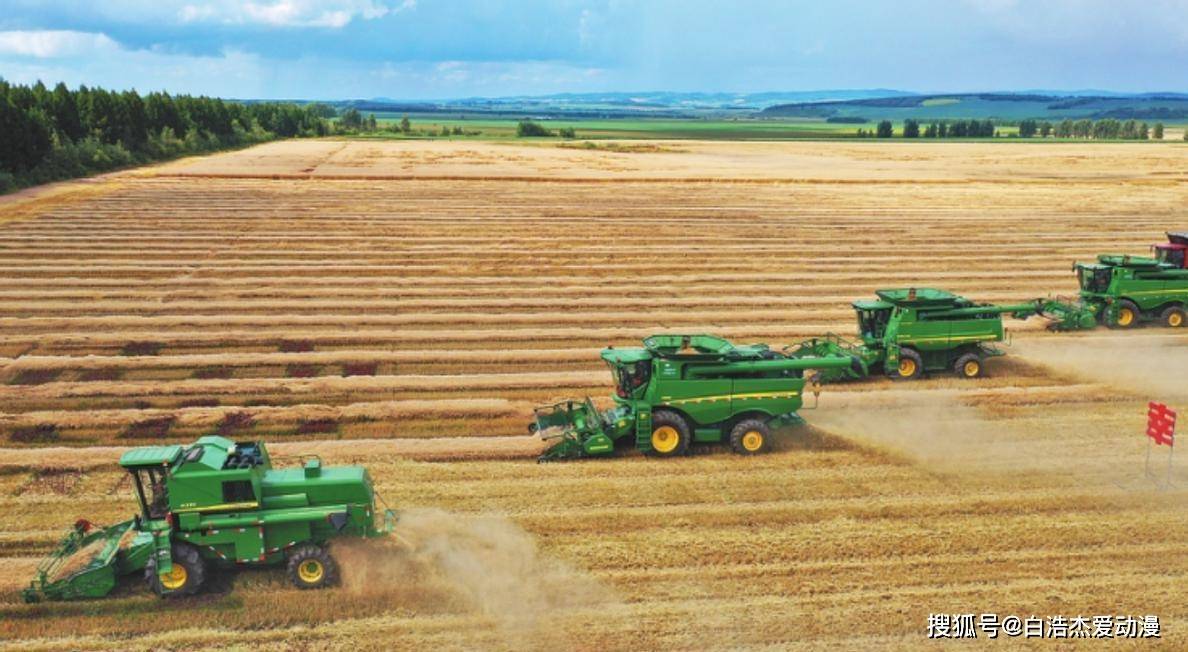
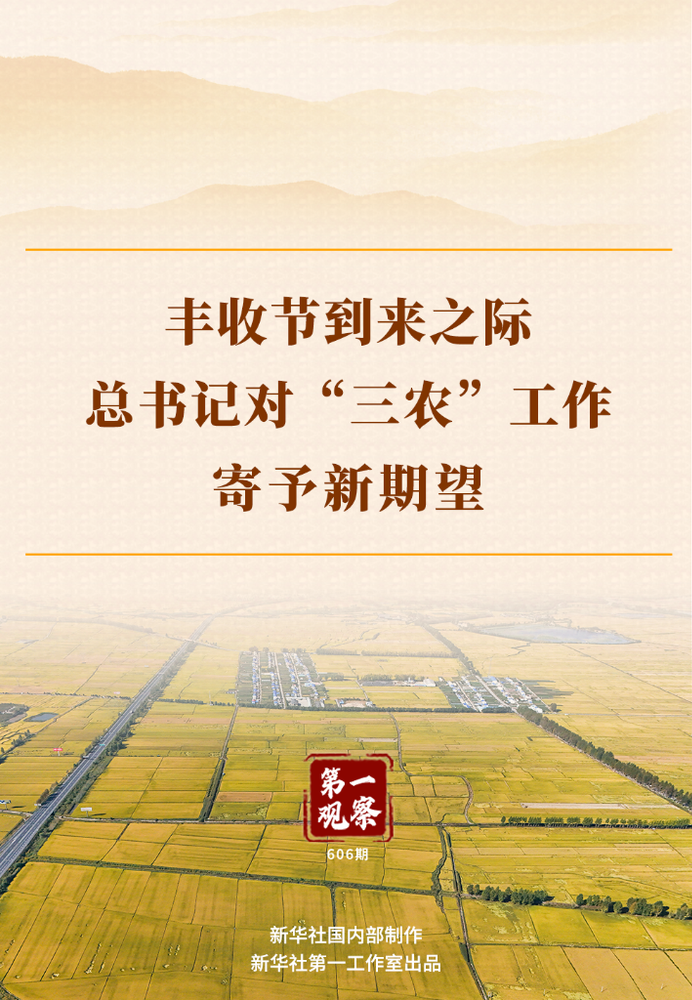
Core Insights - The article emphasizes the importance of enhancing agricultural production capacity to ensure food security for China's population of over 1.4 billion people, highlighting that grain production has remained above 1.3 trillion jin for ten consecutive years and exceeded 1.4 trillion jin last year [5] - It discusses the need for diversified agricultural supply and the challenges posed by extreme weather conditions, stressing the necessity for continuous improvement in agricultural practices and technology [5] - The article outlines the government's commitment to increasing farmers' income through various policies and support mechanisms, particularly in the context of transitioning from poverty alleviation to rural revitalization [6] - It highlights the importance of developing rural industries and improving rural governance and infrastructure to achieve comprehensive rural revitalization, which is essential for China's modernization [7] Group 1 - The article underscores the critical role of agricultural production capacity in ensuring food security for a population exceeding 1.4 billion, with grain production consistently above 1.3 trillion jin for the past decade and surpassing 1.4 trillion jin last year [5] - It points out the increasing demand for feed grains due to rising living standards and the impact of extreme weather on agricultural yields, necessitating a focus on improving agricultural practices and technology [5] - The article stresses the importance of policies aimed at increasing farmers' income and ensuring support for low-income rural populations, particularly after the transition period from poverty alleviation [6] Group 2 - The article advocates for the development of rural industries and the integration of various sectors to enhance rural economic vitality, emphasizing the need for innovative financing mechanisms and talent development in rural areas [7] - It calls for a collaborative effort from government, farmers, and society to implement effective rural revitalization strategies, which are vital for achieving China's modernization goals [7]
齐心协力共绘“三农”新画卷——习近平总书记在“中国农民丰收节”到来之际的节日祝贺和诚挚问候温暖人心催人奋进
Xin Hua She· 2025-09-22 16:13
Core Insights - The celebration of the "Chinese Farmers' Harvest Festival" emphasizes the importance of agricultural modernization and rural revitalization, as highlighted by President Xi Jinping's message to farmers [1][2][3] Group 1: Agricultural Production - The average yield of summer grain managed by a cooperative increased by over 50 pounds per acre this year, with expectations for corn yield to exceed 1,500 pounds per acre [2] - The emphasis on agricultural technology is crucial for ensuring food security, with companies adopting modern farming techniques and equipment to enhance production capabilities [2][3] Group 2: Rural Development - The modernization of rural areas is essential for improving the quality of life for farmers, with initiatives to enhance living conditions and promote tourism [3][4] - Local governments are focusing on developing specialty industries and creating job opportunities to ensure sustainable income for farmers [4][5] Group 3: Policy Support - The central government has implemented a series of policies aimed at supporting agriculture and rural development, which are increasingly comprehensive and impactful [5] - There is a strong push for the integration of modern agricultural practices, such as unmanned farms and biological breeding laboratories, to enhance productivity and farmer income [5][6]
美国农业部将停止发布年度《家庭粮食安全报告》引发专家学者批评
Sou Hu Cai Jing· 2025-09-22 09:37
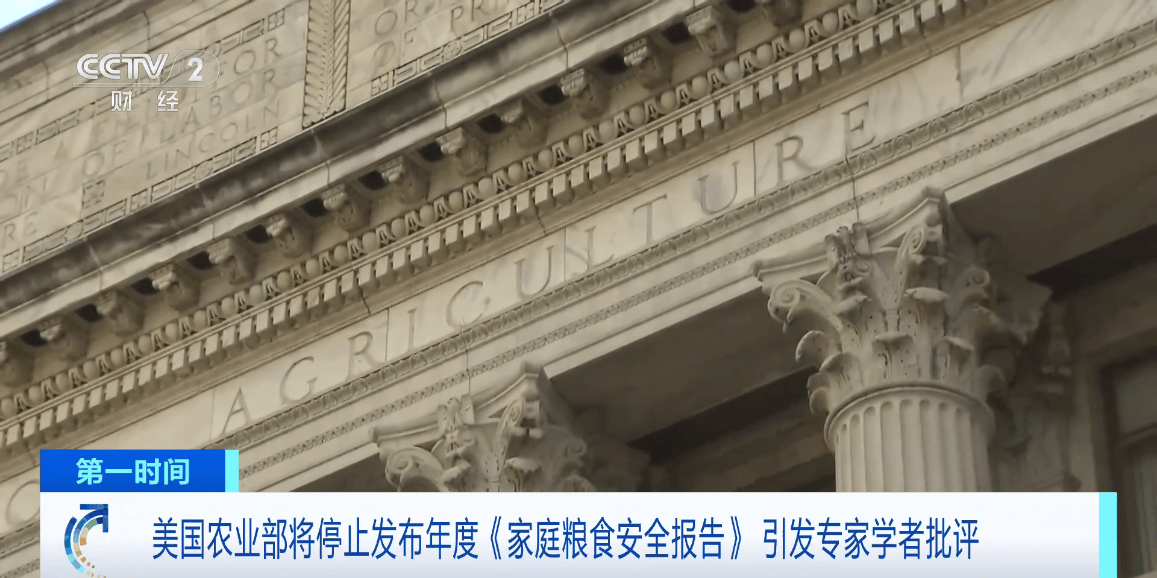
Core Viewpoint - The U.S. Department of Agriculture (USDA) has announced the cessation of the annual "Household Food Security Report," citing "excessive politicization" as the reason, which has drawn criticism from experts who believe this move obscures the existing hunger issues in the U.S. [1][3] Group 1 - The USDA stated that publishing the report is not a legal obligation and that past reports have become "too politicized," leading to the conclusion that this work is "no longer necessary" [3] - The report has been published annually since the mid-1990s, based on surveys of approximately 40,000 households across the U.S. to assess their food security status [3] - Experts have expressed concern over the decision to halt the report, especially given the rising inflation and deteriorating job market in the U.S., which are factors exacerbating food insecurity [5] Group 2 - The 2023 report indicated that approximately 18 million households in the U.S. are experiencing "food insecurity," meaning they cannot access enough food to meet their family's health needs, affecting around 47.4 million people, or about 14% of the total U.S. population [5] - In July, the Trump administration introduced a tax and spending bill that significantly reduced funding for the Supplemental Nutrition Assistance Program (SNAP), impacting around 3 million low-income individuals who were removed from the program [7]
“只会制造恐惧” 特朗普政府停止美国年度饥饿调查
Yang Shi Xin Wen· 2025-09-22 02:37
Core Insights - The U.S. Department of Agriculture (USDA) announced the termination of the "Household Food Security Report," also known as the annual hunger survey, which has been monitoring food insecurity in American households for over 30 years [2] - The USDA criticized the report as "redundant, expensive, politicized, and irrelevant," claiming it only serves to create fear without providing substantial results [2] - Despite an 87% increase in spending on the Supplemental Nutrition Assistance Program (SNAP) from 2019 to 2023, the trend of food insecurity has remained largely unchanged [2] Summary by Sections Termination of the Report - The USDA stated that the 2024 "Household Food Security Report" will be the last, scheduled for release on October 22, 2025, covering the final year of President Joe Biden's term [2] Current Food Insecurity Statistics - As of 2023, 13.5% of American households are experiencing food insecurity, marking the highest level since 2014 [3] - Recent official data indicates a slowdown in economic growth and a depletion of new job opportunities [3] Political Context - Former President Trump has dismissed these economic realities and recently fired the head of the statistics department, asserting that his policies are yielding positive results [3]

多维度夯实大国粮仓产能根基
Ren Min Ri Bao· 2025-09-22 00:29
Core Insights - The recent implementation of the "Permanent Basic Farmland Protection Red Line Management Measures" and the establishment of innovation hubs in key grain-producing regions highlight China's commitment to food security and self-sufficiency [2][3][4] - The focus on improving grain production capacity through land protection, technological innovation, and farmer motivation is essential for ensuring stable food supply amidst environmental challenges [2][3][4] Group 1: Policy and Regulation - The "Permanent Basic Farmland Protection Red Line Management Measures" will take effect on October 1, emphasizing the importance of farmland protection and management principles [2][3] - The policy aims to promote the "优进劣出" (better in, worse out) principle, reinforcing the foundation for stable production and income growth in agriculture [3] Group 2: Technological Innovation - The establishment of innovation hubs in the Huang-Huai region and Northeast China aims to enhance agricultural technology integration and application, addressing bottlenecks in the innovation chain [4] - The contribution of yield improvement from single crop production has exceeded 80% in recent years, indicating the effectiveness of integrating quality land, seeds, machinery, and methods [3] Group 3: Farmer Engagement - The strategy of "storing grain in the land and technology" emphasizes the need to motivate farmers, particularly smallholders, through subsidies and minimum purchase prices [4] - Initiatives like the "Grain King Competition" and targeted training programs are being implemented to encourage larger producers and farm owners to take the lead in increasing grain yields [4] Group 4: Environmental Challenges - Despite adverse weather conditions such as droughts and heavy rainfall, China has managed to stabilize summer grain production and increase early rice yields, setting a solid foundation for a good harvest [2][3] - The effective management of farmland and the application of appropriate strategies in land, technology, and human resources are crucial for achieving agricultural stability [2][3]
多维度夯实大国粮仓产能根基(人民时评)
Ren Min Ri Bao· 2025-09-21 22:00
Core Insights - The recent implementation of the "Permanent Basic Farmland Protection Red Line Management Measures" and the establishment of technological innovation hubs in key grain-producing regions highlight the importance of effective governance and strategic resource allocation in ensuring food security in China [1][2][3] Group 1: Policy and Regulation - The "Permanent Basic Farmland Protection Red Line Management Measures" will take effect on October 1, emphasizing the need for clear principles in the designation, control, and protection of permanent basic farmland [2] - The policy aims to promote the "优进劣出" (better in, worse out) principle, reinforcing the foundation for stable production and increased income in the agricultural sector [2] Group 2: Agricultural Production and Technology - China's agricultural strategy focuses on enhancing both the quantity and quality of arable land, with initiatives like the black soil protection project and high-standard farmland construction [2] - The exploration of technological innovation hubs in the Huang-Huai region and Northeast China aims to address bottlenecks in the agricultural innovation chain, facilitating collaboration among research institutions and enterprises [3] Group 3: Farmer Engagement and Support - The government recognizes the importance of motivating farmers, particularly smallholders, through mechanisms such as grain subsidies and minimum purchase prices to enhance their production enthusiasm [3] - Policies are being developed to link support for new agricultural business entities with income growth for farmers, thereby fostering a more robust agricultural economy [3]
美国叫停反映家庭饥饿状况的年度报告 批评者:粉饰!
Xin Hua She· 2025-09-21 12:28
Core Points - The U.S. Department of Agriculture (USDA) announced the cancellation of the Household Food Security Report, citing it has become "overly politicized" [1] - Critics argue that halting the report is detrimental to addressing hunger issues amid high inflation and low employment in the U.S. [2] - The USDA's decision is seen as an attempt to downplay food insecurity during the Trump administration, despite rising hunger levels [2] Summary by Sections USDA's Decision - The USDA will no longer publish the Household Food Security Report, with the last report scheduled for release on October 22, 2024 [1] - The USDA claims that the data collected does not accurately reflect the actual food security situation in the U.S. [1] Impact on Food Insecurity - The 2023 report indicated that 13.5% of U.S. households faced food insecurity, the highest level since 2014 [1] - Critics highlight that the cancellation of the report undermines efforts to measure and address hunger, especially in the context of ongoing economic challenges [2] Political Context - The decision to cancel the report is viewed as an effort to obscure the increase in hunger during Trump's presidency [2] - Previous reforms pushed by Trump and Congressional Republicans have led to cuts in the Supplemental Nutrition Assistance Program, potentially affecting millions of low-income Americans [2]
刘宁到扶沟县郸城县调研
He Nan Ri Bao· 2025-09-21 11:04
Group 1 - The core focus of the article is on the agricultural development and grain production in Zhoukou City, highlighting the importance of food security and the measures being taken to enhance agricultural productivity [3][5][6] - Zhoukou City is recognized as a major grain-producing area, with efforts to stabilize and increase grain output through improved agricultural practices and technology [3][5] - The establishment of the Zhoukou National Agricultural High-tech Industry Demonstration Zone aims to create a comprehensive wheat industry chain, enhancing the region's agricultural competitiveness and contributing to national food security [5][6] Group 2 - Liu Ning emphasizes the need for collaboration among departments to ensure effective grain procurement and storage strategies, as well as the efficient use of straw resources [3][5] - The article discusses the role of companies like Henan Jindan Lactic Acid Technology Co., Ltd., which utilizes corn to produce various products, showcasing the integration of agriculture and industry [5][6] - The importance of red culture and historical education is highlighted, with a focus on preserving revolutionary heritage and promoting patriotic education [5][6]

美国叫停反映家庭饥饿状况的年度报告 批评者:粉饰!
Xin Hua She· 2025-09-21 07:37
Core Points - The U.S. Department of Agriculture (USDA) announced the cancellation of the Household Food Security Report, citing it has become "overly politicized" [1][2] - Critics argue that halting the report is detrimental to addressing hunger issues amid high inflation and low employment in the U.S. [1][2] - The USDA's decision is seen as an attempt to downplay food insecurity during the Trump administration, despite rising hunger levels [2] Summary by Sections USDA's Decision - The USDA will no longer publish the Household Food Security Report, with the last report scheduled for October 22, 2024 [1] - The USDA claims that the data collected does not accurately reflect the actual food security situation in the U.S. [1] Impact on Food Insecurity - The 2023 report indicated that 13.5% of U.S. households faced food insecurity, the highest level since 2014 [2] - Critics highlight that the cancellation of the report undermines efforts to address hunger, especially given the current economic challenges [2] Political Context - The decision to cancel the report is viewed as an effort to obscure the increase in hunger during Trump's presidency [2] - Previous reforms to the Supplemental Nutrition Assistance Program (SNAP) under Trump are believed to have reduced assistance for low-income individuals, potentially affecting millions [2]