云计算

Search documents
深圳市尼奥云科技有限公司成立,注册资本1000万人民币
Sou Hu Cai Jing· 2026-01-15 20:04
Core Viewpoint - Shenzhen Niao Cloud Technology Co., Ltd. has been established with a registered capital of 10 million RMB, focusing on technology services and cloud computing solutions [1] Company Summary - The legal representative of Shenzhen Niao Cloud Technology Co., Ltd. is Yuan Zijun [1] - The company has a registered capital of 10 million RMB [1] - Shareholding structure: - Shenzhen Sanwang Communication Co., Ltd. holds 51% - Guangdong Weiyun Technology Co., Ltd. holds 49% [1] Business Scope - The company’s business scope includes: - General business projects such as technology services, development, consulting, and transfer [1] - Manufacturing and sales of cloud computing equipment [1] - Information technology consulting services [1] - Retail and wholesale of computer hardware and software [1] - Leasing of computers and communication equipment [1] - Industrial Internet data services [1] - Import and export of goods and technology [1] - Computer system services and electronic product sales [1] - The company operates under a limited liability structure with no fixed business duration [1]

江苏互盟数据科技有限公司成立,注册资本1000万人民币
Sou Hu Cai Jing· 2026-01-15 16:03
企业名称江苏互盟数据科技有限公司法定代表人朱明注册资本1000万人民币国标行业制造业>计算机、 通信和其他电子设备制造业>电子器件制造地址江苏省盐城市盐都区盐城高新技术产业开发区中小企业 (创业)园B2栋一楼南侧企业类型有限责任公司(自然人投资或控股的法人独资)营业期限2026-1-14至无 固定期限登记机关盐城市盐都区政务服务管理办公室 来源:市场资讯 天眼查显示,近日,江苏互盟数据科技有限公司成立,法定代表人为朱明,注册资本1000万人民币,由 苏州互盟信息存储技术有限公司全资持股。 序号股东名称持股比例1苏州互盟信息存储技术有限公司100% 经营范围含技术服务、技术开发、技术咨询、技术交流、技术转让、技术推广;机械设备研发;通用设 备制造(不含特种设备制造);大数据服务;云计算设备制造;计算机软硬件及外围设备制造;信息系 统集成服务;电子产品销售;互联网数据服务;软件开发;人工智能基础资源与技术平台;工业控制计 算机及系统销售;量子计算技术服务;数据处理和存储支持服务;人工智能应用软件开发;信息系统运 行维护服务;信息安全设备制造;信息安全设备销售(除依法须经批准的项目外,凭营业执照依法自主 开展经营活 ...
【公告全知道】光刻胶+PCB+商业航天+芯片+军工+无人驾驶!公司控股股东部分所属企业已向商业航天相关企业供应航天产品
财联社· 2026-01-15 15:25
Core Viewpoint - The article highlights significant announcements in the stock market from Sunday to Thursday at 22:00, focusing on various corporate actions such as suspensions, shareholding changes, investment wins, acquisitions, earnings reports, and stock unlocks, aiming to help investors identify potential investment opportunities and risks in advance [1] Group 1 - The company has supplied aerospace products to commercial aerospace-related enterprises through its controlling shareholder's affiliated companies [1] - The company has launched an AI enterprise-level knowledge base integrated machine in collaboration with Chaojuvian, with applications in data analysis and marketing planning [1] - The company has achieved industrialization of low-orbit satellite receiving antenna technology, with significant revenue growth in its optical module business year-on-year [1]


涉嫌转移2亿远走海外?迅雷起诉前CEO,“影子公司”细节曝光
Feng Huang Wang Cai Jing· 2026-01-15 14:59
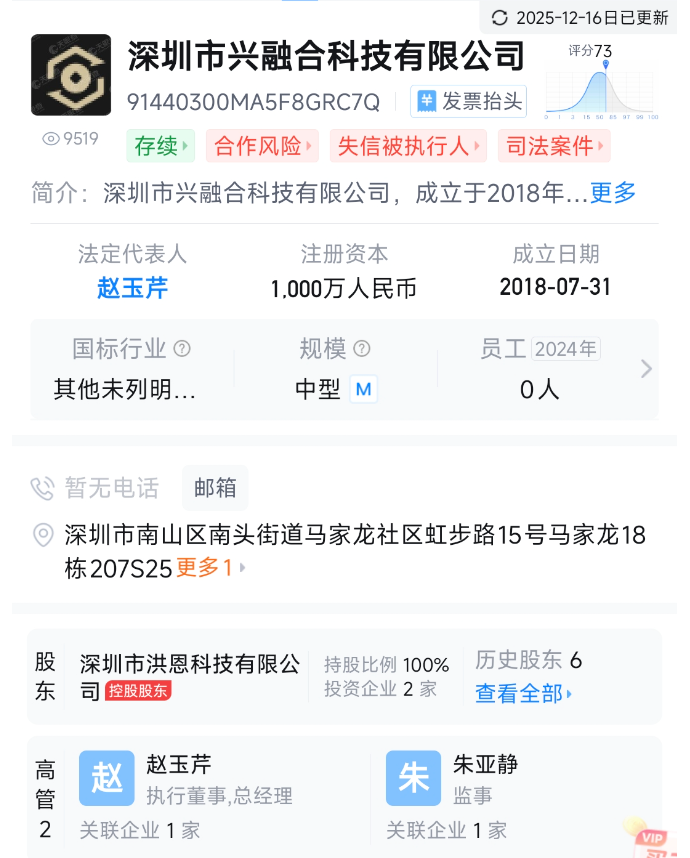
Core Viewpoint - The legal dispute involving Xunlei and its former CEO Chen Lei has resurfaced, with the company filing a lawsuit for damages amounting to 200 million yuan, accusing Chen of secretly siphoning off company assets through a company named "Xing Rong He" [1][2]. Group 1: Background of the Dispute - In 2020, Xunlei was struggling to transition from a download tool to cloud computing and blockchain, leading to internal conflicts between CEO Chen Lei and the board [2]. - Chen Lei was accused of asset transfer and embezzlement through "Xing Rong He," which allegedly involved fictitious transactions and false contracts [2][3]. - Following these allegations, Chen Lei was dismissed and left China, which complicated the investigation and accountability process for Xunlei [2][3]. Group 2: Details of the Lawsuit - The lawsuit names several defendants, including Chen Lei, former senior executives, and the company "Xing Rong He," which is described as a shadow company controlled by Chen [4][5]. - Xunlei claims that "Xing Rong He" was used to create a hidden chain of benefit transfers, effectively siphoning off funds from its subsidiary, Wangxin Technology [4][5]. Group 3: Financial Implications - During Chen Lei's tenure, Xunlei reported a net revenue of $186 million and a net loss of $13.84 million in 2020, with insiders claiming losses of up to 1 billion yuan during his leadership [3][10]. - Xunlei alleges that between January 2019 and April 2020, Chen Lei arranged for approximately 200 million yuan to be paid to "Xing Rong He" through inflated transactions [9]. Group 4: Challenges in Legal Proceedings - The lawsuit comes after Xunlei reported the matter to law enforcement in 2020, but the pursuit of criminal charges was hindered by Chen Lei's overseas status [10][11]. - Legal experts indicate that proving the alleged illegal activities will be challenging due to the need for substantial evidence and the complexities of cross-border jurisdiction [11].

涉嫌转移2亿远走海外?迅雷起诉前CEO,“影子公司”细节曝光
凤凰网财经· 2026-01-15 14:52
Core Viewpoint - The article discusses the legal dispute between Xunlei and its former CEO Chen Lei, focusing on allegations of corruption and asset misappropriation involving a company named "Xing Rong He" [1][2]. Group 1: Background of the Dispute - In 2020, Xunlei was struggling to transition from a download tool to cloud computing and blockchain, leading to internal conflicts between CEO Chen Lei and the board [2]. - Chen Lei was accused of asset transfer and misappropriation through "Xing Rong He," which allegedly involved fictitious transactions and false contracts, resulting in significant financial losses for Xunlei [2][3]. - During Chen Lei's tenure, Xunlei reported a net revenue of $1.86 million and a net loss of $1.384 million, with insiders claiming losses of up to 1 billion yuan [3]. Group 2: Allegations Against Chen Lei - The lawsuit targets Chen Lei and several former executives, accusing them of creating a shadow company, "Xing Rong He," to siphon funds from Xunlei's subsidiary, Wangxin Technology [5]. - "Xing Rong He" was established in 2018 and is alleged to have been used as a channel for fund transfers, with no legitimate business operations or oversight [5][9]. - Chen Lei reportedly arranged for Xunlei to pay approximately 200 million yuan to "Xing Rong He" during his tenure, with the approval process being bypassed [10]. Group 3: Legal Proceedings and Challenges - Xunlei filed a civil lawsuit after facing difficulties in pursuing criminal charges against Chen Lei, who is currently residing overseas, complicating the legal process [12][14]. - The civil lawsuit requires a solid evidence chain to prove the alleged infringement, but the whereabouts of the funds and Chen Lei remain unclear [13]. - Experts note that the cross-border nature of the case poses significant challenges for evidence collection and legal enforcement [14].
铜牛信息:公司正在筹建的“方恒科技超算与金融云计算基地项目”的建筑主体已完工
Zheng Quan Ri Bao· 2026-01-15 14:11
Core Viewpoint - The company is advancing its "Fangheng Technology Supercomputing and Financial Cloud Computing Base Project," with the main construction completed and ongoing work to enhance data center operations and computational service capabilities [2] Group 1 - The main construction of the "Fangheng Technology Supercomputing and Financial Cloud Computing Base Project" has been completed [2] - The company is currently working on the external power supply introduction and other construction tasks according to the project plan [2] - This project is expected to improve the company's data center operational scale and overall computational service capabilities [2]
AI基础设施投资达3万亿美元,盈利前景仍不明朗
Sou Hu Cai Jing· 2026-01-15 10:22
Core Insights - The construction boom of data centers driven by artificial intelligence continues, but concerns about potential industry collapse due to over-speculation and rising investment demands are increasing [2] - Moody's report estimates that at least $3 trillion will be needed in investments by the end of this decade to keep up with expected capacity expansion levels [2] - Major challenges for new data center development include power supply issues, local opposition, skilled labor shortages, and rising costs of construction materials and key equipment [5] Investment Projections - The six major U.S. cloud service providers are projected to have capital expenditures nearing $400 billion in 2025, expected to reach $500 billion in 2026 and $600 billion in 2027 [3] - Global total investment in data centers is expected to peak in 2029 and then decline starting in 2030 [3] Challenges in Development - New data center projects face increasing resistance primarily due to power supply issues and public concerns over resource consumption [3] - Developers are under pressure to shorten construction timelines to meet the demands of large-scale tenants, which conflicts with high demand for skilled labor and materials [3][5] Tenant Behavior - Some tenants are now willing to take on delivery risks they previously avoided, including waiving power and utility availability requirements from completion conditions [4] - OpenAI's increasing presence in the AI ecosystem poses growing credit risks, as its financing relies heavily on long-term lease agreements with major cloud service providers [4]






腾讯押注,深圳140亿独角兽,冲刺国产DPU第一股
21世纪经济报道· 2026-01-15 06:04
Core Viewpoint - The article highlights the emergence of Cloud Leopard Intelligent as a leading player in the DPU (Data Processing Unit) market, emphasizing its potential to become the first domestic DPU unicorn in China, with a valuation of 14 billion yuan after its last round of financing [1][8]. Company Overview - Cloud Leopard Intelligent was founded in August 2020 by Xiaoqi Yang, who has a strong academic and professional background in AI and semiconductor technology [6][8]. - The company focuses on developing high-performance, general-purpose DPU chips and solutions, aiming to provide the highest cost-performance ratio in the domestic market [11][12]. Market Context - The global DPU market is dominated by international tech giants like NVIDIA, Intel, and Broadcom, creating a competitive landscape that offers opportunities for domestic innovation [2][14]. - The importance of DPU technology is increasing with the rapid growth of AI and large-scale intelligent computing centers, positioning DPU as a critical component alongside CPU and GPU in modern data centers [1][14]. Technological Advancements - Cloud Leopard Intelligent has developed China's first high-performance, general-purpose DPU SoC, achieving a fourfold performance increase and over 50% reduction in power consumption compared to traditional solutions [12][13]. - The DPU chip supports a network bandwidth of 400 Gbps and RDMA of 200 Gbps, making it suitable for various applications in cloud computing and AI [12][13]. Strategic Partnerships and Investments - The company has attracted significant investment from various capital firms, including Tencent, which has become the largest shareholder with a 22.54% stake [9][12]. - Cloud Leopard Intelligent plans to expand its business by establishing a strategic investment department to invest in upstream and downstream companies within the industry chain [14].

超73亿资金,“跑了”
中国基金报· 2026-01-15 06:03
Core Viewpoint - On January 14, the A-share market experienced a significant drop, with a net outflow of over 7.3 billion yuan from stock ETFs, indicating a cooling market and a trend of investors cashing out [2][6]. Group 1: Market Performance - The total scale of stock ETFs in the market reached 5.07 trillion yuan, marking the first time it surpassed the 5 trillion yuan threshold [4]. - The total trading volume of stock ETFs on that day was 387.15 billion yuan, an increase of over 76 billion yuan compared to the previous trading day [4]. - The software, big data, and cloud computing sectors led the gains among stock ETFs, while sectors like electric grid and innovative pharmaceuticals saw significant declines [4][7]. Group 2: Fund Flows - On January 14, stock ETFs saw a net outflow of 7.33 billion yuan, with 49 ETFs experiencing inflows of over 100 million yuan [7]. - The top sectors for net inflows included computer (34.6 billion yuan), non-ferrous metals (33.8 billion yuan), and satellite industry (16.6 billion yuan) [7]. - The largest net outflows were observed in broad-based ETFs, particularly the CSI 300 and ChiNext ETFs, which saw outflows of 48.8 billion yuan and 35.6 billion yuan, respectively [9]. Group 3: ETF Performance Rankings - The top-performing ETFs by trading volume included the Software ETF (1.23 billion yuan, +6.34%), Big Data ETF (0.35 billion yuan, +6.27%), and Financial Technology ETF (2.24 billion yuan, +5.88%) [5]. - Conversely, the ETFs with the largest declines included the Electric Grid ETF and the Innovative Pharmaceuticals ETF, with many products dropping over 1.5% [4][7]. Group 4: Fund Management Insights - Leading fund companies like E Fund and Huaxia Fund reported significant inflows in their ETFs, with E Fund's Software ETF seeing a net inflow of 3.76 billion yuan and Huaxia's Non-ferrous Metals ETF attracting 9.46 billion yuan [11]. - Fund managers suggest focusing on technology sectors that have seen significant pullbacks but may have potential catalysts in the first quarter, such as humanoid robots and semiconductor sectors [11].

省呗再获认可,母公司萨摩耶云获“2025金融新质生产力优秀实践”
Cai Fu Zai Xian· 2026-01-15 05:03
Core Insights - The forum highlighted the recognition of Samoyed Cloud Technology Group, the parent company of Shengbei, for its advanced intelligent risk control capabilities and technological strength, being selected as an "Outstanding Practice of Financial New Quality Productivity 2025" [1][3] Group 1: Technological Advancements - The selection reflects Samoyed Cloud's deep technical strength and practical implementation capabilities in the intelligent upgrade of financial risk management and the realization of the "new quality productivity" concept [3] - The company initiated the "Orion System" upgrade project in 2023, focusing on enhancing the ability to identify associated risks and overall system stability, utilizing "AI + Graph Intelligence" as the core approach [3][4] - The system integrates a distributed graph database, NebulaGraph, to consolidate data from customers, devices, accounts, behaviors, and regions into a unified relational network, enabling early detection of collective and chain fraud characteristics [4] Group 2: Operational Efficiency - The system has significantly enhanced graph query capabilities, optimized decision-making processes, and improved rule execution efficiency by 55%, with risk control processing time reduced by half and manual review efficiency increased by nearly 30% [4] - The unified technical architecture and optimized model system have led to a reduction in operational costs by approximately 25% [4] Group 3: Recognition and Future Plans - Samoyed Cloud has been recognized by various authoritative institutions, being listed as a "specialized, refined, distinctive, and innovative" enterprise and receiving multiple awards for its contributions to digital transformation and financial technology [5] - The company plans to continue increasing technological investments, focusing on enhancing AI technology applications in risk identification, approval assistance, and risk warning, while ensuring data security and algorithm transparency [5]