通用人工智能(AGI)

Search documents
马斯克预测Grok 5实现AGI概率达10%
Huan Qiu Wang Zi Xun· 2025-10-21 04:05
Core Insights - Elon Musk predicts a 10% probability of achieving Artificial General Intelligence (AGI) with the development of the Grok 5 large language model by xAI, with this probability on a continuous upward trend [1][3] Group 1: Definition and Capabilities of AGI - Musk defines AGI as an intelligent system capable of completing all tasks that humans can achieve through computer assistance, emphasizing that its capabilities will not exceed the collective level of human and computer collaboration [3] - Current mainstream AI models focus on specific task optimization, while AGI requires cross-domain knowledge transfer, autonomous learning, and creative thinking, which are core human abilities [3] Group 2: Grok Series Models and Technological Advancements - The Grok series models, particularly Grok-1 and Grok-1.5V, have shown significant advancements, with Grok-1 achieving performance close to LLaMA 2 using only half the training resources, and Grok-1.5V capable of generating Python code from visual information [3] - Grok 5 is viewed as a critical milestone for xAI, with a new architecture design that may reduce reliance on massive data sets and lower training costs through a more efficient self-learning system [3][4] Group 3: Competitive Edge and Resource Utilization - Musk humorously claims that Grok 5 has surpassed the performance of Canadian deep learning expert Andrej Karpathy in the AI engineering field, who previously advocated for the "model size equals performance" paradigm [4] - xAI has achieved breakthroughs in resource utilization by optimizing its training stack, which is based on a custom framework utilizing Kubernetes, Rust, and JAX [4]


今年双11,淘宝天翻地覆
Sou Hu Cai Jing· 2025-10-21 02:45
Core Insights - The 17th Double 11 shopping festival is facing skepticism regarding its necessity and effectiveness, with both merchants and consumers showing signs of fatigue [1] - The intersection of large consumption and AI presents unprecedented opportunities and challenges for participants in this year's Double 11 [1] - Alibaba's Taobao and Tmall are not merely iterating on past strategies but are undergoing significant transformations in traffic logic and service experience, potentially redefining future e-commerce promotions [1][10] AI Integration - Alibaba's CEO emphasized the inevitability of achieving Artificial General Intelligence (AGI) and the ultimate goal of developing Super Artificial Intelligence (ASI), which will enhance human capabilities [2][4] - The e-commerce sector, particularly Taobao and Tmall, is positioned as a prime testing ground for AI applications, leveraging a vast consumer base and extensive product offerings [5] - This year's Double 11 marks the first fully AI-integrated event, with AI expected to revolutionize traffic distribution and merchant operations [5][6] Merchant Benefits - AI will enhance the efficiency of traffic matching, with improvements such as a 20% increase in search relevance and a 12% boost in advertising ROI for merchants [6] - The integration of AI across the entire operational chain for brands on Tmall is projected to save merchants hundreds of billions in costs [6] - AI tools have already generated millions of reports and images, significantly improving product visibility and operational efficiency for merchants [6] Consumer Experience - A total of 50 billion yuan in consumer vouchers will be distributed, with AI optimizing the distribution process to enhance conversion rates by 15% [7] - New AI-driven shopping tools, such as AI Universal Search and AI Assistant, have been introduced to improve user decision-making and streamline the shopping process [8] - Features like AI Try-On and personalized AI Lists are designed to enhance the shopping experience, making it more interactive and tailored to individual needs [8] Instant Retail and Market Dynamics - The entry of instant retail players has transformed the landscape of e-commerce promotions, with platforms like Meituan and Taobao Flash Sale offering rapid delivery options [11][15] - Taobao Flash Sale has integrated with Tmall, allowing for a seamless shopping experience that combines e-commerce and local services [16] - The collaboration between e-commerce and instant retail is expected to drive significant growth, with brands reporting over 290% increase in sales through Taobao Flash Sale compared to the previous year [22] Future Considerations - The Double 11 event is at a crossroads of "AI + large consumption," with the need to address consumer fatigue and the effectiveness of promotional strategies [23] - The focus is shifting from price competition to enhancing user experience, precision, and convenience, which may lead to more stable benefits for merchants [24] - Continuous innovation and value creation for consumers will be essential for maintaining the vitality of the Double 11 festival in the long term [25]


马斯克亲自点名Karpathy迎战Grok 5,别神话LLM,AGI还要等十年
3 6 Ke· 2025-10-21 02:21
Core Insights - The path to Artificial General Intelligence (AGI) is acknowledged to exist but is fraught with challenges, with a timeline of approximately 10 years suggested for its realization [1][3][12]. Group 1: Challenges in Achieving AGI - Karpathy highlights several significant challenges in achieving AGI, including sparse reinforcement learning signals, risks of model collapse, and the need for better environmental and evaluative frameworks [2][3]. - He critiques the current hype surrounding AI, suggesting that the industry has overestimated the intelligence level of existing AI systems [1][3]. Group 2: Perspectives on AGI Timeline - The timeline of 10 years for AGI is considered optimistic compared to the current hype, indicating a more realistic approach to expectations in the field [12][15]. - Karpathy believes that while there has been substantial progress in large language models (LLMs), there remains a considerable amount of work to be done before achieving a fully autonomous AGI capable of outperforming humans in all tasks [17][18]. Group 3: Reinforcement Learning and Learning Paradigms - Karpathy expresses skepticism about the effectiveness of traditional reinforcement learning (RL), suggesting that it may not be the complete solution for developing AGI [21][24]. - He advocates for alternative learning paradigms, such as "agentic interaction," which could provide better opportunities for LLMs to engage with their environments [24][25]. Group 4: Collaboration vs. Competition - In a notable exchange, Elon Musk challenged Karpathy to a programming duel with Grok 5, which Karpathy declined, preferring collaboration over competition [4][5]. - This reflects a broader sentiment in the industry that emphasizes the importance of refining tools and methodologies rather than engaging in competitive showdowns [9][32]. Group 5: Future of AI and Automation - Karpathy discusses the potential for AI to enhance productivity across various sectors, emphasizing that automation will likely complement human roles rather than completely replace them [34]. - He suggests that the future of AI will involve a careful balance of human oversight and AI capabilities, particularly in programming and decision-making processes [32][33].

马斯克:Grok 5 实现通用人工智能的概率为 10%,且还在上升
Sou Hu Cai Jing· 2025-10-21 00:26
Core Insights - Elon Musk expresses optimism about the upcoming Grok 5 model from xAI, predicting a 10% chance of achieving Artificial General Intelligence (AGI), with the probability expected to rise [1][3] Group 1: Company Insights - xAI is preparing to launch Grok 5, a large language model that Musk believes could potentially achieve AGI [1][3] - Musk's previous comments on Grok 5 have generated significant attention, as no company has yet realized AGI despite numerous startups working towards this goal [3] - The anticipation surrounding Grok 5 has increased due to Musk's statements, even though the model has not yet been officially released [3] Group 2: Industry Insights - AGI is defined as an AI system capable of matching or exceeding human intelligence in reasoning and cognitive tasks, which could lead to transformative changes across various industries, including robotics and manufacturing [5] - A report from the Center for International Relations and Sustainable Development (CIRSD) suggests that AGI could pave the way for "Artificial Superintelligence" (ASI), which may surpass AGI and the collective intelligence of humanity [5]
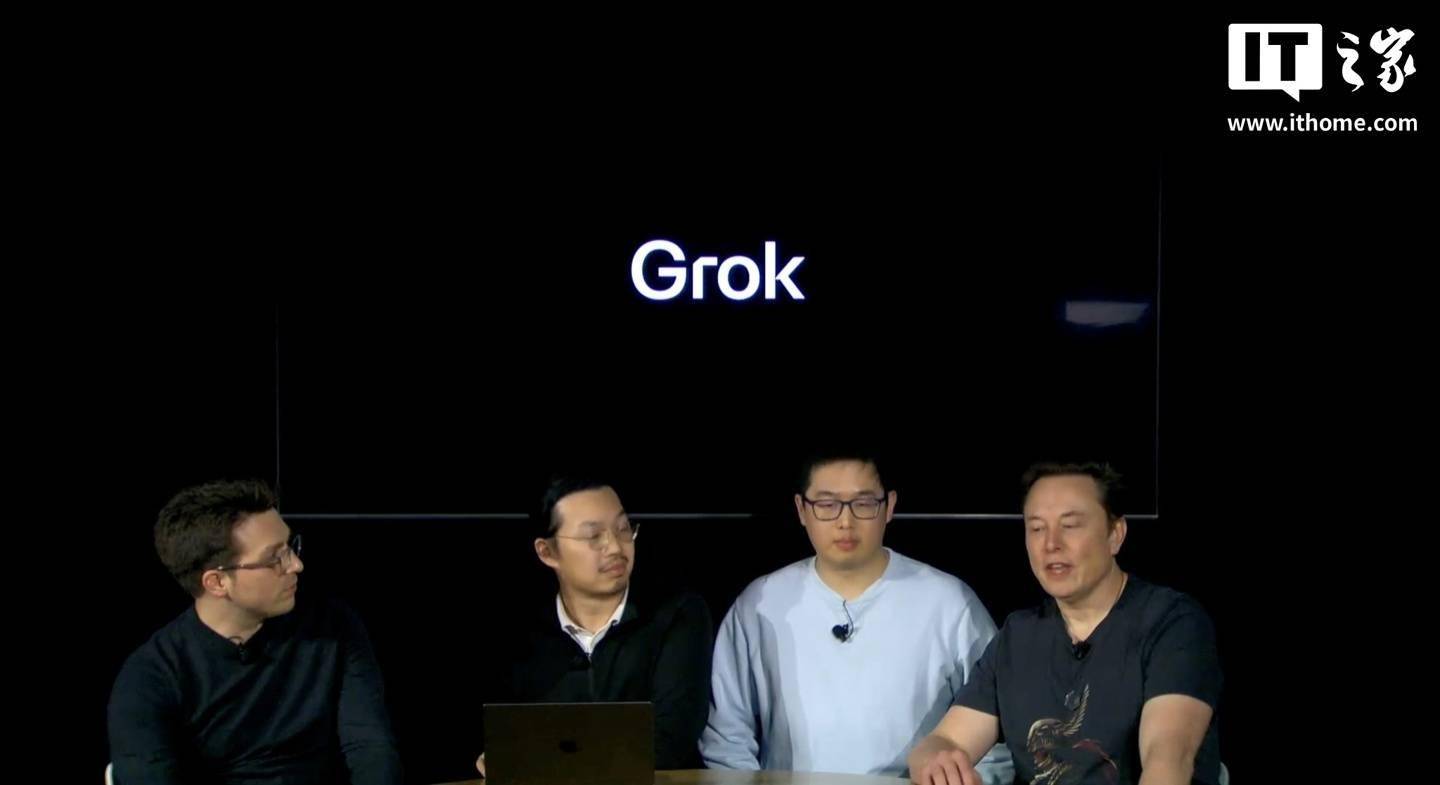
世界模型:机器能否理解现实?
3 6 Ke· 2025-10-20 13:01
Core Concept - The article discusses the concept of "world models" in artificial intelligence (AI), which are internal representations of the environment that AI systems use to evaluate predictions and decisions before executing tasks [1][4]. Group 1: Definition and Importance of World Models - World models are considered essential for building intelligent, scientific, and safe AI systems, as emphasized by leading figures in deep learning [1]. - The idea of a world model has historical roots, dating back to Kenneth Craik's 1943 proposal of a "small-scale model" in the brain that allows organisms to simulate various scenarios [2]. Group 2: Historical Context and Evolution - Early AI systems like SHRDLU demonstrated the use of world models but struggled with scalability and complexity in real-world environments [3]. - The rise of machine learning and deep learning has revitalized the concept of world models, allowing AI to build internal approximations of environments through trial and error [3]. Group 3: Current Challenges and Perspectives - Despite the potential of world models, there is still a lack of consensus among researchers regarding their definition, content, and verification methods [2]. - Current generative AI models, such as large language models (LLMs), exhibit heuristic rules but lack a coherent and unified world model, leading to inconsistencies in their outputs [4][6]. Group 4: Future Directions and Research Focus - Researchers are exploring how to develop robust and verifiable world models, which could enhance AI's reliability and interpretability [6][7]. - There are differing opinions on how to create these models, with some suggesting that sufficient multimodal training data could naturally lead to their emergence, while others advocate for entirely new architectures [7].

Karpathy 回应争议:RL 不是真的不行,Agent 还需要十年的预测其实很乐观
Founder Park· 2025-10-20 12:45
Group 1 - The core viewpoint expressed by Andrej Karpathy is that the development of Artificial General Intelligence (AGI) is still a long way off, with a timeline of approximately ten years being considered optimistic in the current hype environment [10][21][23] - Karpathy acknowledges the significant progress made in Large Language Models (LLMs) but emphasizes that there is still a considerable amount of work required to create AI that can outperform humans in any job [11][12] - He critiques the current state of LLMs, suggesting they have cognitive flaws and are overly reliant on pre-training data, which may not be a sustainable learning method [13][14] Group 2 - Karpathy expresses skepticism about the effectiveness of reinforcement learning (RL), arguing that it has a poor signal-to-noise ratio and is often misapplied [15][16] - He proposes that future learning paradigms should focus on agentic interaction rather than solely relying on RL, indicating a shift towards more effective learning mechanisms [15][16] - The concept of a "cognitive core" is introduced, suggesting that LLMs should be simplified to enhance their generalization capabilities, moving away from excessive memory reliance [19] Group 3 - Karpathy critiques the current development of autonomous agents, advocating for a more collaborative approach where LLMs assist rather than operate independently [20][21] - He believes that the next decade will be crucial for the evolution of agents, with significant improvements expected in their capabilities [21][22] - The discussion highlights the need for realistic expectations regarding the abilities of agents, warning against overestimating their current capabilities [20][21] Group 4 - Karpathy emphasizes the importance of understanding the limitations of LLMs in coding tasks, noting that they often misinterpret the context and produce suboptimal code [47][48] - He points out that while LLMs can assist in certain coding scenarios, they struggle with unique or complex implementations that deviate from common patterns [48][49] - The conversation reveals a gap between the capabilities of LLMs and the expectations for their role in software development, indicating a need for further advancements [52]

Codeforces难题不够刷?谢赛宁等造了个AI出题机,能生成原创编程题
3 6 Ke· 2025-10-20 08:15
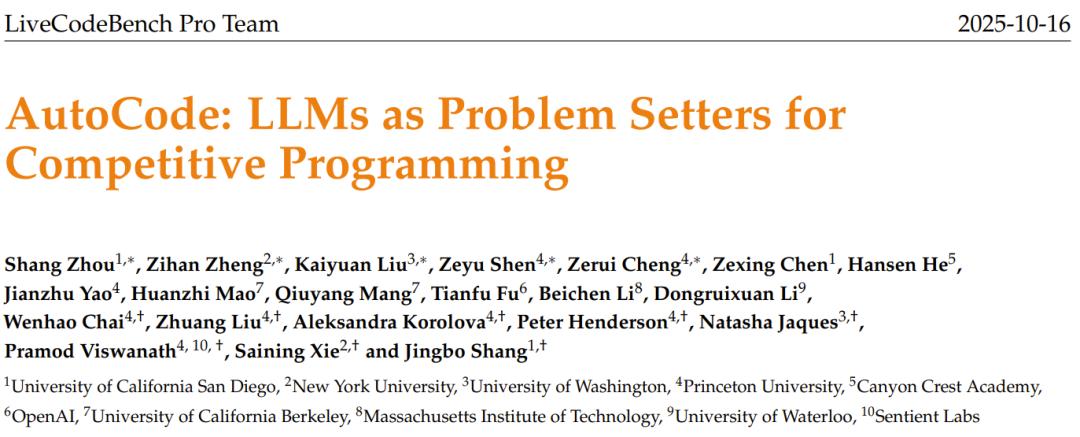
Core Insights - The article discusses the importance of training large language models (LLMs) to generate high-quality programming competition problems, emphasizing that creating problems requires deeper algorithmic understanding than merely solving them [2][3][30] - The research introduces AutoCode, a framework that automates the entire lifecycle of problem creation and evaluation for competitive programming, utilizing a closed-loop, multi-role system [3][30] Group 1: Problem Creation and Evaluation - The ability to create programming competition problems is more challenging than solving them, as it requires a profound understanding of underlying algorithm design principles and data structures [2] - Existing testing datasets for programming competitions have high false positive rates (FPR) and false negative rates (FNR), which can distort the evaluation environment [2][14] - AutoCode employs a robust Validator-Generator-Checker framework to ensure high-quality input generation and minimize errors in problem evaluation [5][8][30] Group 2: Performance Metrics - AutoCode achieved a consistency rate of 91.1% in problem evaluation, significantly higher than previous methods, which did not exceed 81.0% [17] - The framework reduced FPR to 3.7% and FNR to 14.1%, representing approximately a 50% decrease compared to state-of-the-art techniques [17][19] - In a more challenging benchmark with 720 recent Codeforces problems, AutoCode maintained a consistency of 98.7%, validating its effectiveness on modern, difficult problems [19] Group 3: Novel Problem Generation - The team developed a novel problem generation framework that utilizes a dual verification protocol to ensure correctness without human intervention [23] - The process begins with a "seed problem," which is modified to create new, often more challenging problems, with a focus on generating high-quality reference solutions [23][24] - The dual verification protocol successfully filtered out 27% of error-prone problems, increasing the accuracy of reference solutions from 86% to 94% [24][30] Group 4: Findings on LLM Capabilities - LLMs can generate solvable problems that they themselves cannot solve, indicating a limitation in their creative capabilities [27][29] - The findings suggest that LLMs excel in "knowledge recombination" rather than true originality, often creating new problems by combining existing frameworks [32] - The difficulty increase of newly generated problems is typically greater than that of the seed problems, with optimal quality observed when seed problems are of moderate difficulty [32]
万条推文“怒轰”、估值下跌, OpenAI被误导性“突破”反噬!陶哲轩:有实力,但方向错了?
AI前线· 2025-10-20 05:23
整理 | 华卫 "搬起自己的 GPT 石头砸了自己的脚。"这是 Meta 首席 AI 科学家 Yann LeCun 对 OpenAI 研究员们的最新评价。 事件起因是,此前这些研究员因 GPT-5 的一项新数学"突破"而高调庆祝,但在受到整个 AI 社区质疑后又迅速撤回了该说法。连谷歌 DeepMind 首席执 行官 Demis Hassabis 也对此提出批评,称其沟通存在疏漏。 GPT-5"突破" 被证明是一个错误 取得"突破"的消息,最早是由前微软副总裁、现 OpenAI 研究科学家 Sebastien Bubeck 放出。他在 X 上称,两位研究人员在周末借助 GPT-5 找到了 10 个埃尔德什问题(Erdős problems)的答案。埃尔德什问题是匈牙利数学家 Paul Erdős 提出的一系列数学问题的统称,其中既包含未解决的难题,也有 已解决的问题,著名案例包括 "不同距离问题"(Distinct Distances Problem)与 "偏差问题"(Discrepancy Problem)。这类问题以难度高著称,常成为 学界深入研究的对象,部分问题甚至设有现金奖励,鼓励研究者攻克。 10 ...

Codeforces难题不够刷?谢赛宁等造了个AI出题机,能生成原创编程题
机器之心· 2025-10-20 04:50
Core Insights - The article discusses the importance of training large language models (LLMs) to generate high-quality programming problems, which is crucial for advancing their capabilities towards artificial general intelligence (AGI) [1][3]. Group 1: Problem Creation and Evaluation - Creating programming competition problems requires a deeper understanding of algorithms compared to merely solving them, as competition problems have strict standards to evaluate underlying algorithm design principles [2]. - The ability to generate better problems will lead to more rigorous benchmarks for competitive programming, as existing datasets often suffer from high false positive and false negative rates [2][21]. - The AutoCode framework, developed by the LiveCodeBench Pro team, automates the entire lifecycle of creating and evaluating competitive programming problems using LLMs [3][7]. Group 2: Framework Components - The AutoCode framework consists of a Validator, Generator, and Checker, ensuring that inputs adhere to problem constraints and minimizing false negatives [8][10]. - The Generator employs diverse strategies to create a wide range of inputs, aiming to reduce false positive rates, while the Checker compares outputs against reference solutions [12][14]. - A dual verification protocol is introduced to ensure correctness without human intervention, significantly improving the quality of generated problems [29]. Group 3: Performance Metrics - The AutoCode framework achieved a consistency rate of 91.1% with a false positive rate of 3.7% and a false negative rate of 14.1%, marking a significant improvement over previous methods [21][22]. - In a more challenging benchmark with 720 recent Codeforces problems, AutoCode maintained a consistency of 98.7%, validating its effectiveness on modern, difficult problems [24]. - The framework's performance was further validated through ablation studies, confirming the effectiveness of its components [26]. Group 4: Novel Problem Generation - The team established a new problem generation framework that builds on robust test case generation, introducing a dual verification protocol to ensure correctness [29]. - LLMs can generate solvable problems that they themselves cannot solve, indicating a strength in knowledge recombination rather than original innovation [34]. - The quality of generated problems is assessed based on difficulty and the increase in difficulty compared to seed problems, providing reliable indicators of problem quality [34][38]. Group 5: Conclusion - The AutoCode framework represents a significant advancement in using LLMs as problem setters for competitive programming, achieving state-of-the-art reliability in test case generation and producing new, competition-quality problems [36]. - Despite the model's strengths in algorithmic knowledge recombination, it struggles to introduce truly novel reasoning paradigms or flawless example designs [37].

OpenAI 生意做大了,奥尔特曼口碑更差了
3 6 Ke· 2025-10-20 03:56
Core Insights - OpenAI's CEO Sam Altman faces criticism for the decision to allow adult content on ChatGPT, which will adopt a content rating system similar to the American film classification system, prioritizing safety for minors while offering more freedom to adult users [1][3][4] - The company's valuation has reached $500 billion, surpassing SpaceX, driven by aggressive infrastructure expansion strategies, including partnerships with Oracle and Nvidia for data centers and AI chips [5][6][7] - Despite the high valuation, OpenAI's revenue is projected at only $13 billion this year, with significant losses, raising concerns about its ability to generate positive cash flow before 2029 [6][8] Company Strategy - OpenAI aims to secure sufficient data center capacity through innovative financing methods, such as equity trades with suppliers like Nvidia, to support its ambitious goal of building 250GW of computing power by 2033, which could cost over $10 trillion [7][9] - The company is focused on becoming a leading personal AI subscription service provider, with current annual recurring revenue of $13 billion, primarily from ChatGPT subscriptions [8][9] Market Concerns - There are growing worries about a potential bubble in the AI sector, drawing parallels to the 1990s internet infrastructure boom, where over-investment led to significant industry losses [11][12] - Critics highlight that the rapid growth of AI infrastructure may outpace demand, leading to a concentration of returns that could eliminate many competitors [9][10] - The criticism also extends to the negative impacts of AI development on labor and environmental resources, as highlighted in the book "Empire of AI," which critiques OpenAI's operational practices [13][14][16]