
新型电力系统

Search documents
南方电网新型电力系统发展白皮书正式发布
Zhong Guo Dian Li Bao· 2025-11-01 02:53
Core Insights - The Southern Power Grid Company has officially released a white paper detailing its achievements and innovations in the construction of a new power system during the 14th Five-Year Plan period [1] Group 1: Achievements in Power System Development - The company has built the world's largest AC-DC interconnected power grid, with a cumulative electricity transmission of over 950 billion kilowatt-hours [3] - The reliability of power supply in the Guangdong-Hong Kong-Macao Greater Bay Area has reached world-class levels, with over 220,000 registered market participants, accounting for one-fourth of the national total [3] - The installed capacity of renewable energy has exceeded 257 million kilowatts, a 3.5-fold increase since 2020, establishing a clean and low-carbon supply structure [4] Group 2: Green Energy Supply and Consumption - The electricity substitution volume in the five provinces has surpassed 240 billion kilowatt-hours, with electricity accounting for 34% of total energy consumption, 5 percentage points higher than the national average [5] - Over 100,000 charging piles have been installed across urban and rural areas, achieving full coverage in the Greater Bay Area [5] - The trading volume of green electricity certificates is expected to reach 250 billion kilowatt-hours by 2025, surpassing the total of the previous three years [5] Group 3: Collaborative Development of Power Sources and Storage - The company has implemented a system-wide approach to address supply-demand matching challenges, enhancing the efficiency of green electricity across the entire production, transmission, consumption, and storage chain [6] - The installed capacity of pumped storage and new energy storage has exceeded 15 million kilowatts, with demand-side response levels reaching 7.6% [7] - The establishment of 35 new power system demonstration zones and 36 near-zero carbon demonstration zones has provided replicable models for coordinated development [8] Group 4: Technological Innovations - The company has adopted advanced technologies such as cloud computing, big data, and artificial intelligence to transform the power grid from traditional to intelligent [9] - Over 99.5% of substations are now unmanned, and the coverage of distribution automation has increased to 99.72% [9] - The company has launched the first national pilot base for artificial intelligence applications in the energy sector, promoting the development of a digital power grid [10]

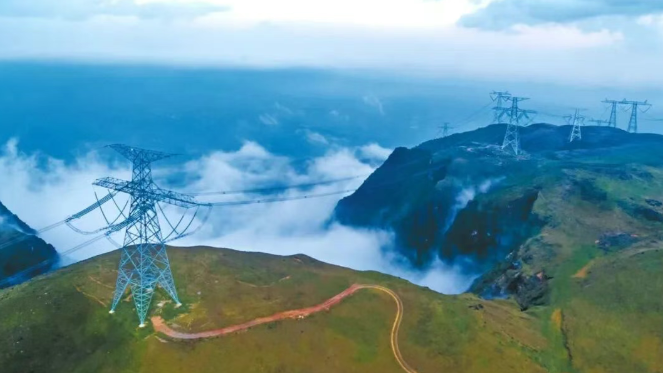
新闻发布︱深刻把握党的二十届四中全会精神 推动能源强国建设
国家能源局· 2025-11-01 01:40
Core Viewpoint - The article discusses the initiatives and measures taken by the National Energy Administration (NEA) to implement the spirit of the 20th Central Committee's Fourth Plenary Session, focusing on the development of a new energy system and the construction of an energy powerhouse during the 14th Five-Year Plan period [2][3]. Group 1: Implementation of the 14th Five-Year Plan - The NEA emphasizes the importance of learning and implementing the decisions made during the 20th Central Committee's Fourth Plenary Session as a major political task [2]. - Key tasks include establishing a clean, low-carbon, safe, and efficient new energy system and building an energy powerhouse [2][3]. - The NEA plans to conduct in-depth discussions and research on major issues related to energy development, considering both domestic and international changes [3][4]. Group 2: New Energy System Development - The new energy system will rely on non-fossil energy as the main supply, with fossil energy as a backup, and a new power system as a key support [4]. - The NEA aims to enhance the flexibility of energy resources to promote the consumption of renewable energy and improve system safety [4][5]. - The NEA will focus on both supply and demand sides to enhance the energy system's flexibility, including the development of large-scale pumped storage power stations and the promotion of virtual power plants [5][6]. Group 3: Policy and Market Mechanisms - The NEA plans to accelerate the establishment of a unified national electricity market system to facilitate the smooth flow of electricity resources across the country [6]. - There will be efforts to improve market mechanisms that allow various operators to participate, thereby enhancing the resilience of the electricity system [6]. - The NEA aims to foster new business models and improve the electricity system's capacity to accommodate and manage renewable energy [6][7]. Group 4: New Power System Construction - The NEA has developed a "1+3" work system to advance the construction of a new power system, which includes an action plan and various implementation guidelines [7]. - The NEA's action plan for 2024-2027 outlines nine major tasks to enhance the grid's capacity to accept and manage clean energy [7]. - Future efforts will focus on improving the adaptability of the new power system to high proportions of renewable energy [7].

《海南清洁能源岛新型电力系统建设实施方案》正式发布
Zhong Guo Jing Ji Wang· 2025-10-31 23:56
Core Viewpoint - The Hainan provincial government, in collaboration with the Southern Power Grid Company, has released the "Implementation Plan for the Construction of a New Power System in Hainan Clean Energy Island," aiming to establish Hainan as a leading area for new power system construction and support the province's free trade port and clean energy island initiatives by 2030 [1][2]. Group 1: Clean Energy Supply - By the end of October 2023, Hainan's installed capacity of renewable energy has exceeded 12 million kilowatts, maintaining its position as the largest power source [1]. - The province will support the development of offshore wind, solar, marine, and geothermal energy, promoting the orderly development of distributed renewable energy and the construction of system-friendly renewable energy power stations [1]. Group 2: Digital Grid Safety - By the end of this year, Hainan's 500 kV provincial digital grid project will be fully completed, enhancing the intelligent perception capabilities through the application of IoT, AI, and other digital technologies [2]. - Plans include the construction of new cross-sea transmission channels to strengthen power supply security and integrate Hainan's grid into the national unified electricity market [2]. Group 3: Green Electricity Consumption - Hainan will promote electric energy substitution projects in various sectors, including ports, airports, and electric vehicles, to enhance electrification levels across industries, transportation, commerce, and residential life [2]. - The province has linked over 4,800 charging stations through the "Hainan Charging Pile" app and mini-program, aiming to develop large-scale vehicle-to-grid (V2G) interaction projects [2]. Group 4: Efficient Power Trading - In October, clean electricity from Inner Mongolia was successfully delivered to Hainan, supporting stable power supply during the National Day and Mid-Autumn Festival holidays [3]. - Hainan will improve cross-provincial and cross-regional electricity trading mechanisms, creating a market system tailored to the new power system's development [3]. Group 5: Flexible System Regulation - Hainan will enhance its intelligent scheduling system to optimize the operation of renewable energy and improve its controllability [3]. - The province plans to accelerate the construction of pumped storage power stations and promote diversified development of new energy storage solutions [3].
三季报里的行业密码:分化中显韧性 新业务成亮点
Shang Hai Zheng Quan Bao· 2025-10-31 18:29
Core Insights - The electric equipment industry is experiencing steady growth in revenue and profit, driven by high domestic grid investment and surging overseas demand, with new growth areas like supercapacitors and energy storage emerging as key focus points [2][3][6]. Group 1: Industry Performance - The majority of electric equipment companies reported revenue and profit growth in their Q3 results, with notable examples including Pinggao Electric, which saw a revenue increase of 6.98% to 8.436 billion yuan and a net profit rise of 14.62% to 982 million yuan [3]. - Siyuan Electric achieved a significant revenue growth of 25.68% in Q3, reaching 5.33 billion yuan, and a net profit increase of 48.73% to 899 million yuan, largely supported by overseas market expansion [4]. - Huaming Equipment reported a revenue of 1.815 billion yuan, up 6.87%, and a net profit of 581 million yuan, reflecting a 17.66% increase, with a focus on expanding overseas business [5]. Group 2: Emerging Business Areas - New business segments such as energy storage and supercapacitors are becoming crucial for growth, with companies like Sungrow Power benefiting from the expanding energy storage market, which is projected to see new installations of around 130 GWh in China this year [6][7]. - Siyuan Electric is also making strides in the energy storage sector, with a projected bid volume of 2.4 GWh in 2024, placing it among the top ten in the country [6]. - The demand for supercapacitors is expected to rise significantly, with the market for related equipment projected to exceed 20 billion yuan by 2025, driven by applications in AI and data centers [7]. Group 3: Future Outlook - Industry experts anticipate sustained high growth in the electric power sector, supported by policy initiatives and the rapid development of renewable energy, with significant investments in grid infrastructure expected to continue [8]. - The construction of new power system facilities is likely to progress, with a focus on smart grids and new energy storage solutions, indicating a positive outlook for the industry [8].
三季报里的行业密码:分化中显韧性,新业务成亮点
Shang Hai Zheng Quan Bao· 2025-10-31 18:21
Core Viewpoint - The power equipment industry is experiencing steady growth in revenue and profit, driven by high domestic grid investment and surging overseas demand, with new growth areas like supercapacitors and energy storage emerging as key focus points [2] Group 1: Industry Performance - The majority of power equipment companies reported steady growth in revenue and profit, with notable examples including State Grid and Southern Grid conducting multiple rounds of equipment tenders [2][3] - The China Electricity Council reported that grid investment reached 437.8 billion yuan in the first three quarters, a year-on-year increase of 9.9% [2] - The cumulative tender amount for transmission and transformation equipment by State Grid reached 68.188 billion yuan, up 22.9% year-on-year [2] Group 2: Company Highlights - Pinggao Electric reported a revenue of 8.436 billion yuan for the first three quarters, a year-on-year increase of 6.98%, with net profit rising 14.62% [3] - Siyuan Electric achieved a revenue of 5.33 billion yuan in Q3, a 25.68% increase year-on-year, and a net profit of 899 million yuan, up 48.73% [3] - Siyuan Electric's overseas revenue reached 2.86 billion yuan in the first half, a staggering 89% increase, with overseas orders growing faster than average [3] Group 3: Emerging Business Areas - Energy storage and supercapacitors are becoming significant growth drivers for power equipment companies, with Sunshine Power predicting a domestic energy storage installation of around 130 GWh this year [5] - Siyuan Electric's energy storage bid volume is expected to reach 2.4 GWh in 2024, placing it among the top ten in the country [5] - Guodian NARI has been deeply involved in the energy storage sector, contributing to the commissioning of new energy storage plants [5] Group 4: Future Outlook - Industry experts anticipate sustained high growth in the power sector, driven by policies promoting renewable energy and the need for stable grid infrastructure [7] - Wanlian Securities suggests continued investment in new power system facilities, emphasizing smart grids and new energy storage as key areas to watch [7]





十五五”新型能源体系建设将按下“加速键
2 1 Shi Ji Jing Ji Bao Dao· 2025-10-31 13:46
Core Viewpoint - The article discusses the release of the "Suggestions" by the Central Committee of the Communist Party of China, which outlines the strategic framework for accelerating the construction of a new energy system during the 14th Five-Year Plan period, emphasizing the importance of clean, low-carbon, and efficient energy sources [1][2]. Group 1: Key Tasks and Goals - The "Suggestions" highlight the core tasks for energy development over the next five years, including the establishment of a clean, low-carbon, safe, and efficient new energy system, and the promotion of strategic emerging industries [1][2]. - The goal is to create a new energy system with a high proportion of non-fossil energy as the main supply, supported by fossil energy as a backup, and a new power system as a key support [2][3]. Group 2: Implementation Pathways - The article outlines specific pathways for constructing the new energy system, including increasing the supply ratio of renewable energy, ensuring the safe and orderly replacement of fossil energy, and building a new power system [3][4]. - The "Suggestions" emphasize the need for a coordinated approach to local consumption and external delivery of energy resources, addressing the challenges posed by the rapid development of renewable energy [4][5]. Group 3: Market Mechanisms and Innovations - The development of new energy systems requires robust hardware and flexible market mechanisms, with a focus on advancing new energy storage and smart grid technologies [6][8]. - The article notes that the new energy storage capacity in China has reached approximately 95 million kilowatts, reflecting a nearly 30-fold increase over five years, indicating significant market potential [6][7]. - The need for a unified national electricity market and differentiated pricing mechanisms is highlighted to ensure the sustainable development of renewable energy and to adapt to the complexities of the new power environment [8][9].
“十五五”新型能源体系建设将按下“加速键”
2 1 Shi Ji Jing Ji Bao Dao· 2025-10-31 13:46
Core Viewpoint - The article discusses the recent release of the "Suggestions on Formulating the 15th Five-Year Plan for National Economic and Social Development," which emphasizes accelerating the construction of a new energy system in China, aiming to establish a clean, low-carbon, safe, and efficient energy framework during the 15th Five-Year Plan period [1][2]. Group 1: Key Tasks and Goals - The "Suggestions" outline major tasks for energy development over the next five years, including the establishment of a new energy system, promoting strategic emerging industries, optimizing energy resource layouts, and ensuring energy resource security [1][2]. - The goal is to create a new energy system with a high proportion of non-fossil energy, supported by fossil energy as a backup, and to develop a new power system that is efficient and sustainable [2][3]. Group 2: New Energy System Construction - The article details six key components for constructing the new energy system, including increasing the supply ratio of renewable energy, ensuring the safe and orderly replacement of fossil energy, and building a new power system [3][4]. - Non-fossil energy has become the main source of new power supply, with 84% of new installed capacity in the past four years coming from non-fossil sources, reaching 2.23 billion kilowatts, which accounts for 60.8% of total installed capacity as of July this year [4]. Group 3: Challenges and Solutions - The rapid development of wind and solar energy has led to challenges in the coordination of generation, grid, and load, resulting in issues such as curtailment of wind and solar power [4][5]. - The "Suggestions" propose a multi-energy approach, integrating wind, solar, hydro, and nuclear energy, to enhance the utilization of renewable energy and improve the stability of power output [5][6]. Group 4: Storage and Grid Development - The article highlights the importance of developing new energy storage and smart grid technologies, with the new storage capacity reaching approximately 95 million kilowatts, growing nearly 30 times in five years [6][8]. - The storage sector is expected to experience explosive growth, with a focus on both short-term and long-term storage technologies to support the new power system [7][8]. Group 5: Market Mechanisms and Pricing - The "Suggestions" call for the establishment of market and pricing mechanisms that adapt to the new energy system, emphasizing the need for a unified national electricity market [9][10]. - Companies will face challenges in a fluctuating electricity pricing environment, requiring them to adjust their energy strategies to manage costs and risks effectively [10][11].
国网莆田供电公司:柔直技术助力湄洲岛绿电消纳 打造海岛零碳智慧能源样板
Zhong Guo Neng Yuan Wang· 2025-10-31 12:43
Core Insights - Meizhou Island has a subtropical marine monsoon climate with abundant renewable energy sources, including wind, solar, and ocean energy, and has established 23 photovoltaic power generation projects with a total installed capacity of approximately 1,300 kW [1] Group 1: Renewable Energy Integration - The electrification rate on Meizhou Island has reached 95%, with green electricity accounting for 73.58% of the total energy supply [2] - The integration of wind and solar power into the grid presents challenges due to their intermittent and random nature, making it crucial to ensure the stability of the power system [2] - The implementation of a multi-terminal interconnected low-voltage flexible microgrid project has improved the transmission efficiency of renewable energy [2][3] Group 2: Microgrid Technology - The project enhances traditional public transformers by adding flexible interconnection devices, transforming five AC supply transformers into a mixed AC/DC low-voltage flexible DC system [3] - The microgrid can directly connect to the "Rainbow" photovoltaic system at the ferry terminal, allowing for local supply to DC charging stations [3] - The project reduces the first-level AC/DC conversion losses, decreasing overall transmission losses of renewable energy to 56% [3] Group 3: System Resilience and Innovation - The microgrid's regional autonomy and flexible allocation can mitigate the over-reliance on the large grid for renewable energy consumption [3] - The company is accelerating the construction of a new power system on Meizhou Island, including the first island-level optical fiber differential self-healing distribution network in the country [3] - This innovative network meets the needs of distributed power sources, microgrids, and flexible loads, reducing fault recovery time from seconds to milliseconds [3][5]
电力设备及新能源行业双周报(2025/10/17-2025/10/30):“十五五”规划建议发布大力支持新能源行业发展-20251031
Dongguan Securities· 2025-10-31 11:34
Investment Rating - The report maintains an "Overweight" rating for the power equipment and new energy industry [2] Core Viewpoints - The "14th Five-Year Plan" emphasizes strong support for the development of the new energy industry, aiming to eliminate barriers to the construction of a unified national market and accelerate the establishment of a new energy system [4][35] - The report highlights the recent performance of the power equipment sector, which has outperformed the CSI 300 index, with a year-to-date increase of 46.13% [11][12] - The report suggests focusing on leading companies benefiting from the robust development of new energy storage technologies [40] Market Review - As of October 30, 2025, the power equipment sector has risen by 4.66% over the past two weeks, outperforming the CSI 300 index by 2.68 percentage points, ranking 3rd among 31 sectors [11] - The wind power equipment sector decreased by 0.30%, while the photovoltaic equipment sector increased by 5.86% [19] - The top three performing stocks in the power equipment sector over the past two weeks were Fangyuan Co., Tongguan Copper Foil, and Penghui Energy, with increases of 46.23%, 36.88%, and 35.39% respectively [20] Valuation and Industry Data - As of October 30, 2025, the price-to-earnings (PE) ratio for the power equipment sector is 34.61 times, with sub-sectors such as motors and batteries showing higher PE ratios of 62.48 and 35.09 respectively [24] - The report provides detailed valuation metrics for various sub-sectors, indicating significant variations in PE ratios compared to historical averages [24] Industry News - The report discusses the recent publication of the "14th Five-Year Plan" which aims to enhance the supply of new energy and promote the safe and orderly replacement of fossil energy [35] - It notes that in September 2025, the national electricity market transaction volume reached 573.2 billion kWh, a year-on-year increase of 9.8% [35] - The report also highlights the competitive bidding for new energy pricing mechanisms in Chongqing, with a total scale of 4.86 billion kWh for wind and photovoltaic projects [36] Company Announcements - The report includes financial performance updates from several companies, such as Guodian NARI and Mingyang Smart Energy, detailing their net profit changes for the first three quarters of 2025 [38]



广州发展(600098.SH):电力集团拟参与禄丰公司35%股权竞拍
Ge Long Hui· 2025-10-31 10:03
Core Viewpoint - Guangzhou Development (600098.SH) aims to accelerate the construction of a new power system and optimize its industrial structure by expanding into new areas of energy business, particularly focusing on increasing the proportion of renewable and green low-carbon energy [1] Group 1 - The company’s wholly-owned subsidiary has approved the acquisition of a 35% stake in China Electric Power Construction (Lufeng) Pumped Storage Development Co., Ltd. [1] - The acquisition will be conducted at a value not exceeding 53.7999 million yuan based on the asset appraisal report [1]
