
人机共生

Search documents
智联招聘李强:技术创新从加分项变成企业必选项,54%百强雇主已将AI大规模应用于多个业务板块
Xin Lang Ke Ji· 2025-10-31 06:56
Core Insights - The "2025 China Annual Best Employers Top 100 List" was officially released by Zhaopin at the HBR Management Annual Conference 2025, highlighting trends in employment relationships [1] Group 1: Employer Characteristics - 42% of the top 100 employers are recognized as "high-tech enterprises" and "demonstration enterprises for technological innovation," which is 25 percentage points higher than non-top employers, indicating a significant advantage in technological innovation [3] - 54% of the top employers have applied AI extensively across multiple business sectors, surpassing non-best employers by 39 percentage points, demonstrating a direct conversion of technological advantages into employer brand advantages [3] - The application rate of AI in human resources among the top employers is as high as 96%, with AI involved in all aspects of HR processes, making HR a leader in "human-machine symbiotic organizational transformation" [3] Group 2: Human-Machine Collaboration - 92% of the top employers hold a positive and open attitude towards human-machine collaboration, showcasing various concrete "symbiotic" scenarios [4] - The concept of "symbiosis" is categorized into three levels: 1. Efficiency symbiosis, where humans direct AI to perform repetitive tasks, freeing up employee time for more critical work [4] 2. Innovation symbiosis, with 85% of top employers using AI in product development and 73% in marketing, emphasizing collaboration where humans define problems and AI explores solutions [4] 3. Decision-making symbiosis, where AI provides multiple options through data and automation, while humans make the final judgment based on experience and values [4]


新闻分析丨警惕“AI依赖” 人机共生时代如何保持独立思考
Xin Hua Wang· 2025-10-28 05:40
Core Insights - The article emphasizes the potential risks of over-reliance on AI, particularly in the context of independent thinking and cognitive abilities [1][2][3] Group 1: AI Dependency and Cognitive Impact - AI applications, while enhancing productivity, may lead to "AI brain fog," diminishing motivation and cognitive abilities over time [2][3] - Research from MIT indicates that long-term use of AI tools can reduce neural connections in the brain, affecting language and behavior [2] - Studies suggest that generative AI can weaken critical thinking skills, leading to a dependency that undermines problem-solving capabilities [2][3] Group 2: Psychological and Social Implications - The use of AI can result in a "hollowing out" of cognitive demands, where humans engage in mere mechanical execution of tasks, leading to psychological detachment and loss of motivation [3] - The increasing trust in AI stems from its specialized capabilities and user-friendly interactions, which can create a psychological dependency [4] - Lack of basic AI literacy among users contributes to a tendency to "blindly trust" AI outputs, raising concerns about the potential for misinformation and bias in critical areas like law and healthcare [4] Group 3: Future of Human-AI Interaction - The future workforce may split into "AI passengers," who rely entirely on AI, and "AI drivers," who actively manage and verify AI outputs [7] - Establishing an "AI buffer zone" is recommended, where individuals first generate their own responses before consulting AI, fostering independent thought [7] - Critical thinking should be applied to AI-generated content, questioning whether the alignment of AI responses with personal views is due to influence or training [7]
人机共生驱动高等教育变革
Xin Hua Ri Bao· 2025-10-24 22:16
Core Insights - The article emphasizes that the global higher education sector is entering the "Smart Education Era," marking a shift where artificial intelligence (AI) evolves from a supportive tool to a core driver of educational paradigm reconstruction [1] - AI is fundamentally transforming knowledge production, learning forms, and governance logic in education, pushing the sector from "digitalization" to "intelligentization" [1] Group 1: Educational Transformation - The focus of education is shifting from knowledge transmission to capability cultivation, addressing the core question of "what kind of individuals to cultivate" [2] - AI is breaking traditional educational logic, promoting a return to the essence of education, which is to stimulate individual potential and shape independent personalities [2] - Higher education must cultivate four core competencies in students: problem-posing thinking ability, AI utilization ability, human-machine co-creation practical ability, and critical thinking ability [2] Group 2: Mode Transition - The traditional "teacher-student" relationship is evolving into a "teacher-machine-student" triadic interaction, leading to systemic changes in the educational ecosystem [3] - AI enables personalized education, allowing for precise understanding of individual strengths and learning preferences, thus facilitating tailored learning plans [3] - The boundaries of education are expanding, allowing for learning beyond traditional constraints, promoting educational equity, and creating a more interconnected learning ecosystem [3] Group 3: Teacher Role Evolution - Teachers must redefine their roles from knowledge authorities to technology and humanities integrators, balancing digital skills with humanistic values [4] - Teachers should act as value shapers, guiding students to resist the influence of algorithm-driven information and fostering ethical judgment [4] - The role of teachers includes being educational guides, helping students establish clear learning goals and develop systematic knowledge frameworks [5] Group 4: Challenges and Opportunities - The rapid development of AI presents unprecedented opportunities for higher education, but it also comes with challenges that require careful navigation [6] - Higher education must clarify the boundaries and norms of technology application while actively promoting the integration of AI into teaching and research practices [6]
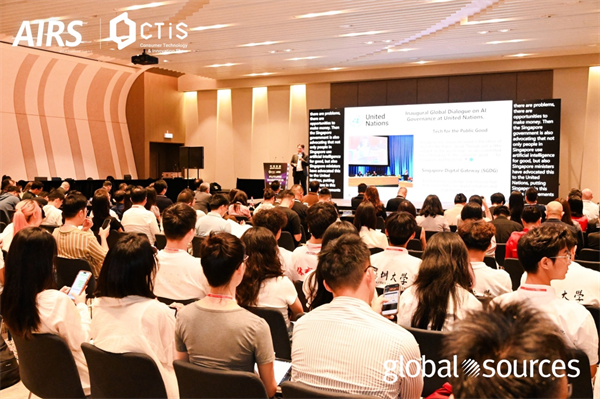
引领AI时代变革,百思特受邀出席香港AIRS峰会,共探组织与商业化新路径
Sou Hu Wang· 2025-10-22 02:49
Group 1 - The AIRS Summit is taking place in Hong Kong from October 18 to 21, 2025, focusing on cutting-edge fields such as AI large models, AI chips, humanoid robots, and AI+XR, aiming to build an integrated smart technology ecosystem [1] - The summit gathers experts and industry leaders to explore the latest trends in AI and robotics, emphasizing the commercial application, technological breakthroughs, and cross-industry transformations [3] Group 2 - Joseph Smith, Vice President of Best Management Consulting Group, discusses the commercialization path of AI, emphasizing that it should start from real customer needs rather than just technology, and suggests integrating AI with core products to create a sustainable competitive advantage [6] - Smith highlights the importance of choosing between B2B and B2C markets based on a company's strengths, noting that B2B markets are more stable while B2C markets are more volatile [6] - He also points out the dual-track trend in the current AI ecosystem, with OpenAI promoting a closed ecosystem and Meta opting for open-source, suggesting that companies should maintain an open mindset and continuously innovate [6] Group 3 - Zhang Zhenghua, Chairman of Best Management Consulting Group, presents on organizational transformation and talent strategy in the AI era, arguing that AI should be seen as an intelligent partner rather than a mere replacement [8] - He predicts that AI will drive organizational changes starting in 2026 and will have a disruptive impact on management systems and business models by around 2030, urging companies to prepare in advance [8] - Zhang outlines three core paths for building a symbiotic organization: transforming from process-oriented to business-oriented structures, reconstructing operations with an "AI first" principle, and fostering a culture that allows for rapid iteration and adaptation to AI advancements [10] Group 4 - A white paper titled "AI Empowerment, Intelligent Shaping of the Future - Transformation and Outlook of the Robotics Industry" is released, analyzing technological breakthroughs, market demand changes, and commercialization challenges in the robotics industry [13] - The white paper aims to provide strategic guidance and practical support for companies in the robotics industry, facilitating the transition from technological exploration to efficient implementation [13] Group 5 - The AIRS Summit serves as a high-end communication platform for the global robotics field, with Best Management Consulting Group positioning itself as a strategic partner for enterprise intelligent transformation [14] - The insights shared by Zhang and Smith resonate widely with attendees, reflecting the company's leading position in strategic planning, technology implementation, and organizational transformation in the robotics sector [14]
从秀场到工厂,人形机器人落地为何这么快?
Hu Xiu· 2025-10-21 03:16
技术突破、政策加持、资本涌入,共同推动人形机器人从实验室迈向生活,2025年迎来"人机共生"的量 产新纪元。 ...

首程控股“机器人科技体验店+融石广场”两大重磅项目黄金周正式开业
Xin Lang Cai Jing· 2025-10-02 04:29
Core Insights - The opening of the first "Robot Technology Experience Store" in Beijing marks a significant milestone for the company, showcasing over 200 robot products across various applications [1] - The launch of the "融石广场" commercial complex aims to create the first robot-friendly commercial space in China, leveraging the company's comprehensive layout in the robotics and sci-fi industries [1] - Interactive performances featuring robots during the National Day holiday are expected to enhance customer engagement and promote the new consumption era of human-robot coexistence [1] Company Developments - The "Robot Technology Experience Store" is the first of its kind in the country, featuring products from leading companies and innovative startups in the robotics sector [1] - The "融石广场" is in trial operation, indicating the company's commitment to expanding its commercial footprint in the robotics industry [1] - The introduction of the original companion robot IP "RoRo" signifies the company's focus on innovative consumer experiences [1] Industry Trends - The establishment of a robot-centric commercial space reflects a growing trend towards integrating robotics into everyday consumer experiences [1] - The variety of robot applications showcased, including companionship, education, and entertainment, highlights the expanding market potential for robotics in various sectors [1] - The interactive nature of the store and performances suggests a shift towards more engaging and immersive retail environments in the robotics industry [1]
智联招聘发布《报告》:“数字同事”正深度融入职场
Zhong Guo Jing Ji Wang· 2025-09-24 03:57
Group 1 - The widespread application of AI tools is transforming traditional work methods, leading to a shift from "human-machine collaboration" to "human-machine symbiosis" in the workplace [1] - 78.2% of employees utilize AI in their work weekly, indicating that AI has become an indispensable tool in the workplace [1] - General-purpose AI tools dominate the market, accounting for 47.4%, while vertical AI applications like DingTalk and Feishu represent 28.1% [1] Group 2 - 71.7% of employees recognize the efficiency improvements brought by AI tools, which automate low-value tasks and streamline information processing [2] - 33.6% of employees have learned to actively collaborate with AI, marking a transition to a higher level of "human-machine co-creation" [2] - 64.9% of employees feel empowered to complete tasks that previously required human colleagues' assistance with AI support [2] Group 3 - 63.3% of employees prefer to make independent judgments when AI suggestions differ from human colleagues, indicating a balanced approach to AI reliance [3] - 31.7% of companies in first-tier cities provide AI-related training, highlighting a disparity in digital economy development between urban areas [3] - The report suggests that companies need to reassess their AI investment strategies to foster a more inclusive and adaptable work environment [3]
激发文化原创力
Jing Ji Ri Bao· 2025-09-23 22:15
Group 1 - The core theme of the event is how to leverage technology to enhance cultural originality, as discussed at the 2025 Beijing Cultural Forum [1] - Over 150 guests from 18 countries and regions participated in discussions on new trends and phenomena in artistic development, focusing on the concept of "cultural originality" and pathways for its enhancement through technology [1] - High-ranking officials emphasized the importance of maintaining emotional vitality and spiritual autonomy in an increasingly automated society, suggesting that technology should be transformed into human knowledge and experience [1] Group 2 - The "Comprehensive Chinese Painting Series" is a significant national cultural project aimed at systematically collecting, organizing, publishing, and researching ancient Chinese paintings using advanced technology, creating an unprecedented "cultural treasure trove" [2] - AI's role in cultural forums was highlighted, with discussions on human-machine collaboration as a pathway to originality, emphasizing the potential of AI in creative processes [2] - The establishment of a new cultural highland in Beijing, driven by artificial intelligence, is seen as a key development in the global innovation landscape, positioning the city as a center for AI technology and cultural integration [3] Group 3 - The integration of science and technology is viewed as a powerful engine for cultural innovation, reshaping the landscape of artistic creation and fostering a fertile ground for literary and artistic endeavors [3] - There is an expectation for technology to facilitate cultural exchanges and storytelling, promoting mutual understanding between Chinese and global civilizations [3]
宇树机器人遭“围殴”能迅速起身;百度搜索上线免费学习机模式
Mei Ri Jing Ji Xin Wen· 2025-09-22 23:24
Group 1 - Yushu Technology showcased the latest training results of its humanoid robot G1, demonstrating its ability to recover quickly after being knocked down by multiple adult men [1] - The performance of G1 marks a significant breakthrough in the humanoid robot field, indicating substantial progress in both hardware and software, laying a solid foundation for future applications in complex environments [1] Group 2 - Baidu Search launched the AI Companion Learning mode, which includes features like "AI Precision Practice" and "AI Speaking," transforming ordinary mobile phones into learning devices [2] - The introduction of AI Companion is seen as a positive start towards educational equity, although it is acknowledged that a single product cannot fully address the complexities of this issue [2] Group 3 - According to a report by Zhilian Recruitment, nearly 80% of surveyed professionals use AI tools weekly, indicating the formation of a human-machine collaborative work environment [3] - 70% of professionals reported increased work efficiency with AI assistance, and 56.1% expressed willingness to pay for AI services, with 24.1% of executives willing to pay over 200 yuan monthly for advanced AI services [3]
宇树机器人遭“围殴”能迅速起身;百度搜索上线免费学习机模式|数智早参
Mei Ri Jing Ji Xin Wen· 2025-09-22 23:19
Group 1 - The humanoid robot G1 developed by Yushu Technology demonstrated significant advancements in both hardware and software, showcasing its ability to recover quickly from various attacks and perform continuous flips, marking a breakthrough in the humanoid robotics field [1] Group 2 - Baidu has launched an AI-assisted learning mode in its search engine, featuring functions like "AI Precision Practice" and "AI Speaking," transforming ordinary mobile phones into learning devices, which aims to enhance educational equity [2] Group 3 - According to a report by Zhilian Recruitment, nearly 80% of surveyed professionals use AI tools weekly, indicating a growing trend of human-machine collaboration in the workplace, with 47.4% frequently using general conversational AI [3] - The report also highlights that 70% of professionals have improved their work efficiency with AI assistance, and 56.1% are willing to pay for AI services, with 24.1% of executives willing to spend over 200 yuan monthly on advanced AI services [3]
