
太空计算

Search documents
“无处不在的算力”,在杭州两场大会上感受AI算力新趋势
Huan Qiu Shi Bao· 2025-09-25 22:32
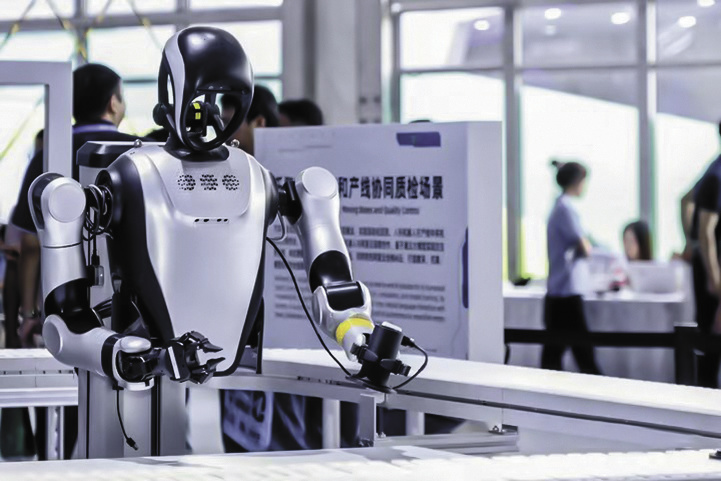
Core Insights - The importance of computing power as a key support for artificial intelligence (AI) development is increasingly recognized, highlighted during the 2025 Yunqi Conference and the Fourth Global Digital Trade Expo in Hangzhou [1][2] Group 1: Computing Power Developments - The Yunqi Conference featured a dedicated computing power exhibition, showcasing major international AI computing service providers like NVIDIA, AMD, and Intel [2] - NVIDIA demonstrated its Omniverse and Cosmos platforms, which allow for virtual training and testing of humanoid robots, emphasizing cost savings and strategy adjustments [2] - AMD showcased its latest processors and graphics cards, highlighting collaborations with Alibaba to enhance performance and reduce costs in cloud server applications [4] Group 2: China's Computing Power Landscape - As of June 2023, China has a total of 10.85 million standard racks in use for computing power centers, with an intelligent computing power scale of 788 EFLOPS and storage exceeding 1,680 exabytes, marking a 40% increase from 2023 [5] - A report predicts that by 2030, China's total computing power scale will exceed 2,500 EFLOPS, with an annual growth rate of over 35% [7] - China's computing power development aligns with national conditions, showing strengths in computing power optical networks, energy coordination, and cluster technology [7][8] Group 3: Innovations and Future Directions - The "Three-Body Computing Constellation," launched in May, aims to create a space-based intelligent computing infrastructure with a total computing power of 1 EOPS [9] - The "Olive Leaf Plan" initiative seeks to leverage this space computing infrastructure for global scientific research and applications, addressing resource imbalances [9] - High-performance computing is accelerating the application of advanced technologies like large models and embodied intelligence, with robots being tested in various industrial scenarios [11][12]


中国团队重新定义“星际之门”!全球首个太空计算星座已实现常态化商用
量子位· 2025-09-25 11:42
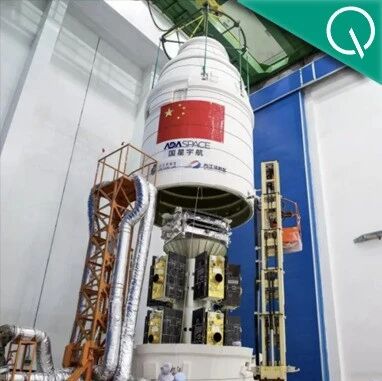
Core Insights - The article discusses the successful deployment of traffic recognition models on satellites, marking a significant advancement in the use of space-based AI for urban traffic analysis [4][15][22] - This achievement indicates the transition of space computing from experimental to operational, establishing a new paradigm for AI deployment in the industry [15][23] Group 1: Space-Based AI Capabilities - The complete process of image collection, model inference, and structured result transmission was executed in orbit, demonstrating the feasibility of on-satellite computation [2][10] - The task was supported by the space computing constellation launched by Guoxing Aerospace, which is now in regular commercial operation [5][6] - The system can support models with billions of parameters and has full-process capabilities including image acquisition, model inference, task scheduling, and communication [12][13] Group 2: Commercialization and Operationalization - The successful execution of the task by the team from Jiadu Technology signifies the first commercial use of the global space computing constellation [9][15] - Guoxing Aerospace has become the first company globally to provide regular satellite-level space computing services, marking a milestone in the AI field [15][22] - The "Star Computing" plan aims to establish a green, low-carbon space computing infrastructure with a total computing power exceeding 100,000 PetaFLOPS [12] Group 3: Implications for AI Deployment - The ability to run AI models in orbit allows for a new dimension in data processing, reducing response times significantly by processing data at the source [21][22] - This shift not only changes the physical location of computation but also adjusts the system architecture, enabling faster decision-making for industries requiring rapid assessments [20][22] - The initiative redefines space as an integral part of intelligent systems, transforming it from merely a data source to an active processing environment [19][23]

中科星图:上半年营收净利双增 三大板块协同发展
Zhong Zheng Wang· 2025-08-29 09:37
Core Insights - Zhongke Xingtou reported revenue and profit growth in the first half of 2025, driven by strong R&D investment and stable expansion of core business [1] Financial Performance - In the first half of 2025, Zhongke Xingtou achieved operating revenue of 1.348 billion yuan, a year-on-year increase of 22.03% [2] - The operating profit reached 124 million yuan, up 42.67% year-on-year, while net profit attributable to shareholders was 78.1018 million yuan, growing by 22.82% [2] Business Segments - The geographic information segment generated 1.091 billion yuan in revenue, accounting for 80.93% of total revenue, with a year-on-year growth of 6.60% [2] - The commercial aerospace segment reported revenue of 193 million yuan, representing 14.34% of total revenue, with a focus on the entire industry chain [3] - The low-altitude economy segment achieved revenue of 63.8139 million yuan, making up 4.73% of total revenue, marking a significant breakthrough [4] R&D Investment - Zhongke Xingtou's R&D investment totaled 317 million yuan, a 38% increase year-on-year, representing 23.52% of total revenue, up 2.72 percentage points [5] - The company has made significant technological advancements, including core technology breakthroughs in low-altitude airspace management and satellite internet [5] Intellectual Property - During the reporting period, Zhongke Xingtou applied for 316 new intellectual property rights and obtained 299, including 30 invention patents and 234 software copyrights [6] Data and Computing Capabilities - The company enhanced its data and computing capabilities by integrating over 350 satellite data resources and establishing a digital earth supercomputer [7] - The satellite internet industry in China is expected to enter a rapid development phase, with significant growth anticipated in satellite manufacturing and services [7] Industry Outlook - The Chinese aerospace information industry is projected to exceed 2.8 trillion yuan by 2025 and approach 10 trillion yuan by 2030, driven by the interdependence of low-altitude economy, commercial aerospace, and geographic information sectors [7]

商业航天收入翻倍背后,中科星图低空经济业务实现从0到1突破
2 1 Shi Ji Jing Ji Bao Dao· 2025-08-29 09:25
Core Viewpoint - Zhongke Xingtou has significantly expanded its low-altitude and commercial aerospace sectors in the first half of 2025, resulting in notable revenue growth, but increased costs have negatively impacted its net profit margins [1][2]. Financial Performance - In the first half of 2025, Zhongke Xingtou reported revenue of 1.35 billion yuan, a year-on-year increase of 22.0% [1]. - The net profit attributable to shareholders was 78.1 million yuan, up 22.8% year-on-year [1]. - However, the non-recurring net profit showed a loss of 22.62 million yuan, a significant decline of 582.2% year-on-year, attributed to increased costs from R&D and market expansion in low-altitude and commercial aerospace sectors [1]. Low-altitude Economy Development - The low-altitude economy has been recognized as a strategic emerging industry, with over 60 provinces and cities in China releasing action plans for its development [2]. - Zhongke Xingtou has implemented a strategy involving "1 low-altitude cloud + 2 low-altitude experimental fields + N regional demonstrations + M industry application scenarios," achieving a breakthrough in low-altitude economic business [2]. Low-altitude Economic Revenue - The low-altitude economy segment generated revenue of 64 million yuan, accounting for 4.73% of total revenue [3]. - The company is building digital infrastructure for low-altitude management, enhancing flight management services, and developing a comprehensive product system covering planning, safety, supervision, and application [3]. Commercial Aerospace Growth - The commercial aerospace segment achieved revenue of 193 million yuan, representing a year-on-year growth of 137.51%, and accounted for 14.34% of total revenue [4]. - The business encompasses satellite constellation construction, aerospace equipment manufacturing, and satellite application services [4]. Strategic Initiatives - Zhongke Xingtou plans to collaborate with Zhongke Shuguang to develop an inclusive space computing network, integrating various computing resources for real-time data processing [5]. - The company aims to enhance its aerospace measurement and control business, establishing a comprehensive ground station network for effective space traffic management [5]. - The strategic plan emphasizes strengthening core capabilities in geographic information and expanding into commercial aerospace and low-altitude economy sectors, aiming for a comprehensive service capability across the entire value chain [5].
AI走向太空,王坚院士最新演讲,提出“三体计算星座”全球协作倡议
3 6 Ke· 2025-08-14 01:57
Core Viewpoint - The speech emphasizes that artificial intelligence (AI) is not a replacement for human intelligence but rather an extension of human creativity, serving as a superior tool for various scientific fields [1][5][7]. Group 1: AI and Computing - Computing is described as a fundamental science, comparable to physics and life sciences, rather than merely a tool [5][9]. - The relationship between computing and AI is likened to two sides of a coin, highlighting the historical context provided by Turing's early work on intelligent machines [4][5]. - AI is positioned as a foundational discipline, akin to mathematics, which will support advancements across various scientific and technological fields [17][18]. Group 2: Applications in Geoscience - The GeoGPT project, initiated to address the needs of geoscientists, aims to facilitate data sharing and collaboration in earth sciences [11][14]. - AI has significantly advanced the classification of fossil sponges, expanding known types from a few dozen to over 3,000, showcasing its potential in paleontology [13]. - An open AI architecture has been developed to enhance scientific discovery, allowing users to choose from various foundational models and ensuring governance around safety and privacy [14][15]. Group 3: Global Initiatives and Challenges - The "Three Body Computing Constellation" initiative aims to extend AI and computing capabilities into space, addressing global challenges such as climate change and natural disasters [17][25]. - The concept of "space computing" is introduced, where data processing occurs in space rather than being sent back to Earth, enhancing efficiency in satellite operations [23][28]. - Collaboration among numerous organizations is encouraged to build a network of satellites capable of real-time communication and computation for observing astronomical phenomena [27][28].

“星算”计划梁溪星座发布会暨国星宇航太空计算生态大会成功举办
Zheng Quan Ri Bao Wang· 2025-07-31 14:12
Group 1 - The "XingSuan" plan's Liangxi constellation was officially launched at a conference in Wuxi, Jiangsu Province, marking a significant step in the development of space computing infrastructure [1] - The Liangxi constellation will consist of 12 intelligent computing satellites, achieving a total computing power of 20P once fully deployed, making it the strongest space computing constellation [1] - The first satellite group of the "XingSuan" plan was successfully launched on May 14, becoming the world's first space computing constellation, with further satellite groups in rapid development [1] Group 2 - The commercial operation of the "XingSuan" plan is progressing quickly, with the first space computing user delivery ceremony held during the conference [2] - The China Academy of Space Technology's intelligent detection algorithm model has been successfully deployed and executed in real-time on the AI payload developed by Guoxing Aerospace [2] - The "XingSuan" plan aims to accelerate the development of the space computing ecosystem by enhancing satellite networking and promoting the large-scale deployment of space computing technology [2]
太空计算卫星星座专家会
2025-07-16 06:13
Summary of Conference Call on the First Space Computing Satellite Constellation Company and Industry Involved - The conference call discusses the launch of the world's first space computing satellite constellation by Hai Xing Guang Nian, a company involved in satellite technology and space computing. Core Points and Arguments 1. **Introduction of the Space Computing Constellation** The call introduces the successful launch of a groundbreaking space computing satellite constellation, which is expected to revolutionize the industry by integrating computing capabilities into space operations [1][2][3]. 2. **Concept of 3T Computing Constellation** The 3T computing constellation aims to establish a series of computing capabilities in space, moving ground-based design centers into the sky. This is seen as a disruptive innovation compared to traditional satellite systems [2][3]. 3. **Integration of Satellite Functions** The constellation will integrate various satellite functions, such as communication and navigation, into a unified platform, enhancing operational efficiency through laser connections between satellites [3][4]. 4. **Data Processing and Efficiency** The new system allows for real-time data processing and transmission, significantly improving the efficiency of high-resolution satellite data collection and reducing the need for extensive ground infrastructure [4][5]. 5. **Strategic Importance** The constellation is positioned as a strategic asset in the context of global competition, particularly between China and the US, with references to similar advancements by US companies like Black Sky [5][6]. 6. **Non-Military Focus** The constellation is primarily designed for non-military applications, focusing on scientific research and civilian use, although there is potential for future military applications [6][7]. 7. **Future Expansion Plans** The company plans to launch 1,000 satellites within five years, with an initial target of 100 operational satellites by 2027, indicating a significant scale of operations [12][13]. 8. **Support from Government and Institutions** The project has backing from the Zhejiang provincial government and various research institutions, which is crucial for its funding and operational success [13][14]. 9. **Commercialization Strategy** The constellation aims to develop a commercial model that allows for profit-sharing among various stakeholders involved in its development, indicating a shift towards a more business-oriented approach [19][20]. 10. **Technical Considerations** The call addresses technical challenges, such as thermal management in space, which have been resolved through innovative design solutions [20][21]. Other Important but Possibly Overlooked Content 1. **Comparison with US Initiatives** The discussion includes comparisons with US satellite initiatives, particularly the Starlink project, highlighting differences in focus and application between the two countries [16][17]. 2. **Potential for Ground Data Centers** The constellation may not completely replace ground data centers but will enhance their capabilities by integrating satellite data processing, suggesting a hybrid model for future operations [22][23]. 3. **Open Collaboration Model** The project promotes an open collaboration model, allowing various companies to participate in the development and operation of the satellite constellation, which could foster innovation and efficiency [24][25]. 4. **Future of Satellite Operations** The call emphasizes the need for continuous iteration and improvement of satellite technology, with a focus on long-term sustainability and operational effectiveness [13][14].
万亿空天信息产业新基建,“太空计算”卡位战打响
Tai Mei Ti A P P· 2025-07-15 01:23
Core Insights - The concept of "low-altitude economy" has gained recognition and is becoming a new engine for economic growth, supported by various industries and government policies [2][4] - The rapid development of the aerospace information industry in China has transitioned from following to leading in certain areas, driven by supportive policies [2][4] - The collaboration between Zhongke Xingtu and Zhongke Shuguang aims to innovate and develop advanced computing technologies in the space sector [2][6] Industry Development - The low-altitude economy is recognized as a strategic emerging industry for high-quality national development, with significant market demand and economic potential despite existing challenges [4][5] - The implementation of regulations and plans, such as the "Interim Regulations on the Flight Management of Unmanned Aerial Vehicles" and the "General Aviation Equipment Innovation Application Implementation Plan (2024-2030)," is expected to bolster the low-altitude economy [4][5] - The aerospace information technology sector, including commercial space and low-altitude economy, is projected to become a trillion-dollar industry [4][5] Technological Innovation - The shift from "ground-based computing" to "space-based computing" is essential for processing the increasing data generated in aerospace applications [6][8] - The establishment of a "space computing network" will enhance global internet connectivity and support various applications such as remote work and digital education [8][9] - The collaboration between Zhongke Xingtu and Zhongke Shuguang focuses on developing space computing technologies and addressing challenges related to cost and environmental conditions in space [6][9]


美股加密货币概念股普涨,Circle涨超8%;云锋金融拟进军Web3、数字货币等领域,扩大稳定币投资——《投资早参》
Mei Ri Jing Ji Xin Wen· 2025-07-15 00:02
Market News - US stock indices closed higher, with the Dow Jones up 0.2%, Nasdaq up 0.27%, and S&P 500 up 0.14% [1] - Cryptocurrency stocks saw gains, with Circle rising over 8%; major tech stocks had mixed results, with Tesla and Netflix up over 1% while Apple fell over 1% [1] - International precious metals futures generally declined, with COMEX gold futures down 0.35% at $3352.10 per ounce and COMEX silver futures down 1.4% at $38.41 per ounce [1] - International oil prices fell, with WTI crude down 2.37% at $66.83 per barrel and Brent crude down 1.82% at $69.08 per barrel [1] - European stock indices closed mixed, with Germany's DAX down 0.39% and France's CAC40 down 0.27% [1] Industry Insights - Cloudfin announced a strategic focus on Web3, real-world assets, digital currencies, and AI, increasing investments in stablecoins [2] - The Shanghai State-owned Assets Supervision and Administration Commission emphasized the importance of innovation and research in digital currencies and stablecoins [2] - Stablecoins are positioned as a bridge between centralized and decentralized finance, playing a crucial role in the global payment system [2] - The humanoid robot industry is expected to see significant demand, with projections of 2 million units by 2030, marking a critical breakthrough phase [3] - The "2025 Space Information Conference" highlighted a collaboration between Zhongke Xingtou and Zhongke Shuguang to advance "space computing" technology [4][5] - The space computing network aims to create a global integrated computing network, enhancing capabilities in AI and edge computing markets [5] Company Updates - Hangang Co. announced that a shareholder plans to reduce holdings by up to 67.54 million shares, representing no more than 2% of total shares [6] - Yuanxin Industrial's actual controller plans to reduce holdings by up to 1.53% of total shares [6] - Xuantai Pharmaceutical's shareholder intends to reduce holdings by up to 1.5441% of total shares [6] - Longi Green Energy expects a net loss of 2.4 to 2.8 billion yuan for the first half of 2025, with a significant reduction in losses compared to the previous year [6] - Ganfeng Lithium anticipates a net loss of 300 million to 550 million yuan for the first half of 2025, despite increased sales in its battery segment [7] - Huanghe Xuanfeng expects a net loss of 285 million yuan for the first half of 2025 due to a competitive market and weak demand [7]
中科曙光携手中科星图 发力太空算网普惠全球
Jing Ji Wang· 2025-07-11 10:07
Core Viewpoint - The collaboration between Zhongke Shuguang and Zhongke Xingtou aims to innovate and apply "space computing" technology, enhancing capabilities in various fields such as disaster monitoring, low-altitude tourism, and commercial aerospace [1][2][3]. Group 1: Collaboration Details - Zhongke Shuguang and Zhongke Xingtou signed a cooperation agreement to develop space computing technologies, focusing on space chip research and the construction of an open and inclusive space computing network [1][4]. - The partnership is expected to create a unified cloud computing system that integrates ground and space computing systems over the next three to five years [1][3]. Group 2: Industry Context - The space sector is entering a significant digital and intelligent transformation phase, leading to the emergence of new technologies and scenarios, with "space computing" being a crucial component [2][3]. - Satellites are essential for tasks such as remote sensing, satellite internet, and disaster warning, necessitating a deep integration of "space and computing" to build a new innovation chain [2][3]. Group 3: Technological Development - The two companies plan to jointly develop high-performance, low-power, and highly reliable specialized chips for space computing applications, creating a comprehensive innovation chain from chips to applications [4][5]. - Zhongke Xingtou will provide the requirements for space computing scenarios, while Zhongke Shuguang will leverage its advanced computing expertise to lead chip and system architecture design [4]. Group 4: Broader Impact - The collaboration aims to release the potential of "space computing" by promoting partnerships across various industries, creating replicable and scalable application benchmarks in areas like emergency rescue, meteorology, and agriculture [5][6]. - The initiative will also extend to emerging fields such as low-altitude airspace management and electromagnetic sensing, enhancing capabilities in communication, environmental monitoring, and smart transportation [6][7]. Group 5: Future Prospects - The open and inclusive "space computing network" is expected to expand application scenarios, providing high-speed internet access to remote areas and enabling real-time processing of remote sensing data [7]. - The network will support real-time positioning and path optimization for autonomous vehicles and drones, as well as offer low-cost computing services to commercial aerospace enterprises, further driving the commercialization of the aerospace industry [7].