
物联网(IoT)

Search documents
刚刚,沪指时隔8个月重返3500点!
证券时报· 2025-07-09 04:11
Market Overview - The A-share market experienced an overall upward trend, with major indices rising, particularly the Shanghai Composite Index, which returned to the 3500-point level for the first time in 8 months, reaching a peak of 3512.67 points during the session [1][4][3] - The ChiNext Index also saw gains, surpassing the 2200-point mark with an increase of over 1% [6] Sector Performance - Among the sectors classified by Shenwan, the top-performing sectors included Media, Electric Equipment, Food & Beverage, Agriculture, Forestry, Animal Husbandry & Fishery, and Beauty & Personal Care, while sectors such as Non-ferrous Metals, Steel, and Basic Chemicals lagged behind [8] Concept Stocks - The short drama game concept sector led the market with a rise of over 2%, with stocks like Huanrui Century and Zhangyue Technology hitting the daily limit [9] Individual Stocks - Guotou Zhonglu has seen its stock hit the daily limit for three consecutive trading days, as the company announced plans to acquire 100% of China Electronics Engineering Design Institute's shares through a share issuance [10][11] - In the Hong Kong market, Hillstone Technology surged over 12%, driven by positive sales data for its camera modules, which showed a year-on-year increase of 4.1% [12][15] Futures Market - In the domestic futures market, the main contract for polysilicon surged, with an intraday increase of over 6%. The price approached 39,800 yuan/ton, marking a nearly 30% increase over the past 10 trading days [2][17][16]


【保险学术前沿】文章推荐:2025年现代保险业面临的十大挑战
13个精算师· 2025-07-03 08:56
Core Viewpoint - The modern insurance industry is facing significant challenges due to technological disruption, regulatory changes, demographic shifts, and evolving customer demands [2][3][33]. Group 1: Key Challenges - **Disruptive Technology and Insurtech**: The rapid development of technology is reshaping the insurance industry through Insurtech startups that offer personalized and efficient solutions using AI, big data, and IoT. For instance, Lemonade utilizes AI-driven chatbots for instant policy issuance and claims processing [5][6]. - **Cybersecurity Risks**: As the world becomes more digital, insurance companies face increasing threats from cyberattacks, which can lead to data breaches and significant financial losses. For example, CNA Financial paid $40 million in ransom due to a ransomware attack in 2021 [7][8]. - **Changing Regulatory Environment**: The insurance industry operates in a complex regulatory landscape, with varying requirements across countries. Adapting to these changes poses a significant challenge, as seen with the EU's GDPR impacting data processing policies [9][10]. - **Demographic Changes and Aging Population**: The aging population in developed countries presents unique challenges, increasing demand for retirement planning and health insurance products. The UN predicts that by 2050, the global population aged 65 and older will double to 1.5 billion [11][14]. - **Climate Change and Catastrophic Events**: The frequency and intensity of natural disasters are rising, leading to increased claims and higher premiums in affected areas. For instance, California wildfires in 2018 resulted in over $12 billion in insurance losses [15][17]. - **Disintermediation and Distribution Channel Changes**: The rise of digital channels and direct-to-consumer models is diminishing the role of traditional intermediaries. Research shows that 43% of consumers prefer to buy insurance directly from companies [18][19]. - **Rising Healthcare Costs**: Medical inflation and increasing healthcare costs challenge health insurers to balance comprehensive coverage with affordability. The WHO forecasts global healthcare spending to reach $10.6 trillion by 2030 [20][23]. - **Low-Interest Rate Environment**: Prolonged low-interest rates affect investment returns for insurance companies, complicating their ability to meet long-term obligations. The global average interest rate has decreased from 2.85% in 2007 to 2.1% in 2023 [24][26]. - **Talent Attraction and Retention**: The insurance industry faces a talent shortage, particularly in technology and digital transformation. A survey indicates that 56% of insurance professionals are aged 45 and above, highlighting the need for younger, tech-savvy talent [27][29]. - **Consumer Expectations and Experience**: In the digital age, consumers expect seamless and personalized experiences from insurance companies. For example, Progressive's Snapshot program uses telematics to offer personalized auto insurance based on driving behavior [30][31]. Group 2: Conclusion - To successfully navigate these challenges, insurance companies must embrace innovation, collaborate with Insurtech firms, invest in cybersecurity, and cultivate a workforce capable of thriving in a digital environment. By adapting to these changes, the insurance industry can continue to play a crucial role in protecting individuals and businesses from future uncertainties [33].

强烈反对!加拿大政府命令海康威视加拿大有限公司停止在加运营
仪器信息网· 2025-07-01 08:21
Core Viewpoint - The Canadian government's decision to order Hikvision Canada Ltd. to cease operations is seen as a significant infringement on the legitimate rights of Chinese enterprises and disrupts normal economic and trade cooperation between China and Canada [1][2][3]. Summary by Sections Canadian Government's Action - The Canadian government has mandated Hikvision Canada to stop its operations under the pretext of "national security," continuing a trend of Western countries targeting Chinese tech firms without providing clear evidence for their claims [2]. Response and Attitude of the Chinese Government - The Chinese Embassy in Canada has expressed strong opposition to Canada's actions, criticizing the broad interpretation of national security and the discriminatory practices against Chinese companies, emphasizing the commitment to protect the legitimate rights of Chinese enterprises [3]. Hikvision's Response - Hikvision has not publicly disclosed specific strategies in response to the situation but may consider legal avenues to protect its rights and assess the impact on its business to formulate future market adjustment plans [4]. International Community's Attention and Impact - The incident has drawn international attention to China-Canada economic relations, with many viewing Canada's actions as detrimental to healthy trade cooperation and potentially negatively affecting other Chinese companies looking to operate in Canada [5]. Future of China-Canada Economic Relations - The event casts a shadow over normal economic cooperation between China and Canada, with China urging Canada to rectify its actions. Continued unreasonable policies from Canada could lead to further tensions in bilateral economic relations [6]. Hikvision's Position and Influence in Overseas Markets - Hikvision is the world's largest supplier of video surveillance equipment, holding approximately 30% of the global market share as of 2023, and has operations in over 150 countries, with overseas revenue accounting for about 30%-40% of total revenue [8]. Extensive Overseas Market Layout - Hikvision has subsidiaries in major regions including Europe, Southeast Asia, and North America, serving a diverse clientele from government agencies to small businesses, and has significant technological capabilities in AI and IoT [9]. Participation in International Standard Setting - Hikvision is a member of several international organizations and has participated in setting international standards for video surveillance and data security, facing market access restrictions in countries like the U.S. and Canada due to the broad application of "national security" concepts [10].


当无人机遇到AI智能体:多领域自主空中智能和无人机智能体综述
具身智能之心· 2025-06-30 12:17
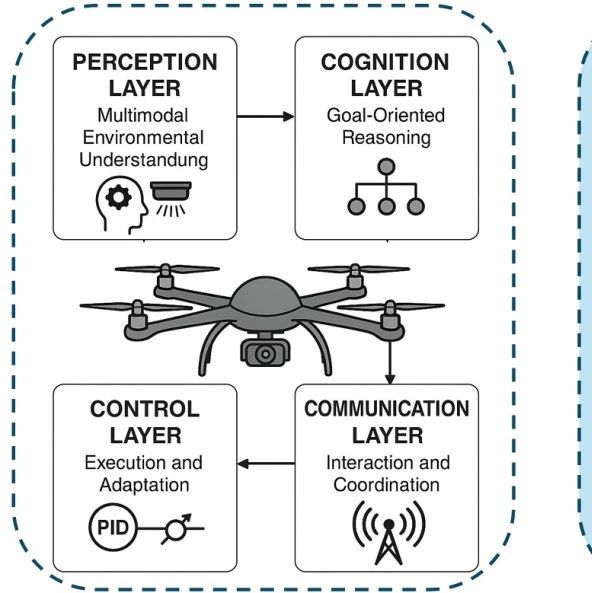
Core Insights - The article discusses the evolution of Unmanned Aerial Vehicles (UAVs) into Agentic UAVs, which are characterized by autonomous reasoning, multimodal perception, and reflective control, marking a significant shift from traditional automation platforms [5][6][11]. Research Background - The motivation for this research stems from the rapid development of UAVs from remote-controlled platforms to complex autonomous agents, driven by advancements in artificial intelligence (AI) [6][7]. - The increasing demand for autonomy, adaptability, and interpretability in UAV operations across various sectors such as agriculture, logistics, environmental monitoring, and public safety is highlighted [6][7]. Definition and Architecture of Agentic UAVs - Agentic UAVs are defined as a new class of autonomous aerial systems with cognitive capabilities, situational adaptability, and goal-directed behavior, contrasting with traditional UAVs that operate based on predefined instructions [11][12]. - The architecture of Agentic UAVs consists of four core layers: perception, cognition, control, and communication, enabling autonomous sensing, reasoning, action, and interaction [12][13]. Enabling Technologies - Key technologies enabling the development of Agentic UAVs include: - **Perception Layer**: Utilizes a suite of sensors (RGB cameras, LiDAR, thermal sensors) for real-time semantic understanding of the environment [13][14]. - **Cognition Layer**: Acts as the decision-making core, employing techniques like reinforcement learning and probabilistic modeling for adaptive control strategies [13][14]. - **Control Layer**: Converts planned actions into specific flight trajectories and commands [13][14]. - **Communication Layer**: Facilitates data exchange and task coordination among UAVs and other systems [13][14]. Applications of Agentic UAVs - **Precision Agriculture**: Agentic UAVs are transforming precision agriculture by autonomously identifying crop health issues and optimizing pesticide application through real-time data analysis [17][18]. - **Disaster Response and Search and Rescue**: These UAVs excel in dynamic environments, providing real-time adaptability and autonomous task reconfiguration during disaster scenarios [20][21]. - **Environmental Monitoring**: Agentic UAVs serve as intelligent, mobile environmental sentinels, capable of monitoring rapidly changing ecosystems with high spatial and temporal resolution [22][23]. - **Urban Infrastructure Inspection**: They offer a transformative approach to infrastructure inspections, enabling real-time damage detection and adaptive task planning [24]. - **Logistics and Smart Delivery**: Agentic UAVs are emerging as intelligent aerial couriers, capable of executing complex delivery tasks with minimal supervision [25][26]. Challenges and Limitations - Despite the transformative potential of Agentic UAVs, their widespread application faces challenges related to technical constraints, regulatory hurdles, and cognitive dimensions [43].
Marvell,主导定制芯片市场
半导体芯闻· 2025-06-20 10:02
Core Insights - Marvell is rapidly emerging as a strong player in the application-specific integrated circuit (ASIC) market, planning to collaborate with TSMC on advanced processes below 3nm [1][2] - TSMC holds over 60% market share in the foundry market and is targeting the emerging application-specific semiconductor manufacturing market driven by AI growth [1] - Application-specific semiconductors are designed for specific functions, offering lower costs, reduced power consumption, and less overall investment compared to general-purpose GPUs, making them attractive in AI data centers, automotive, and IoT markets [1] Group 1 - Marvell's next-generation AI application-specific chips will utilize TSMC's 3nm and 2nm processes, with production of 3nm chips already underway [2] - The company aims to enhance performance through silicon photonics technology, which can increase data transmission speeds by over ten times [2] - Marvell's revenue reached $5.76 billion last year, with AI-related revenue exceeding $1.5 billion, expected to surpass $2.5 billion this year [2] Group 2 - TSMC currently provides over 70% of the production foundry for Broadcom's chips and is increasing collaboration with Marvell to capture the growing application-specific semiconductor market [3] - The application-specific semiconductor market was valued at approximately $20.29 billion last year and is projected to grow to $32.84 billion by 2031 [3] - Marvell has launched data center chips manufactured using TSMC's 3nm process and plans to expand collaboration to include 2nm processes [3] Group 3 - TSMC's global foundry market share reached 67.6% in Q1 this year, significantly outpacing competitors, while Samsung's market share was only 7.7% [4] - Samsung is also collaborating with Broadcom and Marvell on advanced processes but needs to improve yield and performance to enhance its competitive edge [4]



号称“全球最小”Linux电脑:40mm×35mm大小,却能跑Ubuntu、连蓝牙、还有显示屏!
猿大侠· 2025-06-19 04:36
Core Viewpoint - The article discusses the emergence of the Quantum Mini, touted as the world's smallest Linux computer, which has sparked interest due to its compact size and functionality [3][10]. Group 1: Product Specifications - The Quantum Mini measures only 40mm × 35mm, making it smaller than a standard U.S. passport photo [3]. - It is powered by an Allwinner H3 quad-core Cortex-A7 processor, ARM Mali-400 MP2 GPU, and 512MB LPDDR3 RAM [4]. - The device features a mini IPS screen with good readability and runs Ubuntu 16.04.6 LTS via a micro SD card [4][8]. Group 2: Functional Capabilities - The Quantum Mini supports onboard Wi-Fi and Bluetooth, includes an MPU6050 motion sensor, and has a built-in microphone [6]. - It is equipped with four physical buttons for various functions and two USB 2.0 ports for additional connectivity [6]. - The device can be powered via USB or a 5V battery, making it versatile for different applications [6]. Group 3: Potential Applications - The Quantum Mini is suitable for various applications, including Internet of Things (IoT), edge AI (tinyML), and robotics [10]. - The development team has focused on power management and system optimization to ensure effective use of the compact device [10]. - The device's design opens up new possibilities for smart terminal design, wearable devices, and ultra-lightweight edge computing scenarios [11].

Powerfleet, Inc.(AIOT) - 2025 Q4 - Earnings Call Transcript
2025-06-16 13:32
Financial Data and Key Metrics Changes - Total revenue for Q4 reached $104 million, representing a 40% year-over-year growth [34] - Adjusted EBITDA increased by 80% to $20 million compared to the prior year [34] - Annual revenue grew from $135 million in FY 2024 to $362.5 million in FY 2025, nearly tripling [63] Business Line Data and Key Metrics Changes - SaaS revenue now constitutes over 75% of ongoing revenue, with a significant increase in subscribers from 700,000 to 2.8 million [8] - Adjusted EBITDA surged from $7 million in FY 2024 to $71 million in FY 2025, reflecting a tenfold increase [63] - Cross-sell revenue increased by 96% year-over-year, indicating strong customer engagement with the Unity platform [26] Market Data and Key Metrics Changes - The company signed contracts with over 600 new mid-sized and large customers across various industries [23] - AI video deployments increased by 52% within the largest indirect channel partner in the US [27] - The company is seeing strong performance in North America, Europe, and Australasia, with consistent momentum across key segments [25] Company Strategy and Development Direction - The company is focused on revenue expansion through cross-sell and upsell strategies, with a strong emphasis on the Unity platform [20] - A deliberate M&A strategy has been implemented to enhance growth and operational efficiency [9] - The company aims to achieve approximately $430 million in revenue for FY 2026, targeting a 20% total revenue growth [64] Management's Comments on Operating Environment and Future Outlook - Management expressed optimism about the pipeline and sales execution, despite some macroeconomic challenges affecting CapEx budgets [85] - The company is implementing third-party financing options to assist customers with capital expenditures [89] - Management anticipates organic momentum to accelerate in the second half of FY 2026 as the pipeline from indirect channel partnerships grows [67] Other Important Information - The company achieved $16 million in adjusted EBITDA synergies ahead of schedule, demonstrating effective integration while driving growth [15] - PowerFleet was recognized as the number one global leader in platform solutions and innovation by ABI Research [31] - The company is targeting $18 million in annualized cost savings in FY 2026, with over 50% already in execution [78] Q&A Session Summary Question: Can you reconcile the positive outlook with the macro environment and extended sales cycles? - Management remains positive due to credible wins and strong pipeline execution, although some customers are delaying CapEx decisions [85][86] Question: What metrics are being used to gauge pipeline growth and telco relationships? - Management confirmed ongoing growth in the pipeline and clarified that new North American and European telco relationships are being developed [91][92]

267.3亿美元!半导体晶圆市场势头正盛
半导体芯闻· 2025-06-12 10:04
Core Viewpoint - The semiconductor wafer market is experiencing strong growth, with a market value of $17.57 billion in 2023, projected to reach $26.73 billion by 2032, driven by rapid technological innovation, expanding consumer electronics applications, and increased investment in advanced manufacturing processes [1]. Group 1: Technological Advancements - Continuous advancements in microelectronics and nanotechnology are benefiting the semiconductor wafer market, as the demand for faster, more efficient, and compact electronic devices increases [2]. - Innovations in wafer manufacturing technologies, such as extreme ultraviolet (EUV) lithography and 3D stacking, are enhancing production efficiency and chip performance, promoting long-term market growth [2]. - The transition from traditional 200mm wafers to 300mm wafers, along with exploratory developments in 450mm wafers, reflects the industry's pursuit of scalability and higher yields, directly enhancing profitability and market expansion [2]. Group 2: Expanding Consumer Electronics Applications - The growing demand for smart devices, including smartphones, tablets, wearables, and smart home appliances, is a major driver of the semiconductor wafer market [3]. - The proliferation of 5G technology, artificial intelligence (AI), and the Internet of Things (IoT) is increasing the integration of advanced chips in various devices, leading to a rising demand for high-quality wafers [3]. - Silicon wafers remain the cornerstone of chip manufacturing due to their cost-effectiveness and versatility, while compound semiconductor wafers like gallium arsenide (GaAs) and silicon carbide (SiC) are gaining popularity in high-frequency and high-power applications [3]. Group 3: Automotive Industry as a Key Driver - The increasing adoption of electric vehicles (EVs) and autonomous driving technologies is creating significant new opportunities for the semiconductor wafer market [4]. - Modern vehicles require a variety of semiconductor components, from sensors and microcontrollers to power management systems and infotainment units [4]. - The automotive industry's focus on electrification and advanced driver-assistance systems (ADAS) is driving demand for energy-efficient and heat-resistant wafers, with wide bandgap materials like SiC and GaN becoming more prevalent in EV powertrains, inverters, and charging systems [4]. Group 4: Regional Leadership in Production and Demand - The Asia-Pacific region continues to dominate the semiconductor wafer market, holding the largest share of global production and consumption [5]. - Countries and regions such as mainland China, Taiwan, South Korea, and Japan host some of the world's leading semiconductor manufacturers and foundries [5]. - Government-supported initiatives, a robust manufacturing ecosystem, and strategic investments in R&D are solidifying the region's position as a global semiconductor wafer production hub [5]. Group 5: Strategic Investments and Collaborations - Strategic partnerships, mergers and acquisitions, and capacity expansions are crucial in shaping the future of the semiconductor wafer market [6]. - Leading manufacturers are investing in next-generation manufacturing facilities (also known as "fabs") to meet growing demand and mitigate supply chain risks [6]. - Collaborations between wafer manufacturers and end-user industries are fostering innovation in wafer materials, design, and processing technologies, driving market growth [6]. Group 6: Outlook for Continued Innovation - The semiconductor wafer market has a bright outlook characterized by technological convergence, diverse demand, and geopolitical strategies aimed at enhancing supply chain resilience [7]. - The ongoing digital transformation across various industries ensures that the reliance on high-performance semiconductor wafers remains an integral part of innovation [7]. - The broad applications of semiconductor wafers, from consumer electronics and automotive to industrial automation and telecommunications, guarantee sustained market growth through 2032 [7].
刚刚!新思科技高管亲述“断供”始末:详解美国EDA出口管制内情 (附全文翻译)
是说芯语· 2025-06-06 10:18
Core Viewpoint - The recent export controls imposed by the U.S. government on the EDA industry have significant implications for Synopsys Inc., particularly affecting its operations and revenue in China, which previously experienced a growth rate of approximately 25% but has now seen a decline of 28% in the most recent quarter [4][9]. Group 1: Impact of Export Controls - The U.S. Department of Commerce issued a "stop and notify" letter to Synopsys, requiring the company to cease sales and shipments of software, hardware, and chips to China, with existing customer software licenses expiring within 355 days [2][6]. - The export controls have been described as unusual due to the lack of a customary consultation period, which typically ranges from 4 to 12 weeks, leaving companies to react post-factum [3][4]. - The export restrictions have led to a significant operational challenge, as existing customers can use their software until their licenses expire, but will not receive any updates or support during that time [6][23]. Group 2: Industry Response and Collaboration - The EDA industry has shown rare unity in response to the government regulations, with legal and government relations teams from various companies collaborating to navigate the complexities of the new rules [3][4]. - The historical context of U.S. restrictions on technology exports has evolved from targeting specific companies to broader technology restrictions, impacting advanced nodes crucial for AI and high-performance computing [4][17]. Group 3: Financial Implications and Market Dynamics - The revenue structure of Synopsys is heavily reliant on advanced nodes, which are more profitable compared to older technology nodes, making the impact of the export controls particularly severe [4][5]. - Despite the challenges, the company is exploring opportunities in automotive, IoT, and industrial applications, although these markets do not match the revenue potential of the AI sector [5][6]. - The uncertainty surrounding the export controls has raised questions about the future of Synopsys's planned acquisition of Ansys, as the company aims to maintain access to the Chinese market, which is critical for growth [9][20]. Group 4: Operational Challenges - The company faces difficulties in adjusting operational expenditures in response to declining revenues, as fixed costs related to R&D and core tool development remain unchanged despite reduced sales [6][22]. - The ambiguity of the export controls has led to numerous unresolved questions regarding their scope and applicability, complicating compliance efforts [6][25]. Group 5: Future Outlook - The company is actively seeking clarification from the U.S. government regarding the specifics of the export controls, including whether they apply to subsidiaries of Chinese companies located in other countries [6][25]. - The potential for a resolution through trade negotiations remains a possibility, with the company expressing a desire to retain access to the growing Chinese market [9][20].


200块的音箱,1000亿的生意
远川研究所· 2025-06-04 12:42
Core Viewpoint - The article discusses the evolution and current state of the smart speaker market in China, highlighting how Xiaomi has leveraged its smart speaker to drive significant growth in its IoT business, despite the decline in smart speaker sales [4][6][14]. Group 1: Smart Speaker Market Dynamics - The smart speaker market experienced explosive growth in 2017, with major players like Alibaba, Xiaomi, and Baidu entering the space, but has since seen a sharp decline in sales, with market size halved by 2024 compared to its peak [4][6]. - Xiaomi, despite being the market leader, faces challenges as the overall quality of low-priced smart speakers fails to meet consumer expectations, leading to a stagnation in the smart speaker segment [6][12]. Group 2: IoT Business Growth - Xiaomi's IoT business generated 104.1 billion yuan in revenue in 2024, nearly half of its mobile business revenue of 191.8 billion yuan, and three times that of its automotive business [6][12]. - The integration of smart speakers as a gateway for IoT devices has significantly increased the number of connected devices on Xiaomi's platform, from 150 million in 2018 to 900 million in 2024, driving substantial revenue growth [12][14]. Group 3: Channel Strategy and Retail Expansion - Xiaomi's strategy to enhance its offline presence has been crucial, with the number of retail stores growing from 10,000 in 2021 to 16,000 by March 2023, allowing for better product discovery and sales of IoT products [20][24]. - The shift in retail strategy from high-density coverage to attracting consumers with differentiated product offerings has been pivotal in Xiaomi's success in the IoT space [24][28]. Group 4: Product Development and Consumer Engagement - Xiaomi has adapted its product strategy to include non-essential consumer goods, which are better suited for offline discovery, thus expanding its IoT product line beyond traditional necessities [22][28]. - The company has successfully reduced the cost of IoT modules, making it easier for various home appliances to integrate into the smart home ecosystem, further driving the adoption of IoT products [12][10].

