脑机接口技术

Search documents
脑机接口技术已进入“临床价值验证与早期产业化”的关键期
Zhong Guo Jing Ji Wang· 2026-01-09 06:15
Core Viewpoint - Brain-computer interface (BCI) technology is a critical area at the intersection of life sciences and information technology, with significant global competition and potential applications in medical fields, particularly in disease prevention, diagnosis, treatment, and management [1] Group 1: Current Applications and Progress - BCI technology is primarily applied in clinical settings for the rehabilitation of motor and speech functions, with motor function recovery being the most advanced area [2] - Notable examples include Neuralink's successful implantation in over ten patients and the clinical validation of products like Synchron's Stentrode and Onward Medical's ARC-BCI [2] - In speech function, the "Beijing Brain No. 1" system has made significant progress in decoding speech for patients with severe speech disorders due to conditions like ALS [2] Group 2: Technology Maturity and Challenges - The current stage of BCI technology is characterized as a critical period for clinical value verification and early industrialization, facing both unprecedented policy support and intense international competition [3] - Key evaluation metrics include safety and reliability, effectiveness and stability, and usability, with ongoing challenges in long-term safety, performance stability in real-life scenarios, and maintenance issues [4] Group 3: Technical Challenges and Breakthrough Directions - Major technical challenges include balancing high-resolution signal acquisition with low invasiveness, and developing systems that ensure low power consumption while maintaining real-time performance [5][6] - The need for "plug-and-play" capabilities in decoding algorithms and addressing individual variability and time drift are also critical areas for future breakthroughs [6] Group 4: Barriers to Large-Scale Clinical Application - Key barriers to large-scale clinical application include the need for rigorous clinical trials to establish safety and efficacy, the development of reliable manufacturing processes, and the establishment of ethical and legal frameworks [7] - Predictions suggest that semi-invasive BCIs may take 1-2 years for approval in rehabilitation applications, while invasive BCIs may require around 5 years [7] Group 5: Future Development Possibilities - Future applications of BCI technology are expected to extend beyond motor rehabilitation to include speech function restoration and treatment for severe neurological disorders, with aspirations for merging biological intelligence with artificial intelligence to enhance human capabilities [8]
马斯克量产预告 脑机接口迎商业化元年?
Sou Hu Cai Jing· 2026-01-09 01:31
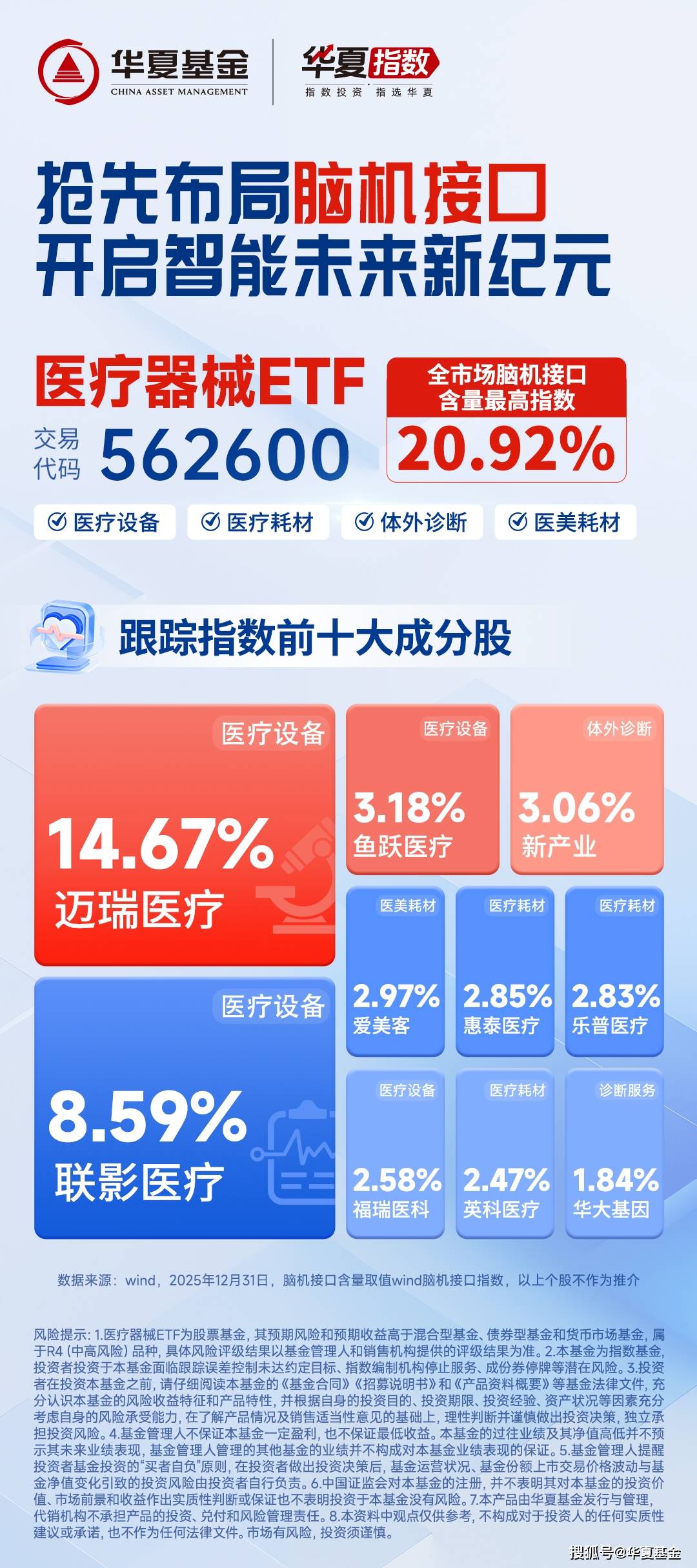
Core Viewpoint - Elon Musk's Neuralink plans to start mass production of brain-machine interfaces by 2026, marking a significant step towards the commercialization of this technology [2] Industry Developments - The brain-machine interface sector in China is accelerating, with the country becoming the second to enter clinical trials for invasive brain-machine interfaces after the United States [2] - In 2025, there were 24 financing events in the domestic brain-machine interface field, a 30% year-on-year increase [3] - Hubei Province has set a price for invasive brain-machine interface medical services at approximately 6,552 yuan, indicating a move towards making this technology more accessible [3] Technology and Market Segmentation - Brain-machine interfaces serve as a bridge between the brain and external devices, with three main technological approaches: invasive, non-invasive, and semi-invasive [4][5] - The largest market segment for brain-machine interfaces is currently in healthcare, accounting for over 56% of applications, particularly for neurological diseases like epilepsy and Parkinson's [6] - McKinsey predicts that the global market for medical applications of brain-machine interfaces could reach $40 billion by 2030 and $145 billion by 2040 [6] Investment Opportunities - While the brain-machine interface sector shows promise, most companies are still far from profitability, with significant time needed for medical applications to gain approval [7] - Instead of focusing on individual companies, it may be more prudent to consider the broader medical device industry, particularly through medical device ETFs that encompass leading firms in this space [8]

心玮医疗20260108
2026-01-08 16:02
Summary of New Wei Medical Conference Call Company Overview - New Wei Medical focuses on interventional brain-machine interface technology, utilizing a minimally invasive approach through the jugular vein to access brain vessels for signal collection, differentiating itself from invasive technologies like those developed by Musk's company [2][5] Key Points and Arguments - **Product Development Timeline**: New Wei Medical plans to complete type testing and animal experiments by mid-2026, initiate clinical enrollment in the second half of 2026, and expects to finish all patient enrollment and submit for regulatory approval by 2028 [2][3][4] - **Independent Subsidiary**: The company has established an independent subsidiary named "Wei Brain Technology" to focus on the development of interventional brain-machine interfaces and related investment collaborations, with plans to expand the team to 20 members [2][9] - **Technical Specifications**: The interventional brain-machine interface device uses a nickel-titanium alloy stent with electrode configurations of 4 or 16 channels, with signal processing chips placed subcutaneously beneath the clavicle [2][8] - **Animal Testing Results**: Animal experiments have shown stable signal strength, with a small-tailed sheep experiment maintaining 97%-98% signal strength after 18 months, validating the feasibility of the technology [2][11] Competitive Landscape - **Comparison with Musk's Technology**: New Wei Medical's approach avoids the need for craniotomy, which is required by Musk's invasive technology. This results in lower surgical risks and higher patient acceptance. The company claims its method ensures stable signal transmission due to the encapsulation of the electrode stent by the vessel wall, preventing displacement issues [5][10] Clinical Trial Plans - **First Patient Enrollment**: The company plans to conduct its first clinical trial in 2026, targeting 30-50 patients primarily for limb rehabilitation indications, with a follow-up period of approximately six months [4][10] - **Regulatory Recognition**: New Wei Medical is the only approved project for interventional technology routes in a national initiative co-hosted by the Ministry of Industry and Information Technology and the National Medical Products Administration, indicating recognition of its innovative technology [4][6] Challenges and Future Directions - **Technical Limitations**: The interventional approach may face challenges in accessing smaller, more distal blood vessels, necessitating the design of smaller electrode stents for broader brain area applications [11][12] - **Future Applications**: The company aims to extend its technology from motor function areas to visual and auditory functions, as well as explore emotional management and other research directions [11][12] Additional Insights - **Market Potential**: With 2,500 hospitals in China capable of performing the minimally invasive procedure, New Wei Medical is positioned to leverage a broad market for its technology [5] - **Investment and Collaboration**: The subsidiary aims to attract external partnerships and capital to enhance its operational capabilities and cover more consumer-level application scenarios [9]
亿道信息:公司会持续关注脑机接口技术的发展与成熟时机
Zheng Quan Ri Bao Wang· 2026-01-08 10:41
证券日报网讯1月8日,亿道信息(001314)在互动平台回答投资者提问时表示,公司曾在2023年与相关 领域公司就非侵入式脑机接口的头盔产品做过原型机探索,但目前公司尚未有实际量产的产品涉足该领 域。公司会持续关注脑机接口技术的发展与成熟时机。 ...
强脑科技完成20亿元融资,规模全球第二仅次于Neuralink
Huan Qiu Lao Hu Cai Jing· 2026-01-07 07:30
Core Insights - Strong Brain Technology, a brain-computer interface "unicorn," recently completed approximately 2 billion yuan in financing, making it the second-largest financing in the global brain-computer interface sector, following Neuralink [1] - The financing round attracted prestigious investors, including IDG Capital, Huaden International founded by Intel CEO Chen Lifeng, and several technology and education companies [1] - The brain-computer interface sector has seen a surge in secondary capital, with the sector's stocks rising over 20% in the last three trading days [1] Company Overview - Founded in 2015, Strong Brain Technology is recognized alongside innovative companies like DeepSeek and Yuzhu Technology as part of the "Hangzhou Six Little Dragons" [1] - Unlike Neuralink, Strong Brain Technology focuses on the development of non-invasive brain-computer interface technology [1] - The company's products span rehabilitation medicine, smart health, and intelligent education, with FDA and CE certifications obtained [1] Product and Market Potential - The core product, "Super Sensor," can detect weak brain electrical signals without invasive procedures, converting them into neural signals to control external devices [1] - The product currently assists individuals with physical disabilities in performing activities like running and complex sports [2] - Strong Brain Technology aims to help 1 million disabled individuals regain mobility and assist 10 million patients with Alzheimer's, autism, and insomnia over the next 5-10 years [2] Financial and Investment Highlights - Strong Brain Technology has attracted significant investment since its inception, completing multiple funding rounds, including a $400 million Series A in 2019 and subsequent rounds totaling $30 million and $20 million [2] - As of 2024, the company's valuation stands at 8.5 billion yuan according to the Hurun Global Unicorn List [2] - The company is reportedly preparing for an IPO, potentially in Hong Kong or mainland China, after completing over $100 million in pre-IPO financing by 2025 [2] Industry Trends - According to research from Open Source Securities, brain-computer interface technology is expected to commercialize by 2026, expanding from medical necessities into AI applications and robotics [2] - The commercialization path for non-invasive products is clear, indicating significant revenue potential in the future [2]
美好医疗20260106
2026-01-07 03:05
Summary of the Conference Call for Meihow Medical Company Overview - Meihow Medical focuses on medical device CDMO, covering areas such as respiratory care, cochlear implants, blood glucose management, and cardiovascular surgical interventions, with full-process production capabilities and relevant qualifications [2][3] Key Business Segments - The company has made significant progress in cochlear implants, utilizing a sound processor to convert external sounds into multiple frequency bands, transmitted to the inner ear via platinum wires, with a unit price of approximately $1,000 and a gross margin of 60%-70% [2][6] - Meihow Medical is developing implantable brain-machine interface (BMI) devices, leveraging its cochlear implant experience, with expected gross margins similar to cochlear implants once mass production begins [2][7] Brain-Machine Interface Technology - BMI technology is categorized into output, input, and interactive types, with applications in medical rehabilitation, mental health, education, and entertainment [4][5] - The company anticipates BMI new business revenue to reach millions to tens of millions of RMB by 2025, with potential for significant growth in 2026 [4][16] Market Outlook - In 2026, Meihow Medical expects a recovery in its main business, with double-digit growth in home respiratory devices and cochlear implants, and above-average growth in blood glucose and consumer segments [4][22] - The company’s BMI products are still in the early industrial stage, with current revenue from cochlear implants around 100 million RMB, 50% of which comes from invasive electrode pieces [15] Collaboration and Client Relationships - 90% of Meihow Medical's business comes from overseas exports, with collaborations with leading companies in the BMI field [17][18] - The company has established a strong reputation due to its long-term experience in processing Class III materials, which is a key consideration for clients when selecting suppliers [19] Challenges and Innovations - Long-term implant technology is a complex system engineering challenge, requiring integration of process technology to ensure stability under long-term conditions [21] - The company is also exploring semi-invasive and non-invasive products, aiming to enhance the effectiveness of non-invasive devices through invasive technology [12][13] Future Developments - Meihow Medical is expanding into humanoid robotics, leveraging existing technologies and planning to fill production capacity in emerging consumer electronics markets [25] - The company’s Malaysian factory is expected to stabilize profit margins and net profits as production scales up [24] Conclusion - Overall, Meihow Medical is positioned for growth in the medical device sector, particularly in cochlear implants and brain-machine interfaces, with a strong focus on innovation and collaboration with industry leaders [2][4][16]
脑机接口专家解读电话会议
2026-01-07 03:05
Summary of Key Points from the Conference Call Industry Overview - The conference call focused on the **brain-computer interface (BCI)** technology, which is categorized into invasive, semi-invasive, and non-invasive types, each with its own advantages and disadvantages [1][3][4]. Core Insights and Arguments - **Non-invasive BCIs** are primarily used for typing communication (based on P300), device control (based on SSVEP), and rehabilitation training (based on motor imagery potentials). However, they face limitations due to skull interference, resulting in low amplitude brain waves and a need for improved decoding accuracy [1][11][13]. - **Invasive BCIs** have made progress in motor and language decoding, as well as visual and auditory reconstruction, but they carry risks such as bleeding, infection, and device reliability issues, leading to uncertainty in commercialization prospects [1][15]. - A research team is exploring a hybrid approach combining **EEG and EMG** to decode motor intentions by analyzing weak muscle signals, which has shown success in helping patients with arm injuries and strokes regain some limb function, with plans for commercial use by mid-2025 [1][16][17]. - The market potential for hand function rehabilitation in China is significant, with over **50 million** patients suffering from limb disabilities and an annual increase of **2 to 3 million** cases [1][18]. Additional Important Content - The **clinical application** of EEG differs from BCI research, requiring higher sampling rates (1,000 Hz to 20,000 Hz) for effective data quality in BCI applications compared to the lower rates used in clinical settings [2]. - The **hardware segment** of the BCI industry has high barriers to entry and substantial profit margins, making it a promising investment area, especially in the context of China's healthcare payment habits [24]. - **Neuralink**, a prominent player in the invasive BCI space, has raised questions about its valuation and the practical benefits of its technology compared to non-invasive alternatives [23][22]. - The **supply chain** for BCI products is influenced by the compatibility of cost control and healthcare payment systems, particularly for non-invasive rehabilitation and invasive surgeries [24]. - Future applications of BCI technology may extend to treating mental health disorders and cognitive enhancement, although these areas still face significant challenges in decoding complex brain functions [26]. This summary encapsulates the key points discussed in the conference call, highlighting the current state and future potential of brain-computer interface technology.
脑机接口专家会议
2026-01-07 03:05
Summary of Neural Interface Technology Conference Industry Overview - The conference focused on the neural interface technology industry, particularly advancements made by Neuralink and domestic companies in China [1][3][4][5][10]. Key Points and Arguments Neuralink's Advancements - Neuralink has significantly reduced the cost of implantable devices, with fixture costs dropping by 95%, from approximately $5,000-$6,000 to a few hundred dollars [1][3][4]. - The electrode production cost remains high, at over $10,000 per electrode, but the implantation speed has improved from 20 seconds to 1.5 seconds per electrode, facilitating clinical applications [1][3][4]. - The company has entered clinical trials, utilizing BlackRock electrodes and developing its own implantation devices that combine electron microscopy and OCR systems for precise electrode placement [1][8][9]. Challenges in Neural Interface Technology - The industry faces challenges such as complex electrode production processes, low yield rates, and patent barriers, particularly regarding non-invasive puncture techniques patented by Musk [1][5][6]. - Domestic companies need breakthroughs in materials, processes, and patent strategies to compete effectively [1][5]. Comparison of Invasive and Semi-Invasive Techniques - Neuralink's fully invasive technology targets complex diseases, while domestic companies like BoruiKang focus on semi-invasive methods primarily for rehabilitation, which are less risky and costly [1][7][10]. - The main difference lies in the application: fully invasive techniques aim to treat severe conditions through deep neural stimulation, whereas semi-invasive methods are used for rehabilitation by repairing damaged nerves [1][7]. Domestic Industry Landscape - Domestic companies such as JieTi, Tiger Technology, and WeiLing have made progress in flexible electrodes but still lag behind international leaders like Neuralink in terms of channel count (128 channels vs. Neuralink's 1,024 channels) and other technical specifications [1][10]. - The downstream applications of the domestic neural interface industry account for 70% of the market share, focusing on rehabilitation devices and commercial products, while upstream investments in electrode and chip development are capital-intensive [1][10]. Clinical Applications and Future Directions - BoruiKang's semi-quantitative methods have been widely adopted in over 20 hospitals in China, with more than 200 clinical trials conducted in 2024 [12]. - The potential for interventionist neural interfaces is highlighted, with successful trials indicating a promising future if challenges like vascular blockage can be addressed [2][16]. Competitive Landscape - Companies like Medtronic have received FDA approval for their brain stimulators, showing significant efficacy in treating conditions like epilepsy, while competitors like Pinchi Medical face challenges due to patent restrictions [14][25]. - The market for deep brain stimulation (DBS) devices is still developing, with no fully mature embedded products available yet [25]. Additional Important Insights - The domestic neural interface industry is characterized by a high investment threshold in the upstream sector, with a typical investment ratio of 3:1 or 4:1 favoring downstream applications [10]. - The technology's application in treating neurological diseases is expanding, with potential uses in conditions like Alzheimer's and depression through adaptive neural regulation [19]. This summary encapsulates the key discussions and insights from the neural interface technology conference, highlighting both advancements and challenges within the industry.
我国首家超声波脑机接口公司在成都成立
Ke Ji Ri Bao· 2026-01-07 00:43
Core Viewpoint - The establishment of Gestalt Technology Co., Ltd. marks a significant advancement in non-invasive ultrasound brain-computer interface (BCI) technology, offering a new pathway in the BCI field [1][2]. Group 1: Technology Overview - Gestalt Technology specializes in ultrasound and phased array technology, differentiating itself from traditional invasive BCI methods [1]. - The non-invasive ultrasound BCI can modulate brain functions without the need for surgical procedures, unlike traditional invasive techniques that require drilling into the skull [1]. - The technology allows for high spatiotemporal resolution monitoring of brain signals, making it a promising direction for full-brain read/write capabilities [1]. Group 2: Product Development and Clinical Applications - The company plans to develop multiple generations of products, starting with a bench-top device, followed by a wearable device, and ultimately a semi-implantable device [2]. - The first product focuses on chronic pain management, currently undergoing clinical trials, with plans to initiate the registration process with the National Medical Products Administration by the end of the year [2]. - Clinical data shows significant potential, with pain intensity in chronic pain management reduced significantly and sustained for a week, and improvements in mood and depression scores within 24 hours for depression interventions [2]. Group 3: Collaborative Efforts and Industry Support - Gestalt Technology has established partnerships with several prestigious hospitals, including Fudan University Huashan Hospital and Peking Union Medical College Hospital, to enhance "industry-university-research-medical" collaboration [2]. - The collaboration aims to accelerate the clinical translation of ultrasound BCI technology, facilitating faster patient service [2]. - Sichuan Province has launched a special policy to promote the BCI industry, aiming to create a leading innovation development hub for BCI and human-computer interaction by 2030 [2][3]. Group 4: Ecosystem Development - The establishment of Gestalt Technology contributes to the formation of a more complete BCI ecosystem in Chengdu, leveraging the region's comprehensive resources in research, clinical practice, and medical innovation [3]. - The presence of top-tier clinical and research capabilities, exemplified by Sichuan University Huaxi Hospital, provides essential support for the innovation of medical devices like BCI [3].
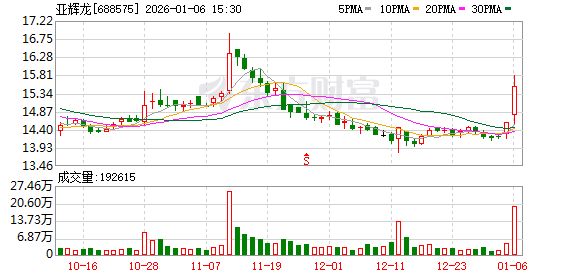
大涨!上交所火速问询688575
Zhong Guo Ji Jin Bao· 2026-01-06 16:22
Core Viewpoint - The Shanghai Stock Exchange has issued an inquiry letter to Yahui Long, requesting additional disclosure regarding its strategic cooperation with Shenzhen Brain Machine Star Chain Technology Co., Ltd. [2] Group 1: Cooperation Details - Yahui Long signed a strategic cooperation framework agreement with Brain Machine Star Chain on January 6, focusing on clinical transformation and market expansion of brain-machine interface technology [2][4] - The cooperation will involve market promotion and revenue sharing [4] Group 2: Inquiry Requirements - The Shanghai Stock Exchange requires Yahui Long to disclose the main technical routes, product types, application fields, and commercialization status of Brain Machine Star Chain [5] - Yahui Long must analyze the feasibility of market promotion collaboration based on its main business and the synergies with Brain Machine Star Chain [5] - The company is also required to provide a timeline for future promotional agreements and expected revenue sharing [5] Group 3: Product Development Status - Brain Machine Star Chain, established in September 2025, is developing products such as EEG analysis devices and non-invasive brain-machine interface devices, which are still in early development stages [4][6] - The vagus nerve stimulation device is in the registration preparation stage, while other products are in early research or preclinical stages [4] Group 4: Financial Performance and Investment Feasibility - Yahui Long's revenue and net profit for the first three quarters of 2025 decreased by 7.69% and 72.36% year-on-year, respectively, with cash reserves of 465 million yuan [10][13] - The company plans to provide financial and business support to Brain Machine Star Chain through equity investment or joint ventures [10][13] - Yahui Long stated that the strategic cooperation will not significantly impact its performance in the short term [13]