量子力学

Search documents
2025年诺贝尔物理学奖揭晓,三位科学家平分836万元
2 1 Shi Ji Jing Ji Bao Dao· 2025-10-07 11:12
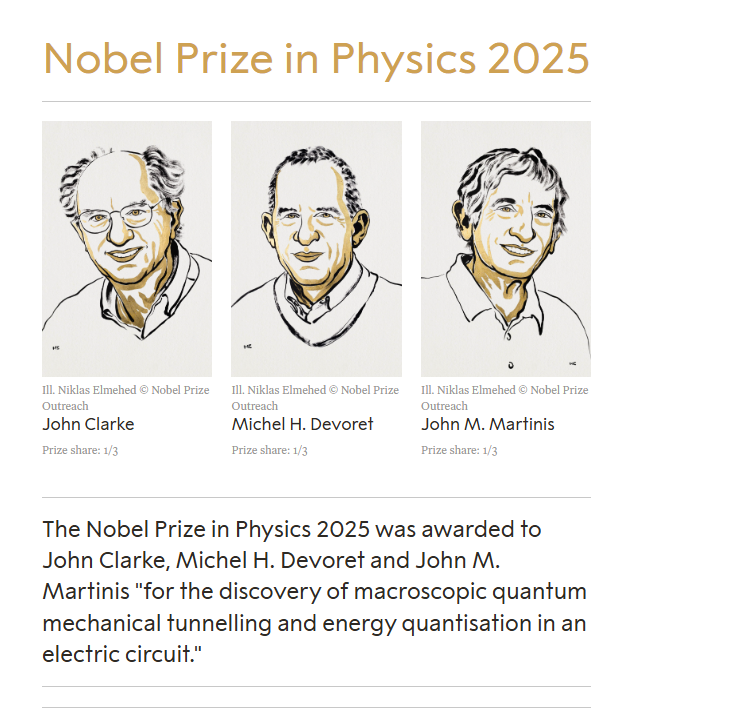
Core Points - The 2025 Nobel Prize in Physics has been awarded to John Clarke, Michel H. Devoret, and John M. Martinis for their work on "macroscopic quantum tunneling and energy quantization in circuits" [1] - The award committee recognized that the laureates demonstrated the peculiar characteristics of the quantum world can manifest in systems large enough to be held in hand [1] - Their superconducting electrical systems can tunnel from one state to another, akin to passing through a wall, and they showed that the system absorbs and emits energy in specific quantized amounts as predicted by quantum mechanics [1] - The winners will share a prize of 11 million Swedish Krona, approximately 8.36 million RMB [1]
2025年诺贝尔物理学奖揭晓:三名科学家获奖,因在量子力学领域贡献显著
Hua Er Jie Jian Wen· 2025-10-07 11:06
Core Points - The 2025 Nobel Prize in Physics was awarded to John Clarke, Michel H. Devoret, and John M. Martinis for their discovery of macroscopic quantum tunneling and energy quantization in circuits [1][5] - The prize money of 11 million Swedish Krona (approximately 8.36 million RMB) will be equally distributed among the winners [1] Group 1: Awardees Background - John Clarke, born in 1942 in Cambridge, UK, is a professor at the University of California, Berkeley [4] - Michel H. Devoret, born in 1953 in Paris, France, is a professor at Yale University and the University of California, Santa Barbara [4] - John M. Martinis, born in 1958, is also a professor at the University of California, Santa Barbara [4] Group 2: Research Significance - The awardees conducted experiments on circuits that revealed the role of quantum physics, addressing a significant question in physics regarding the maximum size of systems exhibiting quantum effects [5] - Their experiments demonstrated that quantum mechanical properties can manifest at a macroscopic scale, using superconducting circuits to show quantum tunneling and quantized energy levels [5][6] - The findings have implications for the development of next-generation quantum technologies, including quantum cryptography, quantum computers, and quantum sensors [6]

2025诺贝尔物理学奖颁给了谷歌量子计算机打造者
量子位· 2025-10-07 10:55
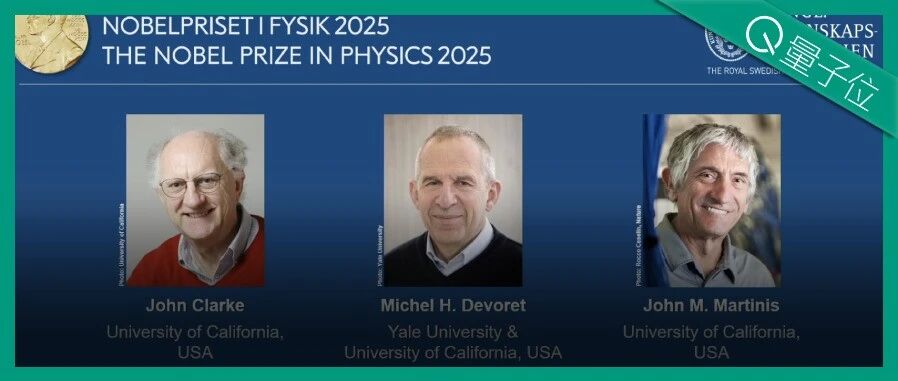
Core Viewpoint - The Nobel Prize in Physics 2025 was awarded to three scientists in the field of quantum mechanics: John Clarke, Michel H. Devoret, and John M. Martinis, for their discoveries related to macroscopic quantum tunneling effects and energy quantization phenomena in circuits [1]. Group 1: John Clarke - John Clarke's research focuses on superconductivity and superconducting electronics, particularly in low-temperature physics [4]. - He is best known for inventing and improving the superconducting quantum interference device (SQUID), which is a highly sensitive flux-to-voltage converter used in various fields such as condensed matter physics and medical physics [4]. - Clarke was born in 1942 in Cambridge, UK, and has received numerous awards, including the Fritz London Prize for his contributions to low-temperature physics [7][11]. Group 2: Michel H. Devoret - Michel H. Devoret is recognized as one of the founders of "quantum electronics," focusing on the quantum behavior of electronic systems at the mesoscopic scale [16]. - He has made significant contributions to understanding the fundamental mechanisms of quantum non-equilibrium physics in superconducting circuits, laying a solid foundation for quantum technology [18]. - Devoret has received several prestigious awards, including the 2024 Comstock Prize in Physics and the 2022 Micius Quantum Prize [19]. Group 3: John M. Martinis - John M. Martinis's core contribution to the Nobel Prize was his research on the quantum behavior of the phase difference in Josephson junctions, demonstrating that macroscopic circuit systems can exhibit quantum tunneling and energy level discretization [20]. - He played a pivotal role in achieving "quantum supremacy" with a 53-qubit processor, surpassing the computational power of the world's strongest classical supercomputer [24]. - Martinis has held various prestigious positions, including serving as the Chief Scientist for Quantum Hardware at Google's Quantum AI Lab, and has co-founded companies focused on practical quantum computing [26][28].

2025诺贝尔物理学奖花落宏观量子隧穿:他们在实验中「造出」了薛定谔的猫
机器之心· 2025-10-07 10:53
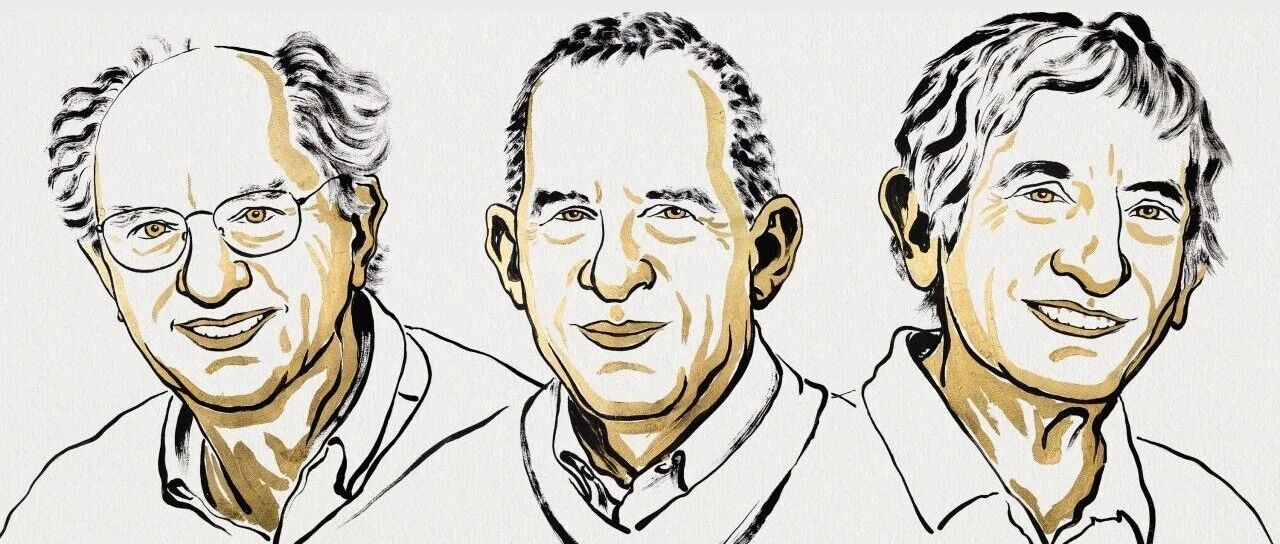
Core Viewpoint - The 2023 Nobel Prize in Physics was awarded to John Clarke, Michel H. Devoret, and John M. Martinis for their groundbreaking work demonstrating macroscopic quantum tunneling and energy quantization in superconducting circuits, paving the way for next-generation quantum technologies [2][5][11]. Group 1: Experimental Achievements - The laureates conducted a series of experiments in the 1980s that showcased how quantum tunneling effects can be observed at a macroscopic scale, specifically in superconducting circuits [11][12]. - They created a circuit with two superconductors separated by an insulating layer, demonstrating that charged particles in superconductors behave collectively as if they were a single particle [11][12]. - Their experiments confirmed that the superconducting system could escape a zero-voltage state through tunneling, producing measurable voltage and demonstrating quantized energy levels [12][28]. Group 2: Theoretical Implications - The experiments provide significant insights into quantum mechanics, illustrating how macroscopic phenomena can arise from the collective behavior of many microscopic particles [31][33]. - The work draws parallels to Schrödinger's cat thought experiment, suggesting that macroscopic quantum states can exist and be measured, challenging traditional views of quantum mechanics [31][33]. - The findings have implications for the development of quantum technologies, including quantum computing, by utilizing the principles of energy quantization demonstrated in their research [35][37]. Group 3: Future Applications - The research opens new avenues for experimental exploration of quantum phenomena, potentially leading to the creation of artificial atoms that can be used in quantum technology applications [35]. - John Martinis's subsequent work on quantum computers leverages the principles established by the Nobel laureates, indicating a direct application of their findings in advancing quantum computing technology [35].
2025年诺贝尔物理学奖揭晓,3名科学家获奖,将平分836万元奖金!“以表彰他们在量子力学领域的贡献”
Mei Ri Jing Ji Xin Wen· 2025-10-07 10:12
当地时间10月7日,瑞典皇家科学院决定将2025年诺贝尔物理学奖授予科学家约翰·克拉克、麦克·H·德沃 雷特、约翰·M·马蒂尼,以表彰他们在量子力学领域的贡献。 获奖者将平分1100万瑞典克朗(约合836万元人民币)奖金。 责任编辑:凌辰 ...
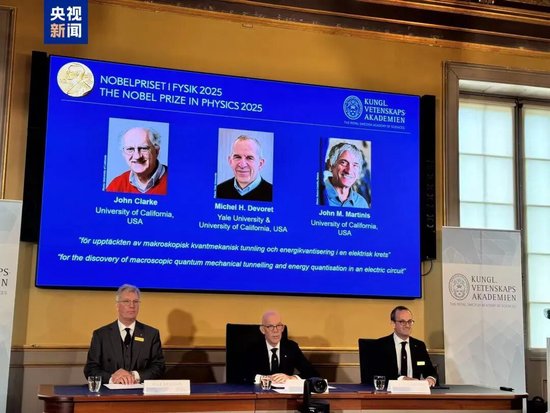
因量子力学领域贡献,3名科学家获颁2025年诺贝尔物理学奖
Di Yi Cai Jing· 2025-10-07 10:07
Core Points - The 2025 Nobel Prize in Physics has been awarded to scientists John Clarke, Mike H. Devoret, and John M. Martinis for their discovery of the macroscopic quantum tunneling effect and energy quantization in circuits [1]. Group 1 - The total prize amount is 11 million Swedish Krona, equivalent to approximately 8.36 million Chinese Yuan [2].

新华社快讯:三名科学家获得2025年诺贝尔物理学奖
Xin Hua She· 2025-10-07 09:59
新华社快讯:瑞典皇家科学院7日宣布,三名科学家因在量子力学领域的贡献获2025年诺贝尔物理学 奖。 ...
国内首部8K航天球幕影片将在广东科学中心首映
Nan Fang Du Shi Bao· 2025-09-29 04:01
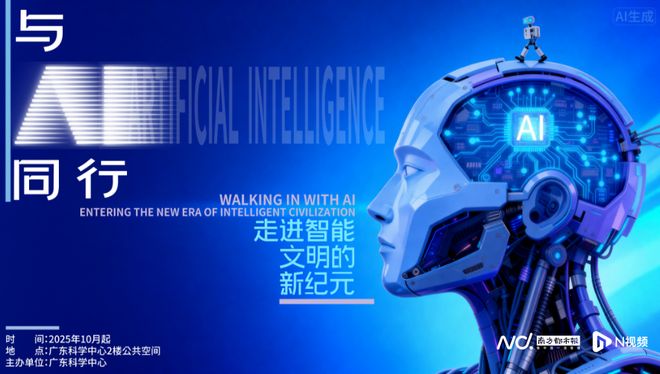
Core Points - Guangdong Science Center will remain open to the public during the Mid-Autumn Festival and National Day holiday, featuring a series of AI-themed science popularization activities [1][3] - The new AI exhibition titled "Walking with AI: Entering a New Era of Intelligent Civilization" will showcase the development of artificial intelligence from theoretical exploration to practical applications [3][5] - Interactive activities such as science markets, challenges, and DIY experiences will be available, allowing participants to learn scientific principles through games [3][5] - The number of science theater performances will increase from 79 to 86, with a new performance of "Journey through Quantum Mechanics" [5][7] - The premiere of the first domestic 8K space-themed film "Building Dreams in Tiangong" will take place during the holiday, showcasing the construction and operation of the Tiangong space station [5][7] - A special "Science Moment" column will introduce China's latest achievements in astronomy, engineering, and robotics, while a lantern riddle activity will blend traditional culture with scientific knowledge [7]
创新药、低空飞行器、量子计算、脑机接口——院士报告为颠覆性技术“把脉问诊”
Ke Ji Ri Bao· 2025-09-28 23:43
Group 1: Innovation in Pharmaceuticals - China has made significant progress in innovative drug development, with the number of approved new drugs increasing from 4 in 2015 to 37 in 2024, and the proportion of first-in-class drugs rising from 4% to 38% [1] - Despite the advancements, challenges such as lack of original theories and technologies, intense competition, changing international environments, and payment system issues pose risks to sustainable industry growth [1][2] Group 2: Development of eVTOL Industry - The eVTOL industry in China is rapidly developing, currently leading globally, supported by the aviation and new energy vehicle sectors [2] - Key technological challenges include distributed propulsion aerodynamics, high-energy power sources, and safety control in complex environments, with a focus on integrating artificial intelligence for autonomous flight capabilities [2] Group 3: Quantum Computing and Research - The Shenzhen International Quantum Research Institute is pursuing a differentiated competition strategy by expanding into solid-state quantum computing and scientific instrument development, achieving notable progress in a short time [3] - Emphasis on the need for China to strengthen its independent research and development of scientific instruments to become a technological powerhouse [3] Group 4: Brain-Computer Interface Technology - Brain-computer interfaces are categorized into brain control and brain modulation, with applications in aiding patients with movement disorders and treating mental health conditions [3] - The development of non-invasive techniques for brain modulation is highlighted as a crucial future direction, with innovative methods proposed for targeted brain area stimulation [3] Group 5: Overall Technological Landscape - The reports from the four academicians reflect China's technological self-reliance and the realities of global technological competition, emphasizing the need to confront challenges to maintain leadership in disruptive innovation [4]
顶尖科学家建言中国量子发展:鼓励年轻学者好奇心驱动研究
Di Yi Cai Jing· 2025-09-22 09:28
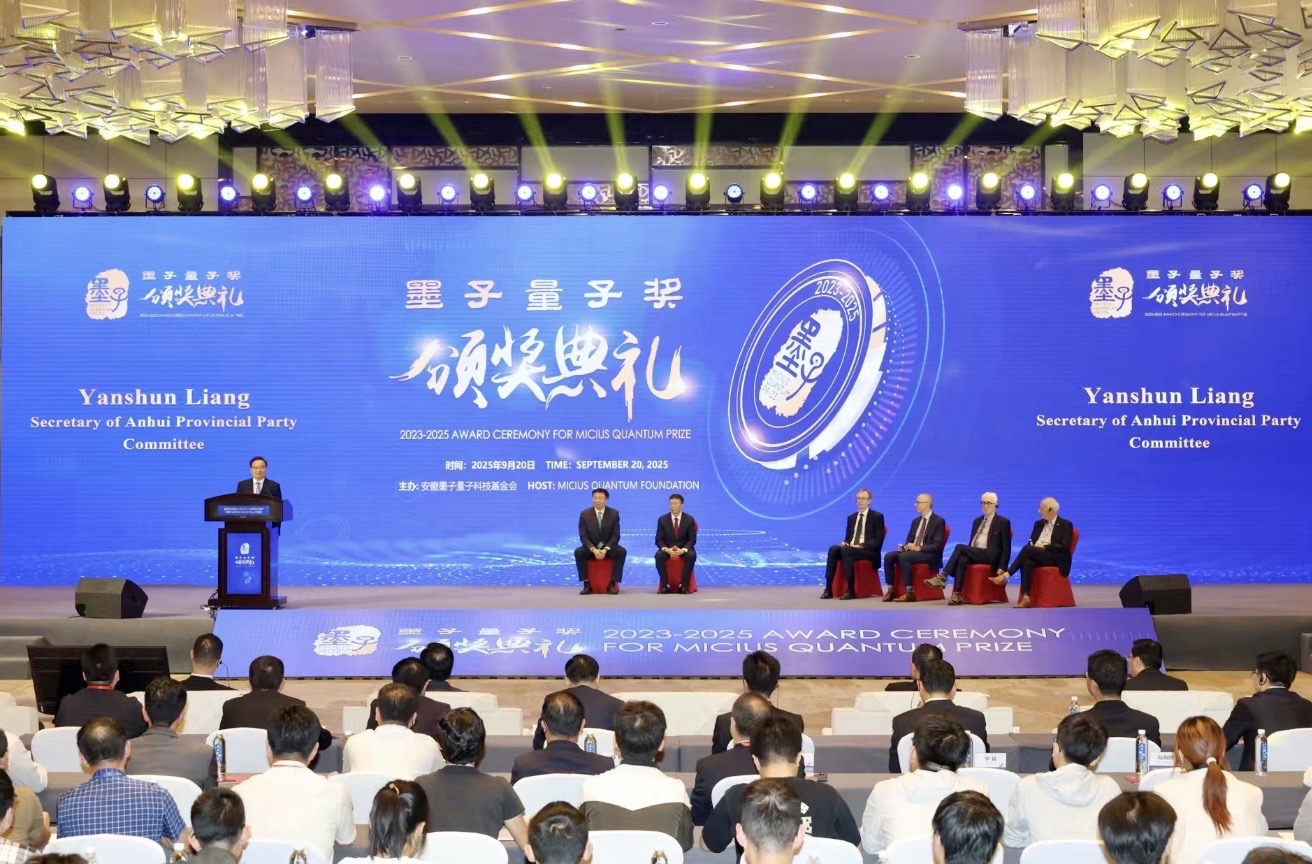
Group 1 - The third International Conference on Emerging Quantum Technologies highlighted China's leading position in quantum technology development, with experts discussing advancements and awarding the "Mozi Quantum Prize" [1][3] - The A-share quantum technology sector saw significant gains, with Guoshun Quantum (688027.SH) rising by 4.4%, Keda Guokong (300520.SZ) increasing by 3.7%, and Shenzhou Information (000555.SZ) up by 2.5% [1] Group 2 - The "Mozi Quantum Prize" for 2025 was awarded to three scientists in the field of quantum simulation, recognizing their contributions to the advancement of quantum science [3] - China's quantum communication capabilities have been demonstrated with the establishment of a 300-kilometer quantum direct communication network, showcasing the feasibility of long-distance secure communication [4] Group 3 - The development of the "Zuchongzhi No. 3" quantum computing prototype has set a new record in superconducting quantum computing, further establishing China's competitive edge in this area [4] - The National Natural Science Foundation of China has launched a major research plan with funding up to 7 million yuan for projects aimed at advancing quantum information science [6]