
AI计算

Search documents
摩尔线程IPO 下周上会
Zhong Guo Zheng Quan Bao· 2025-09-19 14:58
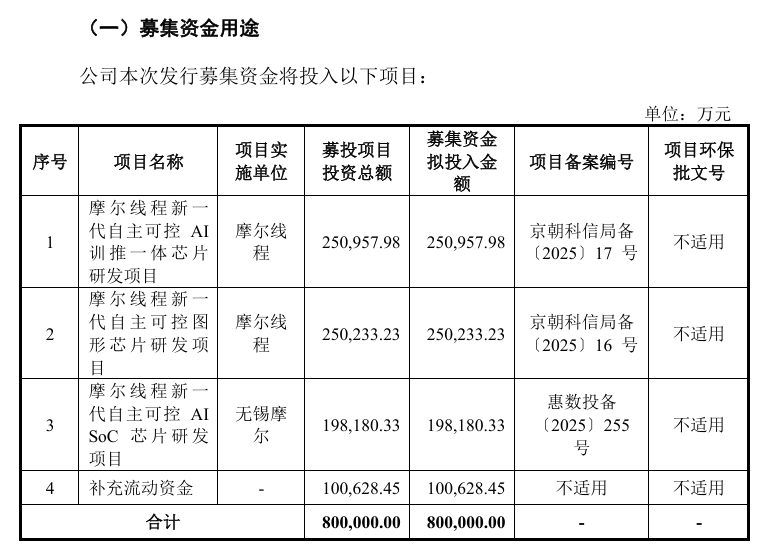
| 序号 | 项目名称 | 项目实 | 募投项目 | 募集资金 拟投入金 | 项目备案编号 | 项目环保 | | --- | --- | --- | --- | --- | --- | --- | | | | 施单位 | 投资总额 | | | 批文号 | | | | | | 额 | | | | | 摩尔线程新一 代自主可控 AI 训推一体芯片 | 摩尔线 程 | 250.957.98 | 250.957.98 | 京朝科信局备 (2025) 17 号 | 不适用 | | | 研发项目 | | | | | | | 2 | 摩尔线程新一 代自主可控图 形芯片研发项 | 壓尔线 程 | 250.233.23 | 250.233.23 | 京朝科信局备 (2025) 16 号 | 不适用 | | | 目 | | | | | | | 3 | 摩尔线程新一 代自主可控 AI SoC 芯片研发 | 无锡壓 尔 | 198.180.33 | 198.180.33 | 惠数投备 (2025) 255 | 不适用 | | | | | | | 름 | | | | 项目 | | | | | | | 4 | 补充流动资金 | l | ...

直击连云港3.36亿打造自走式车场!|活力中国调研行
2 1 Shi Ji Jing Ji Bao Dao· 2025-09-19 14:56
Core Insights - The Jiangsu theme interview event of "Vibrant China Research Tour" highlighted the Lianyungang International Automotive Green Intelligent Logistics Center as the largest automotive logistics center in the national port industry, featuring the highest level of intelligence and concentration, and the first to achieve zero carbon emissions [2][3] Investment and Infrastructure - The logistics center has a total investment of 336 million yuan, completed in 2023, and has been in operation for over a year and a half with excellent performance [3] - The center can accommodate 5,200 vehicles simultaneously and has an annual turnover capacity of 180,000 vehicles, addressing the rapid growth in automotive exports [2] Technological Advancements - The facility is equipped with 4 layers of AGV (Automated Guided Vehicle) parking, 16 vehicle halls, 16 elevators, and 48 AGV robots, allowing for automated classification and preparation of vehicles based on destination, shipping time, and brand, reducing the traditional manual preparation process by 2 days [2] Future Plans - Due to the rapid increase in automotive export volumes, the current logistics center is nearing capacity, prompting the company to consider a second phase of the project [3]

英特尔还不能急着开心
Feng Huang Wang· 2025-09-19 07:22
Core Viewpoint - The strategic investment of $5 billion by NVIDIA in Intel marks a significant collaboration between two major players in the semiconductor industry, aiming to combine their strengths in AI and computing technologies [1][6]. Group 1: Investment and Market Reaction - NVIDIA confirmed a strategic investment of $5 billion in Intel, leading to a 22.77% surge in Intel's stock price and a 3.49% increase in NVIDIA's stock price on the announcement day [1]. - The collaboration is expected to enhance both companies' positions in the AI computing market, with Intel providing customized x86 CPUs for NVIDIA's AI infrastructure [1][2]. Group 2: Technological Collaboration - The partnership aims to integrate NVIDIA's GPU technology with Intel's x86 architecture, addressing the growing demand for AI computing power in data centers and personal computing [2][5]. - Both companies have not yet disclosed a timeline for the release of their first collaborative product, indicating that the development phase is still ongoing [1]. Group 3: Intel's Challenges and Strategic Moves - Intel has faced significant challenges in recent years, including a 15% workforce reduction and the need to pivot its business strategy to regain market share lost to competitors like AMD and NVIDIA [3][4]. - The company has also secured an $8.9 billion investment from the U.S. government, acquiring 9.9% of Intel's shares, which reflects the government's interest in supporting the semiconductor industry [3][4]. Group 4: NVIDIA's Position and Future Prospects - NVIDIA's CEO expressed optimism about the investment, highlighting the potential for substantial returns and the opportunity to become a key customer for Intel's CPUs [6]. - The collaboration is seen as a strategic move for NVIDIA to solidify its market position in AI and GPU acceleration, targeting a market estimated at nearly $50 billion [6][7]. Group 5: Industry Implications - The partnership between NVIDIA and Intel could lead to significant shifts in the semiconductor landscape, increasing competitive pressure on TSMC and AMD [7]. - As the two companies deepen their collaboration in AI and data center technologies, the competitive dynamics in the market are expected to intensify, potentially eroding AMD's existing advantages [7].


英伟达和英特尔,“改变游戏规则”
Di Yi Cai Jing· 2025-09-19 03:15
Core Insights - Nvidia has announced a significant investment in Intel, acquiring shares at $23.28 per share for a total of $5 billion, pending regulatory approval [3][4] - Following the announcement, Nvidia's stock rose by 3.49%, while Intel's surged by 22.77%, indicating strong market reaction [3] - The partnership aims to integrate Intel's x86 CPUs with Nvidia's AI and accelerated computing architecture, potentially reshaping the competitive landscape in data centers and personal computing [4][5] Investment and Market Opportunities - Nvidia will customize x86 processors for Intel, which will be integrated into Nvidia's AI infrastructure, enhancing capabilities in data centers [4][6] - The collaboration is expected to create a new type of system-on-chip (SoC) that combines Intel's x86 CPUs with Nvidia's RTX GPUs, targeting the growing market for laptops and PCs [6][7] - Nvidia anticipates a market opportunity of $25 billion to $50 billion annually from this partnership, with Intel becoming a key supplier of server CPUs [7][8] Strategic Collaboration - The partnership is built on the strengths of both companies, with Nvidia leading in AI acceleration and Intel in data center and PC CPUs [5][6] - Nvidia's CEO highlighted the integration of Intel's x86 CPUs into the NVLink ecosystem, which will facilitate the construction of AI supercomputers [6][7] - Both companies are committed to exploring diverse collaboration opportunities while maintaining their existing relationships with TSMC as a foundry partner [9][10]
美股四指数齐创历史新高,英特尔创1987年来最大涨幅
Sou Hu Cai Jing· 2025-09-19 01:25
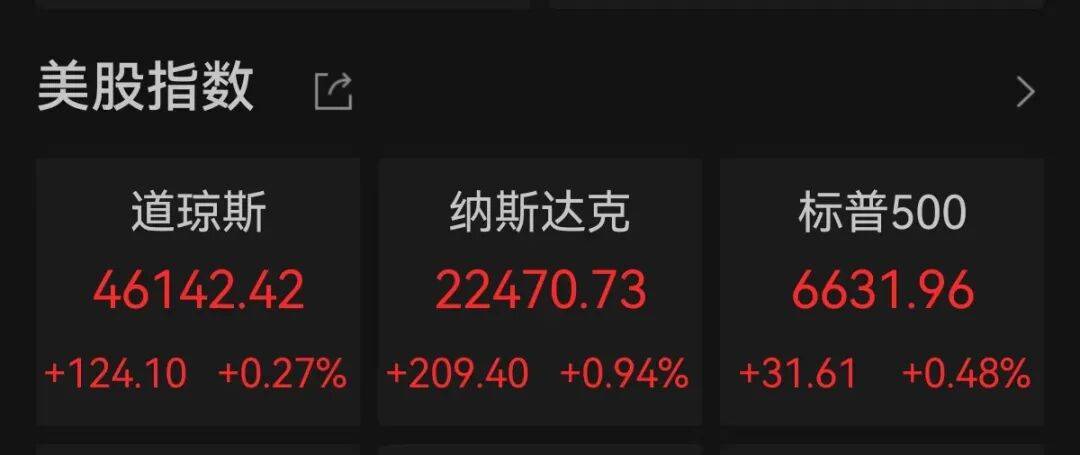
Core Viewpoint - The market rebounded after interpreting the Federal Reserve's signals as the beginning of a rate-cutting cycle, which supported risk assets. Nvidia's $5 billion investment in Intel led to a surge in Intel's stock price and strengthened the semiconductor sector, resulting in all three major U.S. stock indices and small-cap indices reaching new highs for the first time in nearly four years [1]. Group 1: Market Performance - The S&P 500 index rose by 31.61 points, or 0.48%, closing at 6631.96, surpassing its previous record high of 6615.28 set on September 15 [3]. - The Dow Jones Industrial Average increased by 124.10 points, or 0.27%, closing at 46142.42, breaking its previous record high from September 11 [4]. - The Nasdaq Composite index gained 209.399 points, or 0.94%, closing at 22470.725, achieving a new closing record [5]. - The Nasdaq 100 index rose by 231.207 points, or 0.95%, closing at 24454.894, also reaching a new closing high [6]. Group 2: Nvidia and Intel Collaboration - Nvidia announced a $5 billion investment in Intel, purchasing shares at $23.28 each, which is approximately 6.5% lower than the previous day's closing price. This investment represents less than 5% of Intel's market capitalization of about $116 billion [7]. - The collaboration aims to integrate Nvidia's graphics processing technology into Intel's next-generation PC chips and provide processor support for data center products based on Nvidia hardware. Both companies emphasized that this partnership will not alter their independent development strategies [7][9]. - Nvidia's CEO highlighted that this historic collaboration will combine Nvidia's AI and accelerated computing stack with Intel's CPU and extensive x86 ecosystem, laying the foundation for the next generation of computing [9]. Group 3: Industry Context - Intel has been struggling in the high-performance chip market and has been unable to independently fund advanced process research and development. Recent investments from the U.S. government and SoftBank, along with asset sales, have been part of Intel's strategy to stabilize its funding [9]. - The partnership with Nvidia is seen as a pragmatic step in Intel's transformation under its new CEO, who is pursuing a more open strategy and seeking collaborations [10]. - Nvidia's CEO indicated that the collaboration will open new markets for Nvidia in the laptop sector and position Nvidia as a major customer for Intel's server CPUs, with potential market opportunities estimated between $25 billion and $50 billion [11].
改变游戏规则!x86架构进入英伟达生态,每年带来上百亿美元机会
Di Yi Cai Jing· 2025-09-19 00:58
Core Viewpoint - The partnership between Intel and NVIDIA is seen as a significant milestone and a game-changing opportunity, with both companies aiming to leverage their strengths in CPU and GPU technologies to reshape the computing landscape [1][4][5]. Group 1: Partnership Details - NVIDIA will invest $5 billion in Intel by purchasing shares at $23.28 each, pending regulatory approval [1]. - The collaboration will focus on custom x86 processors for NVIDIA's AI infrastructure and integrated x86 system-on-chip (SoC) solutions featuring NVIDIA's RTX GPU for personal computing [3][4]. - This partnership is expected to create new market opportunities, particularly in the data center and personal computing sectors, by integrating Intel's x86 CPUs with NVIDIA's AI and accelerated computing architectures [4][5]. Group 2: Market Opportunities - The data center CPU market is projected to be worth $30 billion annually, with the collaboration allowing for the integration of Intel's x86 CPUs into NVIDIA's NVLink ecosystem for AI supercomputers [5][6]. - The partnership could generate annual market opportunities ranging from $25 billion to $50 billion, as both companies aim to create new types of laptops and computing solutions [6][5]. - NVIDIA will become a major customer for Intel's server CPUs, further solidifying the partnership and expanding market reach [6][5]. Group 3: Technical Collaboration - The collaboration will involve the development of custom CPUs and SoCs that combine both CPU and GPU technologies, enhancing performance and scalability in computing [6][4]. - NVIDIA's NVLink technology will now support the integration of Intel's x86 CPUs, which was previously limited to NVIDIA's own CPU architectures [5][6]. - Both companies acknowledge the need for a streamlined and agile corporate culture to match NVIDIA's rapid development pace, aiming to foster a collaborative environment [9].
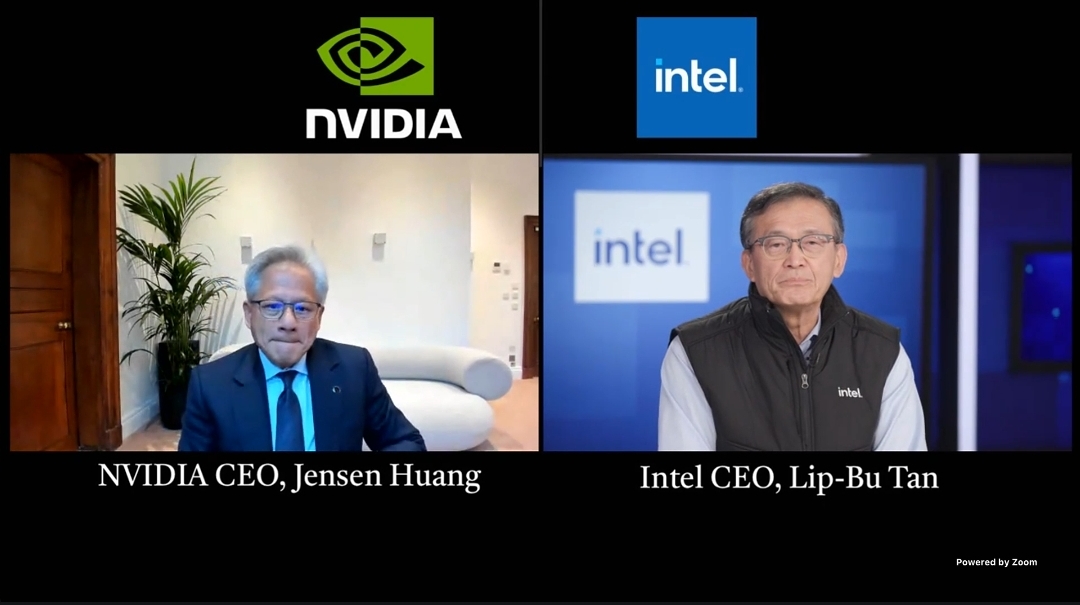
英伟达斥资50亿美元入股英特尔!宿敌变盟友?
Jin Shi Shu Ju· 2025-09-18 12:35
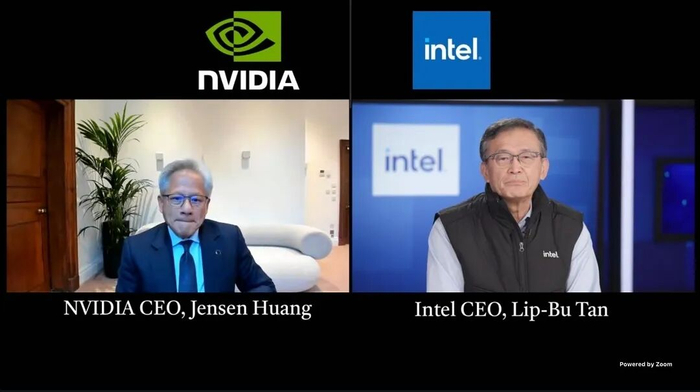
Core Viewpoint - Nvidia has agreed to invest $5 billion in Intel, aiming to support the struggling competitor while both companies will collaborate on chip development for PCs and data centers [2][3]. Investment Details - Nvidia will purchase Intel common stock at $23.28 per share, making it one of Intel's largest shareholders with a stake of less than 5% [3]. - Intel's market capitalization was $116 billion as of the last close, while Nvidia's market cap exceeds $4 trillion [3]. Strategic Collaboration - The partnership will integrate Nvidia's graphics technology into Intel's upcoming PC chips and provide processors for Nvidia's data center products [2][4]. - Nvidia's CEO emphasized the historical significance of this collaboration, merging Nvidia's AI and accelerated computing systems with Intel's CPU and x86 ecosystem [4]. Market Dynamics - Intel's reliance on Nvidia's technology highlights a shift in the computing industry, where Intel, once a dominant player, now seeks support from its former rival [3][5]. - The collaboration aims to enhance Intel's competitiveness against AMD in the desktop and laptop markets [4]. Financial Context - The investment follows a previous $2 billion injection from SoftBank into Intel, indicating growing capital reserves for the company [3]. - Nvidia's sales are projected to reach approximately $200 billion this year, with its data center division surpassing the total sales of any other chip company [6]. Industry Positioning - Intel has lagged in AI-specific computing investments, exacerbating its challenges due to manufacturing technology delays [6]. - The partnership reflects Intel's shift towards a more open strategy under its new leadership, seeking collaboration and opening its factories to competitors [6].
英特尔暴涨30%!英伟达斥资50亿美元入股英特尔,联手开发PC与数据中心芯片
Sou Hu Cai Jing· 2025-09-18 12:02
Core Viewpoint - Nvidia has invested $5 billion in Intel, marking a surprising collaboration aimed at developing chips for PCs and data centers, which highlights significant changes in the computing industry landscape [1] Group 1: Investment Details - Nvidia will purchase Intel common stock at $23.28 per share, representing a discount of approximately 6.5% from the previous closing price [1] - Intel's market capitalization was about $116 billion prior to the announcement, and Nvidia's stake will be less than 5% [1] - Nvidia's market capitalization exceeds $4 trillion, establishing it as a dominant player in the semiconductor industry [1] Group 2: Collaboration Objectives - Intel will integrate Nvidia's graphics processing technology into its next-generation PC chips and provide processor support for data center products based on Nvidia hardware [1][5] - The partnership aims to enhance competitiveness against AMD in the PC chip market [5][6] - In the data center sector, Intel will supply general-purpose processors to complement Nvidia's accelerated chips [6] Group 3: Strategic Implications - This collaboration signifies a shift in the relationship between the two former rivals, with Nvidia's CEO emphasizing the importance of combining AI and accelerated computing with Intel's CPU and x86 ecosystem [5] - Intel has been struggling in the high-performance chip market and has received various investments, including approximately 10% support from the U.S. government and $2 billion from Japan's SoftBank [5] - Under the leadership of new CEO Lip-Bu Tan, Intel is adopting a more open strategy, seeking partnerships and opening factory capacity to external companies [6]
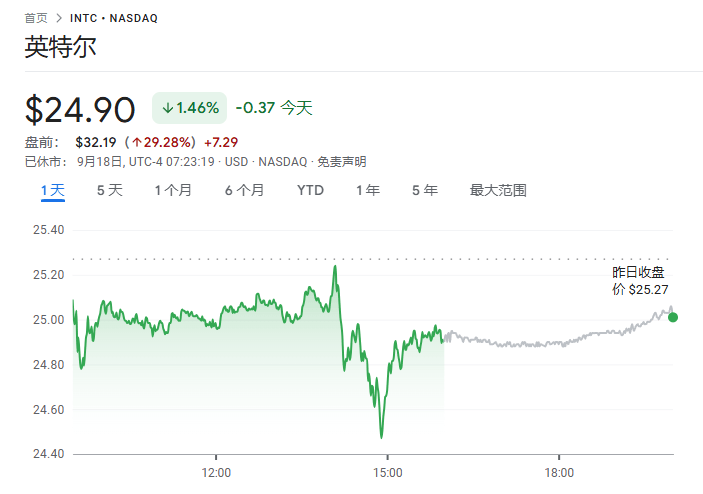
英特尔暴涨30%!英伟达斥资50亿美元入股英特尔,联手开发PC与数据中心芯片
美股IPO· 2025-09-18 11:53
Core Viewpoint - The unexpected collaboration between Intel and Nvidia marks a significant shift in the computing industry, with Nvidia investing $5 billion in Intel to jointly develop chips for PCs and data centers, highlighting the changing competitive landscape [3][6]. Group 1: Investment and Market Impact - Nvidia will purchase Intel shares at $23.28 each, a 6.5% discount from the previous closing price, resulting in Nvidia holding less than 5% of Intel, which has a market capitalization of approximately $116 billion [3][4]. - Following the announcement, Intel's stock surged by 30% in pre-market trading, while AMD, a competitor of Nvidia, saw its stock drop by over 4% [4]. Group 2: Strategic Collaboration - The partnership will integrate Nvidia's graphics processing technology into Intel's next-generation PC chips and provide processor support for Nvidia's data center products [3][7]. - Intel aims to enhance its competitiveness against AMD by incorporating Nvidia's GPU technology into its PC chips, while also supplying general-purpose processors for Nvidia's AI clusters [7]. Group 3: Financial Significance for Intel - The investment from Nvidia is crucial for Intel, which has struggled in the high-performance chip market and has been unable to independently fund advanced process research and development [6]. - Intel has recently received support from the U.S. government, strategic investments from SoftBank, and has accelerated financing through asset sales, with Nvidia's investment further solidifying its financial stability [6]. Group 4: Future Outlook - Under the leadership of new CEO Lip-Bu Tan, Intel is adopting a more open strategy, actively seeking partnerships and opening its factory capacity to external companies, with the collaboration with Nvidia seen as a pragmatic step in its transformation [9]. - Nvidia's revenue is projected to reach $200 billion this year, with its data center business surpassing the total sales of any other chip company, while Intel lags in AI computing and advanced processes [8].
艾华集团(603989.SH):在产产品中暂未有EDLC
Ge Long Hui· 2025-09-18 08:08
Core Viewpoint - The company is currently not producing EDLC products and is focusing on optimizing its product structure and improving gross margins [1] Group 1: Product Development - The company has applied its MLPC products in AI computing and information and communication sectors [1] - There is an ongoing effort to upgrade and adjust the product structure to enhance overall competitiveness and profitability [1]
