
京津冀协同发展

Search documents
从“接得住”到“发展好” ,环京地区建起特色产业集群
Bei Jing Ri Bao Ke Hu Duan· 2025-08-22 09:25
Group 1: Industry Development - The Beijing-Tianjin-Hebei region is expanding the depth and breadth of collaborative development, focusing on both "hard connectivity" and "soft collaboration" [1] - The region is forming distinctive and resilient industrial clusters through industrial chain restructuring, digital transformation, and brand upgrading [1] Group 2: Apparel Industry - The Gu'an International Trade City has become a significant project for Hebei to undertake the non-capital functions of Beijing, accommodating over 4,000 Beijing merchants [3] - The PRO brand area focuses on building "independent original brands" and provides a comprehensive service system to assist traditional merchants in transitioning to brand operators [3] - Merchants report a more than 30% increase in daily revenue through brand operations, reflecting a shift in consumer preferences towards quality [3] Group 3: Logistics Sector - YTO Express has established a northern headquarters base with a total investment of 3.5 billion yuan, significantly enhancing its operational efficiency [6] - The daily processing capacity of YTO's northern headquarters has increased from 6 million to 12 million packages, with a 20% annual growth in business volume [6][8] - The logistics industry in Langfang has attracted 31 express companies, with a projected 2024 express business volume of 1.72 billion packages, a 39% year-on-year increase [8] Group 4: Intelligent Manufacturing - Dazheng Huajia Technology Company in Langfang is engaged in the production of high-end equipment with complete independent intellectual property rights, ensuring efficient delivery to customers [9] - The company has an average annual sales of over 500 units, with plans for continued investment in technology research and business expansion [9] - Langfang is actively attracting advanced manufacturing enterprises to enhance its manufacturing capabilities and promote high-quality economic development [10]


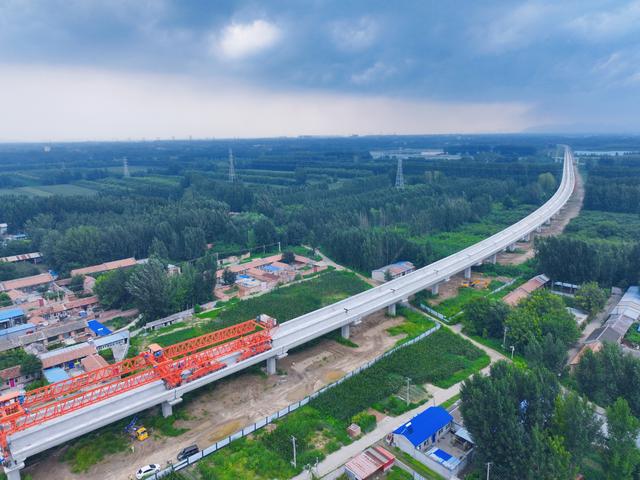
北京轨道交通22号线河北段桥梁下部结构施工全部完成
Bei Jing Ri Bao Ke Hu Duan· 2025-08-21 01:53
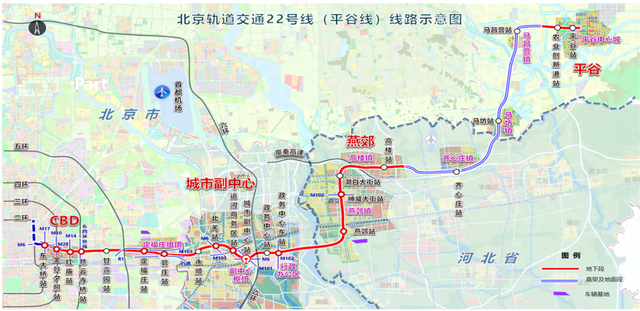
Core Points - The construction of the Beijing Metro Line 22's Hebei section has reached significant milestones, with 70% of the main structure and 80% of the station structure completed [1][3] - The project, spanning approximately 30 kilometers, includes about 8 kilometers of bridge engineering and faces complex construction challenges due to its environment [3] - The line will enhance connectivity between key areas in Beijing and Hebei, significantly improving commuting efficiency and promoting regional development [3] Construction Progress - The final steel cover beam support cushion stone was poured on August 20, marking the completion of the bridge's substructure construction [1] - The main structure of the line has achieved a completion rate of 70%, while the station structure has reached 80% [1] Project Details - The Beijing Metro Line 22 is the first inter-provincial urban rail transit line between Beijing and Hebei, stretching approximately 81.82 kilometers [3] - The line connects major functional areas, including Beijing's business center, sub-center, and key regions in Hebei, facilitating rapid transit [3] Technical Innovations - The construction team has employed technical innovations and scientific management to overcome geological and environmental challenges [3] - Measures such as intelligent monitoring and improved drilling tools have been implemented to minimize construction disruption and enhance quality [3] Regional Impact - Upon completion, the line will enable rapid transit from Langfang's northern three counties to Beijing's sub-center in as little as 9 minutes, and to the CBD in approximately 32 minutes [3] - This project is seen as a significant step towards achieving high-quality integration of the Beijing-Tianjin-Hebei region [3]
北京打造辐射全球的跨境电商创新高地
Zhong Guo Chan Ye Jing Ji Xin Xi Wang· 2025-08-21 00:24
Core Viewpoint - Beijing aims to establish itself as a global hub for cross-border e-commerce through the "Beijing Action Plan for Promoting High-Quality Development of Cross-Border E-Commerce (2025-2027)" focusing on innovation, cooperation, and ecological optimization [1][2] Group 1: Development Strategy - The plan emphasizes leveraging five advantages, including technological innovation, policy innovation, headquarters economy, logistics efficiency, and quality business services to enhance cross-border e-commerce [2] - By 2027, the goal is to establish around three cross-border e-commerce service centers, attract numerous billion-level platforms and ten-million-level brands, and cultivate a thousand cross-border e-commerce talents [2] Group 2: Business Growth - The initiative aims to nurture cross-border e-commerce enterprises by supporting those with core technologies and quality products to grow into high-tech, specialized, and unicorn companies [3] - It encourages the development of cross-border e-commerce service enterprises and the establishment of specialized industrial parks in various districts [3] Group 3: Innovation Focus - The plan supports the application of advanced technologies such as cloud computing, big data, and AI in cross-border e-commerce [4] - New marketing models like "live streaming + short videos" and "bonded warehouses + live streaming" are to be explored to enhance retail imports [4] Group 4: Service Optimization - The initiative aims to improve customs efficiency with a "green channel" for cross-border e-commerce exports and enhance logistics support through the construction of a national logistics hub [4] Group 5: Ecosystem Development - A platform for cross-border e-commerce exchanges will be established to foster collaboration and compliance, including knowledge protection and legal training [5] - The plan also focuses on building a high-quality talent pool by integrating educational resources and encouraging institutions to offer cross-border e-commerce programs [5]
天津西青:打造京津冀协同创新“强磁场” 赋能新质生产力
Zhong Guo Xin Wen Wang· 2025-08-19 19:48
Group 1: Core Insights - The article emphasizes the development of a new model for integrated urban and industrial growth in Tianjin's Xiqing District, focusing on creating a high-quality innovation hub in the Beijing-Tianjin-Hebei region [1][5] - The Xiqing Economic and Technological Development Zone has attracted 288 new enterprises in the first half of the year, showcasing significant advancements in smart manufacturing and digital transformation [2][5] - The establishment of partnerships with Beijing's innovation resources has led to over 10 projects being signed, enhancing the region's technological capabilities [2][3] Group 2: Industry Collaboration - The article highlights the importance of industry chain collaboration, with local policies facilitating rapid commercialization of research outcomes and fostering deep integration of technology and industry in sectors like smart connected vehicles and biomedicine [3][5] - The construction of innovation platforms, such as the synthetic biology innovation transformation platform, supports the growth of biotech companies by providing essential services from research to pilot testing [3][5] Group 3: Talent Development - The integration of education and industry is emphasized, with Tianjin University playing a crucial role in supplying talent and intellectual support for regional development through collaborative programs [4][5] - The article notes that the synergy between government support and a robust industrial ecosystem has attracted high-end talent, enabling local companies to advance from "Made in China" to "Created in China" [4][5]
京投轨道运营公司获北京轨道交通22号线(平谷线)运营权
Zhong Guo Xin Wen Wang· 2025-08-19 08:43
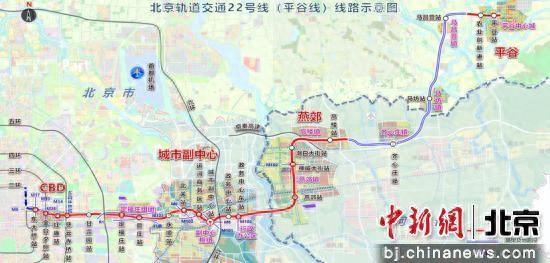
Group 1 - The Beijing Investment Rail Transit Operation Company has won the bid to operate the Beijing Rail Transit Line 22 (Pinggu Line), becoming the operator of this line [1] - The Pinggu Line is the first urban rail transit line in Beijing that crosses provincial boundaries and serves as a demonstration line for the coordinated development of Beijing-Tianjin-Hebei [1][3] - The line is approximately 81.82 kilometers long with 22 stations, including 19 underground and 3 elevated stations, and features an average station spacing of 3.83 kilometers [1][3] Group 2 - The line connects key functional areas such as Beijing's business center, urban sub-center, Yanjiao, and Pinggu New Town, enhancing the commuting efficiency for cross-provincial travelers [3] - The Beijing Investment Rail Transit Operation Company aims to become a leading urban rail transit service provider and has been operating several significant lines, including the fully automated Yanfang Line and the Daxing Airport Line [1][3] - The acquisition of the operating rights for Line 22 marks a milestone in the company's development and is seen as a starting point for a "second entrepreneurship" phase following the successful completion of its "three-step" strategy [1][3]
京投轨道运营公司将运营平谷线
Bei Jing Wan Bao· 2025-08-19 07:50
Core Viewpoint - Beijing Investment Rail Transit Company has won the bid to operate the Beijing Rail Transit Line 22 (Pinggu Line), marking a significant development in urban rail transit in the Beijing-Tianjin-Hebei region [1] Group 1: Project Overview - The Beijing Rail Transit Line 22 (Pinggu Line) is the first urban rail transit line to cross provincial boundaries in Beijing and serves as a demonstration line for coordinated development in the Beijing-Tianjin-Hebei region [1] - The line spans approximately 81.82 kilometers and includes 22 stations (19 underground and 3 elevated), with an average station spacing of 3.83 kilometers [1] - The line will connect key areas such as the Beijing Business Center, the Urban Sub-center, Yanjiao, and Pinggu New City, enhancing the commuting efficiency for cross-provincial travelers [1] Group 2: Operational Goals - The company aims to ensure the line opens on time, safely, and with high quality, striving to make the Pinggu Line a premium service that benefits national strategies and regional livelihoods [1] - By the end of 2024, the total operational mileage of Beijing's rail transit will reach 879 kilometers, with 29 subway lines and 522 stations, including 98 transfer stations [1]
华夏银行石家庄分行:河北人,北京房,异地抵押立等可取
Zhong Guo Jin Rong Xin Xi Wang· 2025-08-19 06:36
Core Viewpoint - The article highlights the successful implementation of a cross-provincial real estate registration service in the Beijing-Tianjin-Hebei region, which significantly streamlines the process for clients needing to secure loans against properties located in different provinces [1][3]. Group 1: Challenges Faced - A business owner in Baoding, Ms. Wang, faced difficulties in obtaining a 5 million yuan loan due to the need for in-person travel to complete the mortgage process for her property located in Tongzhou, Beijing [1]. - The traditional process required multiple trips and extensive documentation, which posed a significant barrier to timely financing [3]. Group 2: Innovative Solutions - Huaxia Bank identified the pain points in the traditional financing process and took the initiative to collaborate with the Baoding real estate registration center to explore new pathways for cross-provincial processing [3]. - A joint task force was established to address bottlenecks and create a more efficient service model, leading to the development of a "highway" for financial collaboration [3]. Group 3: Technological Advancements - The new process leverages advanced technology, allowing data to be transmitted electronically between the two registration centers, thus eliminating the need for physical travel [5]. - Key technologies such as facial recognition, electronic signatures, and high-definition image sharing were utilized to ensure secure and efficient verification of property ownership and mortgage status [5]. Group 4: Impact and Future Plans - The successful completion of Ms. Wang's loan application in one day, without the need for travel, exemplifies the effectiveness of the new service model [5]. - Following this success, a replicable standard process for cross-provincial applications has been established, integrating financial services with administrative reforms in the region [7]. - Huaxia Bank plans to standardize the "cross-provincial handling" service and explore further applications of blockchain technology in real estate registration to enhance data security and efficiency [7].

北京轨道运营公司获得北京轨道交通22号线(平谷线)运营权
Xin Jing Bao· 2025-08-18 10:43
Core Points - Beijing Rail Transit Company has won the bid to operate the Beijing Rail Transit Line 22 (Pinggu Line), marking it as the operator for this line [1][3] - The Pinggu Line is the first inter-provincial urban rail transit line in Beijing and serves as a demonstration line for the coordinated development of Beijing-Tianjin-Hebei [1] - The line spans approximately 81.82 kilometers with 22 stations, including 19 underground and 3 elevated stations, featuring an average station spacing of 3.83 kilometers [1] - The line connects key areas such as Beijing's business center, urban sub-center, Yanjiao, and Pinggu New Town, enhancing commuting efficiency for cross-province travelers [1] Company Overview - Beijing Rail Transit Company is a direct subsidiary of Beijing Investment Company and the third urban rail transit operator in Beijing, currently operating lines such as Yanfang Line, Daxing Airport Line, and Line 19 [3] - The company is committed to ensuring the safe, timely, and high-quality opening of the Pinggu Line, aiming to create a premium line that serves national strategies and benefits regional livelihoods [3]
北京轨道运营公司获得22号线(平谷线)运营权
Bei Jing Ri Bao Ke Hu Duan· 2025-08-18 10:28
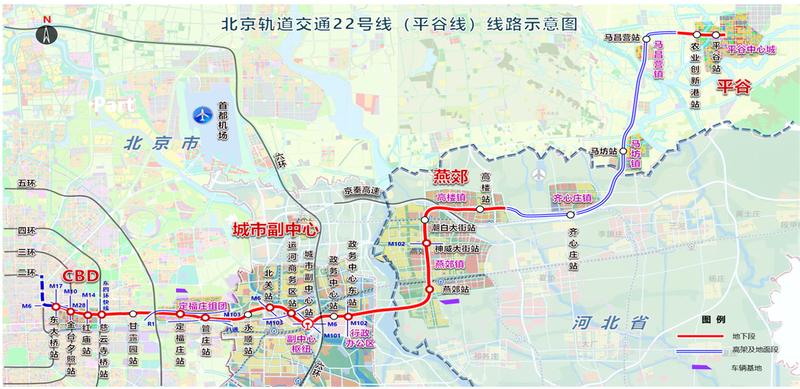
Group 1 - Beijing Rail Transit Company has won the bid to operate the Beijing Rail Transit Line 22 (Pinggu Line), marking it as the operator of this line [1][5] - The Pinggu Line is the first urban rail transit line in Beijing that crosses provincial boundaries and serves as a demonstration line for the coordinated development of Beijing-Tianjin-Hebei [1][2] - The line spans approximately 81.82 kilometers with 22 stations, including 19 underground and 3 elevated stations, featuring an average station spacing of 3.83 kilometers [1][2] Group 2 - The Pinggu Line connects key functional areas such as Beijing's business center, urban sub-center, Yanjiao, and Pinggu New Town, enhancing the commuting efficiency for cross-provincial travelers [2] - Beijing Rail Transit Company aims to become a leading urban rail transit service provider, having already operated several significant lines, including the fully automated Yanfang Line and the Daxing Airport Line [5] - The acquisition of the operating rights for Line 22 is seen as a milestone in the company's development, initiating a "second entrepreneurship" phase following the successful completion of its "three-step" strategy [5]
天津滨海新区高质量完成“十四五”规划
Zhong Guo Fa Zhan Wang· 2025-08-18 07:44
Core Viewpoint - The Tianjin Binhai New Area has made significant achievements during the "14th Five-Year Plan" period, focusing on high-quality development and aligning with national strategies [1] Group 1: National Strategy and Development - Binhai New Area has actively supported the de-concentration of non-capital functions from Beijing, undertaking 278 major projects with a total investment of 273.4 billion yuan, and attracting 1,484 new institutions from Beijing [2] - Major infrastructure projects such as the Tianjin-Weifang High-speed Railway and Beijing-Tianjin Intercity Railway have been implemented, enhancing regional collaboration and high-quality development [2] Group 2: Economic Performance - In 2024, the region's GDP is projected to reach 784.3 billion yuan, accounting for 43.5% of the city's total, an increase of 1.8 percentage points from the end of the "13th Five-Year Plan" [3] - The per capita disposable income of urban residents is expected to be 68,000 yuan, an increase of 13,000 yuan from the end of the "13th Five-Year Plan," with an average annual growth rate of 5.3% [3] - In the first half of this year, the GDP and general public budget revenue of Binhai New Area grew by 5.4% and 5.8%, respectively, indicating a solid economic foundation [3] Group 3: Industrial Structure and Upgrading - The region has optimized its industrial structure, forming five industrial clusters with over 100 billion yuan in sectors such as green petrochemicals and new energy vehicles, and five service industry clusters [4] - Binhai New Area has established nine national new-type industrialization demonstration bases and is actively developing future industries, including biomanufacturing and independent innovation [4] Group 4: Reform and Innovation - Major reforms such as "separation of licenses and permits" and "one enterprise, one certificate" have been implemented, leading the nation in reform initiatives [5] - The region has established seven national key laboratories and three national innovation centers, with the number of national high-tech enterprises reaching 5,338, a 60% increase from the end of the "13th Five-Year Plan" [5] Group 5: Social Progress and Quality of Life - Binhai New Area has focused on improving living standards, with 295 old residential communities renovated and 54 new schools built, resulting in an increase in life expectancy to 83.8 years [6] - The area has created 394,000 new jobs and enhanced elderly care services, reflecting a commitment to high-quality living experiences for residents [6]