
京津冀协同发展

Search documents
站产城互融
Jing Ji Ri Bao· 2025-08-16 21:50
Group 1 - The core viewpoint emphasizes the role of Wuqing District as a key player in promoting the integration of Beijing-Tianjin-Hebei, focusing on deep integration of industry and urban development [1] - Wuqing District has established a comprehensive management system for seven industrial functional zones, including Wuqing Development Zone and Jingqing Automotive Industry Park, to facilitate the integration of construction, production, investment, and services [1] - In the first half of the year, Wuqing District achieved a GDP of 49.261 billion yuan, representing a year-on-year growth of 5.8%, with 390 projects landing and an expected investment of 11.8 billion yuan [1] Group 2 - Wuqing District is developing a new commercial area themed around high-end fashion consumption and automotive culture, enhancing its attractiveness to visitors [2] - The district has launched the "Wuqing New Ten Scenery" and ten high-quality tourism routes, improving its tourism offerings [2] - In 2023, Wuqing District hosted the "Meet the Canal" cultural creative market and other events, attracting 5.814 million visitors, a year-on-year increase of 3.4% [2]
8地共建“两山”朋友圈 门头沟举办第三届永定河绿色发展论坛
Xin Jing Bao· 2025-08-16 10:43
Group 1 - The third Yungding River Green Development Forum focused on ecological civilization construction and the "Two Mountains" theory, promoting collaboration among various regions [1][2] - The Mentougou District has implemented a strategy of "ecological district, cultural prosperity, and technological strength," achieving a forest coverage rate of 48.64% and a PM2.5 concentration reduction from 36 µg/m³ in 2019 to 28.6 µg/m³ in 2024 [1][2] - The district's ecological system service value reached 35.97 billion yuan in 2024, an increase of 221 million yuan from the previous year, ranking first among Beijing's ecological conservation areas [1] Group 2 - Mentougou District is developing cultural tourism brands and has achieved a historic urban-rural income ratio of below 2 in 2024, while also focusing on high-tech industries such as artificial intelligence and medical devices [2] - A collaborative initiative called the "Two Mountains" friendship circle was launched, involving multiple districts and regions to enhance cooperation in ecological protection, green industries, and biodiversity [2][3] - The district aims to transform ecological advantages into economic and social benefits, sharing experiences and building mechanisms for sustainable development in the Beijing-Tianjin-Hebei region [3]
滨海新区五年引进北京在津新建机构1484家
Bei Jing Ri Bao Ke Hu Duan· 2025-08-15 12:02
Group 1 - The Tianjin Binhai New Area has actively served the decongestion of non-capital functions from Beijing, undertaking 278 major projects with a total investment of 273.4 billion yuan over the past five years [1][3] - The area has introduced 1,484 new institutions from Beijing and has seen significant investment from major projects, exceeding 250 billion yuan from Beijing sources [3] - Binhai New Area has formed an innovation collaboration model of "Beijing R&D, Binhai transformation," integrating innovation resources into the capital's tech circle [3][4] Group 2 - Major infrastructure projects such as the Tianjin-Weifang High-speed Railway and the Beijing-Binhai Intercity Railway are accelerating construction, enhancing regional connectivity [4] - The area has implemented 372 action plans to translate policy measures into practical productivity, focusing on enhancing technology R&D transformation capabilities [4] - High-level research institutions, such as the Beijing Institute of Technology's New Energy and High-Performance Manufacturing Laboratory, have established a presence in the region, promoting collaboration with major scientific research infrastructures [4]

重大工程系列报告之三:雄安高铁网建设进度如何了?
Hua Yuan Zheng Quan· 2025-08-15 10:15
Investment Rating - Investment Rating: Positive (Maintain) [5] Core Viewpoints - The construction of an efficient rail system in Xiong'an New Area is accelerating, with a focus on creating a national comprehensive transportation hub. The railway network is forming a "four vertical and two horizontal" high-speed rail system that covers the Beijing-Tianjin-Hebei core area and extends to Central China, East China, and Northwest regions [5][6][9] - The three high-speed rail lines (Xiongshan, Xionxin, and Shixiong) have a total investment of approximately 177.3 billion yuan, with significant construction progress expected between 2025 and 2027, leading to potential revenue and profit growth for related companies [5][36][39] Summary by Sections 1. Efficient Rail System Construction - Xiong'an New Area is strategically positioned to support national development, serving as a key hub for relieving Beijing's non-capital functions. The area is expected to achieve significant connectivity with major cities, including a 20-minute commute to Beijing's new airport and 30 minutes to Beijing and Tianjin [6][9] - The policy framework supporting the railway system has been established, with multiple levels of government backing the construction of high-speed rail and other transportation infrastructure [7][9] 2. High-Speed Rail Network Development - The Xiongshan High-Speed Rail connects Xiong'an to Central China, with a total length of approximately 552 kilometers and a planned completion date of 2026. The project has a total investment of 86.4 billion yuan [14][20] - The Xionxin High-Speed Rail, spanning 342.67 kilometers, is expected to enhance connectivity between Xiong'an and Shanxi, with a completion target of 2027 [21][24] - The Shixiong High-Speed Rail will connect Shijiazhuang and Xiong'an, with a total investment of approximately 33.65 billion yuan and a planned completion date of 2028 [30][33] 3. Investment Opportunities - The construction phase for the three high-speed rail lines is expected to release over 40.7 billion yuan in civil engineering funds between 2025 and 2027, creating significant opportunities for construction and equipment manufacturing companies [5][36][39] - Key construction companies involved include China Railway and China Railway Construction, which are expected to benefit from the ongoing projects [38][39] - The demand for tunnel boring machines (TBM) and related equipment is anticipated to rise due to the high proportion of tunnel construction in the projects, benefiting leading manufacturers in the sector [39][40]




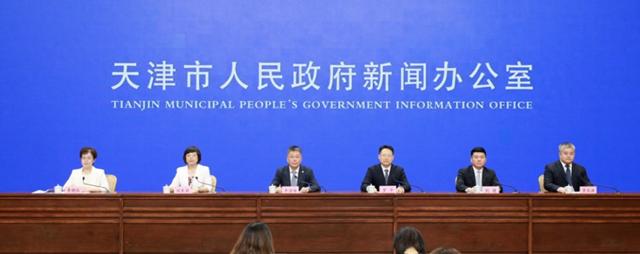
实现京津冀“区域通办”1108项,滨海新区全面发力京津同城化
Bei Jing Ri Bao Ke Hu Duan· 2025-08-15 05:29
Core Insights - The Tianjin Binhai New Area has effectively implemented the "14th Five-Year Plan" by focusing on high-quality development and regional integration, particularly through the collaboration with Beijing and Tianjin [1][8] Group 1: Investment and Project Development - Over the past five years, Binhai New Area has attracted 278 major projects with a total investment of 273.4 billion yuan, including significant contributions from state-owned enterprises [1][3] - The area has successfully introduced 1,484 new institutions from Beijing, with a notable investment exceeding 250 billion yuan from Beijing-originated major projects [3] Group 2: Innovation and Industrial Collaboration - Binhai New Area has deepened collaborative innovation and industrial cooperation, integrating innovation resources into the Beijing-Tianjin-Hebei technology innovation ecosystem [5] - The establishment of 7 entities in the national technology innovation center laboratory system and 12 units in the concept verification platform highlights the region's commitment to innovation [5] Group 3: Infrastructure and Regional Integration - Major infrastructure projects such as the Tianjin-Weifang High-speed Railway and the Beijing-Binhai Intercity Railway are accelerating construction, enhancing connectivity within the region [8] - The area has achieved significant progress in cross-province service integration, with 1,108 high-frequency service items now available for inter-provincial processing [8]
京津冀高校青年共上“同向共行的大思政课”
Zhong Guo Qing Nian Bao· 2025-08-14 22:37
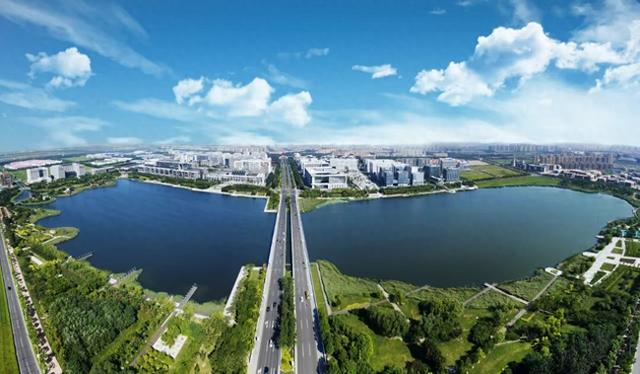
Group 1 - The event "So Close, So Beautiful, Weekend in Hebei" involved over 200 young teachers and students from Beijing, Tianjin, and Hebei, focusing on cultural exchange and understanding the close ties among the three regions [1][3] - Participants engaged in immersive experiences, such as watching the red-themed performance "Shijiazhuang 1947," which helped them connect with historical revolutionary spirit [1][2] - The event included visits to significant historical sites like the Xibaipo Memorial and a lesson on ideological education, emphasizing the importance of unity and collective effort in regional development [2][3] Group 2 - The activities highlighted the transformation of North Zhuang Village from poverty to revitalization, showcasing the power of unity and hard work [2] - Students expressed their aspirations to contribute to urban development and technological innovation, inspired by the collaborative opportunities presented by the Beijing-Tianjin-Hebei integration [2][3] - The event served as a platform for deepening friendships, exchanging ideas, and exploring cooperation among youth from the three regions, with plans for future collaborative initiatives [3]
天津红桥加快建设京津冀同城商务区 打造同城化发展新载体
Zhong Guo Xin Wen Wang· 2025-08-14 17:32
Core Viewpoint - The Tianjin Hongqiao District is leveraging the Beijing-Tianjin-Hebei coordinated development strategy to enhance its business district, focusing on transportation upgrades, industrial development, and talent policies to attract businesses and support the Xiong'an New Area and Beijing's sub-center [1][2]. Group 1: Transportation Infrastructure - The Tianjin West Station has been developed as a comprehensive transportation hub, featuring the only urban terminal in the country, which provides check-in and luggage transfer services, facilitating seamless connections with international flights [1]. - With the expected operation of the second line of the Beijing-Shanghai High-Speed Railway by 2028, over 80% of the intercity trains between Beijing and Tianjin are projected to converge at Tianjin West Station, enhancing its hub functionality and promoting convenient commuting [1]. Group 2: Industrial Development - The Hongqiao District has completed the demolition of surrounding shantytowns, releasing approximately 2.8 million square meters for construction, and is actively revitalizing existing resources, such as a 60,000 square meter office project that has attracted state-owned enterprises and private companies [1]. - Major commercial projects, including Sam's Club, are scheduled to launch by the end of this year, indicating a robust pipeline of development in the area [1]. Group 3: Talent and Policy Support - The Beijing-Tianjin-Hebei coordinated business district is utilizing high-quality educational resources from the region to supply skilled professionals to enterprises, addressing key challenges such as employee social security and household registration [2]. - The Hongqiao District plans to encourage private companies like Kumi Network and Yidian Yichuang to establish regional headquarters, further enhancing its capacity to absorb non-capital functions [2].
京冀携手共建养老服务供需对接新机制
Xin Hua Cai Jing· 2025-08-14 13:45
Core Viewpoint - The event marks a significant step in the integration of elderly care services between Beijing and Hebei, aiming to enhance cooperation and resource sharing in the elderly care sector [1][2]. Group 1: National Strategy and Regional Collaboration - The event aims to implement the "National Medium and Long-term Plan for Actively Responding to Population Aging" and the "Beijing-Tianjin-Hebei Coordinated Development Plan," promoting a collaborative industrial structure of "Beijing R&D + Hebei Implementation" and "Beijing Medical + Hebei Health Care" [2]. - The agreement focuses on addressing the supply-demand imbalance in elderly care services through policy coordination, resource sharing, and standardization [2]. Group 2: Market Activation and Demand Matching - The agreement establishes three cooperative platforms: an information sharing platform for resource integration, a standard collaboration platform for mutual recognition of service standards, and a talent cultivation platform for training professionals in elderly care [3]. - The initiative aims to create a "Beijing Service + Hebei Scene" model for new elderly care formats, enhancing project cooperation and resource complementarity among enterprises [3]. Group 3: High-Quality Development and Best Practices - The event included a field study of various representative elderly care institutions in Beijing, focusing on smart elderly care, medical integration, and age-friendly renovations [4]. - A closed-door seminar was held to discuss brand building and investment experiences in elderly care, emphasizing the need for a combination of top-level design and grassroots innovation to address population aging [4]. - The next steps include forming a "Beijing-Hebei Elderly Care Cooperation Working Group" to refine cooperation details and establish regular communication channels for high-quality development in the elderly care industry [4].
优化港口布局 拓展内外航线 壮大临港产业 河北打造向海发展增长极
Ren Min Ri Bao· 2025-08-14 07:02
Core Viewpoint - The article emphasizes the transformation and modernization of Hebei's port industry, focusing on the integration of smart technology and the development of a comprehensive logistics network to enhance efficiency and support regional economic growth [1][4][5]. Group 1: Port Modernization and Efficiency - The Huanghua Port has achieved full automation in coal loading operations, significantly improving loading efficiency [1]. - In 2024, Hebei's ports are expected to handle a total cargo throughput of 1.405 billion tons, with Tangshan Port ranking second among global coastal ports [3]. Group 2: Strategic Development and Integration - Hebei has established 97 inland ports and developed 30 container sea-rail intermodal routes, enhancing connectivity with inland enterprises [4]. - The port group has opened 68 international and domestic container shipping routes, actively aligning with national strategic needs [4]. Group 3: Industrial Synergy and Economic Growth - The integration of port and industrial operations has led to the establishment of a closed-loop logistics system, enhancing economic and environmental efficiency [5]. - The coastal region of Hebei is projected to achieve a GDP of over 1.68 trillion yuan in 2024, with a growth rate of 5.5%, surpassing the provincial average [5].
优化港口布局拓展内外航线壮大临港产业 河北打造向海发展增长极
Ren Min Ri Bao· 2025-08-12 22:22
Core Viewpoint - The news highlights the advancements in the port operations of Hebei Province, particularly at Huanghua Port, emphasizing the integration of smart technologies and the strategic development of port resources to enhance efficiency and support national initiatives [1][5]. Group 1: Port Operations and Efficiency - Huanghua Port has achieved full automation in coal loading operations, significantly improving loading efficiency [1]. - In 2024, Hebei Province's ports are projected to handle a total cargo throughput of 1.405 billion tons, with Tangshan Port ranking second among coastal ports globally [4]. Group 2: Strategic Development and Integration - The Hebei Port Group has been established to integrate port resources and streamline operations, implementing a unified planning and operational strategy [3]. - The group has opened 68 container trade routes, enhancing both domestic and international logistics for enterprises in the Beijing-Tianjin-Hebei region [5]. Group 3: Economic Impact and Growth - The coastal region of Hebei is expected to achieve a GDP of over 1.68 trillion yuan in 2024, with a growth rate of 5.5%, surpassing the provincial average [6]. - The development of modern port industries is seen as a key driver for regional economic growth, aligning with national strategies for high-level openness and resource integration [6].