人民币国际化

Search documents
美元储备创30年新低!霸权时代要结束了?人民币国际化任重道远
Sou Hu Cai Jing· 2025-12-16 22:46
Group 1 - The core argument discusses the potential shift in the global currency landscape, questioning whether the era of US dollar dominance is coming to an end and if the renminbi is set to rise [1] - The global currency market is experiencing a tension between the desire for change and the difficulty of achieving it, as emerging economies seek to challenge the dollar's dominance [3][5] - The transition in the global currency system is gradual, with the dollar having established itself as the primary currency due to the US's economic strength and the depth of its financial markets [7][9] Group 2 - The renminbi's internationalization is progressing steadily, with more countries looking to diversify their currency reserves, although the dollar still holds significant power in international settlements and reserves [11][25] - The dollar's strength is supported by robust economic indicators in the US, with expectations of a controlled reduction in interest rates rather than a drastic decline [13][16] - The dollar's status as a safe haven remains unchallenged, as geopolitical risks and economic recovery vary globally, making it a preferred choice for investors [18][20] Group 3 - The renminbi faces challenges, including a lack of strong internal support due to sluggish economic recovery in China, with indicators like CPI and PPI showing weakness [22] - The future of the global currency landscape is likely to evolve slowly, with the dollar remaining dominant while other currencies, including the renminbi, play supplementary roles [25][34] - Long-term prospects for the renminbi depend on China's economic transformation and the opening of its financial system, which includes achieving capital flow freedom and market-oriented reforms [25][27]

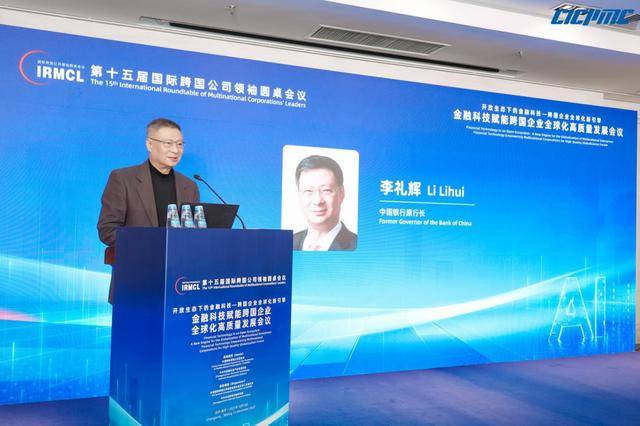
李礼辉:中国企业全球化发展离不开三大核心要素
Sou Hu Cai Jing· 2025-12-16 15:09
Group 1 - The core elements for the globalization of Chinese enterprises include the US-China AI competition, the internationalization of the Renminbi, and the deep empowerment of financial services in the industrial chain [1][3] - AI is identified as a core technology that determines future national strength, with a focus on computing power competition primarily between the US and China, where the US prioritizes hard computing power while China adopts a dual approach of hard and soft computing power [3] - China possesses the largest market demand for digital technology in manufacturing and services globally, which is a unique advantage for its AI development [3] Group 2 - The digitalization of currency is an irreversible trend, with the digital Renminbi developing in three directions: advanced digitalization, broader tool application, and grander internationalization [3] - The internationalization of the Renminbi is seen as a strategy to counteract US monetary and financial hegemony, with three counter-strategies proposed: stability against instability, multipolarity against unipolarity, and strong trust against weak trust [3] - Chinese financial institutions are enhancing their support for outbound enterprises by optimizing global layouts for industrial upgrades, strengthening industrial chain collaboration to improve efficiency, and expanding financial services in the industrial chain to boost international competitiveness [3]
第二届中国智能金融论坛暨中国国际金融30人论坛(第二十二届)在京举办
Xin Hua Cai Jing· 2025-12-16 11:43
Core Insights - The second China Intelligent Finance Forum emphasized the integration of technology and finance as essential for high-quality economic development in China [1] - The forum highlighted the need for collaboration among universities, government, and enterprises to advance intelligent finance and financial security [2] - Discussions at the forum addressed the impact of geopolitical changes on global finance and the dual challenges and opportunities presented by the international financial system [2][3] Group 1: Forum Overview - The forum's theme was "China Intelligent Finance, Global Geopolitical Changes, and Financial Security" [1] - The event featured discussions on the transformation of the global economy and the role of technology as a strategic resource in international competition [1] Group 2: Geopolitical and Financial Governance - Experts noted a structural shift in US-EU relations and emphasized the importance of objective analysis and proactive responses from China [2] - The current international financial system faces challenges from the dollar's dominance and opportunities for the internationalization of the renminbi [2] - China is positioned as both a beneficiary and a rule-maker in the evolving global financial landscape, advocating for financial openness and risk prevention [2] Group 3: Artificial Intelligence and Financial Security - The integration of artificial intelligence and blockchain is transforming the financial industry while also introducing new risks that necessitate improved regulatory frameworks [3] - Intelligent finance has made progress in sectors like agriculture, healthcare, and data operations, enhancing risk management and financial stability [3] - Future efforts should focus on collaboration in technology innovation, security assurance, and talent development to achieve high-quality financial growth [3]
港交所CEO陈翊庭:正在处理的上市申请超过300家,将继续扩大上市公司来源
Sou Hu Cai Jing· 2025-12-16 11:19
Core Insights - The Hong Kong IPO market has welcomed over 100 companies since 2025, raising more than HKD 270 billion, with over 300 applications currently being processed for 2026 [2][3] Group 1: Market Performance and Drivers - The primary drivers behind the Hong Kong market's performance include the global trend of diversified capital allocation and the shift in China's economic development model [3] - Global investors are increasingly seeking diversified growth and risk management opportunities, with Hong Kong being a key market for this trend [3] - The "DeepSeek moment" in January 2025 highlighted China's strength in advanced technology and its transition to a high-value, innovation-driven growth model [3] Group 2: Competitive Advantages and Future Strategies - The interconnectedness with the mainland market is a significant advantage for the Hong Kong Stock Exchange (HKEX) compared to other international exchanges [4] - HKEX aims to strengthen this advantage by optimizing connectivity with the mainland and promoting the internationalization of the RMB [4] - Over the next decade, HKEX plans to enhance regional cooperation and connect Asian markets with opportunities in China [4] Group 3: Strategic Focus Areas - The first strategic focus is to expand and enhance a diversified asset ecosystem, introducing products tailored for Asian clients, particularly retail and professional investors [5] - The second focus is on technological and operational advancements, including market consultations on settlement cycle reforms and the adoption of emerging technologies like AI [5][6] - The third focus is on developing emerging businesses such as data, analytics, indices, digital currencies, and tokenization, with plans to launch more index products to facilitate investment in Asian assets [6]
持续升值!人民币汇率升破7.04,后市怎么走?
Sou Hu Cai Jing· 2025-12-16 09:38
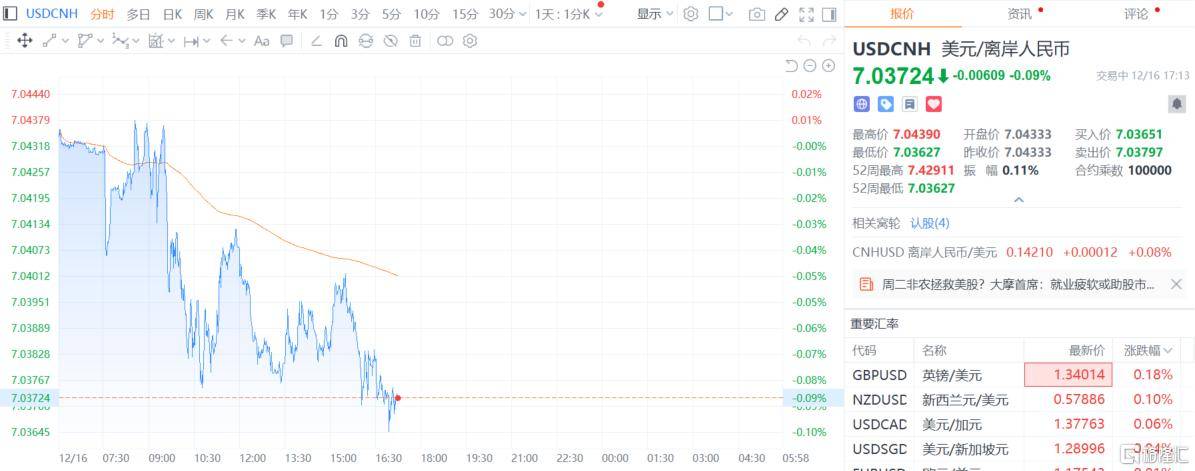
人民币再升值! 今日(12月16日),在岸、离岸人民币对美元汇率再次走强。 离岸人民币对美元汇率再次击穿7.04,盘中一度升至7.03627,创2024年10月以来新高,年内累计升4%;在岸人民币对美元汇率盘中最高升至7.0472,亦创 下2024年10月以来新高,年内累计升3.5%。 对于近期人民币对美元汇率连续上行,业内人士表示,是内外因素共振、市场与政策协同作用的结果,有三大推动因素。 一是美元走弱提供了外部窗口。美联储货币政策转向是关键外部因素。随着美国就业数据降温,美联储降息信号由模糊不定、争议分歧大逐渐变为大概率降 息,导致美元指数整体波动下降,如11月下降约0.3%,为非美货币创造了升值空间。 二是年底临近,企业结汇需求增加,也会带动人民币季节性走强;特别是近期人民币持续走强后,前期累积的结汇需求有可能在加速释放。 三是资产重估与信心修复,国内资产吸引力提升。首先,今年以来中国A股的强劲表现,吸引了全球资本流入。外资增配中国股票等资产,直接增加了对人 民币的需求。其次,中国出口展现出超预期的韧性,贸易顺差为汇率提供了基本面支撑。同时,中美经贸关系趋于稳定,缓解了市场的紧张情绪,市场对国 内经济的 ...


人民币一夜飙破7.05!创14个月最高,换1万美元立省3000,现在上车晚不晚?
Sou Hu Cai Jing· 2025-12-16 06:07
Core Viewpoint - The recent appreciation of the Renminbi (RMB) against the US dollar is driven by a combination of factors including the Federal Reserve's interest rate cuts, strong export performance, and policy measures aimed at stabilizing exchange rate expectations. Group 1: Drivers of RMB Appreciation - The Federal Reserve's recent interest rate cut of 25 basis points has led to a decline in the US dollar index, which fell below 100, marking a new low since September 2024 [3]. - China's export data exceeded expectations, with a year-on-year growth of 5.7% in November, resulting in a trade surplus of $111.68 billion, which has increased demand for RMB as companies engage in year-end currency settlement [3][4]. - The People's Bank of China (PBOC) has intervened by adjusting the central parity rate to manage expectations and prevent one-sided appreciation, while state-owned banks have purchased US dollars to balance market supply and demand [4]. Group 2: Future Exchange Rate Outlook - In the short term (1-3 months), the RMB is expected to experience two-way fluctuations, with a low probability of breaking below 7.0, supported by year-end corporate settlements and continued expectations of Fed rate cuts [5]. - However, the official signals to stabilize the exchange rate and potential rebounds in the US dollar index may act as suppressive factors [5]. - Institutions like CITIC Securities predict that the RMB will struggle to break 7.0 for the year, while Morgan Stanley forecasts a potential rise to 6.7-6.95 by the end of 2026 [6]. Group 3: Currency Exchange Strategies - For individuals with rigid currency needs, a phased approach to currency exchange is recommended to mitigate risks associated with exchange rate fluctuations [8]. - Investors are advised to use hedging strategies such as forward contracts to lock in future exchange rates, particularly for those with stable dollar income [8]. - Dollar holders should consider diversifying their asset allocation by converting some dollars into Hong Kong stocks, US stocks, or gold ETFs to reduce currency risk [10].

政策推动加生态适配,数币有望加速发展
GUOTAI HAITONG SECURITIES· 2025-12-16 02:12
政策推动加生态适配,数币有望加速发展 [Table_Industry] 综合金融 数字人民币专题报告 | [姓名table_Authors] | 电话 | 邮箱 | 登记编号 | | --- | --- | --- | --- | | 刘欣琦(分析师) | 021-38676647 | liuxinqi@gtht.com | S0880515050001 | | 孙坤(分析师) | 021-38038260 | sunkun@gtht.com | S0880523030001 | 本报告导读: 数字人民币有利于人民币国际化发展,在中国移动生态成熟背景下,数字人民币成 为可靠发展路径;推动数字人民币普及,有利于产业链上下游相关企业发展。 投资要点: [Table_Report] 相关报告 综合金融《绩效考核迎新规,行业更重投资者体 验》2025.12.09 综合金融《资本杠杆或进一步优化,打开优质头 部 ROE 长期提升空间》2025.12.07 综合金融《Agent 及端侧 AI 产品加速落地》 2025.12.07 综合金融《回归融物本源,重塑行业监管框架》 2025.12.06 综合金融《Gemini 3 ...
前海新增7家持牌机构 占全市新增总量6成
Nan Fang Du Shi Bao· 2025-12-15 23:13
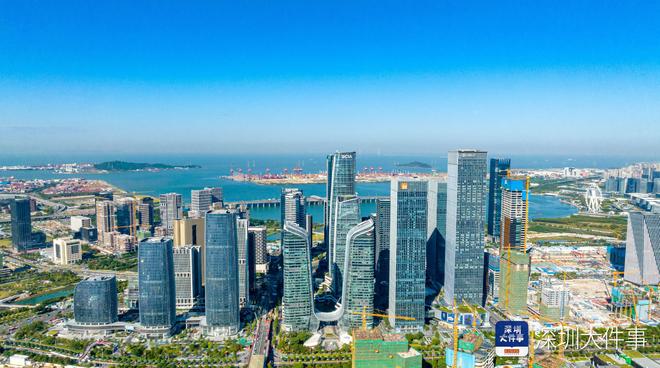
Core Viewpoint - Qianhai is leveraging its position as a financial hub to attract foreign investment, particularly from Hong Kong, aiming for significant advancements in financial openness and resource aggregation by 2025 [2][3]. Group 1: Financial Institutions - Seven key licensed financial institutions have been established in Qianhai, accounting for 60% of the city's new additions, including banks, securities, and futures companies [3]. - Notable new entrants include Fubon Bank (Hong Kong) Shenzhen Branch, which is the first branch of Fubon Bank in mainland China, enhancing the international financial landscape in Qianhai [3]. Group 2: Insurance and Private Equity - Four insurance fund projects initiated by companies like Ping An and Taiping have been launched in Qianhai, representing 80% of the city's new insurance projects, with a total scale of 47.8 billion yuan [4]. - The newly established private equity and venture capital funds in Qianhai account for 30% of the city's total new additions, with a management scale of 40% [4]. Group 3: Financial Technology - Qianhai has established a financial technology research and development center by Future Asset Group, marking a significant step in the smart finance sector [5]. - Major financial institutions such as HSBC and East Asia Bank have set up fintech subsidiaries in Qianhai, facilitating deep integration between Hong Kong capital and mainland innovation [5]. Group 4: Policy and Ecosystem - A total of 518 financial institutions have settled in Qianhai, with foreign capital accounting for approximately 30%, creating a diverse financial ecosystem [6]. - The financing leasing sector has surpassed 250 billion yuan in asset scale, with significant projects like the leasing of China's first domestically produced C919 aircraft [6]. Group 5: Voices and Perspectives - Experts highlight that Qianhai's success in attracting quality financial resources is due to its integrated approach of policy foundation, Hong Kong-mainland collaboration, and industry-finance synergy [7]. - Qianhai is viewed as a practical policy environment that serves as a model for financial openness and a testing ground for RMB internationalization [7].

央行授权星展银行担任新加坡人民币清算行
Guo Ji Jin Rong Bao· 2025-12-15 15:01
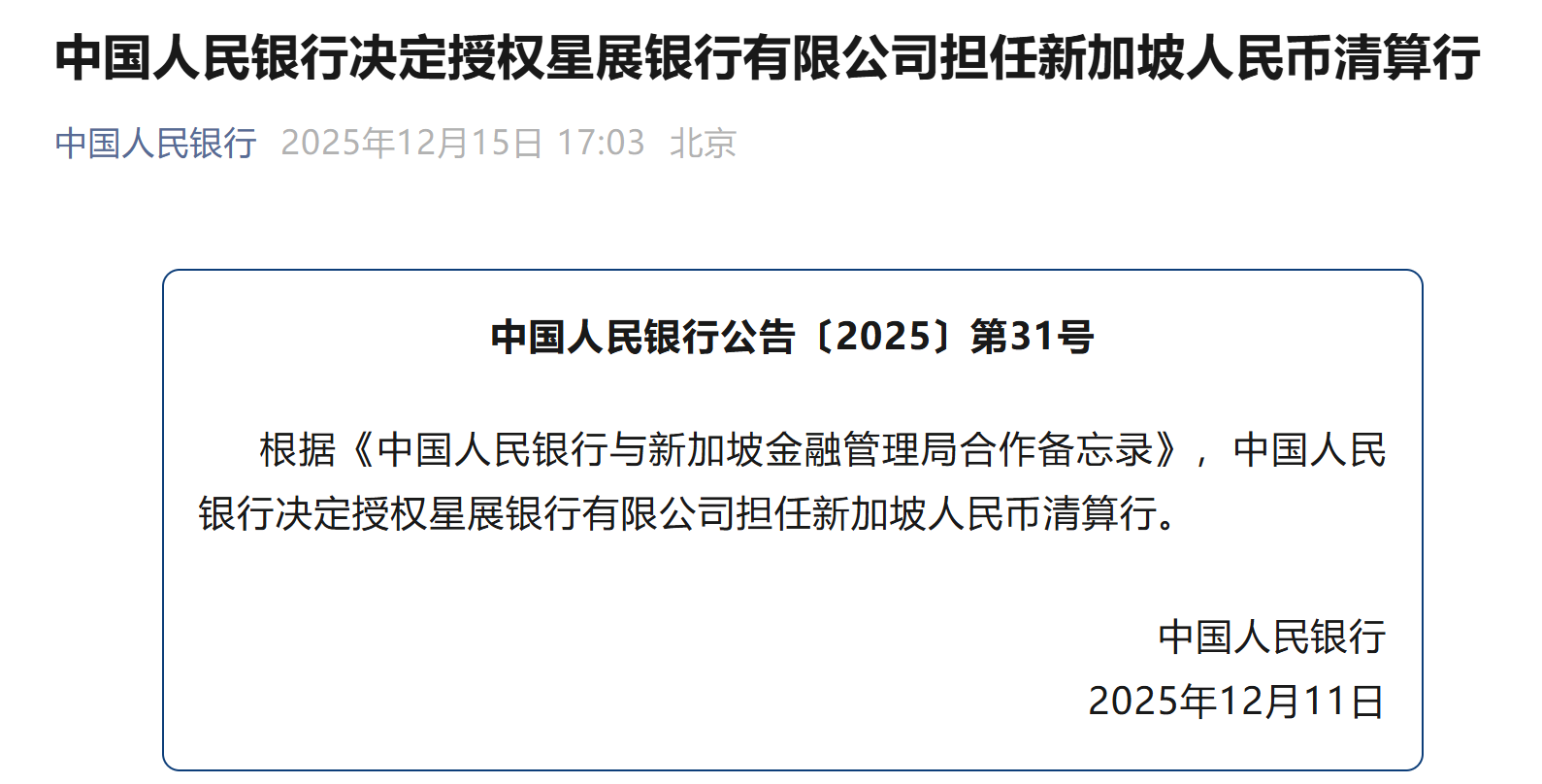
12月15日,中国人民银行发布公告称,根据《中国人民银行与新加坡金融管理局合作备忘录》,决定授权星展银行有限公司(下称"星展银行")担任新 加坡人民币清算行。 记者了解到,星展银行是首家获批该资格的新加坡银行。凭借人民币清算行资格,该行能够直接连接中国在岸人民币流动性支持,提供更加一体化的人 民币综合服务,帮助客户更便捷地投资各类人民币计价金融工具,并无缝衔接在岸与离岸市场的人民币业务需求。 星展银行环球金融市场部主管伍维洪表示,获批人民币清算行显著提升了星展银行支持客户参与中国深度金融市场的实力。星展银行现已具备更优越的 资质,在离岸与在岸人民币市场之间架起一座更加顺畅的桥梁。这将进一步促进亚洲区域经济活动,丰富客户的选择,并为发行人和投资者提供更广阔的市 场准入,使其能够以更强的信心和更高的灵活性把握人民币业务机遇。 星展银行环球交易服务部主管林顺忠表示,星展银行很荣幸获得中国人民银行的授权,在推动新加坡与中国金融合作方面发挥更大作用。随着客户日益 寻求增强业务韧性并分散货币风险,此次授权使星展银行能够为包括企业客户、投资者及代理行在内的多元客户提供更深层次的流动性支持和更强大的结算 能力。 ...
前海金融“强磁场”效应显现 新增持牌机构占全市六成
Nan Fang Du Shi Bao· 2025-12-15 14:47
Core Insights - Qianhai has emerged as a significant financial hub, attracting over 500 financial institutions, making it one of the highest concentrations of Hong Kong and foreign financial entities in China [1][3][8] - By 2025, Qianhai aims to deepen financial openness, focusing on high-quality financial resource aggregation and the construction of a distinctive financial ecosystem [1][3] Financial Institutions and Investments - Seven key licensed financial institutions have recently settled in Qianhai, including Fubon Bank (Hong Kong) and Huatai Securities, accounting for 60% of the city's new additions [3][4] - The total scale of four insurance fund projects initiated by companies like Ping An and Taiping in Qianhai reaches 47.8 billion yuan, representing 80% of the city's new insurance fund projects [4] Financial Technology Development - Qianhai has established a financial technology R&D center by Future Asset Group, indicating a strategic extension into smart finance [5] - Major financial institutions such as HSBC and East Asia Bank have set up fintech subsidiaries in Qianhai, enhancing the integration of Hong Kong capital with mainland tech innovation [5] Policy and Regulatory Framework - The implementation of the "30 Measures for Financial Support in Qianhai" has achieved over 90% execution, leading to six national firsts and eight initial results [7] - The establishment of the first foreign-controlled securities company in Qianhai reflects the region's commitment to innovative financial practices and deepening cross-border cooperation [7] Ecosystem and Collaboration - Qianhai has attracted 518 financial institutions, with about 30% being foreign, creating a symbiotic ecosystem that includes leading fintech companies and international insurance groups [8] - The integration of finance and industry in Qianhai is exemplified by the leasing of China's first domestically produced C919 aircraft, showcasing collaborative breakthroughs [8] Systematic Upgrades and Future Outlook - Qianhai's financial development has transitioned from isolated breakthroughs to systematic upgrades, focusing on institutional innovation and deepening Hong Kong-Shenzhen collaboration [9] - The region is positioned as a critical support for the high-quality development of Shenzhen and the new financial openness framework of the Guangdong-Hong Kong-Macao Greater Bay Area [9]