
大数据

Search documents
依米康跌2.05%,成交额1.23亿元,主力资金净流出1491.49万元
Xin Lang Cai Jing· 2026-01-06 03:19
Company Overview - Yimikang Technology Group Co., Ltd. is located in Chengdu High-tech Zone, Sichuan Province, and was established on September 12, 2002. The company was listed on August 3, 2011. Its main business involves providing green solutions for the entire lifecycle of digital infrastructure, relying on data centers to cover the entire industry chain [1]. Financial Performance - As of September 30, 2025, Yimikang achieved an operating revenue of 1.064 billion yuan, representing a year-on-year growth of 52.61%. The net profit attributable to the parent company was 27.6472 million yuan, showing a significant increase of 273.71% year-on-year [2]. - The company has cumulatively distributed 51.0709 million yuan in dividends since its A-share listing, with no dividends distributed in the past three years [3]. Stock Market Activity - On January 6, Yimikang's stock price decreased by 2.05%, trading at 14.84 yuan per share, with a total transaction volume of 123 million yuan and a turnover rate of 2.20%. The total market capitalization is 6.537 billion yuan [1]. - The stock has seen a year-to-date increase of 1.44%, with a 5-day increase of 1.44%, a 20-day increase of 3.34%, and a 60-day decrease of 6.90% [1]. Shareholder Information - As of September 30, 2025, the number of shareholders increased to 62,700, up by 4.88% from the previous period. The average number of circulating shares per person decreased by 4.65% to 5,958 shares [2]. - Among the top ten circulating shareholders, Hong Kong Central Clearing Limited is the seventh largest shareholder, holding 1.8998 million shares as a new shareholder [3]. Industry Classification - Yimikang is classified under the Shenwan industry category of Computer - Computer Equipment - Other Computer Equipment. It is associated with concepts such as Baidu Concept, Big Data, Digital Economy, Blockchain, and Alibaba Concept [1].

贵州:大力发展旅居产业 建成中国一流的旅居目的地
Zhong Guo Xin Wen Wang· 2026-01-05 23:29
Core Viewpoint - Guizhou aims to develop a first-class travel and residence destination in China by leveraging its natural ecology, cultural resources, and climate conditions, focusing on long-term stays and integrating various sectors such as tourism, healthcare, and culture [1][2]. Group 1: Development Goals - By 2027, Guizhou plans to cultivate 10 well-known county-level travel destinations, 50 diverse travel clusters, and 100 distinctive travel real estate projects, along with 400 quality service homestays and 400 innovative travel villages [1]. - By 2030, the goal is to establish 20 renowned county-level travel destinations, positioning Guizhou as a leading travel destination in China [1]. Group 2: Strategic Measures - Guizhou will implement measures such as enhancing top-level design, diversifying travel offerings, improving service quality, and promoting pilot projects [2]. - A travel service system combining online platforms and offline service centers will be established, utilizing technologies like big data and artificial intelligence to enhance service levels [2]. Group 3: Financial Support and Infrastructure - The provincial government will allocate special funds to support the travel industry, encourage investment funds, and include eligible projects in local government bond support [3]. - Financial institutions will be encouraged to offer "travel loans" and insurance products tailored for the travel industry [3]. - Measures will be introduced to optimize travel real estate project planning and address challenges related to property conversion for travel accommodation [3].
万亿资金,涌入A股这些方向
Zhong Guo Zheng Quan Bao· 2026-01-05 23:07
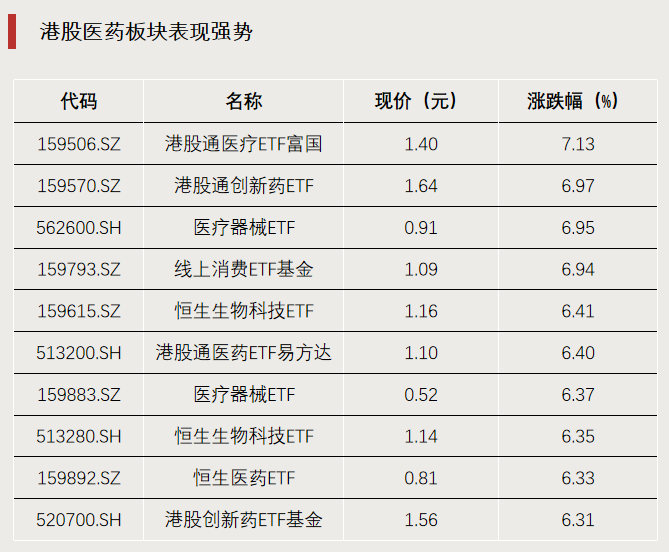
Group 1 - The A-share market shows a strong growth style, with notable performances in the pharmaceutical and semiconductor sectors, where multiple related ETFs rose over 5% in a single day [1] - The Hong Kong pharmaceutical sector is performing strongly, with several ETFs in innovative drugs and medical devices increasing by over 6%, highlighting the attractiveness of the sector post-adjustment [4][5] - The semiconductor sector is also experiencing significant gains, with multiple ETFs in this field rising over 5%, indicating a robust market for semiconductor-related investments [6][7] Group 2 - In December 2025, the A500 and Sci-Tech bonds became major directions for capital inflow, with several ETFs in these categories seeing net inflows exceeding 100 billion yuan [2][8] - The total net inflow for all ETFs in the market reached 11,785.99 billion yuan in 2025, showcasing a strong interest in ETF investments [2] - Specific ETFs such as the FuGuo CSI Hong Kong Internet ETF and the HuaAn Gold ETF saw annual net inflows exceeding 400 billion yuan, indicating strong investor confidence in these funds [10] Group 3 - The Hong Kong market is expected to see a recovery in corporate earnings, particularly benefiting sectors like non-ferrous metals and competitive industry leaders in internet and consumption [10][11] - The anticipated decline in risk-free rates in Hong Kong may lead to improved liquidity, potentially enhancing valuations in the market [11] - Key investment focuses for 2026 are expected to include AI, new consumption, pharmaceuticals, and dividend stocks, reflecting evolving market trends [11]

通达智宇(上海)计算机有限公司成立,注册资本1000万人民币
Sou Hu Cai Jing· 2026-01-05 21:08
Company Overview - Tongda Zhiyu (Shanghai) Computer Co., Ltd. has been established with a registered capital of 10 million RMB, fully owned by Shanghai Tongda Zhiyu Software Co., Ltd. [1][2] - The legal representative of the company is Zang Bosen [1][2] Business Scope - The company operates in the manufacturing of computer hardware and software, cloud computing equipment, internet devices, network equipment, communication devices, and mobile terminal devices [1] - Additional services include technology services, development, consulting, information technology consulting, cloud computing equipment services, data processing and storage support, and big data services [1] Industry Classification - The company is classified under the manufacturing industry, specifically in the sector of computer, communication, and other electronic device manufacturing [2]
亿汇:全球化服务与跨国运营
Sou Hu Cai Jing· 2026-01-05 16:02
Core Insights - Moneta Markets has established itself as a leader in the multinational service sector through its innovative global strategy, focusing on providing international solutions for a seamless user experience [4][8] - The platform emphasizes a borderless world-class service, aiming to empower users through globalization and personalized support [4][5] Global Expansion - Moneta Markets has strategically set up operational centers in key economies such as Southeast Asia, North America, and Europe, enhancing service responsiveness and personalized support [4][5] - The platform employs a global team of bilingual or multilingual customer service representatives to facilitate seamless communication and address language barriers [4][5] Product Diversification - The platform has developed localized projects tailored to regional user preferences, such as community building and educational resources in Asia, and innovation and sustainability initiatives in Europe [5][6] - This adaptive approach not only enhances user experience but also promotes cross-cultural integration [5][6] Technological Innovation - Moneta Markets invests in AI and big data tools to optimize customer interaction processes, ensuring high availability and stability of services [6][7] - The introduction of international training programs, including virtual learning courses, helps users enhance their skills and adapt to the global environment [6][7] Compliance and Trust - The platform adheres strictly to regulatory frameworks in major economies, collaborating with international financial institutions to obtain multiple certifications that safeguard user rights [5][6] - This transparent and reliable operational model has garnered widespread trust among global users [5][6] Community Engagement - Moneta Markets hosts international events, such as global user summits, to foster community engagement and deepen understanding among participants [6][7] - Long-term partnerships with local suppliers are established to promote sustainable regional economic development [6][7] Overall Strategy - The global service and multinational operations of Moneta Markets represent a comprehensive system that integrates strategic, technological, and cultural dimensions [7][8] - By focusing on local market depth and global integration, the platform creates an inclusive and efficient ecosystem for international collaboration [7][8]
广东为何强调发展这两大贸易支柱?
Sou Hu Cai Jing· 2026-01-05 14:53
Core Viewpoint - The implementation opinions released by the Guangdong Provincial Government aim to promote high-level openness and drive the high-quality development of digital trade and service trade, establishing Guangdong as a key player in these sectors [1][10]. Group 1: Digital Trade and Service Trade Development - Service trade is a crucial component of international trade and economic cooperation, and enhancing its quality is essential for navigating complex external situations and fostering new competitive advantages [2]. - Digital trade and service trade are projected to become the three pillars of trade power construction in China, alongside goods trade, with service trade expected to reach approximately 7.5 trillion yuan in 2024, and digital trade showing particularly strong performance with a projected total of 2.9 trillion yuan in digital service imports and exports [6][7]. - Guangdong's service trade is anticipated to exceed 1.3 trillion yuan and digital trade to surpass 680 billion yuan in 2024, contributing over one-fifth of the national total [7]. Group 2: Policy Implementation and Support Measures - The new regulations propose 18 measures focused on developing digital trade, promoting service trade innovation, expanding international market layouts, and strengthening support systems, all centered around high-level openness [10][13]. - Specific initiatives include supporting pilot projects in Hengqin, Nansha, and Qianhai for cross-border data management, implementing a negative list management system for cross-border service trade, and enhancing international cooperation in service trade [13]. - The policies also emphasize facilitating the cross-border flow of professional talent, optimizing cross-border capital flow management, and strengthening intellectual property protection, which are critical for addressing development bottlenecks and enhancing Guangdong's role in global trade [13].

保险股开门红!新华保险涨8.87%市值创历史新高,揭秘新华高质量发展密码
Xin Lang Cai Jing· 2026-01-05 14:16
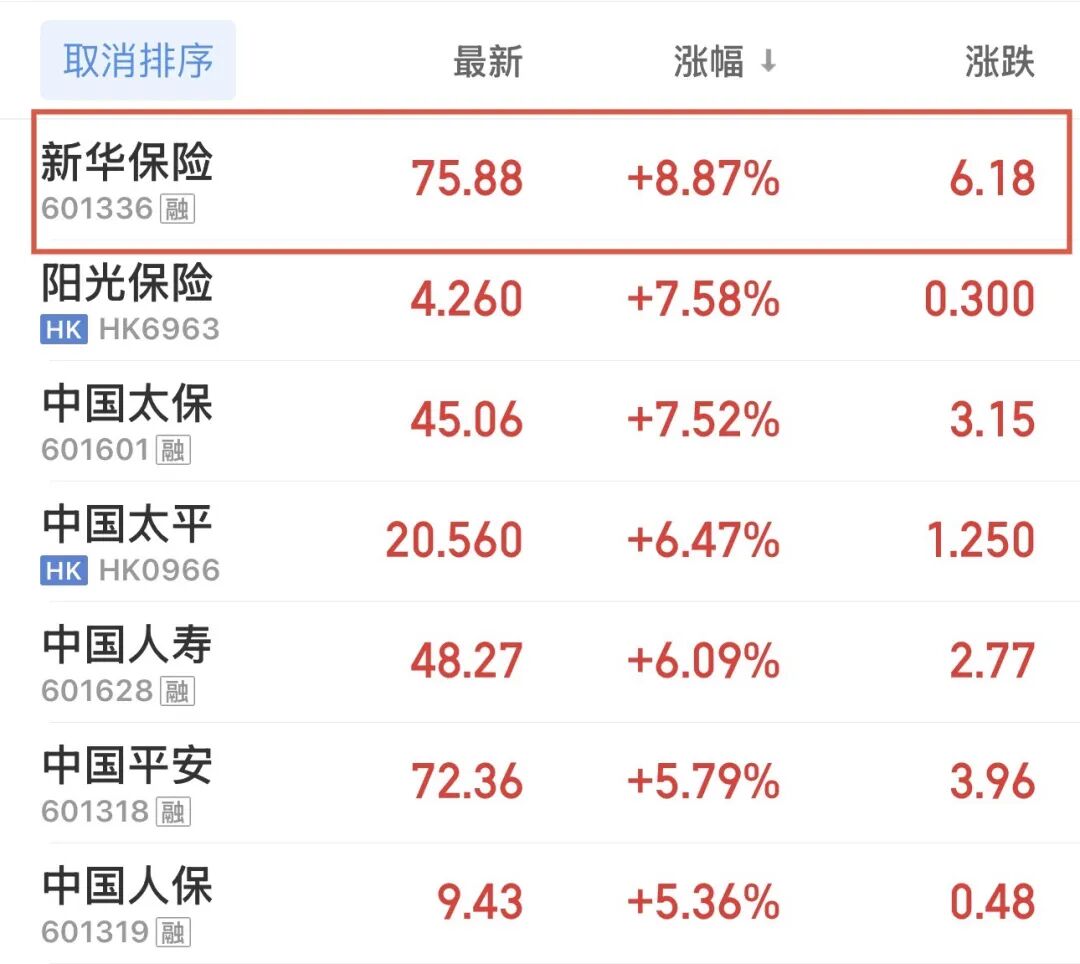
Core Viewpoint - The stock market opened positively in 2026, with New China Life Insurance leading the insurance sector with an 8.87% increase, marking a historical high in its A-share market value, surpassing 236.7 billion yuan [1][11]. Financial Performance - As of the end of Q3 2025, New China Life Insurance's total assets exceeded 1.8 trillion yuan, with premiums reaching 172.7 billion yuan, a year-on-year increase of 19% [4][14]. - The company's profit for the same period was 32 billion yuan, showing a significant increase of 119 million yuan compared to the previous year, with net profit for the first three quarters surpassing the total annual profit of previous years [4][14]. - The first-year premium income from long-term insurance reached 54.6 billion yuan, up 59.8% year-on-year, while the first-year regular premium income increased by 41% to 34.9 billion yuan [4][14]. Growth Drivers - The bank insurance channel has been a crucial growth point, with first-year premium income from this channel rising by 66.7% to 35.9 billion yuan [4][14]. - New business value increased by 50.8%, and renewal premiums remained stable, indicating strong growth across various business metrics [4][14]. Claims and Social Responsibility - In 2025, New China Life Insurance processed 5.01 million claims, with total payouts amounting to 14.7 billion yuan, averaging over 10,000 claims per day [4][14]. - The company has actively engaged in inclusive finance and supported numerous large-scale public welfare projects, with total payouts exceeding 3.3 billion yuan for rural populations [6][16]. Market Recognition - The stock price increase reflects the capital market's high recognition of New China Life Insurance's long-term value, with over ten securities institutions giving a "buy" rating in the last three months [8][20]. - The company has received multiple accolades, including being listed among the Fortune Global 500 and ranking among the top 50 global life insurance companies [20]. Innovation and Technology - New China Life Insurance focuses on product innovation, creating a comprehensive product system that addresses customer needs across various life stages, including health protection and wealth management [9][19]. - The company plans to invest at least 3 billion yuan in artificial intelligence and big data over the next 3-5 years to enhance its digital capabilities [9][19]. Investment Performance - The annualized investment return rate for the first three quarters of 2025 was 8.6%, with an average total investment return rate exceeding 5% over the past decade, positioning the company among market leaders [10][20].

喜报!浪潮智慧城市入选山东省大数据企业50强
Xin Lang Cai Jing· 2026-01-05 10:32
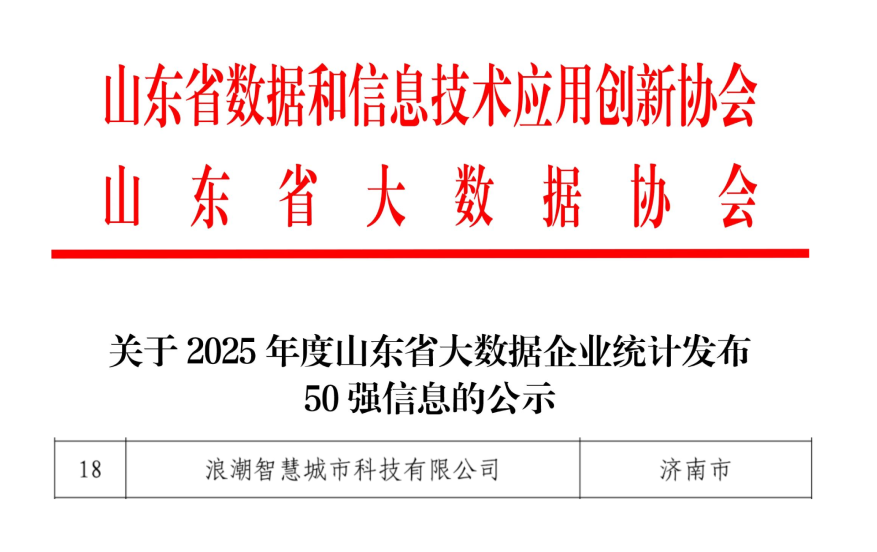
Core Viewpoint - The announcement of the "Top 50 Big Data Enterprises in Shandong Province for 2025" highlights the recognition of Inspur Smart City for its achievements in smart city construction and data innovation applications [1][4]. Group 1: Industry Recognition - The selection of the "Top 50 Big Data Enterprises" is a significant initiative by Shandong Province to implement the national big data strategy and build new advantages in the digital economy, aiming to identify benchmark enterprises with demonstrable effects and industry driving force [2][5]. - Inspur Smart City's inclusion in this list signifies its technical strength, practical achievements, and contributions to the industry, reflecting its leading position and exemplary value in the provincial big data industry [2][5]. Group 2: Technological Integration and Data Management - Inspur Smart City views data elements as the cornerstone of smart city construction, promoting precise urban governance, intelligent industry, and humanized services through the integration of cutting-edge technologies and data lifecycle management [2][5]. - The company has developed a "1+4" product system centered around a "trusted data space infrastructure," which includes an integrated big data platform, data asset management platform, public data authorization operation platform, and data resource registration platform, ensuring secure data circulation and efficient operation [2][5]. Group 3: Impact on Urban Development - Currently, Inspur Smart City supports data platform construction in over 100 cities nationwide, creating a systematic data resource directory that empowers efficient governance, digital quality of life, digital economy enablement, and urban digital renewal [3][6]. - In Jinan, the company has gathered over 47 billion data entries and integrated 175 business systems, facilitating cross-domain data fusion and business collaboration [3][6]. - In Linyi, the establishment of a "city brain" has led to the collection of 13.8 billion data entries, breaking down data barriers among dozens of departments and significantly improving sharing efficiency [3][6]. - In Lianhua County, a county-level data resource center has been created, gathering data from 35 departments and nearly 50 million entries, achieving cross-departmental sharing and business empowerment, setting a benchmark for county-level data-driven urban development [3][6]. Group 4: Future Development Goals - Inspur Smart City aims to continue strengthening its role as a benchmark leader, leveraging its advanced big data technology capabilities and extensive data resource accumulation to drive innovation and transformation, supporting high-quality development of the digital economy in Shandong Province and nationwide [3][6].
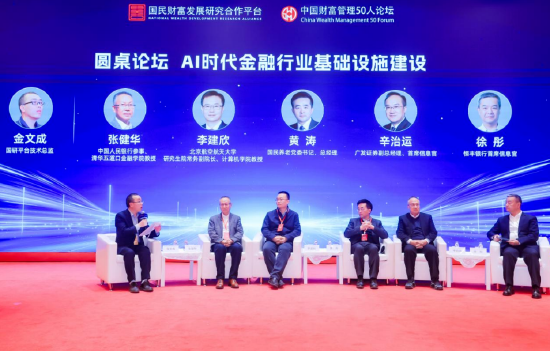
李建欣:金融与AI技术趋势有共性 核心目标是实现精准预测
Xin Lang Cai Jing· 2026-01-05 09:08
Core Insights - The China Wealth Management 50 Forum 2025 Annual Meeting was recently held in Beijing, focusing on the theme "Towards a Financial Powerhouse in the 14th Five-Year Plan" [1][3] Group 1: AI and Financial Industry Trends - A key trend identified in the AI and financial sectors is the importance of big data, which serves as the core of intelligence through data, computation, and connectivity [1][3] - The need for updates in information systems is emphasized as a critical component for the integration of AI in finance [1][3] - The integration of information, physical, and human worlds is highlighted as essential for AI, with the ultimate goal of finance being the ability to make accurate predictions [1][3] - The AI industry is undergoing continuous transformation, with a particular focus on sequences and predictions being vital in this evolution [1][3]
中科江南(301153) - 301153中科江南投资者关系管理信息20260105
2026-01-05 09:02
| 进行了解读和展望。 | | --- | | 1、政策解读 | | 《行动方案》明确提出的"账户体系+币串+智能合约"的 | | 数字化方案,大幅提升了在广域政府资金使用场景中的数字人 | | 民币应用空间,为数字人民币在财政、行政、社保、医保等政 | | 府性资金管理领域的资金流转、使用和监管指明了发展方向, | | 带来了新的业务机遇。 | | 以财政资金为代表的政府性资金是充分利用数字人民币 | | 特有的监管穿透性和多级资金管理能力的最佳使用范畴之一, | | 在公用事业、医保社保、国库资金运营等闭环领域具备低成本、 | | 高效能的广阔运用前景。 | | 自 2022 年起,公司便与多家银行就基于数字人民币在不 | | 同财政资金使用的业务场景共同开展了智能合约技术预研和 | | 场景测试,率先验证了基于数字人民币智能合约的财政资金全 | | 流程闭环管理模式,逐步形成系统性解决方案,并先后在江苏、 | 山东、河北、福建、海南等多地财政场景成功试点落地。 2、业务展望 证券代码:301153 证券简称:中科江南 北京中科江南信息技术股份有限公司 投资者关系活动记录表 编号:2026-01 | | ...