虚拟电厂

Search documents
财经聚焦|直面高温“烤”验 看今夏电力供应如何“过关”
Xin Hua She· 2025-07-14 14:42
Core Insights - The article highlights the record high electricity demand in China, reaching 1.467 billion kilowatts, and emphasizes the importance of ensuring sufficient power supply during peak summer months [1][2]. Group 1: Power Supply and Generation - Coal remains a critical component in energy supply, acting as a stabilizer in the energy mix, with major coal-fired power plants in Huainan contributing significantly to the grid [1][2]. - Huainan has seven large coal-fired power plants with a total installed capacity of 15.62 million kilowatts, supplying nearly 200 million kilowatt-hours daily to the East China grid [2]. - Nationally, coal inventories at regulated power plants have remained above 200 million tons, ensuring over 30 days of supply [2]. Group 2: Renewable Energy Contribution - The transition to renewable energy sources is increasingly vital for power supply during peak demand periods, with significant solar power generation reported in Shandong [4]. - On July 5, Shandong's renewable energy output reached 66.615 million kilowatts, accounting for 54.9% of the total grid load and 63.1% of total generation, with solar power contributing 83.9% of that output [4]. Group 3: Energy Distribution and Management - Efficient energy distribution systems are crucial for managing peak demand, with initiatives in Xinjiang facilitating the transfer of renewable energy to other regions [6][7]. - A new cross-regional trading mechanism has been established to optimize electricity supply and demand across different regions, enabling significant electricity transfers from southern provinces to eastern regions [9]. Group 4: Demand-Side Management - Demand-side management strategies, such as using virtual power plants and new energy storage systems, are being implemented to balance peak loads effectively [10][11]. - Initiatives encouraging residential energy conservation, such as the "demand response" program in Anhui, aim to reduce peak electricity usage by incentivizing households to save energy [13].


湖北武汉开出华中区域首笔虚拟电厂精准响应奖励金
Zhong Guo Xin Wen Wang· 2025-07-14 03:45
Group 1 - The core viewpoint of the articles highlights the successful implementation of virtual power plant (VPP) precise response load regulation in Wuhan, marking the first instance in Central China [1][2] - In response to the rising electricity load due to high temperatures, Wuhan's peak load reached 17.7415 million kilowatts on July 7, breaking historical records [1] - The Wuhan Municipal Development and Reform Commission authorized the establishment of the Wuhan Virtual Power Plant Management Center to initiate precise response invitations for load regulation [1][2] Group 2 - On July 8, three VPP operators adjusted approximately 15,000 kilowatts of electricity load from nearly 40 participating enterprises, earning a total of about 45,000 yuan in response rewards [2] - The Wuhan government has introduced implementation guidelines for VPP precise response, promoting a model of government-led, grid-built, and multi-party participation [2][3] - The VPP serves as a platform connecting power load resource aggregators with the government, allowing invited enterprises to consider their electricity load needs and energy utilization benefits [3]
电新周报:智元、宇树科技中标 1.24 亿人形机器人大单-20250713
Xinda Securities· 2025-07-13 06:08
Investment Rating - The industry investment rating is "Positive" [2] Core Viewpoints - The report highlights that the electric power equipment and new energy sectors are expected to see significant investment opportunities, particularly in the context of the growing demand for electric power driven by emerging industries like AI [2][3] - The report emphasizes the potential recovery in profitability for the lithium battery sector, driven by a decrease in lithium carbonate prices and advancements in fast-charging technologies [2][3] - The report identifies key companies to watch in the new energy vehicle sector, including CATL, BYD, and others, as well as in the electric power equipment sector, such as Sifang Electric and XJ Electric [2][3] Summary by Sections New Energy Vehicles - The lithium battery sector is expected to recover as the supply-demand imbalance improves, with lithium carbonate prices decreasing, which may lower battery costs and stimulate downstream demand [2][3] - The report notes a significant increase in new energy vehicle sales, with June 2025 sales reaching 1.329 million units, a year-on-year increase of 26.7% [11][12] Electric Power Equipment and Energy Storage - The report anticipates a major year for grid investment, with the electric power equipment sector poised for favorable investment opportunities due to the growing demand for electricity from new energy sources [2][3] - In energy storage, the report forecasts continued high growth, particularly in large-scale storage and commercial storage, driven by the development of virtual power plants and seasonal demand increases [3] Photovoltaics - The report indicates sustained high demand in Europe and robust domestic demand for ground-mounted power stations, with new technologies like TOPCon expected to drive further market growth [2][3] Industrial Control and Humanoid Robots - The report suggests a new industrial control cycle is approaching, with companies like Huichuan Technology and Xusheng Group recommended for investment [5] - The humanoid robot sector is maturing, with companies like Zhiyuan Robotics and Yushutech securing significant contracts, indicating a growing market for humanoid robots [5]
用电负荷创新高 电力迎峰度夏有保障
Sou Hu Cai Jing· 2025-07-11 09:13
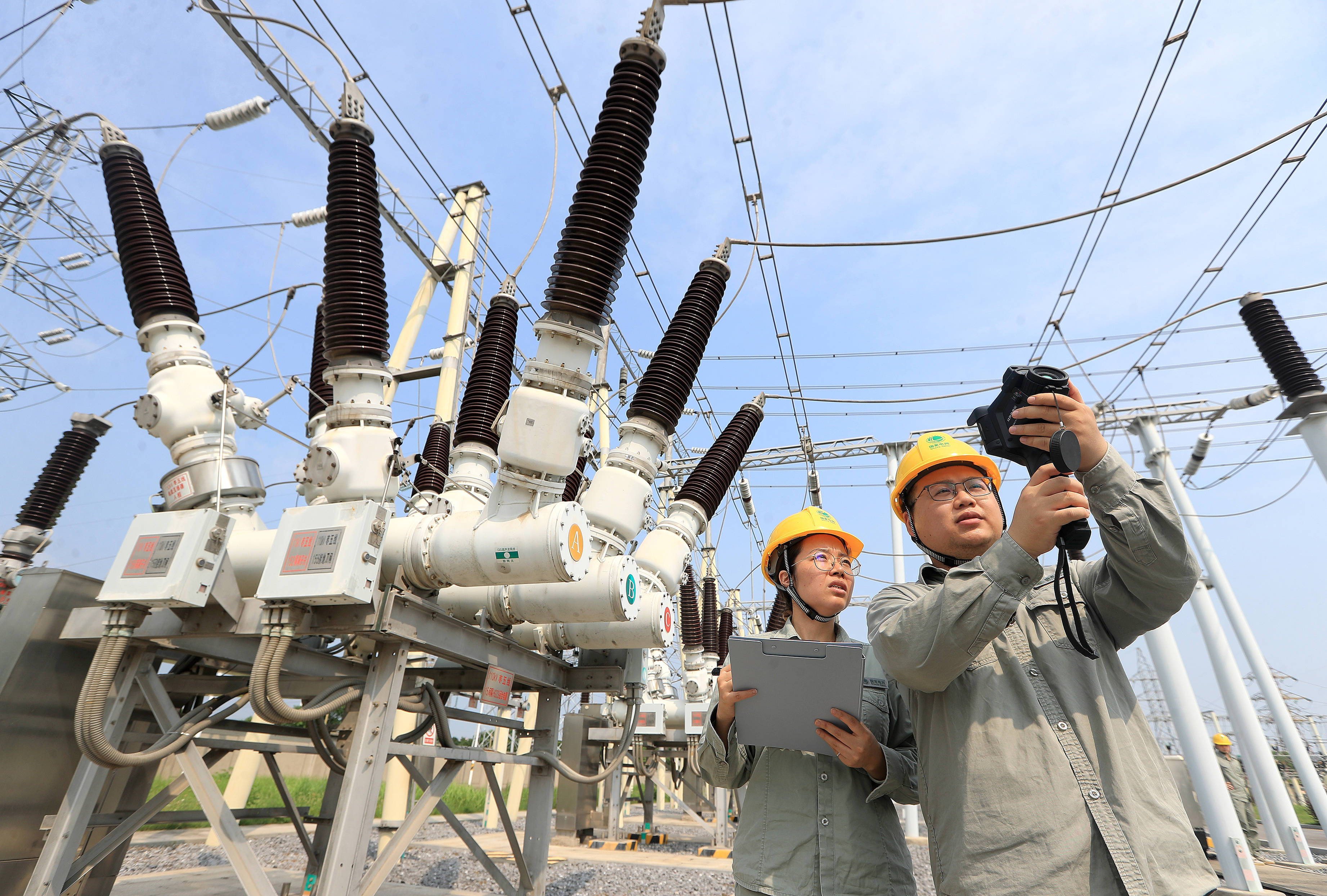
Core Insights - China's electricity load reached a historical record of 14.65 billion kilowatts on July 4, driven by sustained high temperatures across multiple regions, leading to a rapid increase in electricity demand [1][4] - The National Development and Reform Commission indicates that the power supply-demand situation for this summer is better than last year, with overall national power supply balance being secured [1][6] Electricity Supply Stability - High temperatures have caused significant increases in cooling load, with a direct load increase of over 1.2 billion kilowatts attributed to the heat [4] - The National Grid has initiated the "West-to-East Power Transmission" project, utilizing 14 ultra-high voltage lines to transmit over 200 million kilowatts, equivalent to powering 1 billion 100-watt light bulbs [4][5] - Major state-owned enterprises like China Huaneng and Datang have activated supply guarantee modes, enhancing flexibility in power generation to meet peak demands [5][6] Investment and Infrastructure Development - National energy investments exceeded 1.2 trillion yuan in the first half of the year, a 17.7% increase year-on-year, with over one-third allocated to solar and wind energy [7][9] - Key projects in southern power grids have been completed, enhancing transmission capacity and supporting high-demand areas [8][9] Renewable Energy Integration - Wind and solar power have become the main sources of new electricity generation, with total installed capacity surpassing that of thermal power [9][10] - The total installed capacity of solar power reached 1.08 billion kilowatts, a 56.9% year-on-year increase, while wind power capacity reached 570 million kilowatts, a 23.1% increase [9] Demand-Side Management - The National Development and Reform Commission's "three coordination" strategy aims to optimize electricity supply and demand management [10] - Various regions are implementing demand response measures, such as peak-shaving electricity pricing and virtual power plants to enhance load regulation capabilities [10][11] Regional Preparedness - Provinces like Hebei, Shandong, and Zhejiang are actively preparing for peak summer electricity supply, ensuring coal reserves and enhancing emergency response capabilities [11][12] - New energy storage technologies are being integrated to improve emergency supply capabilities during peak demand periods [11][12]

帮主郑重:7月10日涨停股里的门道,散户该怎么看?
Sou Hu Cai Jing· 2025-07-10 19:19
Group 1: Real Estate Sector - Huaxia Happiness experienced a limit-up due to supportive policies for the real estate sector and progress in debt restructuring, but the long-term outlook remains uncertain as the industry is still in a deep adjustment phase [3] - Investors are advised to wait for the company's mid-year report data before making decisions, as the recent price surge may be driven by market sentiment rather than fundamental recovery [3] Group 2: Digital Currency and AI - Zhongke Jincai's stock surged due to its involvement in digital currency and AI, particularly a partnership with banks to develop a cross-border payment platform, indicating potential growth [3] - However, the company reported a loss in the first half of the year primarily due to strategic investments, raising concerns about its financial sustainability despite the hype around its concepts [3] Group 3: New Energy and Virtual Power Plants - Xinlian Electronics saw a limit-up driven by a projected net profit increase of over 500%, largely attributed to financial asset gains, but also showing improvements in its core business [4] - The company's future performance will depend on order fulfillment and the competitive landscape within the virtual power plant sector, suggesting caution for investors considering entry [4] Group 4: Corporate Control Changes - Aowei New Materials' stock rose due to a change in control with Zhiyuan Robotics taking over, which could provide opportunities for transformation given its resources in smart manufacturing and AI [4] - Investors are advised to wait for the completion of the share transfer process and observe the new team's actions before making investment decisions [4] Group 5: General Investment Advice - Many stocks that surged today were influenced by policy benefits or industry trends, highlighting the importance of understanding the underlying reasons for price movements before investing [5] - Investors should assess whether the growth is based on actual performance or mere speculation, emphasizing a cautious approach to avoid potential pitfalls [5]

用电高峰少用电,武汉近40家企业收到奖励金
Chang Jiang Ri Bao· 2025-07-10 12:56
Core Insights - The article discusses the implementation of a virtual power plant in Wuhan, which has successfully coordinated nearly 40 enterprises to reduce electricity load during peak demand periods, resulting in financial rewards for participants [1][2]. Group 1: Virtual Power Plant Overview - The virtual power plant is described as an intelligent "power dispatch brain" that connects various distributed resources such as solar panels, large air conditioning units, and electric vehicle charging stations through IoT, AI, and big data technologies [1]. - This system does not consume coal or occupy land, yet it effectively alleviates electricity pressure during extreme weather conditions, enhancing the resilience of the urban power grid [1]. Group 2: Operational Details - On July 8, during a peak load period, three virtual power plant operators coordinated with nearly 40 enterprises to reduce approximately 15,000 kilowatts of electricity load without affecting residential or business operations [2]. - The participating operators received a total of about 45,000 yuan in response rewards, calculated at 3 yuan per kilowatt-hour, which will be distributed among the participating enterprises [2]. Group 3: Government Involvement and Future Plans - Wuhan has established the "Implementation Guidelines for Virtual Power Plant Precise Response," promoting a model of government-led, grid-built, and multi-party participation, with an annual expected subsidy of 10 million yuan for precise responses [2]. - The July 8 response marked the first reward payment for virtual power plant precise responses in the Central China region [2].
中国领跑过去十年全球清洁能源投资,“十五五”期间新的投资空间在哪里
Di Yi Cai Jing· 2025-07-10 09:39
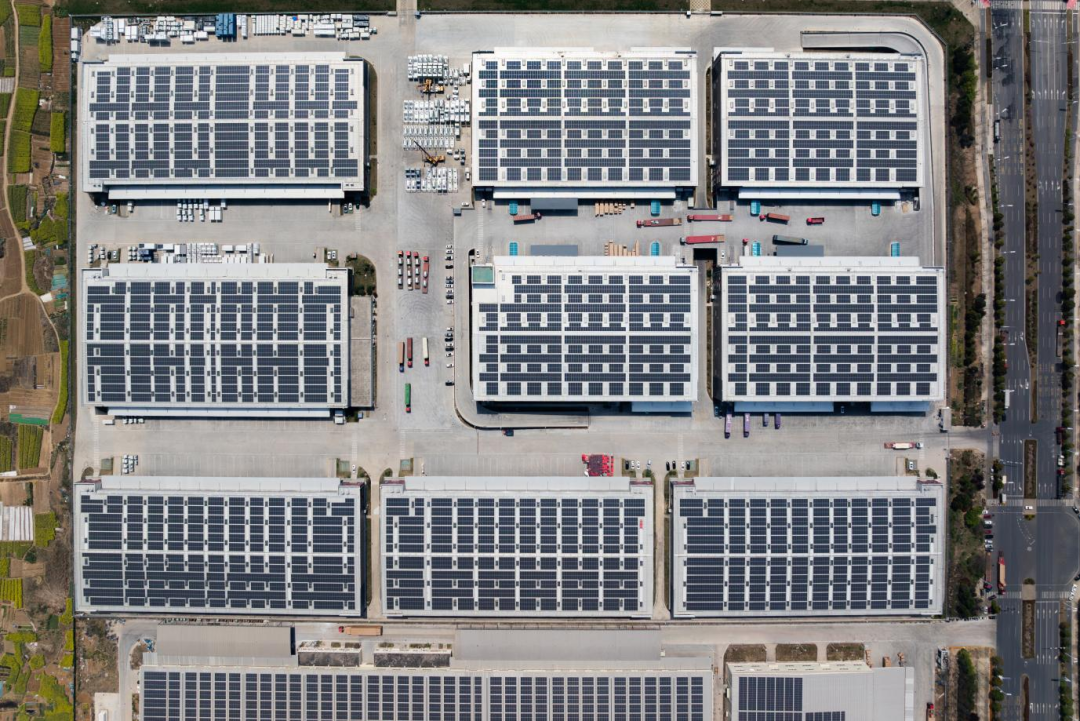
Core Insights - The article highlights that energy investments in China, particularly in energy storage, distribution networks, and charging stations, are expected to see significant growth during the 14th Five-Year Plan period, driven by the need for flexibility and resilience in the power system [1][4] - It is projected that global energy investments will reach $3.3 trillion by 2025, with China accounting for over 25% of this total [1][5] - The construction of a new power system in China, primarily based on solar and wind energy, is accelerating, but the volatility of renewable energy generation poses challenges for grid stability [1][2] Energy Demand and Supply - China's electricity demand is not yet at its peak, with an expected annual increase of 4-5%, translating to approximately 500 TWh of new electricity demand that needs to be met [1][2] - Current approved projects in nuclear and hydropower can only contribute about 50-60 TWh of new electricity annually, necessitating an annual investment of 300-500 GW in wind and solar energy to fill the gap [2][4] Investment Focus Areas - The flexibility and resilience of the power system are identified as key areas for increased investment, with a projected annual addition of 50 GW in energy storage and gas turbines during the 14th Five-Year Plan [4] - There is a shift in investment logic towards enhancing distribution networks to support zero-carbon parks and integrated energy systems, moving away from previous focuses on distributed solar power [4][6] - Demand-side investment opportunities are highlighted, particularly in charging stations, which could significantly reduce the need for additional coal power generation [4][6] Global Energy Transition - The IEA emphasizes the imbalance in global energy investments, noting that while major economies like China, the US, and the EU have seen rapid growth, many developing countries, especially in Africa, have experienced a decline in energy investments [6][7] - China is recognized as a leader in clean energy investment and production, with its experiences serving as a reference for other countries in developing their energy markets [6][7] Regional Investment Trends - Central Asia is emerging as a focal point for market investment, benefiting from land resources and large projects, although it faces challenges due to insufficient grid investment [7] - China's photovoltaic equipment price reductions have spurred rapid market expansion in developing countries, making distributed generation a preferred choice in regions with unreliable grid access [7]
“无缝切换”“交通分流”“虚拟电厂” 各地多措并举保障迎峰度夏电力稳定供应
Yang Shi Wang· 2025-07-10 08:44
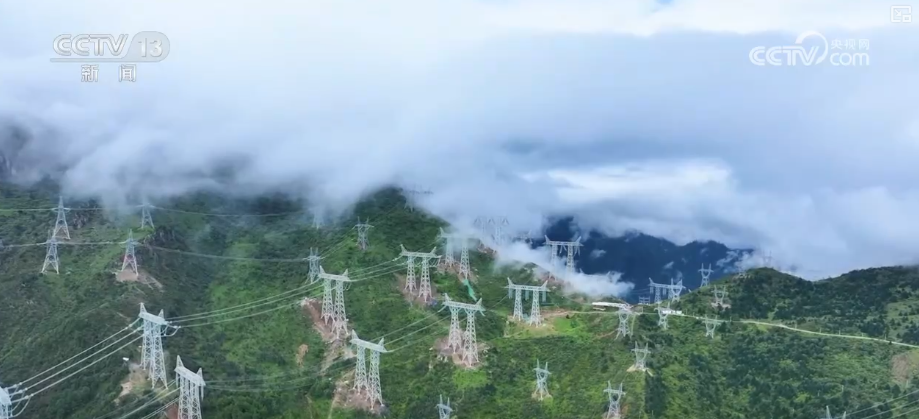
Core Insights - The article highlights the increasing electricity demand in China due to rising temperatures, prompting various measures to ensure power supply during peak summer periods [1][3]. Group 1: Electricity Demand and Supply - Since July, the highest load in the State Grid operating area reached 11.96 million kilowatts, with nine provincial grids, including Shandong, Jiangsu, Anhui, and Fujian, setting 21 new records [3]. - On July 9, the Southern Power Grid recorded a peak load of 2.52 million kilowatts, marking a historical high, with Guangdong becoming the first province in China to exceed 16 million kilowatts in power load [3]. Group 2: Power Supply Measures - To ensure power supply, China is leveraging the resource allocation capabilities of its ultra-high voltage power grid, with inter-regional and inter-provincial power transmission exceeding 21 million kilowatts [5]. - Various flexible measures are being implemented to address peak electricity demand, such as the "seamless switching" technology introduced in Laixi, Shandong, which allows for rapid load transfer between lines in as little as 15 seconds [7][9]. Group 3: Innovative Solutions - The Laixi Power Supply Company has developed a system that functions like "traffic diversion," quickly transferring loads to less utilized lines, enhancing the safety and reliability of the entire power grid [9]. - In Ningbo, Zhejiang, a "virtual power plant" has been established, integrating energy storage devices and air conditioning loads to create a flexible resource pool exceeding 300,000 kilowatts, ensuring balance during peak demand [11]. Group 4: Coal and Gas Supply Stability - The National Energy Administration reports that since 2025, coal supply has been stable, with national coal inventories exceeding 200 million tons, sufficient for over 30 days of use [14]. - Both long-term contract prices and spot prices for coal have decreased, effectively lowering energy costs, while natural gas supply remains secure with over 11 billion cubic meters injected into underground storage [14].
行业规则颠覆性重构 电力市场“电商时代”进入倒计时
Zheng Quan Shi Bao· 2025-07-09 18:25
Group 1: Market Transformation - The southern regional electricity market has initiated continuous settlement trials, marking the arrival of the "electricity e-commerce era" in China [1][2] - The national unified electricity market is nearing completion, focusing on market-driven pricing and efficient resource allocation [1][4] - The electricity market is transitioning from a planned economy to a market-driven model, with dynamic pricing based on supply and demand [2][4] Group 2: New Opportunities and Challenges - The new trading model allows for price fluctuations, creating opportunities for companies to optimize electricity costs by purchasing cheaper green energy during peak production times [2][3] - Companies are adapting by shifting production to low-cost electricity periods, potentially reducing electricity costs by over 10% [3] - The rise of renewable energy sources is reshaping the electricity market, necessitating a shift from traditional power generation models to more flexible and efficient systems [6][7] Group 3: Industry Dynamics - The electricity market is experiencing a significant transformation, with resilience becoming a key focus as renewable energy sources increase [5] - The expansion of renewable energy capacity is expected to exceed 1.4 billion kilowatts by the end of 2024, surpassing traditional coal power for the first time [6] - The competition between traditional coal power and renewable energy is intensifying, requiring coal power companies to adapt their business models to remain competitive [7][8] Group 4: Technological Innovations - Virtual power plants are emerging as a new model, aggregating decentralized resources to enhance system efficiency and stability [11][12] - Data centers are evolving to integrate energy storage and management systems, contributing to the optimization of renewable energy utilization [12] - The development of smart microgrids and virtual power plants is expected to be supported by new policies in the near future [13]

又一省份即将实施分时电价,作为缓解电力压力重要形式,虚拟电厂或迎来爆发期
Xuan Gu Bao· 2025-07-09 07:52
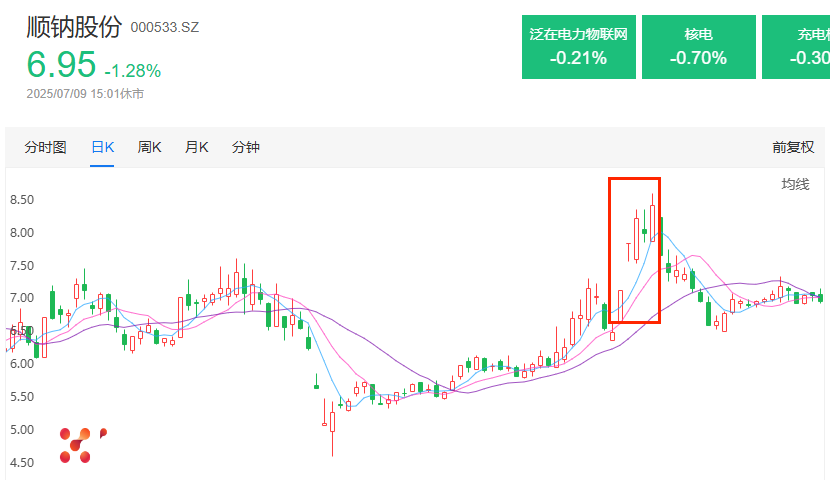
Group 1: Event Overview - Hunan government announced an adjustment to electricity pricing policy to promote the construction of a new power system and ensure stable economic operation, effective from August 1 [1] Group 2: Time-of-Use Pricing Mechanism - Time-of-use pricing is designed to guide electricity users in managing peak and off-peak demand, ensuring the safety and stability of the power system [2] - The need for frequent adjustments in time-of-use pricing is driven by increasing electrification and significant fluctuations in power load, as well as the growing share of renewable energy in the power system [2] - Traditional pricing mechanisms fail to reflect real supply-demand relationships due to the volatility of renewable energy output, leading to adjustments in pricing periods to address issues like midday solar energy curtailment [2] Group 3: Virtual Power Plants - Virtual power plants have the capability to scale and address short-term power supply-demand imbalances and renewable energy absorption challenges, offering economic advantages over traditional coal-fired power [3] - The market-level virtual power plant is seen as an effective means of comprehensive energy operation, requiring operators to optimize various strategies and manage green assets [3] - The successful testing of cross-provincial computing power transfer technology for virtual power plant peak-shaving response was reported by the State Grid Shanghai Pudong Power Supply Company [3] Group 4: Market Potential of Virtual Power Plants - The domestic virtual power plant market is projected to grow significantly, with installed capacity expected to increase from 3.7 GW in 2022 to 39 GW by 2025, representing a compound annual growth rate of 108.1% [4] - The global share of China's virtual power plant capacity is anticipated to rise from 17.5% in 2022 to 67.2% by 2025, indicating a substantial opportunity for large-scale development in the industry [4] Group 5: Historical Performance of Leading Companies - The National Energy Administration initiated pilot projects for the construction of a new power system, focusing on advanced directions such as virtual power plants and smart microgrids [5] - Leading company Shun Sodium Co. experienced a significant stock increase, with a maximum rise of nearly 30% over five trading days [5] Group 6: Related Concept Stocks - High-tech scheduling and platform segments, as well as resource-intensive load-side segments, are expected to see new development opportunities, with potential stocks including Dongfang Electronics and Guodian Nari [7]