云计算

Search documents
民政部等八部门:大力支持科技赋能养老服务
Xin Lang Cai Jing· 2026-01-13 01:56
Core Viewpoint - The Ministry of Civil Affairs and seven other departments have introduced measures to foster the elderly care service sector and promote the silver economy through technological advancements and product development [1] Group 1: Encouragement of Technological Development - The measures encourage breakthroughs in elderly care technology and product research and development [1] - There is a focus on the digital transformation of elderly care services, utilizing big data, cloud computing, artificial intelligence, and Beidou technology for health monitoring and personalized services [1] Group 2: Support for Robotics and Cross-Industry Collaboration - The initiative promotes the development of elderly care robots to meet the daily care, emotional support, and social needs of the elderly [1] - It aims to facilitate collaboration and technological integration across industries, including robotics, medical rehabilitation, and smart home technologies [1] Group 3: Product Development and Application - The measures advocate for the acceleration of research and development in embodied intelligence technology, new materials, genetic technology, and rehabilitation aids [1] - There is an emphasis on exploring advanced technologies such as brain-machine interfaces, exoskeleton robots, and muscle exosuits to support elderly individuals with declining physical functions [1] Group 4: Enhancing User Experience - Support is provided for the integration of smart elderly care devices and rehabilitation robots into care institutions, enhancing user experience through shared services, equipment leasing, and pilot testing [1] - The initiative encourages collaboration between various elderly care institutions and smart product developers to create demonstration and experience areas for elderly-friendly technology [1]
1月13日国际晨讯丨中国资产隔夜大涨;谷歌市值首破4万亿美元
Sou Hu Cai Jing· 2026-01-13 00:31
Market Review - Gold and silver prices experienced significant fluctuations, with London spot gold dropping below $4,580 per ounce and silver falling below $84 per ounce after reaching historical highs the previous trading day [1] - Asian stock markets opened higher, with the Nikkei 225 index rising by 1.67% and the Korean Composite Index increasing by 0.81% [1] - U.S. stock indices closed higher, with the Dow Jones Industrial Average up 0.17% at 49,590.20 points, the Nasdaq up 0.26% at 23,733.90 points, and the S&P 500 up 0.16% at 6,977.27 points [1] - Notable gains were seen in popular Chinese stocks, with the Nasdaq Golden Dragon China Index rising by 4.26%, Alibaba increasing by over 10%, and Bilibili and Xpeng Motors rising by nearly 9% and over 8%, respectively [1] Company News - Google's market capitalization surpassed $4 trillion, following an announcement of a partnership with Apple to enhance AI capabilities, including a significant upgrade to Siri later this year [2] - Planet Labs' stock reached a new historical high after announcing a multi-year agreement with the Swedish Armed Forces worth "low nine figures" [2] - Nvidia and Eli Lilly announced a $1 billion investment over five years to establish a joint research lab in the San Francisco Bay Area, aimed at accelerating AI applications in the pharmaceutical industry [2] - Meta Platforms' CEO Mark Zuckerberg revealed plans for a new initiative called "Meta Compute," which aims to build "tens of gigawatts" of AI infrastructure by the end of 2030 [2] Institutional Research - Moody's latest report indicates that to support the explosive growth of AI and cloud computing, trillions of dollars must be invested in servers, computing devices, data center facilities, and additional power capacity [3] - An estimated $3 trillion will flow into data center-related investments over the next five years, primarily from large tech companies due to their increasing demand for data centers and power capacity [3]


中国版“CES展”背后的惊喜
吴晓波频道· 2026-01-13 00:30
Core Viewpoint - The future of AI hardware is firmly rooted in China, as evidenced by the recent intelligent hardware exhibition held by Alibaba Cloud, which showcased over 1,500 AI hardware products, indicating a significant leap in the industry [2][5][12]. Group 1: AI Hardware Exhibition Insights - The Alibaba Cloud exhibition featured more than 1,500 AI hardware products, with 180 items debuting simultaneously at the CES in the U.S., covering a wide range of consumer sectors from digital devices to home entertainment [5][12]. - The exhibition presented a strong "booth feel," with various AI products displayed in a way that encouraged hands-on interaction, highlighting the diversity and accessibility of AI technology [6][8]. - The event underscored the concepts of "emergence" and "generalization," indicating that AI capabilities are rapidly expanding across various industries, leading to unprecedented product proliferation [8][12]. Group 2: Future Trends in AI - By 2026, a second wave of AI development is anticipated, characterized by rapid technological iterations and a significant reduction in the time required for technology deployment, from 5-10 years to 2-3 years [14][17]. - The shift towards "physical AI" is expected to redefine industries, particularly in automotive and heavy machinery, as AI becomes integrated into traditional sectors [14][16]. - The distinction between consumer and enterprise applications of AI is becoming clearer, with enterprise applications poised to drive deeper value and productivity enhancements, potentially increasing global GDP by 10% [17][18]. Group 3: Competitive Landscape - The competition in AI is evolving into a dual-track approach, where traditional industries leverage AI for transformation while "AI-native companies" explore new business models [19][20]. - Chinese industries are focusing on traditional manufacturing, new energy vehicles, and agriculture, utilizing cloud services to enhance efficiency and reduce costs [20][22]. - The emergence of "AI-native companies" is fostering innovation across various sectors, with a notable rise in startups that utilize generative AI for content creation and other applications [24][26]. Group 4: Infrastructure and Cloud Computing - The foundational infrastructure for AI is transitioning from a "Token factory" to an "AI super factory," emphasizing the need for comprehensive cloud services that support both immediate and advanced AI applications [30][32]. - Companies like Alibaba Cloud are expanding their global infrastructure to meet the increasing demand for AI capabilities, supporting Chinese enterprises in their international ventures [37][38]. - The integration of AI into cloud computing is essential for realizing the full potential of AI technologies, as it enables efficient data processing and model deployment [36][38].


医疗援疆助力兵团诊疗水平再上新台阶
Xin Lang Cai Jing· 2026-01-12 19:03
Group 1 - The Xinjiang Production and Construction Corps (XPCC) has strengthened cooperation with counterpart provinces and cities in medical infrastructure, talent development, and advanced medical technology since the 14th Five-Year Plan, with a total investment of 1.45 billion yuan in 315 medical aid projects [1] - The establishment of high-level hospitals is accelerating, with the opening of the first national regional medical center in the XPCC and significant funding from Guangdong and Jiangsu provinces for hospital construction [1] - Medical aid teams are focusing on training medical personnel in the XPCC, resulting in the cultivation of 109 key physicians and the publication of 262 academic papers, significantly enhancing the medical service level [1] Group 2 - Experts from Beijing, Tianjin, and Henan have improved the ophthalmology capabilities of XPCC hospitals, with 63% of surgeries in secondary and tertiary hospitals being advanced procedures, allowing many patients to receive treatment locally [2] - The XPCC Health Commission plans to enhance the "Internet + Healthcare" support system during the 15th Five-Year Plan, leveraging digital technologies to extend quality medical resources to remote areas and promote high-quality development in healthcare [2]
邦彦技术股份有限公司关于签订战略合作协议的进展公告
Shang Hai Zheng Quan Bao· 2026-01-12 18:07
Core Viewpoint - The company has signed a strategic cooperation agreement with Weishi Jiajie (Chongqing) Technology Co., Ltd., establishing a long-term partnership to enhance the sales and promotion of the "Bangyan Cloud PC" products in mainland China [3][9]. Group 1: Cooperation Overview - The recent agreement, titled "Funding Service Type General Agent Cooperation Agreement," is based on the existing strategic partnership and will replace the previous agreement signed in November 2024 [3][9]. - The actual procurement will be determined by the final product order forms signed by both parties [3]. Group 2: Counterparty Information - Weishi Jiajie (Chongqing) Technology Co., Ltd. is a wholly-owned subsidiary of Weishi Jiajie Holdings Limited, which is listed on the Hong Kong Stock Exchange [4][5]. - The company has a registered capital of 13 million USD and was established on February 15, 2012 [4]. Group 3: Agreement Details - The agreement designates Weishi Jiajie as the exclusive funding service agent for the "Bangyan Cloud PC" products in mainland China, prohibiting the company from signing similar agreements with other agents in the same region [9]. - Weishi Jiajie will also provide financial services related to order payments, credit terms, and sales management for regional agents [9][11]. Group 4: Impact on Company Performance - Successful execution of the contract is expected to positively impact the company's future performance, with the actual effects to be confirmed by an auditing agency [14]. - The Bangyan Cloud PC system is positioned to meet the growing demand for secure and efficient computing solutions, particularly in high-security sectors such as government, healthcare, and finance [15].

【公告全知道】商业航天+卫星导航+AI营销+机器人!公司深耕互联网数字营销生态圈并得到小红书等行业头部客户认可
财联社· 2026-01-12 15:43
Group 1 - The article highlights the importance of weekly announcements from Sunday to Thursday at 22:00, which include significant stock market updates such as suspensions, investments, acquisitions, and performance reports, helping investors identify potential opportunities and risks [1] - A company specializing in internet digital marketing has gained recognition from leading clients like Xiaohongshu, launching multiple AI application robots [1] - Another company has set a target for AI revenue between 500 million to 600 million yuan by 2026, focusing on AI, cloud computing, and low-altitude economy [1] - A company involved in brain-computer interfaces and AI pharmaceuticals aims to achieve revenue exceeding 110,000 yuan from its brain-computer interface products by 2025 [1]

三七互娱:目前已投资的脑机接口公司包括华南脑控及强脑科技
Zheng Quan Shi Bao Wang· 2026-01-12 14:35
Group 1 - The core viewpoint of the article is that the company Sanqi Interactive Entertainment has invested in brain-computer interface companies, specifically Huannan Brain Control and Qiang Brain Technology, with investments of 20 million RMB and 20 million USD respectively [1] Group 2 - The investment in Huannan Brain Control amounts to 20 million RMB [1] - The investment in Qiang Brain Technology amounts to 20 million USD [1]

新易盛暴涨400%!90后CFO林小凤,凭什么年薪暴涨500%?
Xin Lang Cai Jing· 2026-01-12 12:29
Core Insights - New Yisong has emerged as a standout player in the optical module sector, with a stock price increase of 444.84% as of December last year, making it the highest-gaining stock in the AI computing sector [3][34] - The company's growth trajectory is not typical of a "hot" company, as it transitioned from being a low-end player in the optical communication equipment market to a significant player in the optical module space after a merger and restructuring [4][36] - The pivotal shift for New Yisong occurred between 2018 and 2019 when management redirected R&D resources towards 100G and 400G products, aligning with the rising capital expenditures of global cloud vendors [6][39] Company Growth and Strategy - New Yisong's product offerings were primarily low-speed for a long time, resulting in a weak market presence until the strategic shift in R&D focus [4][37] - By 2024-2025, the company began large-scale production of 800G products and preemptively positioned itself for 1.6T optical modules, leading to rapid performance improvements [7][40] - The company's growth is characterized by product upgrades, capacity expansion, stable gross margins, and effective communication with capital markets, all of which test the resilience of its financial systems [9][41] CFO's Role and Impact - Lin Xiaofeng, the CFO, has played a crucial role during this growth phase, transitioning from a background in auditing and finance to a strategic position within the company [12][44] - Lin's career path is marked by a solid foundation in auditing, which has influenced her approach to financial management at New Yisong, focusing on integrating auditing principles into operational decision-making [14][45] - Since joining New Yisong in April 2020, Lin's salary has increased from 199,900 yuan to 1,003,400 yuan by 2024, reflecting her rapid ascent and the value she brings to the company [16][47] Key Actions by the CFO - Lin has effectively transformed her auditing experience into a tool for operational management, focusing on cost breakdowns across production and technology, rather than merely cutting expenses [18][48] - She has significantly increased her engagement with the capital markets, with the frequency of institutional meetings rising from 9 in 2023 to 642 in 2025, demonstrating her proactive approach to managing market expectations [22][51] - Lin is also a central figure in the company's long-term incentive plans, aligning her interests with the company's performance and risk [25][53] Team Development and Sustainability - Lin has emphasized building a sustainable finance team, transitioning from a focus on individual capabilities to fostering a supportive team environment, which is crucial for growth-stage companies [28][54] - Her approach has been to reduce reliance on key individuals by leveraging both external educational resources and internal development [28][54] Implications for IPO Stage CFOs - New Yisong's case serves as a roadmap for CFOs in companies preparing for IPOs, highlighting the importance of capability structure and long-term thinking in navigating rapid growth and financial stability [29][56] - The challenges faced by CFOs in maintaining financial foundations during expansion and effectively communicating financial logic to capital markets are common across pre-IPO companies [29][56]

开年谋新局 多地部署服务贸易高质量发展
Zheng Quan Ri Bao Wang· 2026-01-12 11:29
Core Viewpoint - The recent national business work conference emphasized the importance of developing service trade, with various regions like Guangdong, Guizhou, and Henan outlining plans for high-quality service trade development by 2026 [1][2]. Group 1: Service Trade Development Goals - Guizhou aims for service import and export to exceed 12 billion by 2027, with digital delivery services accounting for over 35% of total service trade [1]. - By 2030, Guizhou targets service import and export to reach 14 billion, increasing the share of digital delivery services to 45% [1]. - The average annual growth rate of service import and export during the 14th Five-Year Plan period is expected to exceed 5% [1]. Group 2: Characteristics and Drivers of Growth - The service trade in China is showing steady growth, with knowledge-intensive services accounting for nearly 40%, becoming a core driver of this growth [2]. - High-level opening-up is identified as a key driver for stimulating service trade growth, with various regions enhancing their foreign trade platforms [2][3]. Group 3: Strategic Initiatives - Measures such as implementing a negative list for cross-border service trade and creating national service trade innovation development demonstration zones are expected to enhance service trade capabilities [3]. - Focus areas for growth in 2026 include artificial intelligence services, green services, and high-end productive services [3]. Group 4: Recommendations for Improvement - To enhance the "gold content" and "intelligence content" of service trade, reliance on technological innovation and the application of new technologies is essential [4]. - There is a need to deepen integration between service trade and manufacturing, developing productive services like R&D design and supply chain management [4]. - The promotion of institutional openness and alignment with high-standard trade rules, particularly in sectors like healthcare and education, is crucial for achieving breakthroughs [4].
突破15万元,锂电池核心材料价格大涨,杠杆资金加仓这些股
Zheng Quan Shi Bao· 2026-01-12 10:58
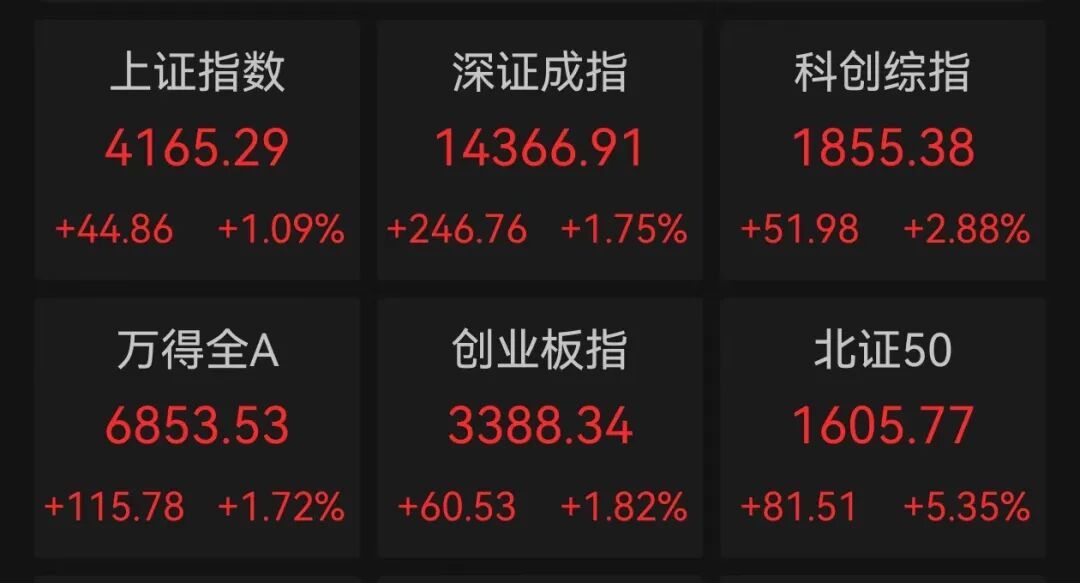
Group 1: Market Overview - The lithium carbonate price has surged, with the main contract closing at 156,060 CNY/ton, marking a 113.37% increase over the past four months [3] - The A-share market saw a record trading volume of 36,449.71 billion CNY on January 12, 2024, with the Shanghai Composite Index rising by 1.09% to 4,165.29 points [1][2] - The media industry index experienced a significant increase of 7.8%, the highest daily gain since October 9, 2024 [2] Group 2: Lithium Carbonate Supply and Demand - The recent surge in lithium carbonate prices is attributed to tightening supply and explosive terminal demand, influenced by new regulations on mining projects [5][6] - The demand for lithium carbonate is expected to grow significantly due to the booming electric vehicle market, with wholesale sales of new energy passenger vehicles projected to reach 15.319 million units in 2025, a 25.2% year-on-year increase [6] - The new energy storage market is anticipated to become a new growth driver for lithium carbonate demand, with a projected increase in global electrochemical storage demand by 60% in 2026 [7] Group 3: Company Performance and Stock Movements - Ganfeng Lithium has seen an 8.67% increase since December 2025, with the company optimistic about the future demand growth driven by electrification and energy storage markets [11] - Salt Lake Co. has forecasted a net profit of 8.29 to 8.89 billion CNY for 2025, representing a year-on-year growth of 77.78% to 90.65%, supported by rising prices of potassium chloride products [11] - Lithium mining concept stocks received significant inflows, with net purchases exceeding 4.583 billion CNY, indicating strong investor interest [8]