创新药

Search documents
医药生物行业跟踪周报:2026年战略性布局创新药,其性价比高-20251228
Soochow Securities· 2025-12-28 13:26
Investment Rating - The report maintains an "Accumulate" rating for the pharmaceutical and biotechnology industry [1] Core Insights - The number of innovative drugs listed in China continues to grow, with domestic products accounting for approximately half of the total market share. The R&D capabilities for innovative drugs in China are also increasing, attracting global attention. Notably, the number and value of domestic innovative drug business development (BD) transactions have reached new highs, with ADC, bispecific antibodies, small nucleic acids, and CAR-T being the four key R&D directions to watch in 2026 [15][21][22] - The Chinese innovative drug market has seen a significant increase in the number of new drug applications (NDA), with domestic products making up a growing proportion. From 2017 to 2024, the number of innovative drugs listed in China rose from 41 to 92, with domestic products accounting for 50% of the total by 2024 [17][21] - The report highlights that the license-out transaction volume and total amount for Chinese companies reached $92.03 billion in the first three quarters of 2025, a 77% increase compared to the total for 2024. The upfront payment for license-out transactions has also surpassed the total financing amount in the primary market for the same period [22][25] Summary by Sections Industry Trends - The A-share pharmaceutical index has shown a year-to-date increase of 14.29%, while the Hang Seng Healthcare Index has surged by 62.29% [3][8] - The report notes that the pharmaceutical sector has experienced fluctuations, with raw materials and medical devices showing positive growth [8] R&D Progress and Company Dynamics - The report provides an overview of the R&D progress for innovative and modified drugs, including approvals and clinical applications [5] - It lists key companies to watch in various sub-sectors, including innovative drugs, research services, and medical devices, with specific recommendations for companies like Innovent Biologics, Hengrui Medicine, and WuXi AppTec [11][12] Market Insights and Regulatory Observations - The report tracks the price-to-earnings ratio of the pharmaceutical index, noting that it is currently lower than historical averages [5] - It emphasizes the importance of the regulatory environment and market dynamics in shaping the future of the pharmaceutical industry [5]




行业周报:瑞博生物通过港交所IPO聆讯,上市在即-20251228
KAIYUAN SECURITIES· 2025-12-28 11:14
Investment Rating - The industry investment rating is "Positive" (maintained) [1] Core Insights - The report highlights the upcoming IPO of Ruibo Bio, which has passed the hearing for listing on the Hong Kong Stock Exchange. The company focuses on innovative siRNA technology platforms targeting various chronic diseases and tumors [4][14] - Ruibo Bio has established multiple technology platforms, including RiboGalSTAR for liver-targeted delivery and RiboOncoSTAR for tumor targeting, with a pipeline that includes over 20 clinical candidates [5][15] - The report emphasizes the potential of the siRNA sector and recommends investment in leading CXO and research service companies, particularly in the innovative drug space [8] Summary by Sections Industry Performance - In the fourth week of December 2025, the pharmaceutical and biotechnology sector declined by 0.18%, underperforming the CSI 300 index by 2.13 percentage points, ranking 25th among 31 sub-industries [7][11] - The raw material drug sector showed the highest increase, rising by 2.05%, while the hospital sector experienced the largest decline, falling by 2.82% [31] Company Developments - Ruibo Bio has seven siRNA pipelines in clinical research, with its core product RBD4059 being the first siRNA drug for treating thrombotic diseases currently in Phase 2 clinical trials [5][14] - The company plans to advance 2-4 new candidates into clinical stages annually, supported by significant partnerships with major pharmaceutical companies, reflecting recognition of its R&D capabilities [6][22] Investment Recommendations - The report recommends focusing on innovative drugs and their supply chains, particularly in the small nucleic acid space, and suggests a monthly investment portfolio including companies like Sangamo Therapeutics and Innovent Biologics [8]
投资策略周报:岁末年初多头势力聚集,抢跑“春季躁动”行情-20251228
HUAXI Securities· 2025-12-28 11:04
Market Review - A-shares led global indices with major broad-based indices generally rising, particularly the CSI 500 and ChiNext, while the Shanghai Composite Index recorded an eight-day winning streak approaching 4000 points [1] - The market liquidity is abundant, with A-share trading volume continuing to expand, reaching over 2 trillion yuan on Friday, and the financing balance exceeding 2.5 trillion yuan, setting a historical high [1] - In terms of style, small-cap and growth styles outperformed, with sectors such as non-ferrous metals, defense, and electric equipment leading gains, while beauty care, social services, and banking sectors declined [1] Market Outlook - Multiple funds are rushing to capitalize on the "spring rally," with a focus on buying on dips. The uncertainty in overseas monetary policy is dissipating, and the upcoming Chinese New Year and "Two Sessions" are expected to support risk appetite [2] - The "spring rally" conditions are accumulating, with key factors including reasonable valuation levels, a loose liquidity environment, and catalysts to boost risk appetite such as domestic policies and external risk mitigation [2] - The latest risk premium for the CSI 300 is at the median level of the past decade, indicating reasonable A-share valuations, while the central bank emphasizes continued implementation of a moderately loose monetary policy [2] Fund Flows - The net subscription of A500 ETFs has become one of the important sources of incremental funds for A-shares at year-end, with a cumulative net subscription of 90.8 billion yuan in December, the highest since April [3] - The top six A500 ETF products saw a net inflow of 97.2 billion yuan since December, reflecting accelerated inflow of institutional funds [3] Financing and Currency Trends - The financing balance of A-shares reached a historical high of 2.53 trillion yuan as of December 25, with a net buy of 72 billion yuan in financing funds since December, indicating a recovery in market sentiment [4] - The strong performance of the RMB is favorable for foreign capital inflow, with the offshore RMB briefly surpassing the 7.0 mark against the USD, reflecting market confidence in the Chinese economy [4] Industry Allocation Recommendations - Focus on growth themes benefiting from industrial policy support, such as domestic substitution, robotics, commercial aerospace, nuclear fusion, innovative drugs, and energy storage [5] - Pay attention to sectors benefiting from "anti-involution" price increases, such as chemicals, energy metals, and new energy [5] - Look for potential catalytic opportunities in the consumer sector due to the deepening of consumption policies [5]
上市公司年报预约披露时间出炉,芯导科技明年2月3日率先披露 预告业绩公司近七成预喜
Shen Zhen Shang Bao· 2025-12-27 20:49
Group 1 - The core point of the article highlights the upcoming annual report disclosures for listed companies, with a focus on those expected to show significant performance growth in 2025 [2] - As of December 26, 2023, 34 listed companies in A-shares have forecasted their 2025 annual performance, with 23 companies expecting positive results, representing 67.65% of the total [2] - Key industries showing notable performance growth include semiconductors, consumer electronics, biomedicine, machinery, and new energy [2] Group 2 - Among the companies forecasting net profit growth, 17 companies expect an increase of over 10%, while 11 anticipate over 20%, and 5 expect over 50% [3] - The top three companies in terms of expected net profit growth are Bai Ao Sai Tu, Xi Hua Technology, and Sanhua Intelligent Control, with projected increases of 303.57%, 52.61%, and 50.00% respectively [3] - 14 companies are expected to report net profits exceeding 100 million yuan, with 6 companies surpassing 500 million yuan, and 4 companies exceeding 1.5 billion yuan [3] Group 3 - Leading companies are showing strong performance recovery, with Luxshare Precision expected to achieve a net profit of 165.18 billion to 171.86 billion yuan, reflecting a growth of 23.59% to 28.59% year-on-year [4] - Luxshare attributes its growth to a deepened global strategy and enhanced cost-effective manufacturing solutions, alongside investments in AI, data centers, and emerging fields [4] Group 4 - As the annual report disclosure season approaches, companies with better-than-expected performance are likely to attract market attention, with a focus on sectors like artificial intelligence, semiconductors, robotics, innovative pharmaceuticals, and new energy [5] - Companies that announce significant profit increases early are expected to draw more market funds, particularly industry leaders with high growth forecasts [5]





医疗器械行业研究:政策推动创新器械应用,脑机接口加速商业落地
SINOLINK SECURITIES· 2025-12-27 15:39
Investment Rating - The report suggests a positive investment outlook for the medical device sector, particularly in brain-computer interface devices, which are expected to see accelerated commercialization due to supportive policies [1][3]. Core Insights - Recent policies have significantly increased support for innovation in medical devices, with the National Medical Products Administration actively promoting faster market entry for brain-computer interface devices, indicating a diverse application landscape and substantial future potential [1][3]. - The pharmaceutical sector is witnessing positive developments, such as GSK's approval of mepolizumab for a new indication in COPD patients, marking it as the first monthly administered biologic in China, which is expected to reduce the annual incidence of severe exacerbations significantly [1][32]. - The report highlights the approval of Wegovy® tablets in the U.S. for weight management, emphasizing its potential impact on the market as the first oral GLP-1 receptor agonist for this purpose [37][40]. Summary by Sections Pharmaceutical Sector - Mepolizumab has been approved for COPD treatment in China, with a monthly dosing schedule, targeting a significant patient population [1][32]. - The A/H share innovation drug sector maintains high activity levels, with new drug approvals and cross-border transactions remaining robust [16][28]. Biologics - Wegovy® tablets have been approved in the U.S. for weight management, showing similar weight loss efficacy to its injectable counterpart, with a significant portion of participants achieving substantial weight loss [37][40]. CXO and Pharmaceutical Supply Chain - The CXO sector continues to show upward momentum, supported by a stable order backlog, with November financing levels slightly above the annual average [44][46]. Medical Devices - The centralized procurement process for high-value medical consumables is progressing steadily, with high selection rates in multiple rounds of bidding, indicating a favorable environment for leading domestic companies [2][52]. Retail Pharmacy - The industry is undergoing a consolidation phase, with leading companies expected to benefit from increased market share through mergers and acquisitions [2][3]. Medical Services and Consumer Healthcare - Aier Eye Hospital's acquisition of 39 institutions for 960 million yuan strengthens its market position, with the acquired entities showing signs of financial recovery [2][3].


创新药起飞,健康更有保障⋯⋯2025年十大刷屏“健闻”,“相信”正在改写我们的健康答案
Mei Ri Jing Ji Xin Wen· 2025-12-26 14:04
Group 1 - The biopharmaceutical industry in China is experiencing a historic leap in 2025, with a record number of innovative drugs approved for market and total licensing amounts exceeding $100 billion [2][18][41] - As of December 7, 2025, 69 innovative drugs were approved in China, a significant increase from 48 in the previous year, indicating a surge in innovative research and development [18] - The total amount of outbound licensing transactions in the Chinese pharmaceutical sector reached $920.3 billion in the first three quarters of 2025, with projections to exceed $1 trillion by year-end [18][41] Group 2 - The Chinese government emphasized the importance of innovative drugs in its 2025 work report, marking a strategic focus on developing a directory for innovative drugs [19] - Two new Alzheimer's disease drugs, Donanemab and Lecanemab, were rapidly approved in China, highlighting the swift integration of international innovations into the local market [21] - A landmark licensing deal between Sihuan Pharmaceutical and Pfizer worth $60.5 billion (approximately 424 billion RMB) was announced, showcasing the international recognition of Chinese innovative drugs [23] Group 3 - China's invasive brain-machine interface has entered clinical trials, marking a significant advancement in cutting-edge medical technology [26] - BeiGene, a leading innovative drug company, reported its first half-year profit, indicating a shift towards commercial viability in the Chinese innovative drug sector [27] - The National Medical Products Administration implemented a 30-day review system for clinical trial applications, significantly accelerating the drug development process [29] Group 4 - Clinical data from Baillie Tianheng's dual antibody ADC drug impressed at the European Society for Medical Oncology (ESMO) annual meeting, enhancing China's global reputation in innovative drug development [31] - The HPV vaccine was included in the national immunization program, reflecting a commitment to public health and women's health in China [32] - The first version of the commercial health insurance innovative drug directory was released, aiming to improve accessibility to innovative drugs through a dual-channel approach [34] Group 5 - By October 2025, the total amount of outbound licensing for Chinese innovative drugs surpassed $100 billion, marking a significant milestone in the global biopharmaceutical landscape [37] - Despite being the largest producer of active pharmaceutical ingredients, China's pharmaceutical market is still only one-sixth the size of the U.S. market, with generics making up 75% of the market [41] - The commercial insurance directory's emergence in 2025 is seen as a pivotal development, potentially transforming the landscape for innovative drug accessibility in China [41]

海外消费周报(20251219-20251225):海外教育:经营效率提升,利润率扩张提速——新东方2QFY26业绩前瞻-20251226
Shenwan Hongyuan Securities· 2025-12-26 11:57
Investment Rating - The report maintains a "Buy" rating for the overseas education sector, particularly highlighting New Oriental as a key player [10]. Core Insights - The overseas education sector is experiencing improved operational efficiency and accelerated profit margin expansion, with New Oriental expected to report a revenue of $1.165 billion for Q2 FY26, representing a year-on-year growth of 12.2% [5][10]. - The report anticipates a significant increase in non-GAAP net profit for New Oriental, projected at $63 million, which is a 77.8% increase year-on-year, with a non-GAAP net profit margin of 5.4%, expanding by 2 percentage points [5][10]. Summary by Sections 1. Overseas Education - **Market Review**: The education index rose by 2.8% in the week of December 19-25, outperforming the Hang Seng Index by 1.8 percentage points, with a year-to-date increase of 13.1% [4]. - **Company Update**: New Oriental's revenue is expected to reach $1.165 billion, with the education business (including cultural tourism) contributing $957 million, a growth of 11% year-on-year [5][10]. - **Study Abroad Business**: The revenue from study abroad exam training and consulting is projected to decline by 3% to $242 million, reflecting a slowdown in growth due to high base effects from the previous year [2][5]. - **New Business Growth**: New business segments, including K9 competency training and learning machine services, are expected to grow by 21% to $364 million, driven by differentiated offerings for primary and secondary education [3][6]. - **Operating Profit Margin Improvement**: Despite a slowdown in high-margin study abroad business, the increase in competency business margins is expected to offset this. The non-GAAP operating profit margin is projected to expand by approximately 2 percentage points to 4.7% [6][10]. 2. Overseas Pharmaceuticals - **Market Review**: The Hang Seng Healthcare Index saw a slight increase of 0.02%, underperforming the Hang Seng Index by 1.24 percentage points [12]. - **Key Events**: Notable transactions include Sanofi's $2.2 billion acquisition of vaccine company Dynavax, which has a marketed hepatitis B vaccine and a promising shingles vaccine candidate [14]. - **Investment Recommendations**: The report suggests focusing on innovative drug companies with active business development opportunities and clinical progress in key pipelines, including companies like BeiGene and Innovent Biologics [15]. 3. Overseas Social Services - **Ctrip's Q3 Performance**: Ctrip reported a 16% year-on-year revenue increase to $18.4 billion, with strong performance across various business segments, particularly in international OTA platforms [17]. - **Tongcheng Travel's Q3 Performance**: Tongcheng Travel's revenue grew by 10% to $5.5 billion, with a notable increase in accommodation and core OTA business revenues [18]. - **Key Focus**: The report highlights potential growth in the outbound travel sector and the importance of hotel management services as additional growth drivers [19].
医药生物行业周报:第六批高值医用耗材国采启动-20251226
BOHAI SECURITIES· 2025-12-26 11:36
Investment Rating - The industry maintains a "Neutral" rating, and the specific company, 恒瑞医药 (Hengrui Medicine), is rated as "Buy" [53] Core Insights - The sixth batch of centralized procurement for high-value medical consumables has been officially launched, covering drug-coated balloon products and urological intervention consumables [7][8] - The first domestically produced anti-CTLA-4 monoclonal antibody, 达伯欣® (Dabaoxin), has received approval from the National Medical Products Administration (NMPA) for marketing [8] - A weight-loss version of 司美格鲁肽 (Semaglutide) has gained approval for cardiovascular indications in China [9] - The SW pharmaceutical industry index has shown a 1.43% increase, with most sub-sectors experiencing growth [41] - The industry’s price-to-earnings ratio (TTM) is reported at 50.75 times, with a valuation premium of 259% relative to the Shanghai and Shenzhen 300 index [47] Industry News - The National Medical Insurance Administration has released a new drug catalog, which is expected to enhance the market potential for related pharmaceutical companies [52] - The recent approval of various drugs and clinical trials indicates a robust pipeline for innovative treatments in the industry [25][27][29][30][31][32][35] Company Announcements - Several companies, including 丽珠集团 (Lizhu Group) and 艾力斯 (Eli Lilly), have received approvals for new drug applications and clinical trials, indicating ongoing innovation and development in the sector [25][26][27][29][30] - 恒瑞医药 has been included in the list of breakthrough therapy products, highlighting its significant advancements in drug development [27] Market Review - The overall market has shown positive trends, with the Shanghai Composite Index rising by 2.15% and the Shenzhen Component Index increasing by 3.66% during the week [41] - The pharmaceutical sector's performance reflects a general upward trend, with specific sub-sectors like chemical pharmaceuticals and medical services leading the gains [41] Weekly Strategy - The report suggests focusing on pharmaceutical companies that have products entering the medical insurance catalog, as this could lead to increased market volume and investment opportunities [52]
12个月,他们投向医疗30亿
3 6 Ke· 2025-12-26 10:55
Core Insights - The investment landscape in the innovative pharmaceutical sector has significantly improved in 2025, with a notable resurgence in market activity and valuations, particularly in Hong Kong's stock market, where the biotech index surged over 100% [1][7] - The strategic decision by Qiming Venture Partners to continue investing in innovative drugs and medical devices during a downturn has proven to be a successful move, leading to substantial returns and a growing portfolio of successful investments [1][6] Investment Activity - Qiming Venture Partners invested in over 30 projects in the medical innovation sector in 2025, with total investments exceeding 30 billion yuan, including decisions made in the latter half of 2024 [2][6] - Notable investments include Cornerstone Robotics, a Hong Kong-based surgical robot company, which has raised over 30 billion yuan and is positioned to compete with imported brands [2][3] Market Trends - The IPO landscape for biotech companies has become increasingly vibrant, with nearly 10 companies submitting applications in November alone, and the number of successful biotech IPOs in Hong Kong doubling compared to the previous year [7][8] - International investors are shifting their focus back to Chinese innovative drug companies, recognizing their clinical data and potential for collaboration with global pharmaceutical leaders [7][9] Future Outlook - The global influence of Chinese medical innovation is on the rise, with projections indicating that approximately 40% of new drug projects licensed in by major global pharmaceutical companies will come from Chinese biotech firms by 2025 [9][10] - Qiming Venture Partners is committed to supporting the globalization of Chinese pharmaceutical companies, facilitating partnerships with international firms and helping navigate global regulatory environments [10]
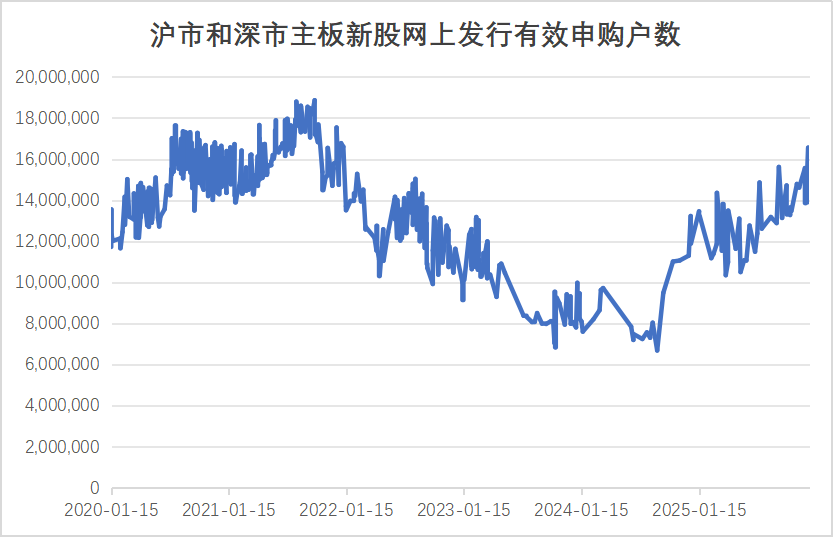
增近1000万户!网上打新人数创新高 新股赚钱效应显著
Zheng Quan Shi Bao· 2025-12-26 09:48
Group 1: Market Overview - The A-share market has seen a surge in new stock listings, such as Moer Thread and Muxi Co., which has stimulated investor enthusiasm for new share subscriptions [1][10] - The number of online subscription participants for the Sci-Tech Innovation Board has reached nearly 6.7 million, setting a historical high, while the Main Board has over 16.5 million participants, increasing by nearly 10 million in the past year [1][11] - The ChiNext Board has also attracted close to 14 million online subscription participants, returning to levels seen at the end of 2021 [1][4] Group 2: Subscription Data - The recent IPO of Shuangxin Environmental Protection on the Main Board attracted 16.55 million investors, with effective subscriptions reaching 335.23 billion shares, marking a record for the year [2] - The ChiNext Board's new stock, Xinguangyi, reported 13.92 million effective subscriptions, also a new high for the year and since the end of 2021 [4] - The Sci-Tech Innovation Board's new stock, Yuxun Co., attracted 6.69 million investors, the highest since its inception [6] Group 3: New Stock Performance - Moer Thread's stock price surged by 468.78% on its first day, reaching 650 yuan per share, with potential earnings exceeding 410,000 yuan for investors who held onto their shares [10] - Muxi Co. also saw a significant increase of 568.83% on its debut, with a peak price of 895 yuan per share, allowing investors to earn nearly 400,000 yuan [10] - The strong performance of these new stocks is attributed to their solid fundamentals and the current market's high recognition and demand for new shares [10] Group 4: Market Dynamics - The increase in new stock subscription participants has led to a decline in the new stock winning rate, with some recent IPOs having a winning rate as low as 0.01% [11] - Despite the enthusiasm for new stocks, analysts emphasize the importance of understanding the fundamentals of new companies to avoid unnecessary risks [1][11] - The overall market activity has improved, with A-share trading volumes exceeding 2 trillion yuan recently, indicating a recovery in market sentiment [12]