
现代化产业体系

Search documents
张家港市全力推动产业转型、城市转型
Su Zhou Ri Bao· 2025-12-20 23:50
聚焦因地制宜加快发展新质生产力,张家港将守牢实体经济基本盘,巩固提升传统产业,培育壮大 新兴产业,前瞻布局未来产业,推动服务业优质高效发展、港口经济高质量发展,加快构建现代化产业 体系;推动科技创新和产业创新深度融合,加强源头创新、推动龙头创新、拓展人才领先优势、推进数 字经济发展、营造更优创新生态。 聚焦全面深化改革开放,张家港将推进深层次改革,鼓励开展差异化改革探索,同时扩大高水平开 放,塑造开放型经济新优势;聚焦区域协调发展,放大两大国家战略交汇点优势,深化市域内部融合发 展,加快构建现代化基础设施体系,持续提升城市功能品质,拓展发展新空间。 日前,张家港市委十二届十二次全会召开,提出"十五五"时期张家港发展的总体要求和主要目标, 对经济社会发展重点任务作出部署。 面向"十五五",张家港将聚焦"加快建设'科创、制造、服务业、交通、文化、富民、生态、平安'八 大强(县)市"重点任务,与时俱进大力弘扬发展张家港精神,全力推动产业转型、城市转型。 ...
在质的有效提升上取得更大突破
Jing Ji Ri Bao· 2025-12-20 22:04
提升发展质量,要加快消除制约高质量发展的体制机制障碍。纵深推进全国统一大市场建设,深入整 治"内卷式"竞争,形成既"放得活"又"管得好"的经济秩序。坚持以开放促改革、促发展,稳步推进制度 型开放,推进贸易投资一体化、内外贸一体化发展,以高水平对外开放助力国内经济提质增效。 2025年,在外部压力加大、内部困难较多的复杂局面下,中国经济顶压前行、向新向优发展,经济社会 发展主要目标将顺利完成,展现出强大韧性与活力。"十五五"时期是基本实现社会主义现代化夯实基 础、全面发力的关键时期,中央经济工作会议在部署明年经济工作时明确指出,要"在质的有效提升上 取得更大突破",为"十五五"开好局、起好步提供了重要指引。 当今世界动荡变革加剧,新一轮科技革命和产业变革加速突破,外部环境变化影响加深,同时,国内供 强需弱矛盾仍然突出。要在激烈国际竞争中赢得战略主动,要解决好发展中、转型中的问题,就必须在 转变发展方式、优化经济结构、转换增长动力方面下更大功夫,全力推动经济发展实现质的有效提升, 以高质量发展的确定性应对各种不确定性。我国经济基础稳、优势多、韧性强、潜能大,长期向好的支 撑条件和基本趋势没有变,中国特色社会主义制 ...
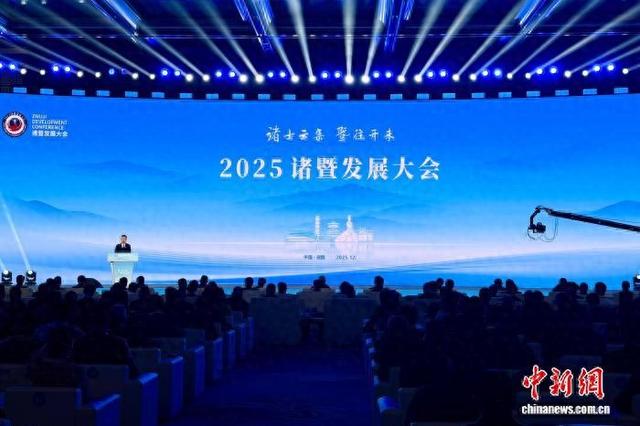
近五年来浙江诸暨“累计吸引在外诸暨人总投资金额超300亿元”
Xin Lang Cai Jing· 2025-12-20 11:52
Core Insights - The 2025 Zhuji Development Conference was held in Zhuji City, Zhejiang Province, where significant investment and development initiatives were announced [1][3] Group 1: Investment and Economic Growth - Over the past five years, Zhuji has attracted more than 2,000 prominent individuals from the area, resulting in total investments exceeding 30 billion yuan [1] - Zhuji's GDP has increased from 154 billion yuan in 2021 to 186 billion yuan in 2024, marking a significant growth trajectory [3] - The local government has identified 144 internal projects with investments over 100 million yuan, accounting for one-third of the annual manufacturing investment [3] Group 2: Industrial Development and Projects - The conference featured the signing of 18 industrial projects with a total planned investment of 26.8 billion yuan, focusing on sectors such as intelligent vision, aerospace, life health, new energy, and high-end manufacturing [5] - Six major industrial platforms were promoted, including the High Lake Future New District and the Xishi Basketball Center area, aimed at accelerating the establishment of a modern industrial system [5] Group 3: Talent and Education Initiatives - A donation ceremony was held where multiple companies contributed 41 million yuan to support local talent development, reinforcing the foundation for industrial growth [5]

内蒙古自治区党委常委于会文兼任呼和浩特市委委员、常委、书记
Xin Lang Cai Jing· 2025-12-20 11:50
于会文表示,坚决拥护党中央决定,坚决服从自治区党委安排。他说,来到呼和浩特市工作,深感使命 光荣、责任重大。我将深入学习贯彻习近平总书记对内蒙古系列重要讲话重要指示精神,铸牢中华民族 共同体意识,团结带领全市各族干部群众,因地制宜发展新质生产力,促进产业优化升级,保障和改善 民生,着力提升首府城市的首位度和影响力。(内蒙古日报) 王伟中强调,要旗帜鲜明讲政治,坚决贯彻党中央决策部署,深入学习贯彻习近平总书记对内蒙古系列 重要讲话重要指示精神,在铸牢中华民族共同体意识和建设"两个屏障"、"两个基地"、"一个桥头堡"上 展现首府担当、作出首府贡献,以实际行动和成效坚定拥护"两个确立"、坚决做到"两个维护"。要完整 准确全面贯彻新发展理念,因地制宜发展新质生产力,加快构建体现首府特色优势的现代化产业体系, 大力实施重要生态系统保护和修复工程,持续完善城市功能、提升城市品质,以更大力度保障和改善民 生,推动经济社会高质量发展。要纵深推进全面从严治党,努力营造良好政治生态,引导党员干部大讲 学习、深入调研、真抓实干、清正廉洁。 包钢说,这次呼和浩特市委主要负责同志调整,充分体现了党中央、自治区党委对首府领导班子建设的 ...
浙江:加快推动人工智能创新发展高地建设,全面实施“人工智能+”行动
Xin Lang Cai Jing· 2025-12-20 10:53
据浙江发布,12月20日,浙江省委经济工作会议在杭州召开。省委书记王浩强调,要牢牢扭住关键重 点,聚焦聚力攻坚突破,确保"十五五"开好局、起好步。聚焦聚力建设创新浙江、因地制宜发展新质生 产力,加快构建浙江特色现代化产业体系。紧紧抓住共建长三角国际科技创新中心机遇,持续做深做透 教育科技人才一体改革发展和科技创新产业创新深度融合"两篇大文章",促进人才有序流动共享,推进 以企业主导的产学研用融通创新,加强科创型企业梯度培育。着力推进先进制造业集群建设,统筹推进 传统产业焕新升级、新兴产业发展壮大、未来产业科学布局,建设全球先进制造业基地。加快推动人工 智能创新发展高地建设,全面实施"人工智能+"行动。着力营造一流创新生态,坚持把良好的创新生态 作为最具竞争力的营商环境。大力培育"新质浙商",持续擦亮民营经济"金名片"。 ...
经济日报评论员:苦练内功把握发展主动权——论贯彻落实中央经济工作会议精神
Jing Ji Ri Bao· 2025-12-20 07:27
Group 1 - The central economic work conference emphasizes the need to strengthen internal capabilities to address external challenges, providing important guidance for economic work in the coming year [1] - The international environment is increasingly complex, with rising unilateralism and protectionism, leading to significant challenges for global economic growth and increased external pressures on China's development [1] - Domestic economic challenges include a prominent contradiction between strong supply and weak demand, with risks in key areas that can be resolved through focused efforts [1] Group 2 - The strategy to build a strong domestic market aims to enhance domestic circulation, leveraging China's vast internal demand to counter international uncertainties and reshape competitive advantages [2] - The focus is on boosting consumption and investment through a dual approach of supply and demand, fostering a positive interaction between them to enhance the internal dynamics of the economy [2] - The commitment to a manufacturing powerhouse strategy includes maintaining a reasonable proportion of manufacturing, developing advanced manufacturing, and creating a modern industrial system centered on advanced manufacturing [2] Group 3 - There is a call to enhance independent innovation capabilities and seize the high ground in technological development, emphasizing the need for systematic deployment in key core technology breakthroughs [3] - The focus is on original and disruptive innovation to fundamentally address core scientific and technical issues, with an emphasis on building regional innovation systems and technology innovation centers [3] - The integration of innovation resources into enterprises is crucial for deepening the fusion of technological and industrial innovation, reinforcing the role of enterprises as the main body of technological innovation [3]
“十四五”时期国家质检中心“国家队”作用凸显 成为支撑现代化产业体系核心力量
Xin Lang Cai Jing· 2025-12-20 06:44
Core Insights - The National Quality Inspection Center is positioned as a cornerstone of national quality infrastructure and a tool for promoting high-quality development, with 926 centers approved for establishment by 2025, covering major industries and supporting innovation in the industrial chain [1][2] Group 1: Strategic Layout and Development - The construction of the National Quality Inspection Center is deeply integrated into the national development framework, achieving nationwide coverage and forming a high-density cluster in strategic areas such as the Yangtze River Delta and the Guangdong-Hong Kong-Macao Greater Bay Area, accounting for over 60% of the centers [1] - In the field of strategic emerging industries, 313 centers have been established, representing over one-third of the total, providing forward-looking technical support for cultivating new productive forces and seizing future competitive advantages [1] Group 2: Core Competencies and Technological Advancements - By 2025, the National Quality Inspection Center will have 58,200 technical personnel, including 19,300 senior experts, reflecting a 13.8% increase since the end of the 13th Five-Year Plan, showcasing the gathering of top industry talent [2] - The total value of instruments and equipment has reached 86.8 billion yuan, with laboratory space expanding to 18.53 million square meters, marking increases of 20.2% and 18.3% respectively, achieving international advanced levels in hardware conditions [2] - The center has undertaken 2,163 provincial and ministerial-level research projects, leading to the formulation of 393 international standards and 3,746 national and industry standards, with increases of 25.2% and 28.1% respectively, highlighting its core strength in overcoming technical bottlenecks [2] Group 3: Service to the Real Economy - The National Quality Inspection Center has served over one million enterprises, helping small and medium-sized enterprises solve critical quality technical issues and improving product pass rates by 2-3 percentage points, effectively promoting quality premiums and brand enhancement across industries [3] - The center provides comprehensive testing and certification for major projects such as the C919 large passenger aircraft and rail transit equipment, ensuring the safety and reliability of industrial supply chains [3] - Through standard guidance and quality certification, the center promotes the transformation and upgrading of traditional manufacturing industries towards higher value chains [3] Group 4: Global Cooperation and Economic Governance - The National Quality Inspection Center serves as a vital link between Chinese manufacturing and global markets, significantly enhancing China's international voice in various technical fields by leading the formulation of 393 international standards during the 14th Five-Year Plan [4] - The center's testing results are widely recognized internationally, facilitating testing for over 2 million batches of export products annually, thereby reducing institutional costs in international trade and supporting the global expansion of "Made in China" [4] - The National Market Supervision Administration will continue to optimize the quality inspection centers, strengthening their integration with technological and industrial innovation to contribute to the construction of a modern industrial system supported by the real economy and promote high-quality development [4]
周红波李忠军会见长三角、粤港澳大湾区上市企业投资考察团
Nan Jing Ri Bao· 2025-12-20 01:58
Core Viewpoint - The meeting between Nanjing city leaders and the investment delegation from the Yangtze River Delta and Guangdong-Hong Kong-Macau Greater Bay Area emphasizes the importance of integrating technological and industrial innovation to drive economic development in Nanjing [1][2]. Group 1: Economic Development and Innovation - Nanjing is focusing on building a modern industrial system supported by advanced manufacturing and modern services, aligning with national economic strategies [1]. - The city aims to enhance its industrial ecosystem by fostering collaboration on innovation and investment, particularly in areas such as industrial upgrading, technological innovation, green transformation, and market expansion [1]. Group 2: Business Environment and Opportunities - Participating entrepreneurs highlighted Nanjing's rich educational resources, strong innovation capabilities, favorable business environment, and broad development prospects, indicating a commitment to deepen practical cooperation [2]. - The city government is dedicated to creating a top-tier business environment characterized by market-oriented, legal, and international standards, offering optimal policies and services to support investment [1].
发展壮大具有海南特色和优势的现代化产业体
Hai Nan Ri Bao· 2025-12-19 23:29
Core Viewpoint - The official launch of the Hainan Free Trade Port's full island closure is expected to inject strong momentum for the cross-sectional development of industries, promoting a modern industrial system with Hainan characteristics and advantages [2][3]. Group 1: Industrial Development - The full closure operation will enhance the free flow of production factors, strengthening Hainan's position as a hub for domestic and international dual circulation [4]. - The four leading industries in Hainan—tourism, modern services, high-tech industries, and tropical efficient agriculture—are expected to gain new momentum and expand new spaces for high-quality economic development [4][6]. - Policies such as "30% tariff exemption on processing value-added" will provide significant cost advantages for high-tech industries, further driving industrial upgrades [6]. Group 2: Opportunities and Challenges - The closure will facilitate the movement of people, goods, capital, and data, creating major opportunities for the development of Hainan's four leading industries [5]. - The tourism sector will benefit from policies like 144-hour visa-free entry for foreign tourist groups, which will enhance international tourism market development [5][11]. - The modern service industry will see an expansion of visa-free entry for 86 countries, broadening the scope for attracting international talent [5][11]. Group 3: Infrastructure and Innovation - The construction of modern infrastructure and the promotion of ecological civilization are key to supporting Hainan's high-quality development [3][4]. - The focus on digital technologies such as artificial intelligence, blockchain, and big data will shift the economic paradigm towards a data-driven model, enhancing the digital economy [8]. - The integration of technology and industry is emphasized, with a call for deepening reforms in the technology system and fostering innovation [11][12]. Group 4: Agricultural Development - The agricultural sector will focus on enhancing the efficiency of tropical agriculture through the integration of advanced agricultural equipment and quality agricultural inputs [6][12]. - The development of international trade in agricultural products will be prioritized, with an emphasis on creating trade centers for products like coffee and coconuts [12]. - The promotion of seed industry innovation and the establishment of a global seed production base are seen as critical for enhancing Hainan's agricultural competitiveness [12].
苦练内功把握发展主动权——论贯彻落实中央经济工作会议精神
Jing Ji Ri Bao· 2025-12-19 22:24
Group 1 - The central economic work conference emphasized the need to strengthen internal capabilities to address external challenges, providing important guidance for economic work in the coming year [1] - The international environment is increasingly complex, with rising unilateralism and protectionism, leading to significant challenges for global economic growth and increased external pressures on China's development [1] - Domestic economic challenges include a prominent contradiction between strong supply and weak demand, with risks in key areas that can be resolved through focused efforts [1] Group 2 - The strategy to build a strong domestic market aims to enhance domestic circulation, leveraging China's vast market size to counter international uncertainties and reshape competitive advantages [2] - Efforts will focus on boosting consumption and investment through a dual approach of supply and demand, enhancing the internal dynamics of the domestic economy [2] - The manufacturing sector will be prioritized, with a commitment to developing advanced manufacturing and modern industrial systems, while also optimizing traditional industries [2] Group 3 - There is a strong emphasis on enhancing independent innovation capabilities to secure a leading position in technological development, with a focus on overcoming reliance on external technologies [3] - The strategy includes strengthening the entire chain of key core technology research and development, promoting original and disruptive innovations [3] - The integration of innovation resources into enterprises is crucial for deepening the synergy between technological and industrial innovation [3]