生成式人工智能

Search documents
涂鸦智能上涨3.2%,报2.58美元/股,总市值15.73亿美元
Jin Rong Jie· 2025-08-25 13:48
Group 1 - The core viewpoint of the news is that Tuya Smart (TUYA) has shown significant financial growth, with a notable increase in both revenue and net profit, indicating strong performance in the cloud platform service sector [1][2][3] Group 2 - As of August 25, Tuya Smart's stock opened up by 3.2%, reaching $2.58 per share, with a total market capitalization of $1.573 billion [1] - Financial data reveals that as of March 31, 2025, Tuya Smart's total revenue amounted to $74.687 million, reflecting a year-on-year growth of 21.12%, while the net profit attributable to shareholders was $11.017 million, showing a remarkable increase of 410.95% [1] - Tuya Smart is recognized as a leading global cloud platform service provider, focusing on building a developer ecosystem for smart solutions, and offers a comprehensive range of products and services including PaaS, SaaS, and smart solutions [2]
全国首个主流文化语料库上线,推动数字文化产业高质量发展
Qi Lu Wan Bao Wang· 2025-08-25 08:39
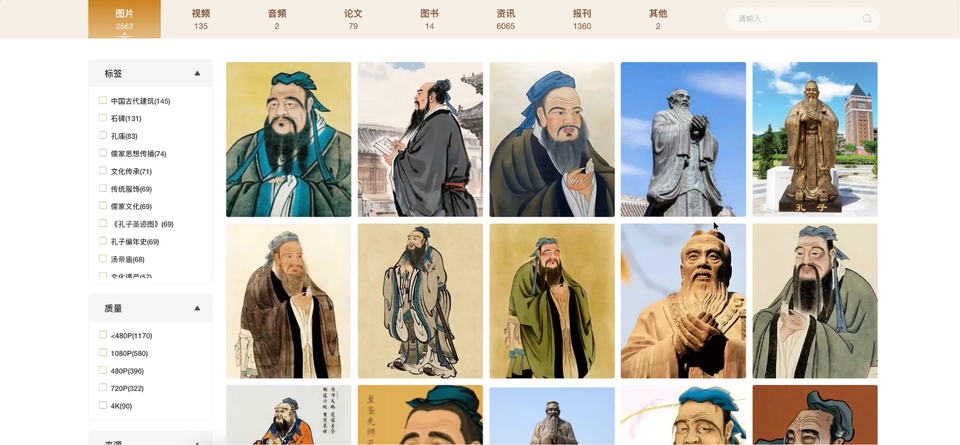
Group 1 - The core viewpoint of the news is the collaboration between Shandong Digital Culture Group and People’s Daily to establish a mainstream cultural corpus, which is essential for the training and application of large AI models in the context of rapid advancements in generative AI technology [1][2] - The mainstream cultural corpus will focus on high-quality, authoritative media resources and private cultural resources accumulated over the years, addressing the common issues of insufficient sensitive area data and low-quality core data in AI models [1][2] - The project aligns with national and provincial policies aimed at enhancing the quality of cultural data and supporting the development of AI in the cultural sector, as outlined in various government documents [1] Group 2 - The first phase of the mainstream cultural corpus will concentrate on excellent cultural resources from Shandong, with an initial offering of 50,000 Q&A pairs and 20 million basic data articles, while also developing high-quality datasets related to Confucius [2] - The Shandong Cultural Data Annotation Platform, developed by the group, will provide comprehensive services for data collection, cleaning, annotation, and enhancement, supporting various data types and enabling a closed-loop process from data collection to usage [4] - The platform will be open to the public for free, encouraging cultural institutions, universities, and enterprises to create their own high-quality datasets, while a cultural data trading platform will be launched to facilitate the circulation and monetization of cultural data assets [4]

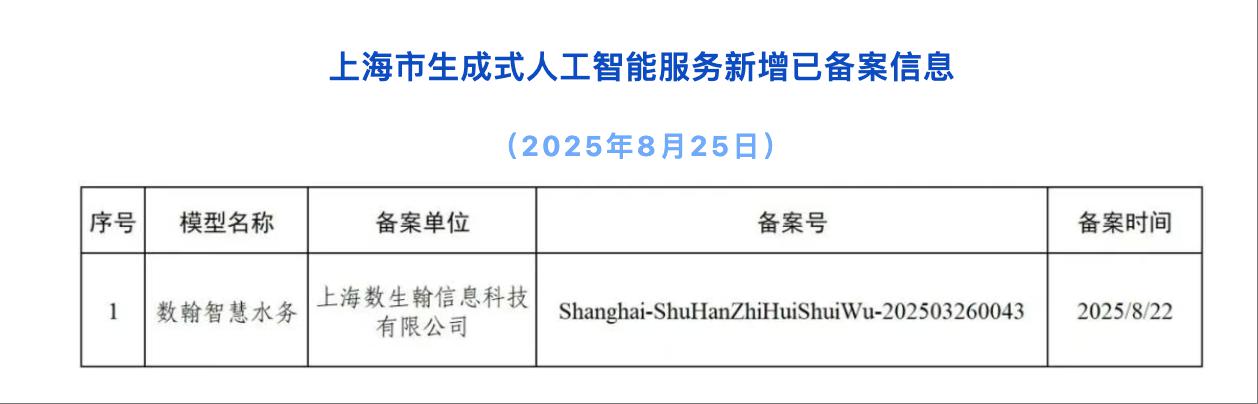
上海新增1款已完成备案的生成式人工智能服务
Mei Ri Jing Ji Xin Wen· 2025-08-25 07:37
Core Insights - As of August 25, Shanghai has registered one new generative artificial intelligence service, bringing the total to 83 services that have completed registration [1] Group 1 - Shanghai's regulatory environment is supportive of generative AI, as evidenced by the completion of 83 service registrations [1]
上海市新增1款已完成备案的生成式人工智能服务
Zheng Quan Shi Bao Wang· 2025-08-25 06:13
Group 1 - The core point of the article is that as of August 25, Shanghai has registered a total of 83 generative artificial intelligence services, with one new service completed and approved for registration [1] Group 2 - The newly registered generative AI service is named "ShuHan Smart Water Management," developed by Shanghai Shushenghan Information Technology Co., Ltd. [1][3] - The registration number for the new service is Shanghai-ShuHanZhiHuiShuiWu-202503260043 [3]
速递|AI战场合纵连横,苹果与谷歌Gemini再议合作,Siri或迎来“换脑手术”
Z Potentials· 2025-08-25 05:53
Core Viewpoint - Apple is exploring a partnership with Google to use the Gemini AI model for an upgraded version of its Siri voice assistant, marking a significant step in its artificial intelligence outsourcing efforts [2][3]. Group 1: Partnership Discussions - Apple has initiated discussions with Google regarding the development of a custom AI model to serve as the foundation for the next version of Siri, which is expected to launch next year [2]. - The discussions are part of Apple's efforts to catch up in the generative AI space, where it has been lagging behind competitors [2][4]. - Apple is also considering collaborations with Anthropic and OpenAI, evaluating whether their models could enhance Siri's capabilities [2][4]. Group 2: Internal Developments and Challenges - Apple is currently weighing whether to continue developing Siri using its internal models or to collaborate with external partners, with no final decision made yet [3][4]. - The upgrade of Siri has been delayed by a year due to technical challenges, which has led to a shift in leadership for the project [3][4]. - Apple's internal AI team has faced significant turnover, with key personnel leaving for other companies, which has raised concerns about the team's stability and direction [5][6]. Group 3: AI Model Complexity and Development - Apple is testing a new trillion-parameter AI model, a significant advancement compared to its current 150 billion-parameter system, but it still lags behind industry leaders like OpenAI, which utilizes models with trillions of parameters [7][8]. - The new AI model is currently intended for research purposes only and is not planned for customer deployment at this stage [9]. Group 4: Strategic Implications - The potential collaboration with Google could lead to a significant shift in Apple's approach to AI, as it has traditionally preferred to maintain control over AI functionalities on its devices [6]. - Apple's CEO Tim Cook has emphasized the need for the company to succeed in AI, indicating a willingness to invest more heavily in this area [6].


兵马俑弹吉他、商代凤鸟翩翩欲飞……千亿级大市场催生就业新蓝海
Yang Shi Wang· 2025-08-24 06:19
Core Viewpoint - The rise of generative artificial intelligence (AIGC) is transforming the digital content creation landscape, enabling creators to produce high-quality animations and interactive experiences more efficiently than traditional methods [1][10][12]. Group 1: Generative AI in Content Creation - Generative AI allows for the automatic generation of various content types, including text, images, audio, and video, by learning from vast datasets [1]. - The use of AI in animation production significantly reduces the time required to create content, with 30 seconds of animation now achievable in as little as two days compared to one to two months previously [7]. - AI is seen as a new tool that empowers creators, opening up both new and existing markets for digital content [10][20]. Group 2: Challenges and Innovations - The creation of a song performed by an AI version of a real artist presents unique challenges in blending the AI with the artist's persona [3]. - The process of refining AI-generated expressions, such as adjusting the portrayal of a character's emotions, requires multiple iterations to achieve desired results [8]. - The integration of AI in storytelling for events, such as a themed gala, involves crafting prompts that guide the AI in generating coherent narratives [8]. Group 3: Employment and Industry Impact - The role of "generative AI animation creator" has been officially recognized as a new profession, encouraging more young people to enter the field [20]. - The application of AI in various sectors, including film, advertising, and immersive education, is expanding rapidly, with over 300 specific use cases identified [21]. - The Chinese AI market is projected to reach a scale of hundreds of billions by 2026, driven by advancements in multi-modal models and cloud rendering technologies [22].

2025年从“千人一面”到“一人千面”:人工智能引领广告行业智能化转型报
Sou Hu Cai Jing· 2025-08-24 04:07
Core Insights - The report titled "From 'One Size Fits All' to 'Tailored for Each': AI Leading the Intelligent Transformation of the Advertising Industry" highlights the significant role of artificial intelligence (AI) in transforming the advertising sector, moving from traditional computational advertising to intelligent advertising by 2025 [2][7]. Group 1: Industry Overview - The advertising industry is a crucial pillar of the national economy, with a digital advertising penetration rate reaching 83.4% in 2023, driven by technological advancements [2][36]. - The rise of generative AI is pushing the advertising industry into a new era characterized by intelligent decision-making and personalized advertising experiences [2][41]. Group 2: AI Empowerment in Advertising - AI is deeply empowering the entire digital advertising chain, leading to two extremes in content production: "automated" and "premium" advertising [2][9]. - For performance-driven "volume-type" ads, AI-generated content (AIGC) enables mass production, while "premium-type" ads still rely on human creativity [2][9]. - AI enhances ad placement optimization through generative recall, data augmentation, and multimodal understanding, transitioning the matching paradigm from "one size fits all" to "tailored for each" [2][25]. Group 3: Evolution of Advertising Formats - The entry point for advertising is shifting from user interfaces to intelligent agents, with ad formats evolving from display ads to conversational embedded ads [2][12]. - New forms of native advertising are emerging, such as dynamic brand elements in games and films, and content integration on social platforms [2][12]. Group 4: Global Practices and Innovations - Major players like Google, Meta, and Tencent are leveraging advanced models to enhance advertising effectiveness and user engagement [2][10]. - Companies like Kuaishou are using AI to reduce advertising costs for small and medium enterprises, while service providers like Weimob are integrating AI with e-commerce SaaS [2][10]. Group 5: Future Trends and Challenges - The future of advertising is expected to be deeply personalized, with intelligent agents becoming new service models and multimodal models forming the new infrastructure [2][11]. - The industry will face challenges that require updated regulations, enhanced platform autonomy, and industry self-discipline to ensure compliant development of AI in advertising [2][11].


图书“众筹”:打造品牌才是长久之计
Xin Hua Wang· 2025-08-24 00:05
Core Insights - Crowdfunding in publishing is a new model where authors or publishers raise funds from the public to support book creation, production, and distribution, but issues like product discrepancies and delayed deliveries pose challenges to its growth [1][2][4] Group 1: Characteristics of Crowdfunding - Scarcity and interactivity are key features of crowdfunding projects, offering unique versions of books that are not available through other channels [2][3] - Readers can access books at lower prices and receive additional rewards, enhancing the appeal of crowdfunding [2][3] Group 2: Challenges in Crowdfunding - Many backers have experienced discrepancies between promised and delivered products, leading to dissatisfaction [5][6] - Delays in delivery can extend beyond six months to a year, negatively impacting the purchasing experience [5] - High prices for some crowdfunding projects deter potential buyers, especially when compared to later standard editions [6] Group 3: Importance of Brand Building - The credibility of crowdfunding projects often hinges on the background and past performance of the initiators, with established publishers seen as more reliable [7] - Building a strong brand and maintaining quality across all aspects of the project are essential for success [7][8] - There is a growing need for content diversity in crowdfunding projects, with a focus on quality and originality rather than merely repackaging existing works [8]
前亚研院谭旭离职月之暗面,加入腾讯混元,AI人才正加速回流大厂
Sou Hu Cai Jing· 2025-08-23 12:10
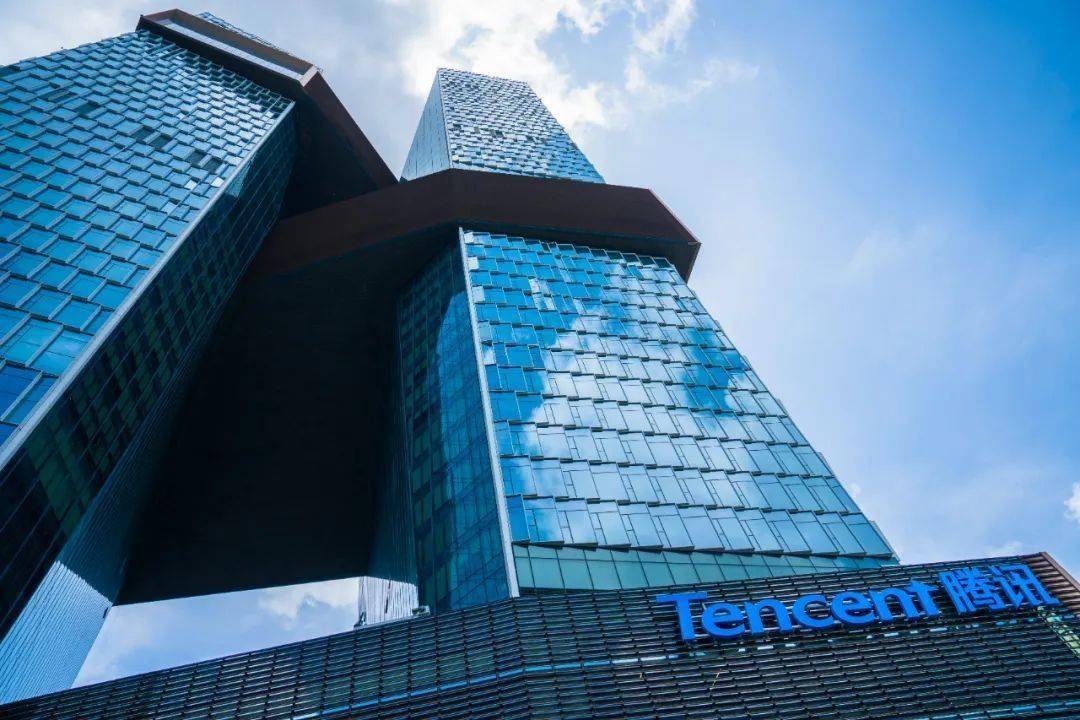
Group 1 - Tencent has recently welcomed Xu Tan, former Chief Research Manager at Microsoft Research Asia, to its Mix Yuan team, focusing on cutting-edge research in multimodal directions [2] - Xu Tan has a significant academic and industry background, with research on generative AI and content generation in audio, video, and speech, and his papers have been cited over 10,000 times [2] - Prior to joining Tencent, Xu Tan was with a domestic large model startup "Moonlight" where he was responsible for developing end-to-end speech models, indicating a shift in his career path [2] Group 2 - The exploration of multimodal research requires substantial computational power and funding, which is a heavy burden for startups [3] - Compared to emerging companies like DeepSeek, which primarily focuses on text and reasoning capabilities, large firms like Tencent and ByteDance have clear advantages in resources, ecosystem, and computational power for supporting multimodal research [3] - The Chinese large model landscape is transitioning from "wild growth to resource concentration," with early-stage startups losing their competitive edge as the focus shifts to data, computational power, and practical applications [3]
2025从“千人一面”到“一人千面”:人工智能引领广告行业智能化转型报告
Sou Hu Cai Jing· 2025-08-23 01:11
Core Insights - The report titled "From 'One Size Fits All' to 'Tailored for Each': AI Leading the Intelligent Transformation of the Advertising Industry" outlines the comprehensive transformation of the advertising industry driven by artificial intelligence, highlighting the shift from traditional models to intelligent systems [1][2]. Industry Overview - The global advertising industry is projected to exceed $1 trillion by 2024, with China's advertising revenue surpassing 1.5 trillion yuan. Each 1 yuan spent on advertising generates approximately 7 yuan in economic output, showcasing the industry's significant multiplier effect [1][2][31]. - In 2023, China's digital advertising penetration rate reached 83.4%, indicating a high level of digital integration within the advertising sector [1][31]. AI Empowerment in Advertising - AI is revolutionizing the entire digital advertising chain, with content production evolving towards automation and high-quality outputs. Generative AI enables efficient mass production of "volume-type" materials, while "premium-type" materials still require human creativity [1][2][9]. - Advertising engines are overcoming computational challenges, transitioning from "keyword matching" to "intent understanding," facilitating a shift from "one size fits all" to "tailored for each" advertising strategies [1][2][9]. Emerging Advertising Forms - The entry points for advertisements are shifting from user interfaces to intelligent agents, with advertising formats evolving from display ads to conversational embedded formats, including new forms of native advertising [1][2][10]. Global Practices and Innovations - Major advertising platforms like Google, Meta, Tencent, and Kuaishou are building AI-driven advertising infrastructures, while service providers such as Weimob and WPP are reshaping the entire marketing chain [2][10]. - Various sectors, including healthcare, e-commerce live streaming, and vertical retail, are actively applying AI to enhance productivity [2][10]. Future Trends - The advertising industry is moving towards deep personalization, with intelligent agents becoming new product and service models. The infrastructure is transitioning from "computational advertising" to "intelligent advertising," leading to a redefined division of labor within the industry [2][11]. - The demand for "strategic creative professionals" is increasing, and human-machine collaboration is becoming mainstream [2][11]. Challenges and Governance - The report identifies challenges such as technology, content regulation, and user trust in AI-driven advertising. It suggests updating regulatory frameworks, enhancing platform autonomy, and promoting industry self-discipline as potential solutions [2][11].