5G

Search documents
大华股份:拟将1.34亿元节余募集资金永久补充流动资金
Xin Lang Cai Jing· 2025-11-17 12:36
Core Viewpoint - The company plans to conclude three fundraising projects and allocate the remaining funds to supplement working capital, totaling approximately 134 million yuan [1] Group 1: Project Conclusions - The company intends to conclude the "Artificial Intelligence Technology Research and Application Project" [1] - The "5G, Internet of Things, and Multi-dimensional Sensing Product Solution R&D Project" will also be concluded [1] - The "Hangzhou Intelligent Manufacturing Base Phase II Construction Project" is set to be concluded [1] Group 2: Remaining Funds Allocation - The total remaining funds amount to approximately 134 million yuan [1] - The remaining amount for the Artificial Intelligence project is 120 million yuan [1] - The remaining amount for the 5G Internet of Things project is 14.2167 million yuan [1] - The remaining amount for the Manufacturing Phase II project is 86,400 yuan [1]

华夏航安在四川成立低空装备研制中心,含AI业务
Xin Lang Cai Jing· 2025-11-17 09:33
Core Insights - The establishment of Huaxia Hang'an (Sichuan) Low-altitude Equipment Research Center (Limited Partnership) with a registered capital of 10 million yuan indicates a strategic move into the low-altitude equipment sector [1] Company Summary - The new company is involved in various high-tech fields, including artificial intelligence software development, intelligent robot research and development, manufacturing of intelligent unmanned aerial vehicles, and 5G communication technology services [1] - Huaxia Hang'an Industrial Co., Ltd. holds full indirect ownership of the newly established center, showcasing a commitment to expanding its technological capabilities [1]
兆龙互连涨0.37%,成交额1.12亿元,近5日主力净流入-2569.28万
Xin Lang Cai Jing· 2025-11-17 07:28
Core Viewpoint - The company, Zhejiang Zhaolong Interconnect Technology Co., Ltd., is experiencing growth in revenue and profit, driven by its technological advancements in high-speed cables and optical products, as well as benefiting from the depreciation of the RMB. Group 1: Company Overview - Zhejiang Zhaolong Interconnect was established on August 21, 1995, and went public on December 7, 2020. The company specializes in the design, manufacturing, and sales of data cables, special cables, and connection products [7] - The revenue composition includes: 43.60% from category 6 and below data communication cables, 20.81% from category 6A and above, 18.04% from special cables, 11.62% from connection products, and 5.94% from other sources [7] - As of September 30, 2025, the company had 38,100 shareholders, an increase of 8.59% from the previous period, with an average of 6,721 circulating shares per shareholder, a decrease of 7.49% [7] Group 2: Financial Performance - For the period from January to September 2025, the company achieved a revenue of 1.518 billion yuan, representing a year-on-year growth of 13.28%, and a net profit attributable to shareholders of 138 million yuan, up 53.82% year-on-year [7] - The company has distributed a total of 113 million yuan in dividends since its A-share listing, with 82.34 million yuan distributed over the past three years [8] Group 3: Market Position and Product Offerings - The company has established itself as a core partner for international leading interconnect solution providers in the active cable (AEC) sector, leveraging its technological expertise in high-speed cable [2] - The optical products offered by the company include fiber optic jumpers, MPO/MTP pre-terminated cables, and LC fiber optic connectors, primarily serving high-end projects in finance, education, healthcare, and exhibitions, while also expanding into overseas markets [2] - The company is one of the few in China capable of designing and manufacturing data cables exceeding category 6, 7, and even 8, meeting the new data transmission demands of the 5G era [2] Group 4: Investment and Market Trends - The company benefits from the depreciation of the RMB, with overseas revenue accounting for 61.93% of total revenue as of the 2024 annual report [3] - The stock has seen a recent increase in trading activity, with a turnover rate of 0.90% and a total market capitalization of 15.229 billion yuan [1]
电广传媒涨2.89%,成交额3.13亿元,主力资金净流入620.04万元
Xin Lang Zheng Quan· 2025-11-17 06:22
Core Viewpoint - The stock of Electric Broad Media has shown a significant increase of 21.28% year-to-date, with recent fluctuations indicating a slight decline in the short term [1][2]. Company Overview - Electric Broad Media, established on January 26, 1999, and listed on March 25, 1999, is based in Changsha, Hunan Province. The company specializes in various advertising services, film and television production, e-commerce, and investment management [1][2]. - The main revenue sources for the company are advertising operations (65.66%), investment management (12.73%), gaming (12.50%), tourism (5.87%), hotel services (3.29%), art (0.03%), film and television production (0.02%), and real estate (0.01%) [1]. Financial Performance - For the period from January to September 2025, Electric Broad Media reported a revenue of 3.19 billion yuan, reflecting a year-on-year growth of 16.32%. The net profit attributable to shareholders reached 132 million yuan, marking a substantial increase of 116.61% [2]. - The company has distributed a total of 695 million yuan in dividends since its A-share listing, with 85.05 million yuan distributed over the past three years [3]. Shareholder Information - As of September 30, 2025, the number of shareholders for Electric Broad Media was 76,800, a decrease of 14.36% from the previous period. The average number of circulating shares per shareholder increased by 16.77% to 18,447 shares [2]. - Among the top ten circulating shareholders, Hong Kong Central Clearing Limited holds 15.22 million shares, an increase of 7.39 million shares from the previous period. Southern CSI 1000 ETF and Huaxia CSI 1000 ETF have seen slight reductions in their holdings [3].

通信ETF(515880)盘中涨1.0%,行业增长逻辑获市场关注
Mei Ri Jing Ji Xin Wen· 2025-11-17 04:54
Core Viewpoint - The communication industry is experiencing steady growth, with overall revenue and net profit increasing by 5.2% and 12.3% year-on-year in Q3 2025, respectively [1] Group 1: Telecom Operators - Telecom operators are maintaining stable growth in net profit [1] Group 2: Optical Communication Sector - Leading companies in the optical communication sector are benefiting from AI computing power demand, with total revenue and net profit for optical modules and devices increasing by 51% and 123% year-on-year, respectively [1] - Demand for 800G and 1.6T products is driving performance [1] Group 3: Copper Connection Sector - The copper connection sector's net profit has increased by 72% year-on-year, driven by capacity release enhancing profitability [1] Group 4: Liquid Cooling Equipment - Revenue from liquid cooling equipment is stabilizing, with 2026 expected to be a key point for demand growth [1] Group 5: ICT Equipment Sector - The ICT equipment sector is benefiting from increased capital expenditure by internet giants, leading to a recovery in network equipment revenue growth [1] Group 6: Fiber Optic Cable Sector - The fiber optic cable sector is experiencing product structure optimization driven by AI computing, with strong demand for high-end products [1] Group 7: Future Outlook - Looking ahead to Q4 2025 and 2026, increased investment in global AI computing is expected to continue driving high growth in optical communication and copper connection sectors, with attention also on demand from telecom operators, liquid cooling equipment, and fiber optic cables [1]
顺络电子跌2.00%,成交额3.36亿元,主力资金净流出1261.06万元
Xin Lang Zheng Quan· 2025-11-17 03:35
Core Viewpoint - The stock of Shunluo Electronics has experienced a decline of 2.00% on November 17, with a current price of 34.28 CNY per share and a total market capitalization of 27.641 billion CNY. The company has seen a year-to-date stock price increase of 10.96% but has faced a recent decline over the past five trading days [1]. Financial Performance - For the period from January to September 2025, Shunluo Electronics reported a revenue of 5.032 billion CNY, reflecting a year-on-year growth of 19.95%. The net profit attributable to shareholders was 769 million CNY, marking a 23.23% increase compared to the previous year [2]. - The company has distributed a total of 2.32 billion CNY in dividends since its A-share listing, with 869 million CNY distributed over the past three years [3]. Shareholder Information - As of September 30, 2025, the number of shareholders for Shunluo Electronics reached 46,000, an increase of 16.79% from the previous period. The average number of circulating shares per shareholder decreased by 14.38% to 16,456 shares [2]. - The top ten circulating shareholders include Hong Kong Central Clearing Limited as the second-largest shareholder with 45.1919 million shares, a decrease of 5.0674 million shares from the previous period. Other notable shareholders include Xingquan Trend Investment Mixed Fund and Southern CSI 500 ETF, both of which have reduced their holdings [3]. Business Overview - Shunluo Electronics, established on September 8, 2000, and listed on June 13, 2007, specializes in the research, production, and sales of new electronic components, primarily chip inductors and chip varistors. The company's main business revenue composition is 99.13% from chip electronic components and 0.87% from other sources [1]. - The company operates within the electronic components industry, specifically in passive components, and is associated with various concepts including NFC, inductors, SOFC, PCB, and 5G [1].

杭叉集团跌2.03%,成交额1.07亿元,主力资金净流入1128.44万元
Xin Lang Zheng Quan· 2025-11-17 03:33
Core Viewpoint - Hangcha Group's stock price has shown a significant increase of 49.97% year-to-date, despite a recent decline in the last five and twenty trading days [1][2]. Financial Performance - For the period from January to September 2025, Hangcha Group achieved a revenue of 13.972 billion yuan, representing a year-on-year growth of 9.73% [2]. - The net profit attributable to shareholders for the same period was 1.753 billion yuan, reflecting an increase of 11.43% year-on-year [2]. Stock Market Activity - As of November 17, Hangcha Group's stock was trading at 26.08 yuan per share, with a market capitalization of 34.16 billion yuan [1]. - The stock experienced a trading volume of 1.07 billion yuan and a turnover rate of 0.31% on the same day [1]. - The net inflow of main funds was 11.2844 million yuan, with significant buying from large orders [1]. Shareholder Information - As of September 30, 2025, the number of shareholders increased to 18,300, up by 5.78% from the previous period [2]. - The average number of circulating shares per shareholder decreased by 5.46% to 71,379 shares [2]. Dividend Distribution - Hangcha Group has distributed a total of 2.964 billion yuan in dividends since its A-share listing, with 1.497 billion yuan distributed over the past three years [3]. Institutional Holdings - As of September 30, 2025, Hong Kong Central Clearing Limited was the third-largest circulating shareholder, holding 36.8853 million shares, a decrease of 16.8952 million shares from the previous period [3]. - Southern CSI 500 ETF ranked as the seventh-largest circulating shareholder, with a holding of 7.6244 million shares, down by 123,400 shares [3].

达利凯普涨2.06%,成交额7330.62万元,主力资金净流入958.26万元
Xin Lang Cai Jing· 2025-11-17 03:09
Core Viewpoint - Dali Kape's stock has shown fluctuations with a recent increase of 2.06%, and the company has demonstrated a solid revenue growth trajectory in 2025, indicating potential investment opportunities in the electronic components sector [1][2]. Company Overview - Dali Kape Technology Co., Ltd. is located in Dalian, Liaoning Province, and was established on March 17, 2011. The company specializes in the research, development, manufacturing, and sales of RF microwave ceramic capacitors [1]. - The main business revenue composition is 98.15% from ceramic capacitors and 1.85% from other sources [1]. Financial Performance - For the period from January to September 2025, Dali Kape achieved an operating income of 286 million yuan, representing a year-on-year growth of 13.75%. The net profit attributable to the parent company was 126 million yuan, reflecting a year-on-year increase of 43.20% [2]. - Since its A-share listing, Dali Kape has distributed a total of 60 million yuan in dividends [3]. Stock Market Activity - As of November 17, Dali Kape's stock price was 17.32 yuan per share, with a market capitalization of 6.928 billion yuan. The stock has increased by 5.93% year-to-date, with a recent decline of 1.59% over the last five trading days [1]. - The company has appeared on the "龙虎榜" (a stock trading list) once this year, with a net buy of 17.75 million yuan on April 18 [1]. Shareholder Information - As of November 10, Dali Kape had 20,000 shareholders, a decrease of 2.93% from the previous period. The average number of circulating shares per person increased by 3.02% to 10,539 shares [2]. - As of September 30, 2025, Hong Kong Central Clearing Limited was the eighth largest circulating shareholder, holding 2.9999 million shares as a new investor [3]. Industry Context - Dali Kape operates within the electronic components sector, specifically in passive components, and is associated with concepts such as 5G, aerospace and military, optical communication, and military informationization [2].
太辰光涨2.08%,成交额1.29亿元,主力资金净流出1457.46万元
Xin Lang Zheng Quan· 2025-11-17 01:48
Core Viewpoint - The stock of Taicheng Light has shown volatility, with a year-to-date increase of 26.22%, but has recently experienced declines over various time frames, indicating potential market concerns or profit-taking [1][2]. Company Overview - Taicheng Light Communication Co., Ltd. is based in Shenzhen, Guangdong, and specializes in the research, production, and sales of optical devices, with 98.02% of its revenue coming from optical device products [1][2]. - The company was established on December 12, 2000, and went public on December 6, 2016 [1]. Financial Performance - For the period from January to September 2025, Taicheng Light reported a revenue of 1.214 billion yuan, reflecting a year-on-year growth of 32.58%, and a net profit attributable to shareholders of 260 million yuan, which is a significant increase of 78.55% [2]. - The company has distributed a total of 827 million yuan in dividends since its A-share listing, with 408 million yuan distributed over the past three years [3]. Shareholder Information - As of September 30, 2025, the number of shareholders increased to 63,800, up by 26.82%, while the average number of circulating shares per person decreased by 21.15% to 3,014 shares [2]. - The top circulating shareholders include Yongying Technology and Hong Kong Central Clearing Limited, with notable changes in their holdings [3].

“智慧旅游”重塑文旅消费体验 数字技术让“诗和远方”触手可及
Yang Shi Wang· 2025-11-17 01:33
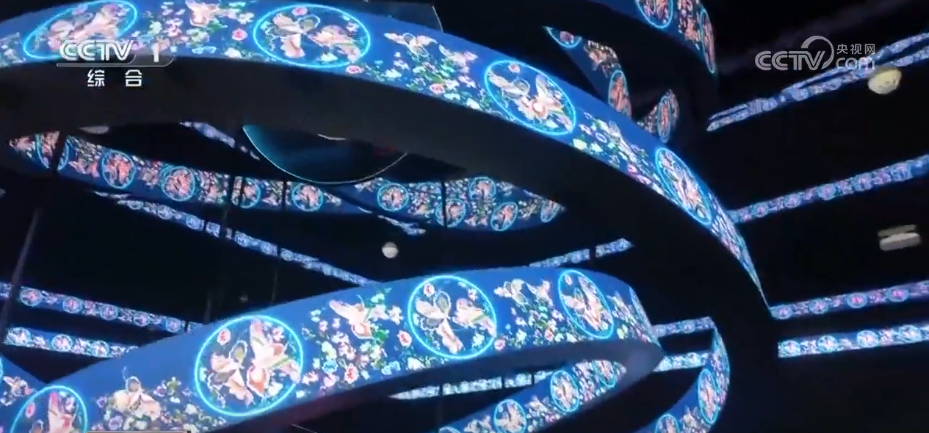
Core Insights - The State Council of China has issued implementation opinions to accelerate the application of digital technology in the cultural and tourism sectors, aiming to make cultural experiences more accessible and immersive [1] Group 1: Digital Technology in Cultural and Tourism - Digital technologies such as AI and VR are being utilized to create interactive and immersive experiences in cultural exhibitions, allowing visitors to engage with traditional culture in innovative ways [5][7] - In museums like the Nanjing Museum and Sanxingdui Museum, advanced technologies enable visitors to experience historical narratives and artifacts in a more engaging manner, enhancing the overall visitor experience [7] - The integration of digital technology is transforming the tourism consumption experience from mere sightseeing to interactive and immersive engagements, supported by AI, VR, and 5G technologies [9] Group 2: AI and Smart Tourism - The introduction of AI-powered tour guides in scenic areas, such as Huangshan, provides personalized experiences by offering real-time guidance and information based on visitors' locations [11] - The use of a digital model in Zhejiang allows tourists to access comprehensive travel information through a single QR code, streamlining the travel experience [9] Group 3: Innovative Cultural Presentations - Drone performances have become a new highlight in cultural tourism, exemplified by a recent event in Hubei where 3,500 drones created a visually stunning display, merging poetry and technology [15]