
金融科技

Search documents
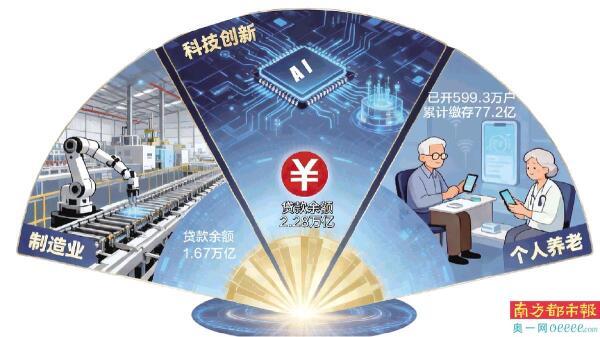
前10月深圳制造业贷款余额1.67万亿
Nan Fang Du Shi Bao· 2025-11-25 23:09
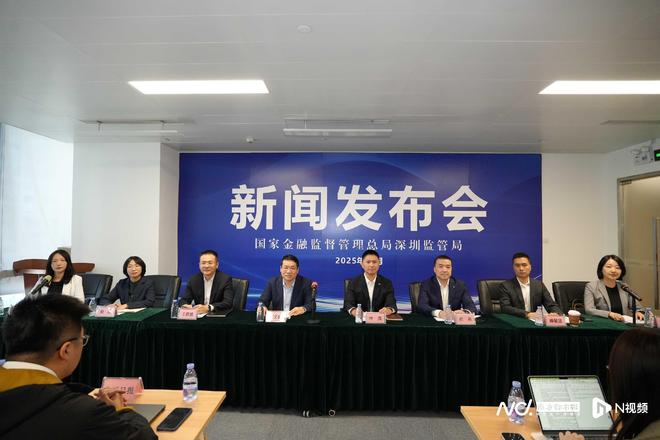
制图:李斌(即梦AI生成) 11月25日,深圳金融监管局召开新闻发布会,通报2025年1月至10月深圳银行业保险业的运行情况,系 统介绍深圳辖内银行业、保险业在稳外贸、促消费方面的政策落地情况与阶段性成果。南都湾财社记者 现场获悉,作为经济高质量发展的重要支撑,深圳金融的精准发力已显现实效:今年前10个月,深圳市 中资银行新发放外贸企业贷款7635.66亿元,同比增长9.83%;个人消费贷款余额8352.88亿元,同比增 长4.95%。 各项贷款余额9.91万亿 同比增长4.92% 深圳金融监管局统计数据显示,截至2025年10月末,深圳金融监管局监管的银行业资产总额达14.36万 亿元,同比增长4.37%;负债总额13.97万亿元,同比增长4.44%。各项贷款余额9.91万亿元,同比增长 4.92%;各项存款余额10.00万亿元,同比增长4.95%。资产、负债、存贷款规模均稳居全国大中城市第 三位。 保险业同样表现亮眼。前10个月,深圳保险业实现原保险保费收入1910.45亿元,规模位列全国大中城 市第三,同比增长12.20%,增速在一线城市中居首。其中,财产险公司原保险保费收入531.54亿元,同 比增长 ...

年内已有10余家券商迎新任首席信息官
Zheng Quan Ri Bao· 2025-11-25 16:45
Group 1 - The role of Chief Information Officers (CIOs) in the securities industry is becoming increasingly important as financial technology empowers brokerages, reflecting a trend towards deeper digital transformation [1][2] - Several brokerages have appointed new CIOs this year, indicating a shift in focus towards hiring high-end talent with a combination of technical and business backgrounds [1][2] - New CIOs typically possess extensive industry experience and a solid technical skill set, often having held significant positions in both technology and frontline securities operations [1] Group 2 - The increasing emphasis on technology within the securities industry is evident, with CIOs expected to transition from backend support roles to strategic leadership positions [2] - Brokerages are actively recruiting for CIO positions, with a focus on candidates who have over ten years of experience in information technology and a background in financial services [2] - The rapid development of innovative business models and the widespread application of emerging technologies are driving the demand for technology talent in the brokerage sector [2] Group 3 - Brokerages are embracing cutting-edge technologies and accelerating their digital transformation efforts, with firms like First Capital and Northeast Securities leading initiatives in AI and digital platforms [3] - The digital transformation wave is reshaping the competitive landscape of the securities industry, pushing firms towards more intelligent and personalized service models [3] - The ability to convert advanced financial technology into value-creating capabilities will be crucial for brokerages, with those that can leverage technology for unique services gaining a sustainable competitive advantage [3]
银行招聘青睐“金融+科技”复合型人才
Zheng Quan Ri Bao· 2025-11-25 16:43
Core Insights - The recent recruitment initiatives by several Chinese banks, including Bank of China, China Construction Bank, Nanjing Bank, and GF Securities, emphasize the urgent need for "financial + technology" interdisciplinary talents, indicating a strategic shift towards technology-driven high-quality development [1][2][4] Recruitment Focus - The banks are prioritizing candidates with experience in artificial intelligence, financial technology, and related fields, reflecting a preference for practical skills over purely academic qualifications [2][4] - Nanjing Bank's recruitment announcement specifies that applicants must have obtained a PhD within the last three years or be graduating by July 2026, with a focus on candidates under 35 years old [2] - GF Securities is also targeting PhD graduates from January 2024 to August 2026, with similar age and qualification requirements, emphasizing backgrounds in computer science, artificial intelligence, big data, and quantitative finance [2][3] Strategic Shift - The banks are transitioning from traditional scale expansion to a focus on efficiency and risk management, driven by the need to adapt to a challenging financial environment characterized by narrowing net interest margins [4][5] - The research topics set by these banks highlight their commitment to integrating advanced technologies like AI into their operations, with specific areas of focus including digital transformation, risk management, and enhancing customer service [3][4] Talent Demand Transformation - There is a notable shift in the banking sector's talent requirements from "single skill" to "cross-disciplinary integration," emphasizing the need for professionals who can bridge finance and technology [4][5] - The banks are increasingly valuing practical experience and the ability to produce actionable research outcomes, contrasting with the traditional academic focus of universities [4][5] Future Directions - The banks aim to leverage AI for smart risk control, intelligent operations, and inclusive finance, marking a significant evolution in their business models from service providers to intelligent solution providers [5]
十一年“冷板凳”,一朝坐上“火山口”!7000亿微众银行困局,新帅何解?
Sou Hu Cai Jing· 2025-11-25 13:41
Core Viewpoint - WeBank, China's first internet private bank, has achieved significant growth with assets exceeding 700 billion yuan, but it faces challenges including declining revenue and net profit, compliance issues, and a need for new growth drivers [2][3][4]. Group 1: Company Overview - WeBank was established in January 2015 and is recognized for its innovative approach to inclusive finance, having provided its first loan of 35,000 yuan to a truck driver [2]. - As of 2024, WeBank's asset scale has surpassed 700 billion yuan, solidifying its position as a leading private bank in China [3]. Group 2: Financial Performance - For the first time since its inception in 2014, WeBank reported a decline in both revenue and net profit [4]. - In 2024, WeBank's net interest margin has significantly decreased, and it has faced compliance penalties totaling 13.87 million yuan, indicating ongoing regulatory challenges [4][33]. Group 3: Leadership Changes - Huang Liming has been appointed as the third president of WeBank after a long wait of 11 years, taking over during a challenging period for the bank [4][5]. - Huang's background is more aligned with insurance and P2P lending rather than retail banking, which may have contributed to his delayed ascension to the presidency [12]. Group 4: Market Position and Challenges - WeBank's target market primarily consists of underserved segments, including blue-collar workers and individuals with lower educational backgrounds, which presents both opportunities and risks [13][14]. - The bank's reliance on a single product, "Weilidai," has raised concerns about its growth sustainability, especially as economic conditions change [15][16]. Group 5: Asset Quality and Risk Management - WeBank's non-performing loan ratio has shown improvement from 2022 to 2024, but this may be attributed to significant loan write-offs rather than genuine asset quality enhancement [22][25]. - The bank's credit impairment losses have decreased for the first time in five years, contributing to net profit growth, but questions remain about the underlying asset quality [19][22]. Group 6: Future Growth Strategies - WeBank is exploring growth avenues beyond retail lending, including corporate loans, which now account for over 40% of its loan portfolio [35]. - The bank is also focusing on wealth management and intermediary services to diversify its revenue streams, although it still faces challenges in customer retention and product differentiation [37][42][44].

九方智投新品“决策大师”亮相十四届沪上金融家颁奖仪式引关注
第一财经· 2025-11-25 10:12
近日,第十四届沪上金融家颁奖仪式在上海北外滩 "世界会客厅"圆满落幕。作为上海金融界极具影 响力的年度盛事,本届汇聚海内外金融机构领军者、学界专家及行业精英,共同见证金融行业年度标 杆,共话金融服务实体经济的创新路径,探寻赋能投资者价值实现的破局之道。 九方智投控股( 9636.HK)凭借在金融科技与投资者教育及服务领域的持续深耕,连续五年受邀出 席该盛典,旗下"新一代股票投资助手"九方智投携核心产品矩阵全景亮相,重磅服务产品"决策大 师"的多位首席及资深投顾老师现场助阵,生动展现了九方智投在投资者服务领域的专业底蕴与创新 活力。 "决策大师"部分首席、资深投顾老师亮相沪上金融家颁奖仪式 科技赋能降低投资门槛,专业服务填补能力短板 在 A股市场波动加剧、 信息过载、 投资者专业需求与日俱增的背景下,普通投资者普遍面临 "选股 难、择时难、风控难、学习难"的核心困境——海量信息中难辨有效信号、专业技术门槛高企、时间 精力有限难以盯盘、缺乏系统投资逻辑易跟风操作。与此同时,传统投资工具多局限于数据呈现,缺 乏针对性策略与陪伴服务,难以覆盖不同投资风格 及 真正解决投资者的核心痛点。 "决策大师"首席投顾孙凯在沪上 ...
深圳前10月外贸企业贷款增10%,个人消费贷款余额增5%
Nan Fang Du Shi Bao· 2025-11-25 09:56
Core Insights - Shenzhen's financial regulatory bureau reported significant progress in supporting foreign trade and consumer spending through targeted financial policies and initiatives [1][3][6] Group 1: Foreign Trade Support - In the first ten months of the year, Shenzhen's domestic banks issued new loans to foreign trade enterprises amounting to 763.66 billion yuan, a year-on-year increase of 9.83% [3][4] - The financing balance for cross-border e-commerce grew by 39.92%, while loans to small and micro foreign trade enterprises increased by 20.58% [3] - Insurance institutions provided export credit insurance coverage of 93.69 billion USD to 31,000 foreign trade enterprises, marking a 13.80% increase [3] - Innovative financial products like "Micro Trade Loan" have been launched, benefiting 1,700 small foreign trade enterprises with credit of 1.82 billion yuan, reducing financing costs by over 15% [3] - A "Foreign Trade Financial Supermarket" was established, integrating 63 banking and insurance institutions, offering 229 financial products for foreign trade enterprises [3] Group 2: Consumer Spending Promotion - As of the end of October, the balance of personal consumption loans in Shenzhen reached 835.29 billion yuan, reflecting a year-on-year growth of 4.95% [5] - Loans in the accommodation, catering, and cultural entertainment sectors totaled 207.99 billion yuan, with a growth of 2.04% [5] - Financial institutions have introduced various consumer incentives, including a program that provided 7.79 million yuan in discounts, stimulating nearly 300 million yuan in related consumption [5] - The "Deep Military Loan" initiative has disbursed nearly 60 million yuan to support veterans in entrepreneurship and enhance their consumption capacity [5] Group 3: Innovation and Policy Synergy - Financial technology and policy collaboration have improved efficiency in both foreign trade and consumer finance sectors [6] - The implementation of a personal consumption loan interest subsidy policy has benefited over 32,100 clients, with a total subsidy amount of 60.14 million yuan [6] - The Shenzhen financial regulatory bureau aims to continue leveraging financial resources to support foreign trade enterprises and upgrade consumer finance, contributing to the establishment of a globally influential consumer finance center [6]

沃尔核材涨2.00%,成交额1.97亿元,主力资金净流入338.54万元
Xin Lang Cai Jing· 2025-11-25 02:13
Core Insights - The stock price of Walden Materials increased by 2.00% on November 25, reaching 24.94 CNY per share, with a trading volume of 197 million CNY and a market capitalization of 31.422 billion CNY [1] Financial Performance - For the period from January to September 2025, Walden Materials achieved a revenue of 6.082 billion CNY, representing a year-on-year growth of 26.17%, and a net profit attributable to shareholders of 822 million CNY, up 25.45% year-on-year [2] Shareholder Information - As of September 30, 2025, the number of shareholders of Walden Materials was 203,300, an increase of 2.43% from the previous period, with an average of 5,628 circulating shares per shareholder, a decrease of 2.37% [2] Dividend Distribution - Since its A-share listing, Walden Materials has distributed a total of 779 million CNY in dividends, with 433 million CNY distributed over the past three years [3] Major Shareholders - The largest circulating shareholder is Hong Kong Central Clearing Limited, holding 60.8337 million shares as a new shareholder, while the Southern CSI 500 ETF ranks as the sixth largest circulating shareholder with 14.6809 million shares, a decrease of 287,700 shares from the previous period [3]

凌志软件股价涨5.34%,华宝基金旗下1只基金位居十大流通股东,持有328.32万股浮盈赚取252.8万元
Xin Lang Cai Jing· 2025-11-25 01:53
Group 1 - Lingzhi Software's stock increased by 5.34%, reaching 15.19 CNY per share, with a trading volume of 31.42 million CNY and a turnover rate of 0.53%, resulting in a total market capitalization of 6.076 billion CNY [1] - The company, established on January 3, 2003, and listed on May 11, 2020, primarily provides customized software development services and application software solutions for the financial industry, with 95.72% of its revenue coming from software development services [1] Group 2 - Huabao Fund's Huabao CSI Financial Technology Theme ETF (159851) entered the top ten circulating shareholders of Lingzhi Software in the third quarter, holding 3.2832 million shares, which is 0.82% of the circulating shares, with an estimated floating profit of approximately 2.528 million CNY [2] - The Huabao CSI Financial Technology Theme ETF was established on March 4, 2021, with a latest scale of 12.319 billion CNY, achieving a year-to-date return of 13.83% and a one-year return of 10.78% [2]

上市仅六年,金融壹账通退市落定,股价低迷与业绩承压是导火索
Di Yi Cai Jing· 2025-11-24 22:49
Core Viewpoint - Financial One Account, a fintech company under Ping An, has officially delisted following the approval of its privatization plan by the Grand Court of the Cayman Islands, marking a swift exit from public markets after only six years since its IPO [1][4]. Privatization Details - The privatization offer was made by Platinum Holdings Limited, a subsidiary of Ping An, which held approximately 30.18% of Financial One Account's shares prior to the offer [2][3]. - The proposed acquisition price is HKD 2.068 per share, representing a premium of about 23.10% over the last closing price and approximately 117.91% over the average closing price of the last 180 trading days [2][3]. Financial Performance and Market Conditions - Since its listing, the stock price of Financial One Account has declined over 95%, attributed to low liquidity, reduced investor interest, and insufficient analyst coverage [5][6]. - The company has faced significant operational challenges, with revenues from its core business expected to decrease by approximately 36.16% from FY2023 to FY2024, leading to increased operating losses [6]. Strategic Implications - The decision to privatize is seen as a move to alleviate short-term market pressures and focus on long-term strategic development, as the public market has not reflected the company's value [4][5]. - Post-privatization, Platinum plans to inject additional financial resources and integrate the company further into the broader Ping An ecosystem [7].
Syfe CEO: Fintech founders need to focus on trust if the sector is to reach its full potential
Yahoo Finance· 2025-11-24 21:00
The fintech industry moved into the modern era from something deeper than just better technology. The Global Financial Crisis of 2008 triggered a crisis of trust. For millions of consumers and businesses, the crisis revealed a need for greater transparency. A new generation of financial services companies–fintechs–stepped into the gap promoting not just efficiency and lower costs, but transparency and accessibility as well. This approach has delivered real results: The International Monetary Fund finds th ...