
智能风控

Search documents
“2025中国AI+应用Top50”优秀案例火热征集中
财联社· 2026-01-16 15:11
Core Viewpoint - The article emphasizes the transition of artificial intelligence (AI) from exploration to large-scale application across various industries, highlighting the importance of practical implementations that enhance efficiency and improve quality of life [3][8]. Group 1: Event Overview - The "2025 China AI+ Application Top 50" initiative aims to collect and recognize 50 exemplary AI applications across sectors such as industry, finance, education, healthcare, and cultural tourism [3][5]. - The event is organized by Shanghai Media Group's Financial Association and "Science and Technology Innovation Board Daily" to showcase practical AI applications and promote deep integration of AI with the real economy [3][8]. Group 2: Application Focus Areas - The initiative focuses on real-world applications of AI technology, emphasizing scenario adaptation and value creation rather than just technological barriers [9][23]. - Key application areas include: - Industrial: Smart quality inspection, predictive maintenance, production process optimization, and intelligent supply chain scheduling [10][24]. - Financial: Intelligent risk control, investment decision-making, anti-fraud systems, AI investment advisory, digital employees, and compliance auditing [10][24]. - Education: Personalized learning systems, intelligent grading, virtual teaching research, and equitable educational resource adaptation [10][24]. - Healthcare: Medical imaging assistance, AI consultations, smart companionship, health monitoring, emergency alerts, and elder care service robots [10][24]. - Cultural Tourism: Digital guides, smart scenic areas, travel planning, and AR/VR immersive experiences [10][24]. Group 3: Application Submission Requirements - Eligible applicants include enterprises, public institutions, research organizations, and innovative teams, with individual innovators also welcome to submit [11][25]. - Applications must address real industry pain points, demonstrate practical implementation, and provide performance data, rejecting purely conceptual proposals [11][25]. - Each applicant can submit up to three cases, requiring a brief description, implementation scenario, and performance data [11][25]. Group 4: Evaluation and Benefits - A professional judging panel comprising industry veterans, AI application experts, seasoned investors, and media representatives will evaluate submissions based on application depth, industry empowerment value, social benefits, and user experience [12][26]. - Selected Top 50 cases will receive: - Coverage and promotion through Financial Association and "Science and Technology Innovation Board Daily" media channels [12][27]. - An invitation to the "China AI+ Application Industry Empowerment Conference" planned for the first half of 2026, including participation in award ceremonies and high-level industry dialogues [12][28]. - Inclusion in the "2025 China AI+ Application Development Report" and priority recommendations to venture capital, private equity, and industry funds for financing needs [12][28]. Group 5: Timeline - The application collection period runs from December 16, 2025, to January 30, 2026 [6][29]. - The evaluation period is set for February 1 to February 5, 2026, with final results announced on February 6, 2026 [6][29].

AI+金融如何落地?深圳香蜜湖金融年会详解融合路径与治理挑战
2 1 Shi Ji Jing Ji Bao Dao· 2025-12-23 13:24
Group 1: Financial Conference Insights - The second "Shenzhen Xiangmi Lake Financial Annual Conference" was successfully held, focusing on promoting a virtuous cycle of technology, industry, and finance in the Guangdong-Hong Kong-Macao Greater Bay Area [1] - Keynote speakers emphasized the need for financial reforms based on rule of law and innovation to support high-quality development, with three main goals: risk prevention, wealth management market construction, and building an international financial center [1] Group 2: Macroeconomic Trends - China's GDP grew by 5.2% year-on-year in the first three quarters of 2025, showing an acceleration of 0.4 percentage points compared to the previous year [2] - Experts discussed the challenges of insufficient domestic demand and overcapacity, while highlighting the need for reforms and technological advancements to drive economic recovery [2] Group 3: Manufacturing and Export Strategies - China's manufacturing sector has achieved significant high-quality development, with industrial added value accounting for 32% globally [3] - Recommendations for optimizing export structures include promoting reasonable appreciation of the RMB and enhancing labor productivity [3] Group 4: Technology-Finance Integration - The integration of artificial intelligence (AI) into the financial sector is transforming service models and enhancing operational efficiency [5][7] - The "Xiangmi Lake Intelligent Finance Development Report (2025)" outlines the current state and challenges of AI in finance, emphasizing the need for a supportive financial ecosystem [6] Group 5: Future of Intelligent Finance - The upcoming "15th Five-Year Plan" is expected to focus on the integration of AI technology with financial industry transformation, presenting new opportunities for intelligent finance [9][10] - Experts suggest that the financial sector must enhance its operational efficiency and adapt to market demands while expanding internationally [10][11]
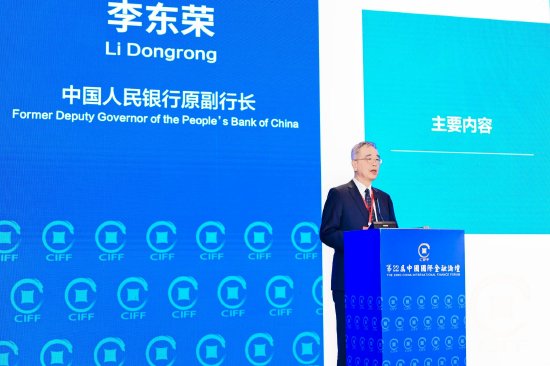
中国人民银行原副行长李东荣:智能金融必将成为数字金融发展的重要方向
Xin Lang Cai Jing· 2025-12-19 02:39
Core Viewpoint - The development of intelligent finance in China is positioned as a crucial direction for digital finance during the 14th Five-Year Plan period, supported by robust policy backing, rapid investment growth, and significant advancements in AI applications within the financial sector [3][6][9]. Group 1: AI Technology and Investment - AI technology in China has a solid foundation for large-scale application, driven by increasing policy support and rapid growth in related investments, with AI investment projected to reach $252.3 billion in 2024, a 25.5% increase from 2023 [6][21]. - The number of AI enterprises in China has surpassed 5,300, accounting for 15% of the global total, indicating a comprehensive industrial system covering foundational infrastructure, model frameworks, and industry applications [6][22]. - The cost and barriers to AI technology and applications are continuously decreasing, facilitating broader adoption across various sectors [6][21]. Group 2: Progress in Financial Sector AI Applications - The financial industry has been a strong advocate for information technology and intelligent applications, with a history of evolving through technological advancements [7][22]. - Policies from the People's Bank of China have consistently supported the gradual application of AI in finance, with significant investments from major state-owned banks reaching approximately 125.5 billion yuan in 2024, marking a 2.15% increase from 2023 [7][22]. - AI applications in finance are transforming traditional business models and service methods, enhancing customer experience and operational efficiency through intelligent customer service, investment advisory, and risk management [7][22]. Group 3: Considerations for Intelligent Finance Development - Emphasis on information security in intelligent finance applications is critical, as the rapid development of financial technology introduces new risks alongside efficiency gains [10][24]. - Accelerating the construction of an intelligent finance ecosystem is essential, focusing on better serving public needs through collaboration and breaking down data silos [11][25]. - Regulatory frameworks must adapt to the evolving landscape of intelligent finance, ensuring that standards support high-quality development while addressing challenges such as algorithm transparency and fairness [12][26].
“2025中国AI+应用Top50”优秀案例征集启动
财联社· 2025-12-17 12:08
Core Viewpoint - The article emphasizes the transition of artificial intelligence (AI) from exploration to large-scale application by 2025, highlighting its integration into various industries such as manufacturing, finance, education, healthcare, and tourism, thereby enhancing efficiency and improving quality of life [3][9]. Group 1: AI Application and Case Collection - The "2025 China AI+Application Top 50" initiative aims to collect and showcase 50 exemplary AI applications that demonstrate practical value and serve as models for industry empowerment [5][9]. - The collection period for submissions is from December 16, 2025, to January 16, 2026 [7][18]. - The focus is on real-world applications of AI technology across various sectors, prioritizing scenario adaptation and value creation over technical barriers [10][26]. Group 2: Application Areas - The initiative covers multiple sectors, including: - **Industrial**: Applications such as intelligent quality inspection, predictive maintenance, process optimization, and intelligent supply chain scheduling [11][28]. - **Financial**: Solutions like intelligent risk control, investment decision-making, anti-fraud systems, AI advisory, digital employees, and compliance auditing [11][28]. - **Education**: Tools for personalized learning systems, intelligent grading, virtual teaching research, and equitable resource allocation [11][27]. - **Healthcare**: Services including medical imaging assistance, AI consultations, intelligent companionship, health monitoring, emergency alerts, and elder care robots [11][28]. - **Cultural Tourism**: Innovations like digital guides, smart scenic areas, travel planning, and AR/VR immersive experiences [12][28]. - **Other Industries**: Innovative AI applications addressing common industry challenges to enhance efficiency [11][28]. Group 3: Submission Requirements and Evaluation - Eligible applicants include enterprises, public institutions, research organizations, and innovative teams, with individual AI innovations also welcome [14][27]. - Each submission must address real industry pain points, demonstrate practical application, and provide performance data, rejecting purely conceptual proposals [14][28]. - A professional evaluation panel will assess submissions based on application depth, industry empowerment value, social benefits, and user experience [16][29]. Group 4: Recognition and Benefits - Selected Top 50 cases will receive comprehensive media coverage from financial news outlets and a certificate of excellence [16][29]. - Winners will be invited to the "China AI+Application Industry Empowerment Conference" and included in the "2025 China AI+Application Development Report" [29][29]. - Successful cases will be prioritized for recommendations to venture capital, private equity, and industry funds to facilitate financing [29][29].

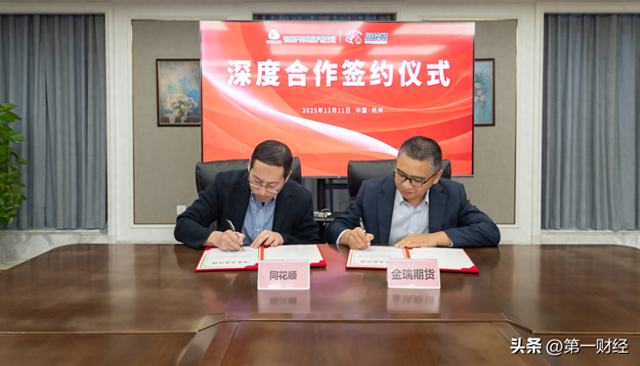
同花顺与金瑞期货在杭州签署深度合作协议
Di Yi Cai Jing· 2025-12-15 03:19
Core Insights - The signing of a deep cooperation agreement between Tonghuashun and Jinrui Futures marks the beginning of a new chapter focused on AI technology and digital collaboration across multiple business areas [1][3] Group 1: Company Overview - Jinrui Futures has extensive experience in the futures derivatives sector, particularly in precious metals risk management and integrated financial services [3] - Tonghuashun has developed a mature application system in futures data services, intelligent investment advisory, intelligent research, and risk control, leveraging its financial large model [3] Group 2: Strategic Focus - The collaboration will focus on three main areas: enhancing intelligent risk management capabilities for core products like precious metals, achieving full-process intelligent upgrades in research, trading, and service, and building a compliance and risk control intelligent system [5] - Jinrui Futures aims to strengthen its core competitiveness in industry services through digital transformation, ensuring mutual benefits and contributing to the high-quality development of the futures industry [5]

锚定一流投行 证券行业差异化发展迎新格局
Zheng Quan Shi Bao· 2025-12-09 17:45
Group 1 - The core direction for the high-quality development of the securities industry includes encouraging brokers to utilize mergers and acquisitions for complementary advantages, accelerating the establishment of first-class investment banks and institutions, and promoting differentiated regulation for specialized development [1][2] - The current wave of mergers and acquisitions in the securities industry is focused on capability complementarity and transformation, aiming to enhance the investment banking business towards a high-level model of "capital empowerment + industry deepening" [3][4] - The regulatory framework is expected to support the optimization of risk control indicators and moderate capital space adjustments, promoting the efficient use of capital to better serve the real economy [3][5] Group 2 - The trend of mergers and acquisitions is characterized by two main lines: enhancing market coverage through business or regional complementarity and promoting equity integration within state-owned enterprises to improve operational efficiency [2][3] - Smaller securities firms are encouraged to develop unique strengths and focus on niche markets to create "boutique" investment banks, with some successfully exploring differentiated business models [4][5] - The integration of financial technology, such as artificial intelligence and big data, is being promoted to enhance risk management capabilities and improve customer experience within the securities industry [6][7]
国泰海通CIO俞枫:人工智能前景光明,但道路也会有曲折
2 1 Shi Ji Jing Ji Bao Dao· 2025-12-02 08:41
Core Insights - The company has initiated its AI application strategy since 2017, adopting the "AI in All" approach to empower various business lines and systems [1] - With advancements in large model technology, the company has upgraded its AI strategy to "ALL in AI," transitioning from enabling AI to transformative AI [1] - The company has implemented over 150 AI application scenarios across various business areas, creating a new development pattern of "ubiquitous intelligence" [1] Technology Challenges - The company identifies the "hallucination" and interpretability issues of AI as significant challenges, particularly in the finance sector where precision is critical [2] - To address these challenges, the company has developed a "1+N" application system, combining general large models with industry-specific models to ensure reliable service outputs [2] Investment Focus - The company emphasizes the need to focus AI investments on core business areas to generate sustainable business value, especially as the enthusiasm for large model applications wanes [2] - The return on investment will become a central concern for companies, necessitating AI to address industry pain points effectively [2] Industry Development - The company advocates for the establishment of a regulated development order to maintain a healthy industry ecosystem, urging collaboration among regulators, institutions, and clients [2] - Industry associations are working on guidelines to standardize development paths, which will support the healthy growth of AI in the securities sector [2] Future Outlook - The company acknowledges the immense potential of AI while recognizing the challenges, suggesting that a collaborative approach can transform technical challenges into new development opportunities for the securities industry [2]

2025年大湾区交易所科技大会聚焦“AI+资本市场” 证券行业迎来智能化深层变革
Zheng Quan Ri Bao Wang· 2025-11-28 14:10
Core Insights - The 2025 Greater Bay Area Exchange Technology Conference highlighted the transition of AI technology in the securities industry from conceptual exploration to deep implementation, presenting both opportunities for efficiency and challenges for governance [1] - AI is positioned as a core driver for high-quality development in capital markets, with a focus on integrating AI capabilities with market governance needs [1] - The conference emphasized the importance of aligning AI advancements with regulatory frameworks to enhance market development and regulatory enforcement [1] Group 1: AI Technology Development - AI is recognized as a strategic technology leading a new wave of technological revolution and industrial transformation, with the year 2025 being termed the "Year of AI Agents" [2] - The securities industry is becoming a significant application scenario for AI, driving the sector towards greater intelligence, efficiency, and inclusivity [2] - AI's role in the securities industry is more critical than in other sectors, providing substantial support in customer acquisition and revenue generation [2] Group 2: Implementation and Challenges - Companies like Guotai Junan Securities have integrated AI across various business sectors, achieving over 150 AI applications that enhance risk control, investment research, and trading [3] - Regulatory bodies are actively embracing AI to improve oversight and compliance, integrating AI throughout the regulatory process [3] - The financial industry is accelerating its adoption of AI, overcoming challenges such as data governance and computational power limitations [4] Group 3: Future Outlook and Collaboration - AI is expected to enhance the overall competitiveness of the securities industry by improving customer service, operational efficiency, and promoting high-quality development [4] - Challenges such as AI's "hallucination" problem and lack of interpretability pose risks in the finance sector, necessitating careful consideration [4] - The industry is working towards overcoming AI application bottlenecks through technological advancements, regulatory adaptations, and collaborative innovation [5] Group 4: Strategic Initiatives - The Shenzhen Stock Exchange aims to build a world-class digital and intelligent trading platform by focusing on risk prevention, regulatory strength, and high-quality development [6] - Key initiatives include planning intelligent computing infrastructure, implementing cloud applications, and enhancing AI integration in core business areas [6] - The potential of AI in the securities industry is significant, but its development requires guidance from regulatory bodies, practical exploration by institutions, and cooperation from clients [6]
金融壹账通荣获2025年“数据要素×”大赛全国总决赛二等奖
Qi Lu Wan Bao· 2025-11-26 05:59
Core Insights - The "Digital Risk Control Project" won the second prize in the national finals of the 2025 "Data Element ×" competition, showcasing a significant achievement among 22,000 participating projects [1] - The competition aims to promote the marketization of data elements and the deep integration of data with industries, with a focus on various sectors including financial services [1] Group 1: Project Overview - The "Digital Risk Control Project" addresses industry pain points such as data integration, circulation, and application difficulties, establishing the first "data-risk-ecosystem" digital risk control system in the insurance sector [2] - The project utilizes a robust data foundation from Ping An Group, creating a comprehensive database covering ten high-quality data categories, with a total data volume exceeding PB level [2] - It integrates over 370 authoritative data sources, achieving a compliance data fusion model and a claims knowledge engineering system, with data standards reaching DCMM level five [2] Group 2: Technological Innovations - The project has developed a large model and knowledge engineering system for the insurance domain, utilizing trillions of insurance corpus and hundreds of millions of claims data to create an interpretable knowledge graph and intelligent reasoning chain [2] - The automation rate of knowledge has reached 70%, while the data knowledge rate stands at 50%, significantly enhancing risk identification accuracy and control efficiency [2] - The model has been implemented in scenarios such as claims risk control, risk pricing, and fraud detection, benefiting over 20 insurance institutions and generating economic and social benefits exceeding 10 billion [2] Group 3: Company Strengths - Ping An Group's technological innovation and ecological collaboration are highlighted through this award, reflecting its systemic strength in driving intelligent financial development with data elements [3] - The company has accumulated over 30 trillion bytes of data, covering nearly 250 million individual customers, and has trained large models based on this vast data [3] - AI has been fully integrated into Ping An's core business, achieving a 63% automation rate in personal injury claims and processing car insurance applications in an average of one minute [3] Group 4: Future Directions - Financial One Account will continue to act as a technology output window, collaborating with the Ping An ecosystem and the industry to explore new intelligent financial models driven by data elements [4] - The aim is to contribute to the high-quality development of the financial industry, support the real economy, enhance financial risk prevention capabilities, and promote new productive forces [4]
银行招聘青睐“金融+科技”复合型人才
Zheng Quan Ri Bao· 2025-11-25 16:43
Core Insights - The recent recruitment initiatives by several Chinese banks, including Bank of China, China Construction Bank, Nanjing Bank, and GF Securities, emphasize the urgent need for "financial + technology" interdisciplinary talents, indicating a strategic shift towards technology-driven high-quality development [1][2][4] Recruitment Focus - The banks are prioritizing candidates with experience in artificial intelligence, financial technology, and related fields, reflecting a preference for practical skills over purely academic qualifications [2][4] - Nanjing Bank's recruitment announcement specifies that applicants must have obtained a PhD within the last three years or be graduating by July 2026, with a focus on candidates under 35 years old [2] - GF Securities is also targeting PhD graduates from January 2024 to August 2026, with similar age and qualification requirements, emphasizing backgrounds in computer science, artificial intelligence, big data, and quantitative finance [2][3] Strategic Shift - The banks are transitioning from traditional scale expansion to a focus on efficiency and risk management, driven by the need to adapt to a challenging financial environment characterized by narrowing net interest margins [4][5] - The research topics set by these banks highlight their commitment to integrating advanced technologies like AI into their operations, with specific areas of focus including digital transformation, risk management, and enhancing customer service [3][4] Talent Demand Transformation - There is a notable shift in the banking sector's talent requirements from "single skill" to "cross-disciplinary integration," emphasizing the need for professionals who can bridge finance and technology [4][5] - The banks are increasingly valuing practical experience and the ability to produce actionable research outcomes, contrasting with the traditional academic focus of universities [4][5] Future Directions - The banks aim to leverage AI for smart risk control, intelligent operations, and inclusive finance, marking a significant evolution in their business models from service providers to intelligent solution providers [5]