人民币汇率

Search documents
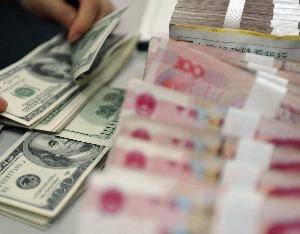
今年人民币汇率料延续双向波动走势
Zhong Guo Zheng Quan Bao· 2026-02-23 20:17
Core Viewpoint - The offshore RMB to USD exchange rate has shown an overall increase during the Spring Festival holiday, influenced by favorable external conditions and increased corporate demand for currency settlement [1][2]. Group 1: Exchange Rate Trends - As of February 23, the offshore RMB to USD exchange rate rose by 0.26%, closing at 6.8835, with a notable increase of 137 basis points from the previous closing price [1]. - The onshore RMB briefly surpassed the 6.90 mark against the USD prior to the holiday, indicating a trend of appreciation since breaking the 7.0 mark at the end of 2025 [1]. - Experts predict that the RMB will likely continue to exhibit a dual-directional fluctuation pattern throughout the year, supported by fundamental factors and stable policy expectations [2]. Group 2: Factors Influencing Exchange Rate - Increased corporate demand for currency settlement has been a significant driver of the recent RMB appreciation, particularly as companies sought to settle their foreign exchange needs before the holiday [1]. - External factors, such as the U.S. Department of Justice's investigation into the Federal Reserve Chairman, have impacted the dollar's strength, allowing non-USD currencies, including the RMB, to appreciate [2]. - The RMB's performance is expected to be influenced by three main factors: the dollar's trajectory, changes in the external environment, and the effectiveness of domestic growth policies [2]. Group 3: Corporate Risk Management - The People's Bank of China is encouraging financial institutions to enhance their currency risk hedging services, emphasizing the importance of these services for corporate financial stability [3]. - The rising volatility in the foreign exchange market has made hedging against currency fluctuations increasingly critical for companies, affecting their profit margins and cash flows [3]. - The National Foreign Exchange Administration plans to strengthen support for corporate currency risk management, promoting the development of more accessible and effective hedging products [3].
陆家嘴财经早餐2026年2月23日星期一
Sou Hu Cai Jing· 2026-02-23 00:50
Group 1 - The global market is focused on the new 15% tariffs announced by President Trump, which may face legal challenges, while bilateral trade agreements remain valid [4][10] - The A-share market is set to open for trading after the Spring Festival, with public funds prepared for investment, anticipating a balanced market structure with a focus on "technology growth" and "Chinese advantages" [5] - The Spring Festival box office has exceeded 5 billion yuan, marking the eighth consecutive year of over 100 million viewers [6] Group 2 - The Chinese government is pushing for modernization in agriculture, emphasizing the integration of various sectors and the development of technology-driven agriculture [2] - The steel industry in China has achieved significant reductions in energy consumption and emissions, with over 80% of crude steel capacity meeting ultra-low emission standards [6] - The AI industry is experiencing strong demand, with companies like SK Hynix and Huagong Technology reporting full order books and operational capacity [8] Group 3 - The global investment landscape is seeing a surge in capital inflow into Latin American markets, with the MSCI Emerging Markets Latin America Index reaching an eleven-year high [11] - The Chinese yuan has been appreciating against the US dollar, driven by favorable external conditions and increased corporate demand for currency exchange [11]


人民币走强!专家:双向波动仍是趋势
Zhong Guo Zheng Quan Bao· 2026-02-22 15:13
2026年以来,人民币汇率"接连上涨"。春节前一周,在岸、离岸人民币对美元汇率双双升破6.9元关 口。春节假期2月16日至20日,离岸人民币对美元汇率累计上涨0.06%。 近期人民币汇率上涨,集中结汇是重要原因之一。东方金诚首席宏观分析师王青表示,年末企业结汇需 求增加,带动人民币汇率季节性走强;特别是近期人民币对美元持续升值后,结汇需求可能在加速释 放。 "今年1月末外汇储备规模较2025年12月末增加412亿美元,央行连续第15个月增持黄金,强化市场对跨 境资金流动稳定性的判断。"国家金融与发展实验室特聘高级研究员庞溟说。 外部环境变化助推人民币汇率走强。王青表示,美联储独立性受到冲击,美联储新主席人选的"降息 +缩表"主张尚未扭转美元颓势。非美货币普遍升值,人民币汇率顺势走强。 多位专家表示,今年人民币汇率大概率延续双向波动、温和升值的特征。 专家表示,人民币对美元汇率走强,受外部环境有利变化、企业结汇需求增加等多重因素影响。今年人 民币汇率大概率呈现"基本面支撑、市场双向波动"的格局。 王青表示,今年一季度我国出口预计还会保持较快增长,春节前企业结汇需求或持续释放,短期内美元 指数大幅反弹的可能性不大 ...
李迅雷:如何解读对出口引擎的“认知偏差”
Xin Lang Cai Jing· 2026-02-22 03:03
Core Viewpoint - The divergence between intuition and data regarding China's export growth is attributed to the continuous drag from export prices and exchange rates, which affects the dollar-denominated export growth and global share of China's exports. Excluding these factors, the quantity of China's exports as a share of global exports continues to rise, contributing significantly to GDP growth [1][3][14]. Export Growth Analysis - The WTO data indicates that only in 2024 did China's dollar-denominated exports grow faster than the global average, while in 2022, 2023, and the first three quarters of 2025, China's export growth lagged behind the global rate [2][14]. - From 2015 to 2019, China's export share of global exports remained stable at around 13%. From 2020 to the first three quarters of 2025, this share slightly increased but fluctuated between 14% and 15%. The peak was in 2021 at 14.9%, with subsequent years showing lower shares [2][14]. Factors Influencing Export Quantity Share - China's export quantity share increased from 13.2% in 2019 to 17.0% in the first three quarters of 2025, driven by three main factors: 1. Accelerated industrial transformation and an increase in high-value-added product exports. Labor-intensive and raw material-intensive exports decreased from 18.43% and 5.13% in 2019 to 13.67% and 4.09% respectively by 2025, while capital-intensive exports rose from 56.80% to 62.97% [4][16]. 2. Continuous decline in export product prices due to a "strong supply, weak demand" environment, with a cumulative price drop of 10.1% from 2023 to 2025 [4][16]. 3. Expansion into new markets through the Belt and Road Initiative, which mitigated external shocks. Key trading partners like ASEAN, Africa, and India saw increased export shares, while traditional partners like the US and EU saw declines [5][18]. Future Export Trends - Future predictions indicate that China's export quantity share will continue to rise due to several factors: 1. The ongoing support for technology and industrial transformation as highlighted in the recent party congress [6][19]. 2. Limited likelihood of significant increases in export prices in the short term due to the absence of large-scale capacity reductions [6][19]. 3. Potential improvements in the external environment, leading to increased shares in emerging markets [6][19]. Price Factors and Currency Exchange - Price factors that have negatively impacted exports are expected to gradually weaken. The absolute level of export prices has limited room for further decline due to: 1. Trade friction risks that may restrict price reductions [7][20]. 2. Government policies aimed at stabilizing export prices and encouraging industrial upgrades [7][20]. 3. The linkage between domestic and export prices, which limits the incentive for further price cuts [7][20]. - The RMB's exchange rate is a significant factor affecting exports. Since 2022, despite a growing trade surplus, the RMB's effective exchange rate has declined by 16.12% [10][23]. Future expectations suggest a stable or rising RMB due to resilient exports and limited short-term dollar appreciation [10][23]. Long-term Export Share Projections - Estimates suggest that from 2026 onwards, China's global export share will continue to recover, potentially reaching around 17% by 2030, indicating a more than 2% increase from current levels [12][25].

AI风起搅动市场,数据看清真实脉络
Sou Hu Cai Jing· 2026-02-21 23:52
窗外的路灯透着暖黄的光,房间里只有电脑屏幕的光在闪。刚关掉手机,耳边还残留着白天市场的喧嚣——AI浪 潮要成全年主线、消费复苏有政策加持、人民币走强利好市场……各种消息轮番轰炸,看得人心里发慌。其实不 止我,身边有个朋友最近也在犯愁,一会儿被利好消息勾得蠢蠢欲动,一会儿又被利空传闻吓得不敢出手,到头 来什么机会都没抓住。2026年的市场确实充满变数,AI板块的热度、新旧产业的分化、人民币汇率的走势,每一 个都牵动着市场参与者的神经。但我越来越觉得,市场的核心从来不在消息里,而是藏在每一笔真实的交易行为 中。这时候,量化大数据的优势就显现出来了,它能帮我们跳出主观情绪的陷阱,看清那些被消息掩盖的真实脉 络。 很多时候,我们看到的价格变化,和背后真实的交易行为完全是两回事。就拿市场里的消息来说,明明是利好发 布,价格却没有如预期般延续走势,反而出现波动;有时候利空传来,价格却逆势企稳。这不是消息没用,而是 我们没看懂消息背后资金的真实意图。 一、价格走高背后的交易特征 看图1里的这只标的,价格还在稳步走高的阶段,量化大数据已经捕捉到「获利回吐」的交易行为——7个交易日 里有5天都被这种行为主导。「获利回吐」其实是 ...
安本集团中国区总经理茅蓓丽:中国市场马年奔驰展潜力
Zhong Guo Ji Jin Bao· 2026-02-20 06:46
踏入马年,我们预期市场一方面有可能像骏马一般快速上涨奔驰,但另一方面,投资回报的来源也可能 出现高度分化。在众多关键驱动因素中,人工智能的快速发展、政府的支持政策以及有效的刺激措施、 再加上人民币汇率的趋于稳定,都可能延续市场去年的强劲势头,并有可能在2026年下半年进一步扩 大。在这样的条件下,投资时选择拥有创新实力、资本纪律和盈利可见度的公司,将带来丰厚的回报。 一马当先:中国人工智能与新能源发展 自2021年以来,受限的产能和较高的准入壁垒导致变压器和开关设备价格大幅上涨。输电升级和老化电 网基础设施的更换仍处于早期阶段,而来自可再生能源以及天然气与核能的新接入预计将加快,相关的 增长前景依然乐观。 我们也看好部分消费板块。尽管消费必需品行业仍处于周期后段,但具备强劲现金流和海外扩张潜力的 龙头企业展现出韧性。当前估值仍比五年均值低17–27%,一旦盈利下调触底,有望出现均值回归。 马运亨通:选择优质企业 下半年市场可能会进一步扩张。如果政策支持力度加大,恢复产能纪律和需求,可能有助于透过改善企 业盈利,促进包括消费在内的传统产业复苏。 尽管如此,"新旧分化"可能会持续存在,宠物食品公司等新兴消费品产业 ...
【NIFD季报】美元指数走势变数加大 人民币有望温和升值——2025年年
Sou Hu Cai Jing· 2026-02-19 08:42
2025年美元指数走势呈现阶段性特征,一季度维持高位,二季度大幅贬值,后两季度横盘震荡,2026年初再度急贬。其下行主因源于多 重因素叠加,包括新一轮贸易关税举措的实施、美联储进入降息周期后货币政策不确定性加剧,以及美债信用、流动性等风险上升引发 的市场担忧。展望2026年,美联储主席人选提名带来的政策分歧、全球地缘政治风险的中长期影响、选举周期的短期扰动,将推动美元 指数维持缓慢下行态势,预计在93-100区间波动。 欧元、日元汇率走势各有特征,2024年末至2026年初欧元兑美元升值14%,涨幅超基本面支撑,2026年预计以双向波动为主;美元兑日 元呈V型走势,2025年4月后日元大幅贬值,受日本国内财政、政治及外汇政策约束等因素影响,2026年日元基本面支撑偏弱,短期或随 美元回调反弹,若内部政策优化叠加外部环境改善,日元有望由贬转升。 今天分享的是:【NIFD季报】美元指数走势变数加大 人民币有望温和升值——2025年年度人民币汇率分析报告 报告共计:15页 本报告为国家金融与发展实验室2026年2月发布的2025年年度人民币汇率分析报告,梳理了2024年末至2026年初全球外汇市场走势,并对 202 ...

价格因素对中国出口的拖累将逐步减弱
Xin Lang Cai Jing· 2026-02-18 06:59
Core Viewpoint - Recent data indicates that China's export growth is lagging behind the global average, but long-term factors suggest that the negative impact of price factors on exports will gradually diminish [1] Group 1: Export Growth Factors - Price and exchange rate factors have constrained China's export growth measured in USD over the past few years [1] - Excluding these factors, the share of China's export volume has been continuously increasing, highlighting its significant role in global trade [1] - The increase in China's export volume share is attributed to industrial upgrades, declining product prices, and market diversification from the Belt and Road Initiative [1] Group 2: Future Outlook - The negative impact of price factors on exports is expected to weaken in the future due to trade friction risks, optimization of export tax rebate policies, and the linkage of domestic and foreign sales prices [1] - A stable and appreciating RMB exchange rate is predicted to support exports, with limited short-term potential for USD appreciation [1] - It is forecasted that by 2030, China's export value share of the global market will reach a new steady state of approximately 17%, an increase of 2 percentage points from the current level, indicating resilience in China's export performance in the coming years [1]
李迅雷:如何理解出口引擎的“数据错觉”
Jing Ji Guan Cha Bao· 2026-02-18 05:50
Core Viewpoint - The article discusses the divergence between intuition and data regarding China's export growth, highlighting that while exports are traditionally seen as a key driver of economic growth, recent data shows a decline in China's export growth compared to global averages [1][2]. Group 1: Export Growth Analysis - According to WTO data, only in 2024 did China's export growth in USD terms exceed the global average over the past four years, with lower growth rates observed in 2022, 2023, and the first three quarters of 2025 [1]. - China's share of global exports has remained relatively stable, fluctuating between 14% and 15% from 2020 to the first three quarters of 2025, with a peak of 14.9% in 2021 [1][2]. - The actual effectiveness of China's exports as a GDP driver is masked by price and exchange rate factors, but when these are adjusted for, the quantity of exports as a share of global totals has been increasing [2][3]. Group 2: Factors Influencing Export Performance - The increase in China's export quantity share from 13.2% in 2019 to 17.0% by the first three quarters of 2025 is attributed to three main factors: accelerated industrial upgrading, declining export prices, and the diversification of markets through the Belt and Road Initiative [3][4]. - The share of high-value-added products in China's exports has risen, with capital-intensive goods increasing from 56.80% in 2019 to 62.97% in 2025, while labor-intensive and raw material exports have decreased [3]. - The prices of Chinese export products have been declining, with a cumulative drop of 10.1% in export prices from 2023 to 2025, reflecting a "strong supply, weak demand" environment [3][4]. Group 3: Market Diversification and Future Outlook - The Belt and Road Initiative has successfully opened new markets, with significant increases in export shares to ASEAN, Africa, Russia, India, and Mexico, while shares to the US and EU have decreased [4][5]. - Future predictions indicate that China's export quantity share will continue to rise due to ongoing industrial upgrades, stable export prices, and improved external conditions [5][6]. - The potential for further increases in China's global export share is estimated to be around 2 percentage points by 2030, suggesting continued resilience in export growth [11].
“6.8时代”,离岸人民币汇率继续上涨
Sou Hu Cai Jing· 2026-02-17 03:30
Group 1 - The offshore RMB exchange rate broke through 6.89, closing at 6.8835 against the USD, with an increase of 176 points [2] - As of February 17, at 10:45 AM, the offshore RMB was reported at 6.887 against the USD [2] Group 2 - Industrial Securities noted that the RMB exchange rate is supported by multiple favorable factors, leading to appreciation against the USD and enhancing the attractiveness of Chinese assets for foreign investors [3] - The weakening of the USD due to its disruptive impact on global order is beneficial for emerging market assets, particularly stable currency and improving fundamental RMB assets [3]