
政治监督

Search documents
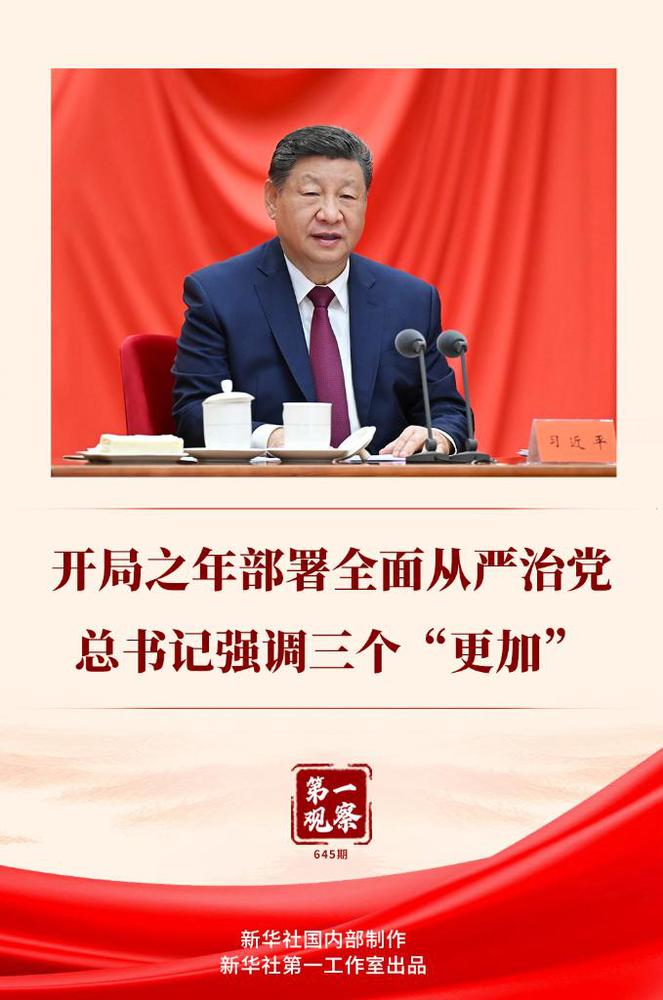
第一观察丨开局之年部署全面从严治党,总书记强调三个“更加”
Xin Hua She· 2026-01-12 15:18
1月12日,习近平总书记出席二十届中央纪委五次全会并发表重要讲话。 2026年是"十五五"开局之年。着眼基本实现社会主义现代化关键时期,习近平总书记在会上强调的 三个"更加"的要求格外鲜明。 (一)"更加坚决有力地贯彻落实党中央重大决策部署" 一分部署,九分落实。 习近平总书记强调,贯彻落实党中央重大决策部署,是维护党中央权威和集中统一领导的根本要 求,也是党和人民事业不断发展进步的重要历史经验。 必须清醒看到,在贯彻落实党中央重大决策部署方面,问题依然存在。数据显示,2025年前11个 月,全国查处的违反中央八项规定精神问题中,"在履职尽责、服务经济社会发展和生态环境保护方面 不担当、不作为、乱作为、假作为,严重影响高质量发展"方面问题最多,达到105008起,占比超过 40%。 深化政治监督,是推动贯彻落实党中央重大决策部署的重要保障。 从建设现代化产业体系、因地制宜发展新质生产力、建设全国统一大市场,到扩大高水平对外开 放、扎实推进全体人民共同富裕、常态化防止返贫致贫,再到化解地方政府隐性债务、加强生态环境保 护、统筹发展和安全…… 聚焦以上任务要求,习近平总书记强调,加强具体化、精准化、常态化的监督检 ...

1月12日晚间央视新闻联播要闻集锦
Yang Shi Xin Wen Ke Hu Duan· 2026-01-12 14:33
Group 1 - Xi Jinping emphasized the need for higher standards and practical measures to advance strict governance of the Party, providing strong support for achieving the goals of the "14th Five-Year Plan" [1][7] - In 2025, various levels of disciplinary inspection and supervision institutions will focus on political supervision to ensure the effective implementation of major decisions made by the Party Central Committee [8] Group 2 - The government has made systematic regulations regarding the layout and investment direction of government investment funds for the first time [10][11] - By 2026, China will accelerate the construction of an efficient and intelligent delivery network to better serve the national unified market [3][12] - Local areas are continuously creating new consumption scenarios to stimulate consumer vitality [4][13]
强化政治监督 护航党和国家事业健康发展
Yang Shi Wang· 2026-01-12 11:38
央视网消息(新闻联播):政治监督是督促全党坚持党中央集中统一领导的有力举措。2025年,各级纪 检监察机关和巡视巡察机构着力压实政治责任、严明政治纪律、纠正政治偏差,持续推进政治监督具体 化、精准化、常态化,以有力监督保障党中央重大决策部署有效落实。 2025年12月,二十届中央巡视省(自治区、直辖市)完成反馈,实现对31个省(区、市)和新疆生产建 设兵团的巡视全覆盖。此次巡视过程中,中央巡视创新组织方式,首次联动巡视副省级城市,对部分地 区开展提级巡视,有效避免了重复监督,减少人情干扰,提高了巡视的穿透力,有利于全面系统反映各 地存在的共性问题、突出问题,有效推动解决问题。 强化政治监督,是纪检监察机关重大政治责任,要坚持党中央重大决策部署到哪里,政治监督就跟进到 哪里。 过去的一年,各级纪检监察机关紧盯权力和责任、紧盯"一把手"和领导班子、紧盯群众反映强烈的问 题,深入查找影响高质量发展的主要矛盾、落实党中央决策部署中的重大偏差、全面从严治党方面的突 出问题,坚持精准、科学、规范问责。 聚焦粮食安全和耕地保护,严查耕地乱象背后的责任、腐败和作风问题。中央纪委国家监委推动相关部 门移送50件耕地违纪违法问题 ...
任平:定了就要落实,要有大局观、执行力
Ren Min Ri Bao· 2026-01-12 03:39
Group 1 - The effectiveness of political supervision is crucial for ensuring the implementation of major decisions and directives from the central government, thereby strengthening the overall development of the economy and society [1][4] - The emphasis on political loyalty and responsibility among party members is highlighted, with a focus on aligning actions with the central government's directives to achieve collective goals [2][3] - Political supervision serves as a powerful measure to maintain the centralized and unified leadership of the Party, ensuring that all members act in concert towards common objectives [4][5] Group 2 - The importance of a systematic perspective and a sense of responsibility is underscored, with leaders expected to proactively address challenges and risks while maintaining a broad view of national interests [15][19] - The necessity for localized and innovative approaches in implementing central policies is emphasized, with examples of successful regional adaptations demonstrating the effectiveness of tailored strategies [7][8][10] - The integration of various regional resources and strengths is essential for achieving coordinated development, as illustrated by the successful consolidation of port operations in Zhejiang [11][12] Group 3 - The need for a proactive and vigilant approach to risk management is stressed, with leaders encouraged to maintain a high level of awareness and readiness to respond to emerging challenges [16][19] - The concept of "seeing the big picture" is vital for understanding the broader implications of local actions, ensuring that regional developments align with national goals [6][18] - The call for continuous improvement in governance and management practices is evident, with a focus on enhancing the quality of life and addressing emerging issues in rapidly developing areas [17][18]
为大国工程清障护航 助力经济高质量发展
Zhong Yang Ji Wei Guo Jia Jian Wei Wang Zhan· 2026-01-12 01:32
Core Insights - The article highlights the significant progress and achievements in major national projects in China, emphasizing the role of political supervision in ensuring the successful implementation of these projects [9][24]. Group 1: Major National Projects - The "Deep Sea No. 1" Phase II project, China's first deep-water high-pressure gas field, has commenced full production, contributing to national energy security [15][24]. - The "National Uranium No. 1" demonstration project has successfully produced its first barrel of uranium within a year of construction, showcasing rapid development in the nuclear industry [13][14]. - The "Longdong-Shandong ±800 kV UHVDC Transmission Project" has been completed, enhancing the transmission of renewable energy from western to eastern China [9][18]. Group 2: Political Supervision and Accountability - The Central Commission for Discipline Inspection (CCDI) has prioritized political supervision in major strategic projects, ensuring accountability and adherence to policies [10][11]. - The CCDI has established specialized teams to monitor the progress of key projects, conducting regular assessments and addressing issues promptly [11][12]. - Emphasis is placed on the importance of integrity and transparency in project management, with measures implemented to prevent corruption and ensure efficient use of resources [16][17]. Group 3: Technological Innovation and Development - The successful launch of the Tianwen-2 probe marks a significant milestone in China's deep space exploration efforts, reflecting advancements in aerospace technology [9][12]. - The completion of the first ultra-deep exploration well, "Deep Earth Taka 1," at a depth of 10,910 meters, demonstrates China's capabilities in geological exploration and resource discovery [19][24]. - The construction of the "Bohai Zero Carbon Demonstration Zone" highlights China's commitment to green and low-carbon development, showcasing innovative approaches to sustainable urban planning [22][24].

勇于自我革命 答好“窑洞之问”
Xin Lang Cai Jing· 2026-01-11 18:13
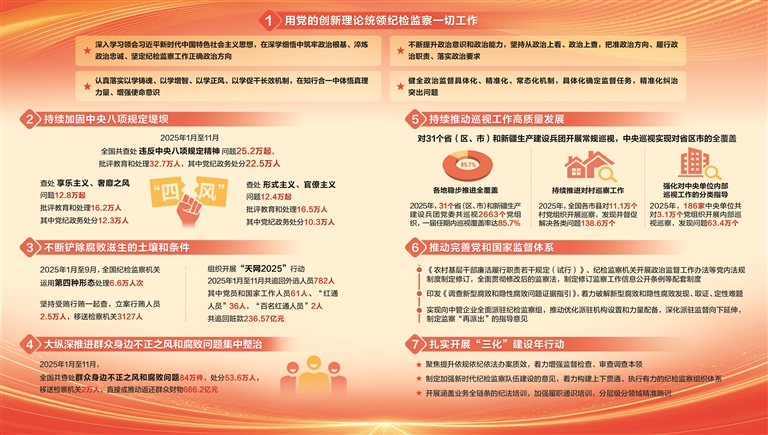
每逢"五一"端午、中秋国庆、元旦春节等重要节点公开通报典型问题;截至目前已连续147个月公布全 国查处违反中央八项规定精神问题月报数据;学习教育期间公开通报3批共4起违规吃喝严重违反中央八 项规定精神问题…… 2025年,各级纪检监察机关着力推动正风反腐一体深化,坚持由风查腐、由腐纠风,以"查""治"贯通阻 断风腐演变,着力营造风清气正的政治生态。 扎牢"不能腐"的笼子,强化对权力运行的监督制约—— 2025年,二十届中央第五轮、第六轮巡视先后开展,完成对省区市巡视全覆盖。 与此同时,巡视组织方式创新不断深化,二十届中央第五、六轮巡视中,除常规巡视外,还对云南省昆 明市开展了提级巡视,对15个副省级城市开展了联动巡视,全面提升监督精准性有效性,不断提高巡视 发现问题的能力和水平。 各地也积极创新,穿插运用机动巡视、专项巡视和"回头看"等方式,推动巡视巡察上下联动、同向发 力。2025年,31个省区市和新疆生产建设兵团党委共巡视2663个党组织,一届任期内巡视覆盖率达到 85.7%。 一手抓监督到位,一手抓制度完善。 2025年6月1日,修改后的《中华人民共和国监察法》及其实施条例同步施行。 修改后的监察法及其 ...
勇于自我革命 答好"窑洞之问"——写在二十届中央纪委五次全会召开之际
Zhong Yang Ji Wei Guo Jia Jian Wei Wang Zhan· 2026-01-11 15:46
Core Viewpoint - The Chinese Communist Party (CCP) emphasizes the importance of self-revolution and strict governance to maintain its leadership role in the modernization of socialism in China, particularly in response to historical challenges and contemporary issues [3][4][7]. Group 1: Self-Revolution and Governance - The CCP is committed to addressing the "Yaodong Question" posed 80 years ago, which focuses on the relationship between the party and the people, and emphasizes self-revolution as a key answer to historical cycles of rise and fall [3][4]. - The party's self-revolution is seen as essential for overcoming unique challenges faced by large political organizations, ensuring the CCP remains a strong leadership core for socialism with Chinese characteristics [2][3][4]. Group 2: Anti-Corruption Efforts - In 2025, the Central Commission for Discipline Inspection reported that 65 senior officials were investigated for serious violations of discipline and law, highlighting the ongoing commitment to anti-corruption efforts [8][9]. - The CCP has intensified its anti-corruption campaign, with significant numbers of cases being investigated and resolved, including 78.9 million cases nationwide, demonstrating a strong stance against corruption [9][10]. Group 3: Political Supervision and Public Engagement - Political supervision is being enhanced to ensure the implementation of major decisions made by the Central Committee, with a focus on addressing public concerns and improving governance [19][22]. - The party is actively engaging with the public to gather feedback on pressing issues, aiming to rectify problems that affect people's lives, such as food safety and rural development [19][21]. Group 4: Cultural and Institutional Reforms - The CCP is promoting a culture of integrity and accountability, with initiatives to enhance the awareness of anti-corruption and the importance of ethical governance among party members [14][15]. - Revisions to laws and regulations, such as the Anti-Waste Regulations and the Supervision Law, are being implemented to strengthen the framework for anti-corruption and improve the efficiency of governance [13][14].
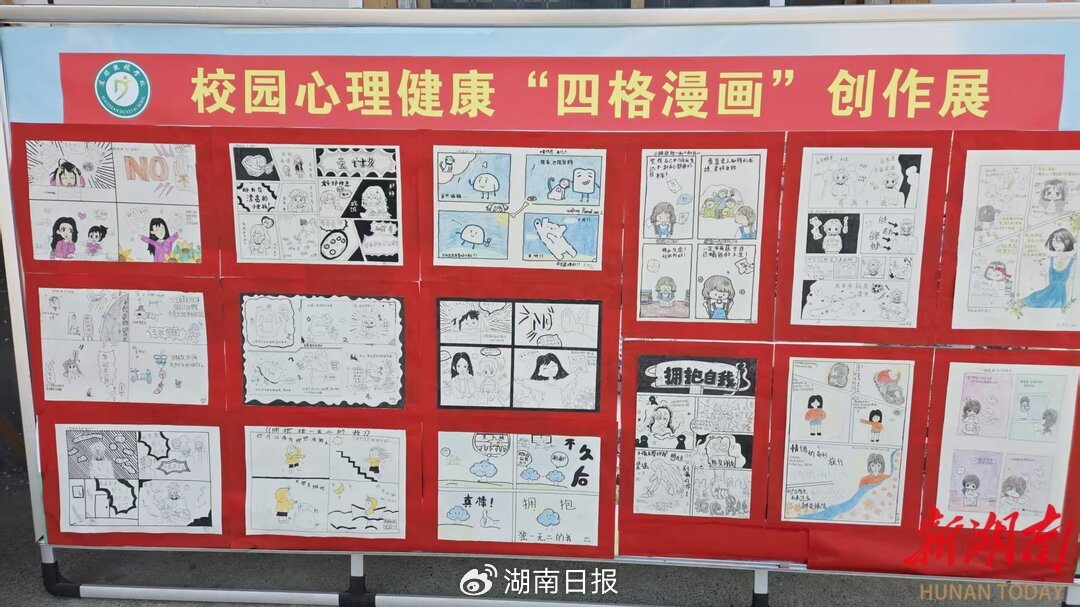
道县敦颐学校用漫画让学生画出“情绪说明书”——一张A4纸读懂青春期
Xin Lang Cai Jing· 2026-01-11 06:52
湖南日报全媒体记者郭利 "原来画画能让妈妈读懂我的心思,还愿意和我一起改变相处方式!"永州市道县敦颐学校八年级学生何清婧拿着四格漫画获奖作品,脸上满是欣喜。2025 年12月,该校开展的"绘心成长,漫语心声"校园心理四格漫画创作活动,让一张A4纸成为青春期学生的"情绪出口",更架起了心灵沟通的桥梁。 当心理课变成漫画大赛,会碰撞出怎样的火花?敦颐学校给出了温暖答案。活动以表达性艺术治疗为理念,面向七至九年级学生定制专属主题:七年级聚 焦"拥抱独一无二的我",八年级探索"情绪的奇妙旅行",九年级直面"压力,我的朋友"。学生们或独立构思,或团队协作,在A4纸上用一格一故事,刻画 从困境、尝试到转折、成长的心路历程。 七年级学生肖子隽的一等奖作品《勇敢拥抱独一无二的自己》,源自身边同学的真实经历。画作主人公因上初中后身高突飞猛进感到自卑,刻意节食,却 在同学们频繁求助她拿高处物品的过程中发现,外貌从不是定义自我的标尺,长高也是一种优势。"我常常通过画画宣泄情绪,也在创作中发现自己的另 一面。"肖子隽说。 同为一等奖获得者,也是学校心理社成员的何清婧,在作品中还原了青春期与父母的矛盾,以及在好友的开导下最终和解的过程 ...
特别报道|2025:纪检监察工作高质量发展取得新进展新成效
Zhong Yang Ji Wei Guo Jia Jian Wei Wang Zhan· 2026-01-11 01:58
Core Viewpoint - The article emphasizes the importance of political supervision in ensuring the implementation of the Party's political line and maintaining a high-pressure stance against corruption and misconduct within the Party and government institutions [3][20]. Group 1: Political Supervision - Political supervision is crucial for maintaining the centralized leadership of the Party and ensuring that major decisions and directives from the Party are implemented effectively [3][4]. - The focus of political supervision should be on specific tasks and responsibilities, ensuring that the directives from the Party are translated into actionable plans [4][6]. - Various regions, such as Beijing and Zhejiang, have implemented targeted political supervision measures to ensure compliance with Party directives and enhance governance [5][6]. Group 2: Anti-Corruption Efforts - The article highlights the ongoing efforts to combat corruption, particularly in local governance, by addressing both minor and major corruption issues [20][28]. - There is a strong emphasis on the need for collaboration among different departments to effectively tackle corruption and misconduct [24][29]. - The article notes that significant progress has been made in addressing corruption linked to public services, with various regions reporting successful interventions [32][33]. Group 3: Integration of Supervision Mechanisms - The integration of various supervisory mechanisms is essential for enhancing the effectiveness of anti-corruption efforts, with a focus on collaboration between different supervisory bodies [39][40]. - The establishment of clear communication and coordination among supervisory entities is emphasized to ensure a unified approach to governance and oversight [41][42]. - The article discusses the importance of grassroots supervision in extending the reach of anti-corruption measures and ensuring accountability at all levels of government [43][44]. Group 4: Continuous Improvement and Education - Continuous education and training for supervisory personnel are highlighted as vital for maintaining high standards of governance and accountability [45][46]. - The article stresses the need for ongoing learning and adaptation of supervisory practices to meet the evolving challenges in governance and corruption prevention [47].
扎实推进政治监督具体化精准化常态化
Xin Lang Cai Jing· 2026-01-10 21:36
Core Insights - The essence of inspections is political supervision, serving as a strategic institutional arrangement for intra-party supervision and governance [1] - The 20th Central Commission for Discipline Inspection's fourth plenary session proposed to organize the fifth and sixth rounds of inspections, aiming for comprehensive coverage during the current term [1] Inspection Coverage - In 2025, the fifth and sixth rounds of inspections will be conducted, with a focus on regular, coordinated, and elevated inspections to enhance overall effectiveness [1] - A total of 2,663 party organizations were inspected across 31 provinces and regions, achieving an inspection coverage rate of 85.7% during the current term [1] Village Inspections - Inspections at the village level are crucial for extending strict party governance to grassroots levels, with 111,000 village party organizations inspected in 2025, uncovering and addressing 1.386 million issues [1][2] Political Supervision Effectiveness - From January to November 2025, 12,000 cases related to food security and farmland protection were investigated, with 16,600 individuals receiving criticism or disciplinary action [3] - Serious environmental issues were addressed, with 103 units held accountable and 649 individuals criticized or disciplined following inspections [3] Technological Integration in Supervision - The integration of information technology in supervision has enhanced the ability to identify and address issues, exemplified by the use of big data in monitoring healthcare fund misuse in Chongqing [3][4] Strengthening Supervision Systems - The 20th Central Committee's fourth plenary session emphasized the need to improve the party and state supervision system, focusing on the regulation and oversight of power allocation and operation [5][6]