
节能减排

Search documents
2025年中国能源货车行业市场研究报告
硕远咨询· 2025-12-16 09:13
Investment Rating - The report does not explicitly state an investment rating for the industry Core Insights - The Chinese new energy truck industry is defined as vehicles powered by non-traditional fuels, including pure electric trucks, hydrogen fuel cell trucks, and plug-in hybrid trucks, contributing to a green transportation transition [4][5] - The market for new energy trucks is expected to grow rapidly, with a compound annual growth rate (CAGR) of over 30%, and is projected to reach a scale of one million vehicles by 2030 [15][16] - The industry is supported by government policies, including purchase subsidies and infrastructure development, which have significantly reduced costs for enterprises and users [14][27] Summary by Sections 1. Industry Overview - New energy trucks are categorized into three main types: pure electric trucks, hydrogen fuel cell trucks, and plug-in hybrid trucks, each with unique advantages and challenges [6][10] - The application range of new energy trucks includes urban delivery, long-distance transport, logistics warehousing, cold chain transport, and short-distance transport within ports and parks [5][6] 2. Industry Development History - The new energy truck industry in China began in the early 2000s, initially limited by technology and high costs, focusing on public transport and logistics [13] - Government policies have played a crucial role in promoting the industry, leading to a significant expansion in market size and user acceptance [14] 3. Current Industry Analysis - As of 2024, the market size of new energy trucks in China has surpassed several hundred thousand units, with strong demand from urban delivery and government procurement sectors [15] - Major players in the market include traditional commercial vehicle manufacturers like BYD, Foton, and Jiangling, as well as high-tech companies like NIO and CATL, which are driving technological innovation [19][20] 4. Market Environment Analysis - The macroeconomic environment is favorable for the new energy truck market, with strong demand driven by the growth of e-commerce and cold chain logistics [25] - The development of charging and hydrogen refueling infrastructure is progressing, although there are significant regional disparities in infrastructure availability [43][44] 5. Demand Analysis - Logistics companies prioritize high-efficiency, low-cost, and environmentally compliant vehicles, influencing their purchasing decisions [47] - The urban delivery and express delivery sectors show rapid growth in demand for new energy trucks, emphasizing operational efficiency and environmental performance [48] 6. Competitive Landscape - Leading domestic manufacturers like BYD, Foton, and Jiangling maintain a competitive edge through strong R&D capabilities and market expansion strategies [52] - Emerging innovative companies are rapidly entering the market, focusing on technology advancements in hydrogen fuel cells and other areas [53][56] 7. Industry Chain Analysis - The new energy truck industry chain includes upstream raw material suppliers, midstream vehicle manufacturers, and downstream sales and service networks [59][66] - The supply chain for key components like batteries and electric motors is complex and heavily influenced by international market dynamics [59] 8. Future Development Trends - Future technological innovations will focus on enhancing battery energy density and the commercialization of solid-state batteries, which are expected to revolutionize the industry [76] - Market demand is shifting towards more diversified applications, including long-distance transport and specialized vehicles, reflecting evolving consumer needs [77]
陕化煤化工月蒸汽煤耗再创新低
Zhong Guo Hua Gong Bao· 2025-12-16 02:50
Core Insights - The company has successfully reduced its steam coal consumption to 97.87 kg per ton in November, which is a decrease of 0.06 kg from the best level achieved in July, significantly outperforming the benchmark values in the petrochemical industry [1] Group 1: Boiler Efficiency Improvements - The company operates three 260 tons/hour circulating fluidized bed boilers to provide steam for production [1] - A special task force was established to address key parameters affecting boiler thermal efficiency, particularly flue gas temperature [1] - The task force completed the adjustment and repair of boiler soot blowers and continuously optimized the soot blowing strategy under different loads and coal qualities, leading to a reduction in flue gas temperature for boilers 2 and 3 [1] Group 2: Resource Utilization and Economic Benefits - Boiler 2 implemented co-firing of by-product gas from chemical installations and fuel gas resources, resulting in a reduction of coal consumption by 720 tons in November, which generated an economic benefit of 485,000 yuan [1] - The task force also conducted economic coal blending, calculating the blending ratios and economic benefits of different coal types to maximize cost reduction while ensuring stable boiler operation, achieving an economic benefit of 645,000 yuan [1]
中韩石化CO 资源化利用显成效
Zhong Guo Hua Gong Bao· 2025-12-15 02:46
为确保碳资源稳定供应,中韩石化持续优化管网运行,通过每日巡检、及时维护管道保温与支架等措 施,将月输送能力提升至7000吨,管网负荷率长期保持在90%以上。企业间建立了紧密的协作机制,在 气源供应、销售渠道等方面形成闭环,实现了经济与环保效益的"双赢"。 中韩石化环氧芳烃部环氧乙烷/乙二醇(EO/EG)装置将再生塔顶气中富含的CO2进行回收提纯,通过专用 管道输送至园区企业博达鸿泰环保科技有限公司,作为食品级CO原料。 中化新网讯截至12月10日,中韩石化实现环氧芳烃装置再生塔顶气二氧化碳(CO)的高效回收与再利 用,今年累计向下游企业输送CO突破7万吨,减排成效显著。 ...
【组图】2025年中国锅炉制造行业细分市场分析 锅炉行业节能减排深入推进
Qian Zhan Wang· 2025-12-12 08:18
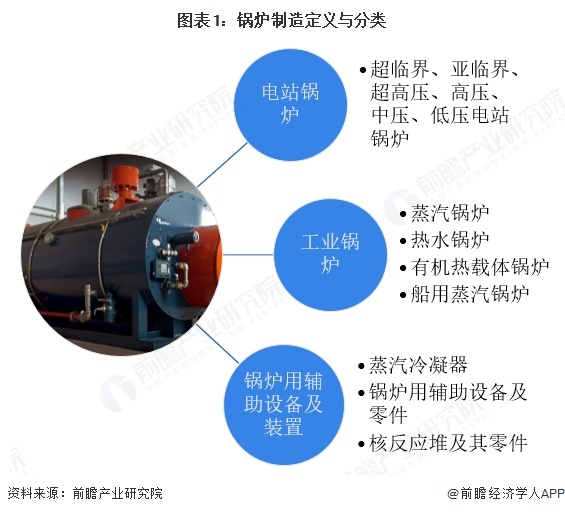
Core Insights - The boiler manufacturing industry in China is experiencing a shift towards energy efficiency and emission reduction, driven by national policies and market demands [10] Industry Overview - The boiler manufacturing sector includes the production of various types of boilers and auxiliary equipment, which convert chemical energy from fuels into thermal energy for industrial applications [1] - Major listed companies in the industry include Xizi Clean Energy, Huaguang Huaneng, Chuanrun Co., Haili Heavy Industry, Huaxi Energy, and Dongfang Boiler [1] Production Trends - Industrial boiler production in China has shown a declining trend since 2015, with a peak production of 558,100 tons in 2014, and an expected production of 203,800 tons in 2024 [3] - The production of waste heat boilers has remained stable, with an increasing market share since 2019, projected to exceed 70,000 tons by 2024 due to energy-saving renovations in high-energy-consuming industries [4] - Electric boiler production has increased from approximately 37.5 million kilowatts in 2019 to 55.0 million kilowatts in 2021, with a forecasted production of 87.5 million kilowatts by the end of 2024, reflecting a year-on-year growth of 31.8% [5] Market Segmentation and Future Trends - The market is expected to phase out coal-fired boilers with a capacity of 35t/h and below, while larger, high-efficiency, low-emission circulating fluidized bed boilers will gain market share [10] - In the industrial sector, gas-fired boilers are anticipated to dominate, focusing on decentralized heating and industrial heat applications, with a growing preference for efficient, low-carbon, and low-nitrogen emission boilers [10] - In the power generation sector, electric boilers and heat storage systems are expected to see increased demand due to reforms in the power supply side and a reduction in fossil fuel-based power generation [10]

日本因能源转型缓慢被授“化石奖”
Ren Min Ri Bao· 2025-12-11 22:11
"如果日本等发达国家执意扩大化石燃料生产与投资,全球南方国家的能源转型进程或将严重受 挫。"《化石燃料不扩散条约》倡议组织研究政策主管阿米拉·萨瓦斯表示,全球气候治理需要实际行 动,而非敷衍塞责的缓兵之计。日本若持续在能源转型上慢半拍,不仅会损害自身国际信誉,更将拖累 全球气候治理的整体进程。 不久前,在巴西贝伦举行的《联合国气候变化框架公约》第三十次缔约方大会上,日本因在摆脱化石燃 料依赖方面缺乏实质进展,再度被国际环保组织"气候行动网络"授予象征气候治理消极态度的"化石 奖"。长期以来,日本在环保领域以"技术领先""理念成熟"自居,但在全球节能减排浪潮加速、绿色转 型已成共识的当下,日本的实际行动与其塑造的国际形象形成鲜明反差,其气候治理表现持续引发国际 社会质疑。 减排目标缩水,是日本绿色转型滞后的突出表现。日本政府最新修订的《地球温暖化对策计划》提出, 到2035年在2013年基础上减少60%碳排放,到2040年减排73%。然而,国际环保组织"350.org"的测算显 示,这一目标与《巴黎协定》确立的"将全球气温升幅控制在工业化前水平1.5摄氏度以内"的要求相 比,仍存在6个百分点的差距,远不能满足全 ...
低碳酒店成酒店业ESG发展主流趋势,节能、减排是改造重点
Nan Fang Du Shi Bao· 2025-12-11 08:31
Core Insights - The article emphasizes the importance of ESG (Environmental, Social, and Governance) principles in promoting sustainable and high-quality development in companies, particularly in the hospitality industry [1][3]. Group 1: ESG Initiatives and Trends - The "Sustainable Innovation Laboratory" by Southern Metropolis Daily is collecting exemplary ESG practices from companies to publish the "2025 ESG Sustainable Innovation Trend Insight Report" [2]. - The hospitality industry is encouraged to adopt clean energy and eco-friendly materials, with a focus on reducing solid waste and promoting green consumption [3]. - Data from Ctrip indicates that low-carbon hotels are preferred by travelers aged 20-40, with 70% willing to pay a premium for low-carbon travel [3][9]. Group 2: Circular Economy and Waste Reduction - The hospitality sector is moving towards reducing single-use plastic items, with regulations mandating the elimination of such items in hotels by 2025 [4]. - Hotel groups are implementing measures like not providing single-use items, using recyclable packaging, and encouraging consumers to use eco-friendly products [4][9]. - Examples include Huazhu Group's introduction of biodegradable toiletries and sustainable materials for hotel amenities [5][7]. Group 3: Incentives for Sustainable Practices - Hotels are creating incentive systems to encourage guests to participate in sustainable practices, such as reducing towel and linen changes [10][12]. - Huazhu's "Green Stay" program has seen participation from over 9,000 hotels, avoiding the washing of 7.885 million towels and reducing carbon emissions by 676 tons [12]. - Jinjiang Hotels is also promoting a "Reduction Stay" initiative, rewarding guests for minimizing the use of disposable items [12][13]. Group 4: Energy Efficiency and Carbon Reduction - The hospitality industry is focusing on energy efficiency, with 70% of carbon emissions coming from energy and electricity consumption [14]. - Hotels are adopting smart technologies to optimize energy use, such as automated systems that reduce power consumption when rooms are unoccupied [15][16]. - Ctrip has introduced a "Low Carbon Hotel Standard" to support hotels in their transition to lower carbon emissions, with 3,300 hotels certified by the end of 2024 [16].






宝马集团:到2035年全生命周期碳排放较2019年降低至少6000万吨
Mei Ri Jing Ji Xin Wen· 2025-12-08 11:42
(文章来源:每日经济新闻) 宝马方面表示,实现上述目标的核心举措包括:扩大生产及供应链中可再生能源的应用比例、提升再生 原材料利用率、优化使用阶段的能效水平,以及深耕产品与技术创新。此外,公司还将拓展电动化产品 矩阵。 12月8日,《每日经济新闻》记者从宝马集团官方获悉,宝马集团公布了最新的减排目标:到2035年, 公司计划实现较2019年减排至少6000万吨二氧化碳当量。此前,宝马明确提出,到2030年,其全生命周 期的二氧化碳当量排放量较2019年减少至少4000万吨。 ...
博汇纸业拟投资17亿元加码化学木浆
Sou Hu Cai Jing· 2025-12-05 10:00
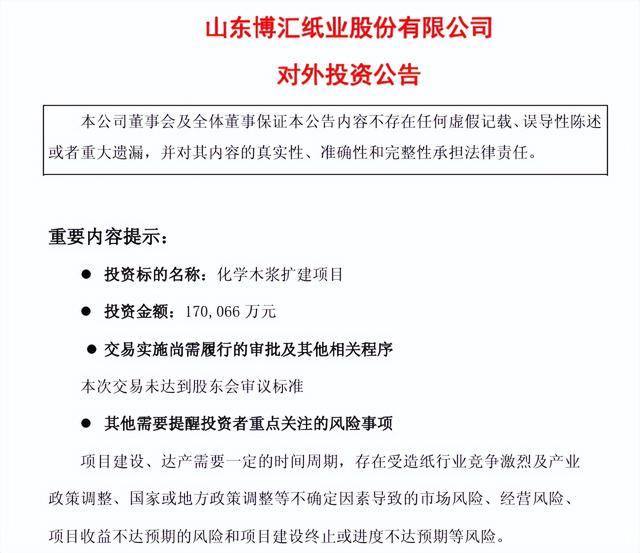
Core Viewpoint - Bohui Paper Industry plans to invest 1.701 billion yuan to expand its chemical pulp project, increasing production capacity from 95,000 tons to 320,000 tons, representing a 237% increase [1][4]. Group 1: Investment and Expansion - The company aims to diversify its raw materials and products through this investment, which will enhance its production capabilities and efficiency [1][4]. - The project will utilize advanced international technology and equipment, incorporating automation, digitalization, and intelligent systems across production, logistics, energy, and water management [4]. Group 2: Financial Performance - For the first three quarters of 2025, the company reported a revenue of 14.45 billion yuan, a year-on-year increase of 3.46%, but the net profit attributable to shareholders decreased by 18.57% to 121 million yuan [4]. - The expansion may be a response to the company's recent financial performance of "increasing revenue without increasing profit" [4]. Group 3: Asset Management - In addition to the new investment, the company sold idle assets worth 32.978 million yuan to related parties and plans to purchase new equipment for upgrading its chemical pulp production process [5]. - The company is focused on reducing chemical consumption and costs associated with chemical pulp production through these upgrades [5]. Group 4: Company Overview - Bohui Paper Industry, registered in Hantai County, Zibo City, specializes in the research, production, and sales of paper products, including whiteboard paper, cultural paper, boxboard paper, and gypsum face paper [5]. - The company was listed on the Shanghai Stock Exchange in 2004, has a registered capital of 1.34 billion yuan, and operates two major production bases in Shandong and Jiangsu, employing over 5,800 people [5].

联美控股收盘上涨9.95%,滚动市盈率29.54倍,总市值205.01亿元
Jin Rong Jie· 2025-12-04 11:54
Group 1 - The core business of the company is comprehensive energy services focused on clean heating and high-speed rail digital media advertising [2] - The company has developed multiple patented technologies in the field of heat supply, with a total of 77 authorized patents as of June 30, 2025, including 18 invention patents and 52 utility model patents [2] - The latest financial report for Q3 2025 shows the company achieved a revenue of 2.156 billion yuan, a year-on-year decrease of 6.19%, while net profit increased by 6.88% to 543 million yuan, with a gross margin of 33.30% [2] Group 2 - The company's stock closed at 9.06 yuan on December 4, with a 9.95% increase, resulting in a rolling PE ratio of 29.54, which is the lowest in 11 days [1] - The average PE ratio for the public utility industry is 29.05, with the median at 29.54, placing the company at 13th in the industry ranking [1][3] - As of Q3 2025, there are 7 institutions holding shares in the company, with a total holding of 1.8167 billion shares valued at 16.442 billion yuan [1]

南昌涵昱低碳科技中心(有限合伙)成立 注册资本10万人民币
Sou Hu Cai Jing· 2025-12-02 01:13
Core Insights - The establishment of Nanchang Hanyu Low Carbon Technology Center (Limited Partnership) indicates a growing focus on low-carbon technologies and sustainable practices in the energy sector [1] Company Overview - Nanchang Hanyu Low Carbon Technology Center is represented by Jiangxi Cooling Energy Investment Co., Ltd. [1] - The registered capital of the company is 100,000 RMB [1] Business Scope - The company is involved in the research and development of efficient energy-saving technologies in the power industry [1] - It also focuses on carbon reduction, carbon transformation, carbon capture, and carbon storage technology development [1] - Additional services include resource recycling consulting, energy management services, and efficient energy-saving technology research in the mining industry [1]