
贸易关税

Search documents
Bernstein Reiterates a Buy Rating on Apple Inc. (AAPL)
Insider Monkey· 2026-01-09 09:21
Core Insights - Artificial intelligence (AI) is identified as the greatest investment opportunity of the current era, with a strong emphasis on the urgent need for energy to support its growth [1][2][3] Industry Overview - Wall Street is investing hundreds of billions into AI technologies, but there is a critical question regarding the energy supply needed to sustain this growth [2] - AI technologies, particularly large language models, are extremely energy-intensive, with data centers consuming as much energy as small cities [2] - The demand for electricity is rising, and power grids are under strain, leading to increased electricity prices [2] Company Insights - A specific company is highlighted as a key player in the energy infrastructure sector, poised to benefit from the increasing energy demands of AI [3][6] - This company owns critical nuclear energy infrastructure assets and is capable of executing large-scale engineering, procurement, and construction projects across various energy sectors [7] - The company is positioned to profit from the surge in U.S. LNG exports, especially under the current administration's energy policies [7] Financial Position - The company is noted for being debt-free and holding a significant cash reserve, which is nearly one-third of its market capitalization [8] - It also has a substantial equity stake in another AI-related company, providing investors with indirect exposure to multiple growth opportunities [9] Market Sentiment - There is a growing interest from hedge funds in this company, which is considered undervalued and off the radar compared to other AI and energy stocks [10][11] - The company is trading at less than 7 times earnings, indicating a potential for significant upside [10] Future Outlook - The ongoing AI revolution is expected to disrupt traditional industries, and companies that adapt to these changes are likely to thrive [11][12] - The influx of talent into the AI sector is anticipated to drive rapid advancements and innovative ideas, reinforcing the importance of investing in AI [12] - The time to invest in AI and related energy infrastructure is emphasized as being critical for future returns [13]


Sensex, Nifty set to open higher after four-session drop
BusinessLine· 2026-01-09 02:52
Market Overview - Stock benchmarks are expected to open slightly higher after four consecutive sessions of losses due to renewed US tariff concerns, with investors awaiting a US Supreme Court ruling on the legality of the tariffs [1][3] - Nifty and Sensex have declined by 1.7% and 1.8% respectively over the last four sessions, following US President Trump's indication of potential tariff increases on Indian goods due to India's purchase of Russian crude [2] Tariff Impact - The US has imposed tariffs of up to 50% on imports from India, which is the second-largest buyer of Russian oil, while India is working on finalizing a trade deal with the US [2] - A US Supreme Court ruling that deems the tariffs "illegal" could result in the US government needing to refund nearly $150 billion to importers [3] Investor Sentiment - Analysts expect buying interest around current market levels after the recent decline, but emphasize that resolution of trade uncertainties and strong domestic corporate earnings are essential for a sustained market uptrend [3] Foreign Investment - Foreign portfolio investors have sold approximately $900 million worth of Indian shares in January 2026, following record outflows of $19 billion in 2025 [4] Company News - Reliance Industries is considering purchasing Venezuelan oil if sales to non-US buyers are permitted [5] - Bajaj Finserve reports that Bajaj Group has acquired a 23% stake in its insurance subsidiaries from Allianz SE for 213.90 billion rupees ($2.38 billion) [5] - BHEL has secured an order worth 54 billion rupees from JV Bharat Coal Gasification & Chemicals [5] - Venus Remedies has received marketing authorization in Indonesia for its antibiotic combination Ceftazidime and Avibactam [5]

“特朗普会绑架莫迪吗?”印度在野党高层发问
Xin Jing Bao· 2026-01-08 11:42
Group 1 - The core issue revolves around the warning from former President Trump regarding India's oil purchases from Russia, suggesting that failure to comply may lead to increased tariffs on Indian products [1] - The statement made by Congress leader Chavan questioning whether Trump would "kidnap Modi" has been criticized as embarrassing for India, highlighting the political tensions and implications of international trade relations [1] - Chavan's remarks about a potential 50% tariff hindering trade raise concerns about the future of India's economic interactions, drawing parallels to Venezuela's situation [1] Group 2 - The ruling party, BJP, has condemned Chavan's comments, accusing him of attempting to create chaos within the country, reflecting the polarized political climate in India [1] - Many Indian netizens have expressed that Chavan's statements do not align with India's status as a nuclear power, indicating a national sentiment regarding the country's international standing [1]
“特朗普会绑架莫迪吗?”印度在野党高层惊人发问引不满
Xin Jing Bao· 2026-01-08 08:00
1月6日,印度在野党国大党高层查万提问"特朗普会绑架莫迪吗",其发言被批令印度蒙羞。特朗普此前 警告,若印度不按美方要求限制购买俄石油,美或继续提高对印产品关税。对此,查万表示:"50%的 关税使得贸易根本无法进行…那么问题是:接下来会发生什么?委内瑞拉发生的事情会在印度重演 吗?"印度执政党印人党发言人批评查万的言论"意图令国家陷入混乱"。报道称许多印度网民认为,查 万的言论与印度的"核大国"地位不符。 ...
特朗普向印度发出新警告
Xin Lang Cai Jing· 2026-01-07 13:07
Core Viewpoint - President Trump has issued a warning to India regarding its purchase of Russian oil, stating that failure to comply with U.S. requests may result in increased tariffs on Indian products [1][7][8]. Group 1: U.S.-India Relations - Trump emphasized that India has significantly reduced its oil purchases from Russia, indicating a desire to satisfy U.S. demands [1][7]. - The U.S. government plans to impose punitive tariffs on Indian goods, potentially raising the overall tariff rate to 50% by August 2025, citing India's imports of Russian oil as the reason [1][7]. - India maintains that its energy import policy is essential for safeguarding domestic consumer interests, despite U.S. pressure [2][8]. Group 2: Ongoing Negotiations - Recent discussions between Trump and Indian Prime Minister Modi highlighted the importance of maintaining a positive bilateral trade relationship, even amidst tariff tensions [2][8]. - Negotiations aimed at resolving long-standing trade disputes have been initiated, but were interrupted following the announcement of the 50% tariff on Indian imports [2][8].
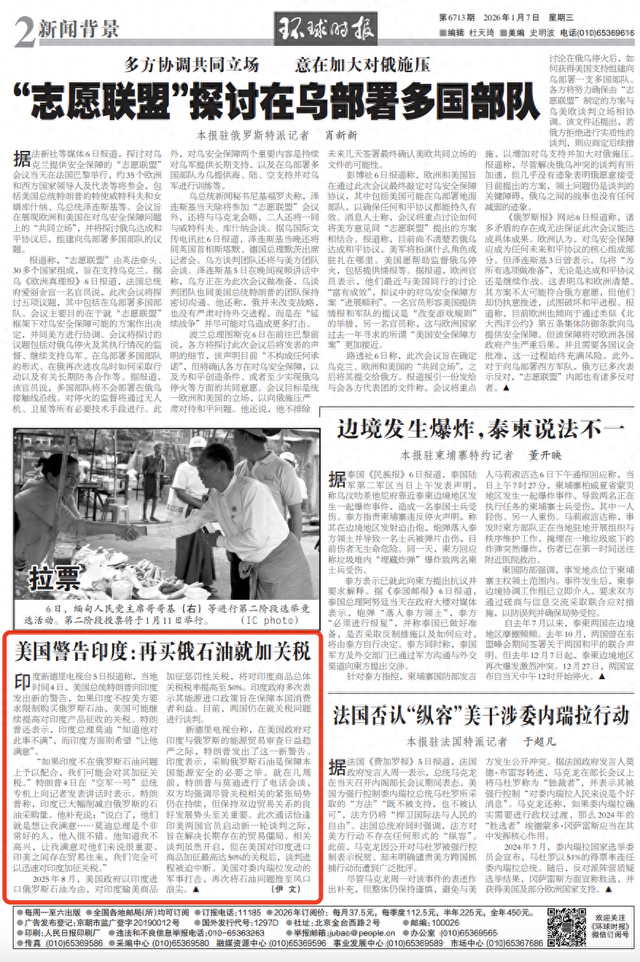
特朗普向印度发出新警告:若不限制购买俄石油,美国可能继续加关税
Huan Qiu Shi Bao· 2026-01-06 23:03
Core Viewpoint - The article discusses a warning issued by U.S. President Trump to India regarding its oil purchases from Russia, indicating potential tariff increases on Indian products if India does not comply with U.S. demands [1][3]. Group 1: U.S.-India Relations - Trump stated that if India does not cooperate on the Russian oil issue, the U.S. may impose tariffs on Indian goods [3]. - The U.S. government plans to increase tariffs on Indian imports of Russian oil, potentially raising the overall tariff rate on Indian goods to 50% by August 2025 [3][4]. - Despite ongoing tensions regarding tariffs, both Trump and Indian Prime Minister Modi emphasized the importance of maintaining a positive bilateral trade relationship during a recent phone call [4]. Group 2: India's Energy Policy - India maintains that its procurement of Russian oil is essential for ensuring national energy security [4]. - The Indian government has expressed that its energy import policies are designed to protect the interests of domestic consumers [4]. - Ongoing negotiations between the U.S. and India aim to address long-standing trade disputes, although these discussions have been complicated by the proposed tariff increases [4].
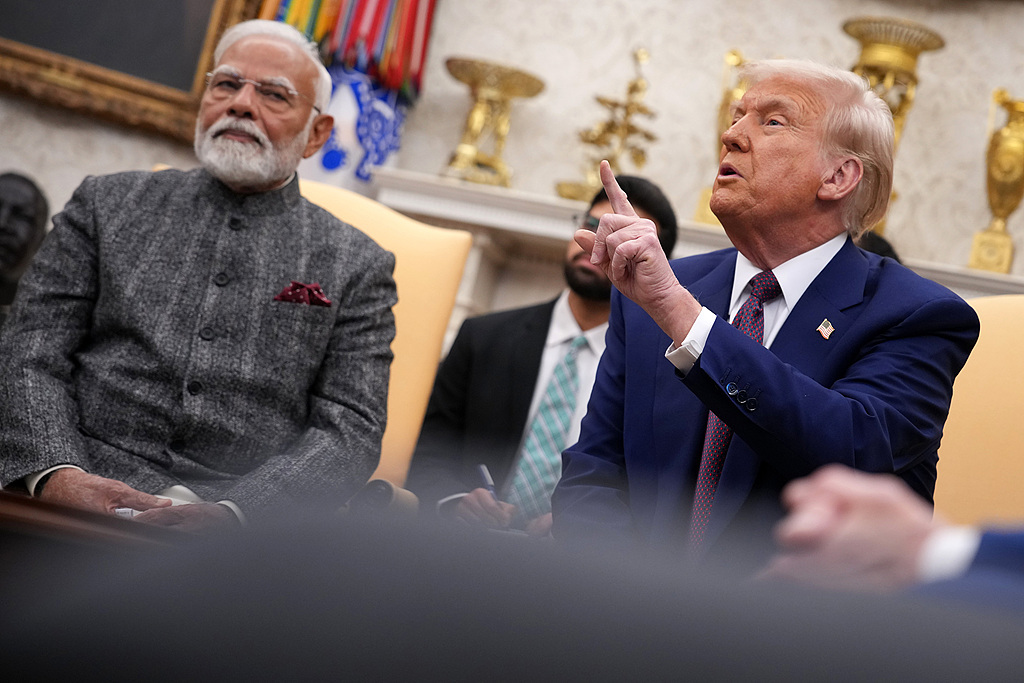
阻止购买俄石油 特朗普放话威胁对印度提高关税
Zhong Guo Xin Wen Wang· 2026-01-06 06:49
Core Viewpoint - The article discusses President Trump's warning to India regarding its purchase of Russian oil, indicating potential tariff increases on Indian products if India does not comply with U.S. demands [1][2]. Group 1: U.S.-India Trade Relations - Trump stated that the U.S. could quickly raise tariffs on Indian goods if India continues its trade with Russia [2]. - The U.S. government plans to impose punitive tariffs on Indian imports of Russian oil, potentially raising the overall tariff rate on Indian goods to 50% by August 2025 [2]. - The Indian government has emphasized that its energy import policies are designed to protect the interests of its consumers [2]. Group 2: Ongoing Negotiations - Currently, both countries are engaged in negotiations regarding the tariff issue [2].
@家居企业,美国推迟加征关税至2027年
Sou Hu Cai Jing· 2026-01-06 03:05
Group 1 - The Trump administration has officially announced the postponement of the planned tariff increase on soft furniture, kitchen cabinets, and bathroom vanity cabinets from January 1, 2026, to 2027, maintaining the current tariff rate of 25% during this period [2] - The initial tariff increase was set to raise kitchen cabinet tariffs to 50% and soft furniture tariffs to 30% in 2026, following a previous executive order signed in September 2025 [2] - The announcement was made on December 31, raising questions about the timing and implications for the industry [2] Group 2 - The postponement of the tariff increase is primarily aimed at alleviating inflation in the U.S. and appealing to voters, as rising prices of household products directly impact living costs [3] - The American Furniture Alliance and other industry organizations have protested against high tariffs, and the delay has led to a surge in stock prices for U.S. furniture retailers [3] Group 3 - The announcement also indicates constructive progress in trade relations with certain partners regarding mutual trade and national security issues related to wood products, creating a more favorable atmosphere for future negotiations [4] - The U.S. accounts for approximately 26% of China's furniture exports, making the postponement beneficial for related enterprises to adjust their market and production strategies [4] Group 4 - Despite the delay, the tariff increase is only postponed, not canceled, and there remains a possibility of an increase in 2027, highlighting the long-term uncertainty in U.S. trade policies, especially concerning wood products and furniture [4] - The U.S. Department of Commerce is conducting additional investigations into various sectors, which may lead to further tariff pressures on related products in the future [6] Group 5 - For Chinese furniture export companies, building core competitiveness is essential for long-term stability in the face of trade fluctuations, emphasizing the need for market diversification and global supply chain strategies [6]
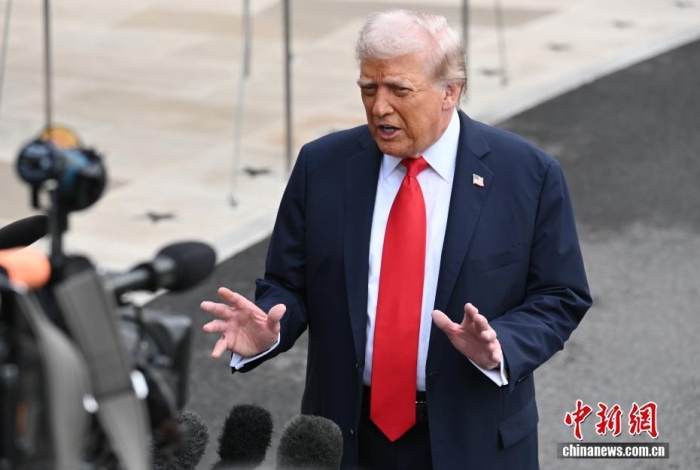
特朗普:如果印度不按美方要求限制购买俄罗斯石油,美国可能继续提高对印关税
Xin Lang Cai Jing· 2026-01-05 17:41
Core Viewpoint - The U.S. President Trump warned that if India does not limit its purchase of Russian oil as requested by the U.S., tariffs on Indian products may be increased further [2] Group 1: U.S.-India Trade Relations - On August 2025, the U.S. government plans to impose punitive tariffs on Indian goods, raising the overall tariff rate on Indian products to 50% due to India's import of Russian oil [2] - Trump indicated that the U.S. could quickly raise tariffs on Indian goods in response to trade relations with Russia [2] Group 2: India's Energy Policy - The Indian government has repeatedly stated that its energy import policy aims to protect the interests of its domestic consumers [2] - Ongoing negotiations are taking place between the U.S. and India regarding the tariff issue [2]
阻止购买俄石油 特朗普再次威胁对印度提高关税
Xin Hua She· 2026-01-05 15:45
Core Viewpoint - The article highlights a warning from U.S. President Trump regarding potential tariff increases on Indian products if India does not comply with U.S. demands to limit its purchase of Russian oil [1] Group 1: U.S.-India Trade Relations - Trump stated that the U.S. could quickly raise tariffs on Indian goods due to India's trade with Russia [1] - In August 2025, the U.S. government plans to impose punitive tariffs on Indian imports of Russian oil, raising the overall tariff rate on Indian goods to 50% [1] - Ongoing negotiations are taking place between the U.S. and India regarding the tariff issue [1] Group 2: India's Energy Policy - The Indian government has repeatedly emphasized that its energy import policy is aimed at protecting the interests of its consumers [1]