
车路云一体化

Search documents
菜鸟入股九识,无人车技术的强强联合
2 1 Shi Ji Jing Ji Bao Dao· 2025-12-21 10:06
文/陈妙盈 在无人驾驶货运领域,单纯的技术堆叠已不再是壁垒,真正的竞争在于数据闭环与场景适配。菜鸟拟入 股九识智能,从技术层面看,是一次极具想象力的"优势互补"。 双方在技术栈上呈现出高度的互补性: 1,九识的"硬核"底座: 九识智能拥有L4级自动驾驶的全栈自研技术,特别是在感知决策算法、多传感 器融合以及VLA大模型研发上具备先发优势。其积累的数千万公里真实道路数据,是算法迭代的宝贵 资产。 2,菜鸟的"AI"赋能: 菜鸟背靠阿里巴巴,在人工智能、机器视觉以及物流调度算法方面积淀深厚。其 自研的菜鸟GT系列无人车已在公开道路大规模运营,具备了极强的场景理解能力。 此次整合后,九识的"车辆端"能力与菜鸟的"云端"AI调度能力将实现深度融合。双方的智驾端到端模型 有望进行数据互通,这将极大加速"车路云一体化"的落地进程。例如,菜鸟的物流调度系统可以更精准 地指挥九识的无人车矩阵,实现快递、商超、冷链等多场景的灵活切换。这种技术共振,将把无人货运 的运营效率推向一个新的高度,构建起难以被单一创业公司复制的竞争壁垒。 ...
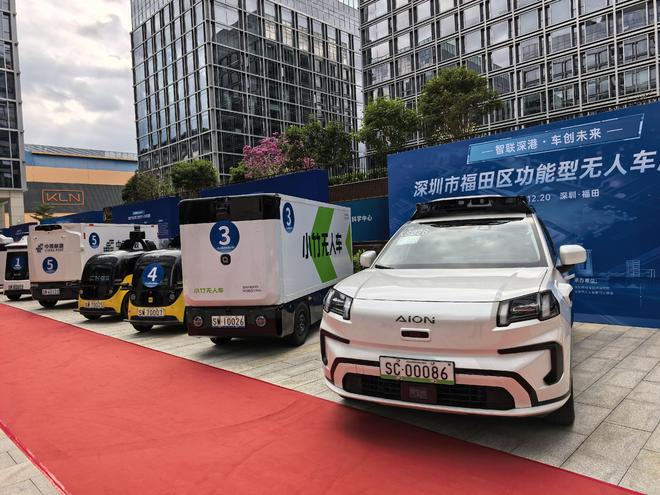
功能型无人车驶入城市街巷!深圳福田区已累计开通线路22条
Nan Fang Du Shi Bao· 2025-12-21 06:58
Core Insights - The event showcased functional unmanned vehicle products, focusing on logistics and sanitation applications, providing a platform for technology validation and scenario integration [1][4][7] Group 1: Event Overview - The event was held on December 20 in Shenzhen, featuring real-world demonstrations of unmanned logistics and sanitation vehicles [1] - It was organized by various governmental and industry bodies, highlighting the collaboration between public and private sectors [4] Group 2: Technical Demonstrations - Six core tasks were demonstrated for unmanned logistics vehicles, including traffic light recognition and automatic unloading, reflecting real urban delivery conditions [4] - Unmanned sanitation vehicles completed five assessments in a closed green space, achieving over 95% operational coverage with zero collisions and no human intervention [4][7] Group 3: Awards and Recognition - Five companies received the "Best Technology Innovation Award," and four teams were awarded the "Best Scenario Team Award," validating the engineering maturity of functional unmanned systems in logistics and urban sanitation [7] Group 4: Industry Collaboration - The event facilitated key cooperation agreements focusing on unmanned delivery and sanitation, emphasizing the need for government-business collaboration to address urban operational demands [8] - Ten street offices in the Futian District signed agreements with relevant companies to integrate unmanned vehicles into community and commercial areas, enhancing last-mile delivery efficiency [10] Group 5: Future Directions - The Shenzhen Bus Group and technology companies are exploring the integration of public transport infrastructure with unmanned delivery systems to improve urban freight efficiency [10] - The city management bureau aims to promote the large-scale application of smart cleaning equipment in various urban spaces, leveraging technology for refined urban governance [12] Group 6: Innovation and Strategic Insights - The event included a technology roadshow where representatives from leading unmanned vehicle companies shared insights on technological maturity, scene adaptability, and business model closure [14] - The Futian District plans to accelerate the integration of technology, scenarios, and ecosystems to enhance urban governance and contribute to Shenzhen's development as a pioneer in artificial intelligence [14]

万集科技牵头设立湖南合资公司,聚焦车路云一体化业务
Ju Chao Zi Xun· 2025-12-21 02:51
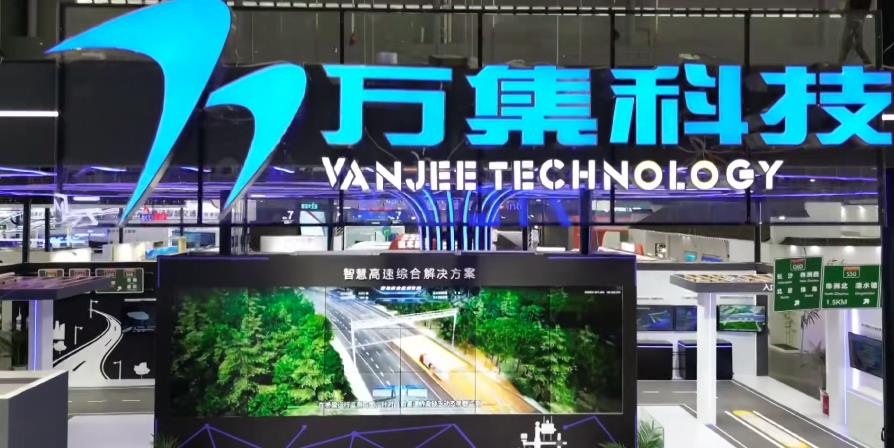
12月19日,万集科技发布公告,宣布公司于当日审议通过《关于对外投资设立湖南合资公司的议案》,拟与湖南湘江智能科技 创新中心有限公司(以下简称"湘江智能")、长沙合创未来企业管理合伙企业(有限合伙)(以下简称"合创未来")、中南大 学资产经营有限公司(以下简称"中大资产公司")共同出资设立湖南湘江智联交通科技有限公司,深耕车路云一体化业务。 公告显示,合资公司注册资本为1429万元,股权及出资方式分布如下:万集科技以现金出资510万元,占注册资本的 35.6893%;湘江智能以现金出资490万元,占比34.2897%;合创未来以知识产权出资300.3万元,占比21.0147%;中大资产公司 以知识产权出资128.7万元,占比9.0063%。 · 湘江智能注册资本50亿元,由湖南湘江新区发展集团有限公司持股99.8640%,主要负责湖南(长沙)国家级车联网先导区规 划、建设和运营,具备丰富的区域产业资源; · 合创未来成立于2025年10月,由"智能网联交通系统分析技术"成果完成人组建,专注相关技术转化与投资; · 中大资产公司为中南大学全资控股企业,是学校科技成果转化、产业化的核心运营平台,负责知识产权对外投 ...
万集科技(300552.SZ):拟成立合资公司湖南湘江智联交通科技有限公司
Ge Long Hui A P P· 2025-12-19 11:27
Core Viewpoint - The company, Wanji Technology, is establishing a joint venture to enhance its capabilities in the integrated vehicle-road-cloud business and improve market development and project undertaking abilities [1] Group 1: Joint Venture Formation - Wanji Technology plans to form a joint venture named Hunan Xiangjiang Intelligent Transportation Technology Co., Ltd. with three partners: Hunan Xiangjiang Intelligent Technology Innovation Center Co., Ltd., Changsha Hechuang Future Enterprise Management Partnership (Limited Partnership), and Central South University Asset Management Co., Ltd. [1] - The registered capital of the joint venture is set at RMB 14.29 million, with Wanji Technology contributing RMB 5.1 million, representing 35.6893% of the total capital [1] - The other partners will contribute as follows: Hunan Xiangjiang Intelligent will invest RMB 4.9 million (34.2897%), Hechuang Future will contribute intellectual property valued at RMB 3.003 million (21.0147%), and Central South University Asset Management will provide intellectual property valued at RMB 1.287 million (9.0063%) [1]
万集科技:拟成立合资公司湖南湘江智联交通科技有限公司
Ge Long Hui· 2025-12-19 11:10
Core Viewpoint - The company, Wanji Technology, is establishing a joint venture to enhance its capabilities in the integrated vehicle-road-cloud business and improve market development and project undertaking abilities [1] Group 1: Joint Venture Details - Wanji Technology plans to form a joint venture named Hunan Xiangjiang Intelligent Transportation Technology Co., Ltd. with three partners: Hunan Xiangjiang Intelligent Technology Innovation Center Co., Ltd., Changsha Hechuang Future Enterprise Management Partnership (Limited Partnership), and Central South University Asset Management Co., Ltd. [1] - The registered capital of the joint venture is RMB 14.29 million, with Wanji Technology contributing RMB 5.1 million, accounting for 35.6893% of the total capital [1] - The other partners will contribute as follows: Xiangjiang Intelligent with RMB 4.9 million (34.2897%), Hechuang Future with intellectual property valued at RMB 3.003 million (21.0147%), and Central South University Asset Management with intellectual property valued at RMB 1.287 million (9.0063%) [1] Group 2: Management Authorization - The company's board of directors has authorized the management team to handle all matters related to the establishment of the joint venture [1]
蓝盾光电:公司的交通管理业务包括仪器设备及系统、系统集成及工程、运维及数据服务
Zheng Quan Ri Bao Wang· 2025-12-19 08:17
Core Viewpoint - The company, Blue Shield Optoelectronics, is actively expanding its traffic management business, which includes various systems and services related to traffic control and monitoring [1] Group 1: Business Overview - The traffic management business encompasses instrument equipment and systems, system integration and engineering, operation and maintenance, and data services [1] - Key applications include outdoor traffic signal control, video surveillance, electronic police systems, and speed monitoring [1] - The company also focuses on the integration of information rooms, command centers, and platform software for traffic management [1] Group 2: Market Expansion - The company is targeting the vehicle-road-cloud integration market as a key direction for expanding its traffic management business [1]
天迈科技:公司目前未参与“车路云一体化”应用试点相关项目
Zheng Quan Ri Bao Wang· 2025-12-18 10:13
Group 1 - The company, Tianmai Technology, focuses on providing digital solutions for urban public transport management based on technologies such as vehicle networking and Beidou positioning [1] - The company has not participated in any pilot projects related to "vehicle-road-cloud integration" applications [1] - The company does not have any L3 level autonomous driving products or research [1]
杭州锻造智能网联汽车“世界级地标”
Hang Zhou Ri Bao· 2025-12-18 02:07
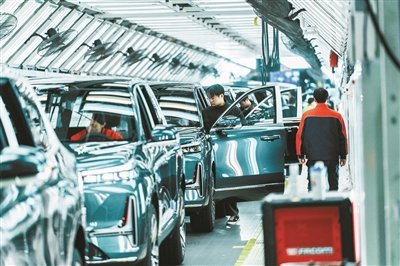
Core Insights - The article highlights the rapid development and implementation of the intelligent connected vehicle industry in Hangzhou, showcasing its transformation from manufacturing to a global technology leader in mobility solutions [4][10]. Group 1: Manufacturing Capabilities - The Geely Qiantang base produces several hundred vehicles daily, with a new car rolling off the line every two minutes [2][6]. - The facility features advanced automation, including a nearly 7,000-ton servo stamping line capable of producing nearly 1,000 stamped parts per hour [5]. - The production line supports mixed production of various powertrain models, including fuel, pure electric, plug-in hybrid, and battery swap vehicles [5][6]. Group 2: Technological Advancements - The vehicles produced, particularly the Galaxy series, are equipped with the Flyme Auto 2.0 intelligent cockpit system and Qualcomm Snapdragon high-performance chips, enhancing user interaction and driving assistance capabilities [6][7]. - A simulation testing environment allows for the generation of vast amounts of training data for autonomous driving systems, improving efficiency by 500 times and reducing the need for real-world testing by approximately 30% [7][11]. Group 3: Industry Ecosystem - Hangzhou has established a robust industrial ecosystem, connecting over 100 core component manufacturers with leading companies like Geely and Changan Ford, forming a billion-level industrial cluster [9][10]. - The city has implemented a "four-question model" to enhance collaboration between enterprises, government, educational institutions, and the market, facilitating the rapid transformation of research into production [8][9]. Group 4: Policy and Regulation - The introduction of the "Hangzhou Intelligent Connected Vehicle Testing and Application Promotion Regulations" positions Hangzhou as the first city in China to clarify the process for autonomous vehicle road testing [10][11]. - The city has issued 614 testing and application licenses, accumulating 5.92 million kilometers of testing mileage with a zero accident rate [10]. Group 5: Future Outlook - Hangzhou aims to leverage its advantages in "vehicle-road-cloud integration" to expand testing scenarios and promote the large-scale operation of Robotaxi services [12]. - The city is focused on developing high-value core areas such as vehicle-grade chips and advanced algorithms, fostering innovation through collaborative efforts [12][13].

首批L3准入亮相:自动驾驶进入“有条件上路”阶段
Tai Mei Ti A P P· 2025-12-17 09:26
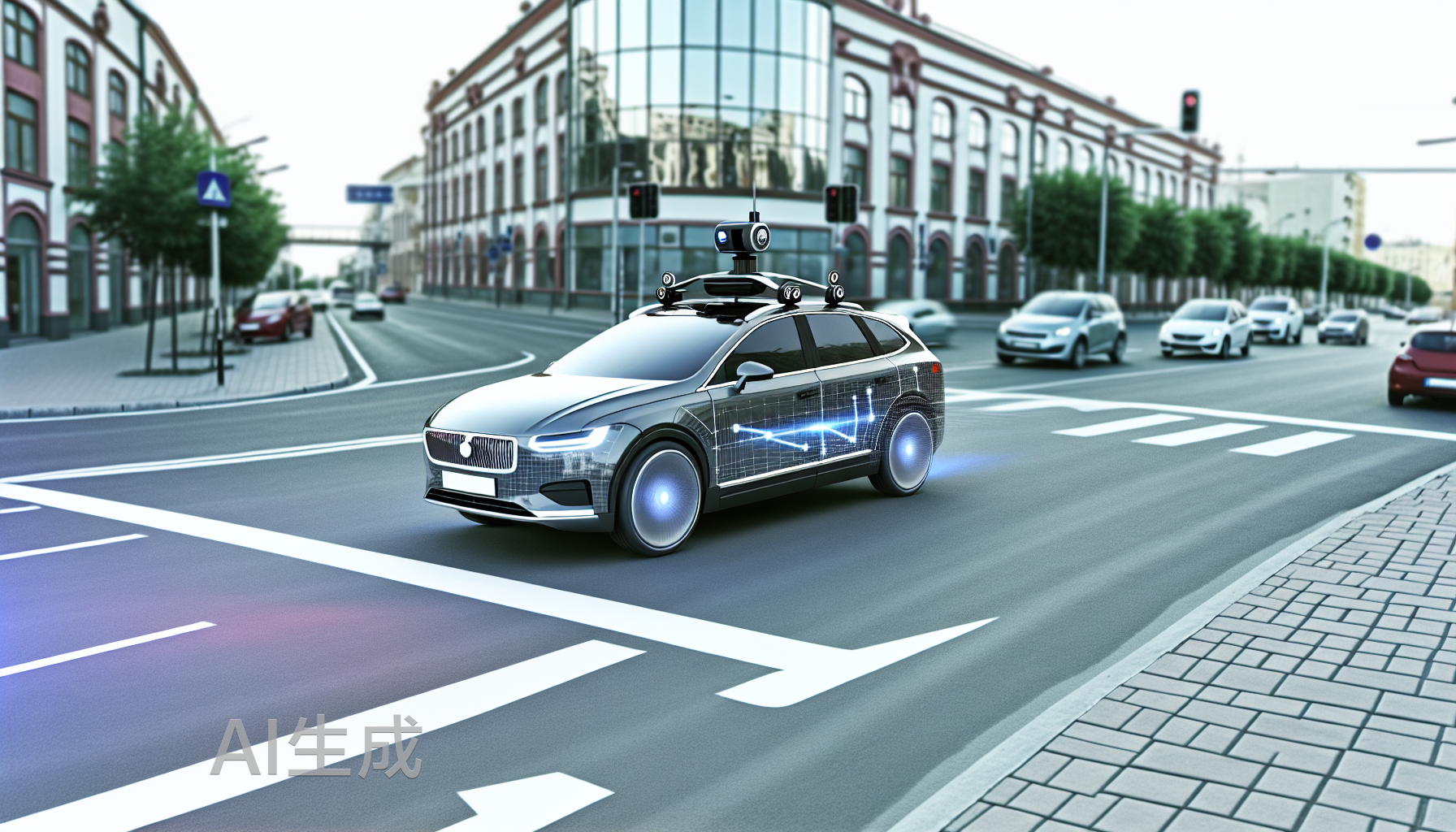
Core Insights - The issuance of L3 autonomous driving licenses in China is more frequent than expected, with several companies like Changan and BAIC receiving approval, indicating a competitive "license race" [2] - The conditions for the first batch of approved vehicles reveal a controlled testing environment, emphasizing a cautious approach to technology deployment and risk management [2][4] - China's path to L3 autonomous driving is distinct from Germany and the U.S., focusing on a gradual, controlled policy experiment over three years [2][3][6] Regulatory Framework - The regulatory journey began in November 2022 with the Ministry of Industry and Information Technology (MIIT) proposing a management framework for L3/L4 vehicles to address the "responsibility vacuum" in the industry [3] - 2023 marked a breakthrough year for testing licenses, with various companies obtaining approvals, establishing a dual-track testing model [3][6] - The approval process culminated in December 2025, with a comprehensive framework for conditional L3 vehicle production licenses [3][6] Testing Conditions - The approved vehicles, such as Changan's SL03 and BAIC's Alpha S, are restricted to specific routes and speed limits, highlighting a focus on controlled operational environments [4][5] - The vehicles are not sold directly to consumers but operated by designated companies, indicating a shift in responsibility from individual users to operators [4][5] Industry Implications - The conditions for L3 licenses signal a shift from hardware-centric competition to a focus on scenario-specific engineering capabilities and cost control [7][8] - The competition among automakers is now defined by their ability to adapt to specific driving conditions rather than merely enhancing hardware specifications [7][8] Business Model Evolution - The "car company + operating company" model serves as a buffer to explore service pricing and user acceptance within a controlled environment [9] - This model allows for the testing of autonomous driving services while gathering valuable data to inform future pricing strategies [9] Challenges Ahead - The transition to a service-oriented model faces challenges, including balancing technical costs with user value and addressing consumer perceptions regarding subscription services [10] - The long-term commercial viability of L3 technology will depend on expanding operational scenarios, clarifying legal responsibilities, and shifting consumer mindsets [10] Strategic Positioning - China's approach to L3 licensing is part of a broader strategy to establish a domestic supply chain for autonomous driving technologies, reducing reliance on foreign components [11] - The testing of L3 vehicles in controlled environments aims to generate data that can inform future standards and practices in the global automotive industry [11] Future Outlook - The issuance of L3 licenses marks the beginning of a longer journey for automakers, who must now navigate the complexities of expanding their operational scope and transitioning to service providers [12]



特斯拉涨超3%创上市以来新高;航天科技集团大力培育以商业航天为代表的产业增长点;特斯拉自动驾驶汽车开始无人测试——《投资早参》
Mei Ri Jing Ji Xin Wen· 2025-12-17 00:36
Market News - The U.S. stock market closed mixed, with the Dow Jones down 0.63%, the Nasdaq up 0.23%, and the S&P 500 down 0.24%. Tesla rose over 3%, reaching a new high since its IPO, while Meta increased by over 1% [1] - International oil prices fell significantly, with U.S. crude oil down 2.99% at $55.12 per barrel and Brent crude down 2.86% at $58.83 per barrel. Gold prices also declined slightly [1] - European stock indices closed lower, with Germany's DAX down 0.68%, France's CAC40 down 0.23%, and the UK's FTSE 100 down 0.68% [1] Industry Insights - China's successful launch of the Resource No. 3 satellite marks a significant step in the space economy, which is expected to grow into a new industry involving satellite communication, navigation, and tourism. The satellite communication industry is projected to reach between 200 billion to 400 billion yuan by 2030, with a compound annual growth rate of 10% to 28% [2] - Tesla has begun testing autonomous taxis without safety drivers, while XPeng Motors has received a license for L3 autonomous driving tests in Guangzhou. This marks a critical step towards commercializing L3 autonomous driving in China, with the potential to generate significant economic value in the coming years [3] - SK Hynix's internal analysis indicates a severe imbalance in the storage market, predicting that DRAM supply shortages will persist until 2028, which is more severe than previous forecasts. This situation is expected to benefit companies in the storage industry as demand continues to rise, particularly driven by AI applications [4][5]

