高市交易

Search documents
十一假期海外回顾
CMS· 2025-10-08 01:01
Economic Overview - The U.S. government shutdown began on October 1, with limited short-term economic impact expected, as most losses are projected to be recovered post-shutdown[1] - The unemployment rate in the Eurozone rose to 6.3% in September, higher than the expected 6.2%[25] - Japan's new Prime Minister, Kishi Sanae, is expected to continue a loose fiscal and monetary policy, impacting market dynamics positively[28] Employment Data - In September, ADP reported a decrease of 32,000 jobs, the largest drop since March 2023, significantly below the expected increase of 52,000[6] - Revelio Labs reported an increase of 60,000 jobs in September, slightly above market expectations, indicating a mixed employment landscape[6] Market Reactions - U.S. stock markets saw gains, with the S&P 500 up 0.77% and the Nasdaq up 1.24% from September 30 to October 6[2] - The Japanese Nikkei 225 index surged by 6.70% following the election of Kishi Sanae, reflecting investor optimism[2] Central Bank Policies - The Federal Reserve's interest rate cut expectations have increased, with market probabilities for a 25 basis point cut in October and December rising significantly[23] - The European Central Bank (ECB) remains committed to maintaining current interest rates despite rising unemployment and inflation data[25] Commodity Prices - Precious metals saw significant price increases, with gold rising by 2.80% and silver by 3.95% during the same period[2] - Oil prices experienced a slight decline of 1.09%, while natural gas prices increased by 1.63%[2] Risks and Uncertainties - There is a risk of an unexpected degree of economic recession overseas, which could impact global markets[2]
“高市交易”势头不减,日经股指连续3天创新高
日经中文网· 2025-10-07 08:07
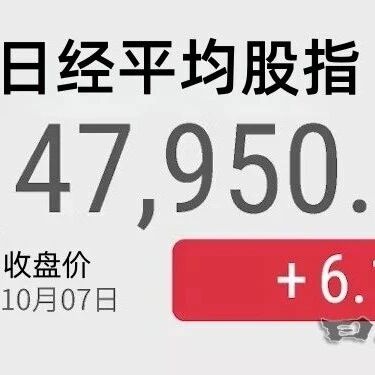
自民党总裁高市早苗就任带动的股价上涨仍在持续,盘中一度涨幅超过580点,但投资者对市 场过热的担忧也带来了持续的卖压,涨势逐渐放缓…… 10月7日,东京股市的日经平均股指连续第四个交易日上涨,收于4万7950.88点,比前一交 易日上涨6.12点(涨幅0.01%)。这是连续三天刷新历史最高收盘价。股市延续了前一日美 国股市科技股上涨的势头。自民党总裁高市早苗就任带动的股价上涨仍在持续,盘中一度涨 幅超过580点,但投资者对市场过热的担忧也带来了持续的卖压,日经股指涨势逐渐放缓,甚 至出现小幅回落的情况。 Nagomi Capital投资总部部长村松一之表示:"'高市交易'至少会持续一周,可以说是蜜月 期"。他认为,自民党新领导班子在10月7日就任后,将维持股市的热情。 日本经济新闻(中文版:日经中文网)田村峻久、佐藤惠里菜 版权声明:日本经济新闻社版权所有,未经授权不得转载或部分复制,违者必究。 日经中文网 https://cn.nikkei.com 视频号推荐内容: 岩井Cosmo证券首席策略师嶋田和昭对目前的股市上涨评价道:"即便觉得上涨速度过快,也 不得不跟随市场买入,否则就会错失机会"。这反映出投资者 ...

日本股市,大涨近5%,创历史新高!发生了什么?
凤凰网财经· 2025-10-07 02:28
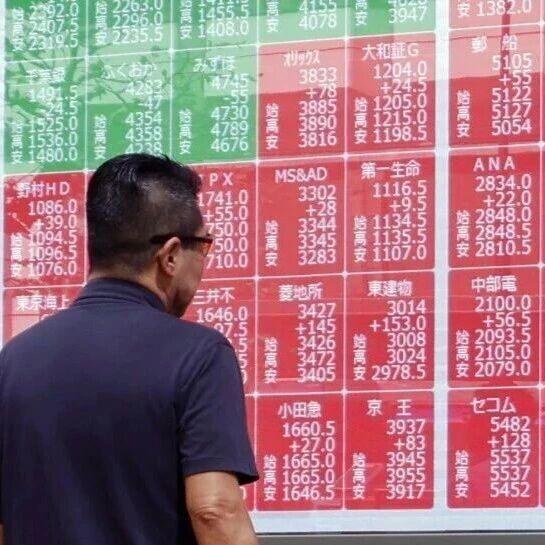
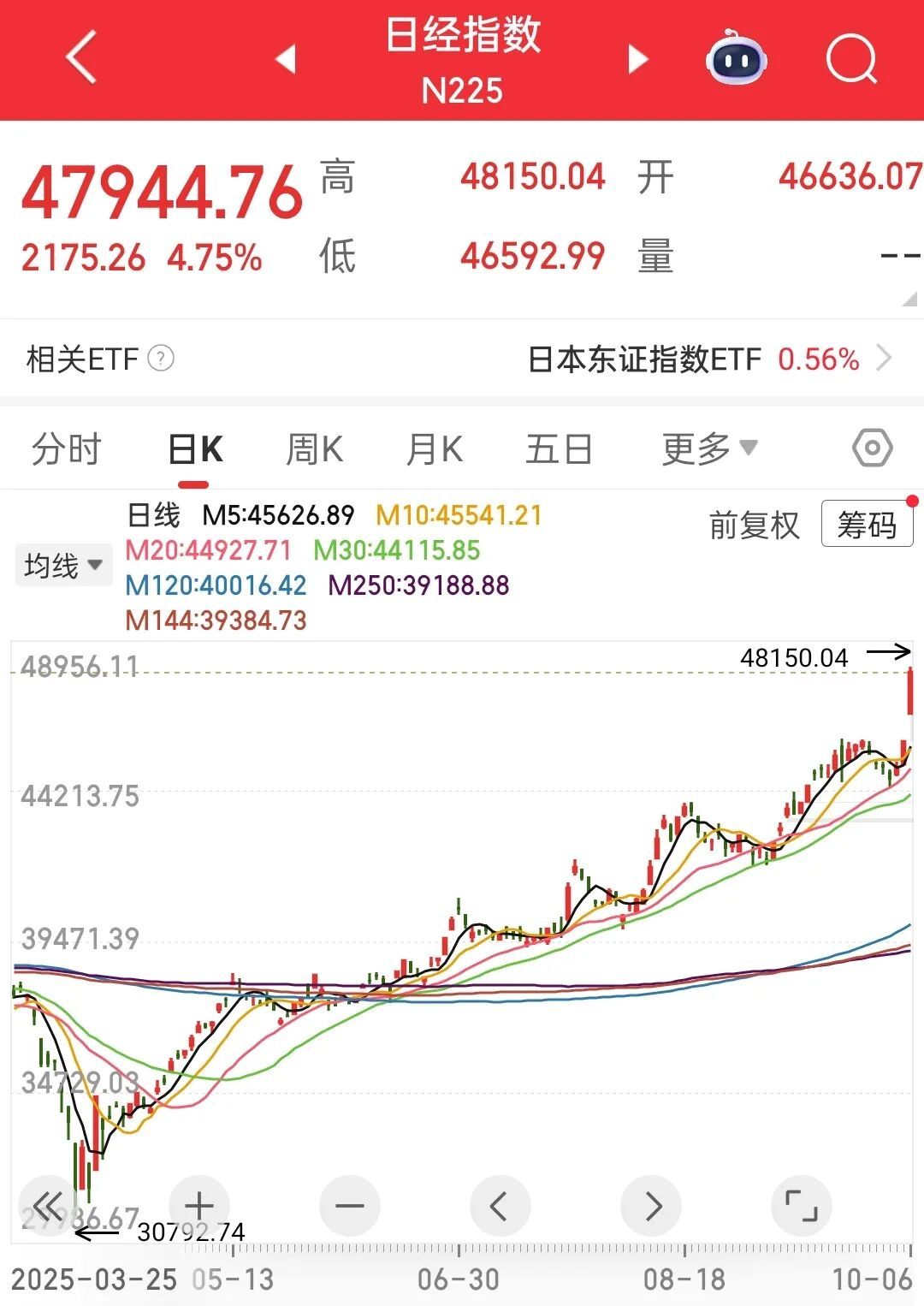
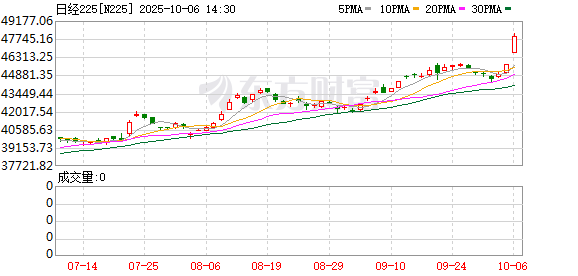
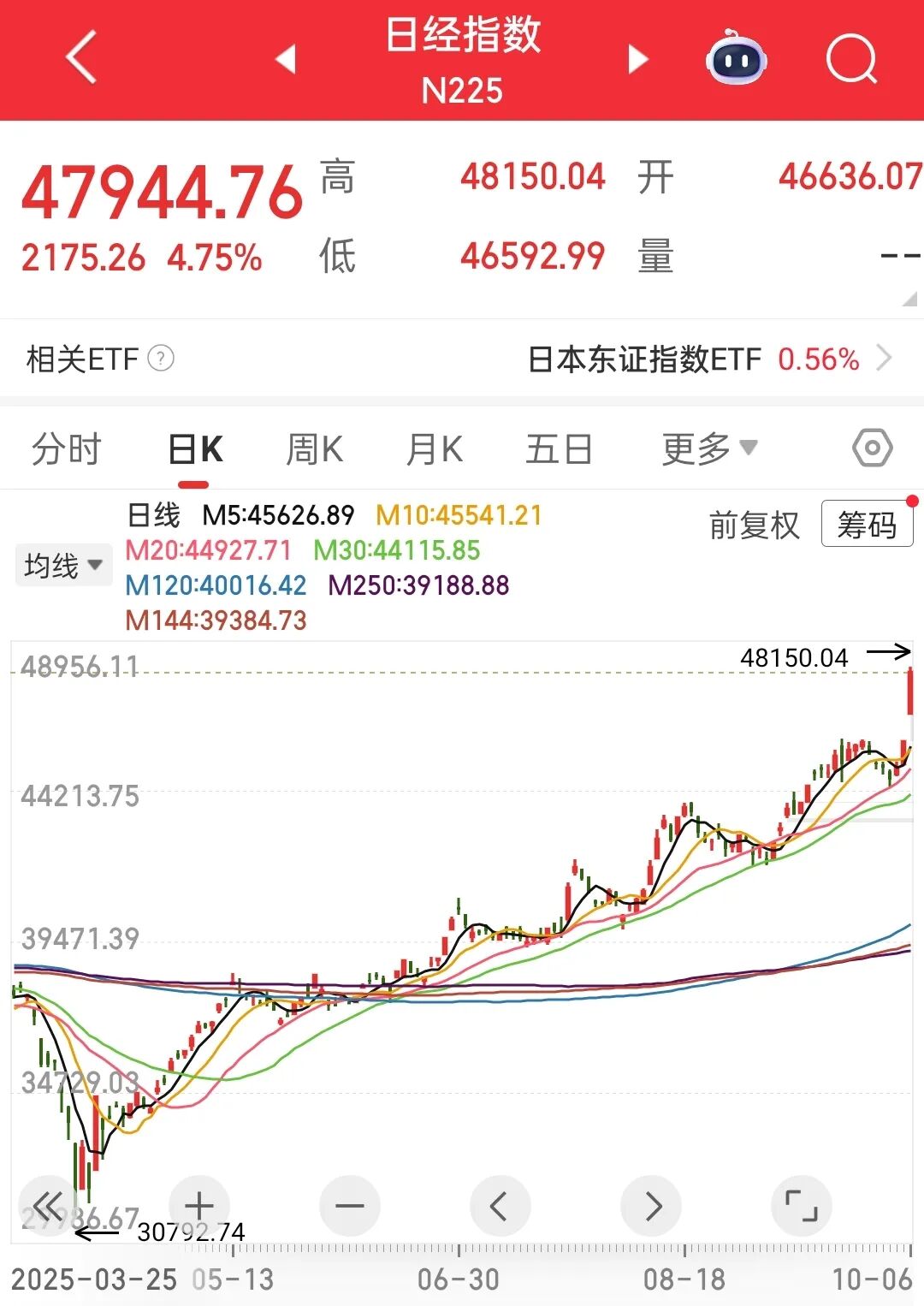
10月6日,日股飙升。 日经225指数收盘上涨4.8%,报47944.76点;东证指数涨3.1%,报3226.06点;均创历史收盘新高。 美元兑日元日内涨幅达2%,现报150.43,续创8月1日以来新高。日本30年期国债收益率触及3.29%,创历史新高。 据上海证券报,日前当选日本自民党首位女总裁的高市早苗支持宽松的财政和货币政策,外界认为其上台或加剧对债券供应增加的担忧,同时降低了对日 本央行本月加息的预期。 01 高市早苗当选 自民党首位女总裁 在第二轮投票中,295名自民党国会议员各持一票,日本47个都道府县自民党支部联合会各有一票,共计342票,得票多者当选。最终,在341张有效票中, 高市获185票,高于小泉的156票,当选自民党第29任总裁。 高市现年64岁,是日本右翼政客代表人物之一,在去年自民党总裁选举决胜轮中败给现任首相石破茂。她主张实施更加积极的财政政策,并提高防卫开 支。 当地时间4日18时,日本自民党新当选总裁高市早苗举行记者会。 高市早苗表示,其当选自民党新任总裁,将会给自民党带来改变,将致力于恢复民众对于自民党的信任,并将就高物价等经济问题、外交、国际安全保障 问题在党内进行充分讨 ...
港股小幅回调,日股创出新高 A 股能否迎来开门红?
Sou Hu Cai Jing· 2025-10-06 15:53
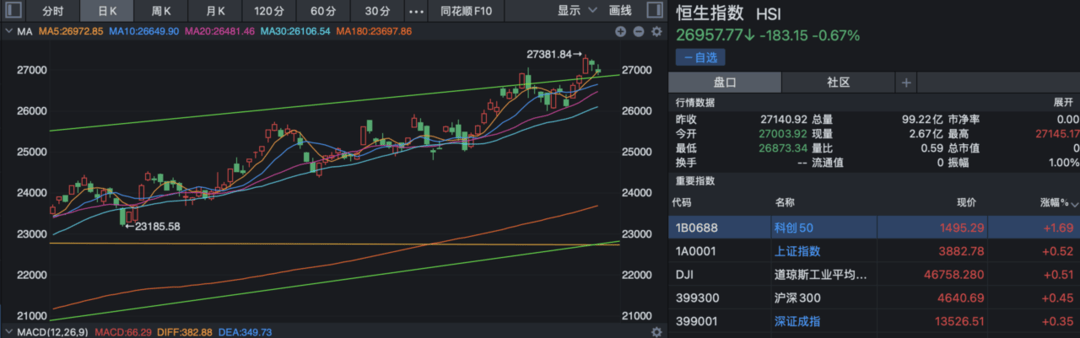
Market Overview - Hong Kong stocks experienced a slight pullback after reaching new highs, with the Hang Seng Index down 0.68% to 26,957.77 points, and the Hang Seng Tech Index down 1.09% [1] - The market saw a significant rise prior to the pullback, with the Hang Seng Index gaining over 500 points on October 2, surpassing the 27,000-point mark, marking a four-year high [3] Sector Performance - Precious metals performed exceptionally well, with China Silver Group rising 18.57%, and other companies like Tan Gold Mining and Zhu Feng Gold also seeing substantial gains of 15.38% and 15.13% respectively [3] - The semiconductor sector emerged as a market leader, driven by breakthroughs in domestic chip technology and increasing global computing power demand, with companies like SMIC and Hua Hong Semiconductor seeing significant stock price increases [3] Policy and Market Dynamics - The Hong Kong Stock Exchange's "Tech Enterprise Line" policy has facilitated listings for tech and biopharmaceutical companies, enhancing market vitality [3] - Continuous inflow of southbound funds has provided liquidity support to the Hong Kong market [3] Japanese Market Reaction - The Nikkei 225 index rose 4.75% to a record closing high of 47,944.76 points, influenced by the election of new Liberal Democratic Party leader, Sanae Takaichi, which is expected to positively impact the Japanese stock market [4][6] - Following Takaichi's election, there is a growing sentiment among institutions to bet on stocks while shorting Japanese government bonds, particularly long-term bonds [6] A-Share Market Expectations - Despite the A-share market being closed for the National Day holiday, strong overseas market performance and capital flows have raised expectations for a positive opening after the holiday [7] - Historical data indicates a stable "National Day effect" in the A-share market, with median returns of +0.94% and +2.20% for the first and fifth trading days post-holiday, respectively [7] Investment Sentiment - Analysts remain optimistic about the Hong Kong market's future despite short-term adjustments, citing a long-term bull market that began in Q4 of the previous year [8] - The key to post-holiday performance will depend on the sustainability of core sectors and the ability of capital to support them [8]
日本股市大涨近5%,创历史新高,发生了什么?
Mei Ri Jing Ji Xin Wen· 2025-10-06 08:37
Market Performance - Japanese stock market surged on October 6, with the Nikkei 225 index closing up 4.8% at 47,944.76 points and the Topix index rising 3.1% to 3,226.06 points, both reaching historical closing highs [1] - The USD/JPY exchange rate increased by 2% during the day, reaching 150.43, marking the highest level since August 1 [3] Political Developments - Sanae Takaichi was elected as the first female president of the ruling Liberal Democratic Party (LDP) in Japan, supporting expansionary fiscal and monetary policies, which may heighten concerns over increased bond supply and lower expectations for a rate hike by the Bank of Japan [4][5] - Takaichi's election is expected to lead to discussions on economic issues, high prices, and international security within the party [6] Economic Implications - Following Takaichi's victory, the Japanese capital market experienced a phenomenon termed "Takaichi trading," with bets on her election leading to bullish sentiment in stocks and bearish sentiment in Japanese government bonds, particularly long-term bonds [6] - Analysts predict that the yen may depreciate to the 150-160 range against the dollar, and the pace of interest rate hikes by the Bank of Japan is likely to slow down [7] Bond Market Reactions - The Japanese bond market showed significant volatility, with concerns over future fiscal expansion pushing long-term interest rates higher; the yield on 40-year government bonds surged by 14 basis points to 3.52% [8] - Takaichi's policies are expected to complicate the Bank of Japan's rate hike strategy, potentially leading to a flattening of the yield curve [8] Economic Challenges - Japan faces multiple pressures, including rising prices, a declining population, and economic stagnation, which complicate the political landscape and the ability of the new LDP president to establish a stable governance foundation [8][10] - A report indicated that 3,024 food items in Japan are expected to see price increases in October, following a previous surge in April, highlighting ongoing inflationary pressures [9]
日本股市大涨近5% 创历史新高!发生了什么?
Mei Ri Jing Ji Xin Wen· 2025-10-06 08:20
Core Viewpoint - The election of Sanae Takaichi as the first female president of the Liberal Democratic Party (LDP) in Japan is expected to lead to significant changes in fiscal and monetary policies, potentially impacting the Japanese economy and financial markets [3][4]. Market Reactions - Following the election results, the Nikkei 225 index surged by 4.8%, closing at 47,944.76 points, while the Topix index rose by 3.1%, reaching 3,226.06 points, both marking historical closing highs [2]. - The USD/JPY exchange rate increased by 2% during the day, reaching 150.43, the highest level since August 1 [2]. - The yield on Japan's 30-year government bonds hit a record high of 3.29% [2]. Political Implications - Takaichi's election is seen as a move towards more aggressive fiscal policies and increased defense spending, which may raise concerns about increased bond supply and lower expectations for interest rate hikes by the Bank of Japan [3][4]. - The upcoming extraordinary Diet session on October 15 will likely confirm Takaichi as the new Prime Minister, despite the LDP being a minority in both houses of the Diet [4]. Economic Challenges - Japan faces multiple economic pressures, including rising prices, a declining population, and economic stagnation, which complicate the political landscape for the new LDP president [6][7]. - A report indicated that 3,024 food items in Japan are expected to see price increases in October, following a previous surge in April [6]. - The manufacturing sector is also under pressure, with the PMI for September recorded at 48.4, indicating continued contraction [6]. Investor Sentiment - The market has already begun to react to Takaichi's anticipated policies, with a trend of "Takaichi trading" emerging, where investors bet on her election by buying stocks and shorting Japanese government bonds [5]. - Analysts predict that the yen may depreciate to the 150-160 range against the dollar, and the Bank of Japan's rate hike pace will likely slow down [5].
日本股市,大涨近5%,创历史新高!发生了什么?
Mei Ri Jing Ji Xin Wen· 2025-10-06 08:12
Market Performance - The Nikkei 225 index surged by 4.8%, closing at 47,944.76 points, while the Topix index rose by 3.1% to 3,226.06 points, both reaching historical closing highs [1] - The USD/JPY exchange rate increased by 2%, reaching 150.43, marking the highest level since August 1 [3] Political Developments - Newly elected Liberal Democratic Party (LDP) president, Sanae Takaichi, supports expansionary fiscal and monetary policies, raising concerns about increased bond supply and lowering expectations for a Bank of Japan interest rate hike this month [4][5] - Takaichi's election is expected to positively impact the Japanese stock market while putting pressure on the yen and long-term government bonds [6][7] Economic Indicators - Japan's bond market is experiencing volatility, with the 40-year government bond yield rising by 14 basis points to 3.52%, driven by concerns over future fiscal expansion [8] - A report indicates that 3,024 food items in Japan are expected to increase in price in October, following a previous increase of 4,225 items in April [9] Challenges Ahead - Japan faces multiple pressures, including high inflation, a declining population, and economic recession, which complicate the political landscape and stability [8][10] - The manufacturing sector continues to show signs of contraction, with the September PMI at 48.4, indicating ongoing challenges in economic activity [9]
高市早苗意外胜选,风险资产许你耀眼
Guotai Junan Securities· 2025-10-06 07:12
Market Reaction - The victory of Sanae Takaichi in the LDP presidential election is interpreted as a signal for the potential return of "Abenomics," leading to a rapid market revaluation[4] - The Nikkei 225 index surged over 4%, marking the largest single-day increase in months[5] - The Japanese yen depreciated by 1.5% against the US dollar, approaching the psychological level of 150, and hit a historical low against the euro[5] Bond Market Impact - The yield on Japan's 40-year government bonds soared by 14 basis points to 3.52%, reflecting expectations of increased fiscal spending[5] - The bond market faces pressure due to anticipated government debt issuance, which could lead to a sell-off if not managed with a safety net[10] Economic Policy Outlook - Takaichi emphasized prioritizing inflation control, proposing increased subsidies to local governments and potentially lowering consumption tax[5] - Her stance against interest rate hikes by the Bank of Japan reinforces market expectations for continued accommodative monetary policy[4] Global Market Dynamics - The interplay between Japanese and US monetary policies is injecting new momentum into global risk assets, benefiting equities and emerging markets[10] - The US dollar's trajectory is complicated; while the yen's weakness supports the dollar, rising global risk appetite diminishes the dollar's appeal as a safe haven[10] Investment Strategy - Investors are adjusting positions in anticipation of fiscal stimulus, favoring high-dividend and high-yield assets while navigating a complex selection of options[11]
日股飙升日元重挫!“高市早苗交易”搅动日本经济
Di Yi Cai Jing· 2025-10-06 03:44
Market Reaction - The Japanese capital market experienced significant volatility following the election of high-profile candidate Takashi Hayashi, with the Nikkei 225 index rising by 2063.93 points, a 4.51% increase, reaching a historic high of 47833.43 points [1][4] - The market's reaction aligns with expectations, as Hayashi's policies are seen as a continuation of Abenomics, favoring aggressive fiscal policies that drive capital into the stock market [1][4] Currency and Bond Market Impact - Following Hayashi's victory, the Japanese yen weakened significantly, dropping 1.5% against the US dollar and nearing the critical level of 150, while the yen also hit a historical low against the euro [4] - Analysts predict that the yen may depreciate to the range of 150-160 against the dollar, and the Bank of Japan's interest rate hikes will likely slow down [4][5] - The bond market also reacted sharply, with the yield on Japan's 40-year government bonds rising by 14 basis points to 3.52%, driven by concerns over future fiscal expansion [4][5] Economic Challenges Ahead - Hayashi's administration is expected to face significant economic challenges, including persistent inflation affecting the living standards of Japanese citizens and increasing policy uncertainty [5][6] - There is skepticism regarding Hayashi's ability to effectively address high prices and economic strategies, as candidates did not present compelling economic policies during the election [6][7] US-Japan Relations - Hayashi's approach to US relations remains unclear, raising concerns about how she will navigate trade agreements and political risks associated with the US [7] - The existing US-Japan trade agreement, which reduces tariffs on Japanese imports, poses challenges for Japanese companies to maintain profitability amidst high tariffs [7]
中金 • 全球研究 | 2025年日本自民党总裁选举#4:候选人高市早苗
中金点睛· 2025-09-29 23:35
Core Viewpoint - The article emphasizes that Sanae Takaichi is a strong proponent of "Abenomics," advocating for monetary easing, yen depreciation, and fiscal expansion. If elected, the price fluctuations of various Japanese assets may align with the trends observed during the "Abenomics trade," although the magnitude of changes is expected to be weaker than in 2012-2013 due to significant transformations in Japan by 2025 [2]. Candidate Background - Sanae Takaichi, born on March 7, 1961, is a female politician from the Liberal Democratic Party (LDP) of Japan. She comes from a non-political family background and has a diverse educational and professional history, including studying at Kobe University and working in the U.S. Congress [3][4]. Political Career - Takaichi's political journey began in 1992, and she has held various significant positions, including Minister of Internal Affairs and Communications and Minister of Economic Security. She has been a prominent figure in the LDP and has supported Shinzo Abe in past elections [4][5]. Economic and Financial Policies - Takaichi's economic policies include: - **Tax Reduction**: Proposing to raise the income threshold for tax exemptions and implement cash subsidies for low-income families, reflecting a cross-party collaboration approach [7]. - **Monetary Policy**: She shows a clear preference for monetary easing, emphasizing the negative impacts of rapid interest rate hikes on corporate investment and housing loans [8]. - **Exchange Rate**: Takaichi appears to favor a weaker yen, arguing that yen depreciation benefits export industries and enhances foreign reserves [9]. - **Fiscal Policy**: Advocating for fiscal expansion and deficit financing, she emphasizes the importance of strategic investments to stimulate economic growth [10]. Market Outlook if Elected - If Takaichi is elected, the market may experience trends similar to those during the "Abenomics trade," including yen depreciation, rising Japanese stock prices, and a gradual increase in bond yields. However, the expected changes in magnitude are likely to be less pronounced than those seen in 2012-2013 [11].