
技术创新

Search documents
联合光电:公司经营层正稳步推进各项研发工作
Zheng Quan Ri Bao Wang· 2025-12-01 09:41
Core Viewpoint - The company emphasizes its commitment to technological innovation and continuous investment in research and development to strengthen its market competitiveness [1] Group 1 - The company is actively advancing various research and development efforts [1] - The management is focused on delivering stable business performance to reward investors' trust [1]

广东石化能效何以持续“领跑”
Zhong Guo Hua Gong Bao· 2025-12-01 03:54
Core Viewpoint - Guangdong Petrochemical has achieved significant recognition in energy efficiency, with its ethylene plant retaining the title of "Energy Efficiency Leader" and its aromatics plant winning dual honors for energy and water efficiency in its first competition [1]. Group 1: Energy Efficiency Achievements - The ethylene plant has successfully implemented an intelligent control system, enhancing operational stability and energy efficiency [2]. - The introduction of the IPC system has led to automatic load adjustments and temperature control, improving ethylene yield and reducing fouling issues in the furnace [3]. - The aromatics plant has demonstrated superior energy consumption and water usage metrics, with a comprehensive energy consumption of 145.51 kg standard oil/ton and a water intake of 0.209 cubic meters/ton, both significantly better than national standards [6]. Group 2: Technological Innovations - The use of a new fuel gas line has effectively addressed the surplus of methane gas, allowing for a utilization rate of 5,880 cubic meters per hour, saving 12,000 tons of fuel gas annually [4]. - Optimization efforts in the propylene tower have reduced the reflux from 1,800 tons/hour to 1,650 tons/hour, saving 5,000 cubic meters of fuel gas per hour [4]. - The introduction of patented technologies, such as the water droplet-type furnace tube and deep cold ethylene recovery technology, has minimized ethylene loss and extended operational cycles [4][3]. Group 3: Management and Operational Strategies - Guangdong Petrochemical has established a four-level energy and carbon management system, enhancing operational efficiency and accountability [2]. - The integration of energy consumption metrics with performance evaluations has motivated teams to optimize operations continuously [5]. - The company has implemented a closed-loop management mechanism for process optimization, ensuring long-term stable operations [7]. Group 4: Future Goals and Vision - The company aims to transition from being scale-leading to efficiency-leading through systematic optimization across equipment, processes, and technologies [8]. - The chairman emphasizes the importance of meticulous production, management, and technological advancements to establish a world-class refining enterprise [8].
以技术构建“防火墙”,华为巨鲸电池平台引领电池安全
第一财经· 2025-12-01 02:07
Core Viewpoint - The article emphasizes the importance of battery safety in the context of increasing penetration of electric vehicles (EVs) and the associated fire incidents, highlighting Huawei's proactive approach in developing the Whale Battery Platform to meet stringent safety standards ahead of the new national regulations [1][20]. Group 1: Battery Safety Challenges - The frequency of fire incidents in electric vehicles is primarily linked to battery thermal runaway, with data indicating that 59% of fire causes are related to the vehicle itself, while collision and external factors account for 25% and 16% respectively [5]. - Concerns regarding battery lifespan, reduced range, and extreme environmental protection contribute to consumer anxiety about electric vehicle usage [5]. Group 2: Huawei's Whale Battery Platform - Huawei's Whale Battery Platform addresses battery safety through a comprehensive safety technology system that includes intrinsic safety, structural safety, and cloud-based big data early warning systems, aiming to prevent incidents before they occur [6][10]. - The platform incorporates advanced materials and designs, such as high-cost aerogel and mica insulation materials, to enhance thermal resistance and prevent heat spread [6][12]. - Huawei's proactive safety measures include a 24/7 intelligent monitoring system that provides dual protection through real-time AI diagnostics and emergency response capabilities [9][10]. Group 3: Industry Leadership and Standards - Huawei's approach to battery safety transcends traditional supplier integration models by taking a full-process leadership role in battery definition, design, and manufacturing, ensuring safety redundancy at every stage [14]. - The Whale Battery Platform has been designed to exceed industry standards, having already met the upcoming stringent national battery standards (GB38031-2025) five years ahead of schedule [10][16]. - Huawei's experience in consumer electronics is leveraged to establish rigorous quality control and safety standards, ensuring a zero-defect lifecycle for batteries [16][18]. Group 4: Future Directions - The article concludes that Huawei's Whale Battery Platform aims to transform battery safety from passive defense to active protection, setting a benchmark for the industry and committing to user safety [20]. - The collaboration between the HarmonyOS ecosystem and Huawei is expected to drive continuous innovation in battery technology, enhancing safety and reliability in the electric vehicle sector [20].

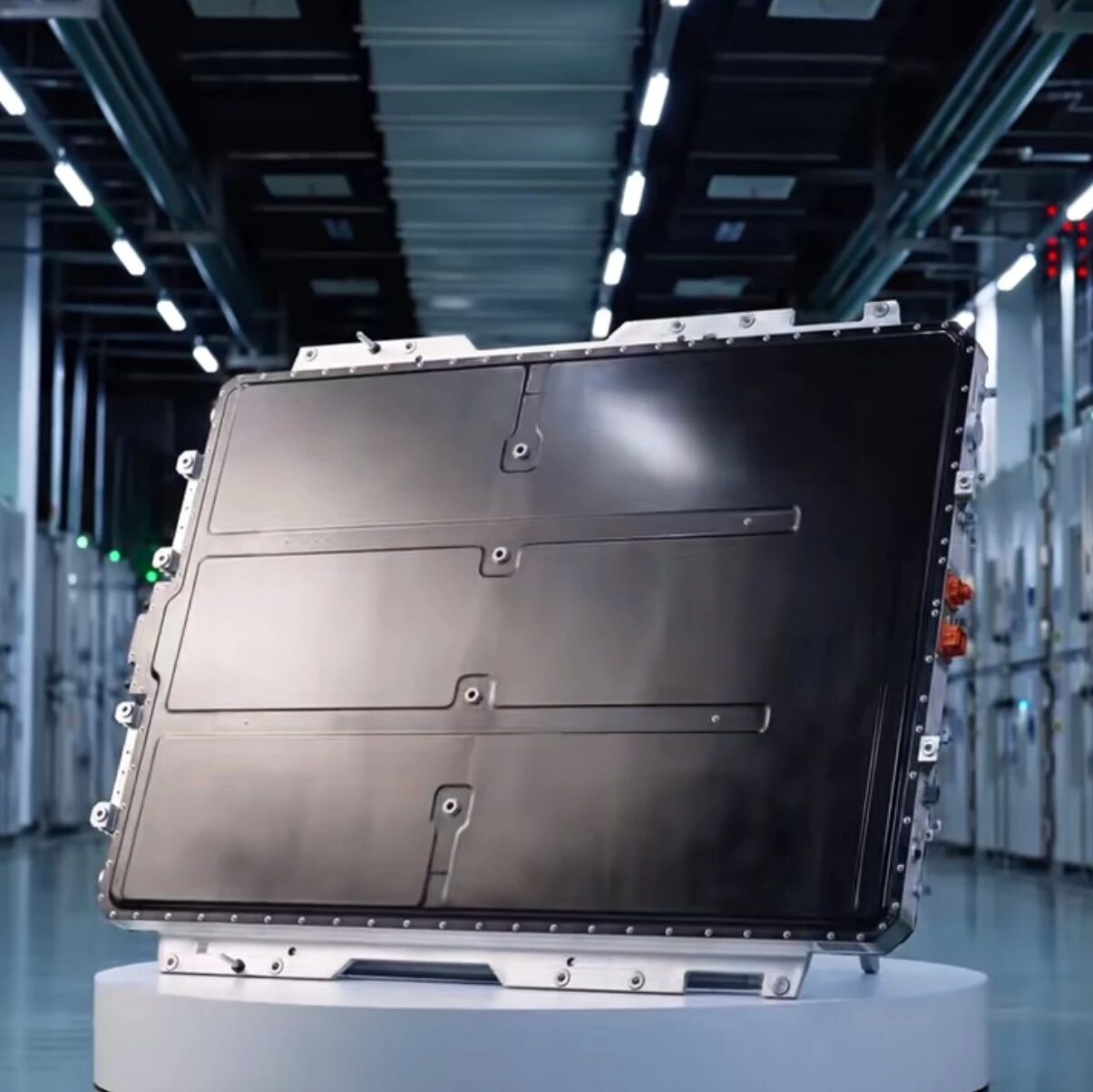
以创新推动升维 业内探索筑牢电池安全基石
Ren Min Wang· 2025-12-01 01:49
Core Viewpoint - The rapid growth of electric vehicle ownership has made battery safety a core decision factor for consumers, prompting the industry to enhance safety technologies in practical applications [1] Group 1: Regulatory Developments - The mandatory national standard "Safety Requirements for Power Batteries for Electric Vehicles" (GB 38031-2025) was officially released on March 28, 2023, and will be implemented on July 1, 2026 [1] - The new standard aims to ensure safety and guide technological advancements in the industry [1] Group 2: Industry Challenges - Current user concerns about battery safety focus on thermal runaway risks, battery lifespan uncertainties, and challenges in all-weather protection [2] - The revised standard includes new tests for thermal diffusion, bottom impact, and safety after fast charging cycles, emphasizing the need for consistent safety across all battery cells [2] Group 3: Technological Innovations - The Huawei Whale Battery Platform is advancing battery safety through a comprehensive protection system that includes five layers of thermal safety [4] - The platform utilizes innovative materials and technologies, such as high-temperature resistant mica boards and liquid cooling systems, to prevent thermal runaway from spreading [4] Group 4: Systematic Changes - The industry is transitioning from being "integrators" to "definers," with a focus on a full-chain approach from battery cell testing to design and manufacturing [3] - The Huawei Whale Battery Platform's deep involvement in the entire process signifies a shift in industry roles [3] Group 5: Safety and Quality Assurance - The battery packs from Hongmeng Zhixing have met the new national standard five years ahead of schedule, demonstrating a commitment to high safety standards [5] - The platform incorporates multiple redundancies to enhance system stability, with at least 200 nodes for risk management [5] Group 6: Collaborative Ecosystem - Hongmeng Zhixing is collaborating with multiple ecosystem partners to create a battery platform that integrates technology, manufacturing, and model adaptation [6] - This collaborative model aims to shift the focus of industry competition from compliance costs to safety value [6] Group 7: Industry Evolution - As the automotive industry evolves, the core competition is returning to safety, reliability, and quality rather than just technological parameters [6] - The practices in battery safety by Hongmeng Zhixing are expanding the concept that "safety is the greatest luxury" into a shared industry standard [6]
湖南裕能(301358) - 2025年11月28日投资者关系活动记录表
2025-12-01 01:06
Group 1: Industry Trends and Challenges - The China Chemical and Physical Power Industry Association has released a cost index for lithium iron phosphate materials to curb "involution" competition and promote a shift from "scale competition" to "quality competition" [2] - Despite facing multiple industry challenges, the company maintains significant advantages in technological innovation, integration, and product cost-performance [3] - The company has consistently remained profitable amidst industry-wide pressure, showcasing strong resilience and risk management capabilities [3] Group 2: Mining and Profit Contributions - The company is progressing well with its phosphate mining operations, with the Huangjiapo phosphate mine expected to start production in Q4 2025, which is anticipated to positively impact profits [2] Group 3: Future Demand and Market Growth - The energy storage market is expected to enter a rapid growth phase due to advancements in large cell technology, market reforms, and increasing demand from emerging applications like AI data centers [3] - The lithium battery market is projected to continue growing, with phosphate cathode materials expected to maintain a growth trend driven by downstream demand [3] Group 4: Financing and Strategic Initiatives - The company is actively advancing its stock issuance to specific investors, currently in the inquiry response phase with the Shenzhen Stock Exchange, pending approval from the China Securities Regulatory Commission [3]

巴比食品20251128
2025-12-01 00:49
Summary of Baba Foods Conference Call Company Overview - **Company**: Baba Foods - **Industry**: Food and Beverage, specifically focusing on steamed buns (小笼包) Key Points and Arguments 1. **Expansion and Sales Performance**: New Baba Foods steamed bun stores in South China and Hefei have achieved sales exceeding 10,000 yuan per day, indicating a high acceptance and promotional potential for the steamed bun model nationwide, supporting the company's expansion strategy [2][4] 2. **Impact of Delivery Services**: New stores without delivery services have already reached sales of over 10,000 yuan, and the introduction of delivery services is expected to increase total store revenue by approximately 20% [2][6] 3. **Technological Innovations**: Baba Foods has solved technical challenges related to retaining soup in frozen raw buns after steaming and preventing the bottom of buns from sticking, enhancing product quality and competitive advantage [2][8][9] 4. **Partnerships with Delivery Platforms**: The company has established deep collaborations with delivery platforms like Meituan and Ele.me, utilizing promotional activities to enhance brand visibility and customer loyalty [2][10] 5. **Store Opening Plans**: Baba Foods plans to accelerate its store opening pace, with expectations to continue opening new stores in 2026 and upgrade existing ones with new design styles to boost overall sales [2][11] 6. **Differentiated Brand Strategy Post-Merger**: The company employs a differentiated operational strategy for acquired brands, with "Light Braise" receiving more support for upgrades, while earlier acquired brands maintain their original identity without expansion [2][5][12] 7. **Market Competition and Supply Chain Strength**: Baba Foods acknowledges potential competition but emphasizes its strong supply chain capabilities as a significant barrier to entry for other brands [2][7] 8. **Product Composition in Stores**: In over 5,000 stores, the majority utilize a combination of frozen dough, fillings, and finished buns, with 99% of stores ordering frozen dough, indicating a high level of operational efficiency [2][14] 9. **Challenges in New Restaurant Models**: The company faces challenges in securing prime locations for new steamed bun outlets, as many suitable spots are occupied by small brands, necessitating strategies to attract these operators [2][16] 10. **Future Growth Outlook**: While specific same-store growth data for 2026 is not available, the company remains cautiously optimistic, influenced by macroeconomic conditions and market competition [2][13] Additional Important Information - **Sales Performance by Region**: New stores in South China and Hefei show sales stability comparable to those in East China, indicating a successful model that can be replicated across regions [4] - **Member System and Customer Engagement**: The company is focused on enhancing its membership system and service quality to maintain a competitive edge in the market [8][10] - **No Current Plans for Stock Incentive Programs**: There are no immediate plans to continue stock incentive programs [2][17]

合作应对全球挑战,推动法中关系发展,法媒期待马克龙本周访华
Huan Qiu Shi Bao· 2025-11-30 22:42
《论坛报》还称,法国希望与中国共同推动"稳健而可持续的增长",并重点就供应链疏通及未来产业关键材料稳定获取开展合作。该报还引用法 国总统府消息人士的观点称:"中国需要先进芯片,欧洲需要稳定的稀土供应,双方在共享和加速技术创新方面拥有共同利益。总统也希望在此逻 辑基础上行事。" Boursorama网站还称,法国总统府一名高级顾问表示,法国还希望吸引更多来自中国的投资。"经过多年的全球化,中国得以发展和创新,如今中 国拥有一些非常先进的技术,可以与值得信赖的伙伴,特别是欧洲伙伴分享。" 据法国国际广播电台报道,爱丽舍宫透露,马克龙此行将与中方签署主要涉及"交通和能源"的协议。 法国TF1电视台引述爱丽舍宫消息称,总统此次访华将"继续推动法中关系的发展"。两国元首将围绕双边关系、国际热点问题和合作应对全球挑 战等议题展开会谈。另据法国国际广播电台报道,除北京外,马克龙还将前往四川成都。该市设有大熊猫繁育研究基地,日前接收了此前在法国 动物园饲养的大熊猫"欢欢"和"圆仔"。 法国Boursorama网站称,最近,乌克兰问题出现新谈判窗口,中日因为日本首相涉台言论关系紧张,全球经济议题备受关注。马克龙访华前夕, 中共 ...

阿维塔递表港交所 三强携手打造智能电动车行业新标杆
Zheng Quan Ri Bao Wang· 2025-11-29 02:37
Core Viewpoint - Avita Technology's IPO application to the Hong Kong Stock Exchange marks a significant step in its international development and capital operation strategy, aiming to enhance its core competitiveness and support long-term high-quality growth [1][5]. Group 1: Company Overview - Avita was established in July 2018 as a joint investment by Changan Automobile and NIO, officially renamed in May 2021, leveraging resources from industry leaders Changan, Huawei, and CATL to create a unique "three-strong alliance" development model [2]. - Changan holds a 40.99% stake as the controlling shareholder, providing extensive experience in vehicle R&D and manufacturing, while CATL, with a 9.17% stake, ensures leading battery technology, and Huawei offers advanced smart automotive solutions [2]. Group 2: Financial Performance - Avita's revenue surged from 28.34 million in 2022 to 5.645 billion in 2023, with projections of 15.195 billion in 2024, reflecting a year-on-year growth of 169.16% [3]. - The company reported a gross profit improvement from a loss of 169 million in 2023 to a profit of 961 million in 2024, with further growth to 1.238 billion in the first half of 2025, despite a loss of 1.585 billion in the same period [3]. Group 3: Product Strategy - Avita has developed a comprehensive product line covering price ranges from 200,000 to 700,000, including four mass-produced models and two limited editions, catering to diverse consumer needs [4]. Group 4: Future Development Strategy - The funds raised from the IPO will be allocated to product development, platform and technology development, brand building, sales service network construction, and operational funding, enhancing Avita's core competitiveness [5]. - Avita plans to launch five upgraded products in collaboration with Huawei by 2026 and aims to introduce a total of 17 models by 2030, expanding its market presence to over 80 countries and establishing more than 700 sales channels [5][6]. - The company targets global sales of 400,000 vehicles by 2027, 800,000 by 2030, and 1.5 million by 2035, supported by a strategy of differentiation, continuous technological innovation, and globalization [6].


百钰顺公司加强精密结构件工艺创新—— 精益生产提升质效
Jing Ji Ri Bao· 2025-11-29 02:35
Core Viewpoint - The company is focusing on innovative production techniques to enhance cost efficiency and environmental sustainability in the manufacturing of precision structural components, particularly in the laptop casing sector. Group 1: Company Overview - Chongqing Baiyushun Precision Industry Co., Ltd. is a national-level specialized and innovative "little giant" enterprise engaged in the R&D, production, and sales of precision structural components [1] - Since its establishment in 2016, the company has built seven manufacturing bases in Chongqing and Anhui, with an annual production capacity of 40 million precision structural components and an output value exceeding 1.5 billion yuan [1] Group 2: Technological Innovations - The company is developing a new production process that combines aluminum alloy room temperature forging technology with metal additive manufacturing to create cost-effective and environmentally friendly precision components [1] - The new production technique has improved material utilization significantly, reducing processing time by 30% and lowering raw material costs by approximately 40% [2] - The company has established a research and development team to tackle technical challenges, resulting in successful production line implementation after three years of effort [2] Group 3: Automation and AI Integration - Baiyushun has developed an AI visual inspection system in collaboration with Harbin Institute of Technology, enhancing detection efficiency by over five times compared to manual inspection, with a defect rate reduction of 15% [3] - The company has integrated smart manufacturing throughout its production process, operating over 3,000 CNC machining centers and more than 600 stamping machines, achieving intelligent control from raw material delivery to final product inspection [3] Group 4: Future Directions - The company plans to continue focusing on innovation, increasing R&D investment in precision and lightweight product manufacturing technologies to meet new demands in consumer electronics, new energy, and aerospace sectors [4] - Baiyushun aims to enhance its intelligent management level while contributing to high-quality development across various industries through its precision structural components [4]
范波会见中国通用技术集团董事长于旭波一行
Su Zhou Ri Bao· 2025-11-29 00:35
Group 1 - The core viewpoint of the article is the meeting between the Secretary of the Municipal Party Committee, Fan Bo, and the Chairman of China General Technology (Group) Holding Limited, Yu Xubo, focusing on collaboration in advanced manufacturing, technology services, and health care [1] - Both parties expressed intentions to further promote technological innovation, market expansion, and industrial upgrading [1] - The goal is to facilitate the implementation of more high-quality projects in Suzhou [1] Group 2 - City leader Cha Yingdong participated in the meeting [2]