
5G

Search documents
财经早报:国办发文!扩范围、清障碍,促进民间投资13条来了,新能源赛道,利好来了!丨2025年11月11日
Xin Lang Zheng Quan· 2025-11-10 23:34
Group 1 - The U.S. has announced a suspension of the 301 investigation measures against China's shipbuilding industry, which includes halting port fees and tariffs on certain equipment, marking a step towards mutual cooperation between the U.S. and China [2] - The Chinese Ministry of Commerce responded positively to the U.S. announcement, indicating it as a significant move in implementing the consensus reached during the U.S.-China economic discussions [2] Group 2 - The Ministry of Industry and Information Technology plans to accelerate the cultivation of application scenarios in five key areas, including 5G and artificial intelligence, to enhance industrial capabilities [4][5] - The government has introduced 13 measures to promote private investment, focusing on expanding market access and ensuring fair competition, which aims to boost investment in emerging sectors [6] Group 3 - A strategic partnership has been established between CPE Yuanfeng and Burger King, with an initial investment of $350 million to support expansion and innovation in the Chinese market [11] - Gree Electric's CEO addressed concerns regarding the company's entry into the refrigerator market, emphasizing the commitment to quality and advanced manufacturing processes [12] Group 4 - The virtual power plant sector is set to benefit from favorable policies, indicating a shift towards large-scale development [13] - The demand for storage chips remains strong, with significant investments observed in several stocks since November [13]



国家发展改革委等多部门: 将分批次推出应用场景项目清单
Zhong Guo Zheng Quan Bao· 2025-11-10 20:13
Core Points - The Chinese government is accelerating the cultivation and large-scale application of new scenarios through a series of implementation opinions and projects [1][2] - The National Development and Reform Commission (NDRC) will collaborate with relevant departments to organize and implement major projects and track the effectiveness of scenario cultivation [1][2] - Emphasis will be placed on enhancing collaboration among various sectors to ensure effective implementation of the new policies [2][3] Group 1: Implementation Strategies - The NDRC plans to release a list of application scenarios in batches, focusing on comprehensive major scenarios and high-value niche scenarios [2] - Mechanisms will be improved to ensure the sustainable development of scenario cultivation, including leveraging government procurement policies to support new technologies and products [2][3] - The integration of "hard infrastructure" and "soft innovation" is essential for the success of scenario cultivation and opening [3] Group 2: Technological Focus - The Ministry of Science and Technology will prioritize key core technology breakthroughs to drive the cultivation and opening of major scenarios [4] - A rapid iterative innovation mechanism will be established, linking demand-driven technology breakthroughs with scenario validation and industrial application [4] - Central enterprises will play a crucial role in providing high-value scenarios and enhancing the integration of technological and industrial innovation [4] Group 3: Key Application Areas - The Ministry of Industry and Information Technology will accelerate the cultivation of application scenarios in key areas such as "5G+", "Artificial Intelligence+", "Robotics+", "Industrial Internet+", and "Beidou+" [5][6] - Specific actions will be taken to implement large-scale applications of 5G in various industries, including the development of integrated solutions for factories [6] - The integration of AI into manufacturing processes will be promoted to enhance productivity and innovation [6][7]
我国将加速推动人工智能+领域应用场景培育
Bei Jing Shang Bao· 2025-11-10 15:53
Core Viewpoint - The implementation of the "Implementation Opinions" aims to accelerate the cultivation and opening of application scenarios in key areas such as 5G, artificial intelligence, robotics, industrial internet, and Beidou, creating significant business opportunities through deep integration of technology and industry, precise matching of supply and demand, and collaborative innovation of systems and elements [1][2][3] Group 1: Key Areas of Focus - The "Implementation Opinions" will focus on five main areas: creating new application scenarios in emerging fields, building new business models for industrial transformation, launching application scenarios in various industries, innovating comprehensive application scenarios for social governance, and enriching application scenarios in the livelihood sector [2][3] - The emphasis on "5G+", "AI+", "robotics+", "industrial internet+", and "Beidou+" indicates a shift in policy direction from "technological breakthroughs" to "application deepening," aiming to optimize the development environment for new industries and facilitate the integration of small and medium enterprises into the innovation chain [4][5] Group 2: Opportunities for Private Enterprises - The "Implementation Opinions" encourage the participation of private enterprises in scenario construction, marking a significant policy shift that recognizes their role as core participants rather than passive recipients of technology [5][6] - Measures to promote scenario openness include enhancing the demonstration role of state-owned enterprises and providing opportunities for social capital and private enterprises to engage in public scenario projects, thereby lowering policy barriers and expanding funding channels [5][6] Group 3: Government and Central Enterprises' Role - The State-owned Assets Supervision and Administration Commission (SASAC) will guide central enterprises to leverage their scenario advantages and collaborate with various ownership enterprises, universities, and research institutions to build industrial ecosystems [6][7] - Central enterprises have already conducted 45 specialized activities and published over 10,000 supply-demand matching lists, engaging nearly 15,000 entities in the industrial chain, which enhances cooperation space for various market entities in technology application and industrial integration [6][7]
工信部:加速推动5G+、人工智能+、机器人+、工业互联网+、北斗+等重点领域应用场景培育|快讯
Hua Xia Shi Bao· 2025-11-10 12:53
Core Viewpoint - The State Council has issued an implementation opinion to accelerate the cultivation and large-scale application of new economic and social scenarios, emphasizing the integration of new information technologies and intelligent devices [2] Group 1: 5G Applications - The "5G+" application scenario will implement the "Sail" action for large-scale 5G applications, focusing on the construction of 5G factories for small, medium, and large enterprises [2] - Key applications include machine vision quality inspection, remote equipment control, and flexible manufacturing [2] Group 2: Artificial Intelligence Applications - The "Artificial Intelligence+" application scenario will promote AI integration across manufacturing processes, including R&D, production, management, and maintenance [2] - A special action plan for "AI+Manufacturing" will be developed to enhance AI technology innovation and application [2] Group 3: Robotics Applications - The "Robotics+" application scenario aims to deepen and broaden the application of robots in factories, particularly in welding, assembly, spraying, and handling [3] - Focus will be on promoting robotic products in complex and harsh environments such as mining and emergency response [3] Group 4: Industrial Internet Applications - The "Industrial Internet+" application scenario will create an upgraded version of "5G+Industrial Internet" and implement collaborative projects across key industries [3] - Applications will be promoted in design, production scheduling, and warehousing within industries like steel, electricity, shipbuilding, and aviation [3] Group 5: Beidou Applications - The "Beidou+" application scenario will promote the development of the space-time information industry and deepen the application of Beidou in smart cities, intelligent transportation, and precision agriculture [4] - Policies will be researched to accelerate the integration of Beidou with mobile communication and high-precision technologies [4]

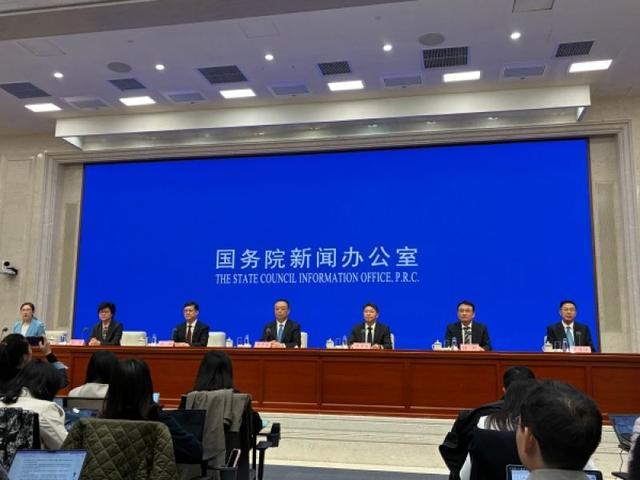
事关场景培育开放!多部门权威解读,这场发布会,信息量满满
证券时报· 2025-11-10 11:48
Core Viewpoint - The article discusses the implementation of the "Implementation Opinions" by the State Council, marking the first systematic deployment of scene cultivation and openness in China, aimed at promoting innovation and activating market vitality through practical applications of new technologies and products [1][5]. Group 1: Definition and Importance of "Scenes" - "Scenes" are defined as specific contexts for the innovative application of new technologies, products, and business models, originating from the film industry and now applied across various sectors [4]. - The absence of practical scenes can hinder the transition of innovative results from theory to market, emphasizing the need for scene cultivation to bridge the gap between technology and industry [5]. Group 2: Key Areas for Scene Cultivation - The "Implementation Opinions" outline five main areas for scene cultivation and openness: 1. Digital economy and artificial intelligence applications 2. Manufacturing and transportation industry upgrades 3. Mining and emergency industry applications 4. Comprehensive applications in social governance services 5. Enrichment of applications in the livelihood sector [7]. Group 3: Focused Application Scenarios - The Ministry of Industry and Information Technology has identified five key application scenarios: 1. "5G+" applications focusing on factory construction and integrated solutions [7]. 2. "Artificial Intelligence+" applications extending AI into various manufacturing processes [7]. 3. "Robot+" applications promoting the use of robots in complex environments [8]. 4. "Industrial Internet+" applications enhancing collaboration across industrial chains [8]. 5. "Beidou+" applications integrating navigation technologies into smart city initiatives [8]. Group 4: Role of Technology Enterprises - The Ministry of Science and Technology aims to strengthen the role of enterprises in technological innovation, promoting a rapid iteration mechanism from demand to application [10]. - The government encourages state-owned enterprises to open their scenes and collaborate with private and small enterprises to enhance innovation and application [10][11]. Group 5: Local Practices - Guangdong and Anhui provinces are leading in scene innovation, with Guangdong establishing a unified work system for scene innovation and Anhui launching a "thousand scenes" plan for quantum information [12][13]. - Both provinces are focusing on major application scenarios to drive the development of new productive forces and enhance regional collaboration [13].
本川智能:公司已在5G、6G等应用领域与部分头部通讯设备厂商开展长期技术交流与合作
Zheng Quan Ri Bao Wang· 2025-11-10 11:41
Core Viewpoint - The company is leveraging its traditional product and technology advantages to engage in long-term technical exchanges and collaborations with leading communication equipment manufacturers in the 5G and 6G application fields [1] Group 1: Company Developments - The company has initiated forward-looking layouts in the research, design, and material processing of high-end PCBs for 6G communication through industry-academia-research collaborations [1] - The deep technical experience and customer resources accumulated in the 5G communication sector provide a solid foundation for the company to enter the 6G market [1] - The company identifies 6G communication PCBs as one of its main development directions for the future [1] Group 2: Market Position and Future Outlook - Currently, 6G technology is in the early stages of research and standard definition, with a considerable distance to commercialization [1] - The company plans to closely follow technological development trends and actively seize market opportunities [1]

兆龙互连跌1.45%,成交额2.06亿元,近3日主力净流入-3655.23万
Xin Lang Cai Jing· 2025-11-10 10:46
Core Viewpoint - The company, Zhejiang Zhaolong Interconnect Technology Co., Ltd., is experiencing fluctuations in stock performance and is positioned as a key player in the high-speed cable and optical fiber sectors, benefiting from the depreciation of the RMB and expanding its overseas market presence [1][3]. Company Overview - Zhejiang Zhaolong Interconnect was established on August 21, 1995, and went public on December 7, 2020. The company specializes in the design, manufacturing, and sales of data cables, specialized cables, and connection products [7]. - The revenue composition includes: 43.60% from category 6 and below data communication cables, 20.81% from category 6A and above, 18.04% from specialized cables, 11.62% from connection products, and 5.94% from other sources [7]. - As of September 30, 2025, the company reported a revenue of 1.518 billion yuan, a year-on-year increase of 13.28%, and a net profit attributable to shareholders of 138 million yuan, up 53.82% year-on-year [7]. Market Position and Performance - The company has become a core partner for international leading interconnect solution providers in the active cable (AEC) sector due to its technological accumulation in high-speed cable [2]. - The company’s optical products include fiber jumpers, MPO/MTP pre-terminated connectors, and LC fiber connectors, primarily serving high-end projects in finance, education, healthcare, and exhibitions, while also expanding into overseas markets [2]. - The company is one of the few in China capable of designing and manufacturing data cables of category 6, 7, and 8, meeting the new data transmission demands of the 5G era [2]. Financial and Investment Insights - The company’s overseas revenue accounted for 61.93% of total revenue in the 2024 annual report, benefiting from the depreciation of the RMB [3]. - The average trading cost of the stock is 56.78 yuan, with recent reductions in holdings but at a slowing rate. The stock price is approaching a resistance level of 50.98 yuan, indicating potential for upward movement if this level is breached [6]. - The company has distributed a total of 113 million yuan in dividends since its A-share listing, with 82.34 million yuan distributed over the past three years [8].
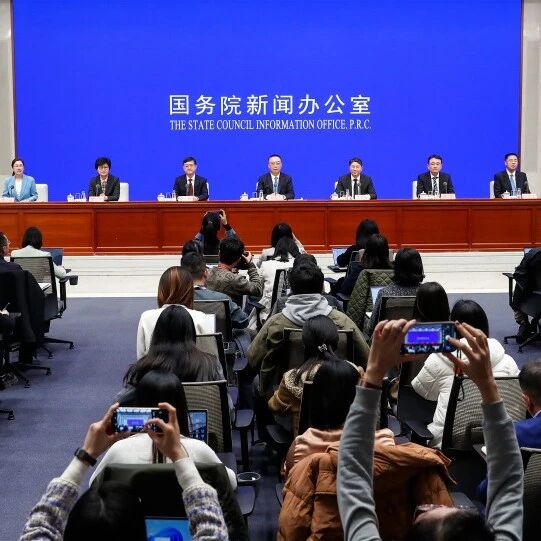
盘后利好!人工智能领域将出新政
Zheng Quan Ri Bao Wang· 2025-11-10 10:16
Core Viewpoint - The Chinese government is accelerating the cultivation and large-scale application of new scenarios in key industries, leveraging the country's vast market and complete industrial system to promote the development of emerging industries [1][2]. Group 1: 5G Applications - The Ministry of Industry and Information Technology (MIIT) is implementing the "Sail" action for the large-scale application of 5G, focusing on the construction of 5G factories for small, medium, and large enterprises [1]. - Key application scenarios include machine vision quality inspection, remote equipment control, and flexible manufacturing [1]. Group 2: Artificial Intelligence Applications - MIIT is developing a special action plan for "Artificial Intelligence + Manufacturing," aiming to extend AI applications across various manufacturing processes, including R&D, production, management, and maintenance [1]. - The initiative seeks to enhance technological innovation and integration of AI, maximizing its multiplicative effects [1]. Group 3: Robotics Applications - The "Robotics +" action plan aims to deepen and broaden the application of robots in industries, particularly in welding, assembly, spraying, and handling [2]. - The focus is on deploying industrial and humanoid robots in complex and harsh environments, such as mining and emergency response [2]. Group 4: Industrial Internet Applications - MIIT is formulating a plan to integrate industrial internet with AI, creating an upgraded version of "5G + Industrial Internet" [2]. - The initiative will promote collaboration between industrial internet and key industry chains, targeting sectors like steel, electricity, shipbuilding, and aviation [2]. Group 5: Beidou Applications - Policies are being developed to promote the development of the space-time information industry, with a focus on expanding the application of Beidou technology in smart cities, intelligent transportation, and precision agriculture [2]. - The integration of Beidou with mobile communications, inertial navigation, and high-precision vision technologies is emphasized [2].
工信部:将加速推动五大重点领域应用场景的培育
Zheng Quan Shi Bao Wang· 2025-11-10 08:23
Group 1 - The Ministry of Industry and Information Technology (MIIT) is accelerating the cultivation of application scenarios in five key areas [1][2] - The first area is 5G applications, focusing on large, medium, and small enterprises to deepen 5G factory construction and promote integrated solutions [1] - The second area is artificial intelligence applications, aiming to extend AI into various manufacturing processes and enhance innovation and integration [1] - The third area involves robotics, promoting the use of industrial and humanoid robots in factories, particularly in welding, assembly, and hazardous environments [1] Group 2 - The fourth area is industrial internet applications, which will integrate AI and industrial internet to enhance collaboration in key industries like steel and power [2] - The fifth area focuses on Beidou applications, promoting the development of spatial information industries and integrating Beidou with various technologies for smart city and agriculture applications [2]
Nokia readies TNN Denmark for AI-powered 5G future
Globenewswire· 2025-11-10 08:00
Core Insights - Nokia has announced a four-year contract extension with TNN in Denmark to continue as the sole supplier of 5G radio access networks and managed services, focusing on AI and autonomous capabilities to enhance service quality and user experience [1][6] Group 1: Contract and Partnership - The new agreement will evolve TNN's 5G network, enabling new digital services and advanced business applications for TNN's customers [1] - TNN is Denmark's largest shared mobile network, a joint venture between Norlys and Telenor, and the project is currently underway [1] Group 2: Technology and Equipment - Nokia will deploy its energy-efficient AirScale Radio Access Network (RAN) portfolio to support TNN's goal of delivering premium 5G services to over three million subscribers [2] - The latest generation of Habrok Massive MIMO radios and Pandion multi-band remote radio heads (RRH) will be supplied for comprehensive coverage [2] - AI-ready, ultra-performance AirScale baseband solutions will enhance scalability and energy efficiency while supporting increased traffic growth [2] Group 3: AI and Automation - TNN will benefit from Nokia's AI and automation capabilities in network management, including MantaRay SON and MantaRay AutoPilot for real-time optimization and reduced operational costs [3] - Nokia Managed Services aims to simplify 5G network operations, leading to enhanced service quality and customer experience [3] Group 4: Statements from Executives - Norlys' SVP Telco emphasized the importance of investing in mobile network infrastructure to improve performance and customer experience through the partnership with Nokia [4] - Telenor Denmark's CTO highlighted that the collaboration will accelerate innovation and enhance network resilience, transforming digital experiences across Denmark [5] Group 5: Nokia's Position - The enhanced deal with TNN reflects Nokia's strong partnership and its position as a trusted technology provider delivering industry-leading 5G solutions [6] - Nokia is committed to expanding 5G coverage and capacity to provide best-in-class connectivity experiences and new digital services [6]
