
数字孪生

Search documents
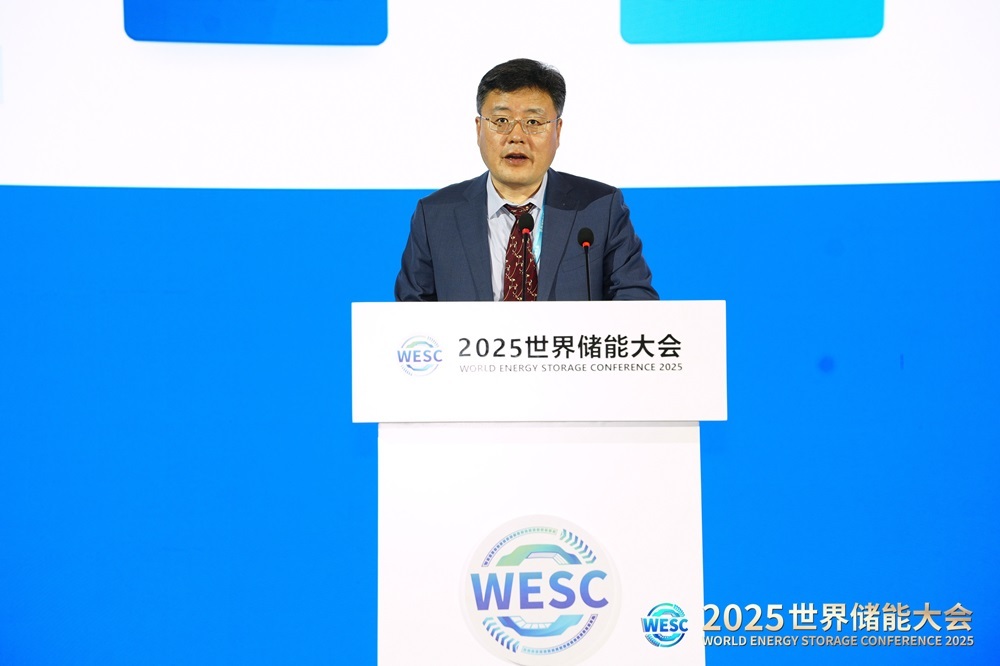
工信部装备工业发展中心党委书记、副主任柳新岩:新型储能正向大容量、混合化、多元化演进
Mei Ri Jing Ji Xin Wen· 2025-09-17 15:25
Core Insights - The "2025 World Energy Storage Conference" highlighted the development roadmap for new energy storage technologies from 2025 to 2035, focusing on 18 key products, 33 critical materials, and 88 key indicators [1] Group 1: Market Trends - In 2024, China, the US, and Europe will account for over 90% of new installed capacity in the global energy storage market, with China being the largest contributor for three consecutive years [3] - By 2027, China's new energy storage capacity is expected to exceed 180 million kilowatts, reaching over 240 million kilowatts by 2030, and surpassing 300 million kilowatts by 2035 [3] Group 2: Technological Developments - The energy storage landscape in China is dominated by lithium-ion batteries, with a growing presence of flow batteries and compressed air storage, which have increased their market share by 0.6% and 0.5% respectively compared to 2023 [3] - The average storage duration has reached 2.3 hours, indicating a shift towards longer-duration storage solutions [3] - Solid-state batteries are being developed along three main routes: polymer, sulfide, and oxide, with oxide solid-state batteries gaining traction due to their superior cycle performance and stability [5][6] Group 3: Policy and Strategic Focus - The US and Europe are implementing policies to support the development of intelligent, green, and long-duration energy storage technologies, with the US focusing on 10-hour plus storage solutions [4] - The EU emphasizes smart and green technologies, aiming for a 90% lithium recovery rate and 95% recovery rates for cobalt and nickel by 2030 [4]

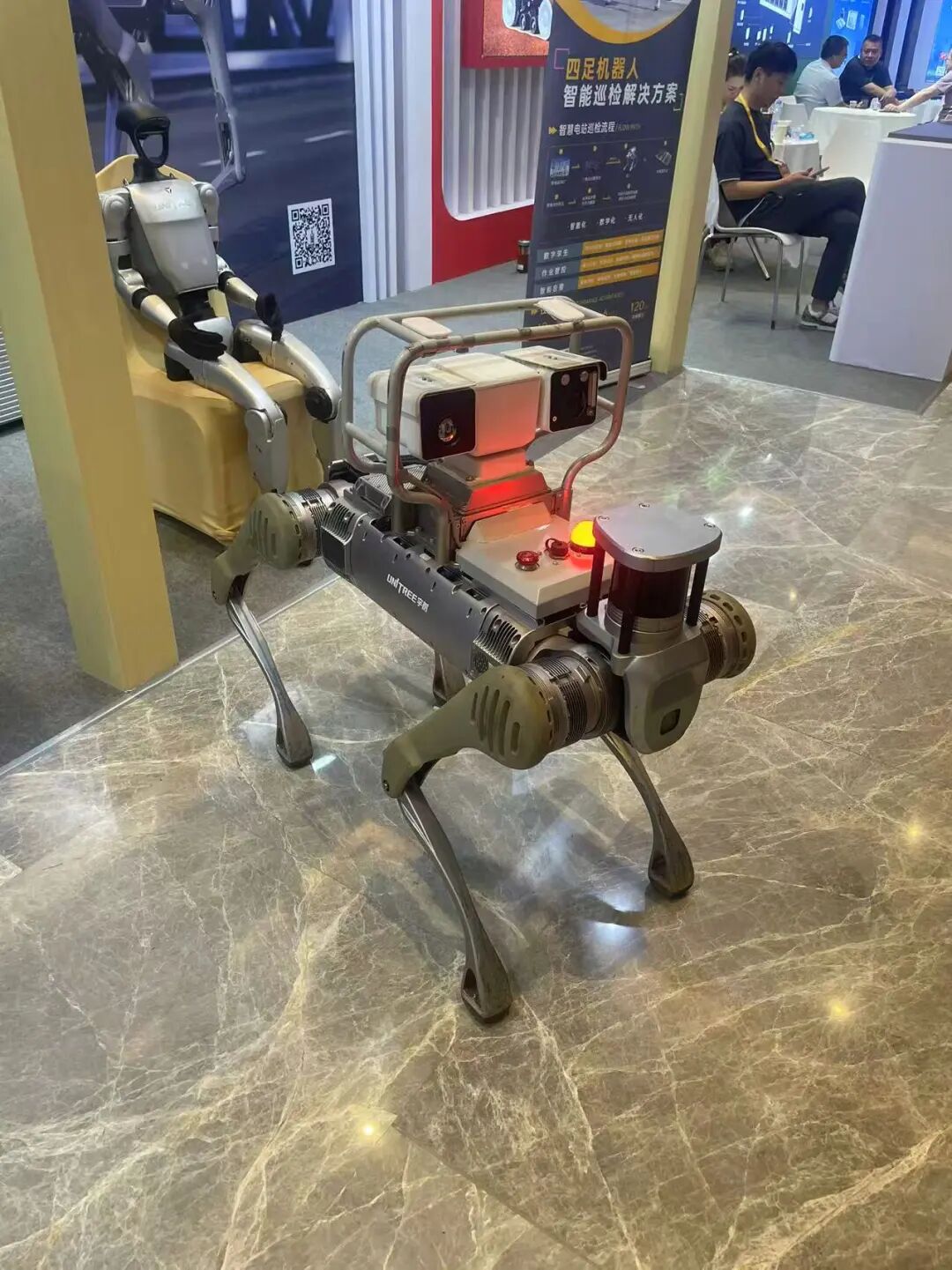
宇树科技 罕见透露
Shang Hai Zheng Quan Bao· 2025-09-17 15:05
Core Insights - The main focus of the news is on the advancements and applications of humanoid and quadruped robots by Yushu Technology in various industrial sectors, emphasizing their role in automation and efficiency improvement in tasks such as inspection and emergency response [1][3][4]. Group 1: Humanoid Robots - Yushu Technology's humanoid robots are being utilized in industrial inspections, power grids, and energy storage, with a focus on performing complex and repetitive tasks in factories [1]. - The company believes that overcoming the challenges of deploying robots in factories for labor-intensive tasks is essential for future development [1]. Group 2: Quadruped Robots - Yushu Technology showcased a quadruped robot inspection system that integrates various technologies such as image recognition, big data, AI, and digital twins to meet the operational needs of power stations and industrial parks [3]. - The quadruped robots are designed for autonomous inspection, automatic identification of defects, and real-time monitoring of equipment status [3][4]. Group 3: Technological Innovations - The company has developed a solution for the adaptability of robots in various environments, utilizing high-performance quadruped robots and humanoid robots across different scenarios [4]. - Yushu Technology has open-sourced a world model called UnifoLM-WMA-0, which is designed for general robot learning, featuring a simulation engine for generating synthetic data and a strategy enhancement component for optimizing decision-making [5].
浙江水利数据仓打通协同治水“血脉经络”
Mei Ri Shang Bao· 2025-09-17 08:32
Core Insights - Zhejiang has established a "Digital Ark" for water resources management, consolidating over 603,138 data points from various water monitoring stations and projects, enhancing water resource management and disaster prevention efforts [1][2] Group 1: Data Governance and Standardization - The project "Water Data Governance Research" has been successfully completed, leading to the creation of a unified data system that addresses the previously fragmented water data landscape [1] - Five provincial standards, three technical documents, and five management measures have been developed to ensure a standardized and secure data governance framework [1] Group 2: Data Integration and Functionality - The Zhejiang Water Data Warehouse integrates over 2.3 billion data points, providing functionalities such as statistical analysis, comprehensive retrieval, and surrounding object queries [2] - A total of 507 data interfaces have been published, facilitating over 450 million data services, thereby enhancing collaborative water management efforts [2] Group 3: Practical Applications and Impact - The "Mountain Flood Four Preventions" system allows for quick assessments and automatic retrieval of critical information, significantly improving emergency response times [2] - The integration of water projects from planning to operation management ensures effective oversight and orderly regulation of water networks [2]
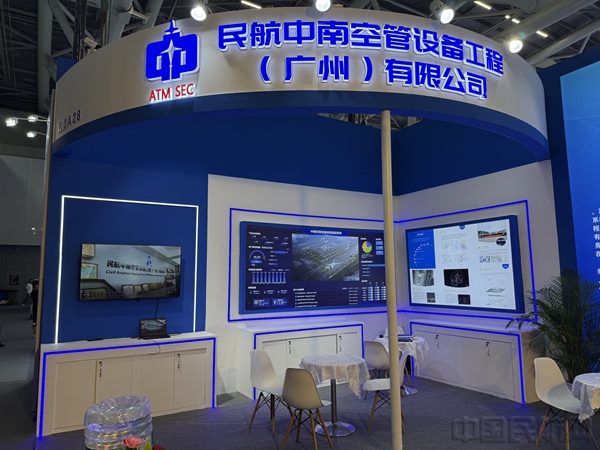
中南空管局参展2025国际机场博览会暨第十届中国机场服务大会
Zhong Guo Min Hang Wang· 2025-09-17 08:15
Core Viewpoint - The 2025 International Airport Expo and the 10th China Airport Service Conference opened in Guangzhou, showcasing innovations and achievements in air traffic management and engineering construction [1] Group 1: Company Innovations and Achievements - The company highlighted its strengths in engineering construction, showcasing projects in communication navigation, system integration, and Building Information Modeling (BIM) technology [2] - The company presented innovative achievements in flight services, including the near-landing flight procedure design at Baiyun Airport, point merging technology, and simplified departure and arrival codes [3] - The company demonstrated its experience in implementing air traffic control projects at 42 airports nationwide, emphasizing the advantages of BIM technology in modern air traffic control infrastructure [2] Group 2: Technological Advancements - The near-landing flight procedure at Baiyun Airport is the first systematic solution in the domestic air traffic control industry, addressing operational challenges [3] - The point merging technology has been tested in regional control sectors, making it the first of its kind in Asia, paving the way for its broader application [3] - The self-developed integrated monitoring system by the company attracted significant attention, featuring capabilities for seamless integration of various equipment into a unified platform [3] Group 3: Future Directions - The company plans to continue focusing on practical work and innovation, enhancing technical capabilities and service quality to contribute to the high-quality development of civil aviation and world-class air traffic management [5]
慧眼捕赤潮
Zhong Guo Zi Ran Zi Yuan Bao· 2025-09-17 02:20
Core Insights - The article discusses the challenges and advancements in red tide monitoring and forecasting in the North Sea region, highlighting the establishment of a comprehensive intelligent support system for red tide disaster monitoring and early warning [1][5][10] Group 1: Red Tide Overview - Red tide, also known as "red ghost," is an ecological anomaly caused by the explosive proliferation of certain microalgae, leading to water discoloration and harm to marine life [1] - In 2024, China experienced 66 instances of red tide, with nearly 60% being toxic, covering an area exceeding 11,000 square kilometers [1] Group 2: Technological Advancements - The North Sea Bureau has developed an intelligent red tide recognition network using satellite remote sensing data, significantly improving the efficiency and accuracy of identifying water color anomalies compared to traditional methods [3] - A machine learning-based early warning model for red tide has been created, along with a three-dimensional migration and diffusion prediction model, enhancing the forecasting capabilities for different time scales [5] Group 3: Monitoring and Response Framework - A scientific decision-making model for on-site verification of water color anomalies has been established, facilitating efficient coordination between remote sensing monitoring and on-site responses [7] - The North Sea Bureau has integrated the latest technological achievements into an intelligent prediction and monitoring auxiliary system, supporting a dual-loop management approach for red tide monitoring and emergency response [7] Group 4: Focused Services and Future Directions - The North Sea Bureau is implementing a comprehensive forecasting system that combines satellite remote sensing, real-time sensors, and laboratory analysis to predict chlorophyll concentration and red tide risks in specific coastal areas [9] - Future plans include the integration of artificial intelligence and digital twin technologies to enhance early warning accuracy and establish a multi-dimensional monitoring network [10]
为黄河装上“智慧大脑” ——解码数字孪生黄河的三门峡实践
He Nan Ri Bao· 2025-09-16 23:29
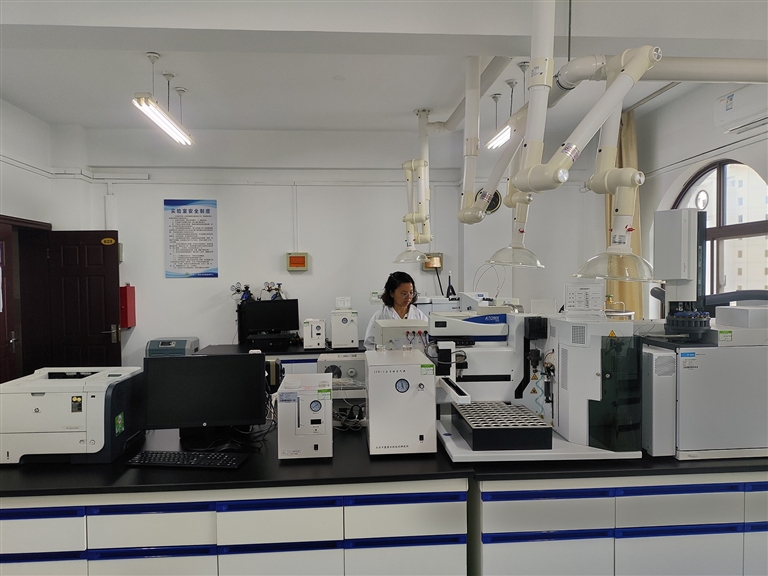
图① 三门峡市生态环境监测人员进行饮用水源地有机物污染物分析。 王阿芳 摄 走进位于郑州市金水区的模型黄河试验基地1号大厅,一条800米长的微缩河道蜿蜒铺展——这便是按1∶600水 平比尺、1∶60垂直比尺复刻的黄河下游河床模型,将小浪底至陶城铺河段476公里的黄河河道地貌浓缩于此。 自2016年起,每年汛前,这条模型黄河都会进行洪水预演试验,为守护母亲河寻得科学答案。随着防汛决策 迈向数据驱动时代,数字孪生黄河悄然诞生。数字孪生三门峡、数字孪生故县、数字孪生小浪底、数字孪生 万家寨、数字孪生大汶河等系统陆续上线,在实践中开展了迭代应用。 "数字孪生黄河将模型黄河的物理规律转化为数字算法,把实体试验升级为实时仿真,推动治黄从'试验优 化'迈向'智能预判'。"黄河水利科学研究院泥沙所副所长张防修如此解释了两条黄河的关系。 作为黄河入豫第一市,三门峡市域干支流积极融入数字孪生黄河建设浪潮,以数字技术化作无形的手,为多 个领域赋能,担当起防洪预警先锋、灌溉管家、生态守护者等角色,为黄河流域生态保护和高质量发展注入 数智动能。 图② 三门峡水利枢纽矩阵平台智慧大屏。 赵帅 摄 "数字镜像"赋能大坝管理 古有大禹治水, ...
数字屏障护江河安澜
Jing Ji Ri Bao· 2025-09-16 22:12
Core Viewpoint - The construction of a digital twin water conservancy system is essential for promoting high-quality water conservancy development and ensuring water security in China [4][9]. Group 1: Digital Twin Technology - The digital twin water conservancy system is not merely a digital replica but a virtual system capable of monitoring, analyzing, and forecasting water conditions [2][3]. - The system integrates various technologies, including satellite remote sensing, drones, and advanced monitoring devices, to provide real-time data and predictive analytics for water management [3][8]. - The digital twin system has been successfully applied in flood forecasting and water resource allocation, significantly improving decision-making processes [2][5]. Group 2: Monitoring and Data Collection - China has established a comprehensive monitoring and sensing system that includes 31 remote sensing satellites, over 100 rain radar units, and more than 48,000 ground hydrological stations [4][8]. - The integration of these technologies has enabled the creation of a digital twin platform that covers 72 categories of water conservancy objects, generating high-resolution data for effective disaster prevention [4][9]. - The system allows for rapid data collection and transmission, enhancing the timeliness of flood warnings and resource management [3][6]. Group 3: Water Resource Management - The digital twin system has improved water resource allocation, enabling real-time monitoring and dynamic simulation of water flow and reservoir management [5][6]. - In Ningbo, the implementation of a smart water network has optimized water supply and ensured a high supply guarantee rate during drought periods [6][7]. - The system has also facilitated the efficient management of water resources in major projects like the South-to-North Water Diversion, enhancing operational efficiency and decision-making [6][8]. Group 4: Technological Advancements - The transition from manual monitoring to real-time surveillance has been marked by the deployment of advanced technologies such as drones and AI-driven models for water forecasting [8][9]. - The development of predictive models has extended the forecasting period for floods and improved accuracy, providing robust support for flood management [8][9]. - The focus on technological innovation is driving the evolution of water management practices, ensuring a more responsive and effective approach to water resource challenges [8][9].
台积电、三星3nm之争,再现工艺突破的制胜法宝
3 6 Ke· 2025-09-16 11:11
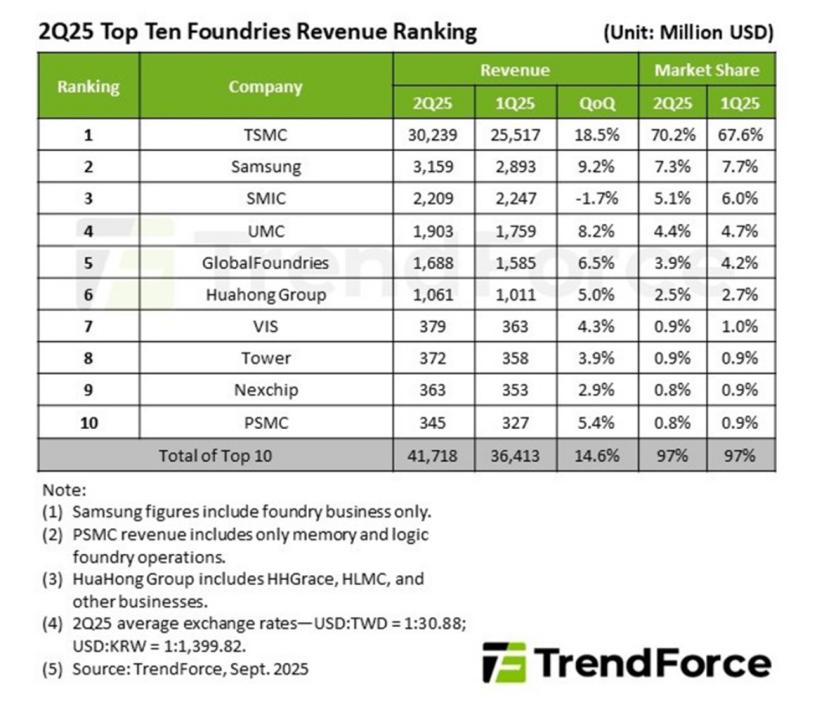
Core Insights - TSMC stands out in the Q2 2025 foundry revenue report, achieving over 40% year-on-year growth and expanding its market share to 70% [1][2] - The top ten foundries collectively generated revenues of $41.718 billion in Q2 2025, marking a 14.6% increase from the previous quarter [2] - TSMC's revenue reached $30.239 billion in Q2 2025, a significant increase from $25.517 billion in Q1 2025, while Samsung and SMIC showed more modest growth [2] Company Performance - TSMC's revenue growth of 18.5% quarter-on-quarter is the highest among the top foundries, reinforcing its leading position in the industry [2] - Samsung's revenue increased by 9.2% to $3.159 billion, while SMIC's revenue slightly declined by 1.7% to $2.209 billion [2] - TSMC's 3nm process technology has significantly contributed to its revenue, accounting for 22% of its total revenue in Q1 2025 [3] Technological Advancements - TSMC has consistently made the right technological choices, such as adopting EUV lithography for the 7nm node, which allowed it to surpass Intel [3][4] - The company utilized FinFET architecture for its 3nm process, achieving better performance and yield compared to Samsung's GAA architecture, which has struggled with yield issues [3][4] - TSMC's investment in R&D for the 3nm node exceeded $10 billion, similar to Samsung's investment [3] Industry Trends - The semiconductor industry is witnessing a shift towards collaborative development between design and manufacturing, driven by recent U.S. export restrictions on EDA tools [12] - The Chinese semiconductor industry is increasing its focus on manufacturing capabilities, recognizing the importance of this segment in the supply chain [12] - TCAD simulation software is becoming a critical tool for optimizing semiconductor processes, significantly reducing development cycles and costs [8][12] Future Outlook - The importance of TCAD is expected to grow as the industry moves towards more advanced nodes like 2nm, where new challenges such as three-dimensional heterogeneous integration will arise [14] - Companies that effectively leverage TCAD for process optimization will gain a competitive edge in the ongoing technological race [14]

数字化从生产“辅助者”升级为“决策者” 赋能传统产业实现“智”的飞跃
Yang Shi Wang· 2025-09-16 04:34
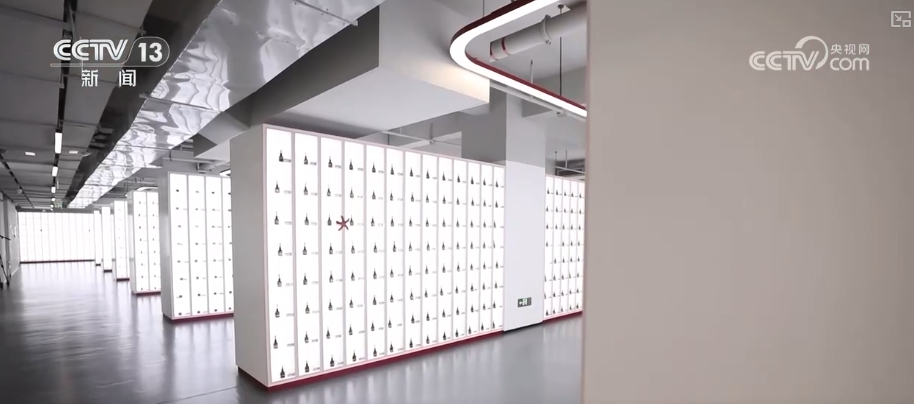
Core Insights - Advanced intelligent factories are shifting from "key process automation" to "full-process collaborative breakthroughs" to achieve qualitative leaps in efficiency, flexible production, and system collaboration [1][24] - The integration of AI, digital twins, and other technologies is transforming production from being merely assisted by technology to being driven by it, reshaping the manufacturing model [18][24] Group 1: Smart Manufacturing in Beauty Industry - A beauty factory in Changsha features a "formula library" with over 8,000 self-developed formula samples for various beauty products [1] - The production process of a mask involves automated systems that require no manual intervention, with ingredients flowing automatically into 36 emulsification pots [6][8] - The factory's production efficiency exceeds the industry average by over 30% due to its flexible production model that accommodates multiple product types on the same line [12] Group 2: AI and Automation in Manufacturing - AI is utilized to manage production lines in real-time, optimizing which lines should produce specific products based on demand [11][15] - The use of AI allows for a minimum production unit of one item, enhancing efficiency and reducing inventory backlog while meeting personalized product demands [21] - The application of digital twins enables real-time monitoring and control of production processes, achieving nearly 100% automation in some factories [24] Group 3: Broader Implications for Manufacturing Industry - Over 7,000 advanced intelligent factories have been established in China, covering various sectors and becoming a backbone for manufacturing upgrades [25] - These factories enhance order delivery capabilities, reduce operational costs, and improve competitiveness through real-time data sharing and collaborative management [25][26] - The transition from "local intelligence" to "overall intelligence" in manufacturing is crucial for future advancements in smart factories, opening avenues for new business models and innovations [26]
调研速递|瑞纳智能接受投资者调研 聚焦智慧供热与半导体业务要点
Xin Lang Cai Jing· 2025-09-15 11:11
Core Viewpoint - The company held an earnings briefing on September 15, focusing on its business layout and financial status, highlighting its strengths in low-carbon smart heating solutions and semiconductor business development [1] Group 1: Smart Heating Business - The company positions itself as a provider of "one-stop low-carbon smart heating solutions," utilizing technologies such as AI Agent and digital twin, and has obtained 24 AI technology invention patents [2] - The RUNA - STORM AI smart heating system integrates multiple advanced technologies, achieving a leading level in smart heating management platforms in China [2] - The company aims to support national carbon reduction strategies through a diversified smart heating platform centered around cloud technology, offering comprehensive lifecycle solutions [2] Group 2: Semiconductor Business - The company is making steady progress in its third-generation semiconductor SiC business, with optimized processes ensuring stable crystal growth and production capabilities [3] - The carbon silicon powder has met standards and is in mass production, with ongoing upgrades to the dual-temperature zone crystal growth furnace [3] Group 3: Contract Energy Management - Contract Energy Management (EMC) is a key operational model for the company, providing heating energy-saving services and sharing profits with heating enterprises [4] - The company indicated that specific financial details regarding EMC's current order amounts and confirmation cycles will be available in future reports [4] Group 4: Financial Status and Improvement Plans - In the first half of the year, the company reported a revenue increase of 27.2% year-on-year and a net profit growth of 59.63%, although it still faced losses after deducting non-recurring items and negative operating cash flow [5] - The company attributed these results to seasonal impacts in the heating industry, with project implementation and payments concentrated in the fourth quarter [5] Group 5: Smart Hardware and Business Expansion - The company plans to increase R&D investment in smart hardware products, such as magnetic levitation heat pump units and intelligent IoT balancing valves, while enhancing product performance through AI technology [6] - Currently, there are no plans to expand into other industrial sectors or new energy-saving and environmental protection business areas [6] Group 6: Specialized and New Technology in Smart Cities - As a "specialized and innovative small giant" enterprise recognized by the Ministry of Industry and Information Technology, the company aims to strengthen its competitive position through continuous technological innovation [7] - The company is focusing on industrial internet technology to enhance its smart city construction efforts, developing a complete product system covering core aspects of heating systems [7] Group 7: Data and AI Technology Applications - The company currently uses accumulated heating data solely to provide energy-saving and carbon reduction services to heating companies, with no plans for market commercialization [8] - In AI smart heating, the company has established a multi-dimensional AI technology application system to improve heating efficiency and energy-saving effects, with no current plans to extend AI technology to other energy management fields [8]