物理AI

Search documents
售价2万5!英伟达推出机器人“最强大脑”:AI算力飙升750%配128GB大内存,宇树已经用上了
量子位· 2025-08-25 23:05
Core Insights - NVIDIA has launched the Jetson Thor, a new robotic computing platform that integrates server-level computing power into robots, achieving an AI performance of 2070 TFLOPS, which is 7.5 times higher than the previous generation Jetson Orin, with a 3.5 times improvement in energy efficiency [1][3][4]. Performance and Specifications - Jetson Thor features a massive 128GB memory configuration, unprecedented in edge computing devices [2]. - The platform is built on the Blackwell GPU architecture, supporting multiple AI models simultaneously on edge devices [6]. - The Jetson AGX Thor developer kit is priced at $3499 in the U.S. (approximately 25,000 RMB), while the T5000 module is available for $2999 for bulk purchases [8][9]. Technical Features - The Jetson Thor includes advanced specifications such as a GPU with 2560 CUDA cores and 96 fifth-generation Tensor Cores, and a CPU with 14 Arm Neoverse V3AE cores, significantly enhancing real-time control and task management capabilities [11][13]. - It supports high bandwidth with 128GB LPDDR5X memory and 273GB/s memory bandwidth, crucial for large Transformer inference and high-concurrency video encoding [13]. - The platform can achieve a response time of 200 milliseconds for the first token and generate over 25 tokens per second, enabling real-time human-robot interaction [16]. Industry Adoption - Several Chinese companies, including Unisound Medical and Youbik, are integrating Jetson Thor into their systems, highlighting its impact on robot agility, decision-making speed, and autonomy [19]. - Boston Dynamics is incorporating Jetson Thor into its Atlas humanoid robot, allowing it to utilize computing power previously only available in servers [20]. - Agility Robotics plans to use Jetson Thor as the core computing unit for its sixth-generation Digit robot, enhancing its logistics capabilities [21]. Software and Development - Jetson Thor is optimized for various AI frameworks and models, supporting NVIDIA's Isaac for simulation and development, and Holoscan for sensor workflows [14]. - The platform facilitates a continuous training-simulation-deployment cycle, ensuring ongoing upgrades to robotic capabilities even after deployment [25]. Future Outlook - NVIDIA emphasizes the need for a triad of computing systems for effective physical AI and robotics: a DGX system for training, an Omniverse platform for simulation, and the Jetson Thor as the robot's brain [23].



英伟达宣布Jetson Thor已发售,宇树科技、银河通用已接入
Xin Lang Ke Ji· 2025-08-25 15:39
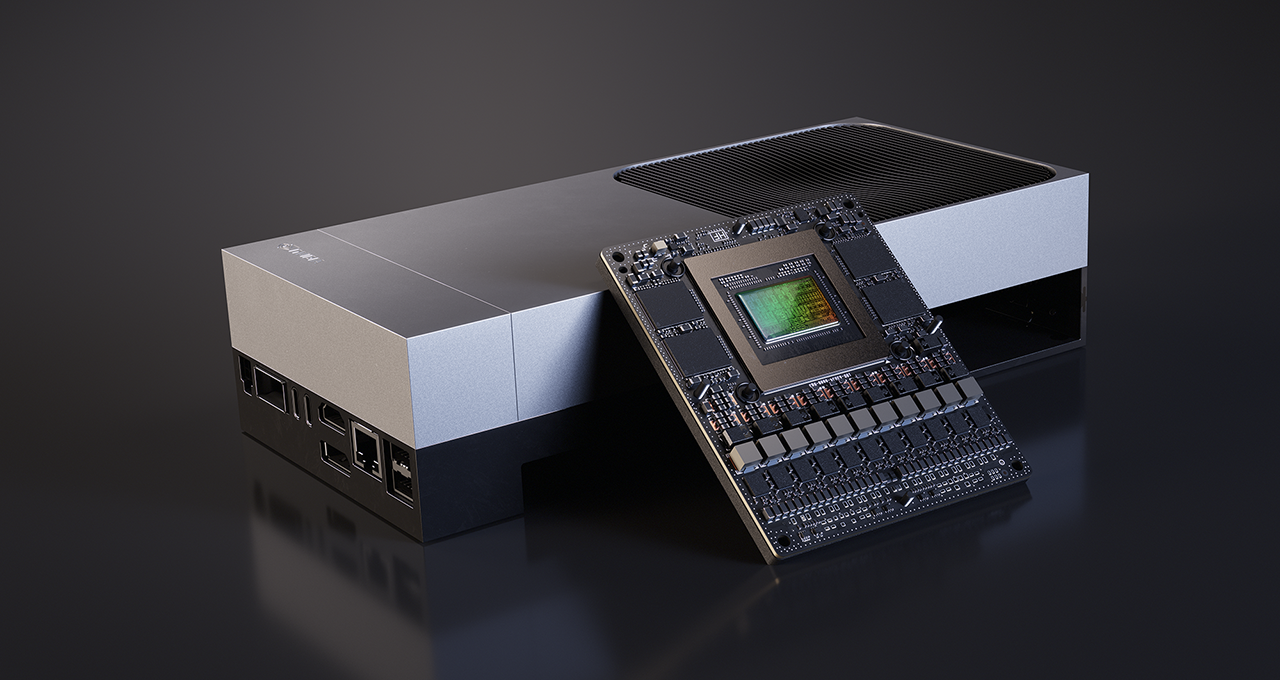
Core Insights - NVIDIA has launched the Jetson AGX Thor developer kit and production-grade module, designed to provide computational power for millions of robots across various industries including manufacturing, logistics, transportation, healthcare, agriculture, and retail [2] - The Jetson Thor is already being utilized by several industry leaders such as United Imaging Healthcare, Wanji Technology, UBTECH, Galaxy General, Yushu Technology, Zhongqing Robotics, and Zhiyuan Robotics [2] - NVIDIA's CEO Jensen Huang emphasized that Jetson Thor is built for millions of developers globally, enabling them to create robotic systems that can interact with and even change the physical world [2] Performance and Specifications - Jetson Thor is based on NVIDIA's Blackwell GPU and features 128GB of memory, offering up to 2,070 FP4 TFLOPS of AI computing power while operating within a power range of 130 watts [2] - Compared to its predecessor, the Jetson AGX Orin, the AI computing performance of Jetson Thor has increased by 7.5 times, and its energy efficiency has improved by 3.5 times [3] - Jetson Thor can run various generative AI models, including NVIDIA Isaac GR00T N1.5 and mainstream large language and vision-language models [3]
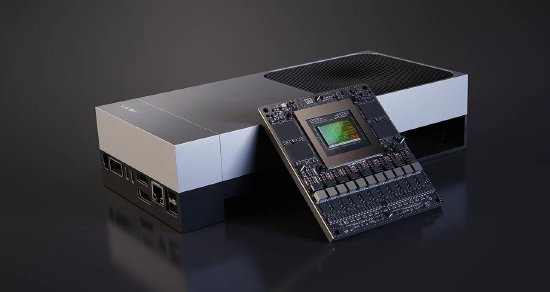
NVIDIA Blackwell 驱动的 Jetson Thor 现已推出,帮助加速通用机器人时代的发展进程
Globenewswire· 2025-08-25 15:00
Core Viewpoint - NVIDIA has launched the Jetson AGX Thor developer kit and product module, aimed at supporting millions of robots across various industries such as manufacturing, logistics, transportation, healthcare, agriculture, and retail [2][8] Group 1: Product Features - Jetson Thor is powered by NVIDIA Blackwell GPU, featuring 128GB of memory and delivering up to 2,070 FP4 teraflops of AI computing power with a maximum power consumption of 130 watts [2] - Compared to its predecessor, Jetson AGX Orin, Jetson Thor offers a 7.5 times increase in AI computing power and a 3.5 times improvement in energy efficiency, capable of running any generative AI model [3][8] - The system addresses significant challenges in robot development by enabling real-time intelligent interaction between robots and the physical world [3][8] Group 2: Industry Adoption - Early adopters of Jetson Thor include industry leaders such as AgiBot, Engine AI, Galaxy Universal, UBTECH, United Imaging, Yushun, and Vanjee [2][8] - The Jetson platform has attracted over 2 million developers and a growing ecosystem of over 150 hardware, software, and sensor partners since its launch in 2014 [4] - Jetson Thor is expected to advance the development of visual AI agents and complex robotic systems, including humanoid and surgical robots [4] Group 3: Market Availability - The NVIDIA Jetson AGX Thor developer kit is now available, starting at a price of $3,499, with the Jetson T5000 product module available through global distribution partners [5]
英伟达,重大宣布!
天天基金网· 2025-08-25 07:42
Core Insights - NVIDIA has announced the launch of the NVIDIA Spectrum-XGS Ethernet technology, aimed at connecting distributed data centers to create an AI super factory with capabilities in the hundreds of billions [3][5] - The company is also preparing to release a new product for robotics, referred to as a "new brain," scheduled for August 25, 2025 [3][9] NVIDIA Spectrum-XGS Ethernet Technology - The Spectrum-XGS Ethernet technology is part of the NVIDIA Spectrum-X Ethernet platform and addresses the limitations of existing Ethernet infrastructure, which has high latency and unpredictable performance [5][6] - This technology introduces a scale-across infrastructure, which is considered the "third pillar" of AI computing, alongside scale-up and scale-out, enabling the connection of multiple distributed data centers into a massive AI super factory with a power capacity of one billion watts [5][6] - Key features include adaptive congestion control, nearly doubling the performance of the NCCL communication library, and an end-to-end telemetry system to ensure predictable performance across geographically dispersed clusters [6][7] Robotics Strategy - NVIDIA is set to unveil a new product for robotics, which is expected to enhance the capabilities of humanoid robots [9][10] - The company has been focusing on the development of physical AI, which involves using motion skills to understand and interact with the real world, encapsulated in autonomous machines like robots and self-driving cars [12][13] - NVIDIA's CEO has indicated that the next wave of AI will be in robotics, emphasizing the potential for significant market growth in this area [14]

重磅催化!英伟达(NVDA.US)机器人“新大脑”即将揭晓 或将受益标的一览(附概念股)
Zhi Tong Cai Jing· 2025-08-25 05:06
Core Insights - Nvidia has introduced an open-source physical AI application and robot vision reasoning model called Cosmos Reason, which enables robots to reason like humans and take actions in the real world based on understanding [1] - The physical AI market is projected to reach trillions of dollars, as emphasized by Nvidia's executives at industry conferences [1] - Nvidia's founder, Jensen Huang, has stated that the next wave of AI is physical AI, following perception AI, generative AI, and agentic AI [1] Group 1: Nvidia's Robotics Strategy - Nvidia began its foray into robotics a decade ago with the launch of the Jetson TK1 robot brain module in 2014, marking a significant step in robot intelligence [2] - Over the past ten years, Nvidia has built a comprehensive robotics technology matrix through hardware iterations, software upgrades, and ecosystem development [2] Group 2: Collaborations and Market Trends - Nvidia has established partnerships with leading humanoid robot companies in China, including Yushu Technology and Galaxy General [3] - The humanoid robot industry is experiencing a vibrant development phase, with emerging players like DeepSeek driving the advancement of general-purpose robot models [5] - Analysts suggest that the humanoid robot industry is on the verge of large-scale commercialization, with significant advancements in intelligent decision-making and motion collaboration [5] Group 3: Investment Opportunities - Companies like UBTECH Robotics have raised substantial capital, with a recent placement raising 2.41 billion HKD, marking the largest placement in the humanoid robot sector [6] - Horizon Robotics is projected to achieve a compound annual growth rate of 57.5% from 2025 to 2027, with a target price of 7.45 HKD [6] - Portai Robotics has signed a groundbreaking order for 10,000 humanoid robots, setting a new industry standard for large-scale commercialization [7] - SUTENG Juchuang has showcased its new Active Camera platform at the World Robot Conference, highlighting its leadership in the global lidar market [8] - Tsugami Machine Tool China is expanding its production lines and actively entering the humanoid robot sector, with significant growth potential in high-end machine tools driven by the demand for humanoid robots [8]

英伟达,重大宣布!
证券时报· 2025-08-25 03:57
Core Viewpoint - NVIDIA has announced the launch of the Spectrum-XGS Ethernet technology, aimed at connecting distributed data centers to create an AI super factory with a computing capacity of hundreds of billions [1][3][4] Group 1: Spectrum-XGS Ethernet Technology - The Spectrum-XGS Ethernet technology is part of the NVIDIA Spectrum-X Ethernet platform and addresses the limitations of existing Ethernet infrastructure, which has high latency and unpredictable performance [3] - This technology introduces a "scale-across" infrastructure, which is considered the third pillar of AI computing, alongside vertical and horizontal scaling, enabling the integration of multiple distributed data centers into a massive AI super factory [3][4] - Key features of Spectrum-XGS Ethernet include adaptive congestion control, improved latency management, and an end-to-end telemetry system to ensure predictable performance across geographically dispersed clusters [3][4] Group 2: Upcoming Robotics Product - NVIDIA's robotics account teased a new product, referred to as a "new brain" for robots, set to be unveiled on August 25, 2025 [5][6] - The teaser included a video showing a humanoid robot interacting with a gift box, suggesting that the new brain will be compatible with various humanoid robot models [6][7] - NVIDIA has been deepening its strategic focus on robotics, with CEO Jensen Huang emphasizing that the next wave of AI will be in the form of physical AI, which involves robots that can understand and interact with the physical world [8][9]
英伟达今日公布人形机器人“新大脑”
Di Yi Cai Jing· 2025-08-25 03:10
Core Viewpoint - Nvidia is set to unveil a new humanoid robot featuring advanced AI capabilities, referred to as the "new brain" for robots, indicating a significant advancement in physical AI technology [3][6]. Group 1: Product Launch and Features - Nvidia's upcoming humanoid robot is being promoted through a social media campaign, including a video featuring the robot reading a card from CEO Jensen Huang [3][4]. - The new brain technology is designed to be compatible with various humanoid robot models, suggesting a versatile application across different platforms [6]. Group 2: Physical AI Development - Nvidia is accelerating its deployment in the physical AI sector, which is seen as the next wave following generative and agent AI technologies [6]. - The company emphasizes that physical AI relies on neural graphics, synthetic data generation, physical modeling, reinforcement learning, and AI reasoning technologies, which are crucial for modern robotics and autonomous vehicles [6]. Group 3: Market Position and Ecosystem - Nvidia is actively seeking more applications for its GPUs in industrial and robotic fields, where physical AI is increasingly relevant [6]. - The company has established a strong ecosystem for humanoid robots, with many manufacturers opting for Nvidia's solutions due to their comprehensive support, which reduces development time [6]. Group 4: Recent Product Introductions - In January, Nvidia introduced the foundational world model Cosmos at CES, aimed at generating synthetic scenarios for autonomous driving and supporting physical AI system development [7]. - At SIGGRAPH, Nvidia launched an open-source 7 billion parameter visual language model (VLM) called Cosmos Reason, designed to help robots and visual AI agents understand and interact with the physical world [7]. - Nvidia also announced new hardware solutions, including servers equipped with RTX PRO 6000 Blackwell GPUs, targeting enterprise workloads in agent AI, industrial applications, and physical AI [7].

英伟达今日公布人形机器人“新大脑”
第一财经· 2025-08-25 03:07
Core Viewpoint - Nvidia is set to unveil a new humanoid robot "black technology," which is a significant advancement in the field of robotics, particularly focusing on a new brain for robots [3][5]. Group 1: Product Launch and Features - The upcoming product is described as a "new brain" for robots, indicating a focus on enhancing robotic intelligence and capabilities [5]. - A promotional video showcased a humanoid robot interacting with a gift box, suggesting that the new brain is compatible with various humanoid robot models [7]. - Nvidia's CEO Jensen Huang emphasized that the next wave of innovation will be in physical AI, which relies on advanced technologies such as neural graphics and reinforcement learning [8]. Group 2: Market Position and Applications - Nvidia is accelerating its deployment of physical AI, particularly in industrial and robotics sectors, which are closely related to the new product [8]. - The company has been actively seeking more applications for its GPUs, with a notable presence in the robotics field through its Jetson Thor GPU onboard computer [8]. - Market research indicates that while many chips meet performance requirements, there are limited solutions for humanoid robots, with Nvidia's offerings being favored due to their comprehensive ecosystem [8]. Group 3: Recent Developments and Innovations - Nvidia has introduced several products related to physical AI, including the Cosmos model for generating synthetic environments and the open-source 70 billion parameter visual language model, Cosmos Reason [9]. - The company is also launching new server versions equipped with RTX PRO GPUs for enterprise workloads related to AI and physical applications [9]. - Upcoming hardware releases include RTX PRO 4000 and RTX PRO 2000 GPUs, aimed at engineering, AI, and 3D visualization applications [9].

英伟达,重大宣布!
券商中国· 2025-08-25 01:32
Core Insights - NVIDIA has announced the launch of the Spectrum-XGS Ethernet technology, aimed at connecting distributed data centers into a massive AI super factory with a computing capacity in the hundreds of billions [2][4][5] - The company is also teasing a new product for robotics, referred to as a "new brain," set to be unveiled on August 25, 2025, indicating a strategic focus on advancing robotics technology [2][7][8] Summary by Sections Spectrum-XGS Ethernet Technology - NVIDIA Spectrum-XGS Ethernet is introduced as part of the NVIDIA Spectrum-X Ethernet platform, designed to overcome limitations of existing Ethernet infrastructure, which suffers from high latency and unpredictable performance [4] - The technology enables "scale-across" capabilities, allowing for the integration of multiple distributed data centers into a single AI super factory with a power capacity of one billion watts [4][5] - Key features include adaptive congestion control, improved latency management, and an end-to-end telemetry system to ensure predictable performance across geographically dispersed clusters [4] Robotics Development - NVIDIA is preparing to launch a new robotics product, which is being marketed as a "new brain" for robots, with a promotional campaign highlighting its capabilities [7][8] - The company has been actively expanding its strategy in the robotics sector, with CEO Jensen Huang emphasizing the transition to "Physical AI," which involves robots that can understand and interact with the physical world [8] - Huang predicts significant advancements in robotics technology over the next two to three years, with humanoid robots expected to become as common as cars [8]

早报 | 警方通报河北一女子疑家暴去世;美国政府成英特尔最大股东;中国中铁回应尖扎黄河特大桥事故;多地快递费涨价
虎嗅APP· 2025-08-25 00:16
Group 1 - The U.S. Vice President stated that new sanctions against Russia to pressure it to end the Ukraine conflict are "not impossible" and that the U.S. will continue to support Ukraine without deploying ground troops [2] - Russian Foreign Minister Lavrov indicated that President Putin is willing to meet with President Zelensky, but only if the meeting is expected to yield results, citing legal legitimacy issues regarding Zelensky's position [3] - Canada is considering sending ground troops to Ukraine, with a new $500 million aid package focused on drone production as a key outcome of discussions between Canadian Prime Minister and Ukrainian President [9] Group 2 - The U.S. government has become the largest shareholder of Intel by investing $8.9 billion to acquire 9.9% of the company's shares, which is expected to strengthen the U.S. position in the semiconductor industry [14][15] - The recent increase in express delivery fees in multiple regions, particularly in Guangdong and Zhejiang, is attributed to the need to address "involution" in the industry, with costs expected to rise for e-commerce businesses [12][13] Group 3 - China Evergrande announced that it will lose its listing status on August 25 due to failure to meet the requirements set by the stock exchange, with the last trading day being August 22 [27] - Nvidia is set to unveil a new humanoid robot "brain" and has partnered with several Chinese humanoid robot companies, indicating a significant advancement in robotics technology [28][30][36]