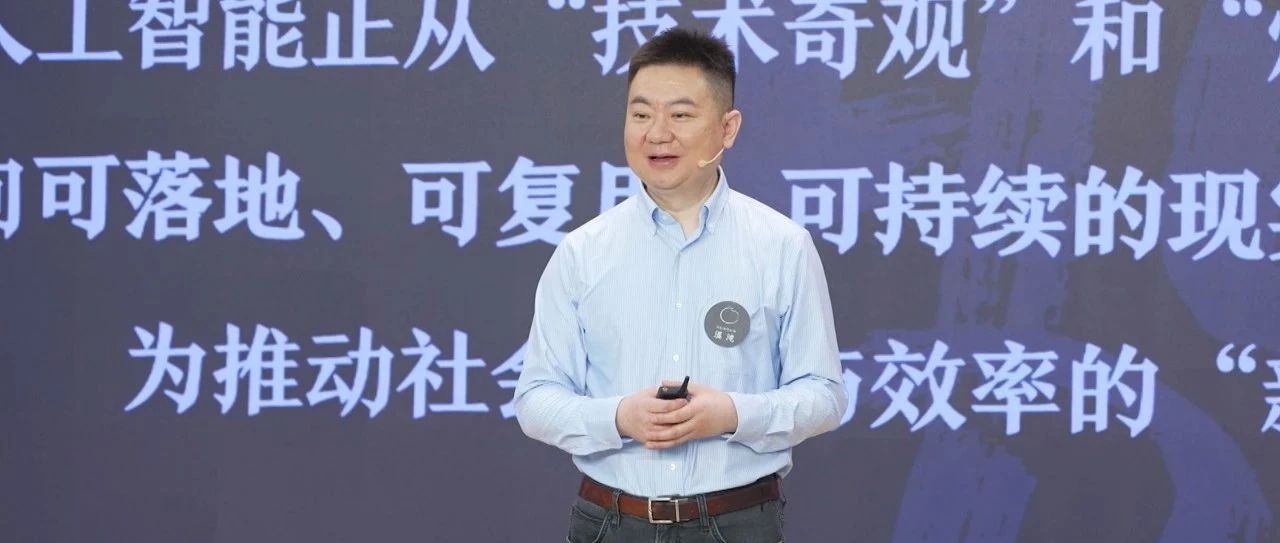
人机共生

Search documents
2025外滩大会在上海开幕
Ren Min Ri Bao· 2025-09-10 22:13
Group 1 - The 2025 Bund Conference, themed "Reshaping Innovative Growth," opened in Shanghai on September 10, attracting nearly 20,000 young tech talents globally to participate in various sci-tech activities [1] - The conference collaborated with four domestic robot exhibition groups to create a "Robot Town," showcasing the technological development landscape of human-machine coexistence with 40 intelligent enterprises [1]

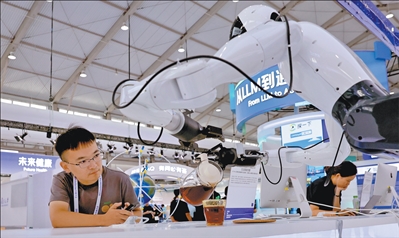
2025外滩大会探营:近200家企业打造超万平科技展览
Yang Guang Wang· 2025-09-10 07:41
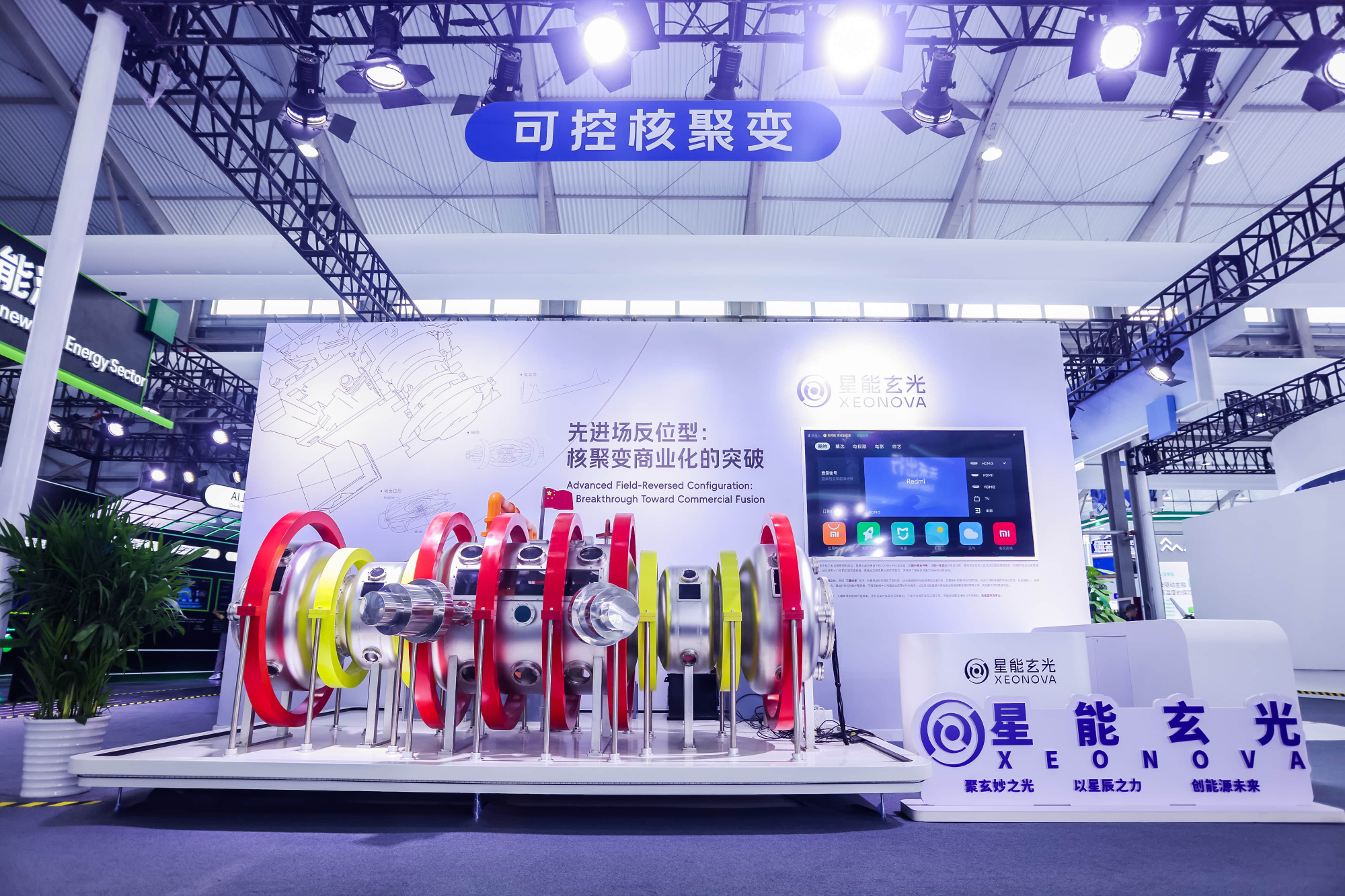
Group 1 - The "2025 Inclusion·Bund Conference" is being held from September 10-13 in Shanghai, featuring a significantly upgraded technology exhibition with record scale, number of participating companies, and new product launches [1][2] - The technology exhibition covers 10,000 square meters and includes nearly 200 participating companies, showcasing over 30 new technology products across various sectors such as AI in health, transportation, finance, and agriculture [2][8] - The event features a "Robot Town" with 40 renowned companies in embodied intelligence, highlighting advancements in human-robot collaboration and showcasing robots capable of performing complex tasks [2][11] Group 2 - A notable exhibit is the controllable nuclear fusion model developed by Hefei Xingneng Xuanguang Technology, which promises clean and efficient energy solutions for various industries [3][10] - Ant Group's Lingbo Technology debuted the R1 robot, a multi-modal perception and interaction robot capable of cooking autonomously, demonstrating advancements in robotics and AI applications [5][7] - The AI Health Steward AQ introduced features for skin disease detection and personalized health advice, showcasing the integration of AI in healthcare [7][10] Group 3 - The event also includes demonstrations of AI applications in agriculture, such as Fudan University's weather forecasting model and XAG's intelligent farming equipment, which enhance productivity and reduce costs for farmers [10][11] - Financial technology innovations were presented, including Ant Group's new enterprise-level financial intelligence platform that leverages AI and blockchain for credit risk assessment [10] - The overarching theme of the conference emphasizes the concept of human-machine symbiosis, highlighting the collaborative potential of technology in various sectors [11][12]
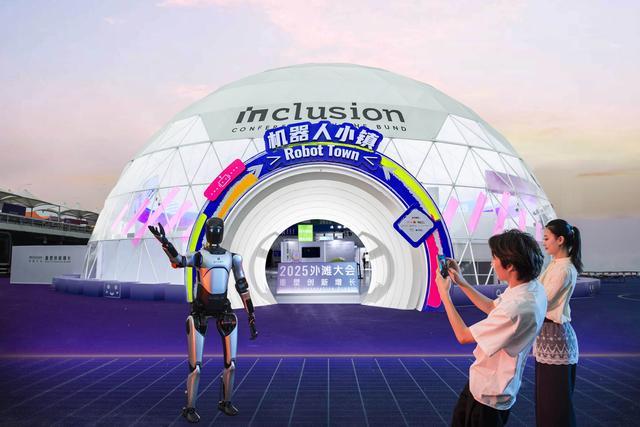
2025外滩大会探营:联合四大机器人产业园打造“机器人小镇”
Xin Lang Cai Jing· 2025-09-10 06:29
Group 1: Event Overview - The "2025 Inclusion·Bund Conference" took place from September 10-13 in Shanghai, attracting significant global attention as a major technology event with 52,000 attendees last year [1] - The conference featured a technology exhibition that was highly anticipated by both the public and industry enthusiasts, showcasing cutting-edge technologies and interactive displays [1] Group 2: Exhibition Highlights - This year's technology exhibition was significantly upgraded, covering 10,000 square meters with participation from nearly 200 companies and over 30 new technology products [3] - The exhibition included various thematic sections such as "Exploring Intelligent Limits," "Deepening Industrial Practices," and "Global Innovation Collaboration," featuring advancements in AI, health, finance, and robotics [3] Group 3: Robotics and AI Innovations - The event showcased a range of robotics innovations, including a bionic robot from Songyan Power that won multiple awards at the World Humanoid Robot Games, capable of interacting with humans through voice and gestures [5] - The "Robot Town" featured 40 renowned companies in embodied intelligence, demonstrating the collaborative future of human-robot interaction [3][5] Group 4: AI Applications in Healthcare - The AQ health manager introduced an "AI skin detection" feature that provides personalized health advice based on skin conditions [9] - Advanced AI diagnostic tools were presented, such as the "Damo Academy" system that can screen for multiple cancers and manage chronic diseases through CT scans [14] Group 5: Agricultural and Financial Technology - The Fudan University Fuxi meteorological model offers precise weather forecasts to support agricultural production, while XAG's smart farming solutions reduce labor dependency and costs [15] - Ant Group unveiled a new enterprise-level financial intelligence platform that leverages AI and blockchain for credit risk assessment and investment optimization [15] Group 6: Human-Robot Interaction - The conference emphasized the theme of human-robot symbiosis, showcasing technologies that enhance rehabilitation and elderly care, such as the Fourier intelligent rehabilitation port and the Fudan Guanghua rehabilitation robot [17][18] - Interactive experiences at the technology market included engaging with humanoid robots and witnessing performances that highlight multi-modal perception technology [18][20]

机器人奏响外滩大会主题曲,灵心巧手联创“骄傲”喊话:我们做出来了,老外没有
Xin Lang Ke Ji· 2025-09-10 06:08
Group 1 - The "2025 Inclusion·Bund Conference" is being held from September 10-13 in Shanghai, featuring a technology exhibition where robots performed AI music [1] - The company Lingxin Qiaoshou aims to demonstrate the dexterity of their robotic hands, emphasizing their affordability and durability compared to foreign counterparts [1] - The cost of their robotic hands is significantly lower, priced at approximately 50,000 yuan, compared to 1.1 million to 2.6 million yuan for similar foreign products [1] Group 2 - The company has over 200 employees and sells approximately 1,000 units of their products each month [2] - The market share of Lingxin Qiaoshou's products exceeds 80% in China and nearly 50% globally [2]
AI来了,岗位会消失吗?听听4位实战家怎么说
Hu Xiu· 2025-09-03 06:06
Core Insights - The rapid integration of AI into business operations has transformed efficiency, enhancing processes from recruitment to training and communication [1][2][3] - However, this shift has introduced new challenges, including increased friction in collaboration, overlapping employee responsibilities, and the need to rebuild trust and culture within organizations [2][3] Group 1: AI Implementation and Trends - AI tools are being adopted across various business functions, leading to faster recruitment and reduced training costs [1] - The emergence of "super individuals" is noted, where employees become multi-skilled due to AI, with those proficient in AI tools earning an average of 80,000 more annually compared to those who are not [9][10] - AI is causing a shift in job markets, with some roles declining while new opportunities arise in sectors like low-altitude economy and smart driving [10] Group 2: Organizational Changes and Challenges - The discussion on organizational restructuring, collaboration, and talent value is central to current management practices in Chinese enterprises [3][4] - AI's impact on organizational structure is evident, with smaller teams achieving outputs previously requiring larger teams, showcasing AI's potential to enhance organizational efficiency [10] - The need for a cultural shift towards "human-machine coexistence" is emphasized, with leadership and organizational culture being critical for successful AI integration [24][26] Group 3: Practical Applications and Case Studies - Various companies shared their experiences with AI, highlighting its role in improving operational efficiency and decision-making processes [4][11] - Specific examples include AI's ability to streamline sales follow-ups and enhance meeting management, significantly reducing manual workloads [18][19] - The importance of developing AI capabilities within organizations is stressed, with a focus on training employees to effectively utilize AI tools [30][31] Group 4: Future Outlook and Recommendations - The future of work will require individuals to adapt to AI, with a call for early exposure to AI tools for students and new graduates [30] - Companies are encouraged to focus on areas where AI can deliver quick returns on investment, such as recruitment and customer service [30] - The overarching message is that AI should not be viewed merely as a tool for efficiency but as a foundational element for future organizational structures [31][32]
荣泰健康携手傲鲨智能 共启“人机共生,智启未来”新程
Zhong Zheng Wang· 2025-08-27 13:53
Core Insights - Rongtai Health and Aosha Intelligent have signed a strategic cooperation agreement, marking a new chapter in the integration of health technology and exoskeleton technology [1] - The partnership aims to explore the potential of "human-machine symbiosis" and accelerate the application of cutting-edge intelligent technology in the health industry [1] Company Overview - Rongtai Health has been deeply involved in the health industry for 28 years, with products sold in over 80 countries and regions, and has sold more than 3 million massage chairs [1] - Aosha Intelligent specializes in exoskeleton robotics, with a focus on transitioning technology from industrial applications to the consumer market [1] Future Plans - The two companies plan to establish deep cooperation in three core areas: technological health, industry applications, and technology research and development, aiming for complementary advantages and collaborative development [1] - Both companies express commitment to continue deepening their partnership to explore the infinite possibilities of "health + technology" [1]

荣泰健康与傲鲨智能达成战略合作 共启“人机共生”新征程
Zheng Quan Ri Bao Wang· 2025-08-27 07:14
Core Insights - Shanghai Rongtai Health Technology Co., Ltd. announced a strategic cooperation with Shanghai Aoshah Intelligent Technology Co., Ltd. to explore the integration of health technology and exoskeleton technology, marking a significant step in their collaboration [1][2] - Aoshah Intelligent, a leader in the consumer-grade exoskeleton field in China, aims to accelerate the penetration of exoskeleton technology into the consumer health market through this partnership [2] Company Overview - Rongtai Health has been deeply involved in the health industry for 28 years, with products sold in over 80 countries and regions, and has sold more than 3 million massage chairs [2] - Aoshah Intelligent offers a diverse product line that includes upper limb, waist, lower limb, and full-body exoskeletons, indicating a strong position in the consumer-grade market [2] Strategic Collaboration - The partnership will leverage Rongtai Health's manufacturing and market channel advantages alongside Aoshah Intelligent's technological expertise, focusing on after-sales service, production, and other collaborative dimensions [1] - Future plans include establishing deep cooperation in three core areas: technological health, industry applications, and technology research and development, aiming for complementary advantages and collaborative growth [1]
荣泰健康:与外骨骼机器人公司傲鲨智能战略合作 探索“人机共生”行业应用
Zheng Quan Shi Bao Wang· 2025-08-27 05:05
Group 1 - Rongtai Health (603579) and Aoshark Intelligence signed a strategic cooperation agreement on August 26 [1] - The collaboration aims to integrate health technology with exoskeleton technology, exploring "human-machine symbiosis" [1] - Future plans include deep cooperation in three core areas: technological health, industry applications, and technology research and development [1] Group 2 - Aoshark Intelligence is a high-tech robotics company based on an exoskeleton technology platform [1]
继注资傲鲨智能后 荣泰健康和傲鲨达成战略合作
Zheng Quan Shi Bao Wang· 2025-08-27 01:07
Core Insights - Rongtai Health has entered a strategic partnership with Shanghai Aoshark Intelligent Technology, marking a significant step in integrating health technology with exoskeleton technology [1][2] - The collaboration aims to explore the potential of "human-machine symbiosis" and promote the popularization of exoskeleton technology in public health scenarios [1] - Rongtai Health has invested 20.6 million yuan in Aoshark Intelligent, indicating a commitment to deepening their partnership [1] Company Overview - Rongtai Health has been in the health industry for 28 years and has sold over 3 million massage chairs globally, reaching more than 80 countries and regions [1] - The company is focused on building a "big health ecosystem" through strategic collaborations [1] Aoshark Intelligent Overview - Aoshark Intelligent is a leading company in the consumer-grade exoskeleton field in China, known for its advanced technology and performance in major events like the Hangzhou Asian Games [1] - The company offers a diverse product line that includes upper limb, waist, lower limb, and full-body exoskeletons [1] Future Collaboration Plans - Rongtai Health plans to leverage its manufacturing and market channel advantages to collaborate with Aoshark Intelligent in after-sales service, production, and other areas [2] - The partnership will focus on three core areas: technological health, industry applications, and technological research and development [2]
我们在2025世界人工智能大会上,看到了7大趋势|混沌深度观察
混沌学园· 2025-08-20 12:05
Core Viewpoint - The 2025 World Artificial Intelligence Conference (WAIC) showcased significant advancements in AI, highlighting a shift from theoretical applications to practical implementations across various industries, indicating the emergence of a new era of human-machine collaboration [1][2]. Group 1: Trends in AI Development - Trend 1: Humanoid robots and embodied intelligence are transitioning from demonstrations to real-world applications, showcasing capabilities such as playing Mahjong and performing tasks in factories [5][6][11]. - Trend 2: AI agents are now integrated into workplace workflows, enhancing productivity by autonomously executing tasks across various sectors [12][13][17]. - Trend 3: AI-enabled devices like smart glasses and AI headphones are becoming prevalent in daily life, merging AI capabilities with personal devices to solve everyday problems [19][20][21]. Group 2: Innovations and Market Opportunities - Trend 4: AI foundational model technology is advancing, with a notable increase in open-source initiatives and the development of multi-modal models that understand both language and visual inputs [27][30][31]. - Trend 5: Multi-modal interaction and human-AI collaboration are evolving, with AI systems becoming more proactive and emotionally aware, creating new market opportunities in emotional computing [32][35][38]. - Trend 6: The cost of computing power is decreasing, driven by advancements in domestic chip technology, which will enable broader access to AI capabilities across various sectors [39][42][43]. Group 3: Industry Applications and Future Outlook - Trend 7: AI is empowering a diverse range of industries, including manufacturing, finance, and healthcare, with a growing number of practical applications being developed [44][45][47]. - The conference underscored the potential for AI to drive innovation and create "native innovation enterprises," similar to the transformative impact of the internet in the late 1990s [48][50].