外骨骼

Search documents
穿着“外骨骼”去遛弯
Xin Lang Cai Jing· 2026-02-27 22:33
Core Insights - The article discusses the evolution and application of exoskeleton technology, highlighting its growth from a concept in video games to real-world applications in various sectors [1][2][3] Market Overview - The global exoskeleton market is projected to grow from approximately $500 million in 2024 to $1.25 billion by 2030, with a compound annual growth rate (CAGR) exceeding 16% [1] - The most mature segment is the powered exoskeletons, initially developed for military purposes but now widely used in rescue operations and industrial applications [2] Types of Exoskeletons - Exoskeletons can be categorized into three main types: 1. **Powered Exoskeletons**: Provide additional strength through motors or hydraulics, primarily used in industrial, logistics, and military settings [2] 2. **Rehabilitation Exoskeletons**: Help individuals with mobility impairments regain movement, with notable advancements reported in recent years [2] 3. **Passive Support Exoskeletons**: Designed for everyday use, these are lightweight and cost-effective, with some products priced around a thousand yuan and weighing approximately 2 kg [3] Technological Advancements - Recent innovations in rehabilitation exoskeletons have shown significant progress, with companies like Ekso Bionics developing products that can be controlled by brain signals to assist paralyzed patients [2] - The consumer-grade exoskeletons, while less powerful than their industrial counterparts, have gained traction due to their affordability and ease of use [3] Performance and Limitations - The effectiveness of exoskeletons is largely determined by their connection to the ground; those that do not connect directly are limited in their capabilities [4] - Consumer-grade exoskeletons typically have a battery life ranging from 2 to 12 hours, raising concerns about their usability during extended activities [4]
腾讯研究院:塑造自己的下一个版本2026前沿科技趋势
Sou Hu Cai Jing· 2026-02-27 07:41
Core Insights - The report by Tencent Research Institute outlines the transformative impact of frontier technologies on human life and society by 2030, emphasizing a human-centered approach to technological advancement [1][9]. Group 1: Vitality 2030 - The shift from merely living longer to living better signifies the beginning of the "third transformation" in human life, focusing on healthspan rather than lifespan [23][26]. - Extending healthy life by just one year could generate an economic value of $38 trillion globally, highlighting the profound economic implications of this transition [23][24]. - Advances in gene therapy and artificial intelligence are pivotal in this transformation, with gene therapy moving towards "life code optimization" and AI enhancing medical efficiency and understanding of human health [27][33]. Group 2: Stamina 2030 - Exoskeleton technology is set to enhance human physical capabilities across medical, industrial, and personal sectors, evolving into intelligent devices that assist in rehabilitation and improve safety [43][44]. - The eVTOL (electric Vertical Take-Off and Landing) market is projected to reach $41 billion by 2040, with significant advancements in battery technology expected to triple flight ranges [48][49]. - Underwater exploration technologies are advancing, with innovations in augmented reality and flexible underwater exoskeletons enhancing divers' capabilities and expanding deep-sea exploration [54][55]. Group 3: Brainpower 2030 - AI is evolving into a more capable "external brain," enhancing human cognitive abilities through improved reasoning, memory, and autonomous learning [62][63]. - Brain-computer interfaces are transitioning from repair to enhancement, with invasive and non-invasive technologies set to benefit thousands of patients by 2030 [68]. Group 4: Creativity 2030 - AI is expected to significantly amplify individual creativity through tools like AI glasses and intelligent agents, leading to a new era of human-machine collaboration [11][60]. - Small teams are becoming more powerful, leveraging AI to redefine productivity and innovation standards, shifting the focus from company size to creative output [60]. Group 5: Pursuit 2030 - The report emphasizes the need for self-reflection in the face of technological advancements, urging individuals to maintain their unique judgment and creativity [7]. - The development of a new societal framework based on truth, goodness, and beauty is essential to navigate the challenges posed by technology [7].


对话 Vinyl 乙烯创意创始人:为什么 Makera 与 NestWorks 能在同一年划破千万美元大关?
雷峰网· 2026-02-20 03:33
Core Insights - The desktop CNC market is experiencing rapid growth, with significant crowdfunding success for projects like Makera Z1 and NestWorks C500, both exceeding $10 million in funding [2][10][16] - The competition in the desktop CNC space is intensifying, with new brands expected to emerge by 2026, leading to a crowded market [3][32] - The Maker category is highlighted as having a higher potential for large-scale crowdfunding success compared to other consumer goods [5][71] Group 1: Market Dynamics - Historically, there have been very few crowdfunding projects exceeding $10 million globally, but China is projected to have four such projects by 2025, all from the Maker category [2] - The desktop CNC industry is characterized by a rapid influx of new players following the success of initial projects, leading to increased competition [3][32] - The success of crowdfunding projects is often linked to the ability to create a strong marketing narrative that resonates with potential users [8][26] Group 2: Project Success Factors - Successful projects like Makera and NestWorks achieved over $1 million in their first day of crowdfunding due to extensive pre-launch customer engagement and marketing strategies [24][25] - The projects benefited from a clear understanding of their target audiences, with Makera appealing to individual creators and NestWorks targeting professional engineers [13][17] - The importance of hardware delivery experience is emphasized, as successful teams have a proven track record in product delivery, which is crucial for gaining consumer trust [11][21] Group 3: Future Opportunities and Challenges - The desktop CNC market is still considered to have room for growth, but the window for new projects to capitalize on this opportunity is narrowing [44][55] - The ease of use and precision of CNC machines remain significant challenges that need to be addressed for broader market acceptance [35][21] - The competition is expected to escalate quickly, with many new brands likely to enter the market, making timing and differentiation critical for success [32][44] Group 4: Trends in Crowdfunding - The trend towards AI integration in hardware products is becoming more prevalent, with many new projects incorporating AI features to enhance functionality [62][63] - The Maker category is expected to continue dominating the crowdfunding landscape due to its potential for high-value products and consumer interest [71][70] - The focus on creating a robust ecosystem around products, rather than just the hardware itself, is seen as a key factor for long-term success [50][51]

义利天下|从中国年到世界单:义乌如何连接全球市场
Zhong Guo Xin Wen Wang· 2026-02-12 02:53
Core Viewpoint - The article highlights the significant growth of Yiwu's export market, with a focus on the increasing demand for Chinese products globally, particularly in countries involved in the Belt and Road Initiative. By 2025, Yiwu's exports are projected to exceed 800 billion yuan, marking a historic high for the region's foreign trade [1]. Group 1: Export Growth and Market Dynamics - Yiwu's exports are expected to surpass 800 billion yuan by 2025, with cross-border e-commerce import orders exceeding 10 million, both achieving record highs [1]. - In 2025, Yiwu's exported goods will encompass 5,900 categories, a 6% increase from the previous year, indicating a diversification of products beyond just low-cost items [5]. - The demand for high-tech products, such as exoskeletons and smart glasses, is rising, reflecting a shift in consumer preferences towards innovative and culturally integrated products [5]. Group 2: Changing Business Methods - Traditional business models of waiting for customers and producing based on orders are being replaced by proactive engagement, utilizing AI tools and digital trading platforms for real-time communication with overseas clients [6]. - The establishment of Yiwu (Suxi) International Hub Port and the Yiwu Global Digital Trade Center has improved logistics and digital trade channels, facilitating smoother operations [6]. Group 3: External Market Challenges - The past year has posed challenges for foreign trade, with increased tariffs and trade barriers from some countries, alongside geopolitical conflicts and a sluggish global economic recovery [8]. - The dual capability of China's foreign trade to "export and import" is crucial in this uncertain environment, supported by competitive product quality and pricing [9]. Group 4: Future Outlook - Despite pressures in traditional export markets, China's foreign trade network is expanding, reducing reliance on single markets and mitigating external risks [11]. - The ongoing efforts to enhance trade relations with ASEAN, Russia, Brazil, and others are part of a strategic approach to strengthen resilience in foreign trade [11]. - The commitment to quality and innovation remains strong among Chinese entrepreneurs, as they continue to engage in global trade, reflecting a dynamic and resilient market environment [11].
卧龙电驱:已形成全面的人形机器人核心组件解决方案组合
Zheng Quan Ri Bao Wang· 2026-01-30 14:44
Core Viewpoint - Wolong Electric Drive (600580) focuses on the commercialization of embodied intelligence in industrial scenarios, leveraging its strong R&D and manufacturing foundation in electric drive system solutions [1] Group 1: Company Developments - The company has developed a comprehensive solution portfolio for core components of humanoid robots, including joint modules, dexterous hands, and exoskeletons, which are characterized by high precision, fast response, and high energy efficiency [1] - Wolong Electric Drive has established business collaborations with leading companies such as Zhiyuan Robotics, Siasun, and Lenovo Technology [1] Group 2: Industry Applications - In the field of industrial applications for embodied intelligence, the company utilizes its advanced industrial automation capabilities and collaborates with ecosystem partners to develop domain-specific models for industrial embodied intelligence [1] - The company aims to promote the commercialization of industrial embodied intelligence robots globally, enhancing the digital and flexible capabilities of the manufacturing industry [1]

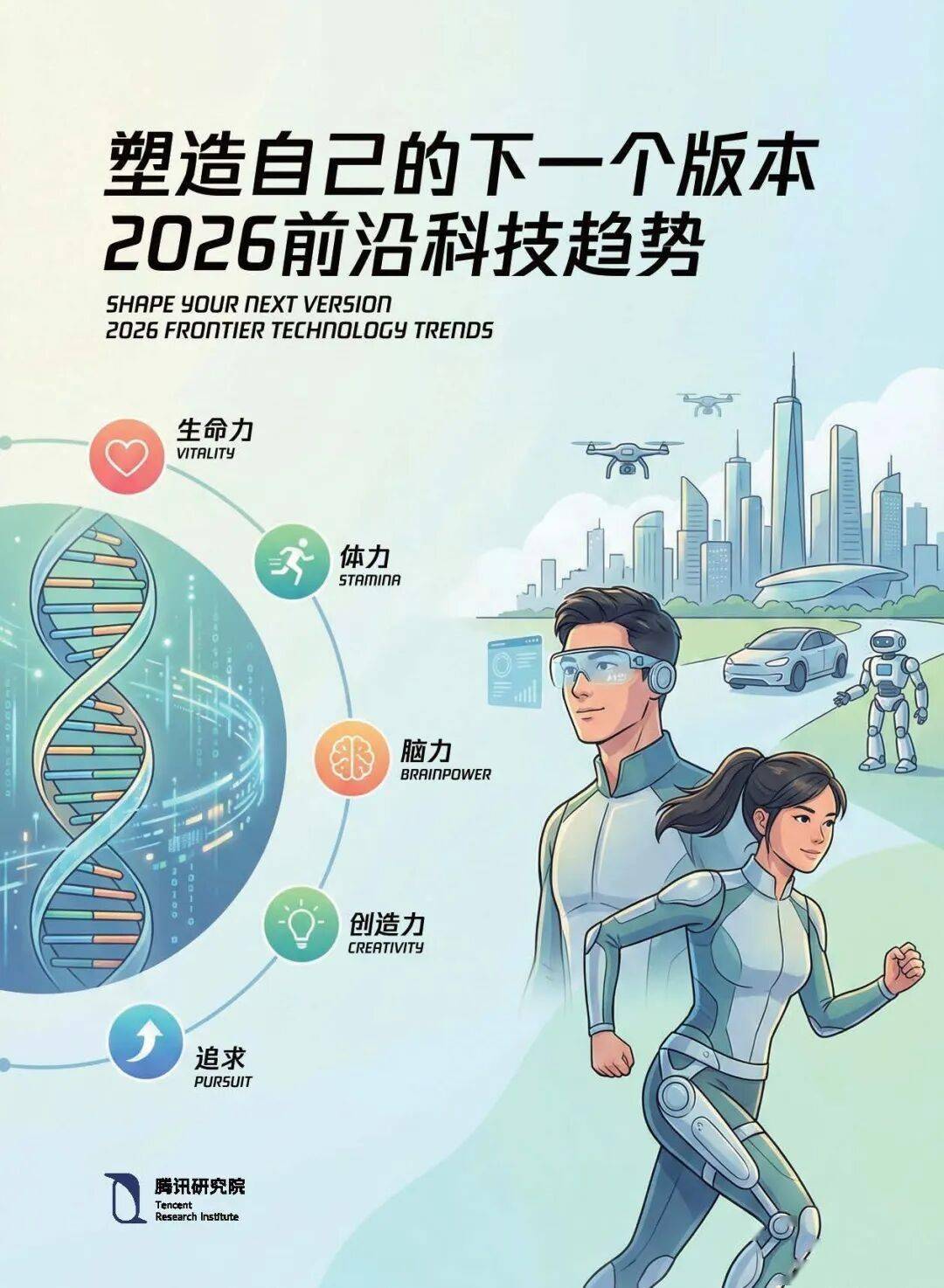
2026前沿科技趋势:塑造自己的下一个版本
腾讯研究院· 2026-01-30 08:18
Core Insights - The article emphasizes the rapid evolution and application of artificial intelligence and cutting-edge technologies across various fields, urging a human-centered approach to technological advancement [3][4][5]. Group 1: Human Life's "Third Transformation" - Extending Healthy Lifespan - Human life expectancy has doubled over the past century, with significant improvements attributed to public health, antibiotics, and vaccines [7]. - Recent research indicates a dramatic slowdown in the growth rate of life expectancy, with the average increase dropping to below 0.25 years per decade in the last 30 years [8]. - A shift is occurring from merely extending lifespan to enhancing healthspan, which is the period of life spent in good health, with potential economic implications of up to $47 trillion in costs from non-communicable diseases by 2030 [9]. Group 2: Programmable Life - Gene Therapy - Gene therapy is moving towards optimizing the "life code," with advancements in CRISPR technology and delivery systems expected to mature by 2030 [11]. - Clinical breakthroughs in preventive gene therapy, such as Verve Therapeutics' treatment for cardiovascular disease, show promising results with significant reductions in LDL-C levels [12]. - The success of personalized CRISPR therapy in curing a fatal metabolic disease in a patient highlights the potential of gene therapy [14]. Group 3: Health Planning - AI Enhancing Medical Efficiency - AI is set to revolutionize drug development, disease screening, and personal health management by 2030, significantly reducing the time and cost associated with traditional drug development [21]. - AI combined with multi-omics technology is facilitating faster and more accurate disease screening, with notable advancements in cancer detection [23]. - Aging clock technology is evolving, enabling precise monitoring of aging processes and identifying underlying causes of aging [25]. Group 4: Enhancing Physical Capability - Exoskeleton Technology - Exoskeleton technology is advancing to enhance human physical capabilities, with applications in medical rehabilitation, industrial safety, and personal use [30]. - In the medical field, exoskeletons are evolving from mere mobility aids to intelligent devices that promote neurological recovery [31]. - Consumer-grade exoskeletons are expected to become popular for outdoor activities, significantly improving mobility for users [32]. Group 5: Flying Technology - eVTOL Development - The eVTOL market is projected to reach $41 billion in China by 2040, with significant advancements in battery technology expected to triple flight ranges [37]. - Noise reduction technologies are being explored to enhance social acceptance of eVTOLs, with strategies like "noise corridors" being implemented [38]. - The evolution of drones into aerial robots is enhancing capabilities in both consumer and industrial applications, with significant advancements in autonomous operations [40]. Group 6: Brain-Machine Interfaces - A New Era of Interaction - Brain-machine interfaces (BCIs) are transitioning from experimental therapies to standard treatment options for conditions like paralysis, with companies like Neuralink leading the way [61]. - Non-invasive BCIs are emerging, allowing for enhanced human-computer interaction, with applications in consumer technology [63]. - The integration of BCIs with AI could redefine human-AI collaboration, raising ethical considerations regarding privacy and data protection [64].

IATA《2025航空货运设施未来愿景:以技术与创新重塑全球物流新格局》解读
Sou Hu Cai Jing· 2026-01-16 12:06
Core Insights - The global air cargo industry is at a historic turning point driven by increasing trade volumes and evolving customer demands, particularly in a volatile and uncertain macroeconomic environment [4] - The International Air Transport Association (IATA) emphasizes the need for air cargo facilities to evolve towards safety, security, sustainability, automation, connectivity, and intelligence to meet modern logistics demands [4] Group 1: Current Challenges in Air Cargo - Insufficient infrastructure both inside and outside airports is a major issue, necessitating a systematic restructuring of air cargo facilities to enhance operational efficiency and capacity [5][6] - Labor shortages and sustainability pressures are critical challenges, with approximately 57% of air cargo operators citing workforce shortages as a significant barrier to smooth operations [7][8] - The air cargo sector suffers from a significant "innovation gap," with only 27.5% of cargo declarations being accurate, leading to wasted capacity on flights [9] Group 2: Technological Advancements and Recommendations - IATA has identified six key technology areas that can reshape air cargo operations, including robotics, sustainable operations, digital processes, and wearable devices [10][11] - The report predicts that automated guided vehicles will become mainstream within five years, significantly improving efficiency in cargo transport [10] - The adoption of APIs for real-time data exchange is expected to have a very high operational impact within five years, streamlining various processes [12][13] Group 3: Future Vision and Strategic Directions - The future vision for air cargo facilities involves a comprehensive transformation that integrates operational logic, infrastructure, and talent systems, moving towards interconnected, data-driven, and environmentally sustainable ecosystems [14] - Stakeholders must address challenges such as high initial investments and complex system integration while adopting industry standards like IATA's ONE Record for data sharing [14]

体育产业投融资回暖:户外热潮持续,新场景、新人群引关注
2 1 Shi Ji Jing Ji Bao Dao· 2026-01-16 10:46
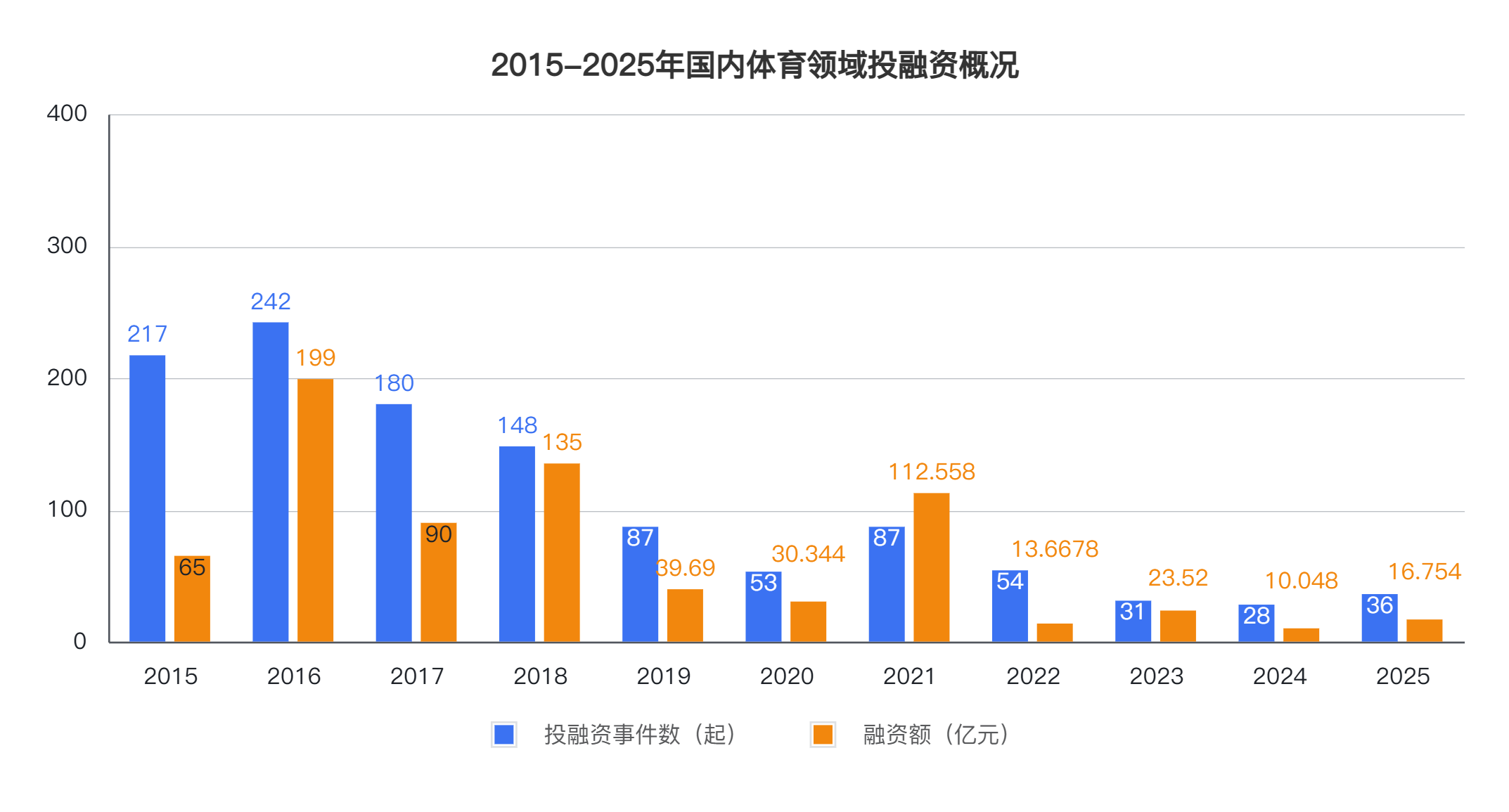
Group 1 - The core viewpoint of the article indicates that the sports industry investment and financing is showing signs of recovery in 2025, with a total of 36 financing events amounting to approximately 1.6754 billion yuan, compared to 28 events and 1.0048 billion yuan in 2024 [1][4] - Despite the increase in investment activities, the number of financing events in 2025 remains at a historical low compared to the past decade, with a peak of 242 events and 19.9 billion yuan in 2016 [4] - The release of new government policies, such as the "31 Document," is expected to create new opportunities for industry players [4] Group 2 - The outdoor sector continues to experience a financing boom, with 10 financing events in 2025, accounting for nearly 30% of total events and raising approximately 0.8198 billion yuan, nearly 50% of the total financing [5][6] - Notable projects include the funding rounds for the consumer-grade exoskeleton developer, Jike Technology, and the strategic financing of 300 million yuan for outdoor brand Berghaus, backed by Tencent [6][7] Group 3 - The article highlights the emergence of new opportunities in the sports industry driven by new scenarios and demographics, emphasizing the importance of creating experiences rather than just selling products [9][10] - The trend of reusing events and establishing long-term relationships with local industries is becoming prominent, as seen in the case of the Suzhou Marathon [10] - The aging population presents a significant market opportunity, with a focus on the "initial elderly" demographic, which has different consumption behaviors compared to traditional perceptions of older consumers [11]
头部公司估值几十亿的外骨骼,画大饼还是真愿景?
3 6 Ke· 2026-01-13 02:28
Core Insights - The exoskeleton industry, previously underestimated, is now attracting significant investment interest, with valuations reaching billions despite historical challenges in consumer adoption [1][2] - The narrative surrounding exoskeletons has shifted towards a vision of "technology empowering life," appealing to investors looking for innovative and futuristic products [2] - However, actual consumer willingness to purchase exoskeletons remains uncertain, as decision-making involves multiple considerations beyond initial interest [3] Investment Trends - The exoskeleton sector has evolved through several phases: a technology emergence phase over a decade ago, a rehabilitation-focused exploration phase five years ago, and a recent surge in consumer outdoor products [4] - Notably, some early-stage companies focused on medical rehabilitation are now diversifying into consumer markets, aiming for a dual strategy of "medical + consumer" [4] - By 2025, the consumer exoskeleton market is expected to see significant growth in both financing and product validation, with successful crowdfunding campaigns indicating strong consumer interest [5] Market Sentiment - Despite some enthusiasm, capital investment in exoskeletons remains cautious compared to other tech sectors, with investors noting a lack of numerous viable targets [6] - Challenges such as product weight, battery life, comfort, and high prices hinder broader market acceptance, with current products not yet achieving "must-have" status [6][7] - The most promising applications for consumer exoskeletons currently lie in specific scenarios like hiking in structured environments, but broader daily use cases remain unclear [6] Consumer Demand Challenges - The primary challenge for consumer exoskeletons is their failure to meet high-frequency daily needs, with prices typically exceeding 5000 yuan, making them a significant investment for infrequent use [7] - User experience issues, particularly discomfort and the "alien feeling" of wearing exoskeletons, further complicate consumer adoption [8] - Technical limitations in drive systems and adaptability to user movements present ongoing hurdles, necessitating advancements in technology for improved performance [8] Future Outlook - The long-term success of exoskeletons hinges on breakthroughs in core technologies related to drive systems, energy sources, and materials, aiming for a lightweight and intuitive user experience [9] - Identifying high-frequency, universal use cases is crucial for transitioning exoskeletons from niche products to everyday essentials [9] - The market still lacks mature consumer exoskeleton products that balance convenience, comfort, and reasonable pricing, indicating a potential gap for future innovation [9]

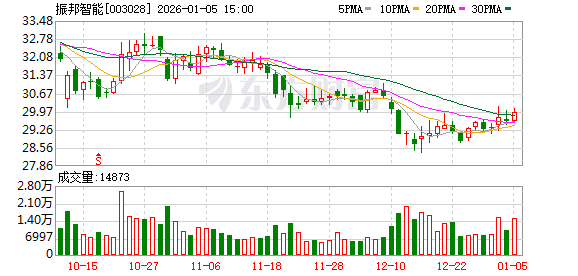
振邦智能:公司在机器人零部件方面已布局智能控制器、电池管理系统和电池包、外骨骼等核心零部件
Mei Ri Jing Ji Xin Wen· 2026-01-05 11:55
Group 1 - The company has laid out its product offerings in the field of robotic components, including smart controllers, battery management systems, battery packs, and exoskeletons [2] - The mentioned business segments are still in the early stages, with limited revenue and production capacity, which has a minimal impact on the company's overall performance [2]