抗衰老

Search documents
“降糖神药”迎来最新研究进展,二甲双胍引爆长寿革命
Xuan Gu Bao· 2025-06-05 15:17
Group 1 - A recent study from the University of California, San Diego, found that women with type 2 diabetes taking metformin have a 30% higher chance of living to 90 years or older compared to those using sulfonylureas [1] - Metformin is evolving from a traditional diabetes medication to a potential anti-aging treatment, with increasing evidence suggesting its role in longevity [1] - The study establishes a link between metformin monotherapy and the likelihood of living to 90 years or older, filling a research gap in this area [1] Group 2 - Key companies involved in metformin production include Koyuan Pharmaceutical, which produces metformin hydrochloride raw materials and tablets for type 2 diabetes treatment [2] - Another company, Teva Pharmaceutical, produces metformin sustained-release tablets that reduce liver glucose production and improve insulin sensitivity [2]

科伦药业董事长赤膊代言麦角硫因背后:产品疗效、资质争议不断 业绩高压下急需新故事?
Xin Lang Zheng Quan· 2025-06-05 14:07
Core Viewpoint - The controversy surrounding Kelun Pharmaceutical and its chairman Liu Gexin has intensified due to allegations regarding the efficacy and regulatory status of its anti-aging product, Ergothioneine, which has not received official certification as a health product in China [1][2][4]. Financial Performance - In Q1 2025, Kelun Pharmaceutical reported a significant revenue decline of 29% year-on-year, totaling 4.39 billion yuan, while net profit plummeted by 43% to 584 million yuan, marking the worst quarterly performance in five years [5][6]. - The company's traditional infusion business revenue fell below 9 billion yuan, a record low, contributing to the overall financial downturn [5][6]. - The cash flow from operating activities also dropped over 60%, reaching 450 million yuan, indicating severe operational challenges [5]. Product Controversy - Ergothioneine, marketed as an anti-aging supplement, lacks regulatory approval and has not been substantiated by scientific evidence for its claimed benefits, raising compliance and ethical concerns [2][3][4]. - The product is being sold through cross-border e-commerce channels, exploiting regulatory differences between domestic and international markets [3][4]. Business Strategy and Challenges - The chairman has positioned the anti-aging sector as the "fourth entrepreneurial venture" for the company, following its traditional infusion and antibiotic businesses, aiming to create an ecosystem around anti-aging products [6][7]. - The subsidiary, Chuaning Biological, which was expected to drive growth through synthetic biology, has seen its revenue contribution remain minimal, indicating slow progress in its transformation strategy [7]. Market Environment - The pharmaceutical industry is facing significant challenges due to stringent government policies, such as the "limit on antibiotics" directive, which has adversely affected the infusion market and overall demand [6][7]. - Despite the decline in traditional business, non-infusion segments (generic and innovative drugs) showed some growth, but this was insufficient to offset the losses from the core infusion business [6].

开拓全球健康长寿新视角 海外专家点赞八子补肾抗衰老研究
Jing Ji Guan Cha Wang· 2025-05-30 07:22
Group 1 - The fifth "Asian Healthcare Summit" held in Hong Kong attracted over 2,800 participants from more than 40 countries and regions, focusing on future development and cooperation opportunities in the global healthcare sector [1] - A key topic discussed was scientific anti-aging and achieving healthy aging in the context of the global "silver wave," with significant interest in the research on Ba Zi Bu Shen capsules based on traditional Chinese medicine [1][2] - The population aged 60 and above in China exceeded 300 million by the end of last year, accounting for 22% of the total population, highlighting the increasing health issues associated with aging [2] Group 2 - The theory of Qi Luo and the essence-spirit theory posits that the core of aging is "kidney essence deficiency," and "tonifying kidney essence" is crucial for anti-aging [2] - Ba Zi Bu Shen capsules have been shown to intervene in 10 biological markers of aging, including maintaining stem cell vitality and reducing telomere loss, aligning with recent findings in Western medicine [2] - A clinical study published in the journal "Phytomedicine" demonstrated that Ba Zi Bu Shen capsules significantly improved aging symptoms in participants aged 30 to 78 over a 12-week intervention, with a 76.7% increase in telomerase activity compared to the placebo group [3][4] Group 3 - The research on Ba Zi Bu Shen capsules shows significant systemic intervention effects on nine major bodily systems, including nervous, circulatory, and immune systems [4] - The Chinese government is actively supporting research in this area, with a key project focusing on the evaluation and integration mechanisms of traditional Chinese medicine for anti-aging [4] - The summit established a "Silver Health Chapter" to address the challenges of population aging, emphasizing the role of scientific research in traditional Chinese medicine as a bridge between Eastern and Western approaches to aging [5]
汤臣倍健(300146) - 2025年5月20日投资者关系活动记录表
2025-05-20 13:04
Group 1: Business Development Strategies - The company plans to enhance offline business through a distributor awakening program, multiple new product launches, and a diverse product SKU range [2] - For international expansion, the focus is on Southeast Asia, particularly the Indian market, leveraging the lifespace brand with localized operations [2] - The production model primarily relies on in-house manufacturing, with some new formulations using contract manufacturing [3] Group 2: Product Innovation and Launch - New product development involves market research, investment modeling, and management approval, with ongoing updates across major product categories [3] - The company is exploring the introduction of ergothioneine-related products based on market demand and business growth [3] - There is a commitment to high-quality product innovation in online channels, aiming for premium pricing and sustainable e-commerce models [3] Group 3: Sales Performance and Market Challenges - In Q1 of this year, sales for the products "健力多" and protein powder saw a significant decline compared to the previous year, attributed to changing consumer environments and industry dynamics [3] - Continuous strategy optimization is necessary to improve sales performance for these categories [3] Group 4: Regulatory and M&A Considerations - The company is monitoring online regulatory trends, which are expected to create favorable conditions for compliant businesses [3] - There is a cautious approach towards potential mergers and acquisitions, aligning with market conditions and strategic planning [3]

发力前沿科技 完美时光葆新品发布会在无锡召开
Cai Jing Wang· 2025-05-19 03:50
Core Insights - The rise of the "silver economy" has created a blue ocean market for health technology companies, with a focus on anti-aging and silver tourism industries as highlighted in the "Consumption Promotion Special Action Plan" [1] - Perfect (China) Co., Ltd. launched its new product, the Perfect Time Preservation Solid Beverage, emphasizing "cell health" as a core target in anti-aging [3][12] - The anti-aging industry is presented as a significant opportunity, catering to the health and longevity desires of both the elderly and younger demographics [5] Company Developments - Perfect Company has a history of 31 years, evolving from aloe vera products to a comprehensive health cycle approach, and aims to leverage technology for health solutions across all age groups [7] - The CEO of Perfect Company detailed the company's journey from popular products to a broader health technology industry, emphasizing the importance of brand strength and product innovation [10] - The company has established a complete evaluation system for health products, focusing on core technologies like seabuckthorn protein peptides and rare ginsenosides, with multiple patents in anti-aging technology [10][19] Product Features - The Perfect Time Preservation Solid Beverage utilizes advanced technology and a unique formula combining eight core ingredients to enhance cellular vitality [13] - The product aims to provide comprehensive solutions rather than just surface-level skincare, addressing cellular health through a four-pronged approach [13] Industry Challenges - The health industry faces challenges such as the prevalence of pseudoscientific concepts, high technical barriers, and consumer awareness issues [19] - The need for scientific integrity and innovation is emphasized as essential for the industry's upgrade and consumer trust [19] Future Outlook - Perfect Company aims to continue its commitment to health and beauty services, aligning with the "Healthy China" strategy and enhancing public health initiatives [16] - The company plans to maintain its innovative spirit and introduce more quality products to benefit the public [33]

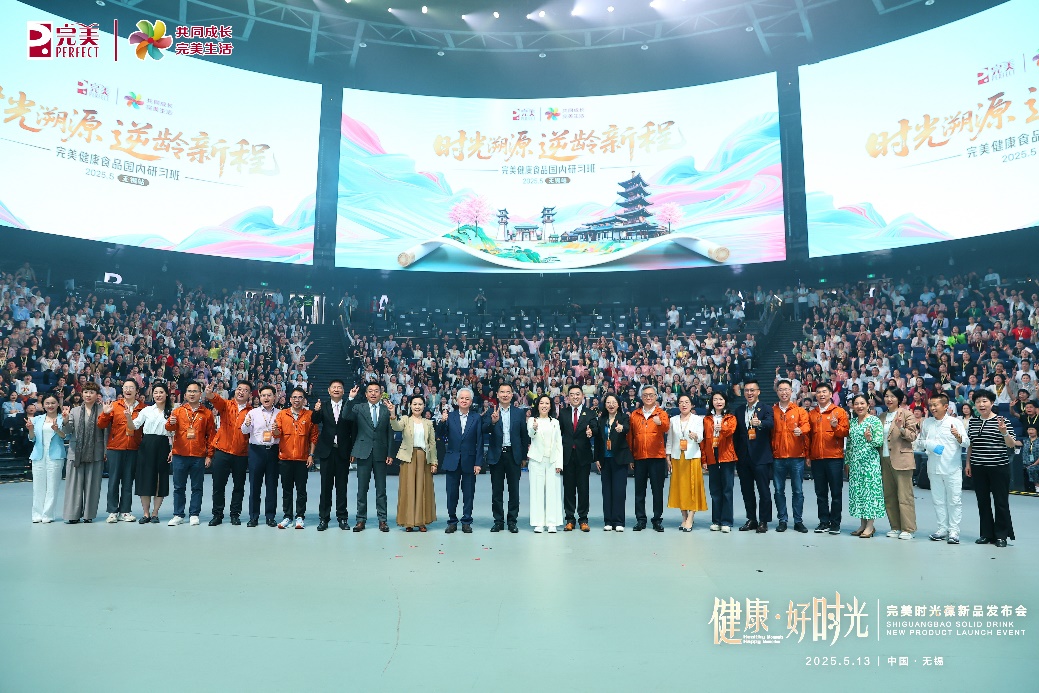
共探抗衰前沿科技 健康中国高质量发展大会在无锡举办
Hua Xia Shi Bao· 2025-05-19 02:39
Group 1: Industry Overview - The anti-aging industry is becoming a key focus in life and health research, driven by the acceleration of aging and increased health awareness, showcasing significant growth potential and market prospects [1] - The anti-aging industry has been included in the silver economy policy support framework by the State Council, emphasizing the need for research on skin aging mechanisms, human aging models, and hair health [4] Group 2: Company Initiatives - Perfect Company is committed to the "Health China 2023-2025 Plan" and aims to enhance health management precision through innovative practices, bridging the gap between laboratory research and production [6] - The company has been focusing on scientific research and innovation in the anti-aging field, achieving a series of research results over the years [7] Group 3: Product Development - Perfect Company unveiled a new product, the Perfect Time Preservation Solid Beverage, which utilizes advanced patented technology to enhance cellular vitality and activate mitochondrial function [11] - The company emphasizes product safety, ensuring that all ingredients are food-grade and undergo rigorous testing [11] Group 4: Industry Standards and Collaboration - Perfect Company actively participates in the formulation of industry standards, collaborating with various organizations to establish guidelines for weight management and aging markers [18][20] - The company aims to inject new momentum into the health industry by addressing the growing consumer demand for effective, safe, and convenient anti-aging products [16]

麦角硫因产业链解构专家电话会
2025-05-18 15:48
Summary of the Conference Call on Ergothioneine Industry Industry Overview - The ergothioneine production in China is limited, relying heavily on cross-border e-commerce, with significant issues related to counterfeit products. Collaboration among brand owners, raw material suppliers, and distribution channels is essential to enhance consumer awareness and ensure product efficacy, guiding consumers to purchase through professional channels to combat market chaos [1][5][12]. Key Insights and Arguments - The health supplement contract manufacturing industry has technical barriers. Leading manufacturers like Xianle and Baihe enhance product value through encapsulation technology and flavoring. Most companies in the industry are taking a wait-and-see approach regarding regulations, while top firms are upgrading product specifications and promoting consumer awareness [1][4]. - Ergothioneine products have high gross margins, primarily concentrated at the production end, with high purity being a core competitive advantage. Companies like Jingshan Bio achieve purity levels of 99.99%, impacting the profit margins of contract manufacturers. Chemical synthesis may introduce heavy metals, making quality control and process inspection crucial [1][7]. - The anti-aging market is gaining traction, with ergothioneine recognized as a natural antioxidant that directly acts on mitochondria to eliminate free radicals, protect DNA, and reduce inflammation and oxidative damage, showing significant effects. A clear trend is emerging with a plethora of new products [1][10]. - The ergothioneine market is rapidly expanding, projected to reach 100 million by 2025, with expected growth of 6-7 times in the next two to three years. Companies like Kelong are working to lower costs and expand the consumer base through extensive promotion, such as partnerships with media outlets [1][11]. Additional Important Points - The pricing structure of ergothioneine shows that the highest profits are made from the brand to consumer end, with gross margins reaching 70%-90%. Mastering high-purity raw materials and reducing costs are key competitive advantages [3][14]. - The biological synthesis technology is reducing the price of ergothioneine, with two-chain purity priced around 8,500-9,500 yuan per kilogram, while four-chain purity exceeds 100,000 yuan. Companies like Huarui and Jingshan Bio have good reputations, with gross margins of at least 50% [3][20]. - The domestic production of ergothioneine is still constrained, necessitating reliance on cross-border e-commerce or overseas supply chains. Despite increased crackdowns on counterfeit products, low-dose and impure products remain prevalent in the market [5][12]. - The market for ergothioneine is expected to grow significantly, with the health supplement market reaching over 400 billion, and anti-aging supplements gaining attention. Consumer awareness of ergothioneine is currently limited, but positive feedback from users, such as marathon runners, is encouraging [11][34]. - The overseas market for ergothioneine has not gained widespread recognition compared to traditional supplements like fish oil, leading to a significant information gap. However, with proper marketing strategies, its market position can be improved [42][43]. Market Dynamics - The ergothioneine market is positioned in the third tier of health supplements in China, with an annual GMV of around 1 billion. The first tier includes fish oil and historical overseas products, while the second tier includes liver health products [41]. - The growth of the ergothioneine market is influenced by several factors, including regulatory frameworks, sales restrictions, and raw material supply, primarily sourced from Northeast Asia, Australia, and the US [38][39]. - The marketing strategies for ergothioneine products on e-commerce platforms focus on showcasing efficacy through data and scenario-based marketing, which effectively drives sales growth [47]. This summary encapsulates the key points discussed in the conference call regarding the ergothioneine industry, highlighting its current state, growth potential, and market dynamics.
“75岁的刘先生”想做医药圈的雷军 不容易
Jing Ji Guan Cha Wang· 2025-05-18 14:33
Core Viewpoint - The chairman of Kelun Pharmaceutical, Liu Gexin, is leveraging his personal brand to promote anti-aging products, marking his fourth entrepreneurial venture, with a focus on the health sector and the potential for rapid monetization through personal branding [2][4]. Group 1: Personal Branding and Marketing Strategy - Liu Gexin's personal brand is being positioned as the first entrepreneur IP in the pharmaceutical industry, aiming to break through traditional marketing barriers [2][3]. - The marketing materials released so far lack entertainment and scenario-based expressions, making it difficult to reach a broader audience [3]. - The anti-aging product, Ergothioneine capsules, priced at 1499 yuan per bottle, is a key focus, with its antioxidant properties being heavily marketed [3][4]. Group 2: Business Performance and Market Potential - Kelun Pharmaceutical reported a revenue decline to 4.39 billion yuan, a year-on-year decrease of 29.4%, with net profit dropping over 43% to 580 million yuan [4]. - The aging population in China presents a significant growth opportunity in the anti-aging market, which is expected to become one of the fastest-growing sectors in the silver economy [4][5]. - Kelun Yongnian Health is not limited to Ergothioneine capsules but is also developing a range of other anti-aging active molecules and health products, with over ten raw materials in production or development [5].
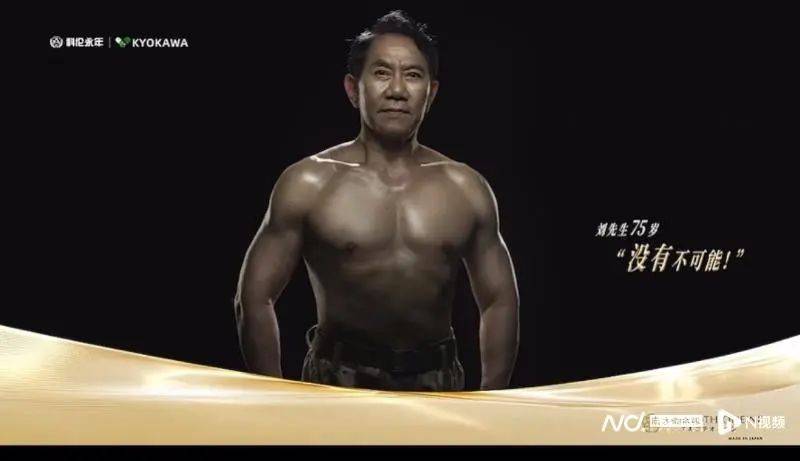
70多岁董事长裸上身拍广告,引发热议!公司否认P肌肉
Sou Hu Cai Jing· 2025-05-17 06:53
Core Viewpoint - The chairman of Kelun Pharmaceutical, Liu Gexin, gained attention through an advertisement showcasing his muscular physique at the age of 75, promoting the company's ergothioneine capsules as part of a healthy lifestyle [1][3]. Company Response - The company confirmed the authenticity of the advertisement, stating that the video was not digitally altered and aimed to convey a positive health message [3]. - Liu Gexin has been taking the ergothioneine capsules for three consecutive years while maintaining a fitness and reading routine, attributing his health to a combination of lifestyle choices and the product [5]. New Business Venture - Liu Gexin announced the anti-aging sector as his "fourth entrepreneurial venture," following previous successes in intravenous solutions, antibiotics, and innovative drugs, with a goal to build an ecological platform for anti-aging [5][7]. Product Details - The ergothioneine capsules are priced at 1499 yuan for 60 capsules, marketed as a cutting-edge anti-aging ingredient that purportedly removes free radicals more effectively than traditional ingredients like Vitamin C and Coenzyme Q10 [7][9]. - The product is produced in collaboration with a century-old Japanese company, ensuring high quality and compliance with Japanese GMP standards [11]. Market Context - The anti-aging market is gaining traction, with the silver economy in China reaching 7.1 trillion yuan in 2023 and projected to grow to 12.3 trillion yuan by 2028, highlighting the potential for companies in this sector [12]. - Kelun Pharmaceutical is recognized among the top 100 pharmaceutical manufacturers in China, indicating its strong position in the industry [12].
75岁董事长“肉身营销”,麦角硫因真是“内服抗衰王”?
Sou Hu Cai Jing· 2025-05-16 10:22
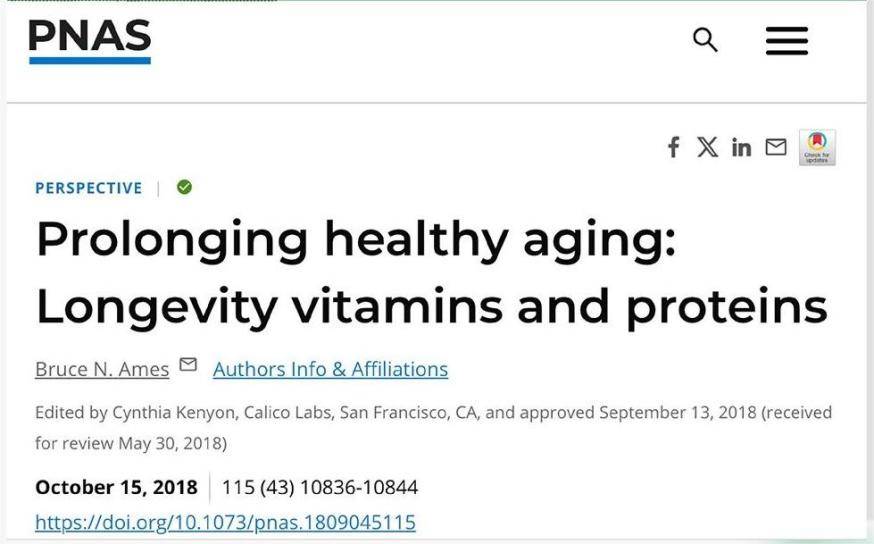
Core Viewpoint - The recent advertisement for Ergothioneine capsules by Kelun Pharmaceutical has sparked attention, particularly due to the endorsement by the company's chairman, Liu Gexin, highlighting the scientific value and industrial prospects of Ergothioneine [1] Summary by Sections What is Ergothioneine and Why is it Called the "Longevity Vitamin"? - Ergothioneine (EGT) is a natural sulfur-containing amino acid derivative first isolated from ergot fungus in 1909, found in high concentrations in vital organs such as the liver, kidneys, and brain [2] - International studies have shown that Ergothioneine has significant antioxidant and cell-protective properties, with notable recognition from Nobel Prize nominee Bruce Ames, who referred to it as the "longevity vitamin" in a prominent publication [2] Mechanism of Action - Mitochondria, the "energy factories" of cells, generate energy (ATP) but also produce reactive oxygen species (ROS) as byproducts, which can accumulate and damage cellular components when mitochondrial efficiency declines due to aging or inflammation [4] - Ergothioneine is unique among known antioxidants and mitochondrial protectants as it can penetrate cell membranes and enter mitochondria, facilitated by its exclusive transport protein, OCTN1, allowing it to exert powerful antioxidant effects [6] Industrial Chain Overview - The production of Ergothioneine involves three main stages: raw material supply, biomanufacturing, and downstream applications [9] - Raw materials are primarily sourced from fungi and mushrooms through fermentation [9] - The mainstream production method is biomanufacturing via genetic engineering and high-efficiency fermentation, followed by extraction and purification [10] - In cosmetics, Ergothioneine is valued for its anti-aging, whitening, anti-inflammatory, and reparative properties, while in food and beverages, it is recognized for its anti-aging and cognitive enhancement effects, approved as a food ingredient in several countries [10] Key Companies in the Ergothioneine Industry - Huaxi Biological is a pioneer in the Ergothioneine sector, producing high-purity raw materials and setting industry standards, with a comprehensive product range from dietary supplements to medical applications [11] - Furuida has launched a new brand "Baifu" to expand its product line in high-end raw materials, including Ergothioneine [12] - Shouxiangu has developed advanced techniques to enhance the content and bioavailability of Ergothioneine in its products [12] - Other companies like Jiabiyou, Kelun Pharmaceutical, and Huadong Pharmaceutical are also actively involved in the production and application of Ergothioneine, contributing to the growth of the anti-aging product market [13][14] Conclusion - As scientific research progresses and regulations improve, Ergothioneine is transitioning from a niche ingredient to a broader market presence, expected to play a significant role in the anti-aging and functional food sectors [14]