
绿色航运

Search documents
中国已初步建成绿色船舶和海上设施技术规范体系
Zhong Guo Xin Wen Wang· 2025-10-20 13:30
Core Viewpoint - China has made significant progress in establishing a technical specification system for green ships and offshore facilities, contributing to the low-carbon and sustainable development of the shipping industry amid a global push for green transformation [1][3]. Group 1: Development of Technical Specifications - China has actively aligned with the International Maritime Organization (IMO) greenhouse gas reduction targets, systematically advancing the standardization of green ship technology, with the release of 15 technical specifications and 7 implementation guidelines related to green technology [3]. - The technical specification system covers green energy applications, energy efficiency improvements, and ecological protection, providing systematic support for the green development of the shipping industry [3]. Group 2: Green Energy Initiatives - The LNG ship technology system in China is becoming increasingly comprehensive, with over 600 LNG ships operating safely nationwide; the number of electric ships has surpassed 500, and demonstration operations for hydrogen fuel cells and battery-swapping technology have been achieved [3]. - Breakthroughs in new power technologies such as alcohol fuel and ammonia fuel are promoting the installation of "green hearts" in Chinese ships [3]. Group 3: Energy Efficiency Improvements - The Energy Efficiency Design Index (EEDI) has been fully implemented across three major types of transport vessels: bulk carriers, liquid cargo ships, and container ships, with approximately 1,500 ships optimizing their energy efficiency design each year [3]. - Energy-saving technologies such as wind rotors, hard-wing sails, and air lubrication systems are being rapidly promoted, allowing ships to "sail with the wind" [3]. Group 4: Ecological Protection Measures - Desulfurization devices and VOCs purification systems effectively reduce atmospheric pollutant emissions, while carbon capture devices and ballast water management systems create a "circular-regeneration" ecological system on ships, ensuring marine environmental protection [3][4]. Group 5: Future Developments - Cutting-edge green technologies such as nuclear energy and biofuels are also being incorporated into planning, continuously improving the blueprint for China's green ship and offshore facility technical specification system [4].

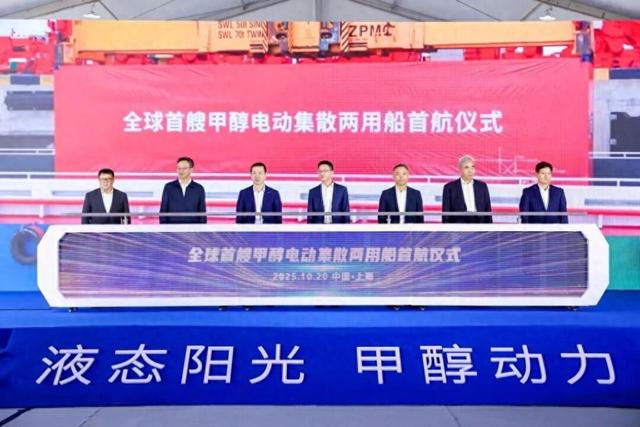
上港集团与吉利控股集团绿色航运战略合作签约
Ge Long Hui· 2025-10-20 13:26
Core Insights - The world's first dual-use methanol-hydrogen electric vessel, "Yuanchun 001," has officially commenced commercial operations with its maiden voyage held at Shanghai Port [1] Group 1: Industry Developments - The maiden voyage ceremony included a strategic cooperation agreement between Shanghai Port Group and Geely Holding Group, aimed at accelerating the promotion of the methanol-hydrogen electric industry ecosystem in green shipping [1]


全球首艘甲醇电动集散两用船在沪首航,可装载64个标准集装箱
Xin Lang Cai Jing· 2025-10-20 12:05
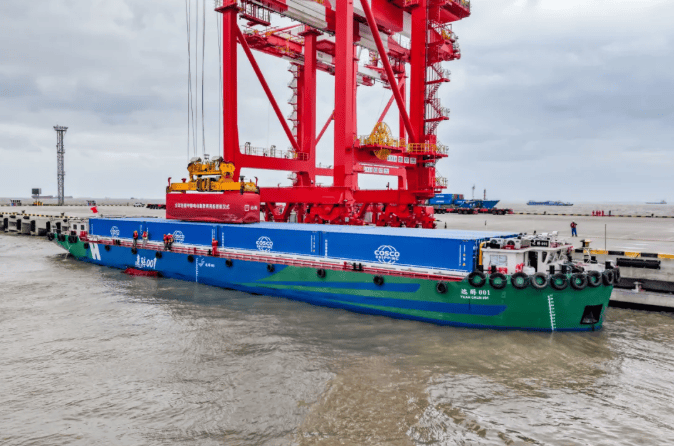
Core Points - The world's first methanol-electric dual-purpose vessel "Yuanchun 001" has successfully launched at Shanghai Port, marking a significant breakthrough in the application of new energy in inland shipping in China [2] - Shanghai Port is actively promoting the green transformation of shipping, aiming to establish itself as an international green fuel bunkering port and extend the advantages of green fuel applications to inland shipping [2] - The collaboration between Shanghai Port Group and Geely Holding Group focuses on integrating resources and advantages in the green shipping and port sectors, enhancing cooperation in areas such as non-road mobile machinery and intelligent operations [3] Group 1 - "Yuanchun 001" is a dual-purpose inland vessel that combines liquid new energy power and intelligent control technology, measuring 64.9 meters in length, 12.6 meters in width, with a draft of 3.5 meters and a carrying capacity of 1,500 tons, capable of loading up to 64 standard containers [2] - The strategic cooperation agreement between Shanghai Port Group and Geely Holding Group aims to promote the application of methanol electric technology in green shipping and green ports, injecting new momentum into the green transformation of inland shipping [2] Group 2 - Shanghai has outlined a plan to promote the green transformation of international shipping fuels, focusing on building a green fuel application system and exploring pilot applications of methanol in inland shipping [2] - The partnership will deepen cooperation in green shipping, green ports, and intelligent operations, leveraging both companies' strengths in various application scenarios [3]
全球首艘甲醇电动集散两用船在沪首航 开创内河绿色航运应用新模式
Sou Hu Cai Jing· 2025-10-20 10:11
Core Insights - The successful maiden voyage of the world's first methanol-electric dual-purpose vessel "Yuanchun 001" marks a significant breakthrough in the application of new energy in inland shipping in China, providing a new path for the global shipping industry's green transformation [1][3][4] - A strategic cooperation agreement was signed between Shanghai Port Group and Geely Holding Group to promote the application of methanol electric technology in green shipping and green ports, injecting new momentum into the green transformation of inland shipping [1][3] Vessel Specifications - "Yuanchun 001" is a dual-purpose inland vessel that integrates liquid new energy power and intelligent control technology, measuring 64.9 meters in length, 12.6 meters in width, and 3.5 meters in depth, with a carrying capacity of 1,500 tons and the ability to load up to 64 standard containers [1][3][4] - The vessel is equipped with two 280 kW methanol generator sets and two 258 kWh lithium battery packs, utilizing a direct current bus frequency conversion control device for grid connection, driving two 150 kW propulsion motors [4] Industry Trends - The green transformation of the shipping industry has become a global consensus, with initiatives like the International Green Shipping Corridor Cooperation Initiative being launched to promote a new pattern of green shipping development [4] - Shanghai is actively laying out plans for the green transformation of shipping, with the "Shanghai Plan for Promoting the Green Transformation of International Shipping Fuels" aiming to build a green fuel application system and extend the advantages of green fuel applications from international shipping to inland shipping [4] Strategic Cooperation - The collaboration between Shanghai Port Group and Geely Holding Group aims to integrate both parties' industrial chain resources and advantages, focusing on applications in non-road mobile machinery, in-port transport vehicles, and barges, enhancing cooperation in green shipping, green ports, and intelligent operations [4][5] - Geely Holding Group's senior vice president emphasized that this cooperation will accelerate the transformation of energy applications, gradually reducing dependence on traditional fossil fuels and establishing a sustainable development model for liquid new energy, contributing "Chinese wisdom" and "Chinese solutions" to global green transformation [5]
中国航运延续增势支撑外贸 未来如何穿越“风浪”
Di Yi Cai Jing· 2025-10-20 08:26
Core Viewpoint - The global shipping industry is facing significant challenges due to geopolitical changes and supply chain instability, yet there are opportunities for growth and innovation in the sector [1][2]. Current "Weather" - The international shipping industry is described as being in a "stormy" situation, influenced by four main factors: global economic growth, energy transition, new ship orders, and trade friction [2][3]. - The International Monetary Fund (IMF) projects global economic growth rates of 3.2% for this year and 3.1% for next year, indicating ongoing trade growth despite challenges [2]. - The shipping industry may face pressure in container shipping and potential losses by 2026 due to new ship order ratios and overcapacity issues [2][3]. China's "Path" - China's shipping industry has shown growth in key metrics, with a projected 9.5% increase in fixed asset investment and significant increases in cargo throughput and container volume [4]. - The focus on green and intelligent development is evident, with a growing number of new energy vessels and automated terminals [4][5]. - The introduction of the first methanol dual-fuel container ship and advancements in green fuel supply systems highlight China's commitment to sustainable shipping practices [6][7]. Future "Direction" - The global shipping industry remains a critical pillar of the economy, with China accounting for approximately 31% of global shipping volume [8]. - Despite a slight slowdown in global trade growth, there are signs of recovery, particularly in the oil tanker market [8][9]. - China is expected to deliver 52% of the world's new ships this year, reinforcing its importance in the global shipping market [8]. Strategic Recommendations - Suggestions for enhancing shipping productivity include strengthening supply chain collaboration, promoting data connectivity, and integrating AI technology into shipping operations [5][10]. - The need for a resilient supply chain system that incorporates technology, safety, and sustainability is emphasized [10][11]. - Financial support for the shipping industry's low-carbon transition and digital integration is crucial for future growth [12].
中国航运延续增势支撑外贸,未来如何穿越“风浪”
Di Yi Cai Jing· 2025-10-20 08:23
Current "Weather" - The international shipping industry is currently described as facing "stormy weather" with low visibility, influenced by global economic conditions, energy transition, new ship orders, and trade friction [4][5] - The International Monetary Fund (IMF) projects global economic growth rates of 3.2% for this year and 3.1% for next year, indicating that global trade continues to grow despite challenges [4] - The new ship order volume is a critical indicator of the shipping sector's outlook, with potential pressure on container shipping expected in the coming years, possibly leading to losses by 2026 [4][5] China's "Path" - China's shipping industry has achieved significant results in supporting economic and social development, with water and land freight volume reaching 9.81 billion tons and container throughput at 33 million TEUs in 2024, reflecting year-on-year growth [8] - The focus on green and intelligent development is evident, with an expanding fleet of new energy vessels and the application of AI technologies [8][9] - The China Ocean Shipping Group has proposed six strategic paths for enhancing shipping productivity, including strengthening supply chain collaboration and promoting green energy integration [9] Future "Direction" - The global shipping industry is expected to remain a core pillar of the economy, with China accounting for approximately 31% of global shipping volume [12] - Despite a projected slowdown in global trade growth, signs of recovery are emerging, particularly in the tanker market, with significant increases in charter rates since summer [12][13] - China is anticipated to deliver 52% of the world's new ships this year, highlighting its critical role in the global shipping market [12] Industry Challenges and Opportunities - Structural challenges such as trade conflicts, technological barriers, and local protectionism are reshaping the industry landscape, necessitating a shift from cost-based competition to a focus on technology and supply chain security [10] - The energy transition presents both risks and opportunities, with potential for growth in alternative fuel applications and ship technology upgrades [13][14] - The shipping industry is encouraged to enhance cooperation, maintain an open shipping order, and strengthen technological empowerment for a green and intelligent transition [15][16]
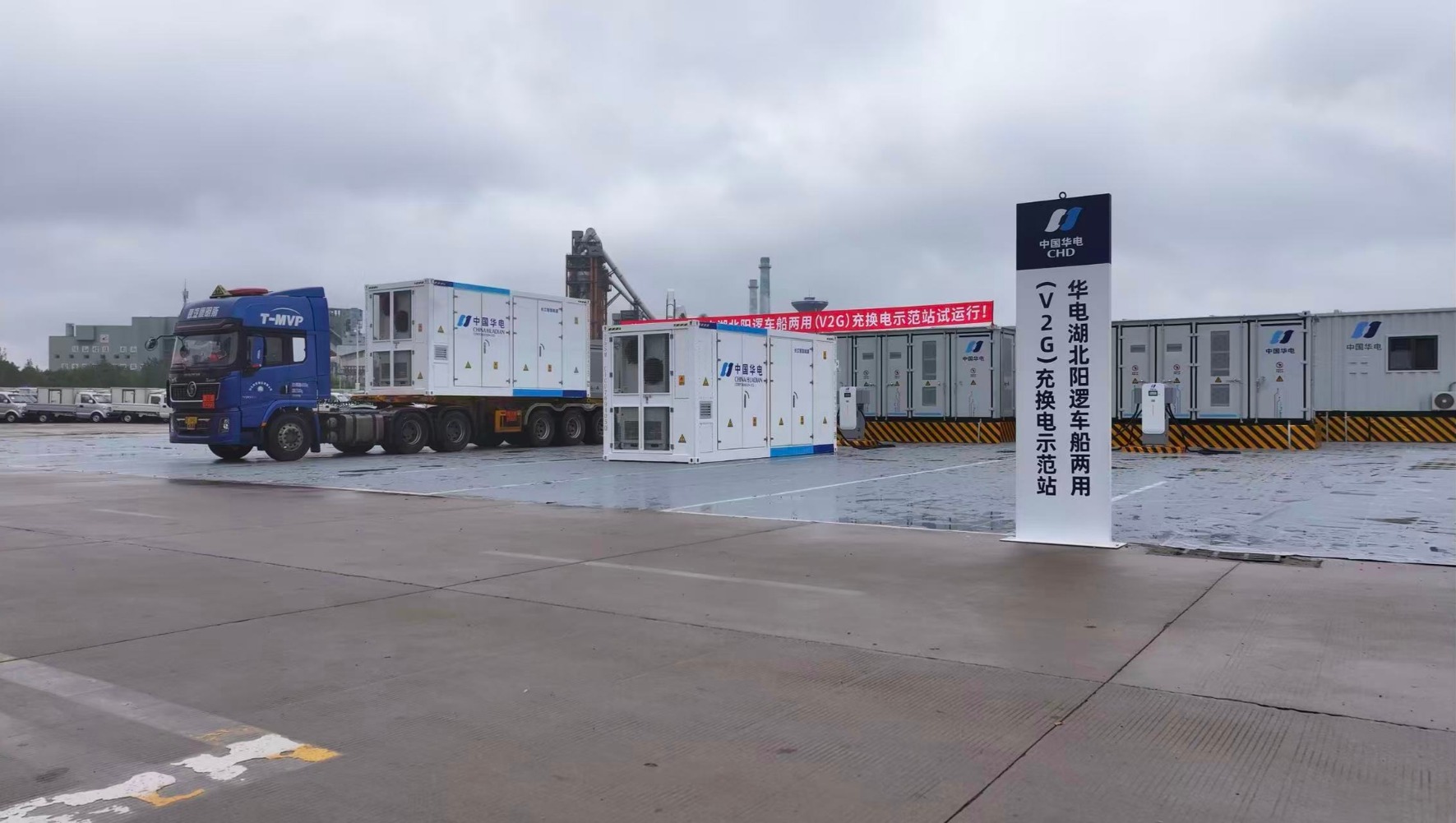
船舶单个电池换电仅需5分钟 中国华电阳逻充换电站投入试运行
Xin Hua Cai Jing· 2025-10-20 06:38
Core Viewpoint - China Huadian has launched a trial operation of its Yangluo V2G (Vehicle-to-Grid) charging and swapping station, marking a significant step in the "green shipping" initiative and the "Electricization of the Yangtze River" strategy [1][3]. Group 1: Project Overview - The Yangluo charging and swapping station is one of the first pilot projects for the national "V2G large-scale application" initiative [3]. - The station features 4 charging facilities for electric vessels and 24 charging spots for electric heavy trucks, supported by distributed photovoltaic power generation [3]. Group 2: Operational Efficiency - The innovative "ship-electric separation" model allows fully charged batteries to be delivered to the port via flatbed trailers, enabling a battery swap process that takes only 5 minutes, which is over 20 times more efficient than direct charging [6]. Group 3: Strategic Importance - China Huadian is actively integrating into national strategies, focusing on market needs and industry trends, and aims to contribute to the high-quality development of the Yangtze River Economic Belt [7]. - The company collaborates closely with upstream and downstream enterprises in the shipping, port, and battery manufacturing sectors to create a robust battery swapping industry chain [7].
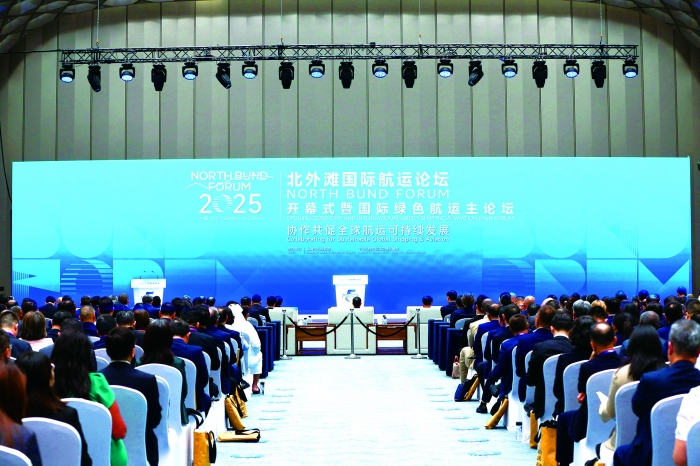
全球航运业合作广度拓宽程度加深 “携手同行才能战胜各种挑战” 围绕“绿色”展开的国际合作更多了
Jie Fang Ri Bao· 2025-10-20 01:37
Core Insights - The 2025 North Bund International Shipping Forum opened with significant participation, highlighting its importance as a global platform for the shipping industry to collaborate and develop [1] - The theme of this year's forum is "Collaborative Promotion of Global Shipping Sustainable Development," with a strong focus on green initiatives [1] Group 1: Participation and Collaboration - The Hong Kong Shipowners Association increased its representation from two to eighteen members this year, indicating a growing interest in the forum [1] - A total of 30 major cooperation outcomes were announced during the opening ceremony, marking a record high for the event [1] - The forum aims to release over 50 new industry results over its three-day duration [1] Group 2: Green Shipping Corridors - Three new green shipping corridors were announced: "Shanghai Port - Barcelona Port Digital Green Roll-on/Roll-off Shipping Corridor," "Shanghai Port - Antwerp Bruges Port Green Roll-on/Roll-off Shipping Corridor," and "Shanghai Port - Melbourne Port Green Shipping Corridor Initiative" [2] - The Shanghai-Los Angeles/Long Beach green shipping corridor achieved a significant milestone, including expanding shore power infrastructure to provide 100% power to container ships [4] - A zero-carbon ship successfully docked at the Port of Los Angeles, demonstrating the feasibility of sustainable shipping practices [4]
协作共促全球航运可持续发展 北外滩国际航运论坛锚定“绿色+智能”
Shang Hai Zheng Quan Bao· 2025-10-19 18:49
Group 1 - The 2025 North Bund International Shipping Forum was held in Shanghai, focusing on "collaboration to promote global shipping sustainable development" [2] - The forum emphasized the importance of accelerating the smart and green transformation of the shipping industry, which has become a consensus among industry stakeholders [2] - Five categories of 30 cooperation outcomes were announced, including international green shipping corridor initiatives and various collaborative documents [2] Group 2 - The core themes of the forum are "green" and "smart," marking a new phase in the large-scale development of sustainable shipping [3] - Shanghai aims to enhance shipping service capabilities and establish itself as a hub for green shipping fuel supply and trading [3] - The city is focused on promoting low-carbon transformation in shipping and advancing technological innovation in the shipping sector [3] Group 3 - COSCO Shipping is concentrating on the research, manufacturing, and use of new energy vessels, with one-third of new ship orders in 2024 expected to use alternative fuels [4] - Shanghai Port has completed 94 LNG bunkering operations in the first nine months of this year, with a volume of 563,000 cubic meters, representing a 71.8% year-on-year increase [4] - The port has established a regular service for LNG and green methanol bunkering, positioning itself among the global leaders in this area [4] Group 4 - Collaborative efforts are underway to establish green shipping corridors, such as the Shanghai-Los Angeles/Long Beach corridor, which has achieved its initial milestone [5] - The construction of additional green shipping corridors is expected to provide more examples for global shipping's green development [5] - The development of international shipping centers and green fuel supply centers is a priority for future cooperation [5] Group 5 - Open collaboration is deemed essential for addressing challenges in the shipping industry and building a new ecosystem [6] - The introduction of digital ship concepts and platforms for intelligent risk management in shipping insurance is being promoted [6] - The industry is leveraging advanced technologies like IoT, big data, and AI to enhance the intelligence of shipping hubs [6] Group 6 - The year 2025 is a critical milestone for Shanghai's international shipping center, transitioning from "basically completed" to "fully completed" [7] - Enhancing the comprehensive competitiveness of Shanghai's international shipping center is a key focus for the upcoming "14th Five-Year Plan" [7] - The development of high-end shipping services and fostering globally influential enterprises are essential strategies for the future [8]
交通运输部:加快培育发展航运领域新质生产力
Zheng Quan Shi Bao· 2025-10-19 17:50
Core Viewpoint - The 2025 North Bund International Shipping Forum emphasizes global collaboration for sustainable shipping development, showcasing 30 major cooperation outcomes across five categories, highlighting China's proactive role with global partners in this initiative [1][2]. Group 1: Government Initiatives - The Ministry of Transport aims to accelerate the green and digital transformation of the shipping industry, focusing on sustainable development to provide new opportunities for global economic and trade prosperity [1]. - Key actions include promoting the large-scale application of clean energy vessels and updating port facilities with new energy power, as well as advancing the construction of international green shipping corridors [1]. Group 2: Industry Collaborations - The forum announced the expansion of the international "friend circle" for green shipping corridors, including initiatives like the Shanghai-Melbourne and Qingdao-Hamburg green shipping corridors [2]. - China Shipowners' Association signed memorandums of understanding with three major international shipping organizations, focusing on policy collaboration and innovation in green and technological shipping [2]. Group 3: Technological Innovations - The forum showcased China's maritime innovation, including the S-101 electronic nautical chart, which integrates various intelligent navigation data for real-time depth display and safe navigation route planning [3]. - The industry is encouraged to strengthen supply chain collaboration, promote data interoperability, and deepen the integration of artificial intelligence with shipping [3]. Group 4: Aviation Sector Insights - The Civil Aviation Administration of China emphasizes the importance of technological innovation in driving the sustainable development of the aviation industry, focusing on smart aviation, low-altitude economy, and sustainable aviation fuels [4]. - The administration aims to create a new ecosystem that links technological elements, industry ecology, and global cooperation to enhance the industry's digital and green transformation [4].