
虚拟现实

Search documents
扎克伯格大砍预算 Meta现实实验室将裁员10%
Feng Huang Wang· 2026-01-12 22:53
Core Insights - Meta plans to lay off 10% of its Reality Labs division as part of a broader strategy to reallocate funds from certain virtual reality products to other AI wearable devices [1] - The layoffs are expected to begin this week, following CEO Mark Zuckerberg's directive to executives to find budget cuts within the Reality Labs division [1] - Reality Labs, which includes teams developing VR headsets, AI glasses, and metaverse products, has been incurring losses of billions of dollars each quarter due to ongoing investments in products that have not generated substantial revenue [1] Financial Overview - The Reality Labs division currently employs approximately 15,000 staff members [1] - Discussions among Meta executives in December included potential budget cuts of up to 30% for the metaverse team within Reality Labs [1]


维信诺涨2.02%,成交额1.77亿元,主力资金净流出763.67万元
Xin Lang Zheng Quan· 2026-01-12 05:46
Group 1 - The core viewpoint of the news is that Visionox has shown a slight increase in stock price and trading activity, with a current market capitalization of 12.697 billion yuan [1] - As of January 12, Visionox's stock price rose by 2.02% to 9.09 yuan per share, with a trading volume of 177 million yuan and a turnover rate of 1.41% [1] - The company has experienced a year-to-date stock price increase of 5.45%, with a 3.89% increase over the last five trading days and a 4.48% increase over the last twenty days [1] Group 2 - Visionox reported a total revenue of 6.051 billion yuan for the period from January to September 2025, reflecting a year-on-year growth of 3.50% [2] - The company recorded a net profit attributable to shareholders of -1.623 billion yuan for the same period, which is a year-on-year increase of 9.67% [2] - As of December 31, the number of shareholders decreased by 2.54% to 66,800, while the average circulating shares per person increased by 2.60% to 20,876 shares [2] Group 3 - Visionox has cumulatively distributed 53.2384 million yuan in dividends since its A-share listing, with no dividends distributed in the last three years [3] - As of September 30, 2025, Hong Kong Central Clearing Limited is the eighth largest circulating shareholder, holding 11.0486 million shares, an increase of 2.8175 million shares from the previous period [3]

爱仕达涨2.04%,成交额4306.77万元,主力资金净流入468.87万元
Xin Lang Zheng Quan· 2026-01-12 03:30
Group 1 - The core viewpoint of the news is that Aishida's stock has shown a slight increase in price and trading activity, indicating potential investor interest despite recent financial challenges [1][2]. - As of January 12, Aishida's stock price rose by 2.04% to 13.02 CNY per share, with a total market capitalization of 4.435 billion CNY [1]. - The company has experienced a net inflow of main funds amounting to 4.6887 million CNY, with significant buying activity from large orders [1]. Group 2 - For the period from January to September 2025, Aishida reported a revenue of 1.954 billion CNY, reflecting a year-on-year decrease of 7.57%, and a net profit attributable to shareholders of -58.986 million CNY, a decline of 3652.15% [2]. - The number of Aishida's shareholders decreased to 47,900, while the average number of circulating shares per person increased by 4.86% to 6,200 shares [2]. - Aishida has distributed a total of 409 million CNY in dividends since its A-share listing, with 6.1315 million CNY distributed in the last three years [3].

龙旗科技涨2.13%,成交额7.61亿元,主力资金净流入629.20万元
Xin Lang Cai Jing· 2026-01-12 03:22
Group 1 - The core viewpoint of the news is that Longqi Technology has shown significant stock performance and financial metrics, indicating potential growth and investor interest [1][2]. - As of January 12, Longqi Technology's stock price increased by 21.30% year-to-date, with a 10.26% rise over the last five trading days and an 18.14% increase over the last 20 days [1]. - The company has a market capitalization of 24.11 billion yuan and reported a trading volume of 761 million yuan on January 12 [1]. Group 2 - Longqi Technology's main business segments include smartphones (70.44% of revenue), AIoT products (16.68%), tablets (9.55%), and other products (3.33%) [1]. - For the period from January to September 2025, Longqi Technology achieved operating revenue of 31.33 billion yuan, a year-on-year decrease of 10.28%, while net profit attributable to shareholders increased by 17.74% to 507 million yuan [2]. - The company has distributed a total of 461 million yuan in dividends since its A-share listing [3].
隆利科技涨2.03%,成交额3825.67万元,主力资金净流入197.25万元
Xin Lang Cai Jing· 2026-01-12 02:43
Core Viewpoint - Longli Technology's stock price has shown a modest increase in early 2023, with a notable rise in trading volume and a positive net inflow of funds, indicating investor interest in the company [1][2]. Group 1: Stock Performance - Longli Technology's stock price increased by 4.60% year-to-date, with a 3.86% rise over the last five trading days and a 6.11% increase over the last 20 days, while it has decreased by 7.38% over the last 60 days [2]. - As of January 12, the stock was trading at 19.09 CNY per share, with a market capitalization of 4.362 billion CNY [1]. Group 2: Company Overview - Longli Technology, established on August 16, 2007, and listed on November 30, 2018, is based in Longhua New District, Shenzhen, Guangdong Province, specializing in the research, production, and sales of backlight display modules [2]. - The company's main business revenue composition is 96.51% from backlight display modules and 3.49% from other sources [2]. - Longli Technology operates within the electronic industry, specifically in the optical optoelectronics and LED sectors, and is associated with concepts such as smart glasses, small-cap stocks, virtual reality, and smartphones [2]. Group 3: Financial Performance - For the period from January to September 2025, Longli Technology reported a revenue of 1.092 billion CNY, reflecting a year-on-year growth of 16.01%, while the net profit attributable to shareholders decreased by 39.91% to 46.3225 million CNY [2]. - Since its A-share listing, Longli Technology has distributed a total of 99.667 million CNY in dividends, with no dividends paid in the last three years [3]. Group 4: Shareholder Information - As of September 30, 2025, the number of shareholders increased to 19,200, with an average of 8,172 circulating shares per person, a decrease of 0.56% from the previous period [2]. - Notable changes in institutional holdings include an increase in shares held by China Life Asset Management and the entry of new shareholders from Guotai Junan [3].

中国AI眼镜军团CES霸场,27家公司组团秀肌肉,2026百镜大战
Xin Lang Cai Jing· 2026-01-09 09:01
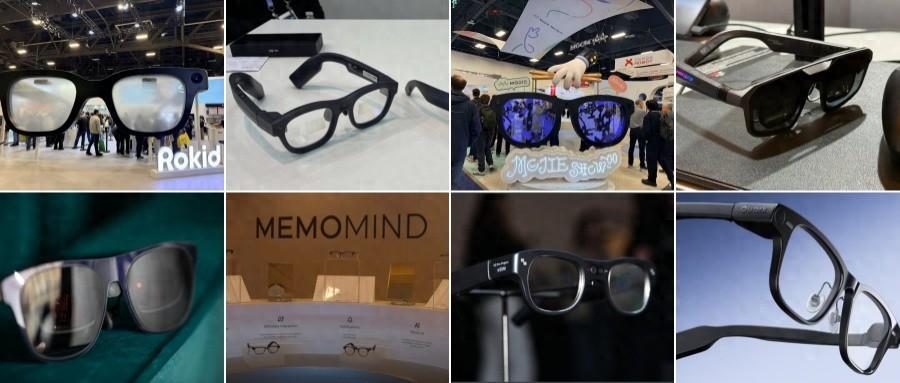
Core Insights - The CES 2023 showcased a significant presence of Chinese manufacturers in the smart glasses and VR/AR market, indicating a shift in industry dynamics with local players gaining traction [2][44] - The Chinese smart glasses market is projected to see substantial growth, with shipments expected to reach 623,000 units by Q3 2025, reflecting a year-on-year increase of 62.3% [4][46] - The event highlighted the competitive landscape, with numerous companies unveiling innovative products, suggesting a "battle of the glasses" in the coming years [42][85] Group 1: Major Players - Rokid attracted attention with its giant glasses display and launched the Rokid Style, claimed to be the lightest full-feature AI glasses at 38.5 grams, starting at $299 [7][48] - INMO introduced two key products: INMO Go3, which offers real-time translation in 261 languages, and INMO AIR3, the first mass-produced 1080P wireless AR glasses, which sold out quickly [9][53] - XREAL showcased the ROG Xreal R1, the first gaming glasses with a 240Hz refresh rate, and announced the upcoming XREAL 1S, featuring a proprietary chip for 3D content conversion [14][57] Group 2: Cross-Industry Innovations - Alibaba presented the Quark AI glasses S1, which allows interaction through voice commands and boasts a battery life of 7 hours, powered by dual flagship chips [22][66] - XGIMI launched its MemoMind AI glasses, marking its entry into the smart glasses market with two series [27][70] Group 3: Emerging Startups - Gyges Labs introduced the world's first AI note-taking ring, which gained significant media attention for its unique functionality [30][73] - MicroVision unveiled the M6 series of AR glasses, which feature hardware that can be sustainably upgraded without replacing the entire device [32][75] - Various smaller companies showcased innovative products, contributing to a diverse and competitive landscape in the smart glasses sector [40][83]
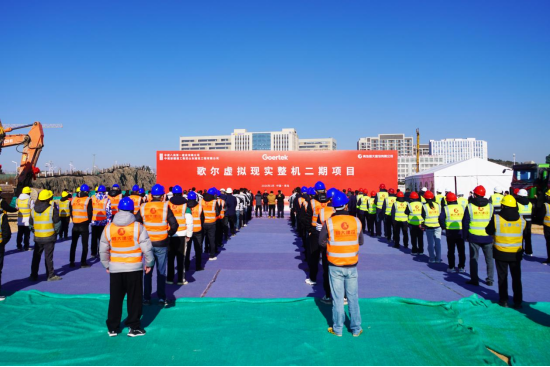
计划总投资16亿元,歌尔虚拟现实整机二期项目开工
Qi Lu Wan Bao· 2026-01-09 06:27
Group 1 - The project for the second phase of Goer’s virtual reality complete machine officially commenced on January 8, with a total investment of 1.6 billion yuan and an expected completion date in 2027 [1][3] - The project will cover a total construction area of 228,000 square meters and will include three factories and an administrative center, aimed at producing virtual reality complete machines, AI smart glasses, and core components [3][5] - Upon reaching full production by 2030, the project is expected to generate an annual output value exceeding 10 billion yuan and tax revenue of over 150 million yuan [3][5] Group 2 - This initiative follows the first phase of the virtual reality complete machine and optical module projects, marking another significant industrial layout for Goer in Laoshan [3][7] - The first phase of the project involved a total investment of 6 billion yuan, covering an area of 214 acres and a planned construction area of 350,000 square meters, with production expected to commence in 2027 [7] - The collaboration between China State Construction Engineering Corporation and Goer represents a deepening strategic partnership in the fields of virtual reality and smart hardware, contributing to Goer’s competitive positioning in the global VR industry [5]

迭代与突围:2025~2026国内LBE大空间市场洞察
Sou Hu Cai Jing· 2026-01-08 13:31
Core Insights - The domestic LBE (Large-scale Business Environment) market is entering a critical phase of scaled development in 2026, driven by technological advancements and policy support [1][3]. Development History - The evolution of the domestic LBE market has been gradual, transitioning from technological foundation and scene exploration to industrial explosion, with a clear developmental trajectory [3]. - The VR industry faced a period of adjustment from 2018 to 2020, where many small enterprises lacking core technologies were eliminated, while leading companies focused on R&D and building core capabilities [4]. - From 2023 to 2024, the VR large space industry began to experience rapid growth, with significant improvements in hardware technology and an expanding content ecosystem [5]. 2025 Market Dynamics - The LBE market in 2025 is characterized by high growth and low concentration, indicating a typical growth phase with a market size approaching one trillion [6]. - The market's low concentration is evident, with a CR10 of less than 20%, indicating that nearly 80% of related enterprises operate as single project entities [7]. - The rapid expansion of offline VR experience channels is evident, with over 5,000 experience points nationwide by the third quarter of 2025, indicating a clear trend of channel penetration into lower-tier cities [8][9]. Industry Ecosystem - The LBE industry ecosystem is becoming increasingly complete, involving hardware suppliers, software service providers, content creators, and offline operators, all collaborating to drive scale [10][11]. - Government support, industry associations, and investment institutions play crucial roles in the ecosystem, with reported financing exceeding 10 billion for the VR large space industry in 2025 [12]. 2026 Market Forecast - The LBE market is expected to exceed 180 billion in 2026, with a compound annual growth rate of over 25% from 2025 to 2030, driven by policy support, technological iteration, and rising consumer demand [13][14]. - The competitive landscape will shift towards higher concentration, with leading companies expanding through content output and franchise models, while mergers and acquisitions will accelerate [15][16]. - Technological trends will include increased application of MR (Mixed Reality) and AIGC (Artificial Intelligence Generated Content), enhancing user experience and content production efficiency [17][18]. Industry Standards and Specialization - 2026 will be a pivotal year for establishing standardized systems and deepening specialization within the LBE industry, addressing fragmentation and high collaboration costs [19][20]. - The division of labor will evolve, with content creators focusing on core development, distributors managing promotion and rights, and venue operators enhancing user experience [20]. Scene Expansion - The LBE market will expand beyond C-end entertainment to include government and enterprise services, creating new growth engines [21]. - C-end scenarios will see further segmentation, while B-end and G-end applications will emerge as significant growth drivers, particularly in industrial training and public service sectors [21]. Conclusion - The domestic LBE market has transitioned from concept trials to a trillion-dollar sector, with a focus on quality enhancement and scale expansion in 2026 [22].

广州:突破MicroLED巨量像素转移等关键技术 加快智能眼镜研发和产业化
Zheng Quan Shi Bao Wang· 2026-01-08 09:32
Core Viewpoint - The Guangzhou Municipal Government has issued a plan to accelerate the construction of a strong advanced manufacturing city from 2024 to 2035, focusing on key technologies in the display industry and aiming for a significant increase in industry scale and global competitiveness [1] Group 1: Key Technologies and Innovations - The plan emphasizes breakthroughs in critical technologies such as curved, foldable, and flexible displays, as well as the acceleration of research in quantum dots, ultra-high-definition displays, printed displays, and flexible displays [1] - There is a focus on enhancing the manufacturing of OLED panels and the innovation and mass production of key equipment for ultra-high-definition video [1] - The development of technologies for dynamic environment modeling, new displays, sensors, system development tools, real-time 3D graphics generation, and multi-source data processing is prioritized [1] Group 2: Future Goals and Industry Scale - The plan aims to achieve an industry scale of 300 billion by 2035, reinforcing Guangzhou's title as the "World Capital of Display" and establishing a globally competitive cluster in ultra-high-definition video and new display technologies [1] - The initiative includes the acceleration of research and industrialization of smart glasses and breakthroughs in key technologies such as MicroLED mass pixel transfer, silicon-based OLED ultra-high resolution, and heterogeneous computing chips [1] - The integration of virtual reality with various sectors including industrial design, healthcare, architectural design, geological exploration, intelligent transportation, cultural education, and entertainment is encouraged for innovative development [1]
广州:加快研发具有自主知识产权的操作系统、数据库、中间件、办公软件等通用基础软件
Zheng Quan Shi Bao Wang· 2026-01-08 09:23
Core Viewpoint - Guangzhou Municipal Government has issued a plan to accelerate the construction of a strong advanced manufacturing city from 2024 to 2035, focusing on developing independent software systems and enhancing product compatibility [1] Group 1: Software Development - The plan emphasizes the development of general foundational software with independent intellectual property rights, including operating systems, databases, middleware, and office software [1] - It aims to promote the establishment of new industrial software standards and achieve several landmark results in software development [1] Group 2: Industrial Software Focus - The initiative will focus on industrial general tools software such as CAD/CAM/CAE, EDA technology research and application, and common supporting technologies for industrial software [1] - There will be a push for the comprehensive application of independent innovation in industrial operating systems, middleware, industrial apps, and new database management systems [1] Group 3: Cloud Computing and Emerging Technologies - The plan includes the development of a next-generation cloud computing software system, enhancing cloud security and intelligent cloud service capabilities [1] - It supports innovations in high-performance data collection, high-capacity storage, massive information processing, artificial intelligence algorithms, toolsets, and blockchain technologies [1] - There is an emphasis on accelerating the development of new platforms related to machine learning, virtual reality, and the metaverse [1]