
软实力

Search documents
邓正红能源软实力:国际油价成为冲突“暴风眼”供需基本面与地缘风险溢价博弈
Sou Hu Cai Jing· 2025-06-14 04:50
中东冲突升级引爆油价单日暴涨7%,地缘风险溢价与供应过剩博弈下,布伦特原油短期或冲每桶90美 元,极端情形可能飙至每桶120美元。伊朗反击阈值、美国政策困境与欧佩克增产形成三重拉锯,投资 者正面临套期保值的战略窗口期。邓正红软实力表示,以色列对伊朗发动空袭,引发投资者担忧冲突扩 大可能扰乱中东石油供应,地缘溢价放大石油软实力价值,周五(6月13日)国际油价大幅走高。截至 收盘,纽约商品期货交易所西得克萨斯轻质原油7月期货结算价每桶涨4.94美元至72.98美元,涨幅 7.26%;伦敦洲际交易所布伦特原油8月期货结算价每桶涨4.87美元至74.23美元,涨幅7.02%。中东紧张 局势加剧,伊朗已发动第三波导弹袭击,向以色列方向发射约150枚导弹。以色列总理内塔尼亚胡表 示,已摧毁大量伊朗导弹库存和多个核设施;以军称伊朗大不里士的空军基地被完全摧毁。当地时间14 日,以色列急救组织"红色大卫盾"表示,在最新一轮伊朗对以色列的袭击中,有5人受伤。 国际油价成为这次冲突中的"暴风眼"。摩根大通警告称,在极端的地缘政治情况下,尤其是涉及伊朗的 情况下,油价可能会翻倍。尽管中东冲突引发避险情绪飙升,但整体而言,霍尔木兹海 ...

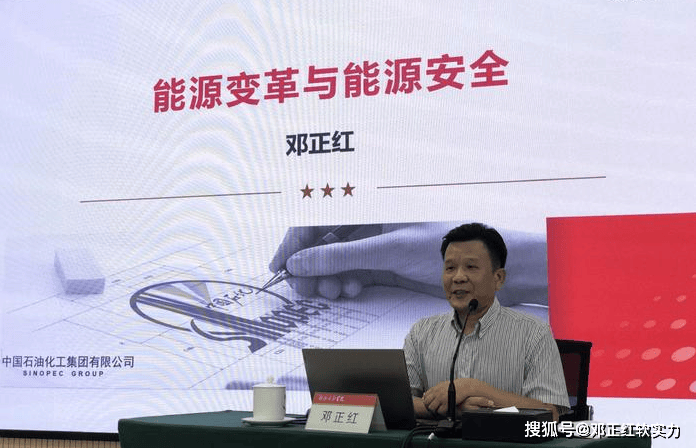
邓正红能源软实力:数据强化过剩主线逻辑 油价承压 欧佩克需求叙事支撑有限
Sou Hu Cai Jing· 2025-06-11 04:52
邓正红软实力表示,美国能源信息署(EIA)大幅上调2025年原油市场过剩预期,石油软实力承压,周 二(6月10日)国际油价小幅走低。截至收盘,纽约商品期货交易所西得克萨斯轻质原油7月期货结算价 每桶跌0.31美元至64.98美元,跌幅0.47%;伦敦洲际交易所布伦特原油8月期货结算价每桶跌0.17美元至 66.87美元,跌幅0.25%。部分因野火而停产的加拿大油砂生产正在恢复,这也推动油价从盘中高点回 落。美国商务部长卢特尼克表示,在伦敦举行的第二轮会谈进展顺利,双方正寻求在出口管制问题上取 得突破。市场对此次谈判持乐观态度,正在等待具体成果,这种预期对油价形成支撑。 美国能源信息署数据显示今年前五个月全球石油库存增加,并将在预测期内继续大幅增长。预计2025年 全球石油库存平均每日将增加0.8万桶,比上个月的的预测高出0.4万桶。供应过剩预期上调原因是经合 组织2025年的石油需求下降,以及欧佩克联盟国家和集团外国家的供应增长增加。供应过剩局面将在未 来一段时间持续施压市场,而这推动油价大方向是重心继续下移,这也意味着供应过剩是多头难以逾越 的大山,油价反弹难以扭转大的下行格局。 欧佩克秘书长海瑟姆•盖斯( ...
【环时深度】此次政学之争或给美国留下“数十年的伤痕”
Huan Qiu Shi Bao· 2025-06-10 22:47
Core Viewpoint - The article discusses the ongoing conflict between the U.S. government and universities, particularly focusing on the actions taken by the Trump administration against institutions like Columbia University and Harvard, highlighting the clash between multiculturalism and free speech [1][2][4]. Group 1: Government Actions Against Universities - The Trump administration targeted Columbia University, withdrawing $400 million in federal funding due to alleged inaction against anti-Semitic harassment [2][4]. - Other universities, including Northwestern, Pennsylvania, and Cornell, faced funding suspensions totaling $7.9 billion, $1.75 billion, and $1 billion respectively, for similar reasons [4]. - The government also revoked visas for over 300 international students accused of supporting Hamas [4]. Group 2: Response from Universities - Columbia University initially complied with several government demands, including disciplinary actions against protesting students and academic oversight of certain departments [2][4]. - Harvard University publicly rejected government demands, leading to the freezing of over $2.2 billion in federal funding and threats to revoke its tax-exempt status [6]. Group 3: Broader Implications - The actions against universities are seen as part of a larger strategy to undermine institutions perceived as aligned with Democratic values, reflecting a political divide in the U.S. [8][9]. - The government’s approach has led to significant cuts in funding for scientific research and education, impacting institutions like the CDC and NIH, which have seen budget cuts of 44% and staff reductions [7][8]. - Concerns are raised about the potential loss of talent, as international students may choose to study elsewhere, jeopardizing the U.S.'s leadership in science and technology [11]. Group 4: Cultural and Ideological Conflicts - The conflict is rooted in deeper ideological divides, with universities often viewed as bastions of liberalism and Democratic support, while the Trump administration seeks to redefine American identity and values [12][13]. - The article emphasizes that the ongoing tensions could have long-lasting effects on the U.S.'s global influence and attractiveness as a destination for international students [10][13].

【环时深度】利益分歧,美大学与政府矛盾逐渐累积
Huan Qiu Shi Bao· 2025-06-09 22:29
Group 1 - The article discusses the historical significance of American universities as a source of soft power and international influence, highlighting their role in educating future global leaders and generating economic benefits for the U.S. [1][3] - The number of international students in U.S. higher education has surged, reaching 1.1 million in the 2023-2024 academic year, with significant contributions to the economy, totaling nearly $44 billion [3][4]. - States with high concentrations of international students, such as California, Texas, and Massachusetts, have seen substantial economic benefits, with contributions of approximately $64 billion, $25 billion, and $39 billion respectively [3][4]. Group 2 - The article notes a growing discontent among the American public regarding elite education, with only 36% expressing confidence in higher education, a significant drop from 57% in 2015 [5]. - The rise of for-profit colleges has led to increased student debt and dissatisfaction, as many students struggle to graduate or find suitable employment [5][12]. - The tension between universities and the government has escalated, particularly in the context of immigration policies and the perception of universities as "leftist strongholds" [12][14]. Group 3 - The article highlights the cultural and ideological divide between elite universities and the general public, with a growing "anti-elite" sentiment emerging in American society [6][8]. - The admissions process at elite institutions has been criticized for favoring wealthy applicants, with data showing that students from the top 1% of income earners have a significantly higher chance of admission [8][9]. - The article discusses the implications of these disparities, suggesting that educational background has become a core issue in political divisions within the U.S. [8][9]. Group 4 - The article outlines the historical context of the relationship between U.S. universities and the government, noting that post-9/11 policies have tightened immigration controls affecting international students [12][13]. - It mentions specific actions taken by the Trump administration that further restricted international student access, including travel bans and tax reforms targeting universities [13][14]. - The ongoing conflict between government and universities reflects deeper societal issues, including class conflict and a crisis of trust in higher education [14].

英媒:严峻财政压力之下,英国政府大臣们被指责在争夺全球软方面“玩忽职守”
Guan Cha Zhe Wang· 2025-06-08 08:38
据英国《卫报》当地时间6月7日报道,今年由内阁大臣们发起新成立的英国软实力委员会的成员们警告称,被视为英国软实力前沿机构 的英国广播公司国际部(BBC World Service)、英国文化教育协会(British Council)以及众多顶尖高校,均面临严峻的财政压力。 【文/观察者网 熊超然】英国政府的大臣们,近日被指责在争夺全球软实力方面"玩忽职守",他们的一些顾问警告称,一场资金危机正在 削弱提升英国影响力的关键机构。 有人担心,尽管大臣们面临着"加强软实力"的呼声,但这些机构可能在下周的财政支出审查中再受影响。报道炒作渲染称,与此同时, 美国特朗普正大幅削减美国支持的软实力机构的拨款,而中国和俄罗斯两国却投入数十亿美元扩大国际影响力。 英国软实力委员会成员、高校倡导团体"英国大学联盟"(Universities UK)首席执行官薇薇安·斯特恩则警告称,与中国通过投资、奖学 金、媒体、音乐及文化项目等方式提升软实力的努力相比,人们只会觉得"我们在方向盘上睡着了(asleep at the wheel)"。 "我们继承了这个(软实力)地位,认为这是我们的神圣权利,但事实并非如此,"她直言:"你必须努力维 ...

邓正红能源软实力:供需动态平衡支撑短期油价 夏季需求高峰与降息预期共振
Sou Hu Cai Jing· 2025-06-08 03:51
Core Viewpoint - The short-term oil price is expected to experience a volatile upward trend due to the summer demand peak and interest rate cut expectations, but caution is advised regarding OPEC's production increase and fluctuating trade policies [1][2][3] Supply and Demand Dynamics - The current oil price rebound is supported by a dynamic balance between supply and demand, with OPEC planning to increase production by 411,000 barrels per day in July, alongside potential overproduction risks from countries like Kazakhstan [2] - Seasonal demand is expected to rise due to increased travel during the summer, but overall demand may be constrained by weak global economic recovery, creating a tug-of-war between strong seasonal demand and weak macroeconomic conditions [2][3] - Supply disruptions from events like Canadian wildfires and geopolitical conflicts (e.g., reduced Russian exports) are providing short-term support against the pressures of increased production [2][3] Policy Influence - The expectation of interest rate cuts by the Federal Reserve is strengthening demand-side dynamics, as lower borrowing costs could stimulate energy consumption and provide a core upward driver for oil prices [2] - Recent U.S. employment data indicates a stable job market, reinforcing the likelihood of a rate cut, which could further enhance oil demand [2] - Trade policy uncertainties, including delays in U.S.-EU negotiations and unilateral U.S. actions (e.g., sanctions on Venezuela), are creating volatility in market confidence and could negatively impact long-term oil demand resilience [2][3] Geopolitical Risks - Geopolitical tensions are amplifying supply disruption risks, with events such as the Ukraine conflict and U.S.-Iran nuclear negotiations contributing to increased oil price volatility [3] - The potential for OPEC's production increases to exceed expectations and the unpredictability of U.S. trade policies are highlighted as key risks for the oil market [3] Market Outlook - The short-term outlook for oil prices is characterized by a volatile upward trend driven by seasonal demand peaks, interest rate cut expectations, and geopolitical premiums, while mid to long-term pressures may arise from non-OPEC supply increases and potential oversupply by 2025 [3]
邓正红能源软实力:经济韧性提振油价 欧佩克增产与地缘风险交织 市场陷入拉锯
Sou Hu Cai Jing· 2025-06-07 05:24
美国可能加强对委内瑞拉制裁限制其原油出口,以及以色列可能袭击伊朗基础设施,这些因素都增加了 油价上行风险。但石油需求疲软,加上欧佩克联盟和非欧佩克产油国增产,将在未来几个季度加剧价格 下行压力。沙特阿拉伯将7月销往亚洲的原油价格下调至近两个月低点。在欧佩克联盟同意7月日增产 41.1万桶后,此次降价幅度小于预期。沙特一直主张更大幅度增产,这是其夺回市场份额并约束欧佩克 联盟成员国过度生产战略的一部分。汇丰银行表示:"根据我们估算,随着夏季石油需求回升并在7-8月 达到峰值,与欧佩克联盟增产相匹配,二三季度市场将趋于平衡。此后欧佩克联盟加速增产将导致2025 年第四季度出现比此前预期更大的供应过剩。" 美东时间周五(6月6日),美国劳工统计局公布的数据显示,5月非农就业人数增加13.9万人,尽管较 上月数据有所放缓,但仍高于市场预期。失业率则维持在4.2%不变。美联储哈克表示,不确定性使得 预测货币政策前景变得非常困难。在存在不确定性的情况下,美联储仍有可能在今年晚些时候降息。美 国5月非农就业报告是"稳健的",关税的影响尚未完全显现。美联储的利率政策具有适度的限制性。现 在是美联储保持稳定并观察数据的时候了。 ...
邓正红能源软实力:贸易谈判预期升温 原油市场仍缺乏清晰可持续的交易主线
Sou Hu Cai Jing· 2025-06-06 03:22
Group 1 - The market optimism regarding the outcomes of the US-China leaders' call has boosted investor expectations for economic growth and oil demand, leading to an increase in international oil prices [1] - As of the close on June 5, West Texas Intermediate crude oil for July delivery settled at $63.37 per barrel, up $0.52, a rise of 0.83%, while Brent crude for August delivery settled at $65.34 per barrel, up $0.48, a rise of 0.74% [1] - Despite expectations of increased production from OPEC potentially leading to oversupply, geopolitical events and Canadian wildfires may reduce oil output, providing support for oil prices [1] Group 2 - Current limited growth in oil supply, coupled with a gradual recovery in seasonal demand, is expected to help oil prices continue their oscillating recovery trend [2] - The easing of tariffs has positively impacted market risk appetite and economic demand expectations, although long-term risks remain unresolved [2] - The oil market is facing multiple significant variables, including geopolitical situations in Ukraine and Iran, OPEC production conditions, summer consumption performance, US tariff policies, and negotiation progress [2] Group 3 - The communication between US and China leaders has enhanced trade negotiation expectations, creating a strategic buffer through institutional dialogue mechanisms, which has effectively countered concerns over OPEC's increased production [3] - Despite high interest rates from the Federal Reserve suppressing demand and Saudi Aramco lowering crude prices for Asia, the market remains focused on the "peace premium" resulting from improved US-China relations [3] - The complexity of geopolitical conflicts and supply chain disruptions has heightened investor sensitivity to marginal improvements, shifting capital from "conflict discounts" to "easing premiums" [3] Group 4 - The oil market is in a "tight balance" due to limited supply elasticity, with OPEC's overproduction and production increase expectations partially offset by geopolitical events and seasonal demand recovery [4] - The resilience in demand is supported by the upcoming summer consumption peak and the easing of US-China tariffs, which improves manufacturing expectations [4] - The current oil price volatility highlights the market's lack of a sustainable trading narrative, influenced by policy variables, geopolitical tensions, and OPEC's production discipline [4]
也许,你比AI更懂价值的真谛
3 6 Ke· 2025-06-03 09:43
Group 1 - The article emphasizes the importance of understanding trends as they reshape environments, opportunities, and entire industries, highlighting that many individuals may find themselves outpaced by changes despite their hard work [2][3][5] - AI is presented as a prime example of a trend that can be integrated into various job functions to enhance efficiency, suggesting that repetitive tasks should be delegated to AI to focus on more valuable activities [4][10] - The article discusses how trends can guide career decisions, such as whether to deepen expertise in a current field or pivot to a new one, and how tools like ChatGPT can significantly improve work efficiency [6][10] Group 2 - The author introduces the concept of "soft power," which encompasses skills like judgment, emotional understanding, and interpersonal relationships, asserting that these are crucial in the AI era [15][16] - Real-life examples illustrate that while AI can handle data processing and logical reasoning, it cannot replicate the human ability to connect emotionally and build trust, which is essential in fields like sales and public relations [17][19] - The article suggests that individuals should leverage AI as a "super tool" to handle standard tasks, allowing them to concentrate on uniquely human capabilities such as empathy and creativity [22][23] Group 3 - The article proposes three strategies for individuals to find their unique "irreplaceability" in the AI era: using AI for repetitive tasks, cultivating genuine relationships based on shared values, and developing a personal brand through consistent output of valuable content [21][24][26] - It emphasizes the importance of creating a "minimum replicable influence," where individuals can share their expertise in a way that benefits others, thereby building a personal brand that stands out in a crowded digital landscape [26][28] - The overarching message is that success in the AI era will not come from being faster or smarter than AI, but from identifying and amplifying the unique human qualities that AI cannot replicate [28][29]
邓正红能源软实力:美国经济数据疲软叠加欧佩克增产预期 国际油价冲高回落
Sou Hu Cai Jing· 2025-05-30 04:00
美国经济数据疲软叠加欧佩克增产预期,国际油价冲高回落。需求侧崩塌与供给侧扩张形成主要矛盾, 地缘风险与政策博弈加剧市场波动,油价呈现"脉冲式反弹、趋势性承压"特征。邓正红软实力表示,美 国经济数据疲软,投资者对原油供应增加的前景感到担忧,削弱了此前法院叫停特朗普政府一系列关税 所带来的风险偏好情绪,石油软实力承压,周四(5月29日)国际油价走低。截至收盘,纽约商品期货 交易所西得克萨斯轻质原油7月期货结算价每桶跌0.90美元至60.94美元,跌幅1.46%;伦敦洲际交易所 布伦特原油7月期货结算价每桶跌0.75美元至64.15美元,跌幅1.16%。尽管当天亚洲时段早盘时段美国 国际贸易法院"叫停"特朗普政府一揽子关税的消息提振油价一度涨超1%,但对欧佩克联盟机制下的8个 产油国可能在7月份再次以较快速度退出自愿减产的担忧不减,最终令油价冲高回落。美国公布的数据 显示经济在第一季度出现收缩,这进一步打压了油价。 雪佛龙因核心许可证于3月被特朗普政府吊销,已终止在委内瑞拉的原油生产及其他业务,这加剧供应 风险。委内瑞拉4月以美国制裁导致付款不确定性为由,取消了雪佛龙的原油装载计划。此前该公司每 日出口29万桶委内 ...