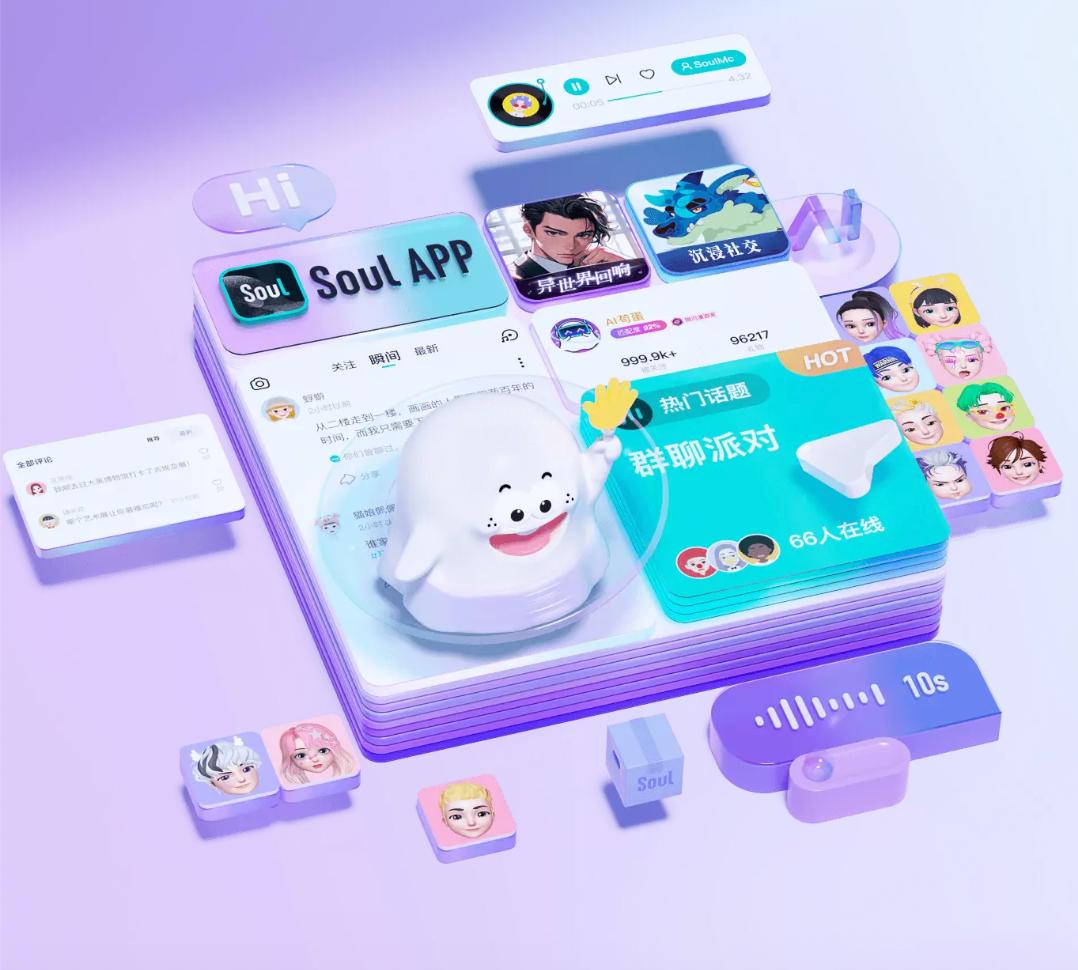
AI社交

Search documents
内部人士回应腾讯元宝发力AI社交
Ge Long Hui A P P· 2026-01-26 03:24
Core Viewpoint - Tencent's AI assistant "Yuanbao" has quietly launched a new version for internal testing, introducing a new social feature called "Yuanbao Club" for users to create or join social groups [1] Group 1 - The "Yuanbao Club" allows users to explore new social scenarios [1] - Users can engage in various social activities such as "Ask Yuanbao," "Share Screen," "Watch Movies Together," and "Listen to Music Together," which will be gradually rolled out soon [1]

社交出海大年,成也AI败也AI
创业邦· 2026-01-14 10:10
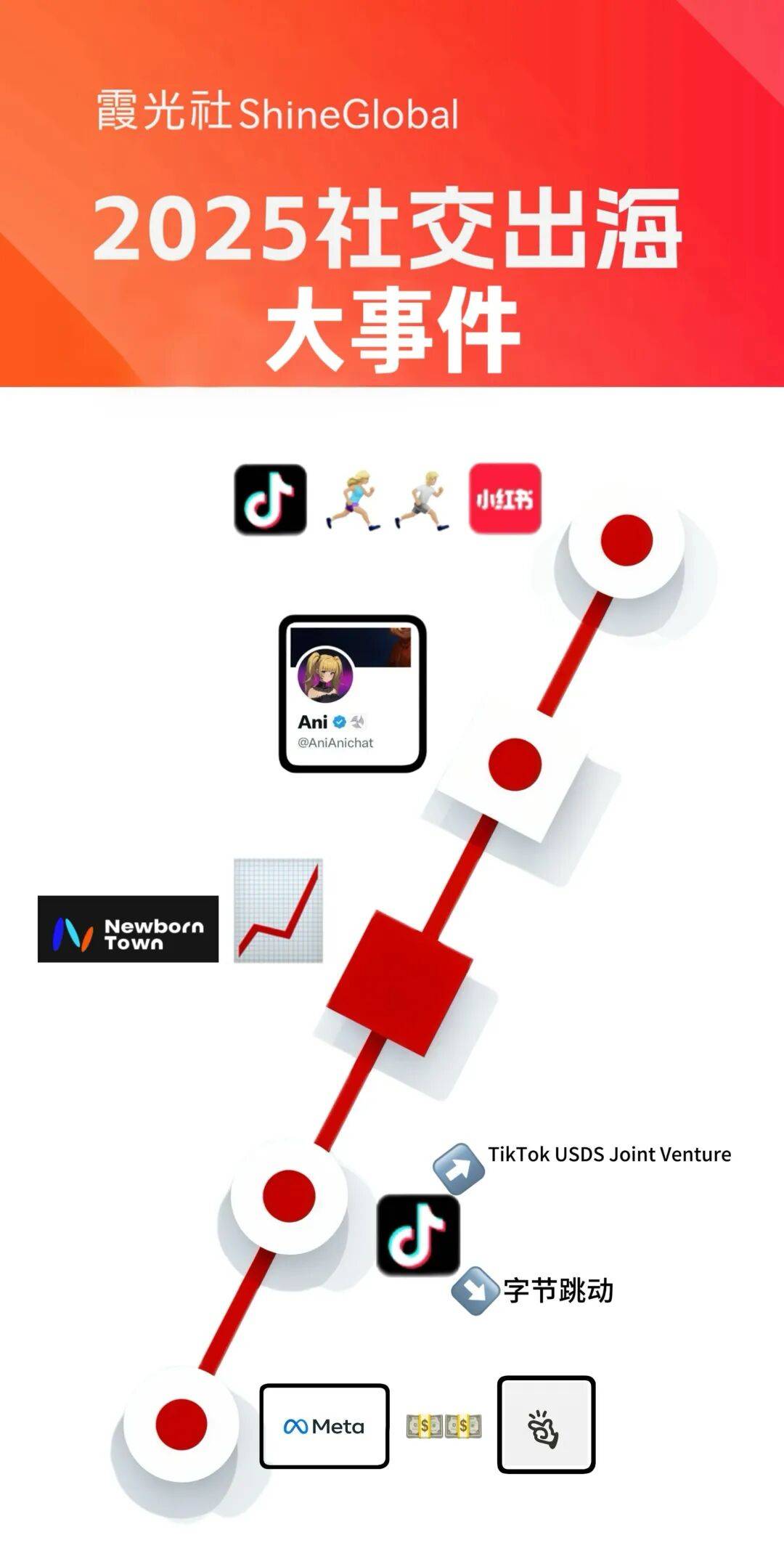
Core Insights - The article discusses the significant trends and developments in the social media industry, particularly focusing on the globalization of social applications and the integration of AI technology in 2025 [5][10][21]. Group 1: Social Media Trends - In 2025, social media expansion saw major events, including the surge of users on platforms like Xiaohongshu following the TikTok ban in the U.S., with over 700,000 new users in just two days [5]. - The Middle East has emerged as a lucrative market for social media, with 74,256 new social apps launched in countries like Saudi Arabia and the UAE in 2025 [12]. - The average monthly active users for BIGO reached 260.4 million globally, with Bigo Live having 28.9 million monthly active users, indicating strong engagement in the Middle East [12]. Group 2: AI Integration in Social Media - The integration of AI in social applications has become a focal point, with significant commercial success stories emerging, such as Meitu's BeautyCam topping app charts in 119 countries [21][23]. - AI-driven applications accounted for over 75% of growth in the social sector, with notable examples including Talkie, which reached 34.89 million monthly active users [23]. - The AI social landscape is characterized by a mix of opportunities and challenges, with many applications struggling to maintain user engagement after initial success [25][26]. Group 3: Marketing and User Acquisition - The cost of customer acquisition has doubled in regions like the Middle East, with average costs reaching around $3 per user, indicating a shift from explosive growth to a focus on sustainable user retention [34]. - There is a notable trend towards precision marketing, with a 12.43% decrease in the number of social applications investing in advertising, while the average monthly material volume per advertiser increased by 47.37% [35]. - Influencer marketing has gained traction as a key strategy for connecting brands with users, particularly in markets where safety and community trust are paramount [36][38]. Group 4: Localization Strategies - Localization has become a critical strategy for social media companies, focusing on product design, user experience, and brand engagement to resonate with local cultures [40][41]. - The emergence of "invisible" localization strategies, where local companies act as intermediaries while leveraging Chinese expertise, has been observed, exemplified by the app JACO achieving top rankings in Saudi Arabia and the UAE [42]. - Companies are increasingly recognizing the importance of integrating into local communities and creating value to enhance user trust and engagement [45]. Group 5: Regulatory Challenges - The social media landscape in 2025 is marked by stricter regulatory scrutiny, with numerous applications facing bans due to compliance issues, particularly concerning child safety [46][48]. - The rise in regulatory challenges has led to a significant number of applications being removed from markets, prompting a shift in resources towards more compliant platforms [49]. - Companies are advised to diversify their market presence and focus on both global and local strategies to mitigate risks associated with regulatory changes [49].


社交出海大年,成也AI败也AI
Sou Hu Cai Jing· 2026-01-14 07:19
Core Insights - 2025 is marked as a significant year for social media expansion, with major events impacting the industry, including user migration from TikTok to Xiaohongshu and the introduction of AI-driven applications [1][2]. Group 1: Social Media Trends - The influx of "TikTok refugees" to Xiaohongshu resulted in over 700,000 new users within two days, indicating a shift in user engagement between platforms [1]. - In the Middle East, social media applications are increasingly focusing on attracting high-value streamers, with some platforms offering over 100% revenue share to secure talent [6][8]. - The number of new social apps launched in the Middle East reached 74,256, highlighting the region's growing importance in the social media landscape [9]. Group 2: Market Dynamics - The average monthly active users for BIGO reached 260.4 million globally, with Bigo Live accounting for 28.9 million, demonstrating the platform's strong market presence [7]. - The competitive landscape in the Middle East is characterized by a significant presence of Chinese companies, which dominate the social media sector [8]. - The cost of customer acquisition in the Middle East has doubled, with current costs around $3 per user, indicating a shift towards a more competitive market environment [32][33]. Group 3: AI Integration - AI technologies are increasingly integrated into social media applications, with AI-driven features contributing to over 75% of growth in the sector [21]. - Successful AI applications, such as BeautyCam, have achieved significant global downloads and revenue, showcasing the potential for AI in enhancing user engagement [21]. - The combination of AI and social interaction is still evolving, with many companies exploring new ways to integrate AI into social experiences [32]. Group 4: Localization Strategies - Localization has become a critical strategy for social media companies, particularly in the Middle East, where adapting to local cultures and user preferences is essential for success [37][39]. - Companies are increasingly employing local teams to enhance their understanding of regional markets, which helps in building trust and user loyalty [41][43]. - The trend of "invisible localization," where local companies act as intermediaries while leveraging Chinese expertise, is gaining traction in the Middle East [42]. Group 5: Regulatory Environment - The global social media market is facing stricter regulatory scrutiny, with multiple platforms being banned for violations related to child safety and content moderation [46][49]. - New regulations in various countries, including the U.S. and Australia, are imposing restrictions on social media usage among minors, impacting user demographics [47][48]. - The increasing number of app removals due to compliance issues is reshaping the competitive landscape, favoring established platforms with robust compliance measures [49][50].
2025出海盘点:社交出海大年,成也AI败也AI
3 6 Ke· 2026-01-13 12:28
Core Insights - 2025 is marked as a significant year for social media expansion, with notable events such as the influx of users from TikTok to Xiaohongshu and the launch of AI-driven social applications [1][2][6] Group 1: Social Media Trends - The year saw a surge in social media applications, particularly in the Middle East, with 74,256 new social apps launched in countries like Saudi Arabia and the UAE [7] - Southeast Asia is emerging as a new growth area for social media, with platforms integrating local influencers to enhance user engagement [14][16] - The competitive landscape in the Middle East is intensifying, with many new entrants struggling to gain traction against established players [11][12] Group 2: AI Integration - The integration of AI in social applications has become a focal point, with significant advancements leading to a surge in user engagement and monetization opportunities [17][20] - Successful AI-driven applications, such as BeautyCam, have achieved top rankings in multiple countries, showcasing the potential of AI in enhancing user experience [21][23] - The AI social sector is characterized by a mix of opportunities and challenges, with many new entrants failing to sustain their growth [28][26] Group 3: Marketing Strategies - The marketing approach for social media applications is shifting from aggressive user acquisition to more refined strategies focusing on brand value and user retention [35][36] - Influencer marketing has gained prominence as a key strategy for connecting brands with users, particularly in markets where user safety and community trust are paramount [38] Group 4: Localization Efforts - Localization remains a critical strategy for social media companies, particularly in the Middle East, where adapting to local cultures and user preferences is essential for success [39][41] - The concept of "invisible localization" is emerging, where local companies act as intermediaries while leveraging the expertise of Chinese firms in technology and operations [42][45] Group 5: Regulatory Challenges - The social media landscape is facing increased regulatory scrutiny, leading to the shutdown of numerous applications due to compliance issues [48][49] - Companies are urged to diversify their market presence and enhance local operations to mitigate risks associated with regulatory changes [50]




字节“上新”AI视频应用,正面迎战OpenAI、阿里
3 6 Ke· 2026-01-09 11:25
Core Insights - 2025 is a significant year for ByteDance's app factory, with Doubao leading AI applications with over 100 million daily active users, and Hongguo short videos surpassing 200 million monthly active users [1] - Despite these successes, the core platform Douyin may become a vulnerability for ByteDance, especially with the emergence of competitors like OpenAI's Sora App, which briefly gained popularity [1][11] - The launch of the new app "Suibian" by ByteDance aims to fill potential gaps in the short video market and explore the next generation of video platforms [3][4] ByteDance's New App "Suibian" - "Suibian" is positioned as a trendy community under Douyin, aiming to attract users with AI features and creative video ideas [4][6] - The app serves as both a defensive measure against competition and an experimental platform for new video functionalities [3][6] - Initial user feedback indicates mixed reactions, with some praising it as a "pure version of Douyin" while others criticize it for being another similar app [7] Competitive Landscape - OpenAI's Sora App, despite initial success, faced significant user retention challenges, highlighting the difficulties of maintaining engagement on AI-driven platforms [11][13] - Alibaba's Qianwen App is also entering the AI video space, introducing features like "AI Theater" to differentiate itself from Doubao and attract users [15][17] - The competition is intensifying as both Douyin and Kuaishou are actively developing AI video and social platforms, indicating a strategic race for the next generation of entertainment [19][21] Future Trends - The integration of AI capabilities in video and social interactions is expected to become increasingly important, with users seeking more engaging and personalized experiences [19][23] - As the technology matures and costs decrease, applications like Keling AI may transition to free models, potentially increasing user adoption and competition in the AI video space [23][24] - The ongoing developments suggest a looming battle among major players for dominance in the AI entertainment sector, with significant implications for user engagement and content creation [24]
聚焦Z世代社交需求,「秘光」用AI构建“人+AI+人”的新关系 | 早期项目
3 6 Ke· 2026-01-07 00:02
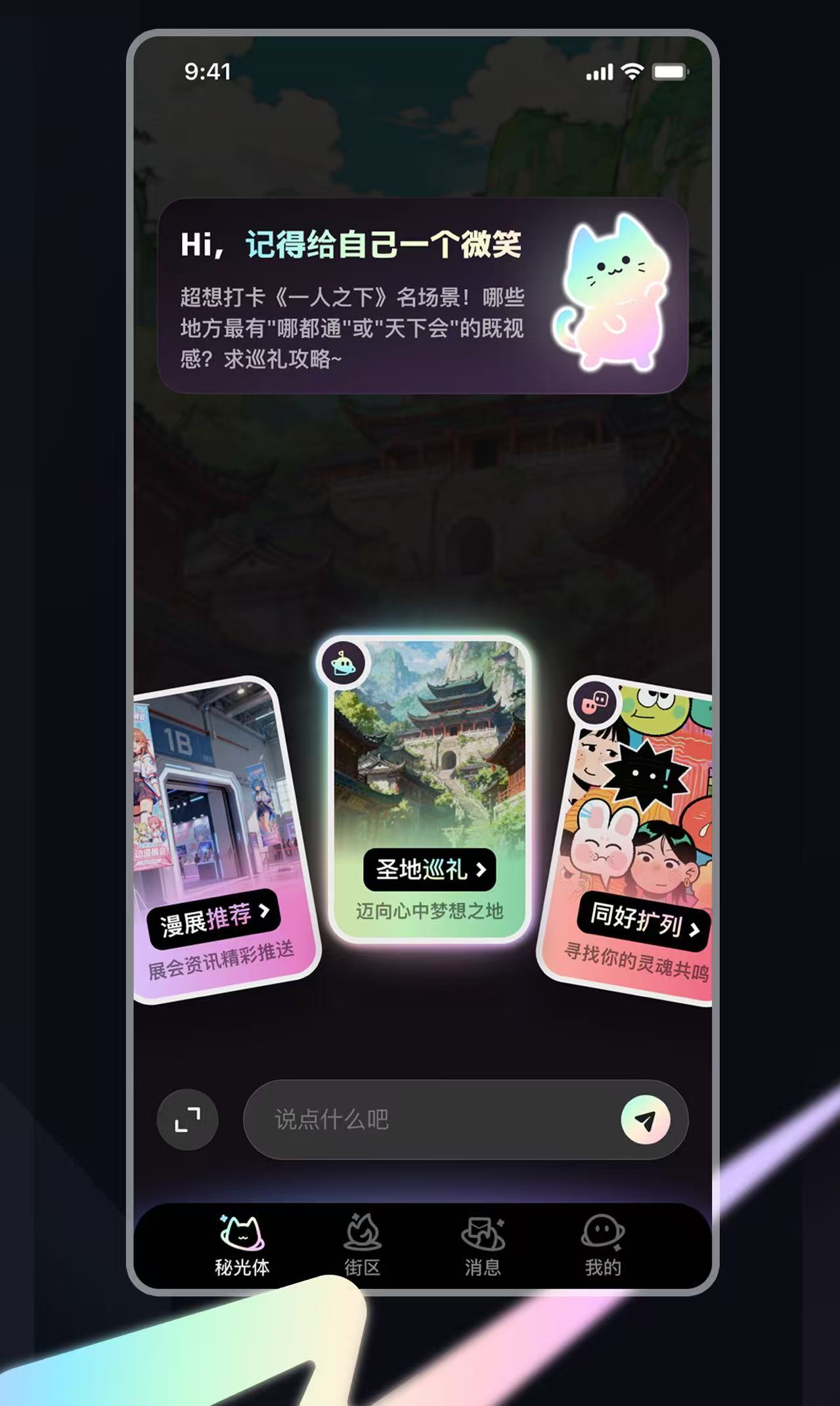
Core Insights - The article discusses the emergence of AI applications in social interactions, particularly focusing on the product "Secret Light" which aims to fill the gap in human-AI-human interactions [1][4]. Group 1: Product Overview - "Secret Light" is developed by a team with members from major tech companies like SenseTime, Tencent, Douyin, Baidu, and Pinduoduo, targeting the AI social interaction space [1]. - The product features an AI assistant named "Light Meow," which has an independent psychological model designed to engage users and address their social anxieties [1][4]. Group 2: User Interaction and Experience - "Light Meow" enhances user interaction by incorporating physical actions in conversations and sharing its internal thoughts to reduce social relationship uncertainties [1][4]. - The AI's thought process is visualized as a "magical experience," transforming decision-making into an engaging display that alleviates user anxiety while providing a sense of control [4][6]. Group 3: Social Dynamics and Features - The AI not only assists individual users but also facilitates interactions between users by decoding social jargon and helping users identify similar interests [6][9]. - Users can create their own digital avatars to express emotions and personality traits, serving as social business cards [6][9]. Group 4: Technological Framework - The team has developed a proprietary "Master-Slave Multi-Agent Architecture" (Migents V1.0) specifically designed for social scenarios, which is crucial for meeting user needs [6][9]. - The AI aims to evolve into a more human-like entity that can sense user emotions and environments, fostering a two-way communication dynamic [9]. Group 5: Future Aspirations - The ultimate goal is to create a mixed-reality social environment where real people, AI agents, and digital avatars coexist, emphasizing the quality and depth of social interactions over distinguishing between human and AI [9].
Soul距离IPO又近一步?高度依赖虚拟礼物打赏,对赌压力悬而未决
Sou Hu Cai Jing· 2025-12-15 03:10
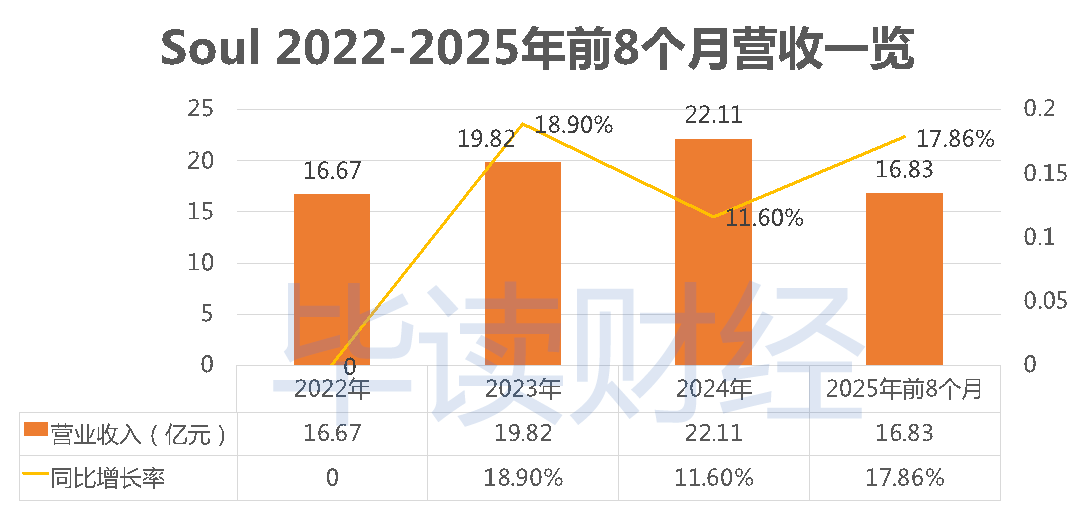
Core Viewpoint - Soulgate Inc., the parent company of Soul, has submitted its fourth application for a mainboard listing on the Hong Kong Stock Exchange after three previous unsuccessful attempts, aiming to leverage AI-driven emotional social networking to regain investor interest while showcasing profitable financial data [1][10]. Financial Performance - Soul reported revenues of 16.67 billion in 2022, increasing to 19.82 billion in 2023, and projected to reach 22.11 billion in 2024, reflecting a compound annual growth rate of approximately 15.2% [5]. - The adjusted net profit for 2023 is 3.61 billion, with projections of 3.37 billion for 2024 and 2.86 billion for the first eight months of 2025 [1][7]. - Despite these figures, the company has accumulated losses exceeding 8.22 billion over three years, with net losses of 5.08 billion, 1.29 billion, 1.49 billion, and 0.36 billion for the years 2022, 2023, 2024, and the first eight months of 2025, respectively [7][8]. Revenue Structure - Soul's revenue is heavily reliant on emotional value services, which accounted for over 90% of total income from 2022 to 2025, while advertising and other business revenues contributed less than 10% [8][11]. - The company faces challenges due to its single revenue structure, which could be impacted by regulatory changes affecting live streaming and virtual consumption [8][10]. Market Position - Soul has seen a decline in user growth, with average monthly active users (MAU) dropping to 26.2 million in 2024, a decrease of 17.09% from its peak in 2021 [9]. - The competitive landscape is intensifying, with platforms like Douyin, Kuaishou, and Xiaohongshu encroaching on its user base, making it difficult for Soul to replicate the connection efficiency of WeChat or the content moat of Bilibili [9]. Debt Pressure - The company is under significant pressure from a convertible redeemable preferred stock liability of 12.4 billion, stemming from agreements made during previous funding rounds, which could trigger a liquidity crisis if the IPO fails [10][13]. - This debt pressure is a driving force behind Soul's repeated attempts to go public, as it seeks to maintain valuation and secure a listing window [10][12]. Strategic Shift - Soul has pivoted towards an AI+social strategy, introducing its self-developed model "Soul X" for user matching and content generation, although these AI functionalities have yet to generate independent revenue streams [10][11]. - The AI strategy is currently more focused on enhancing user experience rather than serving as a direct revenue generator, raising concerns about its effectiveness in improving user payment willingness or reducing customer acquisition costs [11][12]. IPO Journey - Soul's IPO journey has been fraught with challenges, having attempted to list in the U.S. in 2021 before shifting focus to Hong Kong, where it has faced multiple setbacks due to external market conditions and internal operational issues [12][13]. - The upcoming IPO attempt will be scrutinized closely by the Hong Kong Stock Exchange, particularly regarding how the company addresses previous concerns about its business model and debt obligations [13].
一波三折的上市路,Soul的“新故事”能怎么讲?
2 1 Shi Ji Jing Ji Bao Dao· 2025-12-03 00:17
Core Viewpoint - Soul App has submitted its third prospectus to the Hong Kong Stock Exchange, marking its fourth attempt to go public after previous rejections and withdrawals in the U.S. market [1][2] Group 1: Listing Attempts - Soul's journey to IPO has been tumultuous, with the company initially aiming for a NASDAQ listing in 2021 but pausing the process due to internal considerations and support from major shareholder Tencent [2] - Legal challenges, including a lawsuit from Uki over unfair competition, have also hindered Soul's listing efforts, resulting in a freeze of 26.93 million yuan shortly after the IPO application [2] - After two failed submissions to the Hong Kong Stock Exchange in 2022 and 2023, Soul is now making another attempt after more than two years [1][2] Group 2: Financial Performance - In 2023, Soul achieved a profitability turning point, projecting an adjusted net profit of 337 million yuan for 2024, with revenue for the first eight months of 2025 nearing the total revenue of 2022 at 1.683 billion yuan [3] - Revenue figures from 2020 to 2022 show a growth trajectory: 498 million yuan in 2020, 1.2812 billion yuan in 2021, and 1.6674 billion yuan in 2022, with gross margins increasing from 79.9% to 86.3% during the same period [3] - The majority of Soul's revenue comes from emotional value services, which account for over 90% of total revenue, while advertising and other business revenues contribute less than 10% [3][4] Group 3: User Engagement and Demographics - As of August 31, 2025, Soul has approximately 390 million registered users, with daily active users averaging 11 million, 78.7% of whom are from Generation Z [4] - Users spend an average of over 50 minutes daily on the platform, with an 86% engagement rate and a monthly retention rate of 80% [4] - The average monthly revenue per paying user is 104.4 yuan, indicating a stable but potentially stagnant user base in terms of growth [5] Group 4: Strategic Positioning and AI Integration - Soul has shifted its positioning over the years, evolving from "soul social" to "social metaverse for youth," and now to "AI + immersive social" [5][6] - The company emphasizes AI as a core competitive advantage, leveraging its self-developed emotional value model and AI recommendation systems to enhance user experience [5][6] - However, the high costs associated with AI development have risen significantly, from 187 million yuan in 2020 to a projected 546 million yuan in 2024, with 407 million yuan already spent in the first eight months of this year [6][7] Group 5: Regulatory and Compliance Challenges - The integration of AI into Soul's platform raises concerns regarding compliance and regulatory risks, particularly around content generation, copyright issues, and user data privacy [7] - The ongoing debate about the authenticity of AI interactions on the platform highlights the complexities and challenges faced by the company in navigating technological advancements and user expectations [7]
从亏15亿到赚10亿,Soul变身AI社交再次冲击IPO
Sou Hu Cai Jing· 2025-12-01 10:53
Core Viewpoint - Soulgate Inc., the parent company of the social platform Soul, has submitted an IPO application to the Hong Kong Stock Exchange, with Tencent as a strategic investor holding 49.9% of the shares. The company aims to overcome previous IPO failures and has demonstrated a turnaround in profitability [2][3]. Financial Performance - Soul's revenue for 2022, 2023, and 2024 is projected to be 1.667 billion, 1.846 billion, and 2.211 billion RMB, respectively, with a compound annual growth rate exceeding 15%. The adjusted net profit for the same years is expected to be -21.89 million, 361 million, and 337 million RMB, indicating a significant recovery [3][4]. - The total adjusted net profit for the first eight months of 2025 is projected to be 286 million RMB, with the total net profit for 2023-2025 expected to approach 1 billion RMB [3]. Revenue Breakdown - Soul's primary revenue sources are emotional value services (approximately 90% of total revenue) and advertising (around 10%). Emotional value services include user in-app purchases and subscription income, while advertising revenue has shown a growth rate of 64% from 140 million to 239 million RMB between 2022 and 2024 [4][5]. - Within emotional value services, virtual goods revenue significantly surpasses membership subscriptions, with the majority coming from user-to-user virtual gifts [6]. User Engagement Metrics - As of August 2025, Soul's monthly active users (MAU) are projected to be 28 million, with daily active users (DAU) reaching 11 million. The average revenue per paying user (ARPU) has increased from 75.3 RMB in 2022 to 104.4 RMB by August 2025, reflecting a 38.6% growth [8][9]. - The user engagement metrics indicate that while the number of paying users has remained relatively stable, the average income per paying user has risen, showcasing improved monetization strategies [9][10]. AI Integration - Soul has integrated AI into its platform, enhancing user interaction through features like AI virtual companions and recommendation systems. The AI Booster function has gained traction, with 4.6 million daily active users by August 2025, accounting for about 40% of total DAU [10][16]. - The AI capabilities are centered around a model called Soul X, which processes various data types and aims to enhance user emotional engagement and interaction efficiency [11][13]. Market Challenges - Despite the positive financial indicators, Soul faces challenges similar to those of Tinder, including stagnation in user growth and reliance on monetizing existing users rather than expanding the user base. The current paying rate stands at 6.5%, which is lower than Tinder's approximately 12% [19].

腾讯投她,要IPO了
3 6 Ke· 2025-12-01 02:42
Core Insights - Soul, a social platform founded by Zhang Lu in 2015, has submitted its IPO application to the Hong Kong Stock Exchange, marking its attempt to go public after previous unsuccessful attempts [1][5][6] - The platform, which focuses on "soulful socializing" without relying on user contacts or emphasizing appearance, has seen significant growth in its user base, particularly among Generation Z [3][6] - Despite its growth, Soul faces challenges in a competitive market that has shifted away from the once-thriving stranger socialization sector, which is now experiencing a deep reshuffle [1][5] Company Overview - Soul was founded by Zhang Lu, who previously worked in consulting and identified a gap in the market for a social product focused on emotional expression [2][3] - The platform launched in 2016 with a mission to eliminate loneliness, utilizing interest tests and algorithmic matching for user interactions [3] - Soul's user base has grown to approximately 390 million registered users, with daily active users reaching 11 million, 78.7% of whom are from Generation Z [6] Financial Performance - Soul's revenue has shown a steady increase, with figures of 16.67 billion RMB in 2022, 18.46 billion RMB in 2023, and projected 22.11 billion RMB in 2024 [6][7] - The company achieved profitability in 2023, with an adjusted net profit of 3.37 billion RMB projected for 2024, and 2.86 billion RMB for the first eight months of 2023, reflecting a 73% year-on-year growth [6][7] - The primary revenue source is from "AI-driven emotional value services," including virtual goods and membership privileges, contributing over 90% of total revenue [7][8] Market Position and Challenges - Soul's major shareholders include Tencent, which holds a 49.9% stake, and other notable investors like miHoYo and various venture capital firms [9] - The platform's unique selling proposition of "soul matching" has been criticized for fostering environments conducive to scams and inappropriate content, leading to past regulatory scrutiny [9] - The broader social media landscape remains competitive, with various companies attempting to capture market share in the stranger socialization space, which has seen declining user engagement in established platforms [10][13]