多闪

Search documents
抖音成为2026年总台新媒体《竖屏看春晚》独家合作伙伴,支持多机位并行直播
Ge Long Hui· 2026-02-02 13:13
Core Insights - Douyin has become the exclusive partner for the 2026 Spring Festival Gala's new media "Vertical Screen Viewing" experience, enhancing the audience's viewing options [1] - The platform will offer multiple live streaming formats, including vertical, horizontal, and behind-the-scenes content, utilizing multi-camera technology for a comprehensive viewing experience [1] - A special "Barrier-Free Broadcast" feature will be introduced to improve accessibility for visually and hearing-impaired audiences [1] Group 1 - Douyin will focus on creating a vertical screen viewing experience that caters to mobile usage habits, allowing for a more immersive appreciation of performances [1] - The platform's multi-camera capabilities will enable seamless switching between horizontal and vertical views, providing diverse perspectives of the gala [1] - The integration of the news channel's special program "Year After Year" into Douyin's live stream will offer an interactive behind-the-scenes experience [2] Group 2 - Douyin has launched a pre-event campaign called "Watch the Spring Festival Gala on Douyin for New Year Blessings," allowing users to reserve live streams and participate in prize draws [2] - Various platforms, including Douyin, Douyin Lite, and Douyin Volcano, will collaborate to provide users with a range of New Year gifts, enhancing the festive atmosphere [2]


字节“上新”AI视频应用,正面迎战OpenAI、阿里
3 6 Ke· 2026-01-09 11:25
Core Insights - 2025 is a significant year for ByteDance's app factory, with Doubao leading AI applications with over 100 million daily active users, and Hongguo short videos surpassing 200 million monthly active users [1] - Despite these successes, the core platform Douyin may become a vulnerability for ByteDance, especially with the emergence of competitors like OpenAI's Sora App, which briefly gained popularity [1][11] - The launch of the new app "Suibian" by ByteDance aims to fill potential gaps in the short video market and explore the next generation of video platforms [3][4] ByteDance's New App "Suibian" - "Suibian" is positioned as a trendy community under Douyin, aiming to attract users with AI features and creative video ideas [4][6] - The app serves as both a defensive measure against competition and an experimental platform for new video functionalities [3][6] - Initial user feedback indicates mixed reactions, with some praising it as a "pure version of Douyin" while others criticize it for being another similar app [7] Competitive Landscape - OpenAI's Sora App, despite initial success, faced significant user retention challenges, highlighting the difficulties of maintaining engagement on AI-driven platforms [11][13] - Alibaba's Qianwen App is also entering the AI video space, introducing features like "AI Theater" to differentiate itself from Doubao and attract users [15][17] - The competition is intensifying as both Douyin and Kuaishou are actively developing AI video and social platforms, indicating a strategic race for the next generation of entertainment [19][21] Future Trends - The integration of AI capabilities in video and social interactions is expected to become increasingly important, with users seeking more engaging and personalized experiences [19][23] - As the technology matures and costs decrease, applications like Keling AI may transition to free models, potentially increasing user adoption and competition in the AI video space [23][24] - The ongoing developments suggest a looming battle among major players for dominance in the AI entertainment sector, with significant implications for user engagement and content creation [24]

字节杀到大厂护城河下
财联社· 2025-12-07 12:34
Core Viewpoint - ByteDance is aggressively pursuing AI hardware solutions, particularly through collaborations with smartphone manufacturers, to enhance its AI capabilities and create a controlled hardware entry point for its applications [4][5][7]. Group 1: AI Hardware Strategy - ByteDance's recent partnership with ZTE to launch an AI smartphone has garnered significant attention, reflecting a strategy similar to "Huawei's car manufacturing" approach, where the company focuses on software and AI rather than direct hardware production [4][5]. - The company is also developing AI glasses, with plans for a potential release next year, indicating a broader commitment to hardware innovation [4]. - ByteDance's AI application, Doubao, has seen a dramatic increase in daily token usage, growing from 120 billion in May 2022 to 30 trillion by September 2023, marking a 253-fold increase [5][6]. Group 2: Market Position and Competition - ByteDance's Doubao has consistently ranked at the top of AI applications in China, showcasing the company's strength in leveraging traffic from its C-end applications to support its AI infrastructure [5][6]. - The daily token usage of Doubao is comparable to major competitors, with Google at 43 trillion and Baidu around 10 trillion, highlighting ByteDance's competitive position in the AI market [6]. - The collaboration with smartphone manufacturers allows ByteDance to validate its AI capabilities at a lower cost while integrating deeply with the operating system for enhanced user experience [7]. Group 3: Challenges in Hardware Development - ByteDance's history in hardware has been tumultuous, with previous attempts such as the Smartisan phone and Pico VR facing various challenges and adjustments [8][9]. - The acquisition of Pico was initially seen as a significant move, akin to Facebook's acquisition of Oculus, but the business faced setbacks and leadership changes, leading to a period of stagnation [9]. - The recent acquisition of the Oladance headphone team and the subsequent launch of the Ola Friend product indicate a sense of urgency in expanding hardware offerings, despite mixed user feedback on the product's effectiveness [10]. Group 4: Future Prospects and Ecosystem Integration - The success of the AI smartphone hinges on the integration of a rich ecosystem alongside the hardware, as past failures in AI hardware often stemmed from a lack of supporting content and applications [12]. - ByteDance's AI smartphone aims to provide a seamless user experience by allowing cross-application automation, positioning itself as a potential disruptor to traditional app engagement models [12][13]. - Concerns regarding user engagement and financial security have emerged, with reports of risk control measures being implemented on financial applications following the smartphone's release [13][14].

豆包“输入”微信里
3 6 Ke· 2025-12-01 09:30
Core Insights - Doubao has launched a new product, Doubao Input Method, aiming to disrupt the traditional input method market dominated by WeChat and other established players [1][5] - The input method market has seen limited innovation until the introduction of WeChat Input Method in 2022, which quickly gained popularity due to WeChat's vast user base [1][3] - Doubao Input Method leverages advanced voice recognition technology as its main selling point, differentiating itself from competitors by focusing on user experience and AI capabilities [3][7] Product Features - Doubao Input Method emphasizes voice input, retaining only Pinyin input while removing traditional features like handwriting and skin management to highlight its AI strengths [8][12] - The application is designed to be user-friendly, with a layout similar to WeChat Input Method, making it easier for users to switch [6] - It utilizes the Seed - ASR2.0 model for voice recognition, which can understand context, recognize specialized terms, and filter out background noise effectively [7][8] Competitive Landscape - Doubao has a monthly active user base of 170 million, but still lags behind WeChat's 1.4 billion users, creating a long-term challenge for Doubao in the AI application space [3][5] - Tencent is actively enhancing WeChat's capabilities, including the integration of AI features, which poses a potential threat to Doubao's growth [4][14] - Doubao's strategy involves positioning itself as a tool within WeChat, aiming to attract new users by addressing WeChat's weaknesses [4][5] Market Dynamics - Doubao's approach is characterized by agility and rapid iteration, allowing it to respond quickly to market demands and user feedback, unlike WeChat, which must consider the broader implications of changes due to its large user base [21][20] - The competition between Doubao and WeChat highlights a fundamental difference in their operational philosophies: Doubao seeks to innovate aggressively, while WeChat prioritizes stability and gradual improvements [21][20]

腾讯投她,要IPO了
3 6 Ke· 2025-12-01 02:42
Core Insights - Soul, a social platform founded by Zhang Lu in 2015, has submitted its IPO application to the Hong Kong Stock Exchange, marking its attempt to go public after previous unsuccessful attempts [1][5][6] - The platform, which focuses on "soulful socializing" without relying on user contacts or emphasizing appearance, has seen significant growth in its user base, particularly among Generation Z [3][6] - Despite its growth, Soul faces challenges in a competitive market that has shifted away from the once-thriving stranger socialization sector, which is now experiencing a deep reshuffle [1][5] Company Overview - Soul was founded by Zhang Lu, who previously worked in consulting and identified a gap in the market for a social product focused on emotional expression [2][3] - The platform launched in 2016 with a mission to eliminate loneliness, utilizing interest tests and algorithmic matching for user interactions [3] - Soul's user base has grown to approximately 390 million registered users, with daily active users reaching 11 million, 78.7% of whom are from Generation Z [6] Financial Performance - Soul's revenue has shown a steady increase, with figures of 16.67 billion RMB in 2022, 18.46 billion RMB in 2023, and projected 22.11 billion RMB in 2024 [6][7] - The company achieved profitability in 2023, with an adjusted net profit of 3.37 billion RMB projected for 2024, and 2.86 billion RMB for the first eight months of 2023, reflecting a 73% year-on-year growth [6][7] - The primary revenue source is from "AI-driven emotional value services," including virtual goods and membership privileges, contributing over 90% of total revenue [7][8] Market Position and Challenges - Soul's major shareholders include Tencent, which holds a 49.9% stake, and other notable investors like miHoYo and various venture capital firms [9] - The platform's unique selling proposition of "soul matching" has been criticized for fostering environments conducive to scams and inappropriate content, leading to past regulatory scrutiny [9] - The broader social media landscape remains competitive, with various companies attempting to capture market share in the stranger socialization space, which has seen declining user engagement in established platforms [10][13]
腾讯投她,要IPO了
投资界· 2025-11-29 08:15
Core Viewpoint - The article discusses the upcoming IPO of the social platform Soul, highlighting its journey, financial performance, and the challenges it faces in the competitive landscape of social networking [2][8][10]. Company Background - Soul was founded in 2015 by Zhang Lu, who aimed to create a platform for emotional expression and social interaction among strangers, differentiating itself from traditional social media [3][4]. - The platform gained significant attention in 2018 with the introduction of a voice matching feature, leading to a peak of over 10 million monthly active users [7]. Financial Performance - Soul reported revenues of 1.67 billion RMB in 2022, projected to grow to 2.21 billion RMB in 2024, with a 17.8% year-on-year increase in the first eight months of 2023 [8][9]. - The company achieved profitability in 2023, with an adjusted net profit of 2.86 billion RMB in the first eight months, marking a 73% increase [8][9]. User Demographics - As of August 31, 2025, Soul expects to have approximately 390 million registered users, with 78.7% belonging to Generation Z [8][10]. - The average revenue per paying user (ARPU) reached 104.4 RMB, indicating a strong monetization strategy focused on virtual goods and membership privileges [9][10]. Market Challenges - The social networking space is undergoing significant changes, with Soul facing competition from established players and new entrants, as well as challenges related to user trust and content moderation [11][12]. - The platform has been criticized for issues related to anonymity, leading to concerns about scams and inappropriate content, which have affected its reputation [11][12]. Industry Trends - The article notes a resurgence of interest in social networking among major tech companies, with new AI-driven social applications emerging to cater to the emotional needs of users [12][13]. - The landscape of social interaction is shifting, with younger users gravitating towards platforms that offer more immersive and less traditional forms of engagement [13][14].

多闪「起死回生」,字节找到了社交赛道的正确姿势?
3 6 Ke· 2025-11-27 02:27
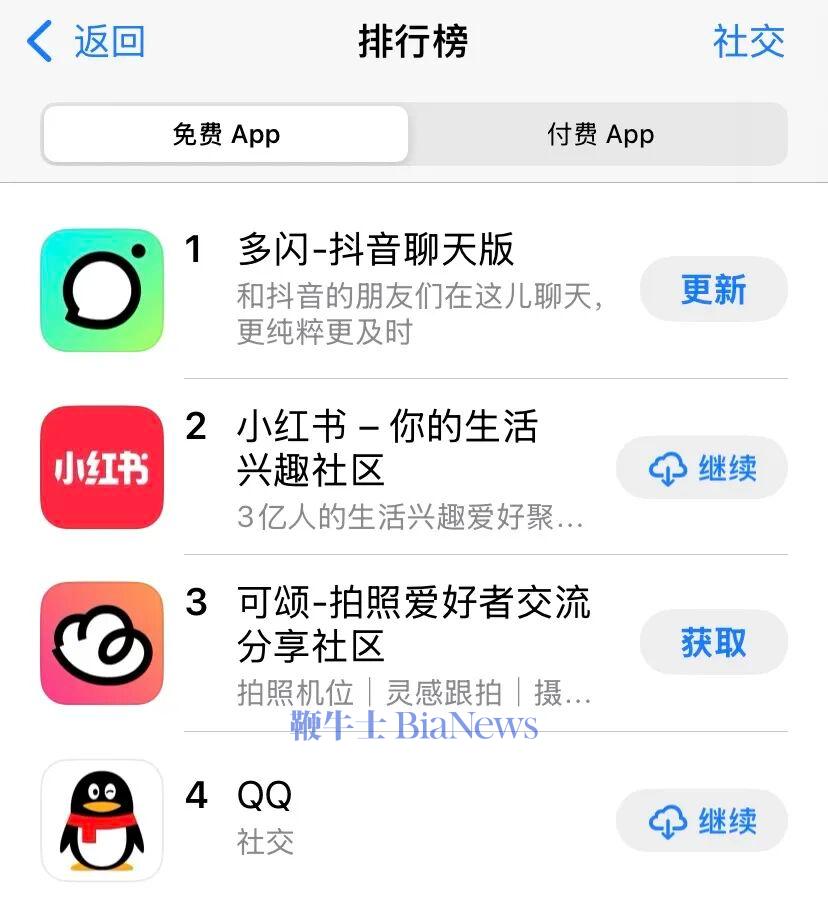
Core Insights - ByteDance's social app "Duoshan" has unexpectedly returned to prominence, topping the social app rankings in the App Store after a long period of obscurity, indicating a strategic repositioning within ByteDance's social ecosystem [1][3][4] Group 1: Product Evolution and Strategy - Duoshan was initially launched six years ago as ByteDance's first independent social product, aimed at challenging WeChat, but failed to gain traction and faced multiple product iterations [3][16] - In 2025, Duoshan underwent 31 product iterations, suggesting that ByteDance has finally identified a suitable direction for the app after a period of stagnation [8][10] - The app's new strategic positioning is to serve as a social interaction platform for friends on Douyin (TikTok), fulfilling the need for instant messaging and daily life sharing among Douyin users [9][10] Group 2: Marketing and User Engagement - Duoshan's resurgence is attributed to targeted marketing efforts on Douyin, utilizing features like "chat sparks" to enhance user interaction and engagement [10][12] - The "chat sparks" feature encourages users to interact more frequently, fostering a habit of socializing that aligns with the app's goals [10][21] - ByteDance's promotional strategy for Duoshan has shifted from a broad marketing approach to a more focused, in-app promotion within Douyin, leveraging existing user relationships [10][12] Group 3: Competitive Landscape and Future Outlook - The evolution of Duoshan reflects ByteDance's broader social strategy, moving from ambitions to create a WeChat competitor to focusing on internal social ecosystem dynamics [17][18] - The integration of AI features, such as the "Little Fireman AI Spirit," aims to enhance user interaction and create a seamless social experience, indicating a shift towards AI-driven social engagement [19][21] - The competitive landscape suggests that as Duoshan gains traction, it may provoke a response from WeChat, potentially igniting a renewed competition in the social app market [22]
多闪“起死回生”,字节找到了社交赛道的正确姿势?
3 6 Ke· 2025-11-27 02:17
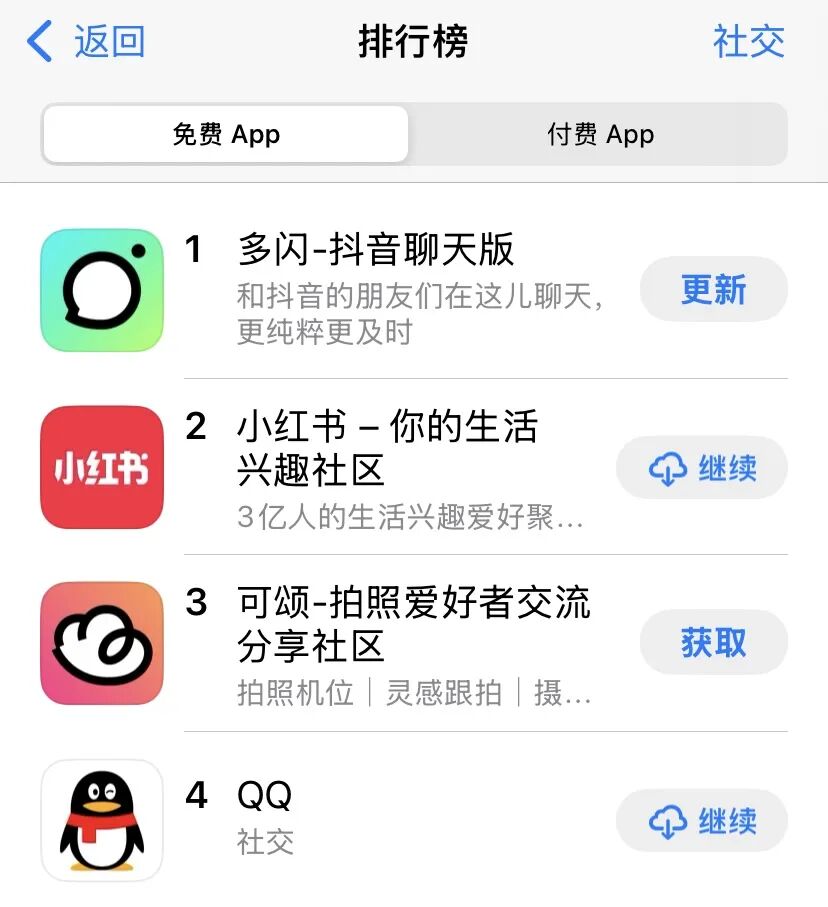
Core Insights - ByteDance's social app "Duoshan" has made a surprising comeback, topping the social app rankings in the App Store after a long period of obscurity, indicating a strategic repositioning within ByteDance's social ecosystem [1][3][4] Group 1: Product Evolution and Strategy - Duoshan was initially launched six years ago as ByteDance's first independent social product, aimed at challenging WeChat, but failed to gain traction and faced multiple product iterations [3][16] - In 2025, Duoshan underwent 31 product iterations, suggesting that ByteDance has finally identified its positioning after a period of stagnation in 2024 [8][10] - The new strategic positioning for Duoshan is to serve as a social interaction platform for TikTok users, facilitating instant messaging and sharing daily life [10][18] Group 2: Marketing and User Engagement - ByteDance's marketing strategy for Duoshan has shifted from a high-profile launch to a more subtle approach, utilizing TikTok for targeted promotion and user conversion [11][13] - The introduction of the "Chat Spark" feature on TikTok has significantly enhanced user engagement, encouraging users to interact more frequently and fostering stable social habits [11][19] - Promotional videos on TikTok have effectively guided users to Duoshan, emphasizing a simplified and distraction-free chat experience [13][22] Group 3: Competitive Landscape and Future Outlook - ByteDance's iterative strategy for Duoshan reflects its broader social strategy evolution, moving from ambitions to create a WeChat competitor to focusing on internal social ecosystem dynamics [14][17] - The integration of AI features, such as the "Little Fireman AI Spirit," aims to enhance user interaction and engagement within Duoshan, indicating a shift towards AI-driven social experiences [19][21] - The competitive landscape is expected to heat up as WeChat may respond to ByteDance's renewed efforts in the social space, suggesting an impending social battle in the AI era [22]
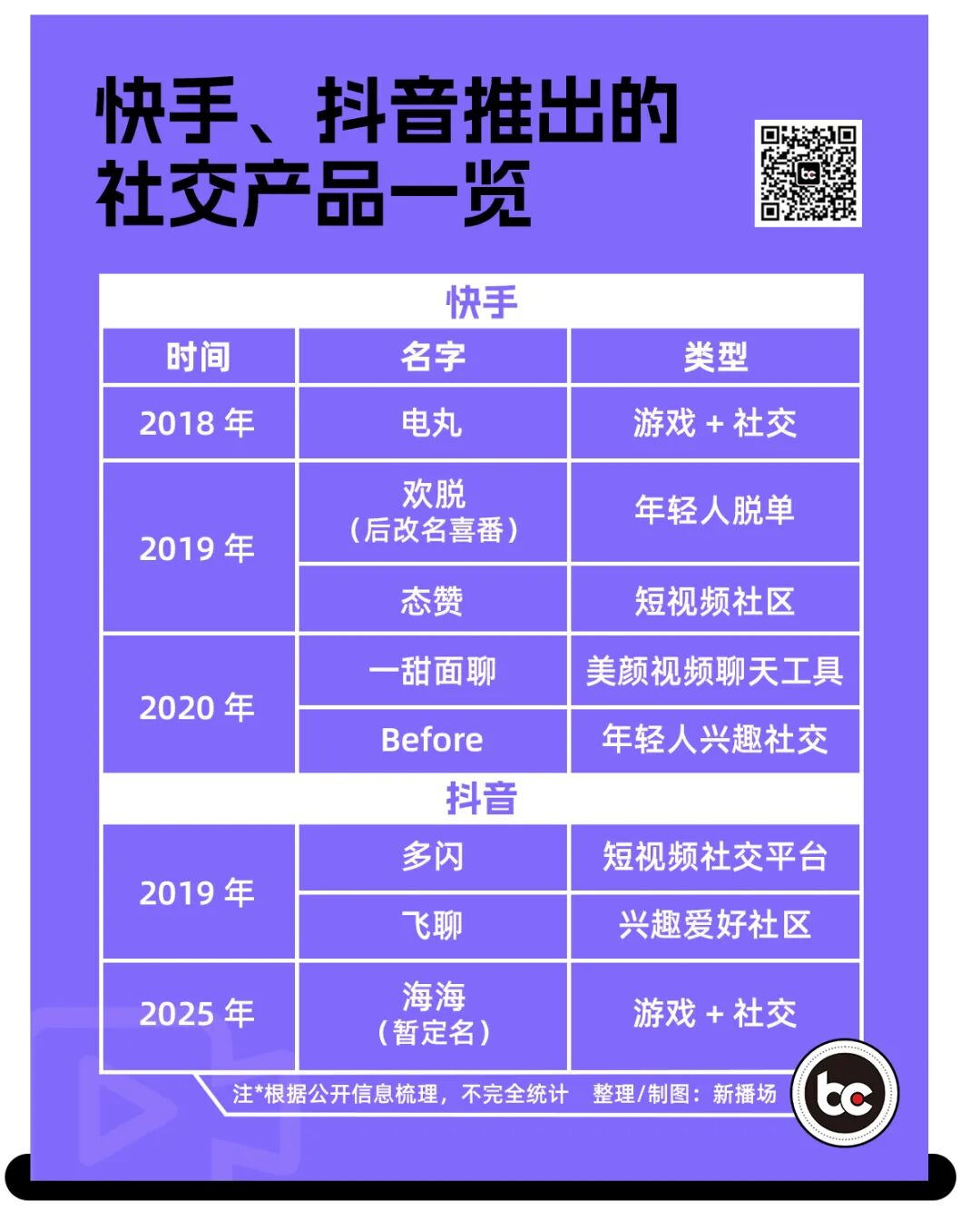
更新功能、内测新App,抖音快手再战社交
3 6 Ke· 2025-10-15 02:04
Group 1 - Douyin and Kuaishou are intensifying their efforts in the social domain by updating features like "Daily" and "Sayings" and testing a new social app called "Haihai" [1][2] - Douyin's previous attempts at social products, such as Duoshan, have not succeeded, leading to their discontinuation, while Kuaishou has also launched several social products with limited impact [2][3] - Recent updates include Douyin's enhancements to the "Daily" module, allowing users to post multimedia content with time-limited visibility and introducing a notification mechanism for friends' updates [3][5] Group 2 - Kuaishou has introduced features like "Nearby People" and "Sayings," which allow users to share multimedia content and interact with friends, resembling social media platforms like QQ Space [5][6] - Kuaishou's "Little Note" feature enables anonymous messaging, enhancing user interaction, while group chat functionalities are being promoted through events [6][7] - The push for social features is driven by the natural user demand for interaction within the platforms, as articulated by Kuaishou's CEO, who envisions a diverse and content-rich community [7][10] Group 3 - The decline in content scarcity on short video platforms necessitates new strategies to retain user engagement, as competition from platforms like WeChat's video accounts intensifies [10][11] - Social features can enhance commercial monetization opportunities by integrating e-commerce and live streaming, thereby increasing platform vitality [11][13] - The challenge lies in changing user perceptions, as most users view Douyin and Kuaishou primarily as entertainment tools rather than social platforms [14][17] Group 4 - The inherent weaknesses of social interactions on Douyin and Kuaishou stem from their focus on interest-based connections rather than strong social ties, making it difficult to maintain active groups [16][18] - The conflict between algorithm-driven content distribution and relationship-driven engagement poses a challenge for fostering genuine user interactions [16][19] - The long-term success of social features on these platforms will depend on their ability to develop unique social models distinct from traditional social networks [19][20]


观察| 我们都错了,Sora的野心是社交
未可知人工智能研究院· 2025-10-04 03:02
Core Insights - The article emphasizes that the ultimate battleground in the internet industry is not content but the ownership of social relationship chains, as demonstrated by OpenAI's Sora2 and its viral growth through an invitation mechanism [2][4][12]. Group 1: Sora2's Nature and Social Ambitions - Sora2 is not merely an AI tool for video generation but a social relationship harvesting machine, leveraging its viral spread to build a social graph [6][8]. - The "invite one, share four" mechanism of Sora2 mirrors the early strategies of WeChat, highlighting the importance of social connections over mere functionality [4][13]. - The data collected on social relationships, such as who invites whom, is more valuable than the technology itself, indicating a shift towards social capital accumulation [9][12]. Group 2: Tencent's Competitive Advantage - Tencent's success is attributed to its robust social relationship chain, with WeChat's 900 million daily active users forming a deep-rooted social network [14][21]. - The migration of QQ relationships to WeChat was crucial for its rapid user growth, demonstrating the resistance users have to adopting new social platforms without their existing connections [15][16]. - Tencent's various successful features, such as WeChat red envelopes and mini-programs, are fundamentally empowered by its social relationship chain, contrasting with ByteDance's reliance on algorithm-driven content [17][21]. Group 3: ByteDance's Challenges - ByteDance's heavy dependence on short video content has created vulnerabilities, as it lacks the social connections that keep users engaged long-term [22][24]. - Despite numerous attempts to create social products, ByteDance has struggled to establish meaningful user interactions, leading to rapid declines in user engagement [25][27]. - The competition in the e-commerce space is fundamentally different from social platforms, where users are less likely to switch due to price alone, as seen with WeChat's enduring user base [28][29]. Group 4: The Impact of AI on Social Dynamics - The emergence of Sora2 intensifies ByteDance's anxieties, as it introduces a new social interaction model that combines AI with user collaboration [30][31]. - Tencent is proactively developing a social video generation platform that leverages its existing relationship chains, positioning itself advantageously in the AI social landscape [32][33]. - The article concludes that while content forms may evolve, the essence of social connections remains constant, and those who control the relationship chains will dominate the future [34][43].