
现代化产业体系

Search documents
湖南湘江新区多项指标跻身全国前列 创新实力与民生保障双提升
Zhong Guo Xin Wen Wang· 2025-12-02 11:16
Core Insights - During the "14th Five-Year Plan" period, the Hunan Xiangjiang New Area's GDP has crossed three trillion thresholds, entering the "five trillion" category, ranking 6th among China's 19 national-level new areas [1] - The number of listed companies and the number of national manufacturing champions in the area remain second nationally among national-level new areas [1] - The Xiangjiang New Area aims to become a key player in building advanced manufacturing, technological innovation, and reform and opening up in inland regions [1] Economic Development - The total number of enterprises in the Xiangjiang New Area exceeds 170,000, with 11 new listed companies and 843 new high-tech enterprises added [2] - The area has seen significant improvements in infrastructure, including the completion of four new rail transit lines and the renovation of 199 roads [2] - The sewage treatment capacity has increased by nearly 70% with the construction and renovation of 317 kilometers of sewage pipelines [2] Social Progress - Over the past five years, the Xiangjiang New Area has added 98,000 urban jobs, with 30% of new entrepreneurial entities being university graduates [2] - The area has constructed or renovated 110 primary and secondary schools and kindergartens, adding 123,000 new student places [2] - The region has experienced a net inflow of approximately 300,000 residents, enhancing the overall sense of well-being and security among the population [3]
海南这五年:三亚发展能力能级实现新跨越
Zhong Guo Xin Wen Wang· 2025-12-02 08:44
三亚深化改革开放实现新高度。推行"一枚印章管审批"新模式,行政审批服务效率大幅提升。跨境电 商、大宗商品交易等开放型经济新业态加快发展,外贸持续提档升级。打开第五航权客货两运新局面, 成功举办多个国际级农业科技大会,三亚国际影响力和感召力持续提升。 海南这五年:三亚发展能力能级实现新跨越 中新网三亚12月2日电 (张月和)三亚市委常委、常务副市长陈景进2日在三亚市"十四五"时期经济社会发 展成就新闻发布会上说,"十四五"时期,三亚全市社会经济实现高质量发展,发展能力能级实现新跨 越。 陈景进说,从当前来看,三亚市主要经济指标稳步增长,2024年地区生产总值(GDP)首次突破千亿大 关,2025年前三季度GDP达到720.1亿元,2021年至2024年间年均增长5.5%,经济综合实力进一步增 强。 随着海南自贸港封关日益临近,三亚7个封关运作项目已建设完成,"二线口岸"查验设施顺利通过国家 验收,8个反走私综合执法站、3个海警工作站进驻运行,压力测试工作有序开展。以"零关税、低税 率、简税制""五自由便利一安全有序流动"为特征的核心政策落地见效。 编辑:董文博 广告等商务合作,请点击这里 本文为转载内容,授权事 ...
黄楚平主持省十四届人大常委会第二十二次会议联组会议开展专题询问以法治助推建设具有国际竞争力的现代化产业体系
Nan Fang Ri Bao Wang Luo Ban· 2025-12-02 02:01
Group 1 - The meeting focused on building a modern industrial system with international competitiveness, emphasizing the integration of technological and industrial innovation [1][2] - The provincial government has made significant progress in addressing key issues and implementing practical measures to enhance the industrial system [1] - The importance of advanced manufacturing as a driving force for revitalizing traditional industries and leading emerging industries was highlighted [2] Group 2 - The need for a strong legal framework to support the construction of a competitive industrial system was emphasized, including legislative plans for emerging fields such as artificial intelligence and quantum technology [3] - Collaboration among various stakeholders is crucial for achieving the industrial development goals, with a focus on horizontal and vertical coordination [3] - The provincial government aims to create a market-oriented, law-based, and international business environment to support industrial growth [2][3]
四中全会精神在基层·一“县”观察丨孟州 产业转型优营商
He Nan Ri Bao· 2025-12-01 23:53
Core Insights - Mengzhou City is implementing the "345" innovation action to integrate technological and industrial innovation, focusing on traditional industries like equipment and leather manufacturing while also promoting emerging sectors such as electronic information and biomedicine [1][2] Group 1: Industry Development - The newly launched CBN tool production line at Henan Lerui Chuangzhi Tool Co., Ltd. demonstrates rapid development, with only 9 months from signing to production, showcasing the "Mengzhou speed" in facilitating business growth [1] - Mengzhou is recognized as one of China's top 100 industrial counties and a pilot city for private economy demonstration in Henan Province, emphasizing its robust industrial layout [1] - The Central Plains Neipei Group's intelligent workshop produces over 50 million engine cylinder sleeves annually, holding a 65% domestic market share and 15% global share, supplying major international car manufacturers [1] - Longfeng Leather Co., Ltd. processes 50 million imported sheep skins annually, accounting for 40% of global raw material procurement, establishing a complete industrial chain from raw skin import to high-end product manufacturing [2] - The green chemical industry in Mengzhou produces 1.5 million tons of alcohol annually, representing 20% of the national output, and has a resource utilization rate exceeding 98% [2] - Guangji Pharmaceutical produces 3,500 tons of riboflavin (Vitamin B2) annually, capturing 70% of the global market share [2] Group 2: Business Environment - The local government has implemented various supportive measures to enhance the business environment, significantly boosting investor confidence [2] - The "Yuanmeng Help" team at the Mengzhou Government Service Center consists of 82 professionals dedicated to streamlining administrative processes for businesses [2][3] - The efficiency of administrative processes has improved, with the time for joint utility applications reduced by over 80%, and business registration now completed in 0.5 working days for 12 items [3] - Mengzhou has consistently ranked among the top in provincial evaluations of the business environment for three consecutive years [3] Group 3: Future Goals - Mengzhou aims to build a modern industrial system, focusing on "two highs and four efforts" and the "1+2+4+N" target task system, while continuing to strengthen its industrial base and optimize the business environment [3]
上蔡高质量发展动力足 老产业焕新生 新赛道加速跑
He Nan Ri Bao· 2025-12-01 23:39
Group 1: Company Overview - Shangnong Industrial Co., Ltd. has achieved a production efficiency that allows for the complete process of anesthetizing and processing 680 pigs in just one hour, positioning itself as a leader in the industry [1] - The company has established a complete industrial chain from breeding to slaughtering, cold storage, and cooked food processing, demonstrating high operational efficiency [1] - Shangnong Industrial has collaborated with Henan Agricultural University and Henan University of Technology to accelerate technological innovation and has been recognized as a national high-tech enterprise [1] Group 2: Industry Transformation - The transformation of Shangnong Industrial reflects the broader trend in Shangcai County, which is focusing on upgrading traditional industries such as agricultural product processing and textiles through smart and digital transformation [2] - The county has encouraged enterprises to adopt advanced technologies and strengthen industry-academia-research cooperation, leading to the enhancement of traditional industries [2] - The emergence of new industries, such as the electronic information sector represented by Landi Optoelectronics, is contributing to the economic vitality of the region [3] Group 3: Economic Impact - Shangcai County has attracted over 12 new projects in emerging industries this year, with a total investment exceeding 1 billion yuan, injecting new energy into economic development [3] - The county has established three main industries: textiles, agricultural product processing, and electronic information, with over 223 enterprise projects and more than 102 large-scale enterprises employing over 20,000 people [4] - The focus on high-quality development and the construction of a modern industrial system is seen as crucial for the county's economic growth [4]
贯彻全会精神·抓落实丨埋头苦干抓落实 砥砺奋进开新局 ——省委十一届十次全会精神在我省广大党员干部群众中引发热烈反响
He Nan Ri Bao· 2025-12-01 23:39
Group 1 - The core focus of the conference is on the "1+2+4+N" goal task system, aiming to promote high-quality development and efficient governance, providing a new direction for grassroots development [1] - The emphasis on accelerating agricultural modernization and promoting comprehensive rural revitalization is highlighted, with a call for high-quality development that includes ecological protection and industry upgrades [2] - The conference outlines the importance of strengthening social governance and enhancing the quality of grassroots governance, with a focus on community service and addressing public concerns [3] Group 2 - The conference stresses the need for high-quality development of the real economy and the construction of a modern industrial system, with a dual approach to upgrading traditional industries and fostering emerging sectors [4] - The initiative for people-centered new urbanization and urban connotation development is emphasized, with plans for urban renewal and improvement of living conditions in older districts [5]
上财校长刘元春:没有产业化的科技创新难以形成持续竞争力
Nan Fang Du Shi Bao· 2025-12-01 16:40
Core Viewpoint - The emphasis on building a modern industrial system and strengthening the foundation of the real economy is highlighted in the "Suggestions for Formulating the 15th Five-Year Plan for National Economic and Social Development" by the Central Committee of the Communist Party of China [1][2] Group 1: Industrial Strategy - The proposal includes constructing a modern industrial system with advanced manufacturing as its backbone [1] - Liu Yuanchun, President of Shanghai University of Finance and Economics, states that industry is the foundation of great power competition and should be prioritized [1] - The current trend suggests that "whoever controls manufacturing controls the world" [1] Group 2: Innovation and Competitiveness - Liu emphasizes that without industrialization, marketization, and commercialization, technological innovation lacks sustainability and competitiveness [1] - Historical examples, such as the dissolution of the Soviet Union and the current trend of "manufacturing return" in the U.S., illustrate the importance of manufacturing [1] - Manufacturing serves as a carrier for innovation and design, which are essential for competitiveness [1] Group 3: New Paradigm - Liu introduces a "industry-driven" new paradigm, asserting that modern technological development must be based on high-tech industries [1] - The current wave of technological innovation is driven by practical applications rather than laboratory experiments [1]
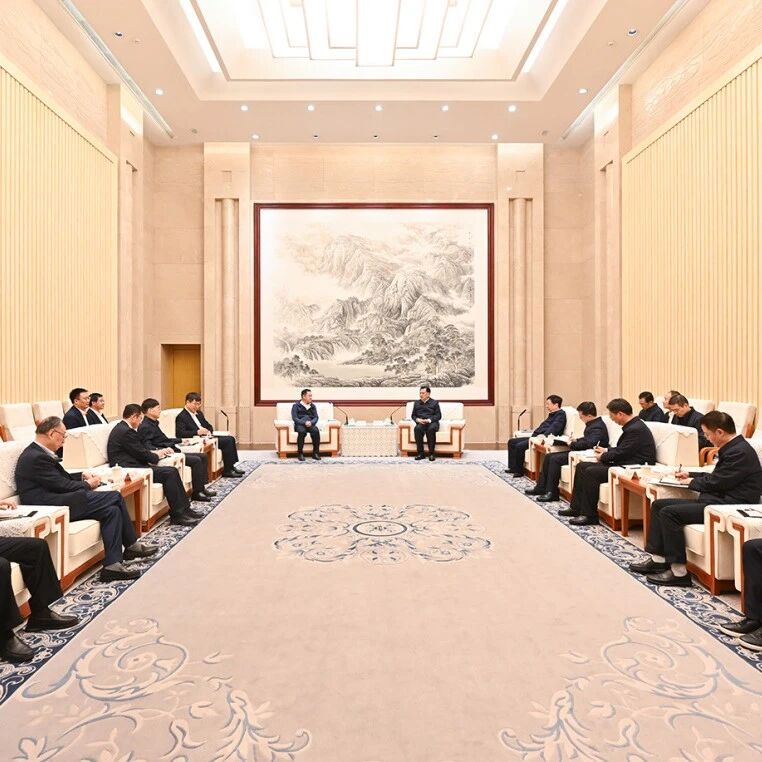
袁家军、胡衡华、徐思伟、黄耀文,共同为新公司揭牌
券商中国· 2025-12-01 15:17
Core Viewpoint - The establishment of Guoxin Holdings (Chongqing) Co., Ltd. marks a significant step in enhancing cooperation between China Guoxin and Chongqing, focusing on strategic emerging industries and the development of the western financial center [1][2]. Group 1: Company Overview - China Guoxin Holdings Co., Ltd. was founded on December 22, 2010, and is one of the central enterprises regulated by the State-owned Assets Supervision and Administration Commission (SASAC) [4]. - The company was designated as a pilot for state-owned capital operation by the State Council in early 2016 and officially transitioned to a phase of continuous deepening reform in December 2022 [4]. - As of the end of 2024, the total assets of the company are expected to reach 980 billion yuan, with annual profits exceeding 20 billion yuan for four consecutive years [4]. Group 2: Strategic Cooperation - The leadership of Chongqing expressed gratitude for China Guoxin's support in the development of strategic emerging industries and the construction of the western financial center [2]. - The local government aims to leverage the recent developments to enhance the economic capabilities of the Chengdu-Chongqing economic circle and accelerate the construction of the western land-sea new corridor [2]. - China Guoxin is committed to increasing its investment in Chongqing, focusing on sectors such as semiconductors, artificial intelligence, advanced materials, biomedicine, low-altitude economy, and new energy vehicles [3].

2026年中国经济怎么看、怎么干?刘世锦、李扬、蔡昉、杨瑞龙最新发声
证券时报· 2025-12-01 14:16
Core Insights - The article discusses key recommendations from prominent economists at the China Macro Economic Forum (CMF) regarding China's economic development during the "14th Five-Year Plan" period and beyond, emphasizing the importance of structural reforms and innovation to stimulate domestic vitality [1][2]. Group 1: Economic Growth and Consumption - Liu Shijun advocates for increasing the consumption share of GDP by 1 percentage point annually during the "14th Five-Year Plan" period, highlighting the need to stabilize and expand terminal demand to boost investment [6][8]. - The report presented by Liu Xiaoguang suggests setting cross-cycle targets for economic growth, including a real GDP growth target of 4.5%-5% and a CPI target of 1%-3% for 2026 [2]. Group 2: Financial Factors and Market Opportunities - Li Yang identifies four major financial factors influencing economic operations from 2026 onwards: changes in social financing structure, declining interest rates, new opportunities in capital markets, and a new paradigm for monetary policy [4]. - The phenomenon of "disintermediation" is noted as a positive trend, with funds flowing out of the banking system, which could create better conditions for capital market development [3][4]. Group 3: Employment and Income Distribution - Cai Fang emphasizes the need for a coordinated approach to promote employment, increase income, and stabilize expectations, proposing a framework of "five combinations" to address these issues [10][11]. - The focus on increasing per capita income and improving income distribution is critical, with suggestions to enhance labor remuneration and expand public services to reduce disparities [12][13]. Group 4: Long-term Economic Strategy - Yang Ruilong stresses the importance of addressing short-term economic challenges with a long-term perspective, advocating for the modernization of the industrial system and the integration of technological innovation [14][15]. - The article concludes that despite current pressures, the fundamental trend of China's economy remains positive, with potential for sustainable growth through structural reforms and innovation [1][15].

海南布局现代化产业体系 谋划五条新质生产力赛道
Zhong Guo Xin Wen Wang· 2025-12-01 13:22
Core Viewpoint - Hainan Province is planning to establish a modern industrial system with a "45432" framework, focusing on optimizing existing industries and fostering new productive forces to enhance economic development [1][2]. Group 1: Industrial Optimization - The four leading industries in Hainan, namely tourism, modern services, high-tech industries, and tropical efficient agriculture, currently account for over 67% of the province's GDP. The province aims to enhance these sectors through chain supplementation and optimization during the 14th Five-Year Plan period [2]. Group 2: New Productive Forces - Hainan will leverage its unique resources to develop five new productive force tracks, including creating a "Southern Seed Silicon Valley," establishing a core hub for deep-sea technology innovation, expanding aerospace-related industries, developing a low-altitude economy, and building a green and low-carbon industrial supply chain [2]. Group 3: Future Industries - The province will focus on four cutting-edge fields: biomanufacturing, hydrogen energy, brain-computer interfaces, and embodied intelligence, to cultivate new hotspots for future industries [2]. Group 4: Consumer Development - Hainan plans to enhance its duty-free shopping reputation, develop the Boao Lecheng Medical Special Zone, and strengthen the "Study in Hainan" brand to boost consumption [2]. Group 5: Talent and Innovation - The province will implement the "Million Talents to Prosper Hainan" initiative to create a hub for technological innovation, reform, and open cooperation [3].