
AI医疗

Search documents
公募策略会把脉市场主线风险偏好或进一步上升
Zhong Guo Zheng Quan Bao· 2025-09-10 20:18
● 本报记者 魏昭宇 近期,权益市场赚钱效应提升,市场主线多点开花。在此背景下,国泰基金、兴银基金、富国基金、华 宝基金等多家公募机构召开秋季策略会,把脉四季度市场主线。 展望后市,公募人士表示,行情的核心驱动力可能主要来自于三方面:一是无风险利率持续下行,有助 于引导增量资金入市,推动市场风险偏好进一步上升;二是"反内卷"政策推进,叠加PPI等数据预期向 好,有望推动部分行业产能出清和供需格局边际改善;三是在人工智能(AI)、机器人等科技领域出 现技术突破与政策支持,有望驱动新一轮科技产业周期,并带来相关板块价值重估。 增量资金有望持续入场 近期,权益市场在波动中逐步走强。在富国基金的基金经理刘兴旺看来,趋势一旦形成短期内难以逆 转,但是指数波动率会放大,风格上延续流动性驱动主逻辑,成长风格仍然在趋势轨道之中。 随着AI行情的崛起,科技投资成为公募秋季策略会上被反复提及的关键词。在富国创新科技的基金经 理罗擎看来,AI投资需要以产业的视角来看待,AI投资不止海外算力,国内算力同样不容忽视;AI投 资不止光模块/PCB/服务器,还有AI应用。AI产业看不到发展的尽头,终将改变整个社会及生产关系。 作为今年涨幅 ...
医疗板块爆发,医疗ETF(159828)领涨超4%,器械逻辑支撑行业估值修复
Sou Hu Cai Jing· 2025-09-08 02:25
Group 1 - The medical device industry is experiencing a dual recovery in performance and valuation, driven by optimized procurement policies, corporate strategic transformations, and international business expansion [1] - Several companies are showing signs of performance inflection, with expectations of high growth in the second half of 2025 and 2026 [1] - There is an increasing focus on innovative medical devices, particularly in areas such as brain-computer interfaces, AI healthcare, and surgical robots, which have significant growth potential [1] Group 2 - Internationalization is becoming a key growth logic, with Chinese companies gaining global recognition in both incremental and breakthrough innovations, such as the FDA approval of a cerebral stent by SINO Medical [1] - Companies like United Imaging and Mindray are expected to benefit from improved bidding processes and inventory clearance, with Q3 performance anticipated to accelerate [1] - The optimization of procurement rules, such as price correction mechanisms, is alleviating price reduction pressures, indicating a clear trend of industry valuation recovery [1] Group 3 - The CSI Medical Index, which the medical ETF (159828) tracks, selects listed companies involved in medical devices, medical services, and medical information technology to reflect the overall performance of the medical theme [1] - The CSI Medical Index consists of 50 actively traded and high market capitalization securities from the pharmaceutical and biotechnology sectors, ensuring the representativeness of the index samples through periodic adjustments [1]
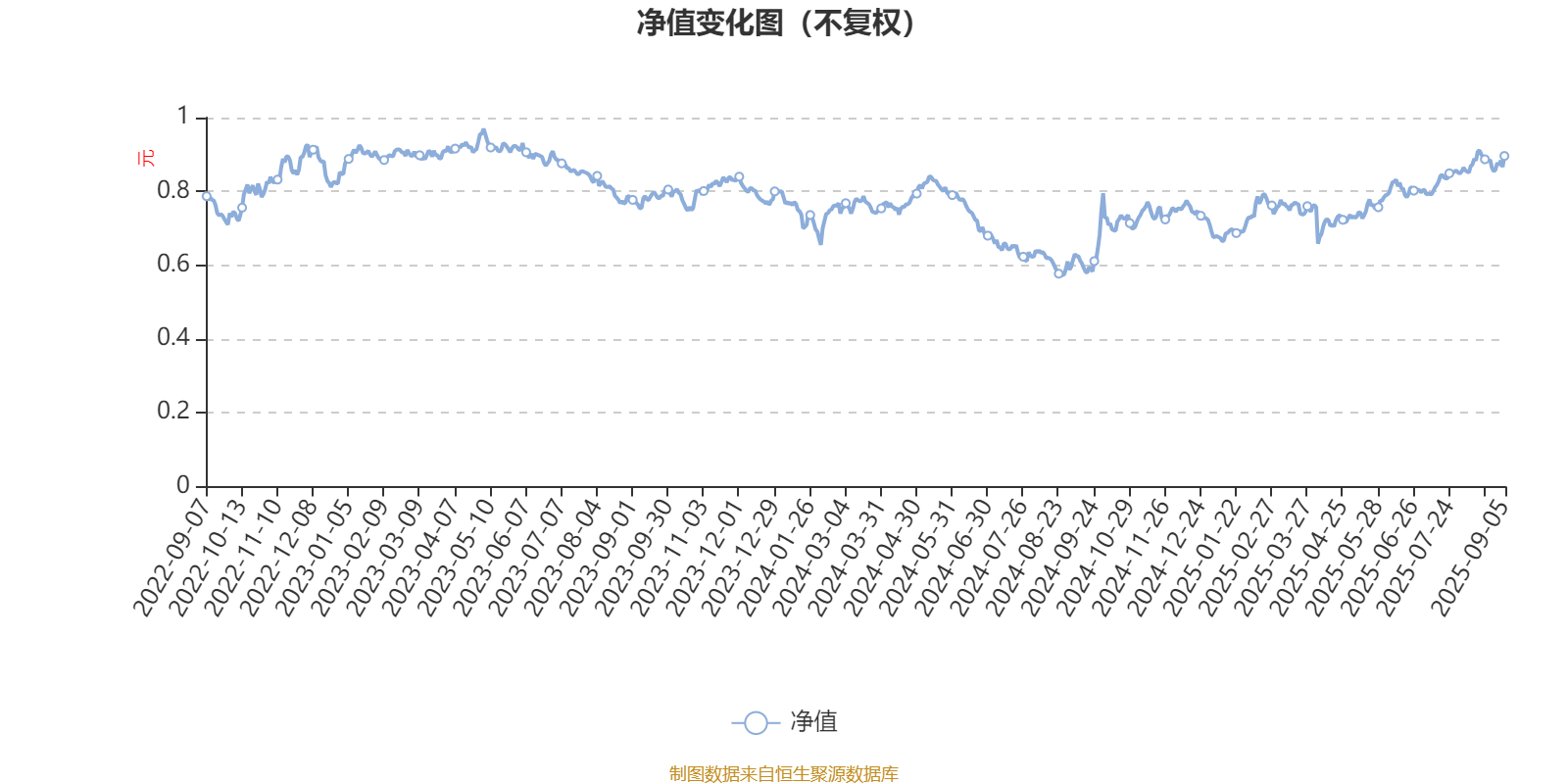
国泰医药健康股票A:2025年上半年利润7467.79万元 净值增长率13.15%
Sou Hu Cai Jing· 2025-09-08 02:20
Group 1 - The core viewpoint of the article highlights the performance and strategy of the Guotai Medical Health Stock A Fund, which reported a profit of 74.68 million yuan in the first half of 2025, with a net value growth rate of 13.15% [3] - As of September 5, 2025, the fund's unit net value was 0.896 yuan, and the fund manager, Xu Zhibiao, oversees six funds, all of which have positive returns over the past year [3] - The fund's investment strategy focuses on the medical sector, particularly in areas such as medical services, retail, and OTC devices, while avoiding heavily crowded innovative drug stocks in the A-share market [3] Group 2 - The fund's performance metrics indicate a near-term net value growth rate of 13.26% over the past three months, 17.70% over the past six months, and 42.25% over the past year, ranking it 47/54, 48/54, and 40/53 among comparable funds, respectively [6] - The fund's weighted average price-to-earnings ratio (TTM) is approximately 29.06 times, significantly lower than the peer average of -135.64 times, while the weighted average price-to-book ratio is 2.52 times compared to the peer average of 4.24 times [12] - The fund's weighted revenue and net profit growth rates (TTM) for the first half of 2025 are both 0.06%, with a weighted annualized return on equity of 0.09% [20] Group 3 - As of June 30, 2025, the fund's three-year Sharpe ratio is 0.2117, ranking 13/46 among comparable funds, while the maximum drawdown over the same period is 40.92%, ranking 21/47 [27][29] - The fund's average stock position over the past three years is 92.98%, higher than the peer average of 88.2%, with a maximum position of 94.25% at the end of 2021 [32] - The fund has a high concentration of holdings, with the top ten stocks consistently accounting for over 60% of the portfolio, including companies like Kefu Medical and Sanofi Pharmaceutical [43]

梁杏:如何把握创新药投资机会?
Mei Ri Jing Ji Xin Wen· 2025-09-08 02:07
Group 1 - The current hot topics in innovative drugs are bispecific antibodies (双抗) and antibody-drug conjugates (ADC), which are favored by overseas investors [1] - AI development, AI healthcare, and gene therapy are expected to gain popularity in the future, although they are still in early stages compared to ADC and bispecific antibodies [1] - The current leading companies in innovative drug licensing are primarily those focused on bispecific antibodies and ADCs [1] Group 2 - The performance of innovative drugs varies across different markets, with Hong Kong stocks performing well initially, followed by the STAR Market, while A-shares lagged behind [2] - A-shares' slower performance is attributed to many companies transitioning from traditional chemical drugs to innovative drug businesses, resulting in less elasticity compared to pure innovative drug companies [2] - Investors seeking stability can consider pure A-share innovative drugs or a combination of Shanghai, Shenzhen, and Hong Kong innovative drug ETFs [2] Group 3 - There is significant differentiation within the pharmaceutical sector, including biological drugs, chemical drugs, traditional Chinese medicine, medical devices, and medical services [3] - The innovative drug sector can be further divided into chemical innovative drugs and biological innovative drugs, with many investors lacking clarity on these distinctions [3] - For investors who recognize the trend in innovative drugs, it is recommended to invest through funds or ETFs to capture the development of this trend [3] Group 4 - Various indices related to innovative drugs have corresponding products, such as the STAR Market innovative drug ETF and the Shanghai-Shenzhen-Hong Kong innovative drug ETF [4] - Investors can choose based on their preferences, whether they prefer pure A-share innovative drugs or Hong Kong and STAR Market options [4] - It is important for investors to manage their risk tolerance and prepare psychologically for market fluctuations [4]
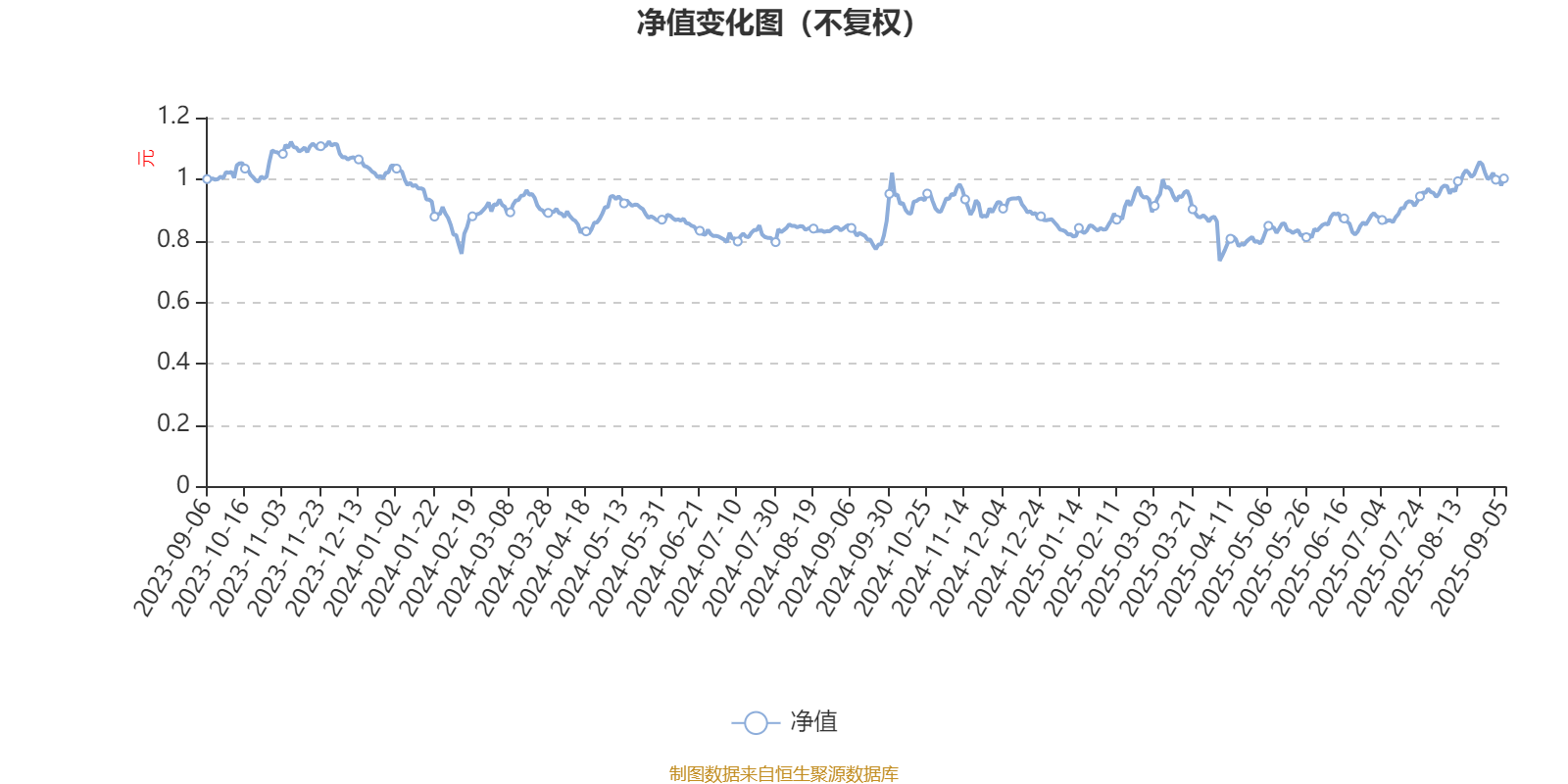
银华医疗健康混合A:2025年上半年利润104.27万元 净值增长率2.57%
Sou Hu Cai Jing· 2025-09-05 17:56
Core Viewpoint - The AI Fund Yinhua Medical Health Mixed A (018364) reported a profit of 1.0427 million yuan for the first half of 2025, with a net value growth rate of 2.57% and a fund size of 35.6523 million yuan as of the end of June 2025 [2][30]. Fund Performance - As of September 5, 2025, the fund's one-year cumulative net value growth rate was 17.70%, ranking 130 out of 136 comparable funds [5]. - The fund's net value growth rate over the past three months was 17.21%, ranking 101 out of 138 comparable funds, while the six-month growth rate was 5.29%, ranking 135 out of 138 [5]. Investment Strategy - The fund manager expressed an optimistic outlook for the second half of the year, citing reduced risks in the pharmaceutical industry's profitability and a turning point in the sector's performance due to policy improvements and the expansion of commercial insurance [2]. - The fund's investment focus is primarily on AI pharmaceuticals and AI healthcare, with a belief that the cost reduction and efficiency improvements brought by AI in the pharmaceutical industry are not yet fully recognized [2]. Valuation Metrics - As of June 30, 2025, the fund's weighted price-to-earnings (P/E) ratio was approximately -279.03, significantly lower than the industry average of 120.96 [9]. - The weighted price-to-book (P/B) ratio was about 2.76, compared to the industry average of 4.07, and the weighted price-to-sales (P/S) ratio was approximately 3.61, against an average of 6.52 [9]. Growth Metrics - For the first half of 2025, the fund's weighted revenue growth rate was -0.03%, and the weighted net profit growth rate was -0.55%, indicating a decline in growth [14]. Fund Composition - As of June 30, 2025, the fund had 848 holders, with a total of 40.4478 million shares held. Institutional investors accounted for 52.59% of the holdings, while individual investors made up 47.41% [33]. - The fund's top ten holdings included companies such as Jingtai Holdings, Yimai Tong, and JD Health, reflecting a focus on key players in the healthcare sector [39].
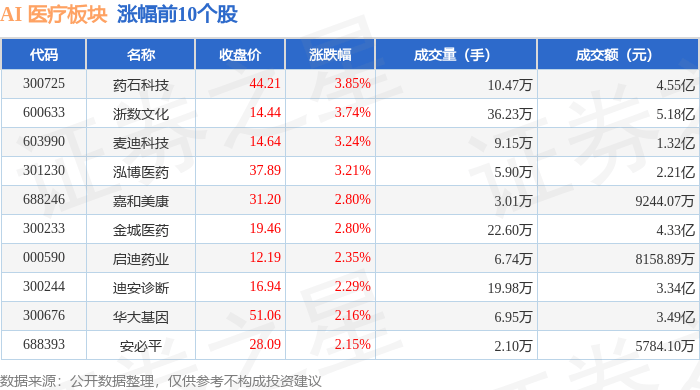
AI 医疗板块9月5日涨1.53%,药石科技领涨,主力资金净流入5649.25万元
Sou Hu Cai Jing· 2025-09-05 09:28
Market Performance - On September 5, the AI medical sector rose by 1.53%, with Yaoshi Technology leading the gains [1] - The Shanghai Composite Index closed at 3812.51, up 1.24%, while the Shenzhen Component Index closed at 12590.56, up 3.89% [1] Stock Performance - The top-performing stocks in the AI medical sector included: - Yaoshi Technology (300725) with a closing price of 44.21, up 3.85% [1] - ZheShu Culture (600633) with a closing price of 14.44, up 3.74% [1] - MaiDi Technology (603990) with a closing price of 14.64, up 3.24% [1] - Other notable stocks included Hongbo Pharmaceutical (301230) at 37.89, up 3.21%, and Jiahe Meikang (688246) at 31.20, up 2.80% [1] Capital Flow - The AI medical sector saw a net inflow of 56.49 million yuan from institutional investors, while retail investors experienced a net outflow of 50.12 million yuan [2] - The capital flow for specific stocks showed: - Meinian Health (002044) had a net inflow of 39.11 million yuan from institutional investors [3] - MaiDi Technology (603990) had a net inflow of 19.26 million yuan from institutional investors [3] - ZheShu Culture (600633) had a net inflow of 5.19 million yuan from institutional investors [3]


AI医疗,迎来DeepSeek时刻了吗?
3 6 Ke· 2025-09-05 08:46
Core Insights - The Chinese government is promoting the "AI+" initiative to enhance healthcare services through AI applications in diagnosis, health management, and insurance services, aiming to significantly improve the efficiency of grassroots healthcare [1] - Major tech companies like Ant Group, JD, Huawei, and ByteDance are entering the AI healthcare sector, focusing on core areas such as consultations, medication, and health management [1] - The AI healthcare market in China is projected to grow from 8.8 billion yuan in 2023 to 315.7 billion yuan by 2033, with a compound annual growth rate of 43.1% [1] - Globally, the AI healthcare market is expected to exceed $491 billion by 2032 [1] Group 1: AI Healthcare Potential - AI has the potential to become a "super entry point" in healthcare by integrating various services and managing family health needs, leveraging the high digitalization of the healthcare industry [4] - The introduction of AI could help address the core issue of insufficient quality healthcare providers, particularly in grassroots settings, by acting as a "smart doctor" to enhance diagnosis and management [2][12] - AI healthcare could reshape the existing medical system by systematically increasing the supply of doctors and improving the capabilities of grassroots healthcare providers [12][16] Group 2: Challenges in the Healthcare System - The global healthcare system faces challenges such as insufficient supply, resource imbalance, and high costs, with no country having a perfect model [5][6] - In China, despite reforms aimed at improving equity in healthcare access, the shortage of quality healthcare resources remains a significant issue [7][8] - Internet healthcare has struggled to address the core supply issues, often remaining on the periphery of the healthcare system without solving the fundamental problem of limited access to quality doctors [10][11] Group 3: AI Healthcare Development Conditions - Current advancements in AI technology, particularly in language models, have improved the potential for AI to assist in medical diagnosis and treatment [15] - The accumulation of high-quality healthcare data over the past two decades in China provides a solid foundation for the development of AI healthcare solutions [15] - AI is better positioned to serve as a replacement for general practitioners in grassroots settings rather than challenging specialized clinical roles [16] Group 4: Future Outlook for AI Healthcare - If widely adopted, AI could transform patient interactions with healthcare, enabling online consultations, automated data analysis, and efficient triage processes [19][20] - AI's integration into healthcare could lead to systematic data accumulation, improved medication practices, and potential changes in insurance and payment models [21][22][24] - Regulatory challenges remain a significant barrier to the widespread implementation of AI in healthcare, particularly concerning accountability and the legal implications of AI decision-making [25][26]

创新药行情方兴未艾!恒生医药ETF一度涨超3%
Sou Hu Cai Jing· 2025-09-05 03:32
Core Viewpoint - The Hong Kong pharmaceutical sector experienced a significant surge on September 5, with the Hang Seng Biotechnology Index rising over 3%, leading the key indices in Hong Kong [1] Group 1: Market Performance - The largest Hang Seng Medical ETF (159892) also saw an increase of over 3% [1] - Notable stock performances included a rise of over 9% for 3SBio, with ConvaTec and Crystal International Holdings also showing strong gains [1] - The Hong Kong Stock Connect Medical ETF (520510), focusing on CXO, innovative drugs, and AI healthcare, increased by nearly 2% [1] Group 2: Industry Outlook - Wanlian Securities predicts a strong recovery for the Hong Kong innovative drug industry in the first half of 2025, following prior adjustments, with substantial growth in overall revenue and profits [1] - Key driving factors for this recovery include accelerated overseas expansion of innovative drugs, increased commercialization, and supportive policies [1] - The continuous improvement of the 18A policy in Hong Kong and the implementation of the fifth set of standards on the Sci-Tech Innovation Board are enhancing the financing environment for innovative drug companies, thereby improving liquidity and aiding in industry valuation recovery [1]
创业板ETF平安(159964)涨超3%,科技+新能源主推创业板主升行情
Xin Lang Cai Jing· 2025-09-05 03:14
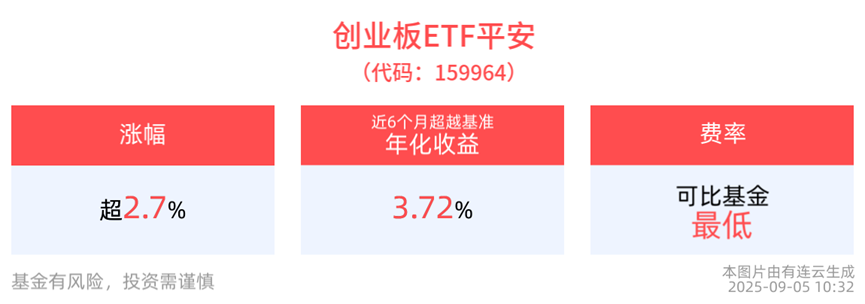
Group 1: Medical Device Industry - The domestic medical device industry is still in a rapid development phase, with short-term medical insurance cost control potentially bringing negative impacts, but the outlook remains positive due to innovation-driven import substitution and globalization [1] - It is expected that multiple negative impacts are being fully released, with a potential turning point for the medical device sector anticipated in Q3 2025 [1] - The competitiveness of domestic companies is continuously improving under policy support and innovation, accelerating import substitution [1] - There is optimism regarding the global layout and continuous breakthroughs in overseas markets [1] - Emphasis is placed on investment opportunities in themes such as AI medical technology and brain-computer interfaces [1] Group 2: ChiNext ETF Performance - As of September 5, 2025, the ChiNext Index (399006) surged by 2.94%, with notable increases in constituent stocks such as QianDao Intelligent (300450) up 14.92% and JinLang Technology (300763) up 13.33% [3] - The ChiNext ETF Ping An (159964) rose by 2.72%, with a latest price of 1.85 yuan, and has accumulated a 6.88% increase over the past two weeks [3] - The ChiNext ETF Ping An has a one-year average daily trading volume of 12.03 million yuan as of September 4, 2025 [3] Group 3: ChiNext ETF Metrics - The ChiNext ETF Ping An has a one-year Sharpe ratio of 1.78, indicating strong risk-adjusted returns [4] - The fund's management fee is 0.15% and the custody fee is 0.05%, which are among the lowest in comparable funds [4] - The tracking error for the ChiNext ETF Ping An over the past three months is 0.015%, demonstrating tight tracking of the ChiNext Index [4] Group 4: Top Holdings in ChiNext Index - As of August 29, 2025, the top ten weighted stocks in the ChiNext Index account for 55.15% of the index, with Ningde Times (300750) holding the highest weight at 18.77% [4][6] - Other significant stocks include Dongfang Wealth (300059) at 8.38% and Huichuan Technology (300124) at 3.71% [6]

A股指数涨跌不一:创业板指涨0.49%,体育产业、家居用品等板块涨幅居前
Feng Huang Wang Cai Jing· 2025-09-05 01:34
Market Overview - The three major indices opened mixed on September 5, with the Shanghai Composite Index down by 0.11%, the Shenzhen Component Index up by 0.18%, and the ChiNext Index up by 0.49% [1] - The Shanghai Composite Index was at 3761.88 points, with a trading volume of 60.71 billion [2] - The Shenzhen Component Index reached 12140.76 points, with a trading volume of 83.81 billion [2] - The ChiNext Index stood at 2789.91 points, with a trading volume of 39.17 billion [2] External Market - U.S. stock markets saw all three major indices rise, with the S&P 500 closing at a record high of 6502.08 points, up by 0.83% [3] - The Dow Jones Industrial Average increased by 0.77% to 45621.29 points, while the Nasdaq Composite rose by 0.98% to 21707.69 points [3] - Most popular Chinese concept stocks declined, with notable drops including Zai Lab down by 4.15% and Alibaba down by 4.05% [3] Industry Insights - Citic Securities highlighted that the energy storage sector is one of the fastest-growing and most cost-effective segments in the new energy industry, despite recent market performance being average [4] - The report suggests that energy storage has established its growth trajectory and is expected to exceed expectations, with a focus on large-scale storage and independent energy storage systems [4] - China Medical Devices industry is projected to reach a turning point in Q3 2025, driven by innovation and global expansion, despite short-term negative impacts from healthcare cost control [5] - Huatai Securities noted that coal companies are maintaining or increasing dividend payouts in response to a downturn, reflecting confidence in long-term industry stability [6] - The report indicates that high-dividend coal companies are expected to maintain strong cash flow and sales performance amid fluctuating coal prices [6]
