数字货币

Search documents
沪指突破3700点!半导体,全线爆发!
Zheng Quan Shi Bao· 2025-08-14 03:36
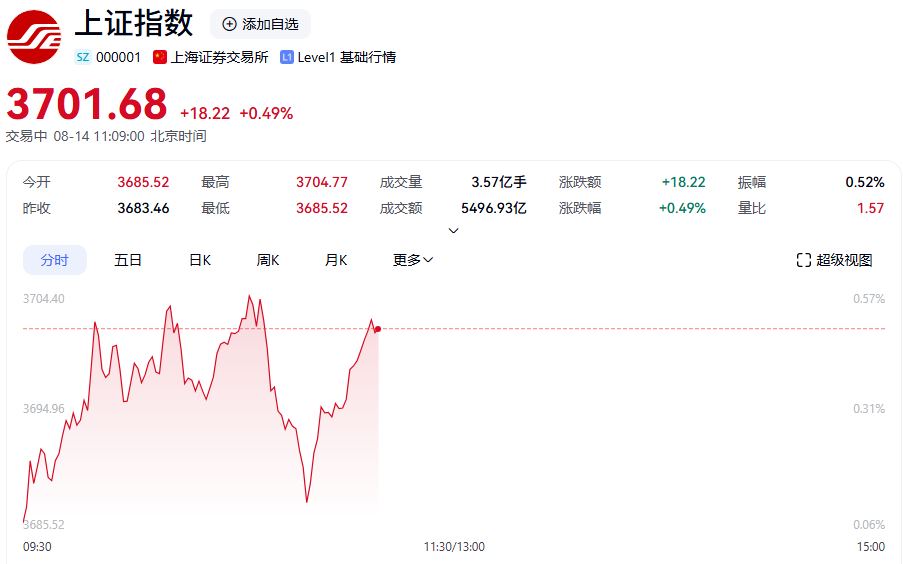
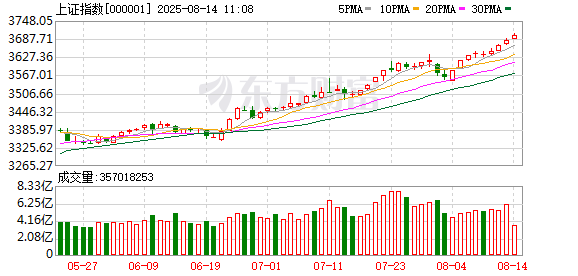
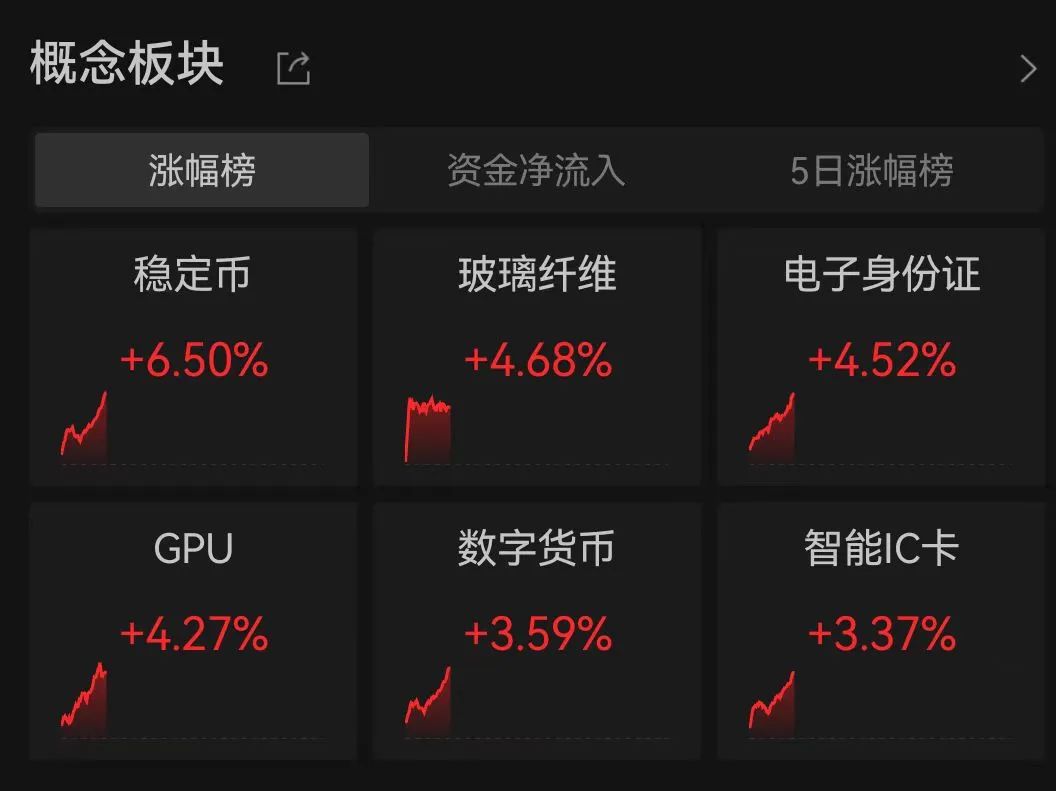
全线爆发。 A股今日(8月14日)延续强势,沪指盘中突破3700点,为2021年12月以来首次,再创阶段新高;科创50指数一度大涨近3%,盘 中重返1100点上方。港股两大股指双双高开,随后窄幅震荡。 具体来看,沪指盘中在金融、酿酒、半导体等板块的带动下发力上攻,一举突破3700点,科创50指数表现尤为强势。保险、券 商、银行板块联袂拉升,长城证券(002939)涨停斩获两连板,中国太保(601601)涨超5%;半导体板块强势,龙图光罩一度 20%涨停,寒武纪盘中涨超12%股价逼近千元大关;数字货币概念活跃,恒宝股份(002104)斩获3连板,中科金财(002657)、 京北方(002987)等涨停。值得注意的是,多只高位股跳水,长城军工(601606)盘中触及跌停,玉禾田(300815)跌超11%, 新疆交建(002941)、洪通燃气(605169)等大幅回落。 港股方面,截至发稿,新华保险(601336)、中国太保涨超6%,中国人寿(601628)涨近5%,华虹半导体涨近4%。 金融板块拉升 保险、券商、银行板块联袂拉升,截至发稿,保险板块方面,中国太保涨超5%,新华保险涨近4%,中国人保(601319) ...


沪指突破3700点 机构:沪指年底有望冲击4000点
2 1 Shi Ji Jing Ji Bao Dao· 2025-08-14 03:08
Market Overview - The Shanghai Composite Index (沪指) rose over 0.48% and broke the 3700-point mark for the first time since December 2021 [2] - The FTSE China A50 Index futures surged, increasing by 1.18% [2] - The semiconductor sector saw significant gains, with the Wind Chip Index rising by 2% and Cambricon Technologies (寒武纪) experiencing a peak increase of over 12%, reaching a total market value exceeding 400 billion yuan [2] Investment Sentiment - There is a strong bullish sentiment in the A-share market, with the financing balance returning to 2 trillion yuan for the first time in ten years [6] - Analysts suggest that the current market is not solely driven by leverage, contrasting it with the 2015 market dynamics [7][8] - The financing funds are now more evenly distributed, with 66% directed towards information technology, industrial, and materials sectors, and over 45% focused on hard technology sectors like semiconductors and new energy [8] Future Outlook - Analysts believe that the Shanghai Composite Index could challenge the 4000-point mark by year-end if three conditions are met: broad improvement in earnings, optimized capital structure, and alignment of domestic policies with global economic cycles [4] - The current market is transitioning from being driven by liquidity to being driven by profitability, indicating a more sustainable growth trajectory [8] - The overall market is expected to maintain a steady upward trend, with a gradual formation of a slow bull market due to improved capital market positioning and ongoing policy support [8]
沪指突破3700点,A50直线拉升,算力大爆发
2 1 Shi Ji Jing Ji Bao Dao· 2025-08-14 02:36
截至10:12,富时中国A50指数期货直线拉升,涨幅扩大至1.18%。 8月14日,截至10:10,沪指涨超0.48%,盘中突破3700点,为2021年12月以来首次。 算力股大爆发,芯片指数大涨2%,寒武纪早盘一度大涨超12%,续创历史新高,总市值突破4000亿元,股价迈向千元大关。尽管寒武纪于对"某厂商 预定大量载板订单、收入预测、新产品情况、送样及潜在客户、供应链等相关信息"进行辟谣,但并未浇灭投资者热情。 截至10:21,寒武纪股价冲高回落 同时,"行情是否见顶和融资余额的某个绝对值也没有必然的联系。就短期而言,期货基差期差和期权市场的隐含波动率更能直观地反映市场情绪的亢 奋程度。当前的市场处于低波水平,期货市场处于贴水状态,市场的短期热度并不高。谈不上有明确的见顶信号。"夏风光指出。 在业内人士看来,本轮A股行情与2015年单纯依赖杠杆资金推动的行情截然不同。 沪指年内有望增至何种高度?在中国银河(601881)证券首席经济学家、研究院院长章俊看来,若能满足三大条件——盈利改善的广度需进一步扩 大、资金结构亟需进一步优化、国内政策需与全球经济周期紧密协同,沪指有望在年末挑战4000点。 从投资角度而 ...
沪指突破3700点,A50直线拉升,算力大爆发
21世纪经济报道· 2025-08-14 02:29
Market Overview - The Shanghai Composite Index (沪指) rose over 0.48% and broke through 3700 points for the first time since December 2021, reaching 3703.31 points [1][2] - The trading volume was reported at 354.54 billion yuan, with a total of 716 stocks rising and 1507 stocks declining [2] Sector Performance - The Wande Chip Index (万得芯片指数) surged by 2%, with notable gains in semiconductor stocks, particularly Cambricon (寒武纪), which saw its stock price increase by over 12% at one point, pushing its market capitalization above 400 billion yuan [4][5] - The digital currency and stablecoin sectors also experienced significant growth, with Bitcoin surpassing $123,500, marking a historical high with a daily increase of over 2% [8] Future Market Expectations - Analysts suggest that the Shanghai Composite Index may challenge the 4000-point mark by the end of the year, contingent on three conditions: broad improvement in earnings, optimization of capital structure, and alignment of domestic policies with global economic cycles [9][10] - Key investment areas identified include technology growth, consumer recovery, "anti-involution" themes, and dividend sectors [10] Financing and Market Sentiment - The financing balance in the A-share market has returned to 2 trillion yuan, indicating a potential new bull market or a peak in the current rally [12] - Current market conditions are characterized by a balanced and stable funding structure, with 66% of financing directed towards information technology, industrials, and materials, particularly in hard tech sectors like semiconductors and new energy [13] - The market is transitioning from being driven by capital to being driven by earnings, with expectations of a gradual formation of a slow bull trend [13][14]


上证指数突破3700点 为2021年12月以来首次
Zheng Quan Shi Bao Wang· 2025-08-14 01:57
Core Insights - The Shanghai Composite Index has surpassed the 3700-point mark for the first time since December 2021 [1] - Sectors such as insurance and digital currency have shown significant gains [1] Sector Performance - The insurance sector has been one of the top performers in the recent market rally [1] - Digital currency-related stocks have also experienced notable increases in value [1]
上证指数突破3700点整数关口
Zheng Quan Shi Bao Wang· 2025-08-14 01:54
人民财讯8月14日电,上证指数突破3700点整数关口,保险、数字货币等板块涨幅居前。 ...
比特币创历史新高
财联社· 2025-08-13 23:36
准确 快速 权威 专业 7x24h电报 头条新闻 VIP资讯 实时盯盘 下载财联社APP获取更多资讯 比特币突破123500美元,创历史新高,日内涨超2%。 ...
稀土稳定币——奏响数字金融与战略资源融合的华美乐章
Sou Hu Cai Jing· 2025-08-13 14:43
Core Viewpoint - The launch of the rare earth-backed digital stablecoin represents a significant innovation in the digital finance sector, combining strategic resources with digital currency to enhance value stability and market resilience [1][3]. Group 1: Digital Stablecoin Overview - The rare earth stablecoin is anchored to rare earth resources, providing a tangible value basis that mitigates price volatility commonly seen in traditional digital currencies [3]. - The project leverages advanced technologies such as blockchain, big data, and artificial intelligence to create a secure, efficient, and transparent financial platform [3][4]. Group 2: Technological Applications - Blockchain technology ensures the authenticity and reliability of asset anchoring information and transaction records through its immutable and traceable characteristics [3]. - The use of big data allows for precise forecasting of rare earth resource reserves, production, and market demand, supporting the issuance and circulation of the stablecoin [3]. - Artificial intelligence enhances financial transaction monitoring and risk warning systems, ensuring the stable operation of the financial platform [3]. Group 3: Benefits for Stakeholders - The project creates a win-win situation for core state-owned enterprises and participating financial and technology institutions, showcasing their strengths and fostering resource sharing [6]. - Industry participants gain access to more convenient financing channels and lower-cost funding support through the stablecoin, addressing cash flow challenges [6]. - Institutional investors and individual users are presented with a new investment option that combines the convenience of digital currency with the stability of rare earth assets, offering potential for value preservation and appreciation [6]. Group 4: Economic Impact - The participation model encourages the formation of a new digital economy ecosystem for rare earth resources, promoting efficient utilization and deep integration of the rare earth industry with digital finance [6].

楚天龙股价震荡下行 盘中快速反弹引关注
Jin Rong Jie· 2025-08-13 14:33
Group 1 - The stock price of Chutianlong as of August 13, 2025, is 27.18 yuan, down 1.38% from the previous trading day [1] - The trading volume on the same day reached 2.336 billion yuan, with a turnover rate of 18.67% [1] - A quick rebound was observed during the day, with the stock price reaching 27.83 yuan at 10:27 AM, showing an increase of over 2% within 5 minutes [1] Group 2 - Chutianlong operates in the communication equipment industry, involving electronic ID cards, smart government services, and digital currency [1] - The company's total market capitalization is 12.534 billion yuan, while the circulating market capitalization is 12.417 billion yuan [1] - On August 13, the net outflow of main funds was 52.3829 million yuan, accounting for 0.42% of the circulating market capitalization [1] - Over the past five days, the net inflow of main funds was 181.1236 million yuan, representing 1.46% of the circulating market capitalization [1]
稀土稳定币——开启数字金融新时代的大门
Sou Hu Cai Jing· 2025-08-13 13:13
Core Viewpoint - The introduction of the rare earth-backed digital stablecoin in China represents a significant innovation in the digital finance sector, leveraging rare earth resources as a core asset to enhance the stability and recognition of the digital currency in international markets [1][3]. Group 1: Project Overview - The rare earth stablecoin pilot project is a collaboration among central enterprises, financial institutions, and technology organizations, aiming to revitalize China's digital finance landscape [1]. - The stablecoin is anchored by rare earth mineral reserves and production, providing a tangible "hard asset support" that stabilizes its value [1][3]. Group 2: Technological Framework - The project utilizes a central bank alliance blockchain to create a secure, transparent, and efficient financial system, ensuring the authenticity and reliability of asset anchoring information [3]. - Blockchain technology enables real-time monitoring of rare earth resources, linking the stablecoin's value closely to the actual value of these resources [3]. - Advanced security measures, including encryption algorithms and identity authentication, are implemented to safeguard the issuance and circulation of the stablecoin [3]. Group 3: Market Participation - The pilot phase is open to select industry participants, institutional investors, and compliant individual users, fostering deep integration between industry and finance [4]. - Participants can benefit from the stablecoin's development, enhancing their core competitiveness and achieving asset preservation and appreciation [4]. Group 4: International Trade Implications - The rare earth stablecoin can serve as a new settlement currency in international trade, reducing reliance on traditional currencies like the US dollar and mitigating exchange rate risks [6]. - It offers a fast, convenient, and low-cost solution for cross-border payments, enhancing efficiency in global trade and investment [6]. - The stablecoin is positioned to provide a stable value benchmark for digital assets, promoting healthy market development [6].