
物联网

Search documents
AI与物联网驱动美国老年护理服务谋改革︱鞠川阳子话养老
Di Yi Cai Jing· 2025-11-30 12:53
Core Insights - The U.S. elder care industry is undergoing a dual transformation driven by fiscal pressures and market changes, necessitating a shift towards home and community-based care models to meet the increasing demand from the aging population [1] Policy Reforms in Elder Care - Various authoritative organizations in the U.S. elder care sector have proposed reforms focusing on addressing severe staffing shortages, reducing administrative burdens, ensuring sustainable funding, and leveraging technology to enhance care quality and efficiency [2] - By 2040, the elderly population in the U.S. is expected to reach 80.8 million, representing 22% of the total population, with a significant preference for home and community-based care among seniors [2] Investment Opportunities - Investors in the elder care sector are encouraged to focus on home and community care models, particularly in developing community support networks that provide essential services like meals, transportation, and health management [3] - The federal and state governments are urged to prioritize funding and policy support for home and community care services to build a sustainable care system [3] Technology Applications in Elder Care - The integration of AI and IoT in elder care is accelerating, providing solutions to existing challenges while creating new market opportunities [4] - AI applications in elder care include smart monitoring, virtual care assistants, predictive analytics, and personalized care plans, enhancing service accessibility and reducing costs [4][5] Business Models and Profitability - The business models driven by AI and IoT in elder care encompass B2B, B2C, platform-based ecosystems, and data-driven services, emphasizing interoperability and compliance [6] - The penetration of AI and IoT solutions in both home and institutional settings is expected to rise, leading to a more cost-effective and comprehensive service landscape [6][7] Outcomes of Technology Integration - The use of AI and IoT in elder care has demonstrated significant outcomes, including reduced labor costs, expanded service coverage, decreased medical expenses, and improved service quality [7] - Companies in the U.S. are increasingly adopting AI for predictive and personalized care, as well as IoT for real-time monitoring, indicating a shift towards a technology-driven, home-centered approach in elder care [7]
国科微终止筹划重大资产重组 仍将积极寻求外延并购机会
Zheng Quan Ri Bao· 2025-11-29 12:39
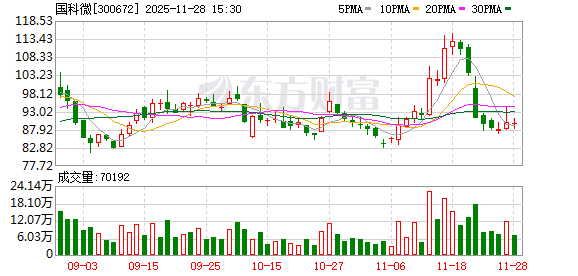
Core Viewpoint - Hunan Guoke Microelectronics Co., Ltd. has decided to terminate the acquisition of 94.366% equity in SMIC Integrated Circuit (Ningbo) Co., Ltd. due to the inability to reach an agreement on related matters within the expected timeframe, emphasizing the company's commitment to safeguarding the long-term interests of shareholders and maintaining operational stability [2][4]. Group 1: Acquisition Termination - The termination of the acquisition reflects the company's prudent decision-making and responsibility towards shareholder interests, as the negotiations did not yield a consensus within the anticipated timeline [4]. - The company stated that the termination will not adversely affect its production operations or financial status, and it does not imply a complete abandonment of future restructuring efforts [2][4]. Group 2: Strategic Focus - Guoke Micro has been focusing on its long-term strategic layout, continuing to strengthen its core business in smart display and high-definition visual technology while exploring new markets in automotive electronics, AI, and IoT [6]. - The company has been implementing its "ALL IN AI" strategy, developing AI System-on-Chip (SoC) products that cater to various applications, including AIoT and industrial computing [6]. Group 3: Future Outlook - Despite the termination of the acquisition, Guoke Micro remains committed to seeking merger and acquisition opportunities that align with its strategic goals, leveraging policy support for "hard technology" companies to enhance competitiveness [7]. - The company aims to drive long-term healthy development through a dual approach of internal growth and external expansion, focusing on technology, market, and product integration opportunities [7].

福建低空经济场景典型案例发布 “低空政务巡检”入选
Zhong Guo Jing Ji Wang· 2025-11-29 09:42
Core Viewpoint - Fujian Province's Development and Reform Commission has released nine typical cases of low-altitude economy, with Yunsheng Intelligent's "Low-altitude Government Inspection" being selected as a notable example [1] Group 1: Company Initiatives - Yunsheng Intelligent has implemented integrated air-ground smart governance projects in Dongshan County, Longwen District, and the Taiwan Business Investment Zone in Zhangzhou [1] - The smart governance project in the Taiwan Business Investment Zone deeply integrates IoT, big data, and artificial intelligence technologies, transitioning urban governance from "manual control" to "technological and intelligent control" [1] Group 2: Industry Applications - The project extends to innovative applications in cultural tourism services and the low-altitude economic industry ecosystem, forming a smart governance system characterized by "one network management, multi-cross collaboration, and full-domain empowerment" [1] - Through the deployment of various fully autonomous drone inspection systems like "Shengbaolian Lantern" and "Whale Cave," a comprehensive "air-ground integrated" urban management monitoring network has been established [1] - The combination of "aerial grid personnel and urban brain" effectively enhances the precision of urban governance [1]
突破35亿!我国物联网建设持续提速 新网络、新模式、新业态不断涌现
Yang Shi Wang· 2025-11-29 03:54
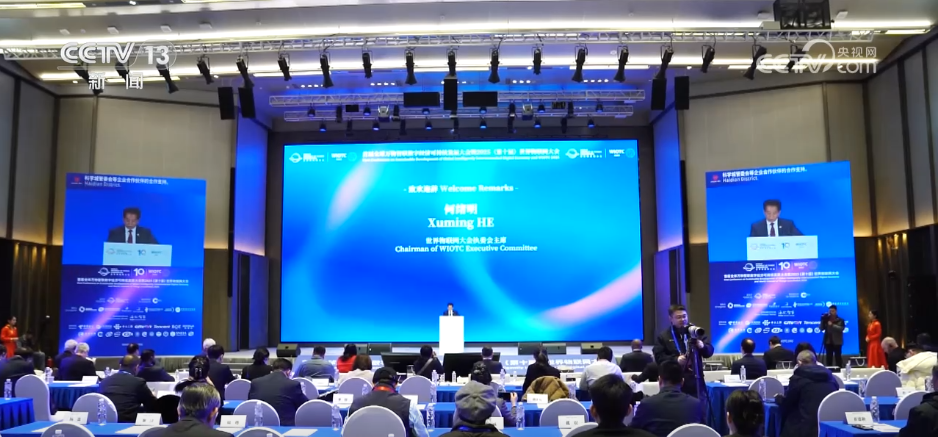
央视网消息:"十五五"规划建议,明确将第六代移动通信列为未来产业的发展重点。28日,首届全球万物智联数字经济可持续发 展大会在北京开幕,大会发布的《全球万物智联高级数字经济与社会发展宣言》显示,今年我国物联网连接数有望突破35亿。 我国针对物联网领域的专项政策投入已超80亿元,已发布了86项物联网相关国家标准。政策与标准的推动下,我国物联网通信技 术正从5G向6G、星链、量子通信快速迈进,新网络、新模式、新业态不断涌现。 今年以来,我国物联网建设持续提速,承载物联网的5G基站有望突破480万个,卫星物联网建设正式开启。 世界物联网大会执委会主席 何绪明:今年,我国的传统数字经济年产值有望超过80万亿人民币,特别是具备万物智联高级数字 经济条件的企业超过120万家,正在成为以新质生产力为核心要素的世界创新强国。 中国移动通信联合会会长 倪健中:中国由物联网支撑的数字经济规模预计在未来数年保持10%以上的强劲增长。智能交通、智慧 城市、智能制造、智慧生活等领域捷报频传,一个以新网络、新模式、新业态为核心要素的"新质生产力"正在形成。 ...
纽创信安:让天下没有不安全的芯片
半导体芯闻· 2025-11-29 03:09
如果您希望可以时常见面,欢迎标星收藏哦~ 虽然少被提及,但安全问题无疑是芯片的头等大事。尤其是在在集成电路全球化与处理器架构快速演进的当下,芯片微架构层面的隐私与安全问题 已然成为硬件系统设计中的关键挑战。 本土硬件安全领先供应商纽创信安副总裁范长永在此前举办的ICCAD 2025现场与半导体行业观察等交流的时候也指出,当下信息安全面临越来越 多的威胁,随之而来的挑战也给纽创信安这些硬件安全供应商提出更多的需求。 "作为领先的IP供应商,纽创信安聚焦于硬件安全领域并耕耘多年。公司团队有着雄厚的理论技术积累,也对前端应用有深刻的理解,形成了独特的 技术优势和市场优势。"范长永说。他进一步指出,正是基于这些积累,纽创信安面向云、管、端等全部应用领域打造了极具竞争力的硬件安全解决 方案。 芯片硬件,挑战重重 在过去,我们谈到芯片的挑战的时候,很多时候谈的是他们的性能、面积、功耗和成本等方面。但正如文章开头所说,其实安全早已成为不可或缺 的重要一环。 以热门的物联网为例,范长永指出,当前物联网安全最大的痛点是安全需求与低成本安全方案之间的矛盾。如他所说,物联网安全点多、面广,同 时物联网设备通常对成本、功耗等比较敏感 ...

安徽趣赢智能科技有限公司成立 注册资本500万人民币
Sou Hu Cai Jing· 2025-11-28 23:57
Core Viewpoint - Anhui Quying Intelligent Technology Co., Ltd. has been established with a registered capital of 5 million RMB, focusing on various technology services and product manufacturing in the fields of IoT, sports equipment, and more [1] Company Overview - The company is legally represented by Hu Qianjun and has a registered capital of 5 million RMB [1] - The business scope includes technology services, development, consulting, and promotion, as well as computer system services and IoT technology services [1] Product and Service Offerings - The company engages in the manufacturing and retail of sports goods and equipment, amusement devices, and various electronic components [1] - It also offers services related to the rental of charging control equipment, vending machines, and general mechanical installation [1] - The company is involved in the sales of adult products, household appliances, daily chemical products, and medical devices [1] Market Positioning - The establishment of the company indicates a strategic move into the growing sectors of IoT technology and smart devices, reflecting current market trends [1] - The diverse range of services and products positions the company to cater to various consumer needs, from entertainment to healthcare [1]
京东商汤背书的特斯联三冲港股:AI业务暴增191%,“陡峭曲线”能延续吗?
3 6 Ke· 2025-11-28 11:52
Core Viewpoint - The resurgence of artificial intelligence (AI) and its integration with the Internet of Things (IoT) is driving industrial intelligence, with a focus on the potential of Teslin Smart Technology Co., Ltd. as a candidate for the "first public AIoT stock" in China [1][2]. Company Overview - Teslin was founded in 2015 and is a key player in China's public AIoT sector, aiming to drive industrial upgrades and spatial intelligence for sustainable development [2]. - The core business revolves around the TacOS operating system, which provides a comprehensive AIoT solution by integrating software, hardware, and related services [2]. Financial Performance - Teslin's revenue trajectory shows significant growth, with revenue increasing from 738 million yuan in 2022 to 1.843 billion yuan in 2024, reflecting a compound annual growth rate (CAGR) of 58% [3]. - In the first half of 2025, revenue growth accelerated further, with a year-on-year increase of 77% [3]. - The AI industry digitalization business saw a remarkable revenue increase of 191% in the first half of 2025, contributing over 90% of total revenue [3]. Market Position and Strategy - Teslin is among the top five public AIoT operating system providers in China, based on projected revenue for 2024 [2]. - The company has over 900 clients and its products are deployed in 172 cities globally, indicating a strong market presence [3][8]. - The strategic focus has shifted towards AI digitalization, while revenues from urban intelligence and smart living have contracted [3]. Profitability and Investment - Despite revenue growth, profitability has fluctuated, with gross margin dropping from 31% in 2023 to 15.3% in 2024, before slightly recovering to 22.7% in the first half of 2025 [4][5]. - The company recorded net losses of 2.387 billion yuan, 803 million yuan, 2.1 billion yuan, and 574 million yuan over the past four years [5]. - Research and development (R&D) expenditures exceeded 1 billion yuan from 2022 to 2024, with a consistent annual investment of around 300 million yuan [5]. Industry Trends - The AIoT market is projected to grow from 408 billion yuan in 2023 to 744 billion yuan by 2028, with a CAGR of 12.8%, making it one of the fastest-growing segments in the digital economy [7][8]. - The growth is driven by policy support and the deep integration of AI and IoT, creating new application scenarios and value [8]. Competitive Landscape - The AIoT sector is characterized by complex competition, with telecom operators, cloud service providers, and vertical solution providers vying for market share [8]. - Teslin differentiates itself as a public operating system provider, leveraging its TacOS to connect diverse devices for centralized management [8][9]. Future Opportunities - The company aims to capitalize on the trend of re-evaluating data value in the physical world and is well-positioned to build an ecosystem with strong backing from notable investors like JD Technology and SenseTime [11]. - Recognition as a "small giant" enterprise by the government enhances its credibility and market position [11].
必看,2025年值得关注的AI、物联网、边缘计算七大洞察
3 6 Ke· 2025-11-28 11:07
Group 1: IoT and AI Integration - The integration of IoT and AI is reshaping operational models and competitive landscapes across various industries, including manufacturing and logistics [1] - A significant skills gap in AI integration within IoT products and services is identified as a core bottleneck for industry advancement, with a lack of cross-disciplinary talent being a major challenge [2][2] - The rapid iteration of AI technology outpaces the product lifecycle of traditional IoT devices, leading to mismatches that increase R&D costs and necessitate new planning strategies [2][2] Group 2: Tariff Impacts on Business Strategy - Tariffs have raised raw material costs, affecting product pricing and supplier profitability, with 60% of companies indicating that rising tariffs threaten their profitability and tech budgets [3] - Companies are adjusting their strategies to mitigate the impact of tariffs, including delaying equipment purchases and diversifying supply chains [4][4] - Despite the instability caused by tariffs, investments in manufacturing upgrades and IoT systems are expected to continue, although cost pass-through to customers may affect pricing and supplier margins [5][5] Group 3: Rise of Synthetic Data - Synthetic data is emerging as a key tool for companies to navigate challenges related to data privacy and security, allowing for analysis without exposing sensitive information [6][6] - The use of synthetic data can facilitate model training, cross-company collaboration, and system simulation without compromising core business data [7][7] - Factors driving the adoption of synthetic data include concerns over data security, the need for cross-system analysis, and the demand for diverse datasets for AI applications [7][7] Group 4: Interoperability Among IoT Vendors - There is a growing trend of interoperability among IoT vendors, driven by customer demands for integrated solutions rather than isolated systems [8][8] - The shift from closed ecosystems to collaborative frameworks is essential for enhancing operational efficiency and reducing integration costs [9][9] - Companies are recognizing the need to compete not just on hardware but also on ecosystem capabilities and service integration [9][9] Group 5: Hybrid AI Models in Industrial IoT - The development of hybrid AI models is accelerating in response to the pressures of integrating real-time intelligence into edge devices within industrial IoT [10][10] - Hybrid AI models balance speed, cost, and performance by sharing intelligence between edge devices and cloud platforms [11][11] - The application of hybrid AI spans predictive maintenance, process optimization, and remote monitoring across various industrial operations [11][11] Group 6: Cybersecurity Challenges - Cybersecurity remains a significant challenge for IoT deployments, with 43% of companies identifying it as their biggest concern [13][13] - The complexity of IoT environments necessitates advanced security frameworks that can adapt to diverse potential attack vectors [14][14] - Companies are increasingly adopting zero-trust architectures and AI-driven threat detection to enhance their security postures [14][14] Group 7: AI's Role in Data Processing - AI is transforming how companies manage and analyze the vast amounts of data generated by IoT sensors, enabling actionable insights with minimal human intervention [15][15] - The ability of AI to facilitate predictive maintenance and optimize supply chains is accelerating the adoption of IoT technologies among businesses [15][15] - Companies that were previously cautious about data management complexities are now moving forward, driven by AI's capacity to deliver quantifiable results [15][15]
千方科技:公司长期致力于智慧交通及物联网技术的深度融合与创新应用
Zheng Quan Ri Bao· 2025-11-28 09:41
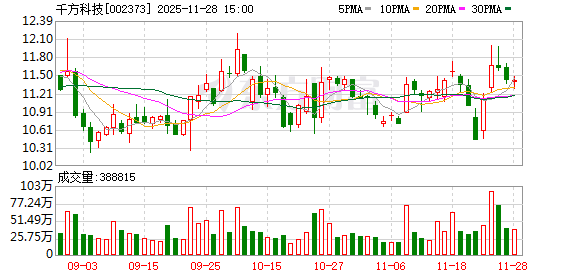
Core Viewpoint - Qianfang Technology is committed to the deep integration and innovative application of smart transportation and IoT technologies, particularly in response to China's recent launch of satellite IoT commercial trials [2] Group 1: Company Strategy - The company aims to leverage its advantages in vertical industry solutions and edge computing to connect space-based networks with ground applications [2] - Qianfang Technology's initiatives include, but are not limited to, the adaptation of vehicle-mounted terminals, development of industry solutions, and provision of data intelligence services [2]

福建三钢集团成立数字科技公司
Zheng Quan Shi Bao Wang· 2025-11-28 07:26
Core Insights - A new company named Fuxi Qilin Chain Jin (Shanghai) Digital Technology Co., Ltd. has been established with a registered capital of 100 million yuan [1] - The legal representative of the company is Guo Linghuan, and its business scope includes blockchain technology-related software and services, industrial internet data services, data processing and storage support services, and IoT technology services [1] - The company is wholly owned by Fujian Sansteel Group Co., Ltd. [1]
