
冰雪经济

Search documents
奥雅股份:公司高度重视冰雪经济带来的商业机会
Zheng Quan Ri Bao Wang· 2025-12-05 11:13
Core Viewpoint - The company emphasizes the importance of the ice and snow economy and its potential business opportunities, particularly through its involvement in projects related to the Winter Olympics [1] Group 1: Company Initiatives - The company has participated in the design of the Beijing Bajiao New Park project, which is a significant part of the "Winter Olympic Scenic Avenue," integrating the spirit of the Winter Olympics into local communities [1] - The project has created an ecological and natural activity space for 15,000 households in seven surrounding communities [1] Group 2: Market Expansion - The company is actively exploring market opportunities through ice and snow projects, focusing on the concept of "winter and summer coexistence" [1] - It has begun to establish a product model centered around "ice and snow culture" to deepen its research and market engagement [1]

放雪假多地滑雪场长满了学生
Di Yi Cai Jing· 2025-12-05 11:01
Core Insights - The introduction of "snow holidays" in various regions is expected to boost local tourism and enhance family travel experiences [2][3][4] Group 1: Snow Holidays Implementation - Xinjiang's Altay region will implement its first "snow holiday" from December 1 to 5, 2025, providing a continuous 9-day break for 73,000 students [2] - Jilin Province has scheduled its "ice and snow holiday" from December 3 to 7, 2025, ensuring it does not overlap with summer and winter vacations [2] - The implementation of these holidays is part of a broader initiative to promote student well-being and educational practices [2][3] Group 2: Impact on Tourism - Jilin's local tourism saw a significant increase, with daily visitors to the Songhua Lake Resort exceeding 3,000 during the snow holiday, and ski trail usage rising by 60% compared to regular days [2][3] - The booking volume for local tours in Jilin surged over 6.5 times week-on-week during the snow holiday, driven by promotional ticket offers for students [3] - In regions like Urumqi and Altay, ski resorts offered discounts on lift tickets and equipment rentals, attracting many families to the slopes [3] Group 3: Economic and Social Benefits - Experts suggest that the establishment of snow holidays can cultivate the market and promote the development of the ice and snow economy [4] - These holidays encourage off-peak travel, which can sustain tourism consumption during traditionally slower periods [4]
高梵旗舰店落户哈尔滨,重塑高端鹅绒服品牌价值
Sou Hu Cai Jing· 2025-12-05 05:20
Core Insights - The opening of the high-end store of Gaofan in Harbin marks a significant milestone, achieving over 400,000 yuan in sales within the first two days, showcasing strong consumer demand and brand appeal [1] - Gaofan's strategic positioning in the Northeast market capitalizes on the growing demand for high-quality winter apparel, driven by the region's unique climate and tourism trends [2] - The brand's extensive patent portfolio and commitment to quality have established a strong competitive advantage in the high-end down jacket market [7][10] Channel Strategy - Gaofan's success in Harbin is attributed to its deep understanding of the Northeast market and precise channel strategy, leveraging the region's booming ice and snow economy [2] - The choice of Harbin's Xicheng Hongchang as a location reflects Gaofan's foresight in targeting high-traffic areas with a mature customer base, enhancing brand visibility and alignment with its premium positioning [2] - The brand's expansion strategy includes establishing flagship stores in key cities, creating a robust regional retail network that effectively captures the benefits of the ice and snow economy [3] Product Strength - Gaofan's product strength is underpinned by 185 invention patents, making it a leader in the global down jacket industry, with a focus on quality and innovation across the entire supply chain [7] - The brand's commitment to sourcing high-quality down from top regions and maintaining strict quality control through proprietary breeding bases ensures the superior quality of its products [7] - Innovative design and technology integration in Gaofan's down jackets provide a blend of functionality and fashion, appealing to modern consumer preferences [10] Experience Empowerment - Gaofan's flagship stores offer immersive experiences that go beyond traditional retail, enhancing brand value and consumer engagement through carefully curated environments [12] - The store layout is designed to facilitate easy navigation based on usage scenarios, allowing consumers to quickly find products that meet their needs [13] - The presence of brand ambassadors and interactive experiences at the store launch amplify consumer interest and drive word-of-mouth marketing [13] Full Channel Collaboration - Gaofan's growth strategy is characterized by a synergistic approach that combines online sales with offline experiences, creating a sustainable growth ecosystem [14] - The brand's ability to convert online traffic into in-store purchases through engaging experiences exemplifies its effective marketing strategy [14] - Gaofan's commitment to quality and customer satisfaction fosters high repurchase rates, transforming single transactions into long-term customer relationships [15]


“雪假”激发新一轮冰雪旅游消费热潮
Xin Hua She· 2025-12-05 00:40
新华社上海12月4日电(记者陈爱平)12月以来多地推出的"雪假",让冰雪季消费热潮迅速升温。 公开信息显示,新疆乌鲁木齐市、阿勒泰地区等地"雪假"时间为12月1日至5日,加上前后的双休日,出 游时间可长达9天。12月3日至7日,吉林省也迎来首个"冰雪假期"。多地还推出门票减免、住宿折扣等 优惠及文旅活动和体育赛事,鼓励亲子家庭走出家门共赴"冰雪之约"。 上海市民陈慕芳一家正在长白山滑雪。"雪场上有众多亲子游客,非常热闹。优质的滑雪教练甚至 需要提前'锁定'。但相较农历春节前后的'超级旺季',雪假前后出行性价比仍很高,体验很好。"陈慕芳 说。 受益于多个南方省市学校放秋假、举行秋游以及近期的"雪假",上海耀雪冰雪世界提前进入客流旺 季,11月以来景区客流量同比增长30%,相当部分游客来自外省市,景区营业收入同比增长70%,带动 周边商业营业收入增长近20%,其配套酒店在周末均处于满房状态。 业界预计,冰雪消费正成为扩大内需重要增长点,到2030年,我国冰雪经济总规模有望达到1.5万 亿元。 携程平台数据显示,吉林省"雪假"期间,从当地出发的机票预订量同比增长41%,酒店预订量同比 增长147%。 另据吉林省文旅 ...
“十四五”末河北冰雪产业总规模将达900亿元
Zhong Guo Xin Wen Wang· 2025-12-04 12:26
Core Viewpoint - By the end of the "14th Five-Year Plan," the total scale of Hebei's ice and snow industry is expected to reach 90 billion RMB [1] Group 1: Industry Growth - The ice and snow industry in China is projected to exceed 1 trillion RMB by 2025, reaching 1,005.3 billion RMB [1] - During the "14th Five-Year Plan" period, Hebei's sports event economy has become a new highlight, with 10,078 sports events held from January to November 2024, attracting 24.9 million participants and spectators, generating over 47.3 billion RMB in consumption [1] - The average annual growth rate of Hebei's sports industry has exceeded 10% over the past five years, supporting the province's economic transformation and high-quality development [1] Group 2: Infrastructure Development - Hebei, as one of the hosts of the 2022 Beijing Winter Olympics, has built several world-class professional ski venues and high-quality ice rinks, including the National Ski Jumping Center "Snow Ruyi" [1] - Currently, Hebei has 84 ski resorts and 98 indoor ice rinks, both ranking first in China [1] - The province has successfully promoted the post-use of Olympic venues, achieving a balance of income and expenditure within two years, with a slight surplus [1]
新消费派丨“没雪又爱雪” 室内滑雪场“激活”南方冰雪经济
Zhong Guo Jin Rong Xin Xi Wang· 2025-12-04 11:04
Core Viewpoint - The ice and snow economy in China is experiencing rapid growth, driven by policy support, consumption upgrades, and innovative scenarios, with indoor ski resorts playing a crucial role in expanding the market, especially in southern regions [1][2]. Policy and Market Dynamics - Ice and snow-related consumer goods have become a consumption hotspot since September, with Douyin reporting a 112% year-on-year increase in related content and a 24% rise in group buying sales [2]. - The State Council aims for the ice and snow economy to reach a total scale of 1.2 trillion yuan by 2027, promoting nationwide participation in ice sports [2]. - By 2030, the total scale of China's ice and snow economy is projected to reach 1.5 trillion yuan, indicating significant growth potential [2]. Indoor Ski Resort Growth - Indoor ski resorts are emerging as a new growth engine, with 5 indoor ski resorts in 2013 growing to 66 by April 2025, primarily located in economically active southern regions [4][5]. - Indoor ski visits are expected to reach 5.63 million by the 2024-2025 fiscal year, accounting for 22% of total ski visits, with a compound annual growth rate of 23% since 2018-2019, significantly outpacing the 4% growth of outdoor skiing [4][5]. Seasonal Demand and Operational Strategies - Indoor ski resorts exhibit unique seasonal demand patterns, thriving in off-peak winter months, with May, July-August, and October being peak times [6]. - High fixed costs necessitate effective management of both peak and off-peak seasons, with successful indoor ski resorts characterized by advantageous locations, large scale, and refined operations [6]. Diversification and Event Integration - To address seasonal challenges, indoor ski resorts are exploring "ice and snow +" integration models, combining skiing with other entertainment options [7]. - Events play a significant role in driving consumer engagement, with facilities like Shanghai Yao Snow Ice World successfully hosting major competitions, leading to a 30% increase in local retail and dining revenues during events [7]. Future Outlook - The ice and snow economy is expected to maintain high growth momentum, transitioning from seasonal peaks to year-round prosperity, supported by ongoing policy backing and evolving consumer demands [8].

中国经济信心说丨“雪假”激活冰雪热,消费势能如何精准释放?
Yang Shi Xin Wen· 2025-12-04 10:53
Core Insights - The introduction of "snow holidays" in northern regions has led to a significant increase in ice and snow consumption, creating a new wave of tourism driven by policy and demand [1][3] - The ice and snow tourism industry is evolving from traditional models to more integrated experiences, combining education, culture, and sports [3][5] - The rapid growth in ice and snow consumption is prompting a shift from broad development to refined services, enhancing the overall quality of tourism offerings [5][6] Group 1: Policy and Demand - Northern regions have announced "snow holidays," allowing students to enjoy up to 9 days off, which has stimulated ice and snow tourism [1] - Local governments are implementing measures such as issuing ice and snow consumption vouchers and special subsidies to attract visitors [1] Group 2: Tourism Infrastructure and Services - The influx of tourists is testing the capacity of local cultural and tourism industries, necessitating improvements in transportation, safety, and service [3] - New services are being introduced, such as dedicated transportation for ice and snow tourism and one-stop service stations for families [3][5] Group 3: Industry Growth and Economic Impact - The ice and snow tourism sector is projected to reach a scale of 980 billion yuan in 2024, with expectations to exceed 1 trillion yuan by 2025 [6] - The growth in this sector is creating job opportunities, with over 30,000 jobs generated in Hebei's snowfields alone, and young ski instructors earning competitive salaries [5][6] - The economic benefits extend to surrounding areas, with a reported 27.97% increase in consumption within a two-kilometer radius of ski resorts [5]
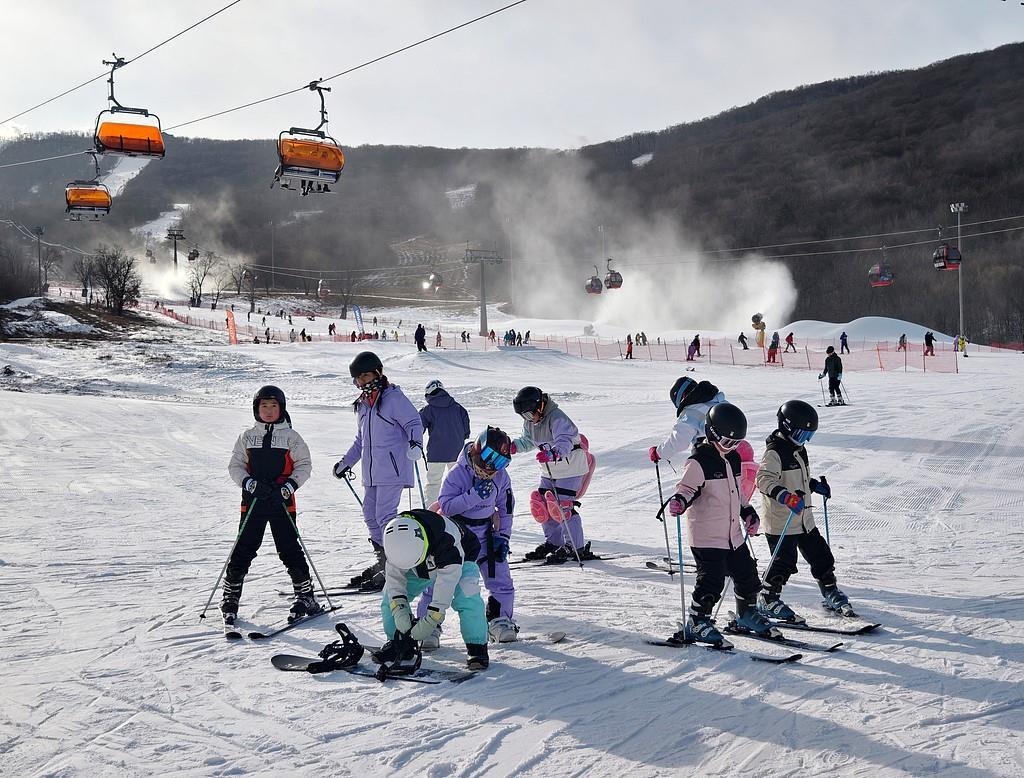
雪假激发延边景区预订热度增长超240%
Di Yi Cai Jing· 2025-12-04 10:50
Core Insights - The ice and snow tourism sector in China is experiencing unprecedented growth, transforming from a seasonal "cold resource" to a "hot economy" that links domestic and international markets [2] - Driven by policy guidance and market innovation, ice and snow tourism is breaking seasonal barriers and becoming a key force in promoting consumption upgrades and industrial integration [2] Group 1: Market Trends - The introduction of the "snow holiday" in Jilin Province has significantly boosted local tourism, with a reported increase in bookings for local day trips and hotel stays during this period [3] - The overall market size for ice and snow tourism is expanding, with the number of ski resorts reaching 748 and winter ski visits exceeding 26.05 million, marking a 12.9% year-on-year increase [5] - Popular destinations for ice and snow tourism include Harbin, Beijing, and other northern cities, with a notable increase in bookings from southern users, who make up nearly 70% of the market [6] Group 2: Consumer Behavior - There is a shift in consumer preferences, with longer stays becoming more common; the proportion of two-night hotel stays has increased by 5% and three to four-night stays by 3% in key ice and snow regions [7] - Tourists are seeking more comprehensive experiences beyond skiing, with a trend towards integrated leisure, entertainment, and family-oriented activities [7] Group 3: Industry Innovation - The ice and snow industry is evolving towards more inclusive and innovative models, with a significant increase in bookings for mid-sized ski resorts, which have seen a 2.6-fold increase since November [8] - Smaller cities are leveraging partnerships with travel platforms to develop unique winter tourism destinations, showcasing the potential for differentiated market growth [8] Group 4: International Dynamics - The inbound ice and snow tourism market is experiencing explosive growth, with orders for inbound travel nearly doubling, particularly from Southeast Asian markets [8][9] - Outbound ice and snow tourism is also on the rise, with a notable increase in bookings for Russian ski resorts, driven by visa-free policies and rich ice and snow resources [9]


雪假激发延边景区预订热度增长超240%
第一财经· 2025-12-04 10:25
Core Viewpoint - The article highlights the rapid growth of the ice and snow tourism industry in China, transforming from a seasonal niche to a significant economic driver, supported by policy initiatives and market innovations [3]. Group 1: Market Trends - The introduction of the "snow holiday" in Jilin Province from December 3 to 7, 2025, aims to promote ice and snow sports among students and boost local tourism [5]. - Booking data from Tongcheng Travel indicates a significant increase in local tourism during the "snow holiday," with a week-on-week rise of over 650% in bookings for one to three-day tours [6]. - The number of ski resorts in China has reached 748, with winter ski visits surpassing 26.05 million, marking a year-on-year growth of 12.9% [6]. Group 2: Consumer Behavior - Popular destinations for ice and snow tourism include Harbin, Beijing, and Changchun, with southern users making up nearly 70% of bookings, indicating a strong interest in "northward snow chasing" [9]. - The trend shows a shift from one-day trips to longer stays, with hotel bookings for two-night stays increasing by 5% and three to four-night stays by 3% [10]. - The demand for diverse experiences beyond skiing is growing, with tourists seeking comprehensive vacation experiences that include leisure and entertainment [10]. Group 3: Industry Development - The ice and snow industry is evolving towards more inclusive and innovative models, with a notable increase in bookings for mid-sized ski resorts, which have seen a year-on-year rise of 260% [11]. - Smaller cities like Heihe and Yichun are leveraging partnerships with travel platforms to develop unique winter tourism destinations, showcasing a trend towards differentiated and specialized offerings [11]. - The inbound ice and snow tourism market is experiencing explosive growth, with orders nearly doubling year-on-year, particularly from Southeast Asian markets [11][12].
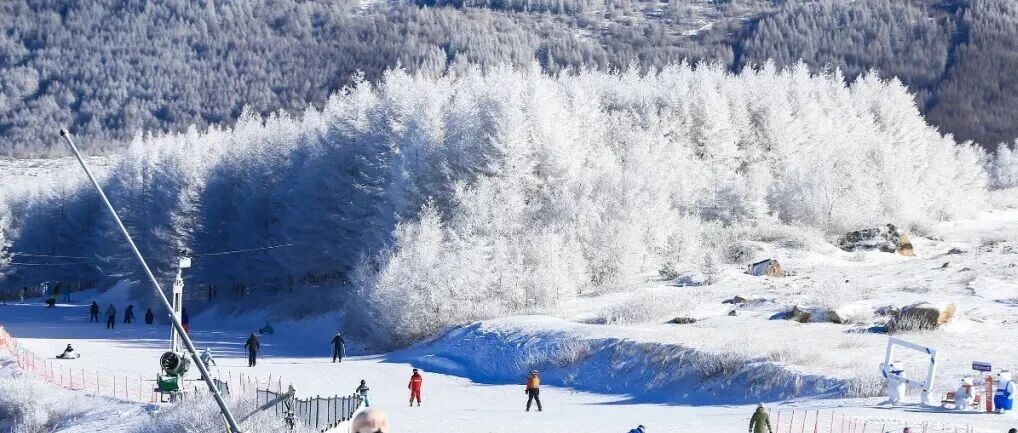
“冷资源”热发展,冰雪经济带来发展新动能
Ren Min Wang· 2025-12-04 05:39
Core Insights - The Chinese ice and snow industry is projected to exceed 1 trillion yuan, reaching 10,053 billion yuan by 2025, indicating explosive growth in the ice and snow economy [1] - The industry is characterized by a complete ecosystem comprising specialized upstream equipment manufacturing, diversified midstream service operations, and varied downstream consumption scenarios [1] - The ice and snow economy is reshaping China's geographical landscape, expanding from northern regions to southern areas, thus promoting regional coordination and infrastructure development [2] Industry Development - The ice and snow industry has seen significant advancements in domestic equipment manufacturing, with technologies for snow-making machines, snow groomers, and skis reaching international standards [1] - The midstream service sector is diversifying with the development of ski resorts, ice and snow parks, event operations, and training, enhancing service standards and innovation capabilities [1] - Downstream consumption includes tourism, dining, accommodation, and retail, with the integration and collaboration across these sectors enhancing the industry's added value and sustainability [1] Regional Expansion - The ice and snow economy has transcended regional limitations, with northern regions leveraging natural resources while southern regions, like Sichuan, develop unique offerings such as "warm ice and snow" experiences [2] - The development of ice and snow tourism in southern areas has become a new hotspot, contributing to infrastructure improvements and industrial upgrades in less developed regions [2] Technological Innovation - High-quality development of the ice and snow industry relies on technological innovation, with advancements in snow-making technology, insulation materials, and venue construction enabling growth in low-latitude, low-snowfall areas [2] - The acceleration of domestic equipment replacement is enhancing the cost-performance ratio of ice and snow gear, lowering participation barriers and driving industry transformation [2] Cultural Significance - The ice and snow economy serves as a vital platform for cultural transmission and image shaping, showcasing Chinese culture and development achievements through events like the Beijing Winter Olympics and local ice and snow festivals [3] - The integration of traditional customs with modern ice and snow sports allows for a vibrant presentation of Chinese culture, facilitating global understanding of China through the medium of ice and snow [3] Future Outlook - The 1 trillion yuan scale is just the beginning, with the multi-functional value of the ice and snow economy expected to continue to be released [3] - As the industry ecosystem matures, regional collaboration deepens, and technological innovations evolve, the ice and snow economy is poised to play a more significant role in driving high-quality development and injecting new momentum into economic and social growth [3]