数字孪生

Search documents
龙软科技: 北京龙软科技股份有限公司2025年半年度报告
Zheng Quan Zhi Xing· 2025-08-18 16:30
Core Viewpoint - The report highlights the financial performance of Beijing LongRuan Technology Co., Ltd. for the first half of 2025, indicating significant declines in revenue and profit due to market conditions and increased competition in the coal mining industry [1][4]. Financial Performance - The company's operating revenue for the first half of 2025 was approximately 85.98 million yuan, a decrease of 38.75% compared to 140.37 million yuan in the same period last year [4]. - Total profit for the period was about 4.42 million yuan, down 88.53% from 38.58 million yuan year-on-year [4]. - The net profit attributable to shareholders was approximately 4.82 million yuan, reflecting an 86.43% decline from 35.52 million yuan in the previous year [4]. - The basic earnings per share decreased to 0.07 yuan, down 85.71% from 0.49 yuan in the same period last year [4]. - The net cash flow from operating activities improved significantly, increasing by 145.62% to approximately 9.04 million yuan [4]. Industry Overview - The company operates in the software and information technology services sector, focusing on industrial applications for coal and non-coal mining safety and intelligent mining solutions [6][7]. - The coal industry is a key downstream sector for industrial software applications, with increasing emphasis on intelligent mining to enhance safety and efficiency [7]. - The Chinese software and information technology services industry is experiencing rapid growth, driven by advancements in cloud computing, big data, and artificial intelligence [6]. - The government has been actively promoting the intelligent transformation of coal mines through various policies and funding initiatives, aiming to improve safety and operational efficiency [7][9]. Strategic Initiatives - The company is leveraging its proprietary LongRuan GIS platform to provide comprehensive digital solutions for mining safety and management [6]. - There is a strong focus on integrating new technologies such as IoT, cloud computing, and AI to enhance mining operations and safety management [6][7]. - The coal mining sector is undergoing a transformation towards automation and intelligent systems, supported by national policies aimed at reducing labor and improving safety standards [9][10].

海博思创获评2025年北京市先进级智能工厂
Zhong Zheng Wang· 2025-08-18 12:43
Core Insights - Haibo Shichuang has been recognized as an advanced intelligent factory in Beijing for its "big data-driven high-performance energy storage products" project, aiming to set a benchmark in smart manufacturing [1] - The evaluation was conducted by the Beijing Economic and Information Technology Bureau, focusing on key dimensions such as safety of key technical equipment, talent reserve in smart manufacturing, and maturity of smart manufacturing capabilities [1] Group 1: Intelligent Factory Development - The intelligent factory integrates cutting-edge technologies like digital twins, industrial internet, and big data, creating a fully automated system covering R&D, production, and operations [1] - A comprehensive 3D digital model of equipment and buildings has been established, enabling real-time interaction and collaborative operation between the physical factory and its digital twin [1][2] Group 2: Technological Advancements - In the R&D phase, a digital design platform based on multi-physical field coupling has been developed, integrating leading simulation software for virtual validation and optimization of product performance [2] - The factory has implemented a digital twin for virtual production processes, allowing for simulation of equipment and material movements, enhancing production quality, equipment status, energy consumption, and performance predictions [2] Group 3: Service-Oriented Manufacturing - The intelligent factory has transitioned from a traditional product manufacturer to a data-driven service-oriented manufacturing benchmark, establishing a full lifecycle service platform for each battery cell with unique digital identity coding [2] - Utilizing IoT technology, the factory collects comprehensive data from design to delivery, providing predictive maintenance and energy efficiency optimization services during the operational phase [2] Group 4: Sustainability and Expansion - A carbon footprint management system covering the entire value chain has been established, significantly reducing carbon emissions per product compared to industry averages [3] - The new energy storage products designed by the factory feature energy recovery capabilities, promoting efficient energy use and earning the "Beijing Green Factory" certification [3] - Haibo Shichuang is expanding its successful intelligent manufacturing model to other locations such as Zhuhai, Jiuquan, and Datong, aiming to create integrated smart manufacturing bases across the country [3]
探索智慧无人仓储调度、无人驾驶场景,亦庄综保区科技感拉满
Xin Jing Bao· 2025-08-18 11:47
Core Insights - The Beijing E-Town Comprehensive Bonded Zone has passed pre-acceptance, marking it as the fourth comprehensive bonded zone in Beijing and the first in the country themed around new productivity [1][3] - The zone aims to explore innovative applications such as smart unmanned warehousing, autonomous driving, and AI-assisted supervision, creating a full-cycle digital twin park [5][6] Geographic and Infrastructure Summary - Located in the southern part of the E-Town New City, the zone covers an area of 0.61 square kilometers and is well-connected by major roads and highways, facilitating quick access to Beijing Daxing International Airport and Beijing Capital International Airport [2] - The first phase includes approximately 100,000 square meters of high-standard industrial space, with 42,000 square meters already completed and additional facilities under construction, expected to be operational by February 2026 [2] Business Development and Opportunities - There are currently 80 intended enterprises looking to enter the zone, with 30 projects confirmed post-closure, covering various sectors such as automotive, semiconductor, and biopharmaceuticals [4] - The zone is expected to enhance logistics efficiency, with potential delivery times for cross-border e-commerce products reduced to 30-50 minutes for local consumers [4] Technological Innovations - The zone will establish a comprehensive digital twin model, integrating various data sources to create a smart regulatory and operational platform [5] - It will also implement a dual-carbon management system, focusing on carbon emissions monitoring and providing services related to carbon certification and trading [6]
丝路视觉发布2025年半年报:“文化+科技”赋能多项目落地,勤修内功夯实长远根基
Zheng Quan Shi Bao Wang· 2025-08-18 11:33
Core Viewpoint - The company, Silk Road Vision, reported a decline in revenue but improved its net profit loss, showcasing resilience amid challenging market conditions [2][6]. Financial Performance - In the first half of 2025, the company achieved operating revenue of 277 million yuan, a decrease of 6.28% year-on-year [2]. - The net profit attributable to shareholders was -80.26 million yuan, which represents a reduction in loss by 28.40 million yuan compared to the same period last year [2]. Industry Context - The digital cultural industry is experiencing strong growth driven by favorable national policies and technological advancements [3]. - The government has emphasized the creation of new consumption scenarios, supporting immersive experience projects in various cultural spaces [3]. Business Development - Silk Road Vision is focusing on the long-term opportunities in the digital cultural industry, particularly in the integration of culture and technology [2][3]. - The company has successfully secured several benchmark projects, including a significant exhibition project at the Shenzhen Natural History Museum [4]. Innovation and Technology - The company is actively exploring the integration of AI and digital twin technologies into its core business, enhancing its service offerings [4][5]. - A notable project, "Seeking the Qin Tomb," exemplifies the company's ability to leverage technology for cultural storytelling, featuring high-quality visuals and immersive experiences [5]. Operational Efficiency - The company has improved its cash flow significantly by optimizing internal management and enhancing project lifecycle management [6][7]. - Silk Road Vision has implemented a robust accounts receivable management strategy to alleviate financial pressure and support ongoing operations [6]. Governance and Management - The company is continuously refining its internal governance structure to enhance decision-making efficiency and operational effectiveness [7]. - Silk Road Vision remains committed to maintaining its brand reputation and aims to drive innovation through digital technologies in the future [7].

北京市先进!海博思创智能工厂引领储能智造变革
中关村储能产业技术联盟· 2025-08-18 10:45
Core Viewpoint - The article highlights the recognition of Haibo Shichuang as an advanced intelligent factory in Beijing, emphasizing its role in driving digital transformation in the renewable energy sector through high-performance energy storage products and smart manufacturing technologies [2][4]. Group 1: Intelligent Factory Recognition - Haibo Shichuang was awarded the title of advanced intelligent factory by the Beijing Economic and Information Technology Bureau, showcasing its capabilities in smart manufacturing and its contribution to the digital transformation of the renewable energy industry [4][12]. - The evaluation focused on key dimensions such as the safety of critical technology equipment, the reserve of smart manufacturing professionals, and the maturity of smart manufacturing capabilities [4]. Group 2: Technological Integration - The intelligent factory integrates cutting-edge technologies such as artificial intelligence, digital twins, and big data, creating a comprehensive intelligent system that covers research and development, production, and operational management [5][6]. - A digital 3D model of equipment and buildings has been established, allowing for real-time interaction and collaboration between the physical factory and its digital twin [6]. Group 3: Smart Manufacturing Ecosystem - The factory has developed a digital design platform that integrates leading simulation software, enabling virtual verification and optimization of product performance [7]. - A digital twin factory has been created to simulate production processes, allowing for the visualization and transparency of production quality, equipment status, energy consumption, and performance predictions [7][9]. Group 4: Lifecycle Services and Value Creation - The intelligent factory has transformed from a traditional product manufacturer to a service-oriented manufacturing benchmark, establishing a full lifecycle service platform for each battery cell with unique digital identity codes [9]. - Through IoT technology, the factory collects comprehensive data from product design to delivery, providing predictive maintenance and energy efficiency optimization services during the operational phase [9]. Group 5: Sustainability and Carbon Footprint Management - The factory has implemented a carbon footprint management system that optimizes production processes through digital twin technology, significantly reducing carbon emissions per unit product compared to industry averages [11]. - The newly designed energy storage products feature energy recovery capabilities, promoting efficient energy utilization and earning the "Beijing Green Factory" certification [11]. Group 6: Industry Standards and Innovation - Haibo Shichuang actively participates in the formulation of smart manufacturing standards, leveraging its extensive experience in the energy storage sector to lead or contribute to multiple industry standards [12]. - The successful practices of the intelligent factory not only revolutionize the company's production model but also promote high-quality and sustainable development across the entire industry chain [12].
海博思创获评2025年北京市先进级智能工厂 打造数字化智能制造新标杆
海博思创· 2025-08-18 09:41
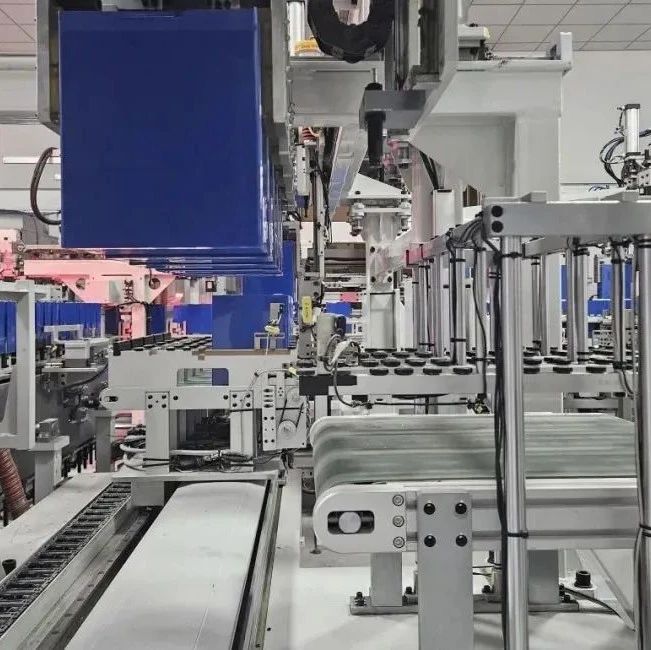
Core Viewpoint - The article highlights the recognition of Haibo Shichuang as an advanced intelligent factory in Beijing, emphasizing its role in driving digital transformation in the new energy industry through high-performance energy storage products and big data-driven manufacturing [1][4]. Group 1: Intelligent Factory Overview - Haibo Shichuang's intelligent factory is located in Fangshan District, Beijing, and integrates artificial intelligence with energy storage, utilizing cutting-edge technologies such as digital twins, industrial internet, and big data to create a fully automated system covering research, production, and operations [5]. - The factory has established a comprehensive digital 3D model of its equipment and buildings, enabling real-time interaction and collaboration between the physical factory and its digital twin [5]. Group 2: Technological Advancements - In the research and design phase, the factory has developed a digital design platform that integrates leading simulation software for virtual validation and optimization of product performance [6]. - The production process employs a digital twin to simulate equipment and material movements, enhancing visibility and efficiency in production management through data analysis and visualization [6]. Group 3: New Manufacturing Ecosystem - The intelligent factory has transitioned from a traditional product manufacturer to a service-oriented model, establishing a product lifecycle service platform that assigns unique digital identities to each battery cell, enabling comprehensive data collection throughout the product's lifecycle [9]. - This model allows for predictive maintenance and energy efficiency optimization, creating continuous added value for customers [9]. Group 4: Sustainability and Efficiency - The factory has implemented a carbon footprint management system across the entire value chain, significantly reducing carbon emissions per unit product compared to industry averages [10]. - The newly designed energy storage products feature energy recovery capabilities, promoting efficient energy use and earning the "Beijing Green Factory" certification [10]. Group 5: Industry Impact and Standards - Haibo Shichuang actively participates in the formulation of industry standards related to intelligent manufacturing, leveraging its extensive experience in energy storage to promote standardization and regulation within the industry [11]. - The successful practices of the intelligent factory not only revolutionize the company's production model but also serve as a replicable model for the intelligent transformation of the new energy equipment manufacturing sector [11].
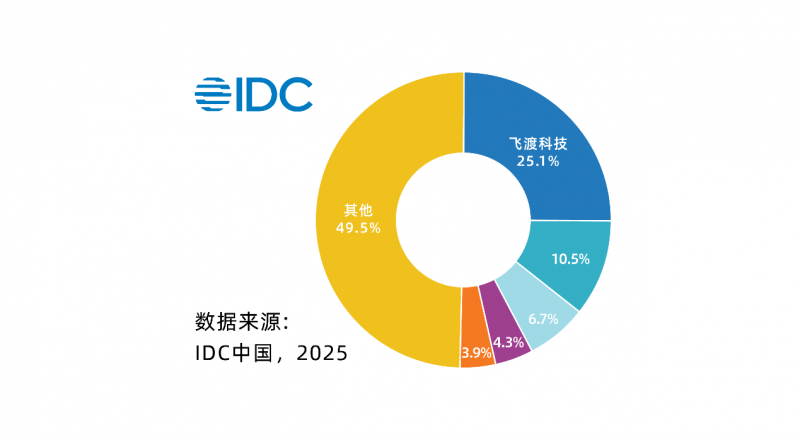
重磅!飞渡科技蝉联IDC中国数字孪生平台市场榜首
Cai Fu Zai Xian· 2025-08-18 02:49
Core Insights - Beijing Feidu Technology Co., Ltd. has maintained its leading position in the Chinese digital twin platform market for 2024, marking its second consecutive year at the top, showcasing its strong technical capabilities and industry applications [1][3]. Group 1: Market Position and Performance - Feidu Technology has achieved a dominant market share in the digital twin sector, reinforcing its status as an industry leader recognized by both the market and clients [1]. - The IDC report indicates that the digital twin market is stabilizing in growth, with increasing fragmentation, making technology and scenario integration a competitive focus [4]. Group 2: Technological Advancements - The DTS digital twin platform developed by Feidu Technology integrates multi-source data governance, real-time rendering, and AI simulation, effectively addressing underlying technical bottlenecks in various industries [3]. - The platform covers the entire technology chain from data collection to intelligent analysis, providing high-precision simulation and AI-driven decision-making capabilities [3]. Group 3: Strategic Initiatives - Feidu Technology is implementing a "vertical deep cultivation" strategy, adapting its DTS platform to meet the refined upgrade needs of existing markets while also accommodating emerging industry scenarios [4]. - The company aims to transform from technology supply to value creation, positioning itself as a partner that understands industry scenarios deeply [4]. Group 4: Ecosystem Development - The chairman of Feidu Technology emphasized the importance of trust from clients and partners, which drives continuous innovation [5]. - The company is focusing on a "platform + ecosystem" strategy, collaborating with upstream and downstream enterprises to promote the application of digital twin technology across broader scenarios [5]. Group 5: Future Outlook - With the ongoing expansion of China's digital economy, digital twin technology is expected to experience explosive growth, becoming a key driver of industrial digital transformation [7]. - Feidu Technology plans to increase R&D investment in AI integration and real-time rendering to lower application barriers and assist various industries in achieving digital upgrades [7].
黄仁勋子女逆袭上位,4万亿「皇储」成长史首曝:一个学烘焙,一个开酒吧
3 6 Ke· 2025-08-18 01:39
Core Insights - Nvidia's chip business is thriving, while the founder's children are exploring new avenues such as digital twins and AI [1][4][30] - Jensen Huang's children, Madison and Spencer, have taken on significant roles within Nvidia, focusing on emerging business areas rather than core chip operations [6][25] Group 1: Family Involvement - Madison Huang joined Nvidia in 2020 as a product marketing manager and was promoted to senior director in March 2023, with a total annual salary reaching $1.13 million [26] - Spencer Huang joined two years later and is working as a product manager in the robotics simulation sector, with a salary of $530,000 in 2024 [26] - Both siblings are not working in the core chip department but are involved in areas deemed future growth engines by Jensen Huang [6][25] Group 2: Company Culture and Dynamics - Nvidia has a culture where many executives' children also work at the company, indicating a familial atmosphere [3][9] - Jensen Huang is not concerned about nepotism affecting the company's development, believing that parents would only endorse their children if they were confident in their capabilities [11][30] - Madison is noted for her strong personality and work ethic, often drawing comparisons to her father's management style [25][26] Group 3: Educational Background and Career Paths - Both siblings did not follow traditional paths to Silicon Valley success; Madison studied culinary arts and Spencer opened a cocktail bar before returning to Nvidia [14][19] - They began preparing for their roles at Nvidia by taking AI courses at MIT and pursuing advanced degrees, with Madison attending London Business School [22][23] - Their early experiences and education reflect a desire to cultivate unique perspectives rather than simply following in their father's footsteps [30][31]


白鹤滩水电站“超级安全大脑”正式投用
Ke Ji Ri Bao· 2025-08-17 23:30
三峡集团8月15日发布消息,近日,国家能源局大坝安全监察中心组织权威专家组,对白鹤滩水电站安 全监测自动化系统进行实用化验收并一致通过。这标志着,这套堪称"超级安全大脑"的系统正式全面投 入运行。 白鹤滩水电站安全监测自动化系统共接入11287个(套)监测设备,其规模之大,创全球水电站之最。 这些遍布大坝、地下厂房、工程边坡等关键部位的"神经末梢",通过自动化数据采集,实时捕捉变形、 渗流、应力应变和温度等关键信息,经由专用网络传输至信息系统平台,实现全流程的智能处理、分析 评价与自动预警。 "白鹤滩水电站安全监测自动化系统实现效率飞跃,仅需3分钟,就能完成水电站全面自动化'体 检'。"白鹤滩水电站相关负责人告诉记者,白鹤滩水电站安全监测自动化系统各项指标均满足并优于规 范要求,达到国际领先水平。该系统不仅为白鹤滩水电站的安全运行提供智能化保障,更为世界巨型水 利水电工程的自动化安全监测提供了中国方案、中国智慧。 该负责人表示,接下来,白鹤滩水电站将以这套"超级安全大脑"为核心,加快数字孪生、人工智能等新 一代信息技术与大坝安全管理的融合创新,不断提升水电站本质安全水平,为保障国家能源安全和推动 水电行业高质 ...

京北方: 2025年半年度财务报告
Zheng Quan Zhi Xing· 2025-08-17 08:15
Core Viewpoint - The financial report of Beijing Beifang Information Technology Co., Ltd. for the first half of 2025 shows a significant increase in total revenue and assets, while also highlighting a decrease in cash flow and an increase in liabilities compared to the previous year [1][2][3]. Financial Performance - Total operating revenue for the first half of 2025 reached CNY 2,360,965,387.88, up from CNY 2,243,919,193.08 in the same period of 2024, representing an increase of approximately 5.2% [5][6]. - Total operating costs increased to CNY 2,217,843,267.36 from CNY 2,096,866,888.60, marking an increase of about 5.8% [5][6]. - Net profit for the first half of 2025 was CNY 118,841,220.98, slightly down from CNY 119,928,424.88 in the previous year [6][7]. Asset and Liability Overview - Total assets at the end of the reporting period amounted to CNY 3,502,757,309.36, compared to CNY 3,379,648,532.26 at the beginning of the year, indicating a growth of approximately 3.6% [3][4]. - Total liabilities increased to CNY 717,583,103.18 from CNY 571,388,017.98, reflecting a rise of about 25.6% [3][4]. - Current assets totaled CNY 3,015,806,097.19, up from CNY 2,922,881,650.18, showing an increase of approximately 3.2% [2][3]. Cash Flow Analysis - The net cash flow from operating activities was negative at CNY -591,138,821.64, compared to CNY -619,626,115.96 in the previous year, indicating a slight improvement [8][9]. - Cash and cash equivalents at the end of the period were CNY 470,131,907.74, down from CNY 314,735,094.95 at the beginning of the year [8][9]. Equity Changes - Total equity attributable to shareholders was CNY 2,785,174,206.18, a decrease from CNY 2,808,260,514.28 in the previous year [3][4]. - The company's share capital increased to CNY 867,687,711.00 from CNY 619,374,213.00, reflecting a significant capital increase [3][4].