
上海油

Search documents
上海国际金融中心建设能级跃升
Guo Ji Jin Rong Bao· 2026-02-24 13:40
Core Insights - The construction of Shanghai International Financial Center (SIFC) has transitioned from "gathering institutions, building frameworks, and expanding scale" during the 14th Five-Year Plan to "strengthening functions, enhancing levels, and optimizing ecology" in the 15th Five-Year Plan, with a focus on offshore finance as a key driver by 2026 [1][6][9] Group 1: Achievements in 2025 - In 2025, SIFC achieved significant progress in financial market construction, institutional capacity, financial infrastructure, and high-level openness, marking a new stage of functional enhancement [2][4] - The total amount of cross-border RMB payments in Shanghai reached 32.4 trillion yuan, a year-on-year increase of 9%, maintaining a 46% share of the national total [3] - The number of licensed financial institutions in Shanghai reached 1,813, with 128 international reinsurance platforms, including 34 foreign institutions [3] Group 2: Strategic Initiatives - The central financial committee issued opinions to support the acceleration of SIFC construction, aiming for a comprehensive enhancement of its capabilities over the next five to ten years [2] - The Shanghai government signed a collaborative development action plan with Hong Kong to strengthen cooperation in building international financial centers [2] - The 15th Five-Year Plan emphasizes the establishment of a global RMB asset allocation center and risk management center, enhancing cross-border and offshore financial services [6][7] Group 3: Future Directions - The focus will shift towards enhancing pricing power, resource allocation rights, and global service capabilities, aiming to establish Shanghai as a global center for RMB asset allocation and risk management [1][8] - Offshore finance is identified as a breakthrough point for SIFC construction, with plans to address challenges in legal frameworks, tax arrangements, and cross-border data flow [9][10] - Recommendations include establishing offshore financial functional zones, enriching offshore RMB product systems, and optimizing the legal and business environment to enhance international competitiveness [10][11]
国际金融中心对外开放的全球经验与上海提升路径
Guo Ji Jin Rong Bao· 2025-12-09 08:13
Core Insights - The high-level opening of financial markets is a core strategic pivot for the structural upgrade of the modern economic system, influenced by the post-pandemic global governance restructuring and digital technology paradigm shifts [1] - The competition logic of international financial centers has evolved from traditional "capital scale competition" to "institutional supply capability comparison" [1] Group 1: Current Status of Shanghai's Financial Market Opening - Shanghai has made significant progress towards becoming a globally influential international financial center, with 1,796 licensed financial institutions as of September 2025, nearly one-third of which are foreign institutions [2] - The internationalization of the RMB has improved, with the global payment share stabilizing at around 3.5%, ranking fourth globally, but still has substantial growth potential compared to the dollar's 48.5% [10] - Shanghai's financial market size ranks among the top globally, but foreign ownership in the stock market remains low at 8%-10%, compared to over 35% in mature markets like New York and London [9] Group 2: Comparative Analysis of Global Financial Centers - New York's governance-oriented open model is supported by the dollar's international status and a regulatory framework that promotes global rule output [4] - London's intermediary open model balances domestic regulatory flexibility with international rule adaptability, supported by a robust professional service network [5] - Singapore's adaptive open model emphasizes governance efficiency through a "three-in-one" framework that allows for dynamic regulatory adjustments [6] Group 3: Challenges and Opportunities for Shanghai - Shanghai faces structural shortcomings in market openness depth, monetary hub functionality, and financial rule discourse power compared to top financial centers [2] - The international financial rule discourse power of Shanghai is gradually increasing, transitioning from a "rule taker" to a "rule participant," but still needs to enhance its influence [10] - The regulatory framework in Shanghai requires further optimization to address issues such as multi-head regulation and data silos, which hinder cross-border investment and financial technology [11] Group 4: Governance Framework for High-Level Opening - Establishing governance principles such as adaptability, precision, and synergy is essential for constructing a high-level opening system [13] - Key tools for institutional innovation include high-standard rule pressure testing and the establishment of an internationalized legal protection ecosystem [14][15] - A multi-level risk prevention system is necessary to ensure the safety of financial high-level opening, incorporating macro-prudential management and regulatory technology [16] Group 5: Talent and Institutional Support - Building an international financial talent hub is crucial, with policies aimed at attracting high-end talent in derivatives innovation and financial technology [17] - The cultivation of specialized financial service clusters and enhancement of international financial cooperation platforms are vital for reducing transaction costs and increasing Shanghai's global competitiveness [17]
“金融有为”地方纵横谈丨以构建市场体系为核心的区域金融中心模式
申万宏源研究· 2025-12-01 06:38
Core Viewpoint - The article emphasizes the importance of developing regional financial centers in China during the "14th Five-Year Plan" period, highlighting the need for a strong economic foundation, a complete financial market system, and supportive mechanisms to enhance local financial effectiveness [1][2][3]. Group 1: Building Regional Financial Centers - The development of regional financial centers requires a strong regional economic foundation, characterized by a large economic scale and strong growth momentum to attract financial institutions and talent [1]. - A complete financial market system is essential, comprising market entities, financial institutions, trading markets, regulatory mechanisms, and financial infrastructure [2]. - The establishment of supportive mechanisms, including legal frameworks, talent development, credit systems, and financial culture, is crucial for the success of regional financial centers [3]. Group 2: Shanghai's Exploration of Financial Center Models - Shanghai serves as a global financial center, with a complete financial market system that includes a variety of financial institutions and a robust trading market, with 1,782 licensed financial institutions by the end of 2024, one-third of which are foreign [5]. - The city has enhanced its financial service capabilities, particularly in the Yangtze River Delta, by implementing platforms for data sharing and financing needs, addressing financing challenges for small and medium-sized enterprises [6]. - Shanghai's GDP has surpassed 5.3 trillion yuan, with key industries such as integrated circuits, biomedicine, and artificial intelligence exceeding 1.8 trillion yuan, further solidifying its role as a national economic engine [7].


上海金融业持续升级:前三季度多项数据快速增长
Xin Lang Cai Jing· 2025-10-22 02:57
Core Insights - Shanghai's GDP for the first three quarters of 2023 reached 40,721.17 billion yuan, reflecting a year-on-year growth of 5.5% at constant prices [1] - The financial sector in Shanghai has shown rapid growth, with key financial metrics indicating a robust expansion and solidifying its status as an international financial center [1][3] Financial Market Performance - The total transaction volume in Shanghai's major financial markets increased by 12.7% year-on-year [1] - The Shanghai Stock Exchange saw a significant increase in transaction volume, with a growth of 38.4% [1] - The Shanghai Futures Exchange and the Shanghai Gold Exchange also reported transaction volume increases of 11.5% and 40.2%, respectively [1] Financial Sector Contribution - The financial sector's value added reached 6,965.27 billion yuan, marking a year-on-year growth of 9.8% [4] - The financial sector accounted for 17.1% of Shanghai's GDP, indicating its critical role in economic growth [4] - The growth rate of the financial sector outpaced the overall GDP growth by 4.3 percentage points, highlighting its importance as a driver of economic expansion [4] Banking Sector Dynamics - By the end of Q3, the total deposits of financial institutions in Shanghai reached 23.84 trillion yuan, with an 8.4% year-on-year increase [5] - The loan balance stood at 12.89 trillion yuan, reflecting a 7.1% year-on-year growth, which is 0.6 percentage points higher than the national average [5] - The demand for credit in Shanghai's real economy remains strong, particularly in long-term loans for enterprises and households [5] Real Estate Market Trends - Recent policy adjustments have positively impacted the real estate market, with new home sales maintaining momentum and second-hand home transactions exceeding 15,000 units for 11 consecutive months [6] - The introduction of the "Shanghai Six" policies has notably increased activity in the outer ring new housing market [6] Securities and Insurance Sector Growth - The securities sector's value added is primarily driven by the growth in transaction volumes, with a remarkable 95.2% increase in trading volume in Q3 [6] - The insurance sector reported a 10.1% growth in original premium income, which is an improvement of 3.9 percentage points compared to the first half of the year [7] - Innovations in financial products and increased openness in the financial market are contributing to the sector's growth [7]
上海市委常委、常务副市长吴伟稳步推进全球资产管理中心建设
Shang Hai Zheng Quan Bao· 2025-10-19 18:49
Group 1 - The core viewpoint is that Shanghai is steadily advancing the construction of a global asset management center under the guidance of national financial management authorities, showcasing new achievements and effectiveness [2][4] - Shanghai's financial market scale is steadily expanding, with a total trading volume of 29.6783 trillion yuan from January to September this year, representing a year-on-year growth of 12.7% [2] - The number of financial organizations is accelerating in Shanghai, with foreign banks, joint venture fund management companies, and foreign insurance companies headquartered in Shanghai accounting for about half of the total in the country [2] Group 2 - Financial reforms and opening-up are being comprehensively deepened, with mechanisms like "Bond Connect" being continuously improved to attract foreign investors to allocate RMB assets [2] - The financial legal environment is continuously optimized, with Shanghai being the first in the country to establish specialized institutions such as financial courts and arbitration courts [3] - The global wealth management forum highlighted the importance of Jing'an District as a key area for the construction of Shanghai's global asset management center, actively attracting quality financial institutions and building a financial development ecosystem [4]
活力中国调研行|“上海价格”国际影响力攀升
Sou Hu Cai Jing· 2025-09-15 10:16
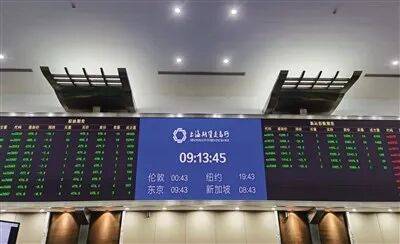
Core Insights - The increasing popularity of "Shanghai prices" in international trade is attributed to the Shanghai Futures Exchange's (SHFE) efforts to enhance its influence and expand its product offerings [1][4]. Group 1: Shanghai Futures Exchange Overview - SHFE, established in 1999 and located in Shanghai, is one of China's five major futures exchanges, regulated by the China Securities Regulatory Commission [3]. - The exchange currently lists 25 futures products, including copper, aluminum, zinc, lead, tin, and nickel, as well as 18 options products covering various sectors such as metals, energy, and chemicals [3]. - SHFE has opened five futures products and crude oil options directly to foreign investors, allowing qualified foreign institutional investors (QFII, RQFII) to participate in trading for 32 futures and options products [3][4]. Group 2: Internationalization and Market Impact - The internationalization of SHFE aligns with Shanghai's goal of becoming an international financial center, as highlighted in the revised regulations promoting the financial market's internationalization [4]. - "Shanghai copper" has emerged as a significant pricing benchmark in the global non-ferrous metal market, establishing SHFE as one of the three major pricing centers for non-ferrous metals [4][6]. - The listing of "Shanghai natural rubber futures" on the Osaka Exchange in Japan marks a significant step in exporting Chinese futures pricing standards [6]. Group 3: Growth and Future Plans - SHFE has seen a steady increase in foreign participation, with growing numbers of foreign clients and expanding price application scenarios [7]. - The exchange aims to enhance its market service functions, diversify its product offerings, and deepen its high-level openness to further contribute to Shanghai's international financial center development and support high-quality economic growth [7].
沪港共振!两大国际金融中心协同发展迈向深水区,支持内地企业“走出去”|聚焦2025陆家嘴论坛
Hua Xia Shi Bao· 2025-06-20 04:40
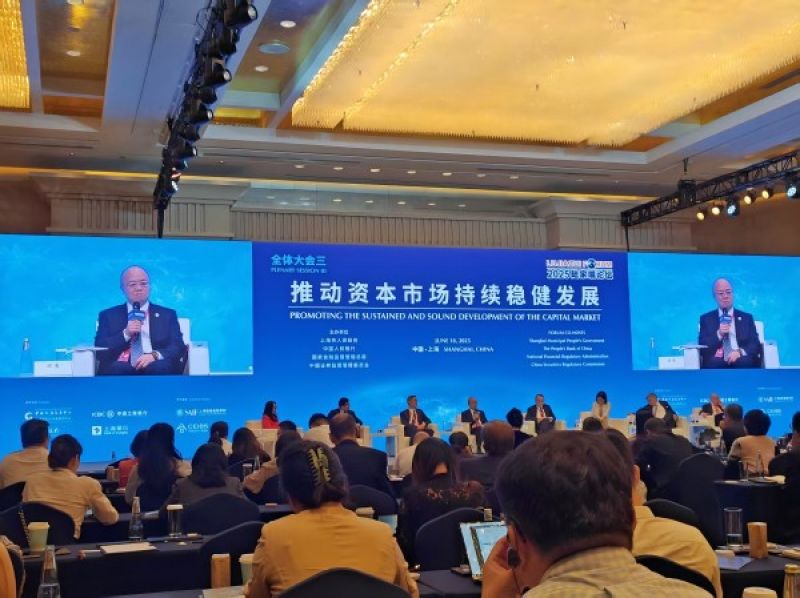
Core Viewpoint - The collaboration between Shanghai and Hong Kong is a natural choice for both cities as they are complementary financial centers, enhancing their roles in the international financial landscape [1][5][10]. Group 1: Cooperation Framework - The "Shanghai-Hong Kong International Financial Center Collaborative Development Action Plan" was signed on June 18, outlining six areas of deep cooperation, including infrastructure connectivity and offshore financial strategies [1][6]. - The action plan aims to support cross-border financial services innovation and green finance development, enhancing the existing cooperation framework established since the launch of the Shanghai-Hong Kong Stock Connect in 2014 [6][7]. Group 2: Financial Market Dynamics - Shanghai serves as a key onshore financial hub, with the Shanghai Stock Exchange ranking third globally in market capitalization and leading in bond custody and gold trading volumes [2][4]. - Hong Kong, as the largest offshore RMB business center, has over 1.19 trillion RMB in deposits and has been a crucial channel for mainland enterprises to access international capital [4][5]. Group 3: Future Opportunities - The collaboration is expected to provide more financing opportunities for technology innovation enterprises and increase the demand for cross-border RMB payment settlements [8]. - The partnership will facilitate the establishment of financial centers in both cities, supporting mainland enterprises in their international expansion efforts [7][9]. Group 4: Strategic Importance - The synergy between Shanghai and Hong Kong is seen as a catalyst for the internationalization of the RMB and the integration of China's financial markets into the global system [9][10]. - The relationship is characterized by complementary strengths, with Shanghai focusing on domestic economic cycles and Hong Kong linking global capital networks [4][5].

425万亿元!“上海价格”火了
Zhong Guo Ji Jin Bao· 2025-05-23 07:04
Core Insights - The Shanghai Futures Market has experienced significant growth, with its scale increasing 2.7 times from 2017 to 2024, reaching 425 trillion yuan, and is becoming a global pricing reference for trade [1][2] - The development of the futures market is aligned with China's modernization goals and aims to enhance risk management for enterprises while promoting high-quality development [2][3] Group 1: Market Growth and Development - The Shanghai Futures Market has attracted global industry players and financial institutions, contributing to the construction of a financial hub [2] - The market has listed 47 futures and options products, covering key sectors such as metals, energy, and finance, enhancing its role in risk management for various industries [2][4] - The trading volume of Shanghai's financial market exceeded 365 trillion yuan in 2024, with the futures market being a crucial component [4] Group 2: Regulatory and Strategic Initiatives - The China Securities Regulatory Commission emphasizes the importance of the futures market in supporting the real economy and enhancing financial stability [3] - Ongoing development of the Sci-Tech 50 index futures and options is aimed at better serving high-level technological enterprises [2][3] Group 3: Market Functionality and Impact - Financial futures are playing a stabilizing role in the market, with stock index futures helping to increase the value of hedged stocks by 14% from November 2023 to April 2024 [5][6] - The introduction of new products and adjustments in trading mechanisms have improved market quality, with daily trading volumes for financial futures and options increasing significantly [7] - Institutional participation in financial futures has grown, with a notable increase in the average daily positions held by institutions, enhancing overall market performance [7] Group 4: Future Prospects and Innovations - The Shanghai Futures Exchange plans to launch futures and options for aluminum alloy, further expanding the global influence of "Shanghai prices" [8] - The exchange is actively increasing the number of products available to qualified foreign investors, enhancing international collaboration [8]