
上海金

Search documents
上海国际金融中心建设能级跃升
Guo Ji Jin Rong Bao· 2026-02-24 13:40
Core Insights - The construction of Shanghai International Financial Center (SIFC) has transitioned from "gathering institutions, building frameworks, and expanding scale" during the 14th Five-Year Plan to "strengthening functions, enhancing levels, and optimizing ecology" in the 15th Five-Year Plan, with a focus on offshore finance as a key driver by 2026 [1][6][9] Group 1: Achievements in 2025 - In 2025, SIFC achieved significant progress in financial market construction, institutional capacity, financial infrastructure, and high-level openness, marking a new stage of functional enhancement [2][4] - The total amount of cross-border RMB payments in Shanghai reached 32.4 trillion yuan, a year-on-year increase of 9%, maintaining a 46% share of the national total [3] - The number of licensed financial institutions in Shanghai reached 1,813, with 128 international reinsurance platforms, including 34 foreign institutions [3] Group 2: Strategic Initiatives - The central financial committee issued opinions to support the acceleration of SIFC construction, aiming for a comprehensive enhancement of its capabilities over the next five to ten years [2] - The Shanghai government signed a collaborative development action plan with Hong Kong to strengthen cooperation in building international financial centers [2] - The 15th Five-Year Plan emphasizes the establishment of a global RMB asset allocation center and risk management center, enhancing cross-border and offshore financial services [6][7] Group 3: Future Directions - The focus will shift towards enhancing pricing power, resource allocation rights, and global service capabilities, aiming to establish Shanghai as a global center for RMB asset allocation and risk management [1][8] - Offshore finance is identified as a breakthrough point for SIFC construction, with plans to address challenges in legal frameworks, tax arrangements, and cross-border data flow [9][10] - Recommendations include establishing offshore financial functional zones, enriching offshore RMB product systems, and optimizing the legal and business environment to enhance international competitiveness [10][11]
2300吨黄金运抵回国,失去定价权,美财长开甩锅中国,美元没救了
Sou Hu Cai Jing· 2026-02-09 17:12
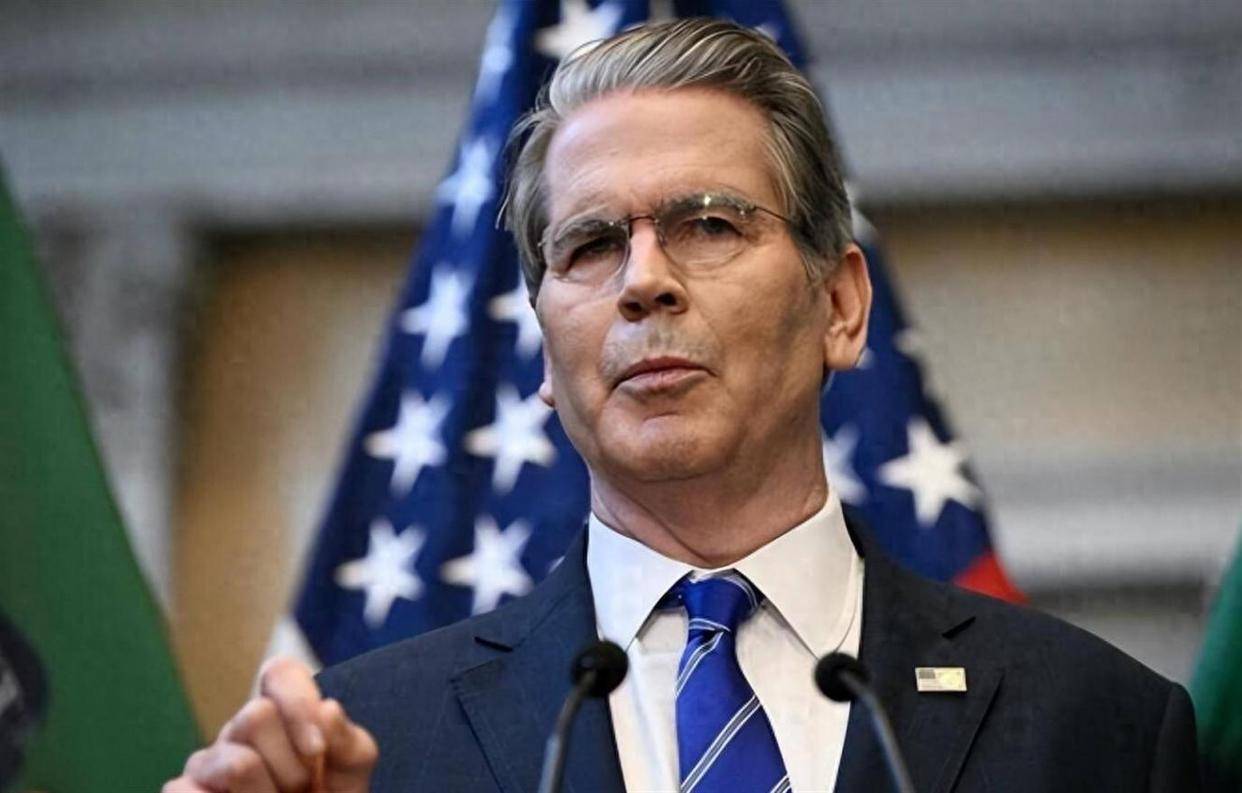
Core Viewpoint - The U.S. Treasury Secretary's comments on the recent volatility in the gold market reflect a deeper issue regarding the diminishing control of the U.S. over gold prices, highlighting a shift in global pricing power towards China [1][6][23] Group 1: U.S. Treasury Secretary's Statements - The U.S. Treasury Secretary attributed the recent fluctuations in gold prices to "unstable" trading conditions in China, suggesting a speculative bubble burst [3][4] - His remarks were interpreted as an attempt to simplify a complex global issue into a single narrative, shifting blame to Chinese traders rather than addressing U.S. monetary policy or geopolitical risks [3][6] Group 2: Changes in Global Gold Pricing Power - The traditional dominance of London and New York in gold pricing is being challenged by the Shanghai Gold Exchange, which introduced a yuan-denominated pricing mechanism in 2016 [6][7] - By 2025, the Shanghai Gold Exchange's average daily trading volume reached 70% of that of the New York Mercantile Exchange, indicating a significant shift in market influence [6][7] Group 3: China's Central Bank Actions - As of January 2026, China's gold reserves increased to 7,419 million ounces, marking the 15th consecutive month of gold accumulation by the People's Bank of China [9][10] - This consistent buying strategy reflects a broader trend among global central banks to increase their gold holdings, with 95% of central banks planning to continue purchasing gold in the coming year [12][10] Group 4: Global Central Bank Trends - The World Gold Council reported that global central banks net purchased 863 tons of gold in 2025, maintaining historically high levels of gold accumulation [12] - Countries like Poland and Hungary are also increasing their gold reserves significantly, indicating a collective shift towards gold as a stable asset amid concerns over the existing monetary system [12][13] Group 5: Underlying Economic Concerns - The decline in trust towards the U.S. dollar is attributed to several factors, including the independence of the Federal Reserve and the sustainability of U.S. fiscal policy, which are perceived to be under threat [16][17] - Geopolitical risks and policy uncertainties have further exacerbated concerns about the reliability of dollar-denominated assets, prompting a global trend towards gold accumulation [19][20] Group 6: Historical Context and Future Implications - The current situation is reminiscent of the 1970s when the dollar's credibility was questioned, leading to a significant rise in gold prices [20][22] - The ongoing "de-dollarization" narrative is gaining traction, with central banks increasingly viewing gold as a hedge against potential instability in the dollar-based financial system [23]

南方基金:黄金、白银集体跳水后,资金流向何处?
Sou Hu Cai Jing· 2026-02-03 11:49
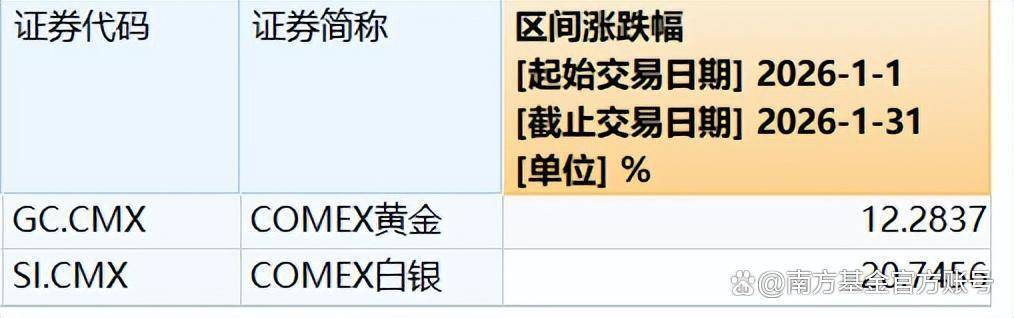
Market Overview - In January, the global market experienced a general upward trend, with emerging markets outperforming developed markets [1][2] - The US dollar index showed slight downward movement throughout the month, while emerging market currencies strengthened [1] - Most major commodities saw significant price increases, although gold and silver experienced a notable correction at the end of the month [1][2] Performance of Major Indices - The KOSPI index in South Korea rose by 21.15%, while the MSCI Emerging Markets index increased by 10.71% [2] - The Hang Seng Index gained 9.12%, and the WIND All A index rose by 5.83% [2] - The S&P 500 and Nasdaq indices in the US continued to show high volatility, with the S&P 500 increasing by 1.8% [2] Commodity Market Insights - Gold and silver recorded year-to-date increases of approximately 12.3% and 20.7%, respectively, despite recent volatility [1] - The Bloomberg Commodity Index rose by 13.59%, indicating a strong performance in the commodity sector [2] Domestic Market Dynamics - The domestic market showed significant differentiation, with equity markets experiencing high volatility while risk-free rates trended downward [2][3] - The commodity market, represented by the South China Industrial Products Index, saw substantial gains [2] Future Asset Allocation Outlook - Short-term adjustments in gold prices may reflect a correction from previous extremes, with increased volatility expected [5][6] - In the medium to long term, gold is anticipated to benefit from factors such as US debt pressure, geopolitical tensions, and rising inflation expectations [6] - The A-share market is expected to enter a critical trading window before the Spring Festival, with a potential shift towards a "high-level oscillation and structural differentiation" pattern [7] Investment Strategies - A balanced allocation strategy focusing on "technology + cycles + dividends" is recommended to capture structural opportunities [9] - In the technology sector, attention should be given to AI-related investments, while the cyclical sector, particularly non-ferrous metals, may present buying opportunities after recent corrections [9] - For conservative investors, strategies focusing on "dividend low volatility" and "free cash flow" indices are suggested [10]
【财富】黄金继续闪耀 投资如何跟上?
中国建设银行· 2026-01-15 06:14
Core Viewpoint - The article discusses the historical performance of gold prices and suggests that there may still be room for further increases in gold prices, driven by various economic factors and central bank policies [2][4]. Group 1: Historical Performance of Gold - Since 1970, gold has experienced six major bull markets, lasting an average of 65 months with an average increase of 334.57% [2]. - The current gold market has been ongoing for 34 months since November 2022, with a cumulative increase of over 150%, indicating potential for further upward movement [2]. Group 2: Economic Factors Influencing Gold Prices - The article highlights the impact of a renewed interest in gold due to central banks' ongoing purchases, particularly in the context of a global economic slowdown and geopolitical uncertainties [5]. - The Federal Reserve has cut interest rates three times this year, which may further support gold prices as investors seek safe-haven assets [5]. Group 3: Investment Opportunities - The Jianxin Shanghai Gold ETF Linked Fund aims to closely track the Shanghai gold market, providing investors with a viable option to capitalize on gold price movements [6]. - Since its inception, the Jianxin Shanghai Gold ETF Linked Fund has shown strong performance, with one-year and three-year returns of 45.96% and 117.19%, respectively [7].

开年贵金属市场波动加剧,黄金ETF受关注但风险需警惕
Huan Qiu Wang· 2026-01-10 03:00
Core Insights - The precious metals market has experienced significant fluctuations since the beginning of 2026, with rising prices for gold and silver attracting widespread attention [1] Group 1: Gold and Silver ETF Performance - As of January 7, 2026, all 14 gold ETFs in the market recorded gains of over 2%, with some like ICBC Gold ETF and Huaxia Gold ETF exceeding 2.5% [3] - The net asset value of gold ETFs has been increasing, with significant inflows noted, particularly in the last week where certain ETFs saw growth of over 10,000 shares [3] - The total management scale of ETFs tracking SGE gold reached 230.285 billion yuan, while those tracking Shanghai gold reached 23.682 billion yuan, marking further growth from the end of 2025 [3] Group 2: Market Volatility and Risk Warnings - Recent volatility in gold and silver prices has been attributed to fluctuating expectations regarding Federal Reserve interest rate cuts and geopolitical factors, leading to increased volatility in precious metals [4] - The Shanghai Futures Exchange has implemented measures to mitigate risks, including limiting the maximum number of contracts for silver futures and adjusting margin requirements [4] - The fund company Guotai Asset Management has issued multiple risk warnings regarding the high premium of its silver futures product, indicating potential valuation corrections and risks of losses for investors [5] Group 3: Long-term Value of Precious Metals - Despite short-term volatility, the long-term strategic value of gold remains strong due to factors such as weakening dollar credit, ongoing central bank purchases, and expanding physical gold consumption [6] - Analysts predict that gold and silver will maintain a strong performance in the first half of 2026, although short-term price fluctuations are expected due to dollar volatility and monetary policy changes [6] - Investors are advised to remain rational and aware of market risks while considering precious metal investments, emphasizing the importance of asset allocation based on individual risk tolerance [6]

金融战场悄然开启:中国减持美债只是幌子,真正王牌是黄金回流
Sou Hu Cai Jing· 2026-01-03 07:17
Core Insights - The article discusses China's significant reduction in U.S. Treasury holdings and simultaneous increase in gold reserves, indicating a strategic shift in asset allocation [1][2][20] Group 1: U.S. Treasury Holdings - In October 2025, China reduced its U.S. Treasury holdings by $11.8 billion, bringing the total to $688.7 billion, the lowest level since the 2008 financial crisis [1] - This reduction is seen as a move to mitigate risks associated with potential credit defaults and asset depreciation in the context of rising U.S. debt and geopolitical tensions [3][5] Group 2: Gold Reserves - In the same month, China imported a record amount of gold from Russia, with exports valued at $1.9 billion in the first 11 months of 2025, marking a nearly ninefold increase year-on-year [1] - As of November 2025, China's official gold reserves reached 74.12 million ounces, reflecting 13 consecutive months of increases [1][6] Group 3: Strategic Asset Allocation - The reduction in U.S. Treasury holdings and increase in gold reserves is described as a "left-hand and right-hand maneuver," aimed at optimizing the structure of international reserve assets and reducing reliance on the U.S. dollar [2][20] - The shift towards gold is also seen as a response to the declining credibility of the dollar, which has been used as a political tool, accelerating the global trend of "de-dollarization" [5][20] Group 4: Global Gold Market Dynamics - The Shanghai Gold Exchange has emerged as a key player in the global gold market, introducing a yuan-denominated gold pricing system, which challenges the traditional dominance of London and New York [10][12] - This development is part of China's broader strategy to establish a "gold anchor" for the renminbi, enhancing its international acceptance and reducing dependency on the dollar [8][12] Group 5: International Trade and Currency Settlement - The article highlights the increasing use of the renminbi in international trade, with significant percentages of transactions in oil and energy trades being settled in renminbi [16] - This shift is part of a larger strategy to create a direct exchange channel between the renminbi and gold, bypassing the dollar-centric SWIFT system [14][20] Group 6: U.S. Response and Market Implications - The U.S. is facing challenges in finding new buyers for its expanding debt, with potential implications for interest rates and fiscal stability if major holders like China continue to reduce their holdings [18][20] - The article suggests that this trend reflects a broader market movement away from reliance on the dollar, as evidenced by other countries also reducing their U.S. Treasury holdings [18][20]
“全民买金”背后:重估黄金投资叙事|2025招商证券“招财杯”ETF实盘大赛
Sou Hu Cai Jing· 2025-12-31 13:46
Core Viewpoint - The article discusses the rising interest in gold investments, particularly through ETFs, driven by central bank purchases and changing perceptions of the dollar's credibility, highlighting the importance of understanding market dynamics and investment strategies in this context [1][14][24]. Group 1: Gold Market Dynamics - Since 2022, central banks have significantly increased their gold purchases, which has been a primary driver of the recent rise in gold prices [14]. - The traditional relationship between gold prices, the US dollar index, and US Treasury yields has been disrupted, particularly after significant geopolitical events [11][13]. - The current gold price dynamics are influenced by a combination of traditional market indicators and new factors, such as the credibility of the US dollar and global economic conditions [12][13]. Group 2: Investment Strategies - Investors are encouraged to adopt a long-term perspective on gold investments, utilizing strategies like dollar-cost averaging to mitigate short-term price volatility [24][26]. - The recommended allocation of gold in an investment portfolio typically ranges from 10% to 20%, depending on individual risk tolerance [25]. - Gold ETFs offer liquidity advantages over physical gold, allowing for easier buying and selling based on real-time market prices [3][4]. Group 3: Market Sentiment and Risks - Short-term market sentiment can lead to price fluctuations, but the long-term bullish outlook for gold remains intact despite these temporary movements [6][7]. - The unique risks associated with gold ETFs include potential price discrepancies between the ETF's market price and its net asset value, which investors should monitor [9]. - The independence of the Federal Reserve is a critical factor influencing market confidence and, consequently, gold prices [15][17]. Group 4: Broader Market Influences - The rise in prices for other metals like copper and silver is also linked to global monetary and fiscal easing, alongside their specific supply and demand dynamics [20][21]. - The interplay between gold and risk assets can lead to simultaneous price movements during liquidity crises, but this does not diminish gold's role as a safe-haven asset [22][23].

上金所公布2026年相关品种交易手续费率
Xin Lang Cai Jing· 2025-12-22 13:33
Core Viewpoint - The Shanghai Gold Exchange announced the trading fee rates for various gold and silver contracts for the year 2026, effective from January 1 to December 31, 2026. Group 1: Trading Fee Rates for Gold and Silver Contracts - The trading fee rate for Au (T+D) and mAu (T+D) contracts will be 0.0015% [1][4] - The trading fee rate for Ag (T+D) contracts will be 0.0012% [1][4] - The trading fee rate for Au (T+N1), Au (T+N2), NYAuTN06, and NYAuTN12 contracts will be 0.001% [1][4] - Short-term opening trading fee rates for Au (T+D) and mAu (T+D) contracts will be 0.00125% [1][4] - Short-term opening trading fee rate for Ag (T+D) contracts will be 0.00075% [1][4] - No fees will be charged for short-term closing of Au (T+D), mAu (T+D), Ag (T+D), Au (T+N1), Au (T+N2), NYAuTN06, and NYAuTN12 contracts [1][4] Group 2: Trading Fee Rates for Spot and Inquiry Contracts - The trading fee rate for the main board gold spot contracts Au99.99, Au99.95, Au100g, and Au99.5 will be 0.003% [1][4] - No fees will be charged for the silver Ag99.99 contract [1][4] - No fees will be charged for Shanghai gold, Shanghai silver centralized pricing contracts, panda gold coin contracts, and performance guarantee inquiry contracts [1][4] Group 3: Inquiry Trading Fee Rates - The trading fee rate for gold inquiry swaps in the interbank market from TOM (inclusive) to SPOT (inclusive) will be 0.0001% [2][5] - For non-financial institutions participating in the inquiry platform for PAu99.99 and PAu99.95 contracts, the spot trading fee rate will be 0.002% [2][5] - The fee rates for forward contracts will vary based on the maturity date, with specific rates outlined for different time frames [2][5] Group 4: International Board Trading Fee Rates - The trading fee rates for international board competitive bidding contracts iAu99.99, iAu99.5, and iAu100g will be 0.0005% [3][6] - The trading fee rates for international board inquiry contracts iPAu99.99, iPAu99.5, and iPAu100g for physical delivery will be 0.001% [3][6] - Discounted fee rates will apply for international members participating in international board inquiry contracts based on the maturity date [3][6]
黄金涨不动了,白银为啥还在涨?
3 6 Ke· 2025-12-10 07:59
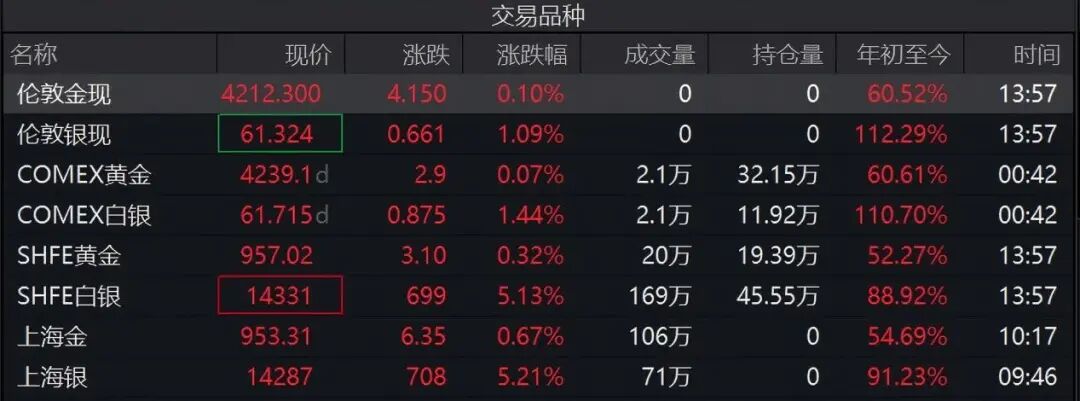
Core Insights - Silver prices have surged significantly, surpassing $60 per ounce, marking a historical high, with a year-to-date increase of over 110%, compared to gold's 60% rise [1][2] Group 1: Price Movements - On October 9, silver prices reached $60.83 per ounce during trading, closing at $60.65, reflecting a daily increase of 4.4% [1] - Year-to-date, silver has outperformed gold, with silver's price increase being more than double that of gold [1][2] Group 2: Market Drivers - The recent surge in silver prices is attributed to three main factors: 1. Expectations of U.S. Federal Reserve policy changes, with a potential interest rate cut anticipated in early 2026, leading to a decline in real interest rates [2][3] 2. Increased industrial demand, particularly from the photovoltaic sector and AI-related industries, which has driven up orders for silver [2][3] 3. Supply constraints from key mining regions, raising concerns about future silver supply [3][4] Group 3: Investment Behavior - The rising silver prices have led to increased interest in silver investments, although many investors are cautious due to high prices [5] - The current high recovery price for silver, which is significantly higher than gold, has led to a higher loss rate for silver when reselling [5] Group 4: Market Dynamics - The divergence in performance between gold and silver is attributed to their differing market drivers, with silver benefiting from industrial demand and supply disruptions, while gold's price has stabilized due to already priced-in geopolitical risks [4][6] - The current market structure for silver, including high ETF holdings and speculative positions, may amplify price volatility [7]
国际金融中心对外开放的全球经验与上海提升路径
Guo Ji Jin Rong Bao· 2025-12-09 08:13
Core Insights - The high-level opening of financial markets is a core strategic pivot for the structural upgrade of the modern economic system, influenced by the post-pandemic global governance restructuring and digital technology paradigm shifts [1] - The competition logic of international financial centers has evolved from traditional "capital scale competition" to "institutional supply capability comparison" [1] Group 1: Current Status of Shanghai's Financial Market Opening - Shanghai has made significant progress towards becoming a globally influential international financial center, with 1,796 licensed financial institutions as of September 2025, nearly one-third of which are foreign institutions [2] - The internationalization of the RMB has improved, with the global payment share stabilizing at around 3.5%, ranking fourth globally, but still has substantial growth potential compared to the dollar's 48.5% [10] - Shanghai's financial market size ranks among the top globally, but foreign ownership in the stock market remains low at 8%-10%, compared to over 35% in mature markets like New York and London [9] Group 2: Comparative Analysis of Global Financial Centers - New York's governance-oriented open model is supported by the dollar's international status and a regulatory framework that promotes global rule output [4] - London's intermediary open model balances domestic regulatory flexibility with international rule adaptability, supported by a robust professional service network [5] - Singapore's adaptive open model emphasizes governance efficiency through a "three-in-one" framework that allows for dynamic regulatory adjustments [6] Group 3: Challenges and Opportunities for Shanghai - Shanghai faces structural shortcomings in market openness depth, monetary hub functionality, and financial rule discourse power compared to top financial centers [2] - The international financial rule discourse power of Shanghai is gradually increasing, transitioning from a "rule taker" to a "rule participant," but still needs to enhance its influence [10] - The regulatory framework in Shanghai requires further optimization to address issues such as multi-head regulation and data silos, which hinder cross-border investment and financial technology [11] Group 4: Governance Framework for High-Level Opening - Establishing governance principles such as adaptability, precision, and synergy is essential for constructing a high-level opening system [13] - Key tools for institutional innovation include high-standard rule pressure testing and the establishment of an internationalized legal protection ecosystem [14][15] - A multi-level risk prevention system is necessary to ensure the safety of financial high-level opening, incorporating macro-prudential management and regulatory technology [16] Group 5: Talent and Institutional Support - Building an international financial talent hub is crucial, with policies aimed at attracting high-end talent in derivatives innovation and financial technology [17] - The cultivation of specialized financial service clusters and enhancement of international financial cooperation platforms are vital for reducing transaction costs and increasing Shanghai's global competitiveness [17]